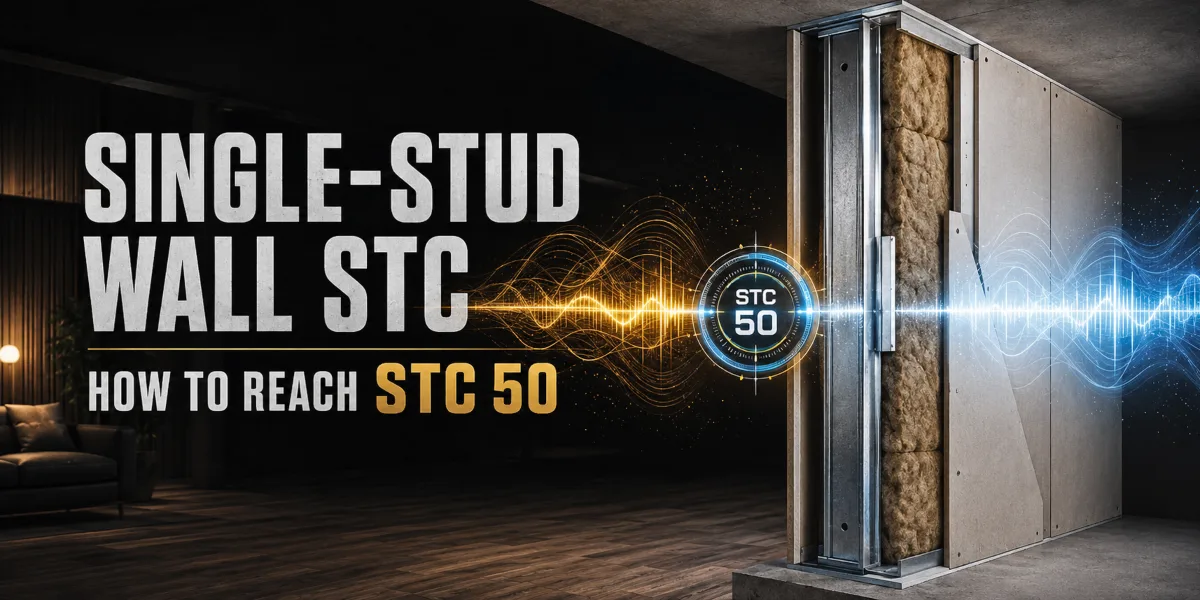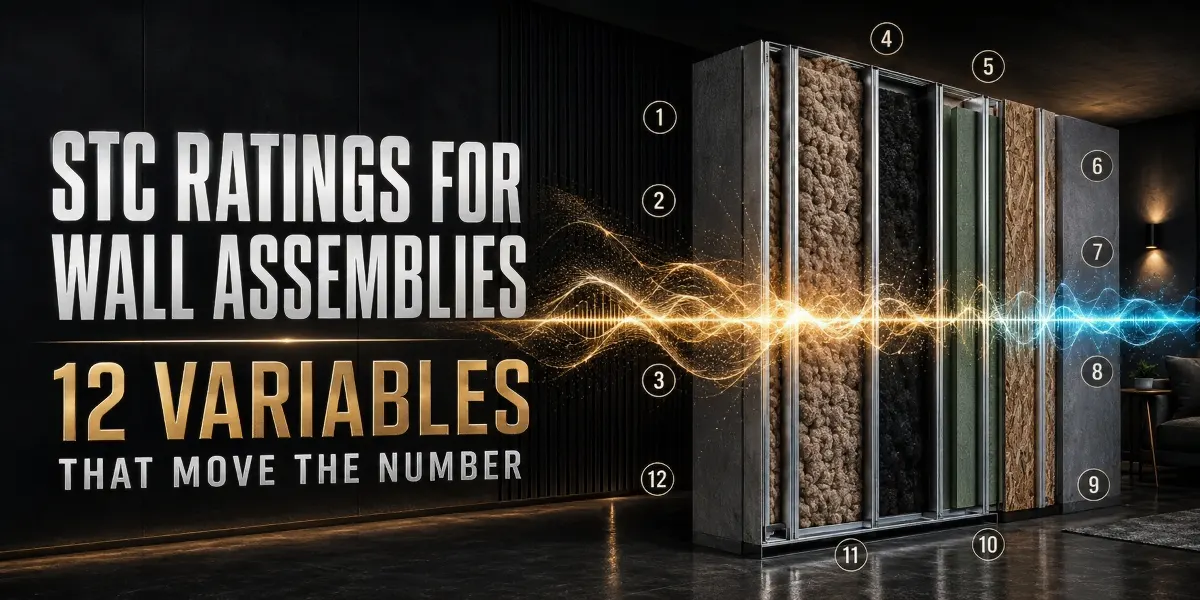
STC rates indoor speech and TV; OITC rates outdoor traffic, trains, and aircraft. Why OITC is always lower on the same assembly, where each rating belongs, and the spec mistake behind most low-frequency complaints.
Sound Advice
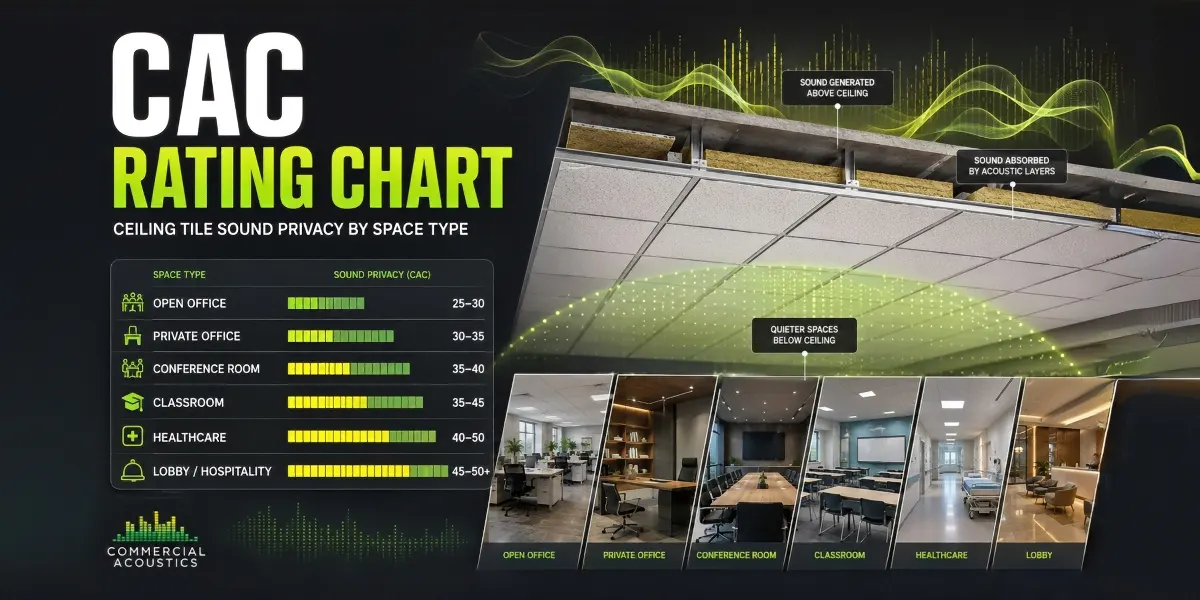
The ceiling is usually the largest reflective surface in a room. How ACT systems absorb, block, or diffuse sound, the three main material types, and where they actually deliver acoustic comfort versus just aesthetics.
Why music rooms leak — air gaps, shared structure, lightweight materials — and the three physics principles that fix it: mass, decoupling, and sealing. Includes typical STC and RT60 targets for studio-grade spaces.
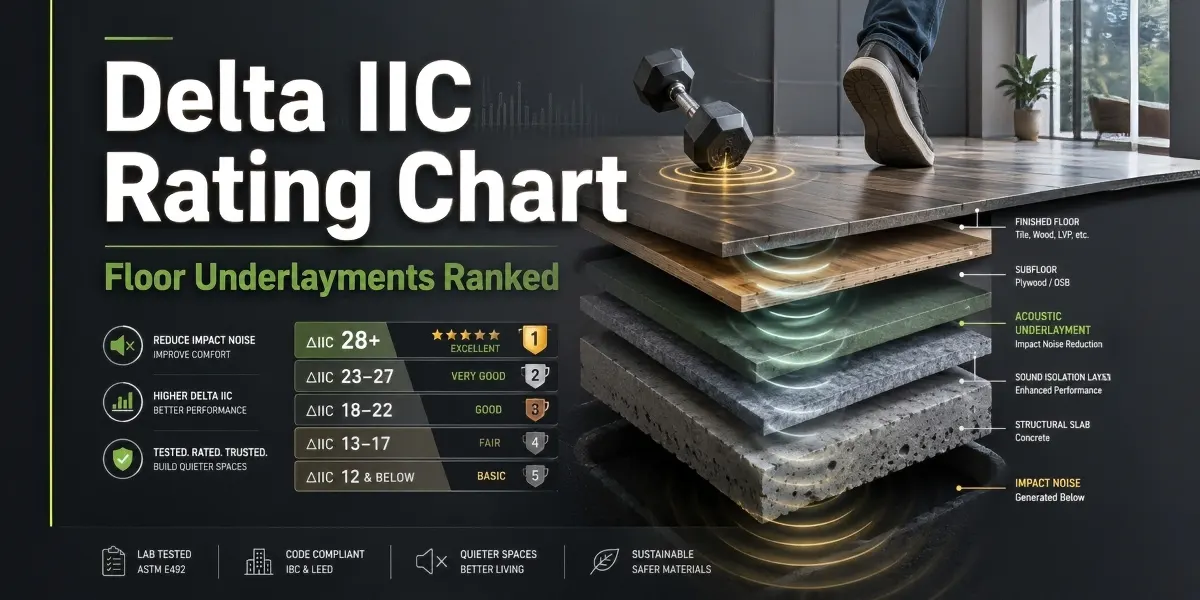
Impact noise from footsteps, dropped objects, and dragged chairs — what IIC measures, the IBC minimums for multifamily, typical floor-ceiling assembly ratings from bare concrete to fully decoupled studios, and the lab-to-field penalty most specs miss.
Quick fixes, mid-level retrofits, and full-build solutions for ceiling noise from upstairs units, HVAC, and mechanical equipment. How mass, isolation, and sealing interact, plus common mistakes that waste budget without solving the problem.
Soundproofing isn’t acoustic treatment — it stops sound from passing through walls, ceilings, and gaps, not echoes inside the room. The three principles that actually work (mass, decoupling, sealing) and the quick fixes that waste money.
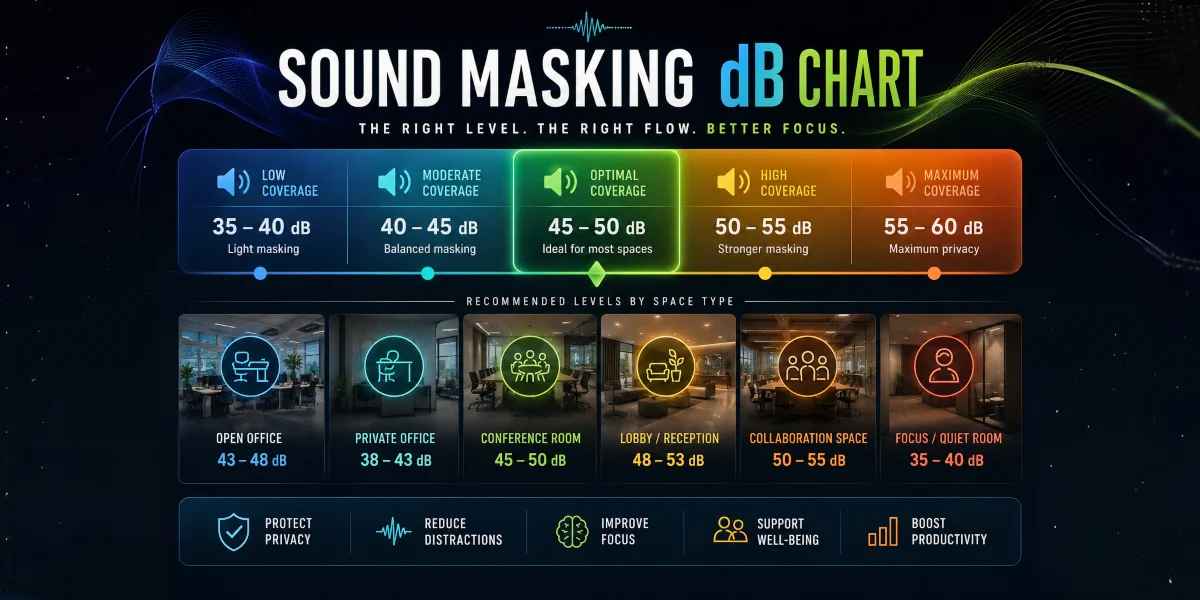
Engineered background noise tuned to speech frequencies — how masking improves privacy in open offices, clinics, and call centers, why it isn’t white noise, and where it outperforms absorption alone.
When ceiling tiles aren’t enough — baffles, clouds, stretched fabric, wood, metal, and pyramid diffusers that deliver acoustic performance and visual design at once. How each type performs and where each belongs.
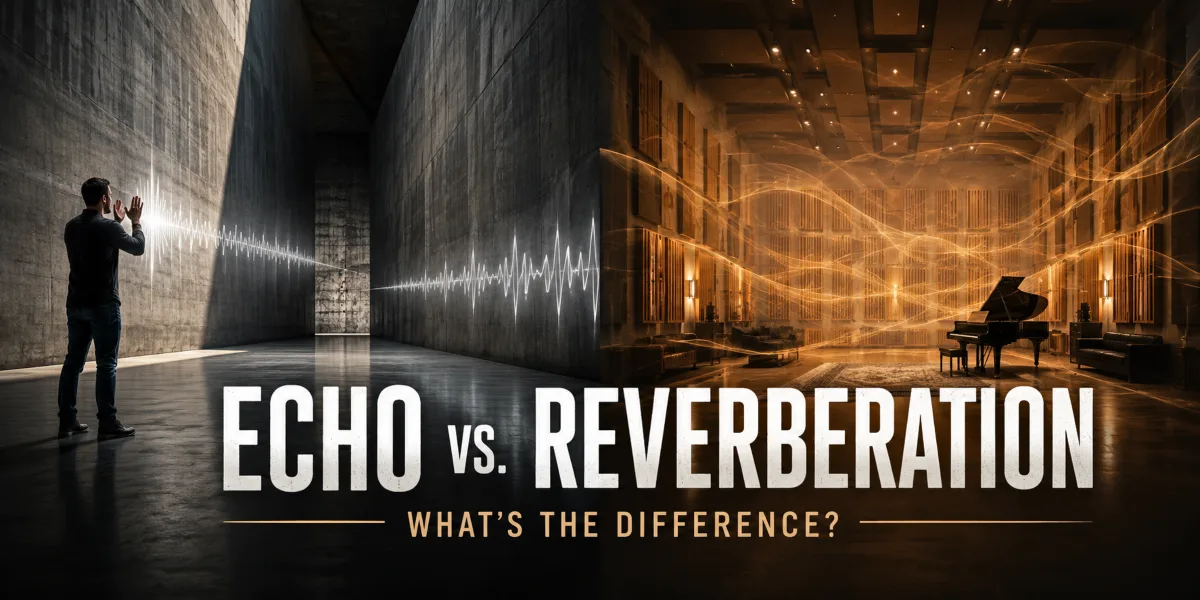
Echo is a reflection problem, not a soundproofing one — fixed with absorption and diffusion, not heavier walls. RT60 targets, the surface area to cover with NRC 0.85+ material, and where to start (hint: the ceiling).
The α values behind every absorption calculation — octave-band coefficients for common floor, wall, and ceiling materials from 125 Hz to 4 kHz, with notes on which numbers to trust and how to use them.
The major ACT brands, the tile types that actually perform in offices, schools, healthcare, and performing arts, and how to match panel construction to the acoustic and visual targets each project demands.
Sound travels four times faster through concrete than air — why stiffness beats density, what that means for structure-borne noise paths, and how to turn one of the worst transmission materials into a quiet building.
From the loudest sound ever recorded to why a 1% gap leaks 50% of sound energy — twenty surprising facts about how sound behaves, why egg cartons don’t absorb it, and what humans actually hear.
Every noise complaint starts with one question — is the sound coming through air or through structure? How to tell which you’re fighting, and the two completely different strategies for solving each.
Doors are the weakest acoustic link in most walls — why hollow cores leak as much as open vents, what a real door upgrade looks like (seals, sweep, mass, threshold), and the targets that make it worth the spend.