Enter your room’s size and finishes to get its reverb time (RT60) and the acoustic treatment it needs to hit your target.
The Basics
What Is Room Acoustics?
Room acoustics describe how sound reflects, decays, and disperses within a space — factors that directly impact speech clarity, comfort, and code compliance. Our acoustic treatment calculator uses Sabine’s Formula to estimate reverberation time (RT60) from your room’s dimensions and surface finishes, helping you determine if additional treatment is needed.
What It MeasuresRT60 is the time, in seconds, for sound to fade by 60 dB after the source stops.
What Drives ItRoom volume and how much absorption the floor, walls, and ceiling provide.
Why It MattersToo much reverb muddies speech, builds noise, and makes rooms tiring to be in.
Methodology
How the Acoustical Calculator Estimates RT60
This tool applies Sabine’s Formula — a proven method for predicting reverberation time — using your room’s volume and the Noise Reduction Coefficient (NRC) of each surface. It helps architects, contractors, and designers quickly assess whether additional acoustic treatment is needed before construction or renovation.
1
Measure the SurfacesLength, width, and height give the floor, wall, and ceiling areas and the room’s volume.
2
Total the AbsorptionEach surface’s area × its NRC gives sabins. Floor + walls + ceiling = total absorption.
3
Apply Sabine’s FormulaRT60 = 0.05 × Volume ÷ Total Absorption. The gap to your target sets the treatment needed.
Design Targets
Target RT60 by Room Type
The right reverb time depends on how a space is used. Rooms built around speech need short reverb, while music and worship spaces benefit from a little more warmth.
Speech Clarity
RT60 0.4–0.6s
Classrooms & Offices
0s1s2s
Short reverb keeps every word clear.
Balanced
RT60 0.5–0.8s
Conference Rooms & Clinics
0s1s2s
Clear calls without a dead feel.
Echo Control
RT60 1.0–1.5s
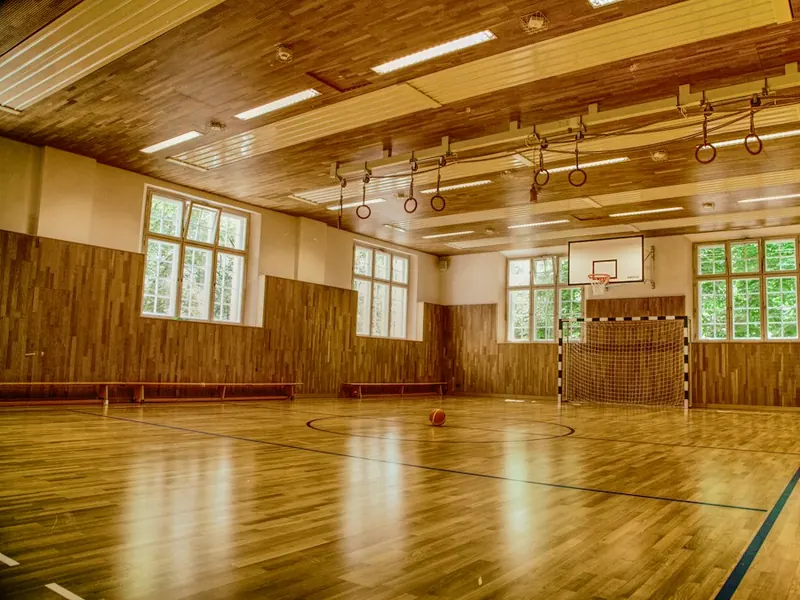
Cafeterias & Gyms
0s1s2s
Tames the roar of a full room.
Musical Warmth
RT60 1.2–1.8s
Auditoriums & Sanctuaries
0s1s2s
Lets music and voices bloom.
Design Strategy
Absorption vs. Diffusion in Acoustic Design
Effective acoustic design typically combines both strategies. Absorption shortens RT60 and removes harsh reflections, while diffusion keeps the room from feeling “dead” by breaking up concentrated sound energy.
AbsorptionReduces echo by converting sound energy — panels, carpet, acoustic ceilings.
DiffusionScatters sound evenly to preserve liveliness — 3D diffusers, clouds.
Best StrategyAbsorption controls reverberation. Diffusion improves clarity and balance.
Proof
Case Studies: Absorption in Action
Acoustic treatment projects across education, hospitality, offices, and restaurants — with the reverb results to show for it.
Diffusers + Panels
Polk State College — Music Building
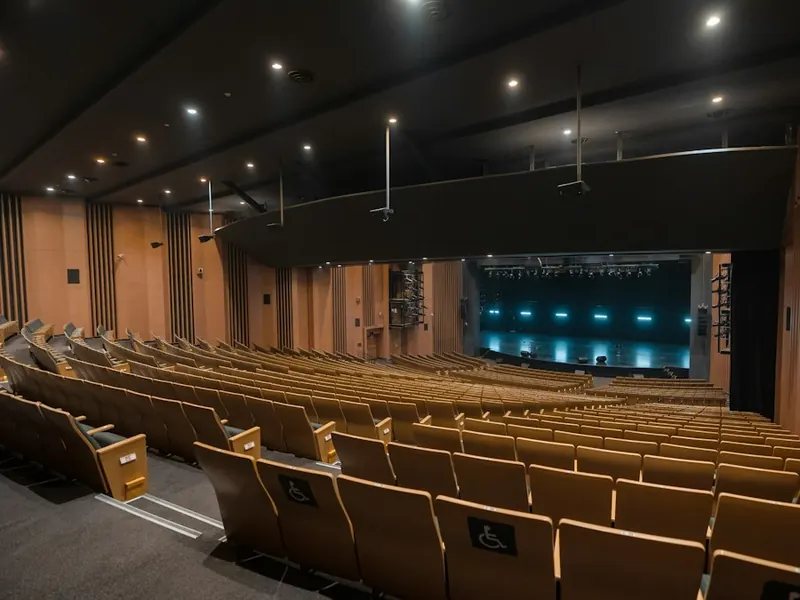
Polk State renovated its Arts & Music Building to improve clarity and manage reverberation. Ceiling diffusers, fabric panels, and scatter units balance frequencies across performance, rehearsal, and teaching spaces.
More than 450 fabric panels and barrel diffusers were installed in the auditorium and band rooms to reduce reverberation, improve speech intelligibility, and lift performance quality.
Excessive echo hurt conversation in this 55+ community’s clubhouse restaurant. A fabric wall system across all available surfaces cut RT60 from 1.75 to 1.0 seconds.
Hard surfaces from a remodel created echo that hurt speech clarity and client confidentiality. A seamless fabric wall system aligned with the cabinetry added absorption without breaking the design.
14 custom fabric-wrapped panels across the walls, ceiling, and accent zones pulled reverb from 1.2 to 0.7 seconds — right in the window for clear conference calls.
Custom panels sized to the room’s geometry cut reverb from over 1.6 seconds to under 1 second, so guests at the same table could finally hold a conversation.
FAQs: Using the Room Acoustics Calculator Effectively
RT60 is the standard measure of reverberation time. It tells you how echoey or controlled a space is, and affects everything from speech clarity to noise complaints.
It’s based on real-world NRC values and proven acoustic formulas. For pre-construction planning, it’s highly reliable. Final tuning may require field testing in sensitive applications.
That means your room is too reflective. You’ll need to add acoustic absorption, such as wall panels, ceiling baffles, or even carpets and drapes depending on the setting.
Ceiling treatments are most effective in large or tall rooms; wall panels are best at targeting side reflections and speech paths. Use both when possible for balanced control.


 Diffusers + Panels