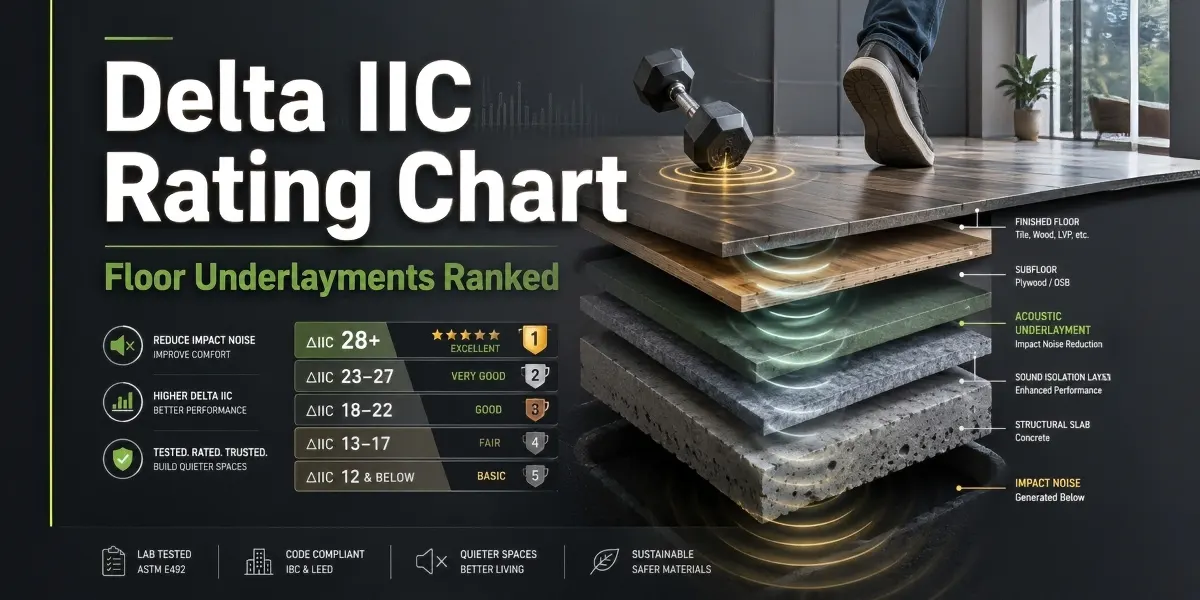
Delta IIC (ΔIIC) ratings for cork, rubber, foam, and engineered underlayments — plus how ΔIIC differs from a full IIC assembly rating and why the gap matters.
Ratings & Charts
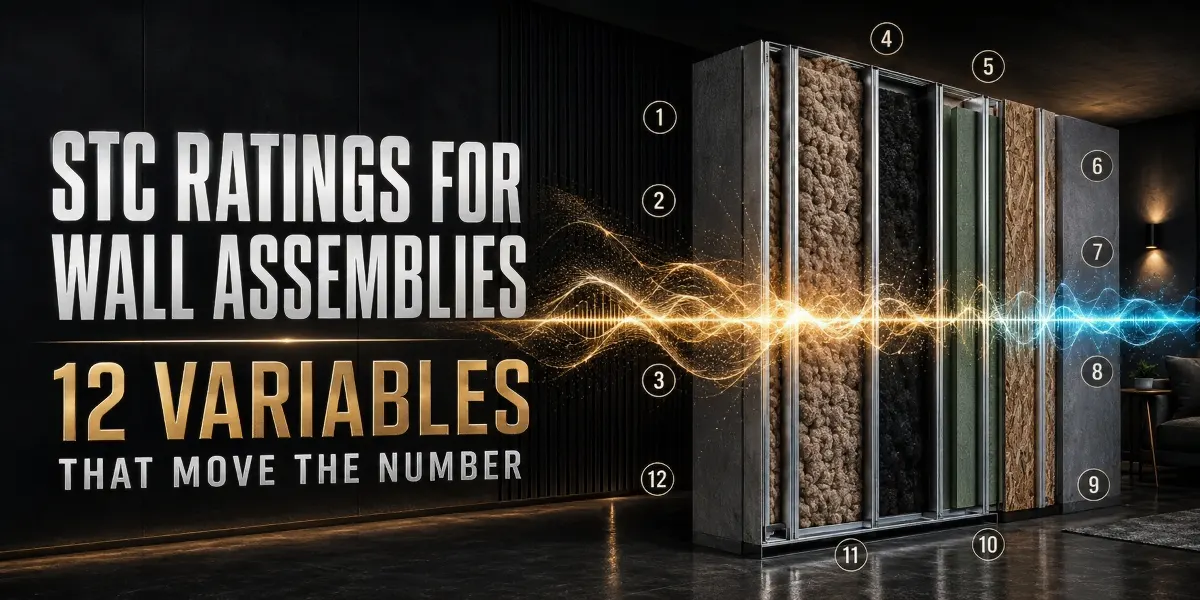
What actually moves a wall’s STC rating — 12 variables ranked by typical point gain, with cross-section diagrams and worked builds for STC 50, 55, and 60, plus field fixes.
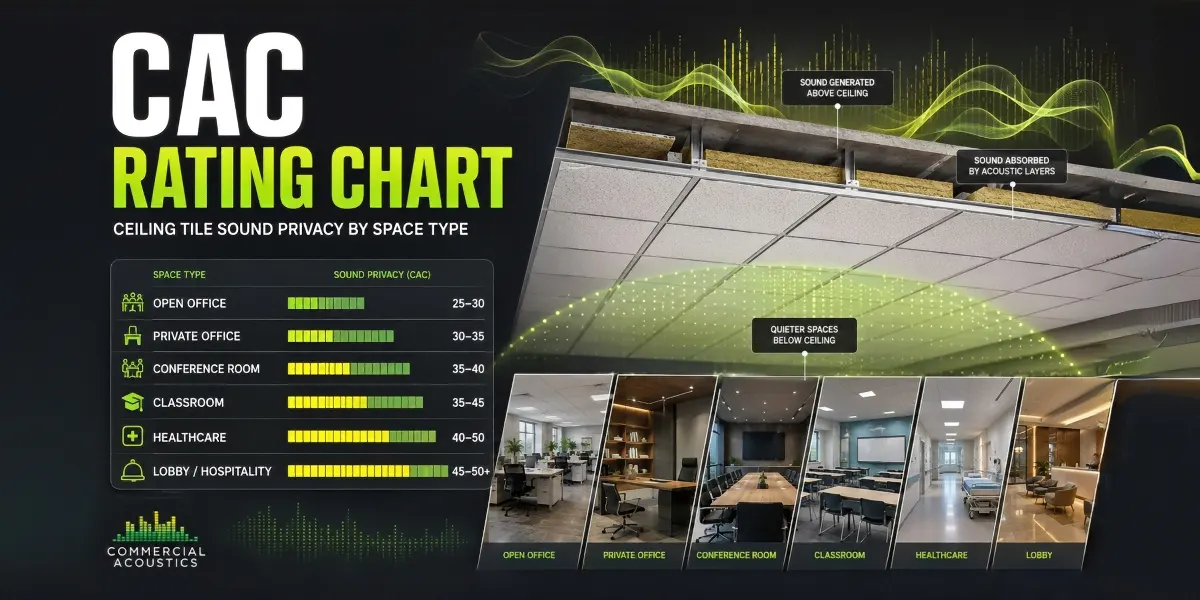
CAC rating chart for ceiling tile sound privacy, showing recommended Ceiling Attenuation Class targets by space type, where CAC matters, and how ceiling tiles affect room-to-room speech transfer.
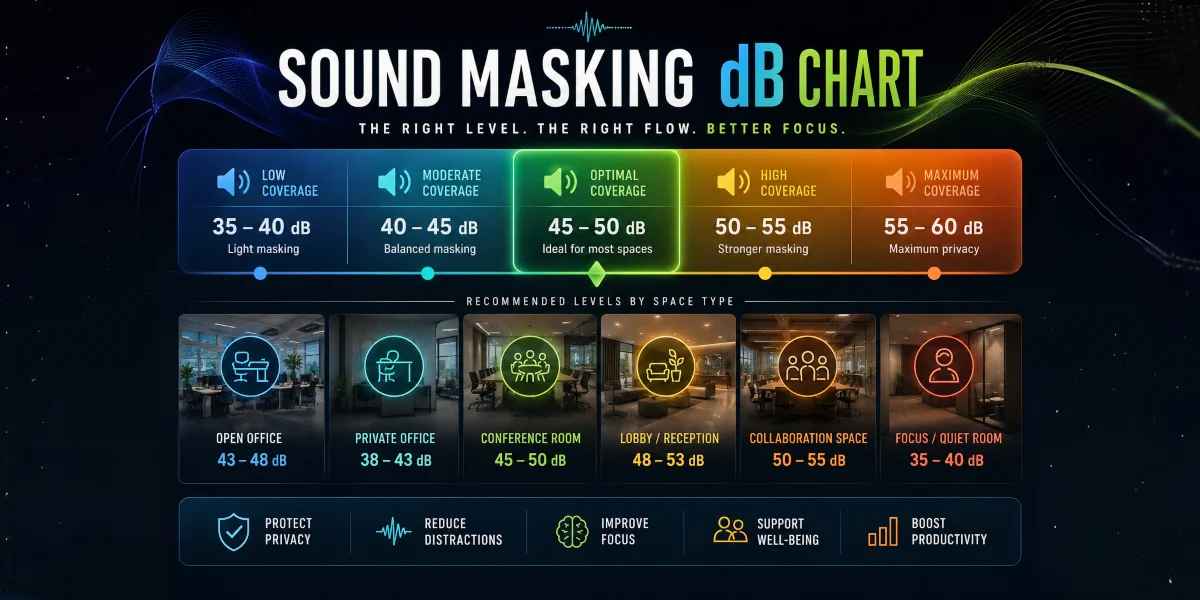
Recommended sound masking dB levels for open offices, private offices, healthcare, hotels, and high-density spaces – plus how to pair masking with STC, CAC, absorption, and speech privacy goals.
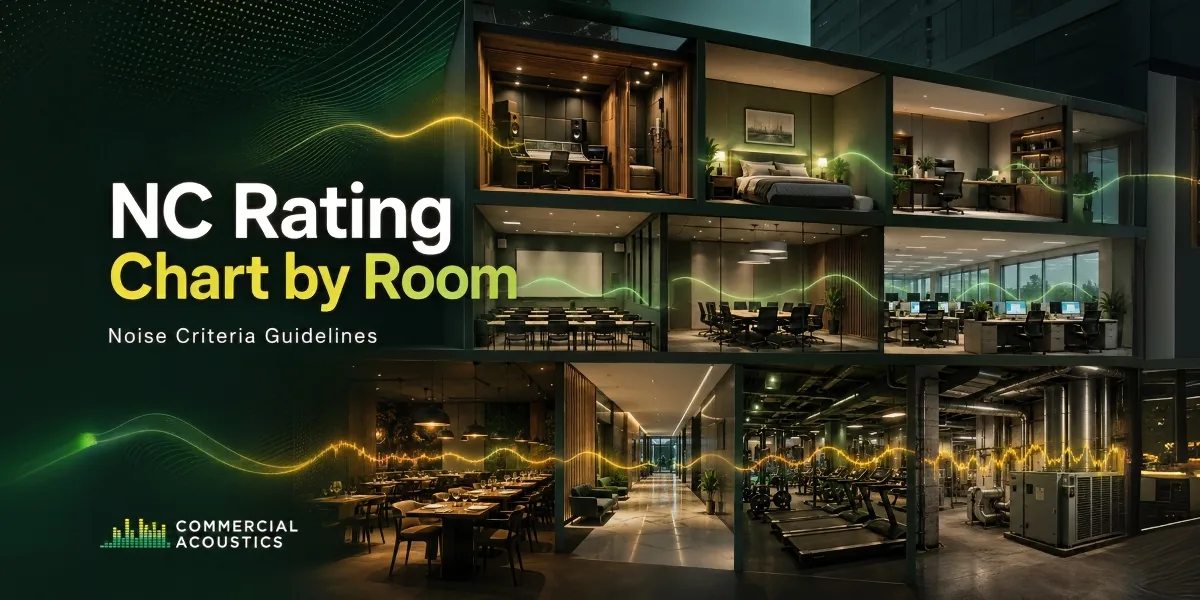
What the NC curves mean, target levels by space type – offices, hospitals, concert halls, classrooms, industrial – and how HVAC equipment and duct silencers drive whether a room actually hits its number.
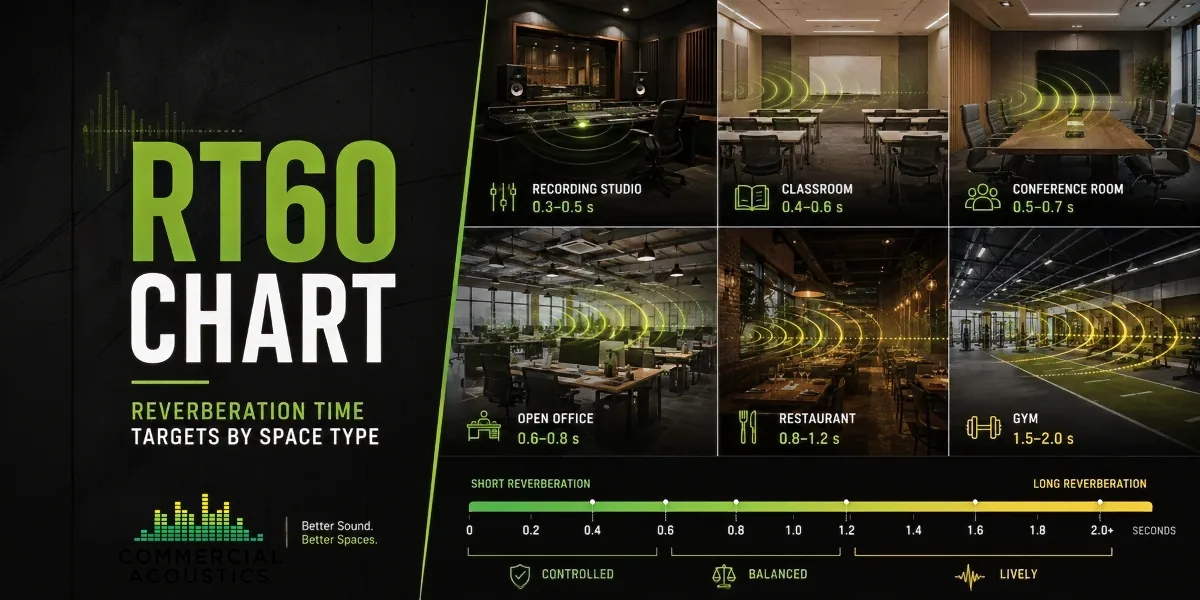
How long a room “rings” after sound stops – RT60 targets from 0.2-second recording booths to 3-second cathedrals, the Sabine formula behind them, and treatment strategies for each frequency band and room use.
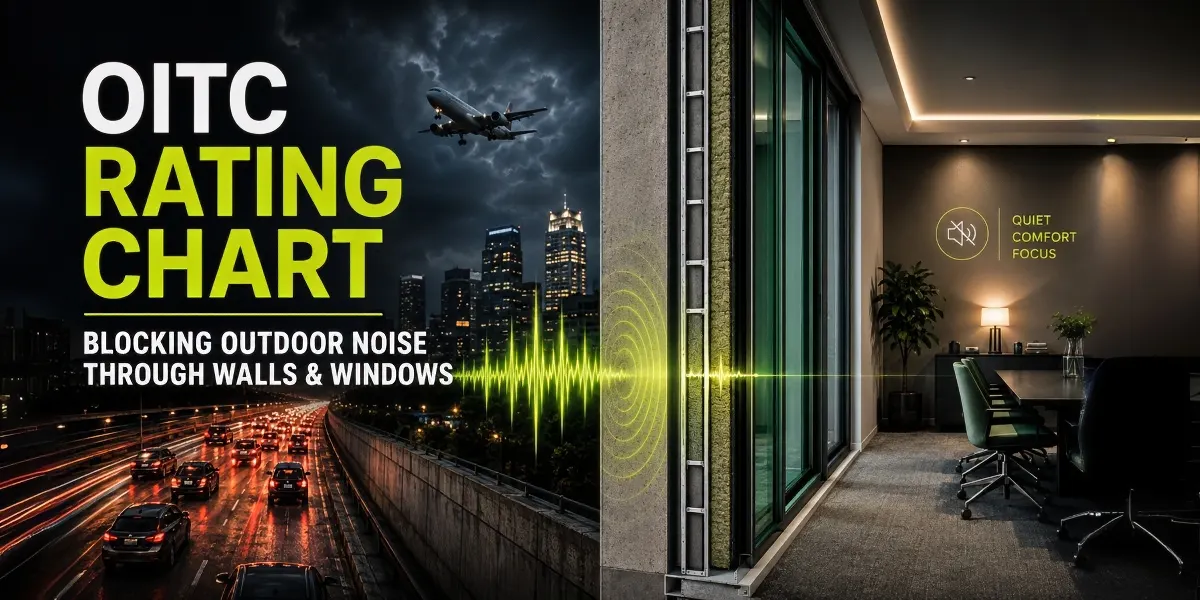
OITC measures how well exterior walls and windows block outdoor noise – traffic, aircraft, trains. A full reference: typical assembly ratings, recommended targets by site, and why OITC numbers run 5-10 points below STC.
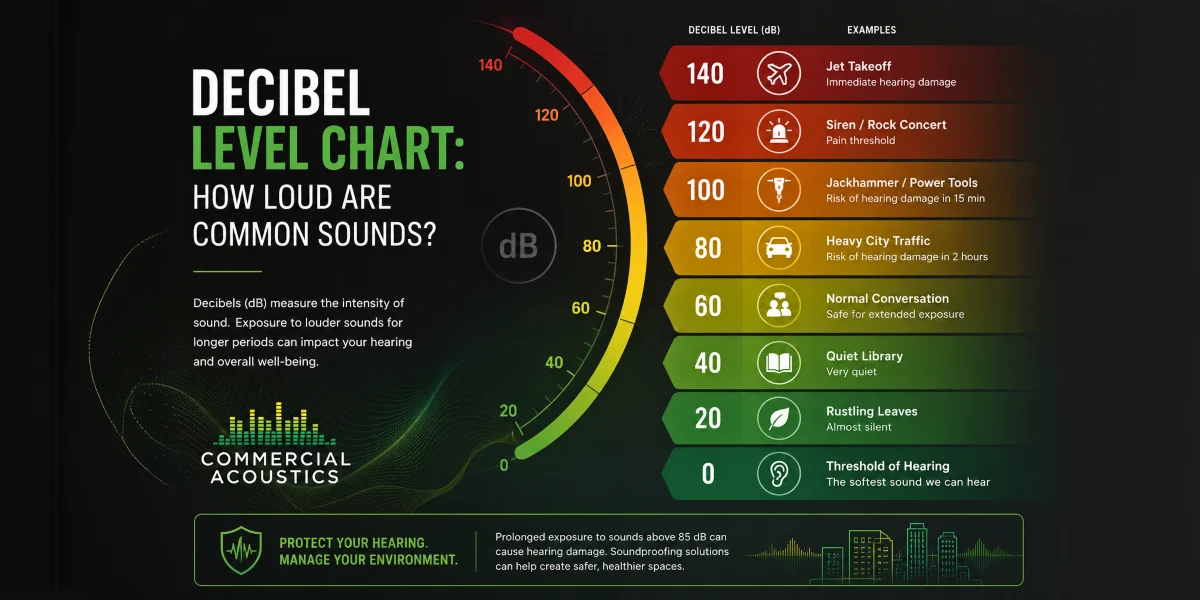
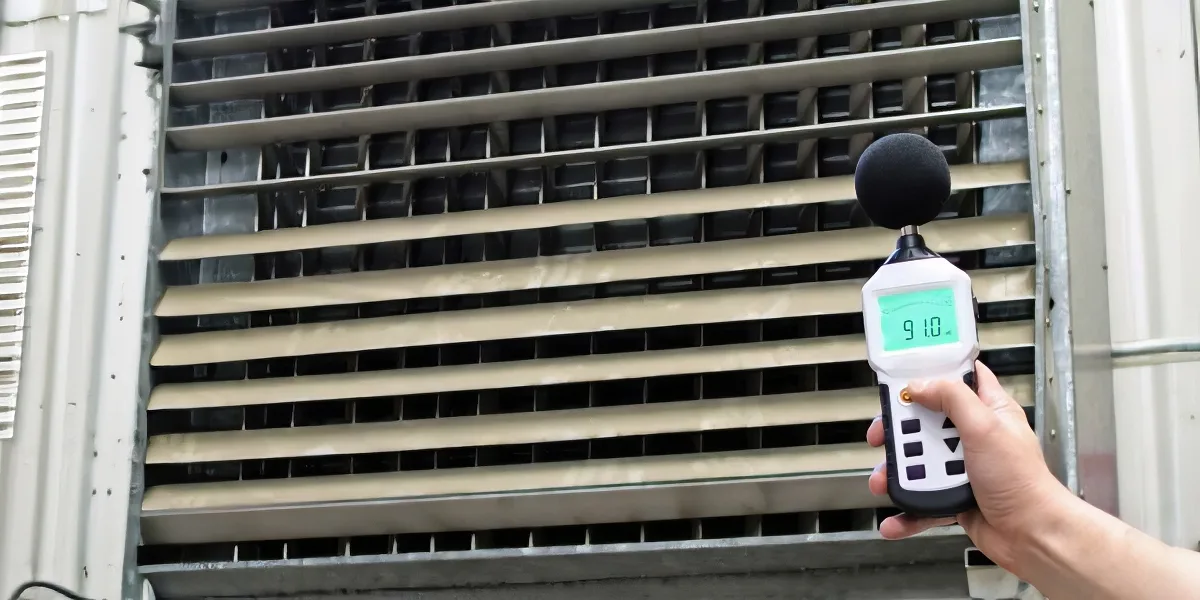
Decibel levels for everyday sounds – from a whisper (30 dB) to a jet engine (140 dB) – plus OSHA safe exposure limits, hearing damage thresholds, and acoustic design context.
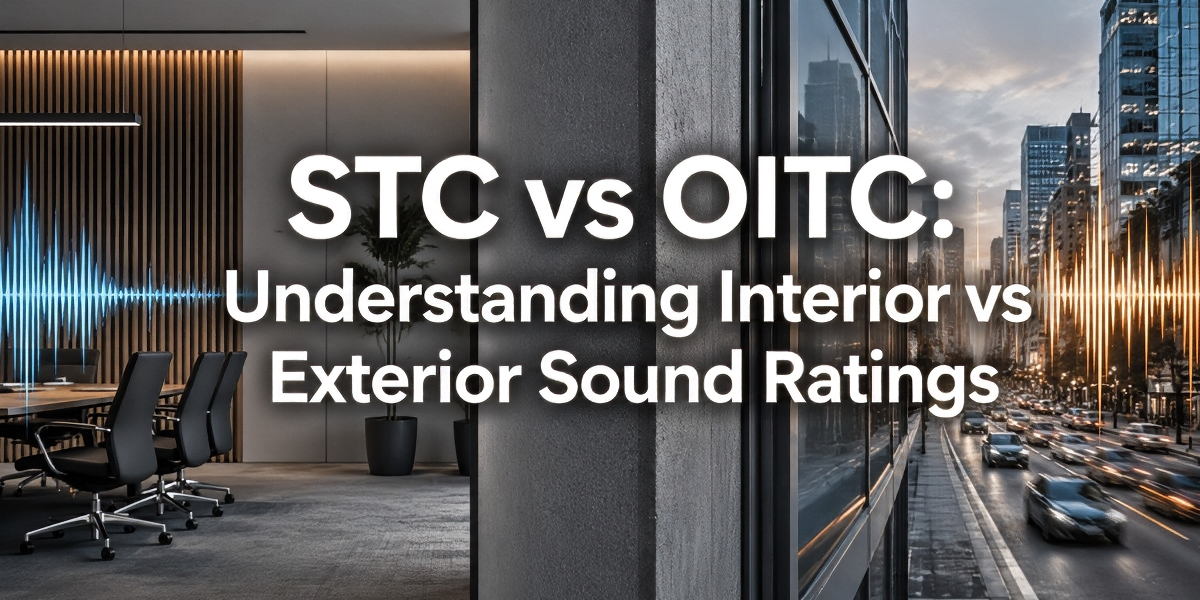
STC rates indoor speech and TV; OITC rates outdoor traffic, trains, and aircraft. Why OITC is always lower on the same assembly, where each rating belongs, and the spec mistake behind most low-frequency complaints.
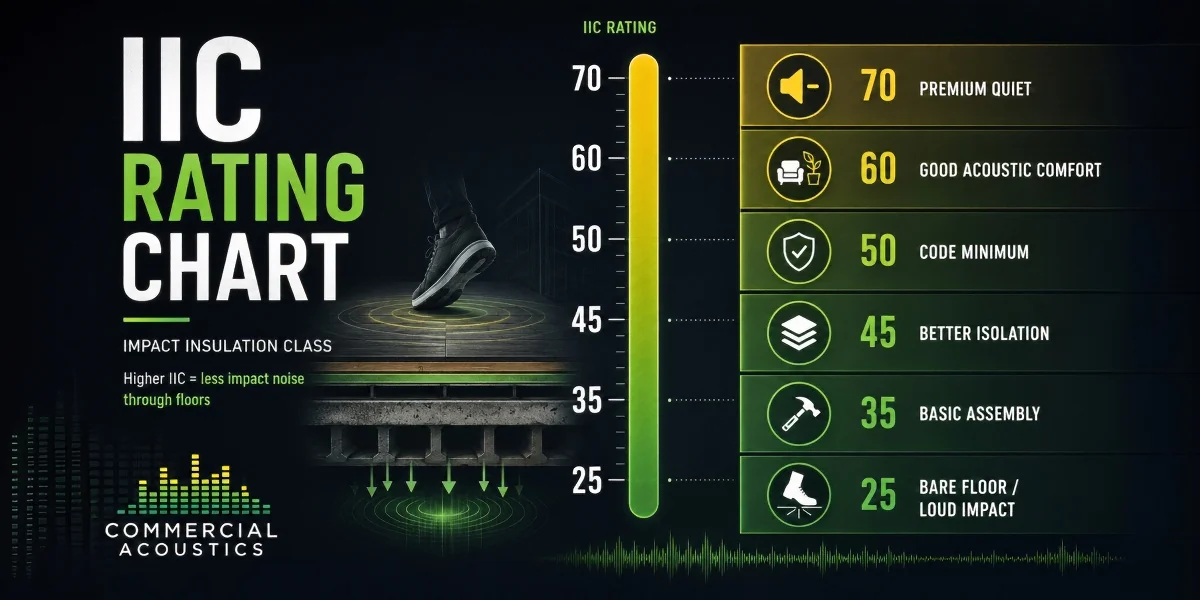
Impact noise from footsteps, dropped objects, and dragged chairs – what IIC measures, the IBC minimums for multifamily, typical floor-ceiling assembly ratings from bare concrete to fully decoupled studios, and the lab-to-field penalty most specs miss.
The alpha values behind every absorption calculation – octave-band coefficients for common floor, wall, and ceiling materials from 125 Hz to 4 kHz, with notes on which numbers to trust and how to use them.
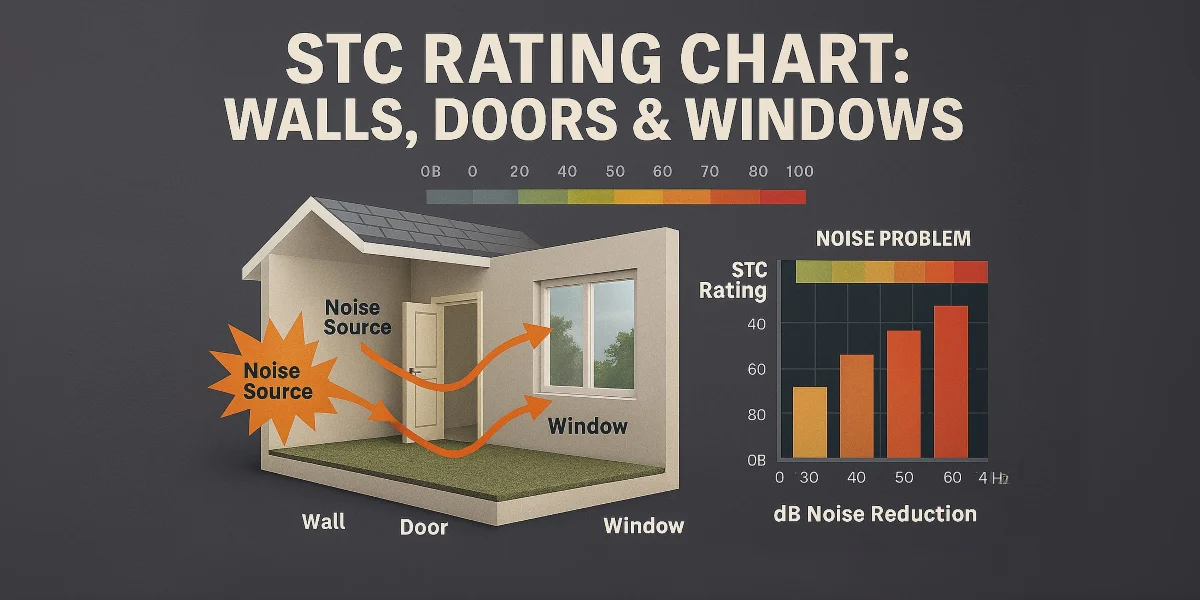
What STC ratings really mean across walls, doors, and windows, the assemblies that hit common targets (STC 35 to 60+), code minimums by building type, and the lab-to-field penalty that catches projects off guard.
Designing to NC targets — the HVAC and mechanical sources driving background levels, composite noise math, exterior propagation, structure-borne control, and the products that hit the curves consultants spec.
What it takes to hit STC 50 in modular wall construction — code requirements, assembly options, field-verification realities, and the design tactics that keep modular projects code-compliant without overspending.
Wall assemblies that hit STC 50 and above — staggered studs, double-stud, resilient channel, mass-loaded vinyl, and the field-verification steps that confirm a wall built to spec actually performs to spec.
- 1
- 2