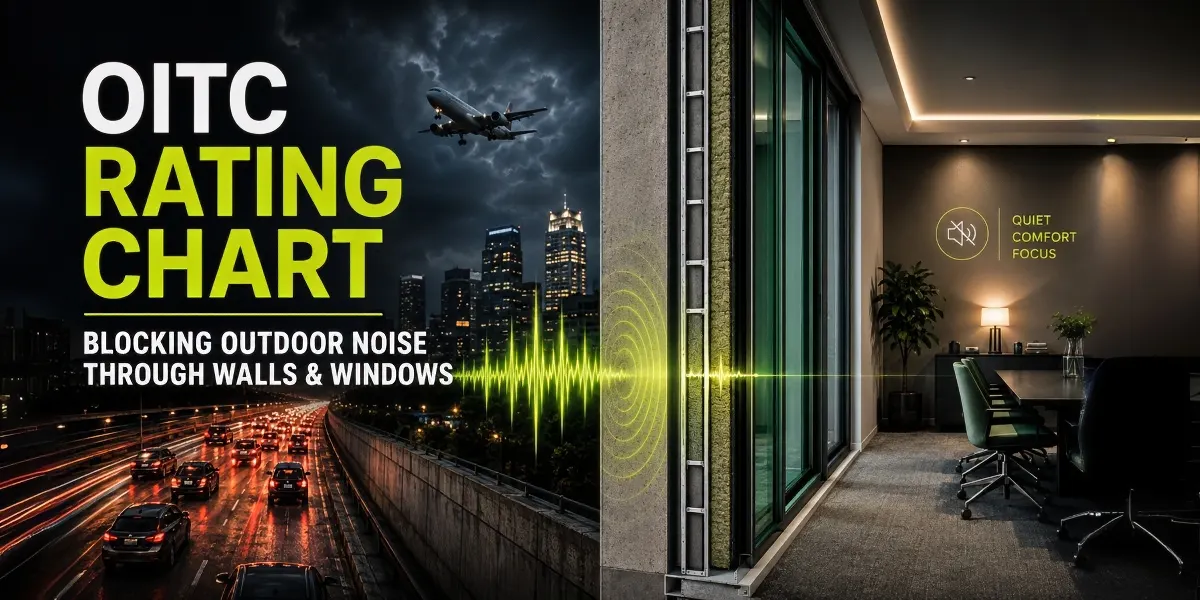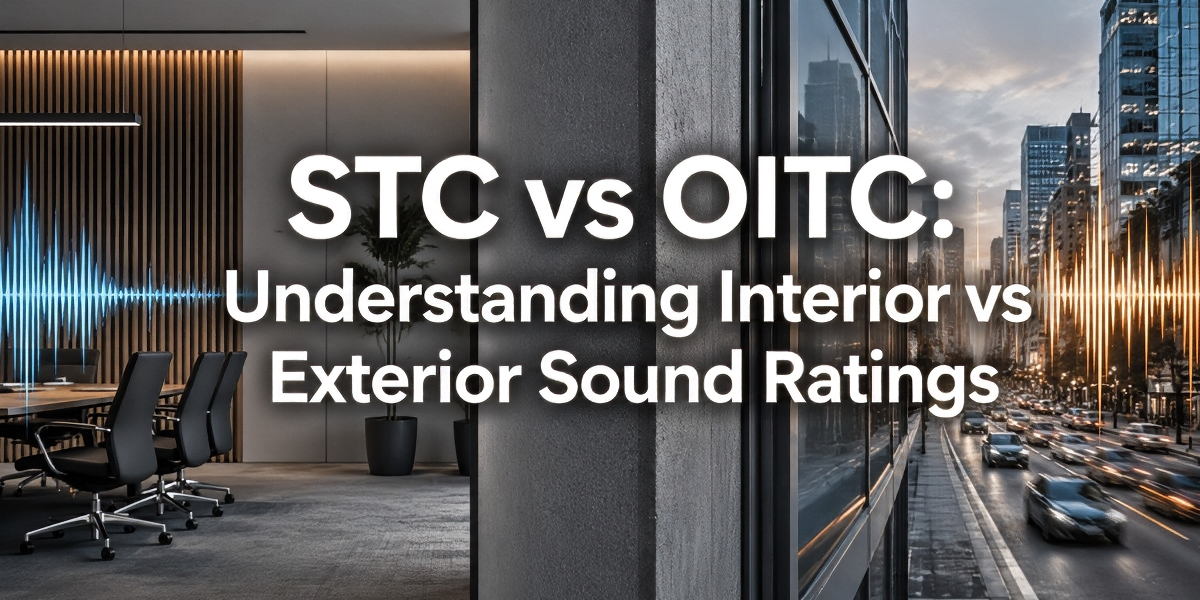
Why windows are the weak link in nearly every building envelope — what laminated glass and proper IGU spec actually buy you, how STC and OITC differ here, and the realistic upgrades by site type.
Sound Advice
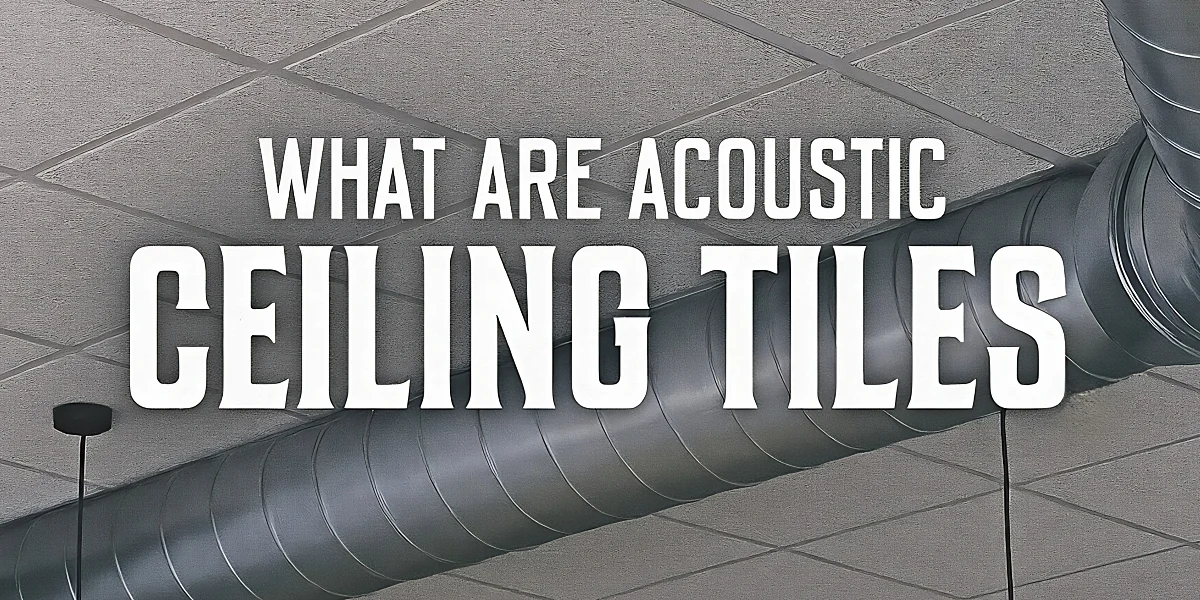
The materials that actually absorb sound — fiberglass, mineral wool, PET felt, foam, fabric-wrapped panels — with NRC values, where each works, and the cost/performance tradeoffs that decide what you specify.
What STC ratings really mean across walls, doors, and windows, the assemblies that hit common targets (STC 35 to 60+), code minimums by building type, and the lab-to-field penalty that catches projects off guard.
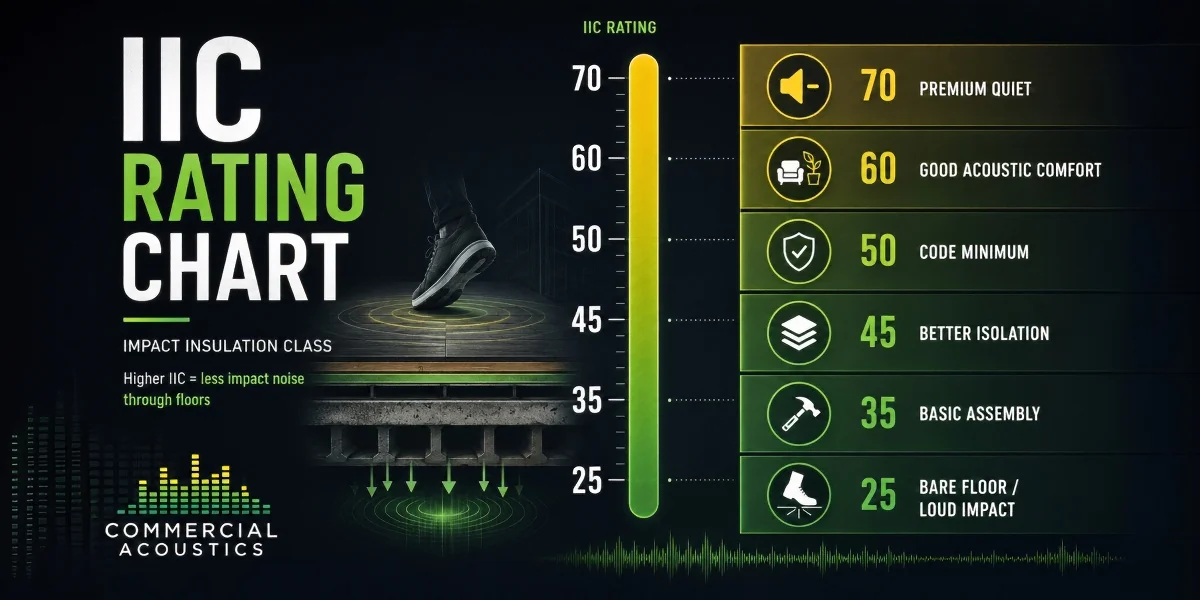
The ten spec details where soundproofing actually lives or dies — wall STC, IIC, door seals, glazing, top-of-wall, penetrations, HVAC silencers, equipment isolation, plumbing risers, and the plenum flanking paths most specs miss.
How to soundproof an apartment when you can’t tear into walls — the upgrades that actually move the dB needle (doors, sealing, mass-loaded coverings, smart panel placement) versus the foam-panel fixes that don’t.
What the “WC” callout on a drawing set actually means — how stretched fabric walls and acoustic wall coverings differ in construction, performance, finish, and budget, and which one belongs on each project.
The metal that makes stretched fabric walls work — track profile types, how each handles outlets and penetrations, edge and corner conditions, and where prefabricated panels make more sense than site-built systems.
Vibration doesn’t fade like airborne sound — how it propagates through structure, why steel and concrete carry it so far, and the design moves that stop equipment and footfall noise before they ring through a building.
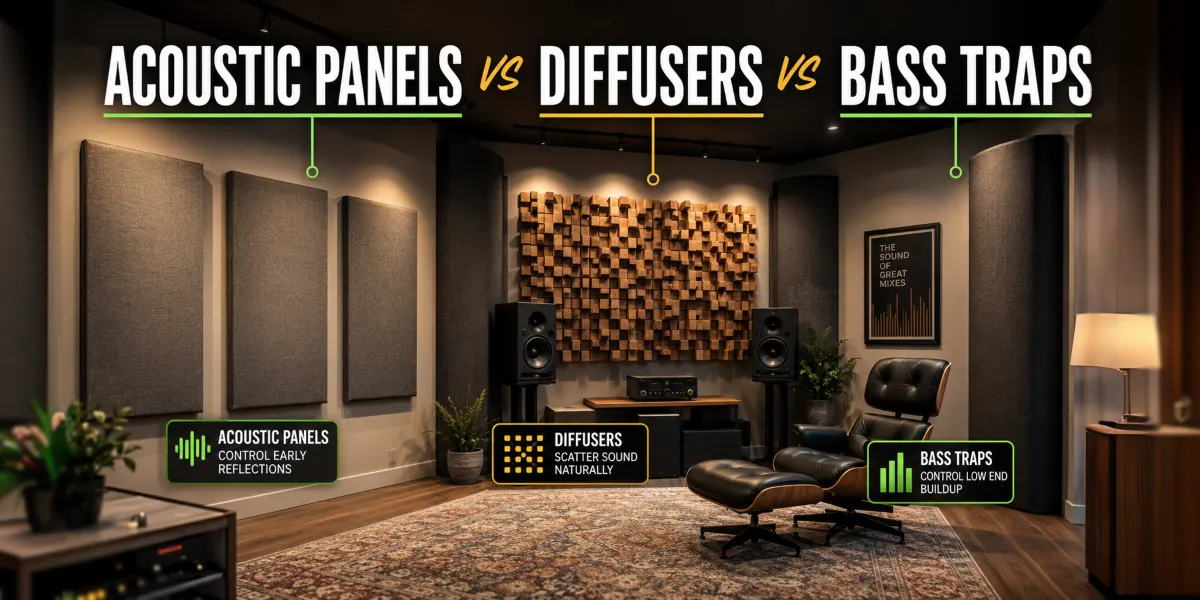
When diffusion solves what absorption can’t — how diffusers scatter reflections, where they belong (and don’t), and how they compare to acoustic panels and bass traps in real-world rooms.
Ten field mistakes that quietly kill acoustic performance — resilient-channel misuse, hat-channel substitution, UL fire ratings mistaken for STC, heavier studs assumed to help, flanking ignored, and the marketing claims to discount.
The design choices that make or break a masking system — speaker spacing, plenum versus direct-field, zoning, tuning targets, and the layout math behind even coverage in private and open offices.
How to clean acoustic panels without ruining them — which fabrics are washable, stain-prevention strategies, color-fastness considerations, and the maintenance routines that protect both performance and appearance.
Attorney-client privilege depends on speech privacy — how sound masking protects confidential conversations in closed offices, where masking outperforms absorption alone, and how to design coverage for legal settings.
The construction details that decide whether high-spec walls actually perform in the field — penetrations, structure-borne paths, HVAC connections, and the oversight that catches them before they become complaints.
Mass and decoupling don’t matter if sound finds another way around — how flanking paths and on-site workmanship determine whether designed STC ratings hold up in the built room.