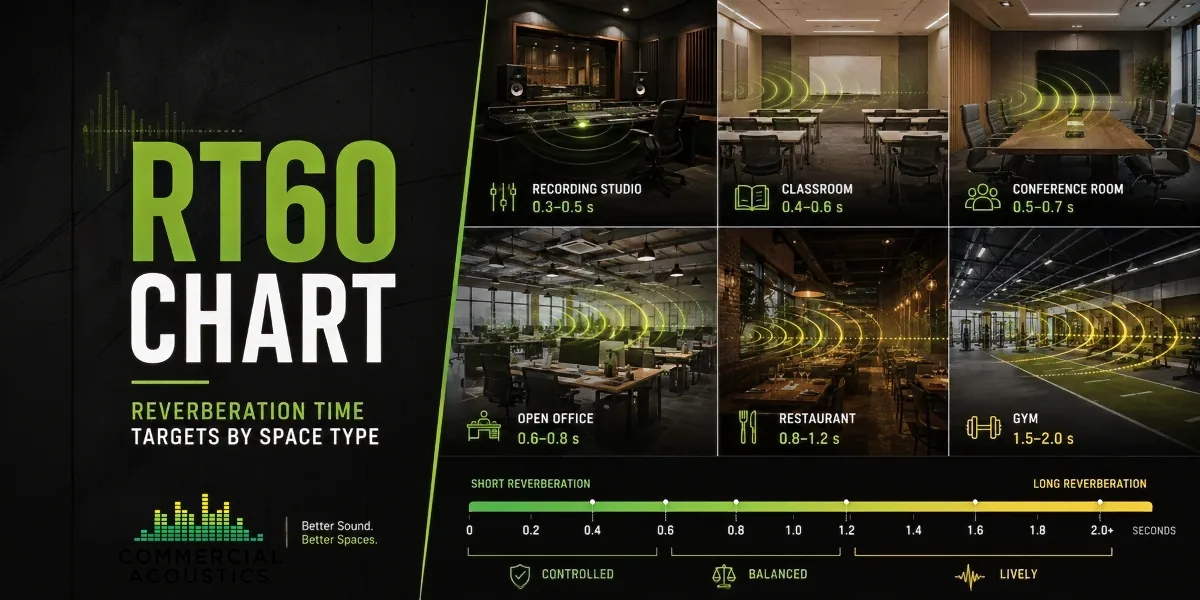
What Is RT60? RT60 (reverberation time) is the number of seconds it takes for sound to decay by 60 dB after the source stops — effectively, how long a room “rings.” A recording studio measures around 0.3 seconds. A cathedral can stretch past 3.0 seconds. Hitting the right RT60 target is the single biggest lever […]
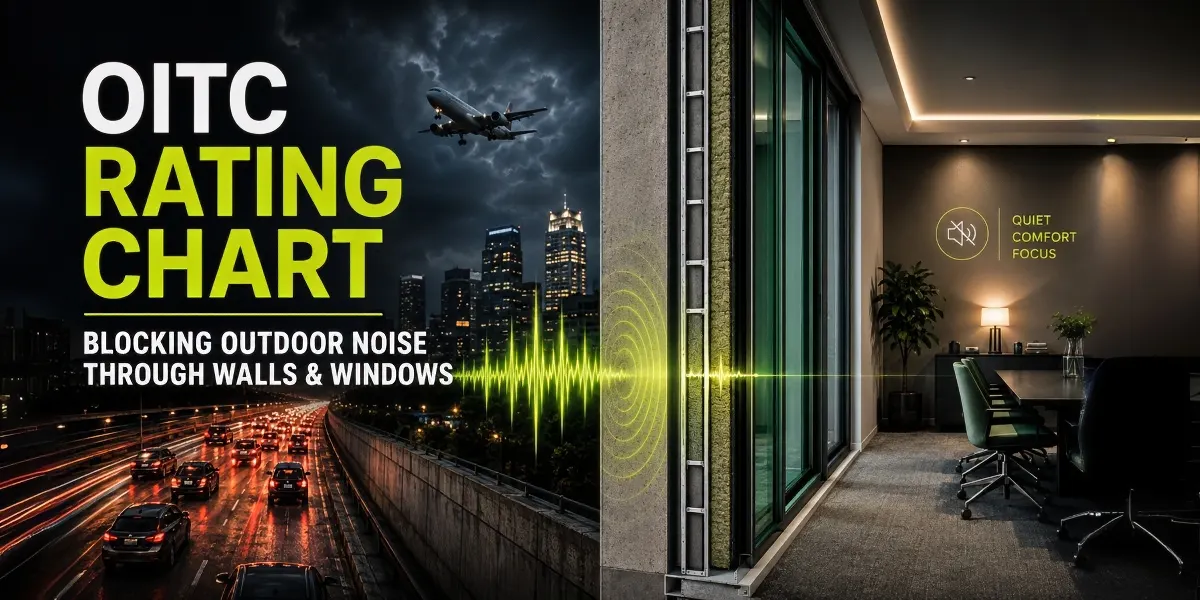
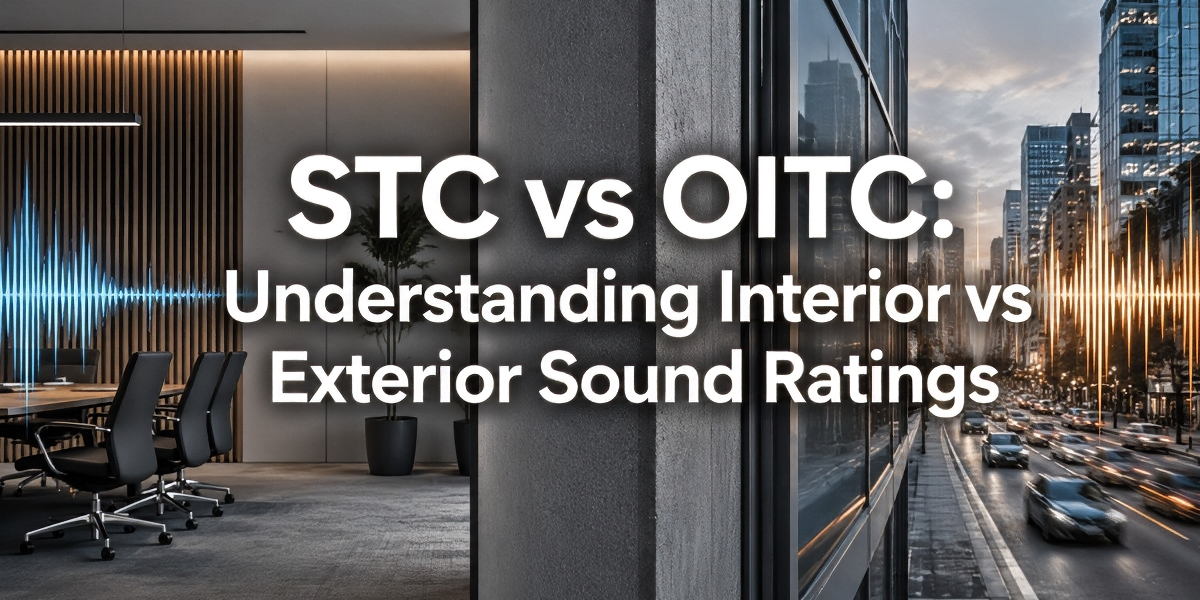
What Is an OITC Rating? OITC (Outdoor-Indoor Transmission Class) measures how well an exterior wall, window, or door blocks outdoor noise from entering a building. Unlike STC, which uses a speech-weighted spectrum to evaluate interior partitions, OITC uses a reference noise spectrum dominated by low-frequency content — traffic rumble, aircraft, trains — exactly what you […]
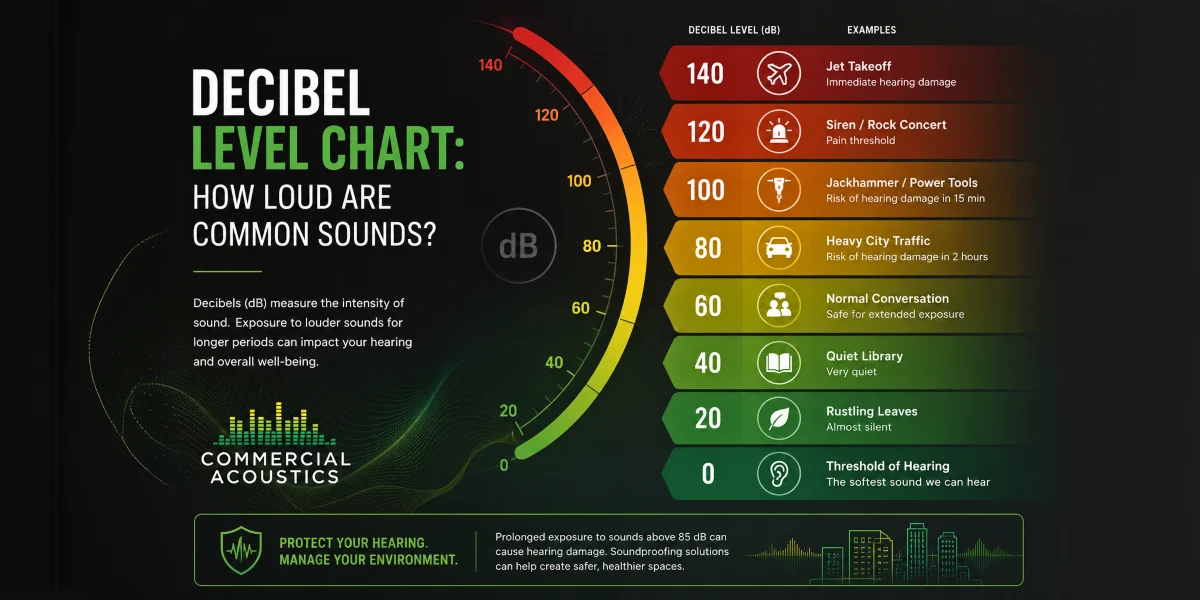
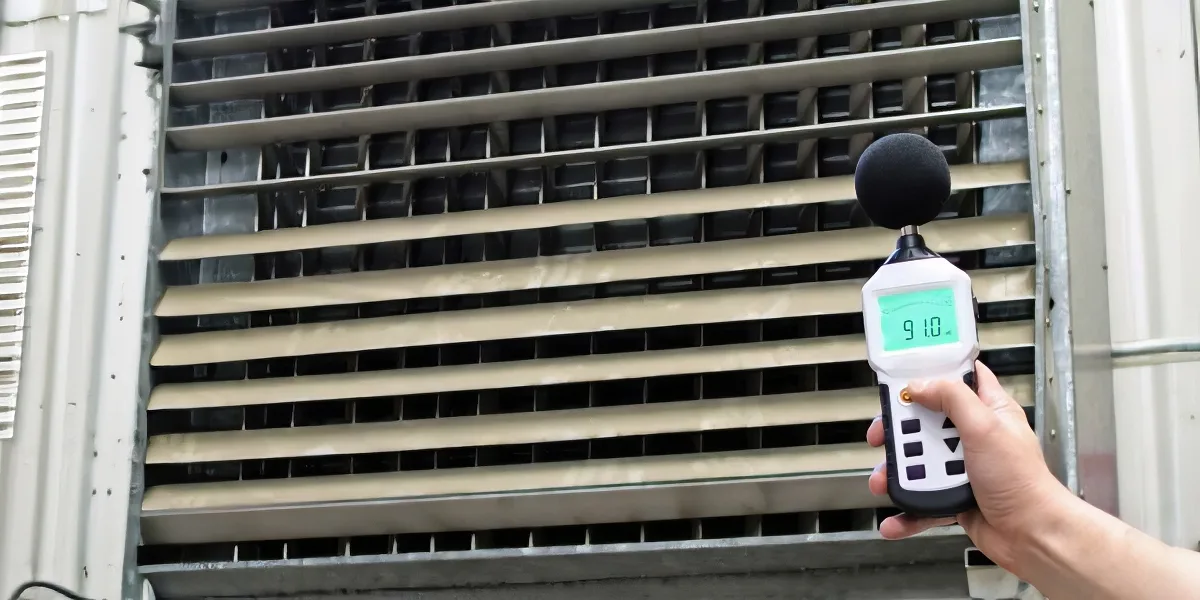
Decibel levels for everyday sounds — from a whisper (30 dB) to a jet engine (140 dB) — plus OSHA safe exposure limits and hearing damage thresholds.
Quick Overview Why STC and OITC Matter in Building Acoustics STC and OITC are two of the most commonly misunderstood sound ratings in architectural specs. STC (Sound Transmission Class) measures indoor airborne noise like speech and TV. OITC (Outdoor-Indoor Transmission Class) measures exterior environmental noise like traffic, rail, and aircraft. When the wrong rating is […]
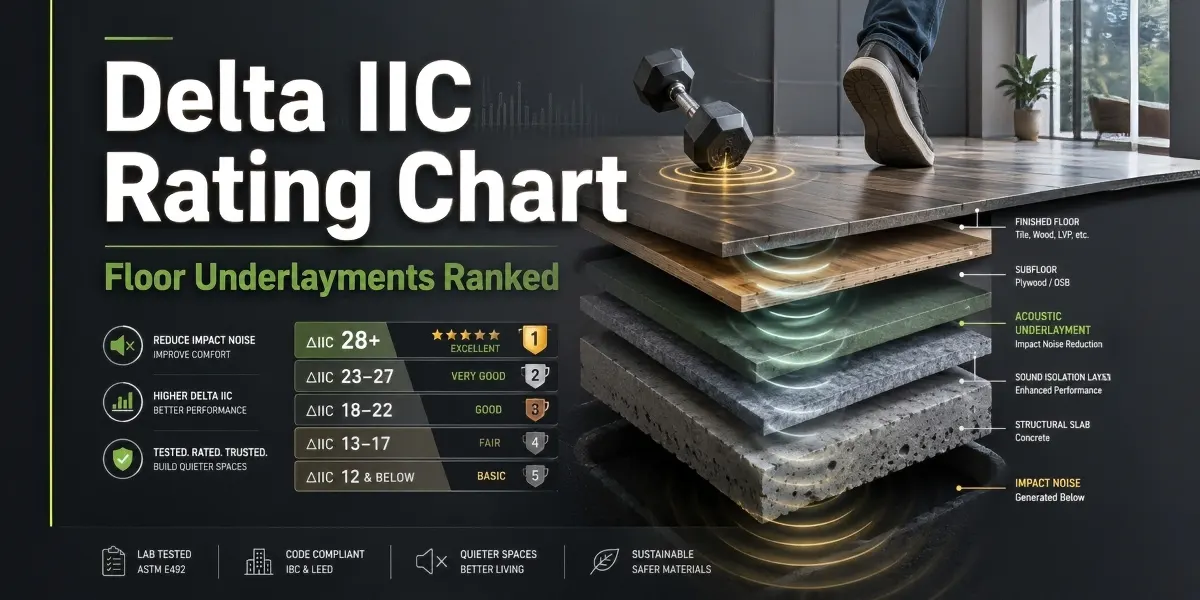
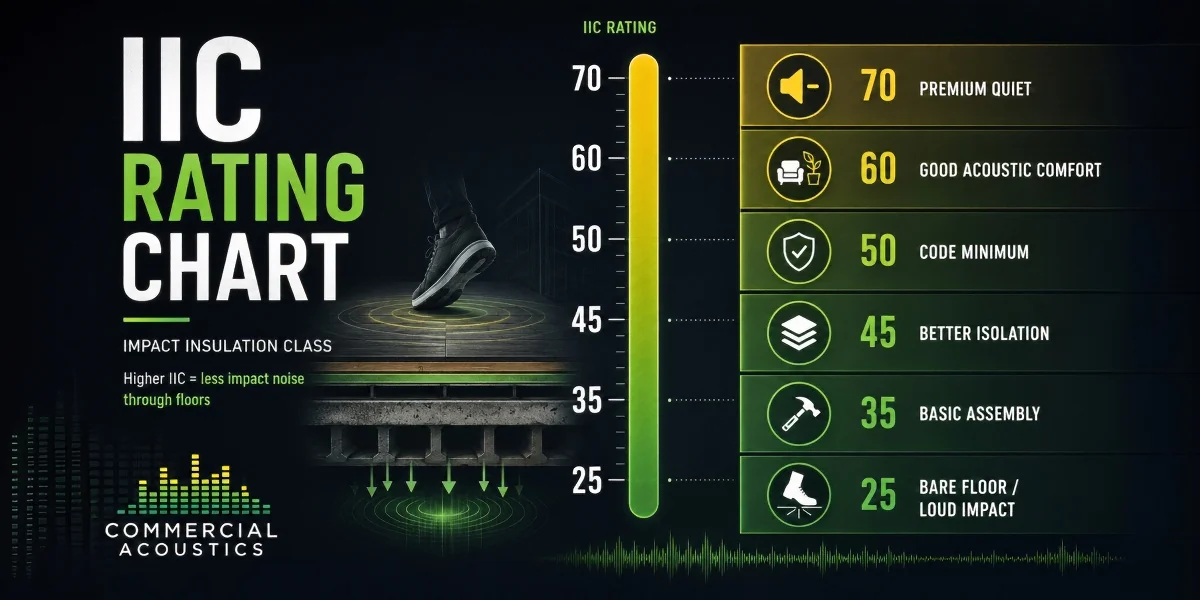
What Is an IIC Rating? An Impact Insulation Class (IIC) rating measures how well a floor-ceiling assembly blocks impact noise — footsteps, dropped objects, dragged chairs, dog claws — from passing into the space below. While STC ratings measure airborne sound transmission, IIC measures structure-borne impact. They are independent: a wall or floor can pass […]
Absorption Coefficients of Common Building Materials The sound absorption coefficient (α) measures how much sound energy a surface absorbs at specific frequencies. Values range from 0.00 (highly reflective) to 1.00 (highly absorptive). The data below helps you compare common materials and finishes across octave bands. Use these values when selecting finishes, estimating reverberation times, or […]
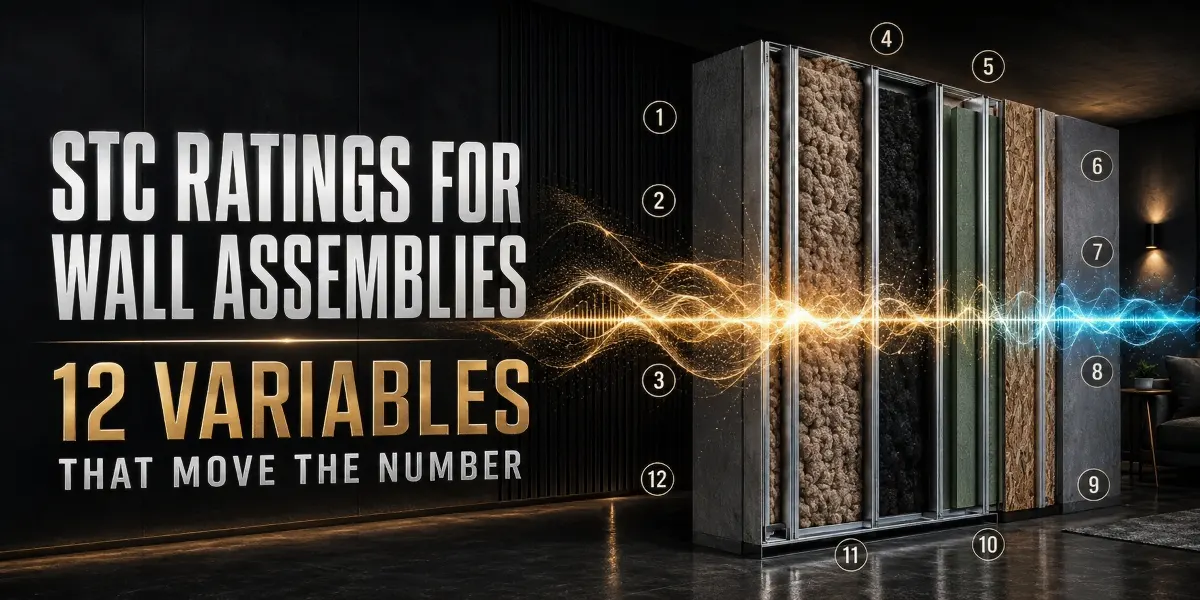
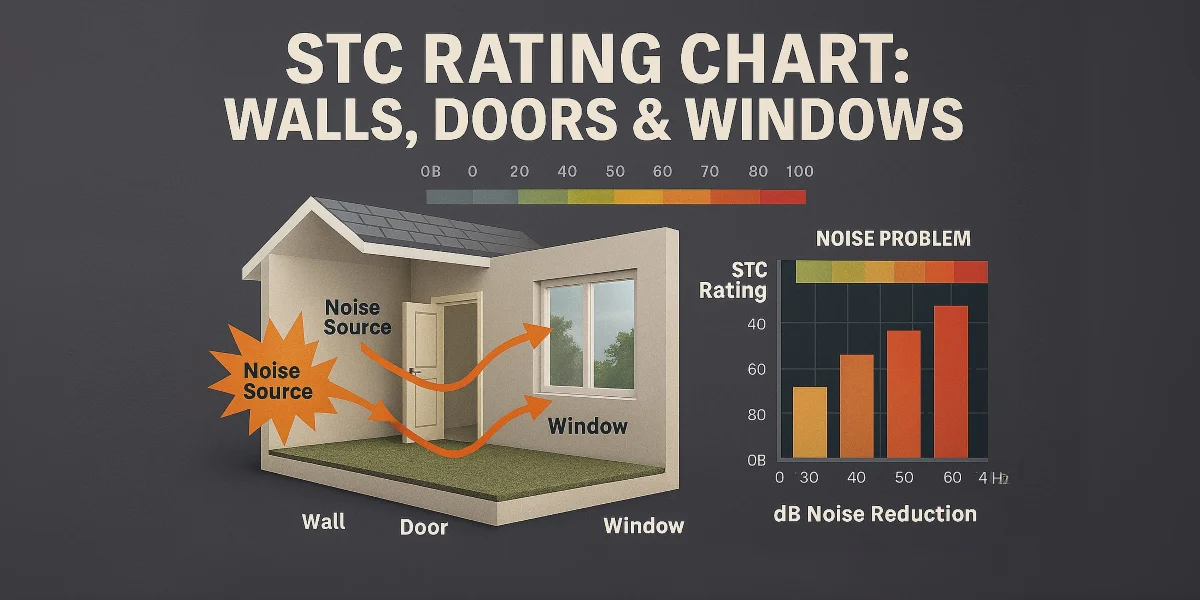
What Is an STC Rating? STC ratings help architects and engineers evaluate how effectively walls and partitions reduce noise transfer. Use the chart below to identify assemblies that meet specific performance goals for privacy, comfort, or code compliance in multi-family, hospitality, and office projects. STC Rating Chart – Typical Assemblies STC 25–35 Low Privacy Speech […]
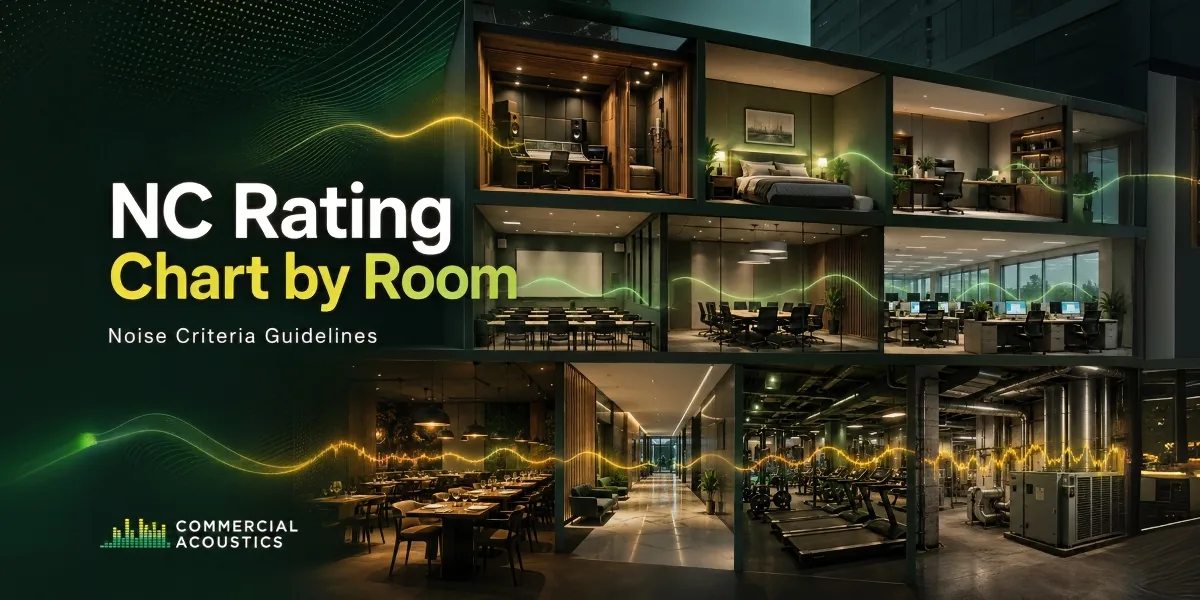
Understanding Noise Criteria (NC) Noise Criteria, or NC, refers to the background noise level caused by HVAC systems, air movement, and other mechanical sources within a space. These levels are a key part of acoustic design — too high, and speech clarity or listening comfort suffers; too low, and spaces can feel unnaturally quiet, revealing […]
Why STC 50 Matters in Wall Construction STC 50 is the industry benchmark for acoustic privacy in multi-family, hospitality, and mixed-use projects. Meeting this rating ensures compliance and long-term occupant comfort. While it’s the code minimum, many developments aim for STC 55 or higher to provide superior acoustic separation and tenant satisfaction. Proper STC 50 […]
Why STC 50 Matters in Modern Construction Every building has a sound story—how noise moves, echoes, and fades within its walls. For architects and contractors, controlling that story means understanding how to meet and exceed STC 50, the benchmark for acoustic comfort and code compliance. Hitting this target ensures walls not only meet regulatory standards […]
- 1
- 2