
Table of Contents
Absorption Coefficients of Common Building Materials
The sound absorption coefficient (α) measures how much sound energy a surface absorbs at specific frequencies. Values range from 0.00 (highly reflective) to 1.00 (highly absorptive). The data below helps you compare common materials and finishes across octave bands. Use these values when selecting finishes, estimating reverberation times, or modeling sound absorption for your project. For more on reverberation control, see our guide on RT60 Rating 101.
How to Use This Chart
- Speech clarity: Focus on higher frequencies (1–4 kHz).
- Low-frequency rumble: Improve absorption at 125–250 Hz.
- Design mix: Combine materials and coverage areas (m²) to hit your target RT60.
Laboratory results vary by mounting and manufacturer, so always confirm values from product data sheets or acoustic testing reports when specifying materials. Proper use of absorption data ensures accurate design and predictable sound control performance.
Floor Materials – Absorption Coefficients (α)
For improved floor absorption and impact isolation, explore our Acoustic Absorption Panels and related soundproofing systems.
Wall Materials – Absorption Coefficients (α)
Adding absorptive wall finishes reduces echo and improves speech intelligibility. The right balance of reflective and absorptive materials creates rooms that sound natural yet controlled.
Ceiling Materials – Absorption Coefficients (α)
Ceiling finishes have a major impact on sound decay and clarity. Acoustic ceilings and sprayed cellulose coatings are highly effective in open offices, classrooms, and performance venues.
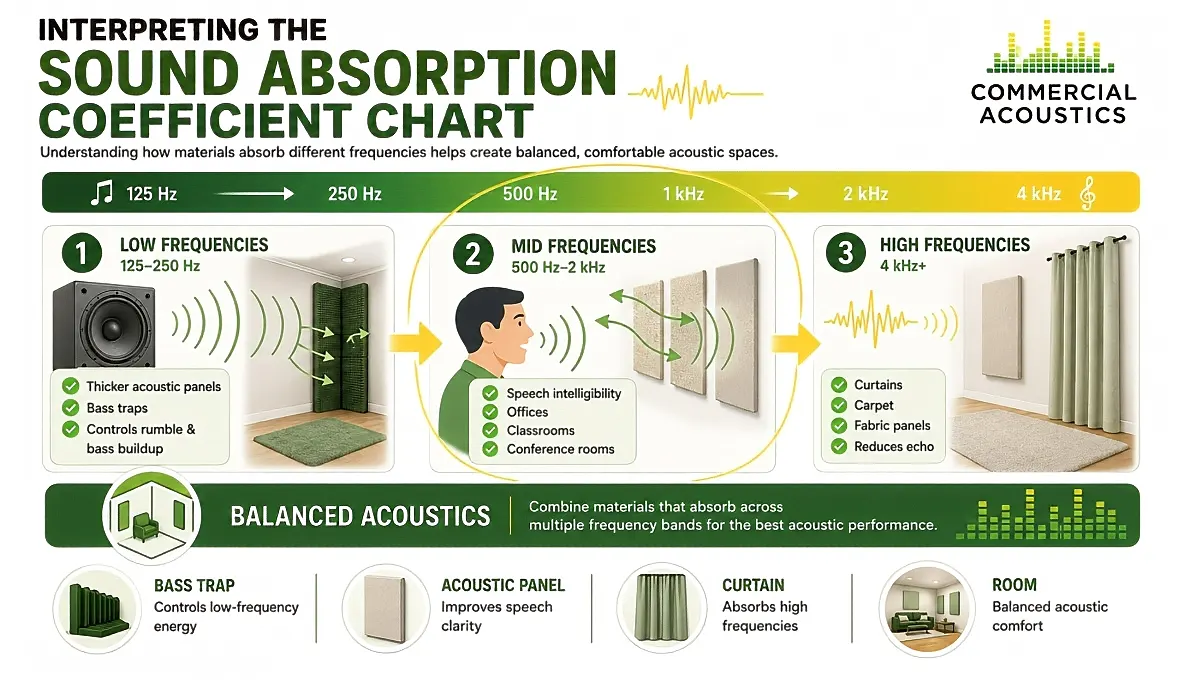
Interpreting the Chart
- Low frequencies (125–250 Hz): Use thicker absorptive panels or bass traps.
- Mid frequencies (500–2 kHz): Critical for speech intelligibility and acoustic comfort.
- High frequencies (4 kHz+): Softer materials and textiles provide the best absorption.
Combining materials that perform well across multiple frequency bands ensures balanced acoustics. To plan treatment coverage and layout, visit our guide on How Much Sound Absorption Do You Need.
Conclusion: Using Absorption Data in Real Projects
The sound absorption coefficient chart serves as a reference point for material selection and design planning. Pairing accurate absorption data with room modeling helps ensure acoustic goals are met before construction. Commercial Acoustics helps architects, builders, and consultants select tested materials, model room acoustics, and achieve measurable improvements in speech privacy and sound control.
FAQs: Sound Absorption Coefficient Chart
What does an absorption coefficient of 1.0 mean?
It represents perfect absorption—100% of sound energy is absorbed and none is reflected. In practice, real materials rarely reach 1.0 except in specialized lab conditions.
How is the absorption coefficient measured?
It’s measured using reverberation chamber testing, comparing sound decay rates with and without a test sample to calculate energy absorbed at each frequency.
What is the difference between NRC and absorption coefficient?
The NRC is an average absorption value across 250–2000 Hz, while absorption coefficients provide detailed data for each frequency band. NRC gives a quick summary; coefficients give precision.
Which materials absorb sound best?
Porous materials like fiberglass, mineral wool, acoustic foam, and heavy drapery absorb sound efficiently. Thicker materials and air gaps behind surfaces enhance low-frequency absorption.
Can Commercial Acoustics help select the right materials?
Yes. Our team offers design consulting, product recommendations, and field testing to ensure every surface meets your acoustic performance goals across all frequencies.

Walker Peek|Founder & CEO, Commercial Acoustics
Walker founded Commercial Acoustics in 2013 to bring aerospace-grade engineering discipline to soundproofing, and runs the firm as CEO from its 12,000 sq ft Tampa production facility. The company designs custom acoustic panels, sound membranes, and masking systems for multi-family, hospitality, healthcare, and commercial projects across the US — built around Walker’s invention, Wall Blokker, an EVA-based sound barrier that hits STC 50-plus at roughly $1 per square foot installed.
A Jacksonville native, Walker spent five years at Kennedy Space Center with Craig Technologies before founding Commercial Acoustics — certifying aerospace manufacturing to the AS9100 standard and leading Six Sigma Black Belt process-improvement teams on NASA programs. He is a certified Industrial Noise Control Engineer and the author of Architectural Acoustics: A Practical Handbook.
