
Table of Contents
Project Overview: Acoustical Testing in a Corporate Office
- Project: ASTM E336 Field ASTC Testing Across 10 Office Partitions
- Location: Washington, DC (corporate office buildout)
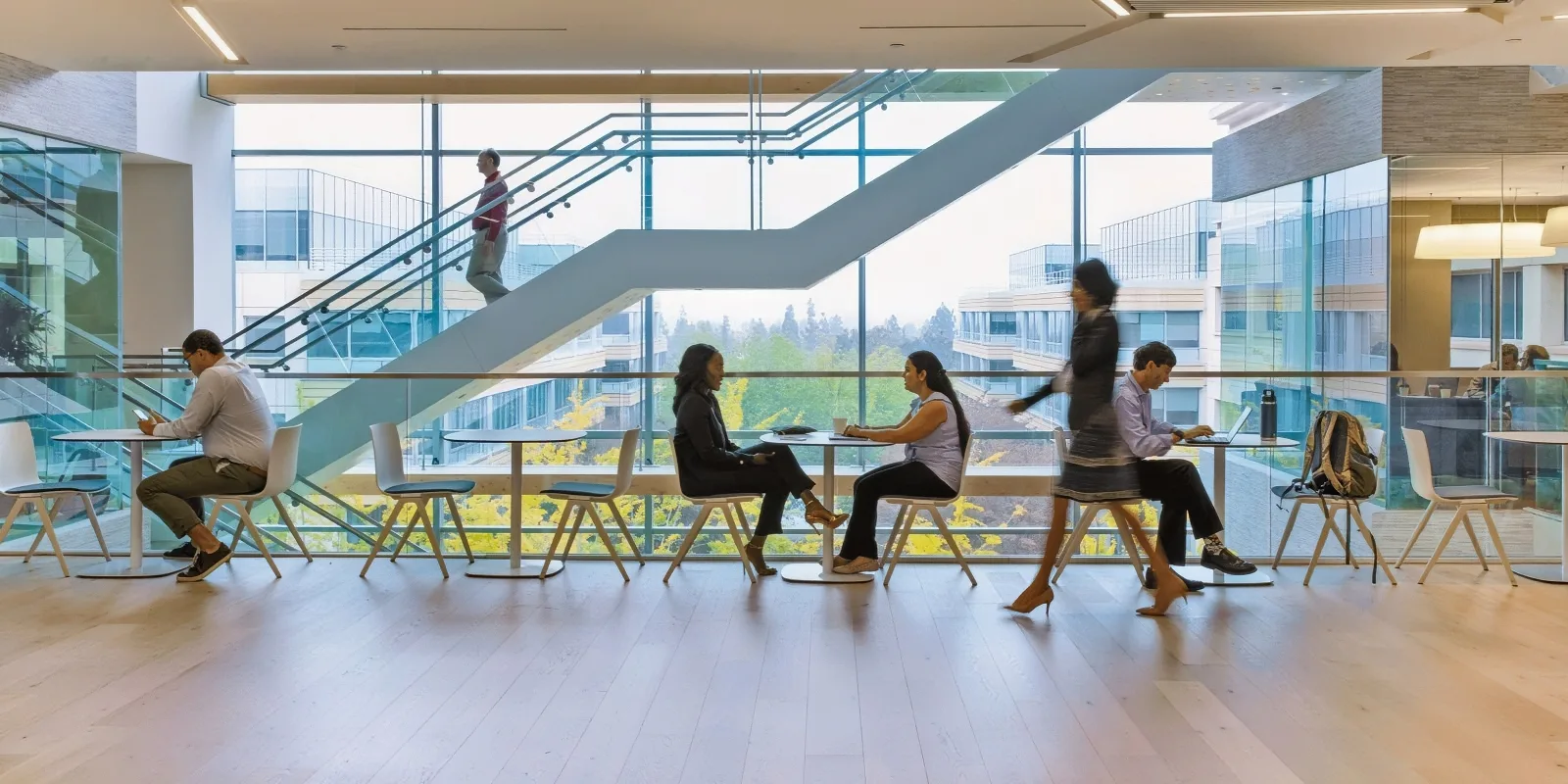
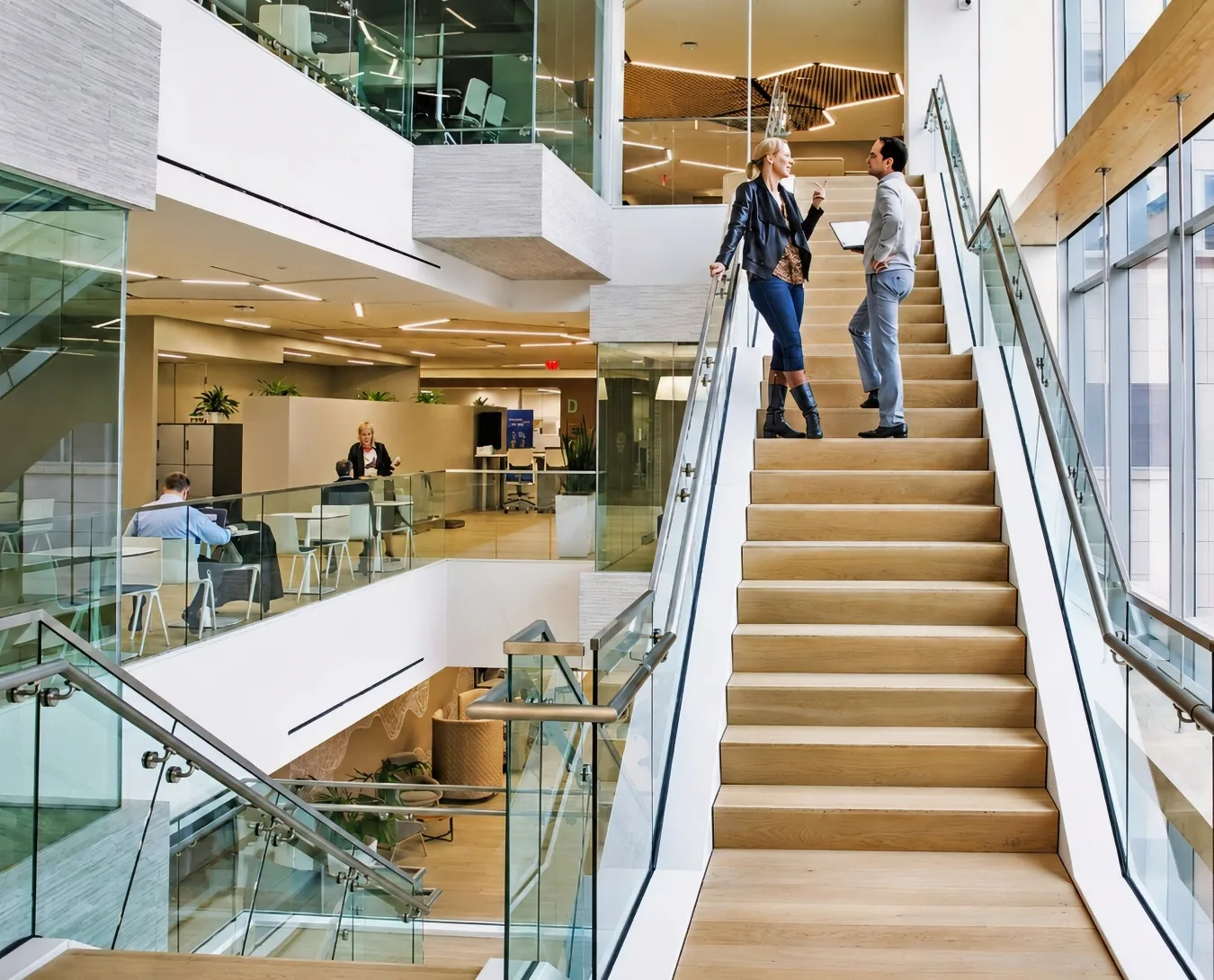
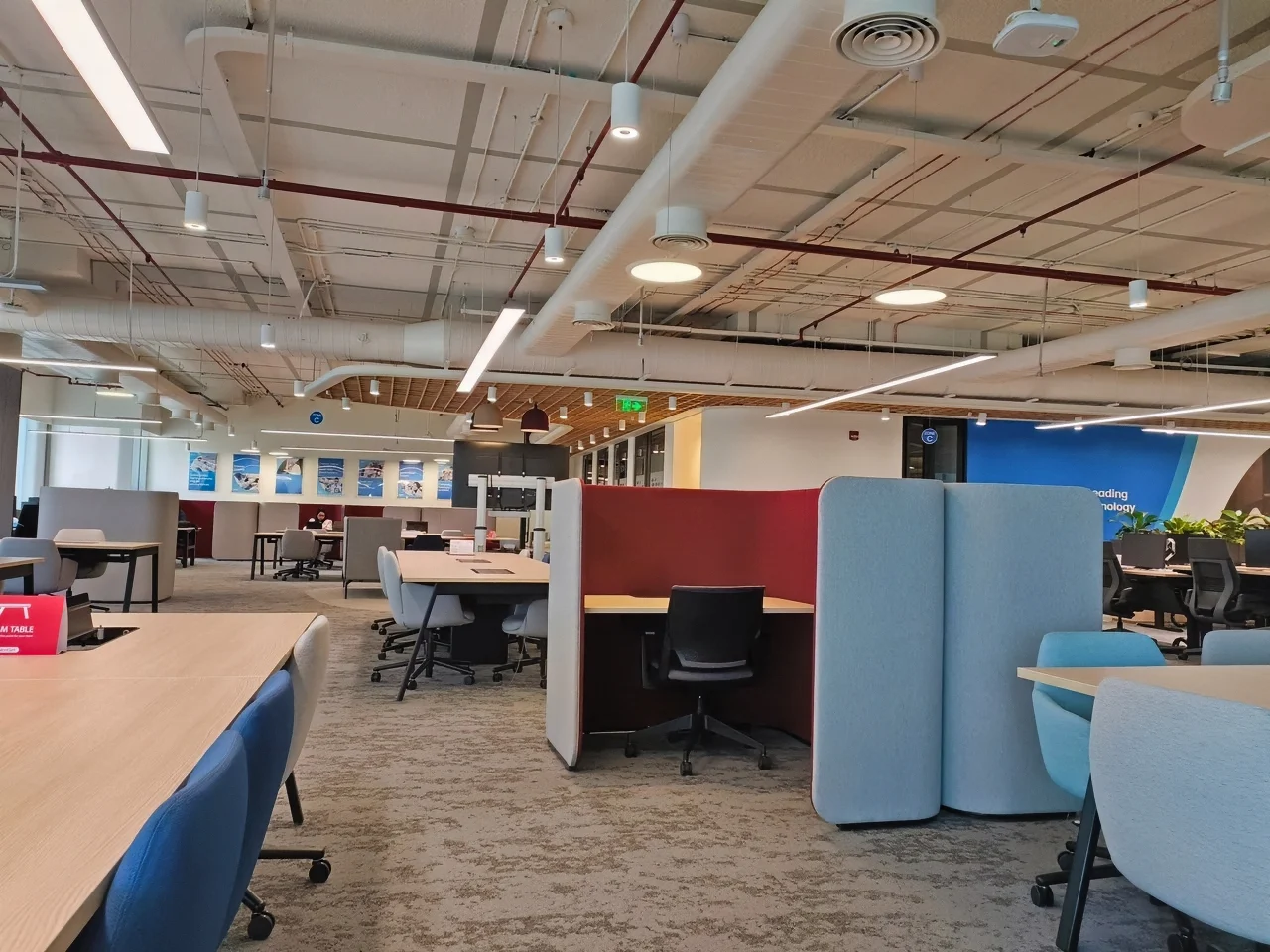
- Facility Type: Corporate Office, Modular Wall System with Glass Partitions
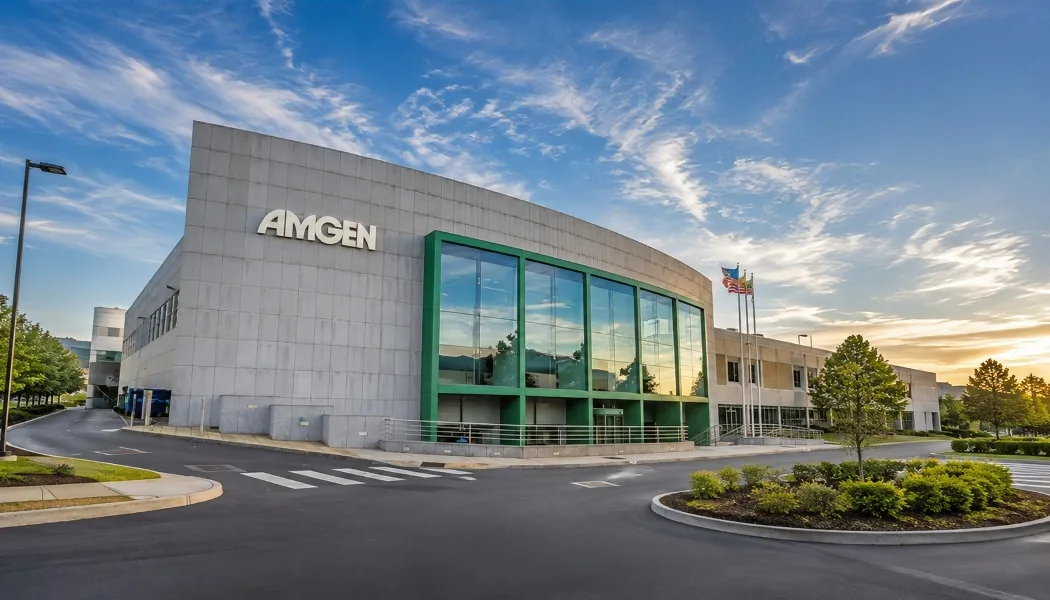
- Client: Amgen Pharmaceuticals
- Existing Setup: Teknion Wall System, Armstrong Calla Tiles, Lencore Sound Masking
- Scope: White-Noise ASTC Tests, Flanking Diagnostic, Remediation Spec
Why Sound Testing Beats Guessing in a Corporate Office
Amgen had done everything right on paper. STC-rated walls, a properly specified Lencore sound masking system, a designer-grade modular partition layout. The TI buildout completed and the noise complaints arrived almost immediately. Conversations between adjacent closed offices were not just muffled — they were clearly intelligible across the partition.
That gap between paper specs and lived performance is the entire reason field acoustical testing exists. Lab STC numbers are measured under perfect conditions; field ASTC numbers are measured in the actual building, with all the flanking paths the lab does not have. Without a real measurement, the design team is guessing which partition is the bottleneck.
The masking system was already turned up to 49 dBA at four feet — well above standard office levels — just to drown out the voices that were leaking. That’s a symptom of an under-performing wall, not an effective masking install. Testing was the only honest path to a fix.
ASTM E336 Field ASTC Test Method
- Standard: ASTM E336 field STC standard for in-place ASTC measurement
- Source: White noise speaker, calibrated send-side level
- Receive Meter: Class 1 SPL meter, octave-band logging
- Repeatability: Same protocol re-run on 3 follow-up partitions for delta tracking
ASTM E336 is the standard a general contractor and tenant should both be familiar with before signing off on any acoustically-sensitive office buildout. The test produces an Apparent Sound Transmission Class (ASTC) for each measured partition — the field equivalent of the lab STC rating, with all the real-world flanking paths included.
The protocol is repeatable, which matters more than any single number. Running the same test before and after a remediation tells the team whether the fix actually worked. Running it across multiple partitions in the same building tells the team which wall types are pulling the average down. The STC rating chart covers what each numeric range actually delivers in lived sound.
Test Results: 10 Wall Types, ASTC 27 to 38
- Best Performer: Room 4B06-4B08 (Teknion, no glass) — ASTC 38
- Worst Performer: Room 4B06-4B07 (Teknion with glass) — ASTC 27
- Drywall Comparator: 2A09-2A10 (Drywall, No Batt) — ASTC 36
- Office Target: ASTC 40 to 45 — none of the tested walls hit it
| Wall Type | ASTC Score |
|---|---|
| 4B06-4B08 — Teknion, No Glass | 38 |
| 2A09-2A10 — Drywall Partition, No Batt | 36 |
| 4A08-4A03 — Focus Room with Batt | 33 |
| 4B06-4B09 — Teknion with Glass | 33 |
| 4A08-4A04 — Standard Wall with Batt | 31 |
| 4B07-4B08 — Teknion | 31 |
| 2A12-2A04 — Focus Room, No Batt | 29 |
| 4B08-4B09 — Teknion | 29 |
| 2A12-2A11 — Standard Wall, No Batt | 28 |
| 4B06-4B07 — Teknion with Glass | 27 |
The Teknion modular system performed 3 to 8 ASTC points worse than the equivalent drywall partition in the same building. The pattern was consistent: every Teknion wall with a glass panel scored below ASTC 33, and the gap closed when glass was removed. Building code does not mandate STC ratings between commercial offices, but LEED v4 calls for STC 45 between standard offices and STC 50 between executive offices. None of the tested partitions came close.
The Flanking Paths That Actually Showed Up
- 1. Glass-to-Glass Connections: Top flanking path across every measured partition
- 2. Glass Partition Area: Sound transmits straight through the glass face
- 3. Baseboards: Gaps along the wall-floor track leak audibly
- 4. HVAC: Minimal — ducted supply and return units handled their job
The leak check ranked the flanking paths in priority order, which is the only way a remediation budget can be allocated rationally. Glass-to-glass joints were the dominant leak — wherever two glass panels met without an acoustic seal, sound passed through almost unimpeded. Glass partition areas themselves were the second source, since glass without an acoustic interlayer transmits speech-band energy efficiently.
HVAC was a relief. Modern ducted supply and return units with proper attenuation handled their part of the equation cleanly. That moves the remediation budget away from duct silencers (expensive) and toward joint sealing and fabric reskinning (much cheaper). For a deeper read on how flanking actually works, see the soundproofing flanking principles guide.
Remediation Recommendations: Existing and Future Buildouts
- Glass Joint Caulk: Acoustic caulk on each side of every glass-glass seam
- Glazing Investigation: Acoustic glazing applications (mileage varies in the field)
- Baseboard Caulk: Acoustic bead along the bottom of the wall track
- Future Walls: 25-gauge metal stud + fiberglass batt = ASTC 44 target
The existing-units remediation is mostly caulk work. Acoustic caulk at every glass-glass seam, an acoustic bead along the baseboard track, and a glazing review on the glass faces themselves. None of those interventions require demolition, none take down the office for more than a few off-hours nights, and combined they should claw back 4 to 8 ASTC points across the worst-performing partitions.
The bigger lever is on the next buildout. The Teknion system underperformed equivalent drywall by a meaningful margin in this test, and Amgen has more office space coming. A 25-gauge metal stud wall with fiberglass batting reliably hits ASTC 44 in the field — over the LEED v4 standard-office threshold. For projects targeting STC 50, additional drywall layers or specialty soundproofing membranes are the next step. The companion Amgen Tampa office expansion case study covers the absorption-side treatment Amgen rolled out alongside the wall remediations.
When to Run Acoustical Testing on Your Office
- Post-Buildout Complaints: Voices clearly carrying between adjacent offices
- Sound Masking Cranked: System running above 48 dBA to mask voices = wall problem
- Pre-Lease Diligence: Tenants verifying spec compliance before signing
- LEED / WELL Certification: Documented ASTC required for credit submission
Acoustical testing pays for itself any time there is real money on the line — a cranked-up masking system that staff hate, a tenant lease tied to acoustic spec compliance, a LEED or WELL credit that needs documentation. The test results give the design team a defensible basis for the remediation budget, and they give the GC something testable to certify against on future floors.
For a sister sound-testing project in a different sector (residential demising wall instead of corporate office), see the New Orleans residential sound testing case study. Same ASTM E336 protocol, different venue type, different remediation playbook.
Conclusion: Acoustical Testing in a Corporate Office
Ten partitions tested, ASTC scores ranging 27 to 38, glass-glass joints flagged as the dominant flanking path, and a clear remediation playbook that splits caulk-and-seal work for existing offices from a 25-gauge metal stud spec for future buildouts. Lab STC numbers and field ASTC numbers are different problems — the only honest way to know how an office partition actually performs is to measure it in place under ASTM E336.
FAQs: Acoustical Testing in a Corporate Office
What is the difference between STC and ASTC?
STC (Sound Transmission Class) is measured in a controlled lab. ASTC (Apparent Sound Transmission Class) is the field equivalent — same logic, measured in the actual building with all the real flanking paths included. ASTC is typically 5 to 10 points lower than the lab STC for the same wall assembly.
What STC should a corporate office target?
Office targets typically run STC 40 to 45. LEED v4 calls for STC 45 between standard offices and STC 50 between executive offices and interview rooms. Building code itself does not mandate office STC, so the targets come from LEED, WELL, or the design team’s own spec.
What causes most office sound flanking?
Glass-to-glass connections, glass partition areas, and baseboards — in that order — were the top three flanking paths in the Amgen field test. HVAC came in fourth and was minimal. The pattern repeats across most corporate offices with modular partition systems and glass-front rooms.
How do you fix glass partition flanking?
Acoustic caulk on each side of every glass-to-glass seam is the cheapest first move. Glazing applications can help but field results vary. For walls that need to hit STC 40 plus, a 25-gauge metal stud wall with fiberglass batting performs at ASTC 44 reliably and is usually the right call for new buildouts.

Walker Peek|Founder & CEO, Commercial Acoustics
Walker founded Commercial Acoustics in 2013 to bring aerospace-grade engineering discipline to soundproofing, and runs the firm as CEO from its 12,000 sq ft Tampa production facility. The company designs custom acoustic panels, sound membranes, and masking systems for multi-family, hospitality, healthcare, and commercial projects across the US — built around Walker’s invention, Wall Blokker, an EVA-based sound barrier that hits STC 50-plus at roughly $1 per square foot installed.
A Jacksonville native, Walker spent five years at Kennedy Space Center with Craig Technologies before founding Commercial Acoustics — certifying aerospace manufacturing to the AS9100 standard and leading Six Sigma Black Belt process-improvement teams on NASA programs. He is a certified Industrial Noise Control Engineer and the author of Architectural Acoustics: A Practical Handbook.
