

Table of Contents
Project Overview: Atlanta Stadium Soundproofing
- Project: Premier Suite Acoustic Privacy Treatment for an Atlanta NFL Stadium
- Client: Mercedes-Benz Stadium (Atlanta Falcons), Atlanta, Georgia
- Building: $1.5 Billion Stadium With Solar Panels, Fan Plaza, and Retractable Roof
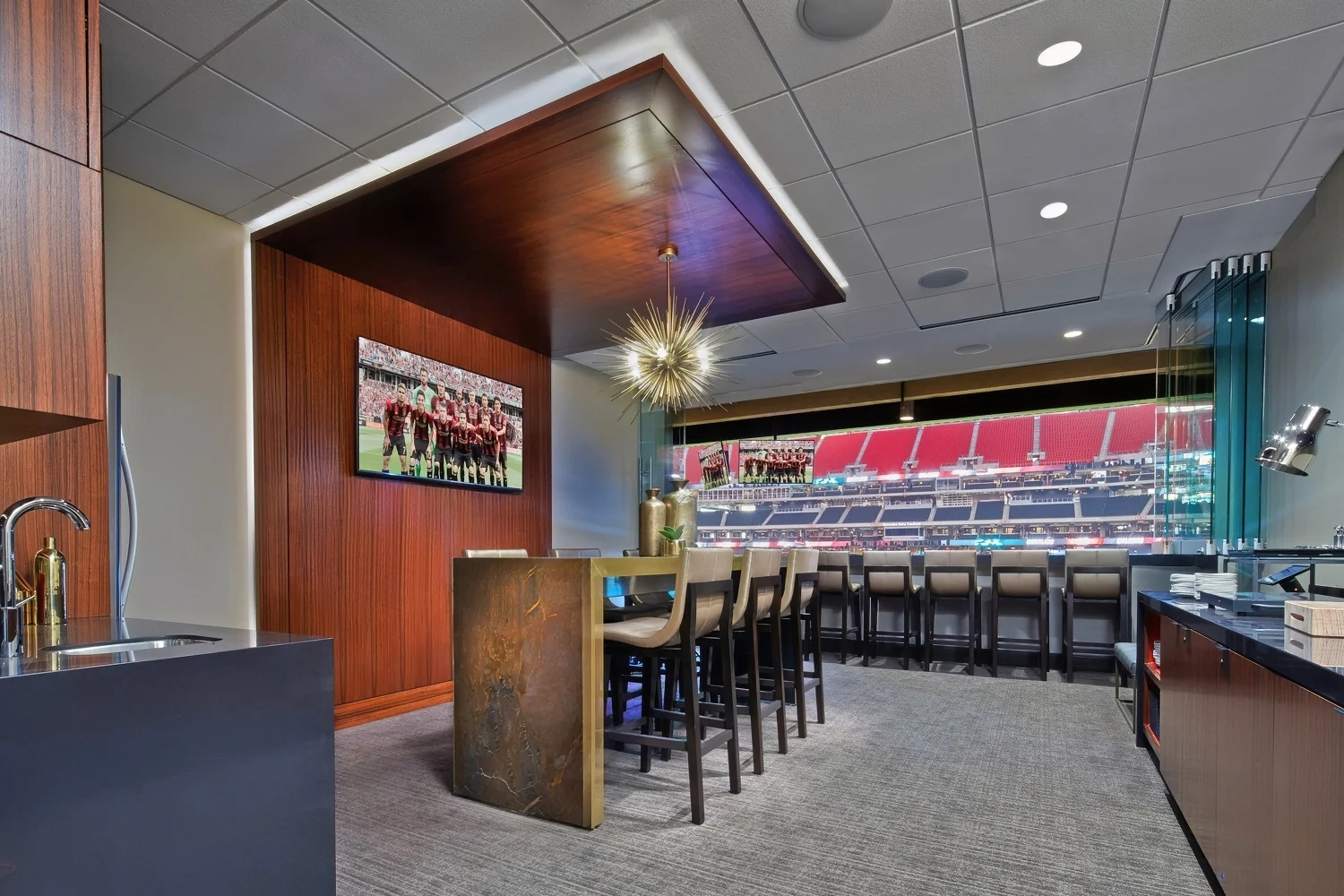
- Treated Spaces: Premier “Super Suites” — Private VIP Boxes With Catering and Wet Bar
- Solution: Wall Blokker Soundproofing Membrane Hung on the Suite Ceiling Above the Acoustical Ceiling Tiles
- Outcome: Reduced Sound Transfer Into Premier Suites, Game-Day Privacy Preserved at the Highest-Revenue Seating Tier
Why Premier Stadium Suites Need Acoustic Privacy
Stadium economics depend on premier seating. The Super Suites at an NFL venue like Mercedes-Benz Stadium command an order-of-magnitude price premium over general admission, and the entire experience justifies that premium through privacy, exclusivity, and amenity. Crowd noise from 70,000 fans bleeding directly into a $50,000-per-game suite undermines the value proposition the operator is selling.
Acoustic privacy in a stadium suite is a different problem than acoustic privacy in an office or condo. The source-side sound levels are massive (110+ dBA crowd noise) and the suite spaces share walls and ceilings with circulation areas, neighboring suites, restrooms, and media corridors. The wall and ceiling assemblies have to handle source-side levels that are 20 to 30 dB higher than typical commercial spec.
The general framing of how mass-loaded membranes block airborne transmission lives in our airborne vs structure-borne noise guide.
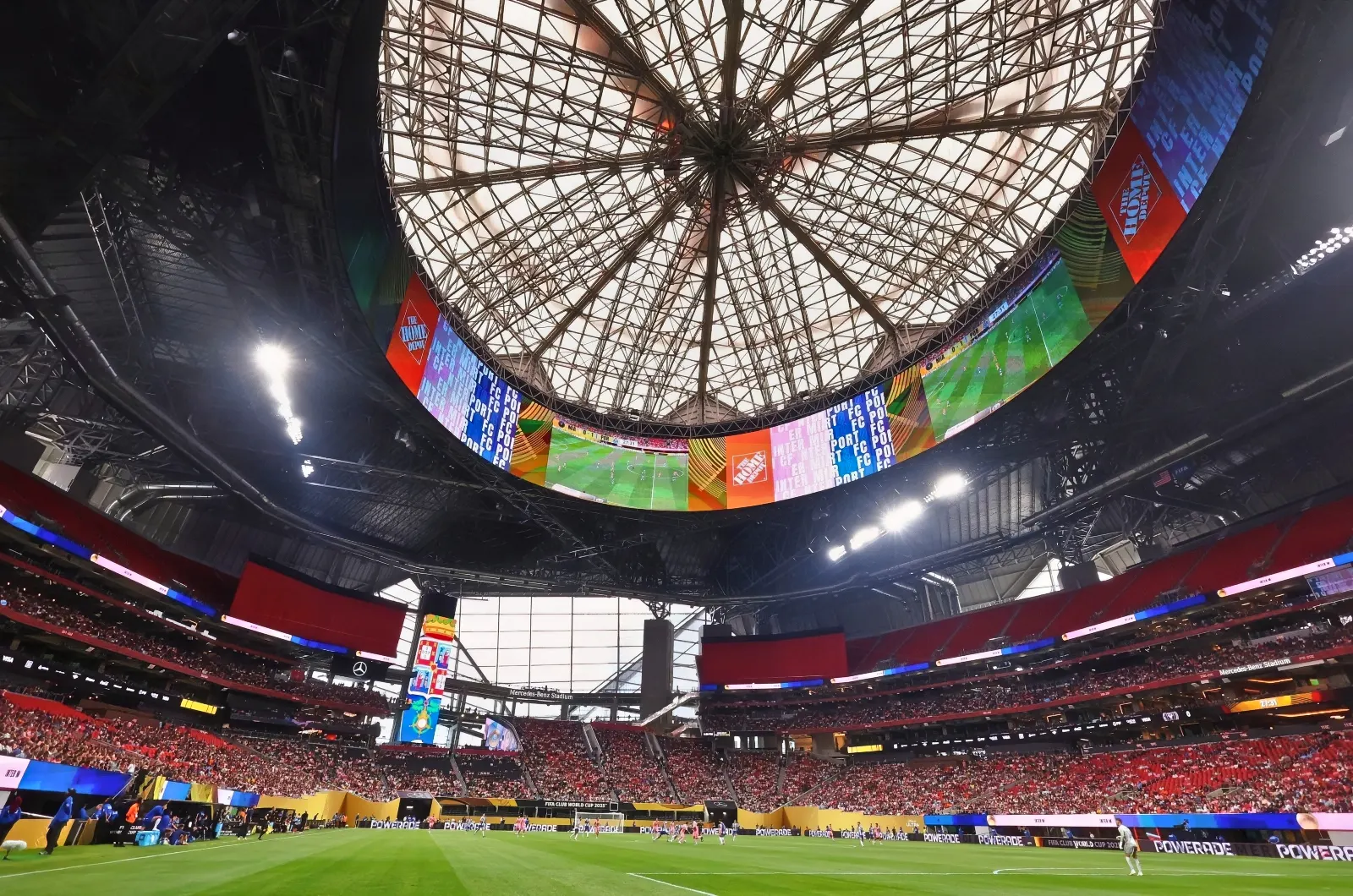
Wall Blokker Above ACT: The Suite Ceiling Treatment
- Existing Ceiling: Standard Acoustical Ceiling Tile (ACT) System Across the Suite Footprint
- Added Layer: Wall Blokker Mass-Loaded Sound Membrane Hung in the Plenum Above the ACT
- Function: Deflect Soundwaves Traveling Through the Plenum Between Suites and Adjacent Spaces
- Why Above the Tile: The ACT Itself Provides Almost No Transmission Loss — the Plenum Is the Real Sound Path
Standard acoustical ceiling tiles are designed for absorption, not blocking. They reduce reverberation inside a room but let airborne sound pass through them with minimal attenuation. The plenum space above the ACT is where suite-to-suite, suite-to-corridor, and suite-to-media-room sound transmission actually happens. Treating the plenum is what closes the path.
Wall Blokker hung in the plenum above the ACT adds the mass that the tiles lack. The membrane intercepts airborne sound before it reaches the receiving-side ACT and the suite below. The product spec sheet lives at the Wall Blokker mass-loaded membrane page.
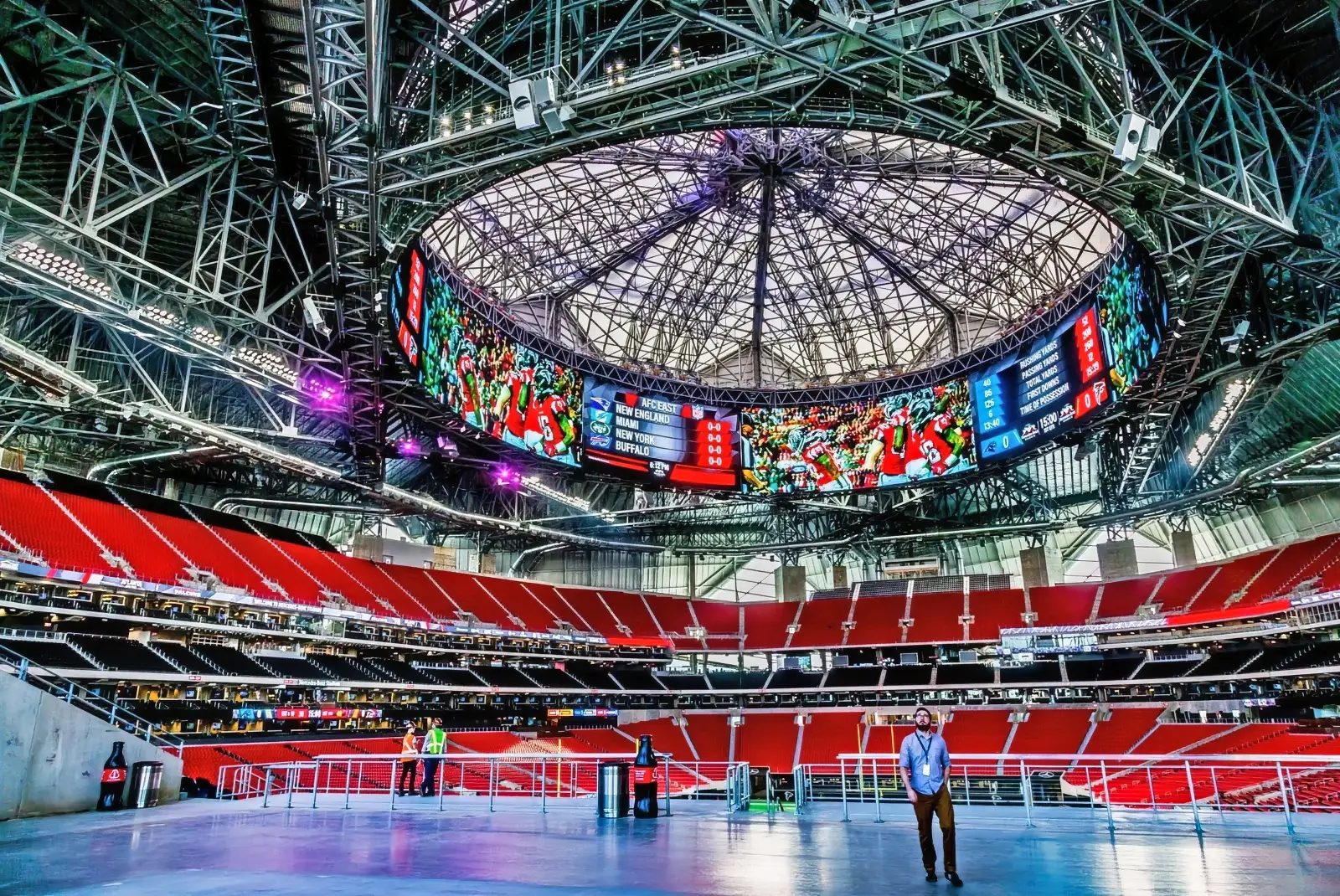
Critical Adjacencies in Stadium Design
- Suite-to-Suite: Conversation Privacy Between Adjacent Premier Boxes
- Suite-to-Bathroom: Plumbing and Restroom Acoustics Bleeding Into the Suite Experience
- Suite-to-Media-Room: Speech Privacy for Press and Broadcast Spaces
- Suite-to-Concourse: Crowd Noise From the Public Concourse Bleeding Into Premier Spaces
Stadium designers know that “the bowl is loud” and accept it. The acoustic spec gets focused on the spaces where loudness is not acceptable. Premier suites, broadcast booths, press rooms, and locker rooms all need transmission loss against the bowl noise on one side and against each other on the other side.
Bathroom-to-suite is the most commonly underbuilt adjacency in stadium acoustic spec. Plumbing carries water-flow noise that translates as airborne in the suite. Treating the demising wall between the suite and its private bathroom takes the same membrane approach used on the ceiling plenum.
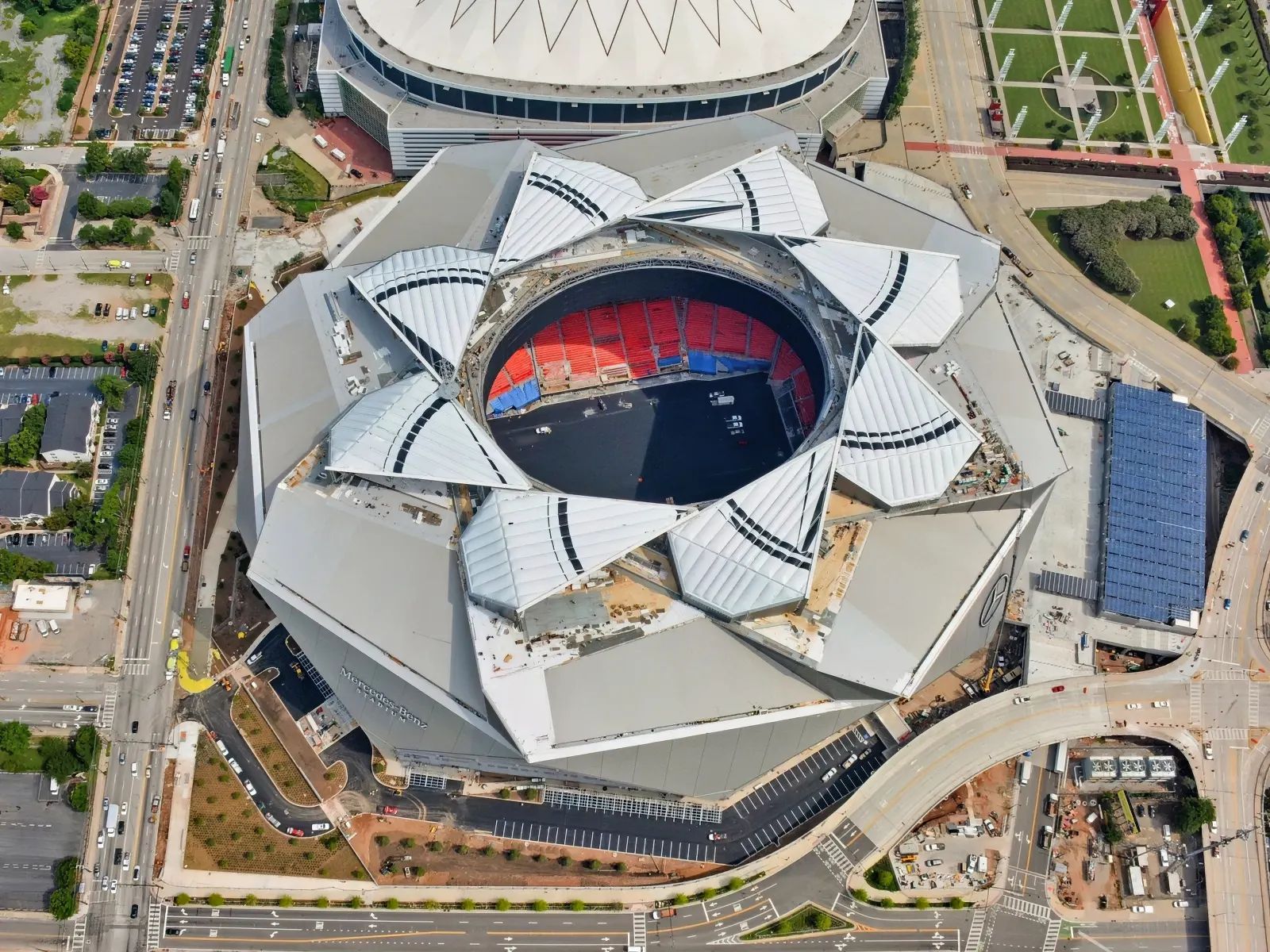
Why Stadium Acoustic Treatment Has to Happen During Construction
Stadiums are the worst possible building type for acoustic retrofit. The ceiling plenum, the demising walls, the floor-ceiling assemblies, and the mechanical chases all sit behind finished surfaces that include premium millwork, branded suite finishes, AV cabling, lighting fixtures, and the venue’s brand identity. Pulling those finishes apart to add a membrane after opening day is prohibitively expensive in time and cost.
The Mercedes-Benz Stadium project caught the suite acoustic spec during construction, which is when membrane installation costs roughly nothing per square foot of difficulty. Hanging Wall Blokker in the plenum above the ACT during the rough-in phase took a fraction of the labor that the same install would take post-occupancy. The lesson generalizes: stadium operators should treat acoustic spec as a first-cycle decision, not a complaint-driven retrofit.
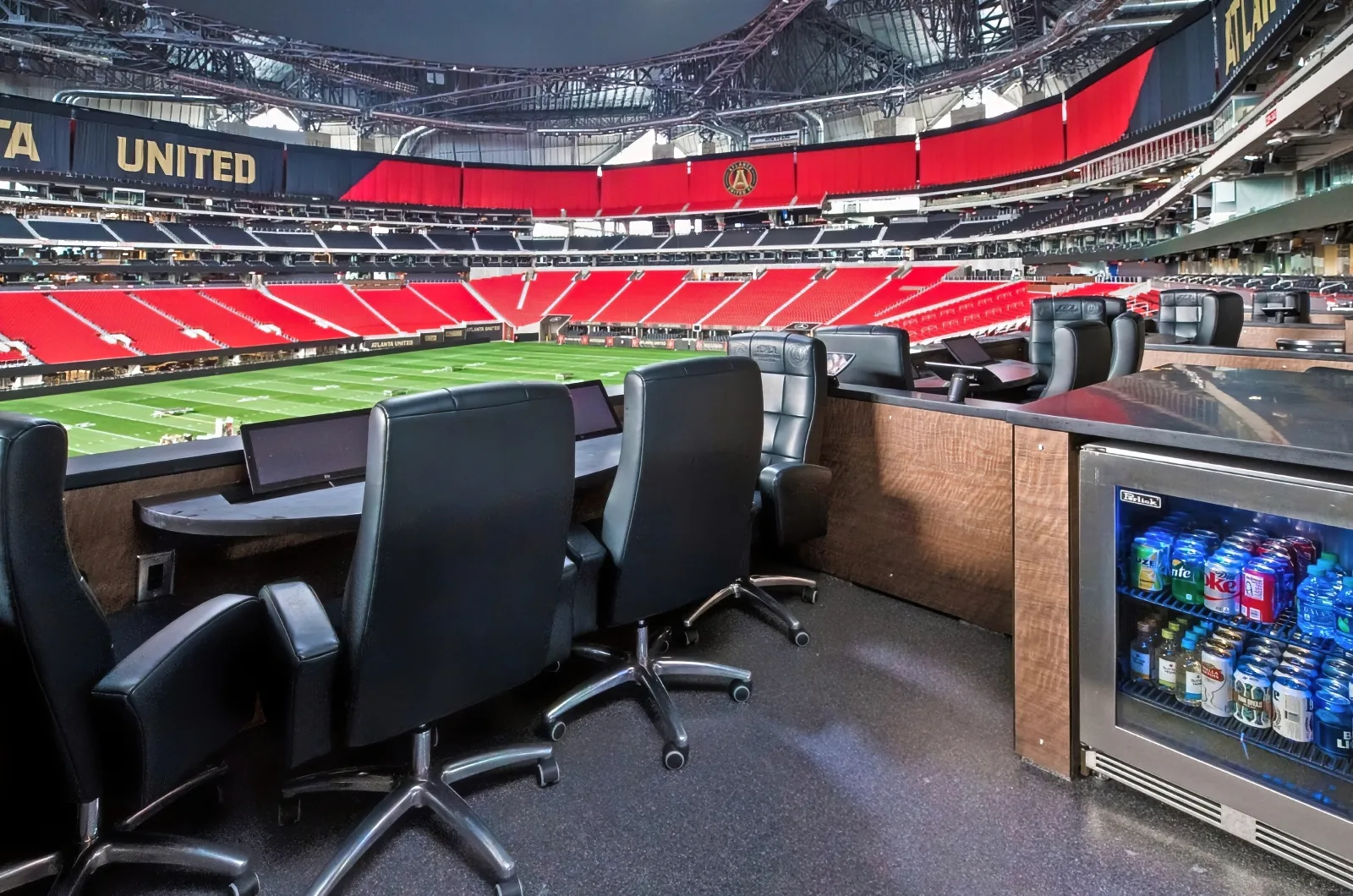
Stadium Soundproofing Targets by Space Type
Stadium acoustic targets shift dramatically with the space type. The bowl tolerates almost any noise level. Premier suites need office-grade speech privacy in spite of bowl noise on one side. Broadcast booths need studio-grade isolation. The table below maps the working windows.
| Stadium Space | STC Target | Privacy Goal | Treatment Approach |
|---|---|---|---|
| Premier Suite (Mercedes-Benz Tier) | STC 55+ | VIP conversation privacy in spite of bowl noise | Wall Blokker membrane in plenum above ACT |
| Broadcast / Media Booth | STC 60+ | Studio-grade speech intelligibility | Membrane plus decoupled wall plus acoustic door |
| Press Room | STC 50 to 55 | Press conference speech intelligibility | Membrane on demising walls and ceiling plenum |
| Locker Room | STC 50 | Player privacy and team meeting confidentiality | Membrane plus solid-core door, perimeter caulk |
| General Concourse and Bowl | No specific target | Loudness is the experience | No acoustic spec required |
Mercedes-Benz Stadium’s premier suites landed in the highlighted top row at STC 55+. The Wall Blokker plenum treatment was the single mechanism that let a standard ACT-finished ceiling deliver that target without rebuilding the suite ceiling assembly from scratch.
Conclusion: Atlanta Stadium Soundproofing
Stadium acoustic spec lives or dies on the construction-phase decision to treat the plenum. The bowl is going to be loud and that is the point. The premier suites, broadcast booths, press rooms, and locker rooms have to do the opposite job, and the spec has to be locked in before the ACT goes up. Mercedes-Benz Stadium delivered Atlanta a venue where the suite tier sounds the way it costs. Contact Us for stadium, arena, or commercial venue soundproofing in Atlanta and across Georgia.
FAQs: Atlanta Stadium Soundproofing
How is stadium soundproofing different from office soundproofing?
Stadium source-side sound levels run 20 to 30 dB higher than typical commercial spaces. Premier suites need office-grade speech privacy in spite of 110 dBA bowl noise, which means STC 55+ on the suite envelope rather than the typical office STC 45 to 50.
Why install acoustic membranes above the acoustical ceiling tiles?
Acoustical ceiling tiles absorb reverberation but provide almost no transmission loss. The plenum above the ACT is where suite-to-suite and suite-to-corridor sound actually transmits. Hanging a mass-loaded membrane like Wall Blokker in the plenum closes the real sound path.
What STC should premier stadium suites target?
STC 55 or higher for premier suites at major NFL or NBA venues. Broadcast and media booths target STC 60+ for studio-grade isolation. Press rooms target STC 50 to 55. Locker rooms target STC 50 for player privacy and team meeting confidentiality.
Should stadium acoustic treatment be done during construction or as a retrofit?
Always during construction. Stadium ceilings, walls, and chases sit behind finished suite millwork, AV cabling, lighting, and brand finishes. Adding acoustic treatment after opening day requires pulling those finishes apart, which is prohibitively expensive in time and cost.

Walker Peek|Founder & CEO, Commercial Acoustics
Walker founded Commercial Acoustics in 2013 to bring aerospace-grade engineering discipline to soundproofing, and runs the firm as CEO from its 12,000 sq ft Tampa production facility. The company designs custom acoustic panels, sound membranes, and masking systems for multi-family, hospitality, healthcare, and commercial projects across the US — built around Walker’s invention, Wall Blokker, an EVA-based sound barrier that hits STC 50-plus at roughly $1 per square foot installed.
A Jacksonville native, Walker spent five years at Kennedy Space Center with Craig Technologies before founding Commercial Acoustics — certifying aerospace manufacturing to the AS9100 standard and leading Six Sigma Black Belt process-improvement teams on NASA programs. He is a certified Industrial Noise Control Engineer and the author of Architectural Acoustics: A Practical Handbook.
