Table of Contents
Project Overview: Restaurant Reverberation Reduction
- Project: Reverberation Time Reduction in a Newly Opened Fine-Dining Restaurant
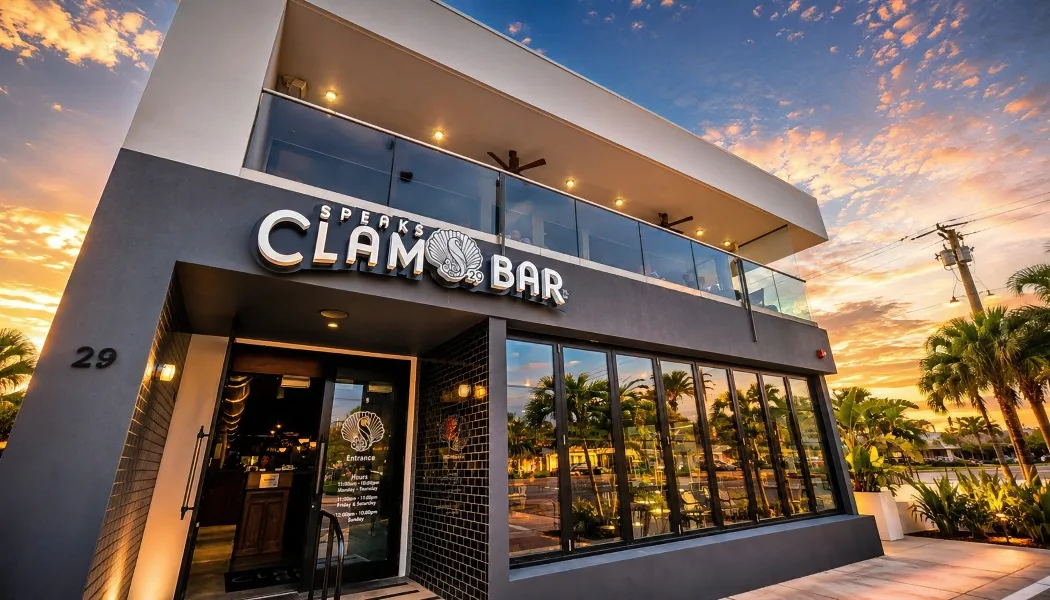
- Client: Speaks Clam Bar, Sarasota, Florida
- Issue: Marble Finishes Plus Tile Floors Drove Reverb Time Above 1.6 Seconds
- Symptom: Patrons Could Not Easily Converse at the Same Table
- Solution: Custom Acoustic Panels Sized and Placed for the Specific Room Geometry
- Outcome: RT60 Reduced From 1.6 Seconds to Under 1 Second Inside the Fine-Dining Window
Why Hard Surfaces Kill Restaurant Speech Intelligibility
Speech intelligibility is the percentage of spoken words a listener can correctly identify in a given environment. It is not loudness. A room can be quiet and still have terrible speech intelligibility if the reverberation tail blurs each word into the start of the next one. The brain spends extra cognitive load trying to parse the words it missed, which is what diners experience as fatigue.
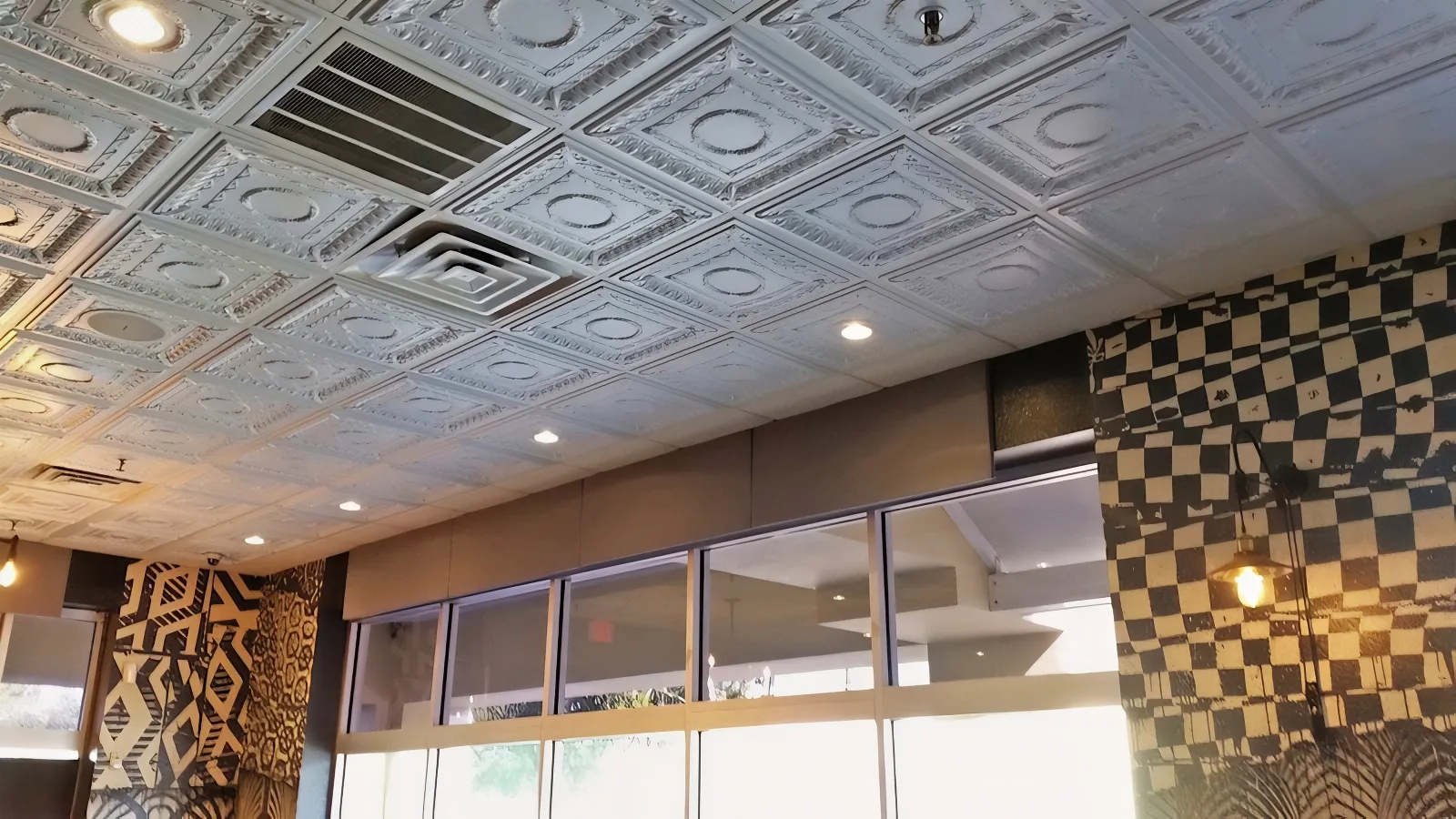
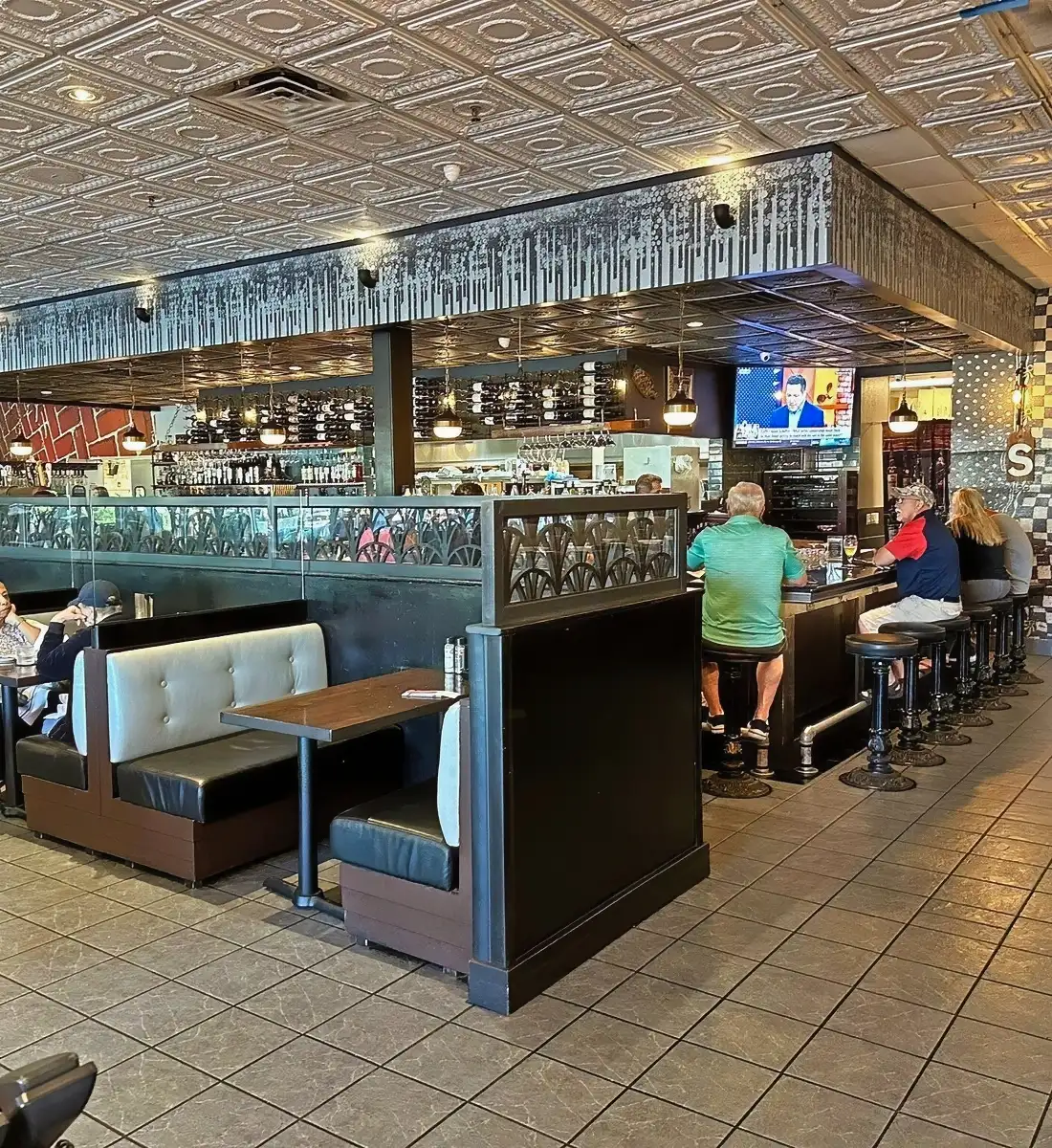
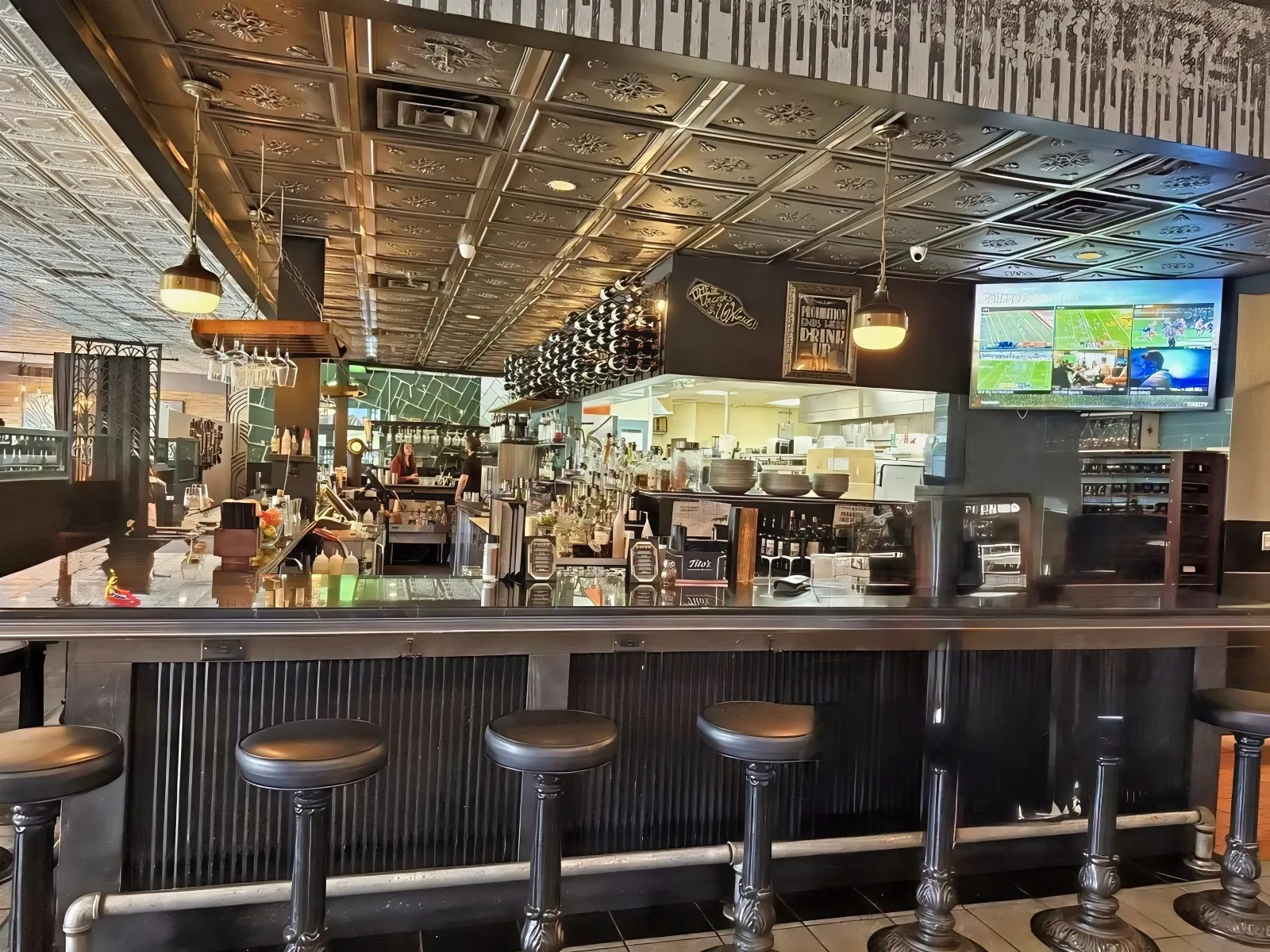
High-end restaurant finishes work against speech intelligibility. Marble walls, stone counters, glass partitions, and tile floors all reflect sound rather than absorbing it. The visual language of a fine-dining room and the acoustic language of a fine-dining room point in opposite directions. The aesthetic team specifies the look. The acoustic problem shows up at occupancy.
The fix is absorption surface area inside the room dedicated to converting sound energy into a small amount of heat instead of reflecting it back. The general framing of how reverberation affects restaurant comfort lives in our restaurant acoustics design guide.
Measuring RT60: The Reverberation Diagnosis
- Definition: Time for a Sound Pulse to Decay 60 Decibels After the Source Stops
- Why 60 dB: Below 60 dB Decay the Sound Has Functionally Faded From Audibility
- Field Measurement: SPL Meter Plus Calibrated Source in the Empty Room
- Why Measure Empty: Diners Add Absorption the Empty-Room Reading Is the Worst Case
RT60 is the workhorse metric for room acoustics. Most diagnostic acoustic work begins with an RT60 measurement because it captures both the volume of the room and the absorption already inside it in a single number. Two rooms with identical floor plans can sit on opposite sides of the comfort threshold depending on what materials are inside them.
The empty-room measurement matters because the room has to be acoustically acceptable when occupied at low density. A late breakfast service or a slow Tuesday afternoon will not have the diner-bodies that absorb sound during a packed Saturday night. Treating the room for the worst case (sparse occupancy) means the room performs across the full range of service times.
The 1.6-Second Reverb Problem
The Speaks Clam Bar measurement returned 1.6 seconds. That number sits in concert-hall and worship-space territory, not restaurant territory. A reverberation tail of 1.6 seconds means each word spoken at a table overlaps with the tail of the previous several words across the room, and the resulting acoustic mush is what tanks speech intelligibility.
Fine dining typically targets 0.8 to 1.0 seconds. Casual dining sits a bit lower at 0.6 to 0.8 seconds. Lively bar-format restaurants can hold up to 1.0 second comfortably. Anything above 1.2 seconds in a dining room consistently produces complaints. The 1.6-second reading was 0.6 seconds above the upper edge of any reasonable restaurant target.
The deeper background on what RT60 means and why dining environments need it under one second lives in our reverberation time graphic reference.
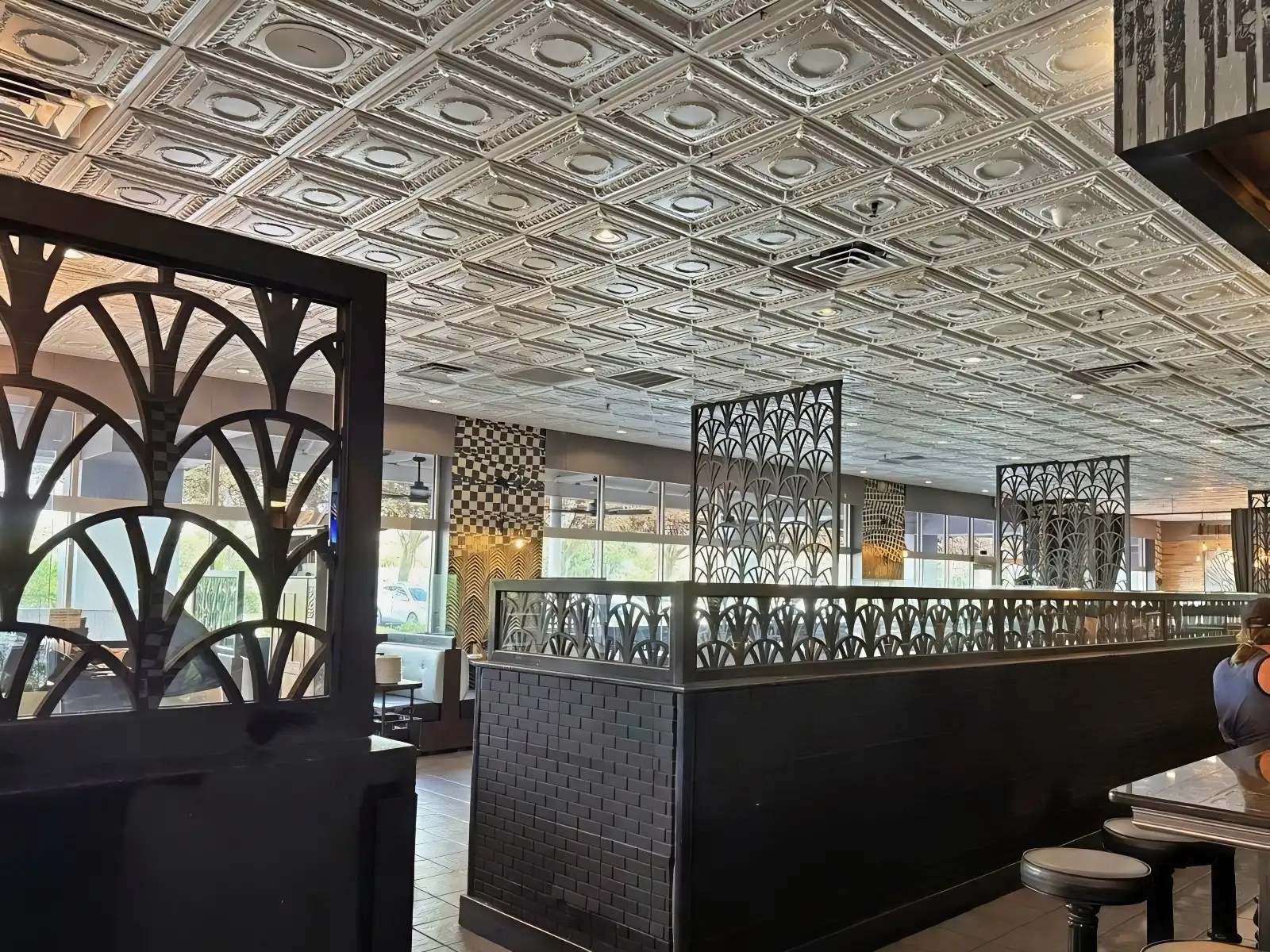
The Custom Acoustic Panel Treatment
- Panel Specification: Custom-Sized Acoustic Absorption Panels for the Specific Room Geometry
- Modeling: Reverberation-Time Calculation Determined Required Absorption Square Footage
- Placement: Distributed Across Wall and Ceiling Planes, Targeting Reflective Hot Spots
- Result: RT60 Cut From 1.6 Seconds to Under 1 Second
Reverberation reduction is a square-footage problem with a target. Modeling the empty-room volume and the existing reflective surface area gives a calculated absorption requirement in square feet of NRC-rated panel material. The panel count and placement follow from that target, not from a fixed product menu.
Custom panel sizing matters in a high-end room where the panels become a visible element. Stock-size panels often look bolted-on. Custom-sized panels can be specified to align with structural rhythms (windows, beams, columns), which keeps the visual integrity of the dining room intact while still delivering the absorption budget the room needs.
The product page with NRC ratings, sizes, and finish options lives at the acoustic absorption panel page.
Restaurant RT60 Targets by Format
Reverberation time targets shift with the dining format and the kind of conversation the room is built around. Fine dining wants the quietest tail, casual dining wants a touch more energy, and bar-format rooms tolerate the most. The table below maps the working windows.
| Restaurant Format | Target RT60 | Speech Intelligibility Goal | Notes |
|---|---|---|---|
| Fine Dining (Speaks Clam Bar Target) | 0.8 to 1.0 sec | Easy table conversation, no raised voices | Marble or tile finishes drive long reverb |
| Casual Family Restaurant | 0.6 to 0.8 sec | Conversation with kids and groups | Mid-range absorption budget |
| Bar / Gastropub | 0.7 to 1.0 sec | Lively but tables stay intelligible | Tolerates more energy than fine dining |
| Cafe / Quick Service | 0.5 to 0.7 sec | Short conversations, fast turnover | Lighter absorption usually sufficient |
Speaks Clam Bar landed in the fine-dining row. Cutting RT60 from 1.6 seconds to under 1 second moved the room from the unworkable range into the upper edge of the fine-dining target window lively enough to feel occupied but quiet enough for table conversation without raised voices.
Conclusion: Restaurant Reverberation Reduction
Restaurant reverberation problems are measurable, quantifiable, and fixable. Speaks Clam Bar started at 1.6 seconds RT60 and landed below 1 second after a custom acoustic panel install. The before-and-after numbers turn an aesthetic complaint (“the room is too loud”) into an acoustic spec (“the room needs X square feet of NRC-rated absorption”). Contact Us for an RT60 measurement and absorption plan on a specific dining room.
FAQs: Restaurant Reverberation Reduction
What is RT60 and why does it matter for restaurants?
RT60 measures the time for a sound pulse to decay 60 decibels after the source stops. Long RT60 values blur each spoken word into the next one and tank speech intelligibility. Restaurants target 0.6 to 1.0 seconds depending on format.
What reverberation time should a fine-dining restaurant target?
0.8 to 1.0 seconds. Lower than that and the room feels dead. Higher than that and table conversation gets harder than it should be. The Speaks Clam Bar project started at 1.6 seconds and landed under 1 second after treatment.
How is restaurant reverberation actually measured?
A calibrated SPL meter records the sound pressure level decay after a known source stops in the empty room. The empty-room measurement is the worst case because diner bodies add absorption when the room is occupied. Treating for the empty case covers all service times.
Can custom acoustic panels really cut reverb in half?
Yes when the absorption budget is calculated correctly. Reverberation reduction is a square-footage problem with a measurable target. Speaks Clam Bar dropped from 1.6 seconds to under 1 second a 40 percent reduction with custom panels sized for the specific room geometry.

Walker Peek|Founder & CEO, Commercial Acoustics
Walker founded Commercial Acoustics in 2013 to bring aerospace-grade engineering discipline to soundproofing, and runs the firm as CEO from its 12,000 sq ft Tampa production facility. The company designs custom acoustic panels, sound membranes, and masking systems for multi-family, hospitality, healthcare, and commercial projects across the US — built around Walker’s invention, Wall Blokker, an EVA-based sound barrier that hits STC 50-plus at roughly $1 per square foot installed.
A Jacksonville native, Walker spent five years at Kennedy Space Center with Craig Technologies before founding Commercial Acoustics — certifying aerospace manufacturing to the AS9100 standard and leading Six Sigma Black Belt process-improvement teams on NASA programs. He is a certified Industrial Noise Control Engineer and the author of Architectural Acoustics: A Practical Handbook.
