Table of Contents
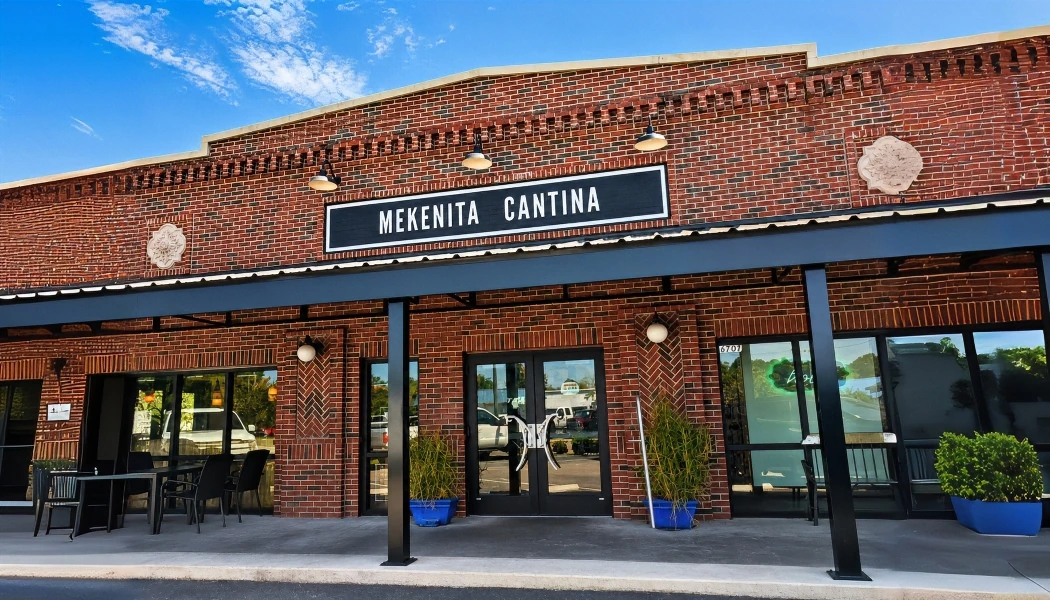
Project Overview: Acoustic Ceiling Cloud Installation at Mekenita Cantina
- Project: Acoustic Ceiling Cloud Install in a 1950s Restaurant Building
- Location: 6707 N Florida Ave, Tampa, FL 33604
- Facility Type: Mexican Cantina, Sealed Concrete and Brick Finishes
- Client: Mekenita Cantina
- Pre-Treatment RT60: 1.05 seconds (overpoweringly loud for a cantina)
- Scope: Acoustic Analysis, Cloud Spec, Custom Suspension, Off-Hours Install
The Mekenita Cantina Acoustic Problem
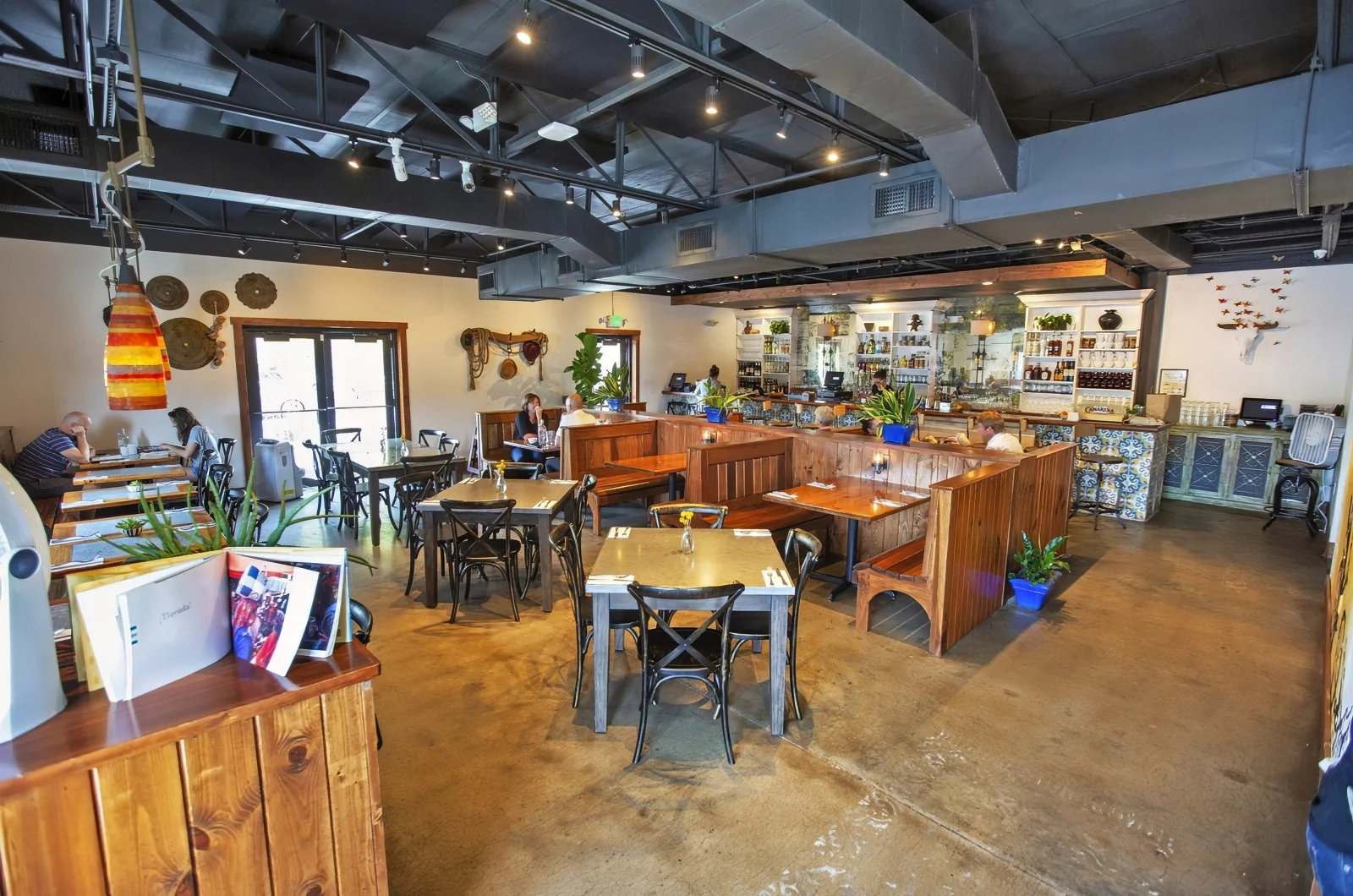
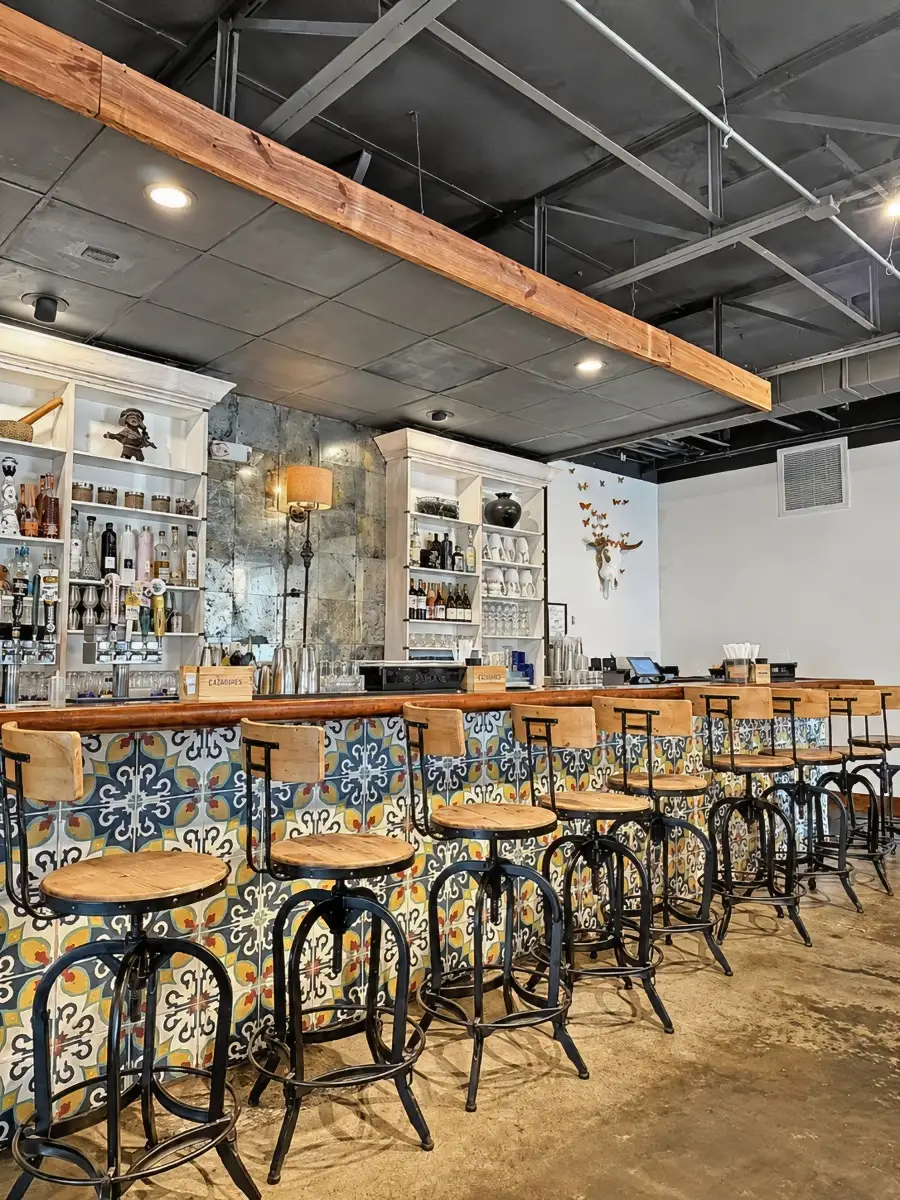
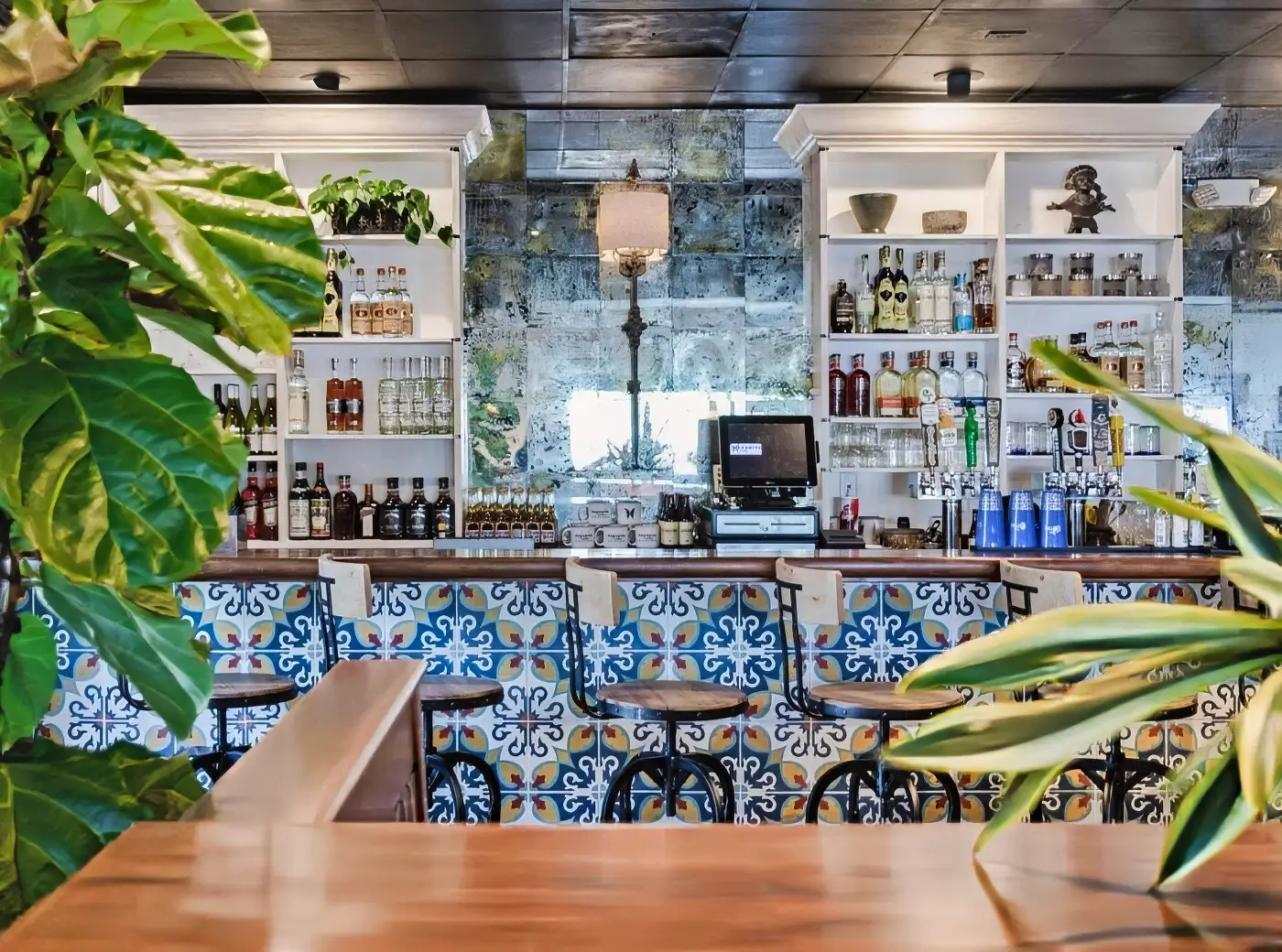
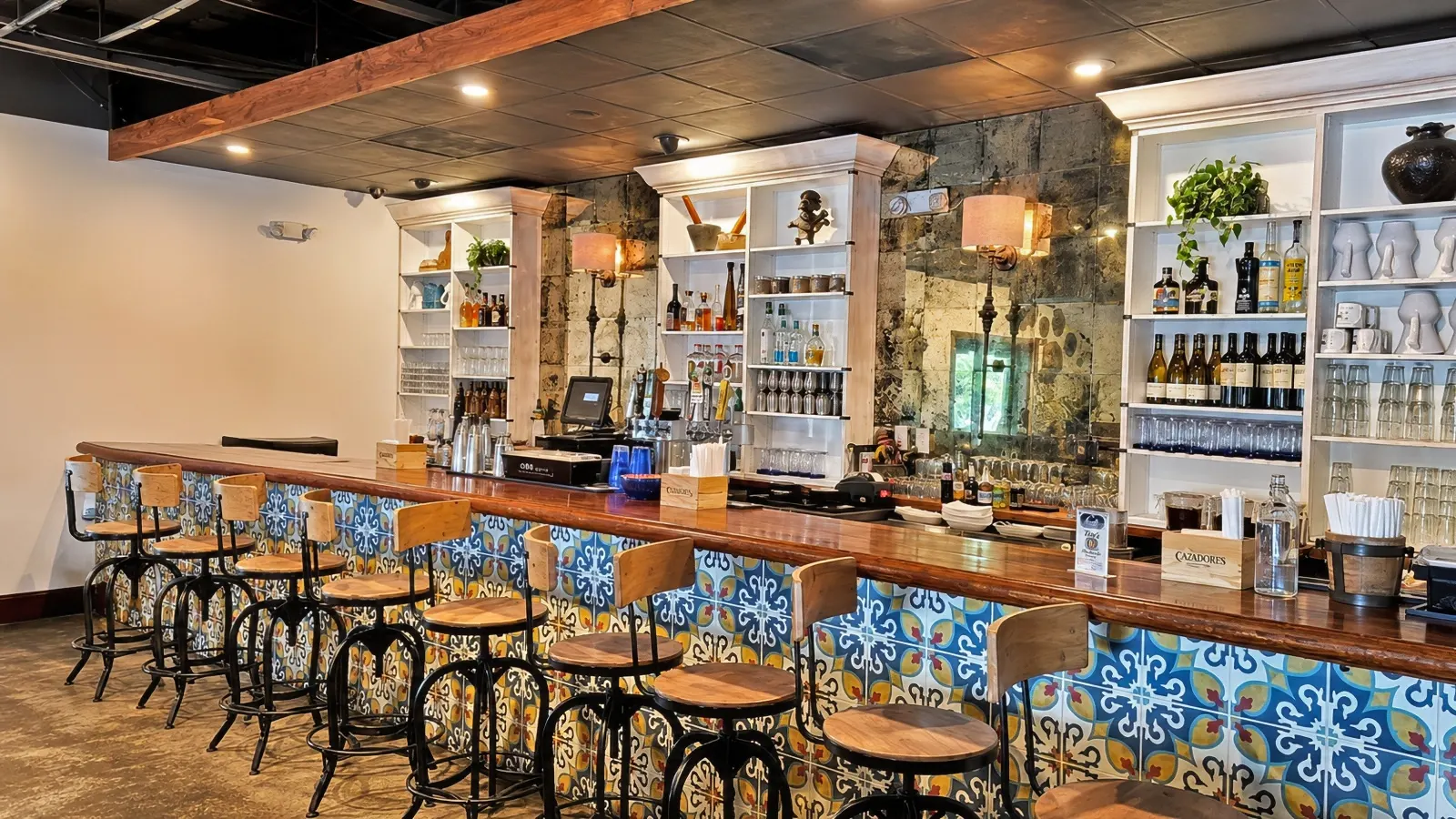
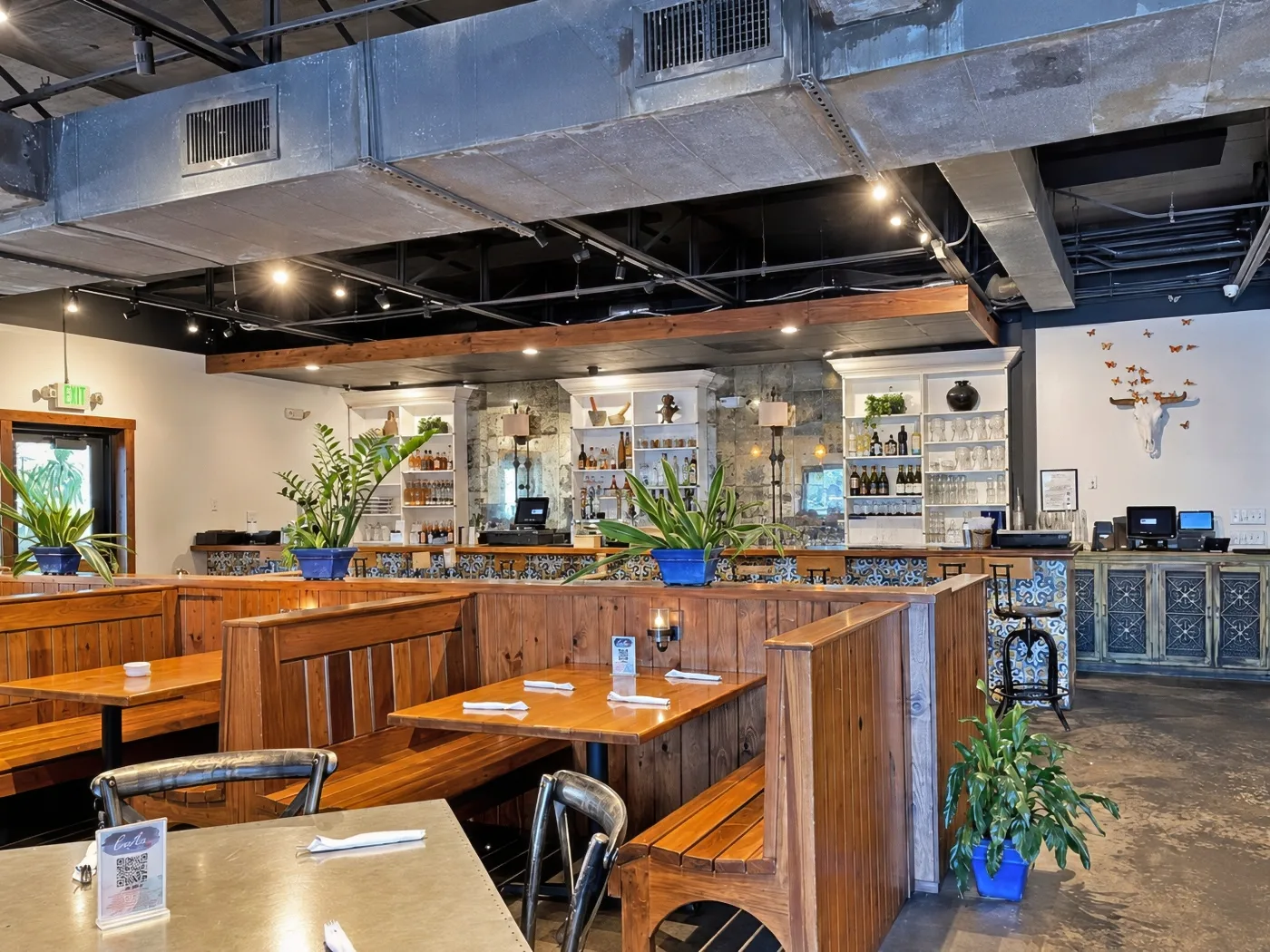
Mekenita Cantina downtown Tampa opened into a build-out with sealed concrete floors, exposed brick walls, and a hard ceiling — the standard hip-cantina aesthetic that looks great on a moodboard and reverberates terribly in real life. Patron complaints arrived almost immediately after opening, with the dining room hitting an unsustainable noise floor.
Acoustic analysis returned a measured RT60 of 1.05 seconds across the dining space. That sits well above the 0.6 to 0.8 second working range where a lively restaurant feels alive without sliding into “I cannot hear my date” territory. The fix needed to absorb without changing the visible aesthetic the operator had built the brand around.
Acoustic Ceiling Cloud Specification
- Product: Acoustic ceiling clouds, NRC 1.05
- Suspension: Black airline wire from existing metal joists
- Aesthetic: Floating just below the ceiling, hidden against the dark structure
- Target RT60: 0.6 seconds, lively-but-conversable cantina range
Ceiling clouds were the right tool here because the wall finishes (sealed concrete, exposed brick) were locked in by the brand identity. Adding wall panels would have meant covering up the design language Mekenita had paid to build. The acoustic ceiling clouds route hides the absorption above sightline and leaves the walls untouched.
Black airline wire was the install choice for the same reason. From below, the clouds appear to float in space with no visible suspension — the dark wire disappears against a dark ceiling structure. The visible read is a clean architectural plane; the acoustic read is full broadband absorption above the dining floor.
The 1950s Cement Board Ceiling Install Problem
- Building Age: 1950s construction with original cement board ceiling
- Standard Anchors: Drywall anchors and eye-bolts would not grip
- Toggle Bolts: Ceiling thickness too shallow for sufficient grip
- Result: Standard install methods all ruled out on first site visit
Acoustic ceiling clouds typically mount via drywall anchors with eye-bolts, lag bolts into joists, or toggle bolts for heavier panels. The Mekenita ceiling was none of those. Mid-century cement board sits between modern drywall and old plaster on the install spectrum, and none of the standard hardware sets gripped reliably enough to support a panel safely.
Toggle bolts, the usual fallback for awkward ceilings, also failed the test. The cement board layer was thin enough that the toggle wings could not seat properly behind it. Walking away from the project was an option; engineering an alternative suspension was the better one.
Suspension Wire Solution: Rotofast Bolts on Parallel Walls
- Anchor Strategy: Suspension wire fastened to parallel walls (not ceiling)
- Wire Run: Spans the room above sightline, hidden against ceiling
- Cloud Attachment: Rotofast bolts clipped to the wire system
- Visible Read: Same floating-cloud look as a standard ceiling install
The fix was structural, not hardware. Instead of fighting the ceiling, the suspension load was transferred to the parallel wall structure. A wire was anchored on each side wall, run across the room above the dining floor, and tensioned to support the cloud array.
Rotofast bolts clipped each ceiling cloud directly to the suspension wire. The bolts are designed for exactly this kind of intermediate-attachment scenario, where the cloud needs to hang from a wire rather than a fixed surface. From below, the visible result is identical to a standard ceiling-mounted install. From above, the load path is completely different.
Total project timeline from site visit to installed clouds was four weeks, with the actual install run during off-hours so the cantina lost zero service time.
RT60 Results: 1.05 to 0.6 Seconds
- Pre-Treatment RT60: 1.05 seconds, broadband
- Post-Treatment RT60: 0.6 seconds, target hit
- Reduction: 43 percent drop in reverberation time
- Outcome: Cantina reads as lively without crossing into “too loud”
Post-install testing returned a measured RT60 of 0.6 seconds across the dining space, exactly the working anchor for a casual lively restaurant. Speech intelligibility came back across the room, the music bed stopped competing with conversation, and the patron complaints stopped.
When Ceiling Clouds Beat Wall Panels in Restaurants
- Locked Wall Finishes: Brick, concrete, design-feature walls — clouds preserve them
- High Ceilings: Treatment goes where the energy reflects most
- Open Plans: Clouds work over multi-zone dining rooms without zoning the panels
- Floor-Footprint Constraint: Zero floor or wall coverage required
Ceiling clouds are the right tool when the walls are locked in by the design brand or when the ceiling is the dominant reflective surface. For a sister cantina-adjacent project on the absorption side, see the Olivia Italian ceiling clouds case study at a different Tampa restaurant.
Wall panels remain the right call for restaurants where the walls are the design canvas (custom fabric finishes, art-printed treatments) or where the ceiling is too high to treat economically. The specialty ceilings: baffles and clouds guide walks the deeper decision tree across both options.
For a recent restaurant project where the problem was sound transmission instead of reverberation, see the Wright’s Gourmet curtain partition case study.
Conclusion: Acoustic Ceiling Cloud Installation at Mekenita Cantina
NRC 1.05 ceiling clouds suspended from a custom wall-to-wall wire system dropped Mekenita Cantina’s RT60 from 1.05 to 0.6 seconds, restored speech intelligibility, and ended the patron complaints — all while preserving the brick-and-concrete brand aesthetic the operator had built around.
FAQs: Acoustic Ceiling Cloud Installation
What RT60 should a restaurant ceiling cloud install hit?
Casual lively restaurants target 0.6 to 0.8 seconds RT60. Intimate fine dining aims tighter at 0.5 to 0.7. Above 1.0 seconds the room reads as too loud and patrons start asking to be moved. The Mekenita Cantina install dropped RT60 from 1.05 to 0.6 seconds.
Can ceiling clouds work over old or non-standard ceilings?
Yes, with the right suspension strategy. Standard drywall anchors and toggle bolts often fail in 1950s cement board, plaster, or concrete ceilings. The Mekenita install used a wire suspension fastened to parallel walls instead of the ceiling, with Rotofast bolts clipping each cloud to the wire run.
What is a Rotofast bolt and when do you use it?
A Rotofast bolt is a quick-connect fastener for clipping acoustic clouds to a suspension wire instead of a fixed surface. They are the standard pick when ceiling material cannot hold drywall or toggle anchors, or when the install needs to maintain a clean floating-cloud look without visible hardware.
Should a restaurant choose ceiling clouds or wall panels?
Ceiling clouds win when the walls are locked in by brand finishes (brick, concrete, custom art) or when the ceiling is the dominant reflective surface. Wall panels win when the ceiling is too high to treat economically or when the walls are blank canvas. Many restaurants use both.

Walker Peek|Founder & CEO, Commercial Acoustics
Walker founded Commercial Acoustics in 2013 to bring aerospace-grade engineering discipline to soundproofing, and runs the firm as CEO from its 12,000 sq ft Tampa production facility. The company designs custom acoustic panels, sound membranes, and masking systems for multi-family, hospitality, healthcare, and commercial projects across the US — built around Walker’s invention, Wall Blokker, an EVA-based sound barrier that hits STC 50-plus at roughly $1 per square foot installed.
A Jacksonville native, Walker spent five years at Kennedy Space Center with Craig Technologies before founding Commercial Acoustics — certifying aerospace manufacturing to the AS9100 standard and leading Six Sigma Black Belt process-improvement teams on NASA programs. He is a certified Industrial Noise Control Engineer and the author of Architectural Acoustics: A Practical Handbook.
