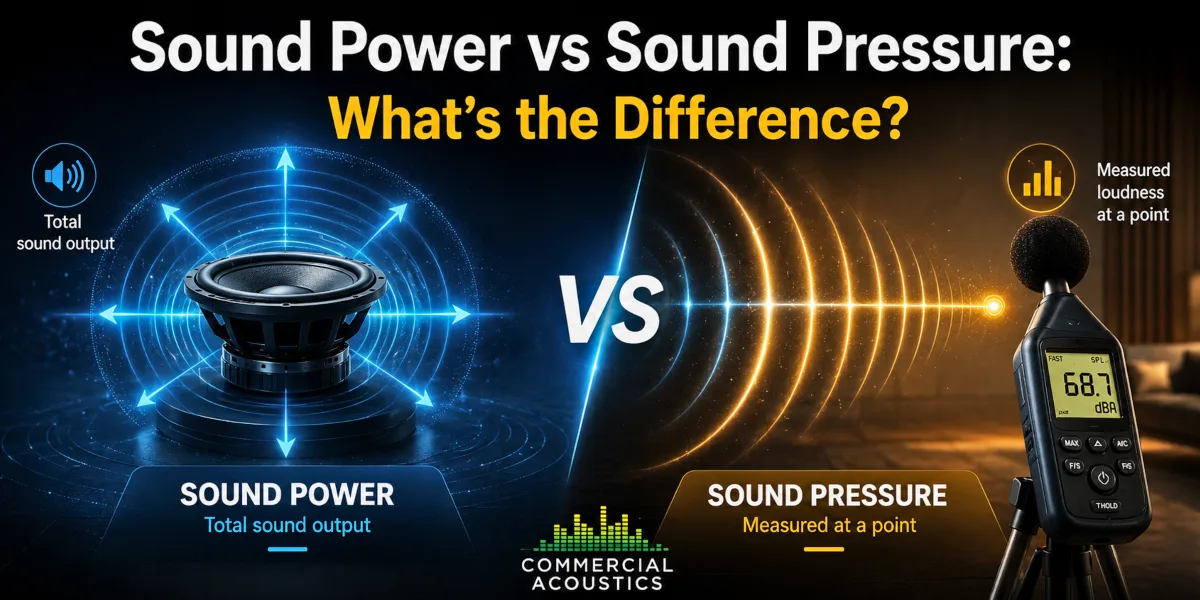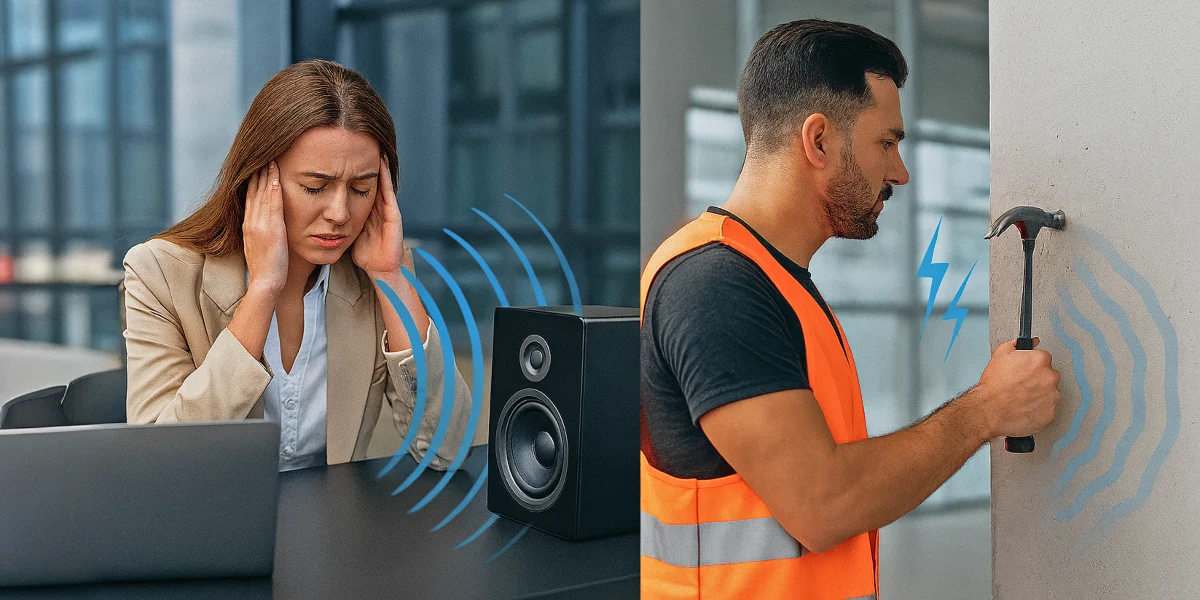
Sound power is the energy a source emits; sound pressure is what a listener hears. Mix them up and you miss the spec by 10–20 dB. Here is the difference, the conversion, and where each one belongs.
Fundamentals
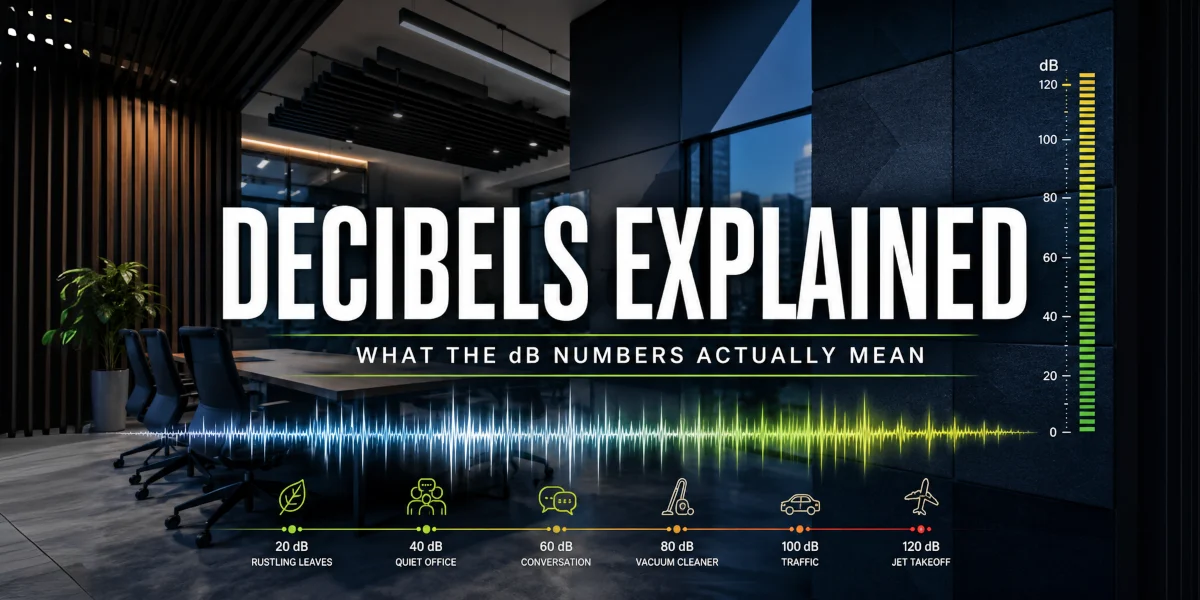
Decibels aren’t a unit of loudness — they’re a logarithmic ratio. Every 10 dB is 10x the sound energy and roughly twice as loud to the ear. Covers dBA versus dBC, SPL versus sound power, and OSHA/NIOSH exposure limits.
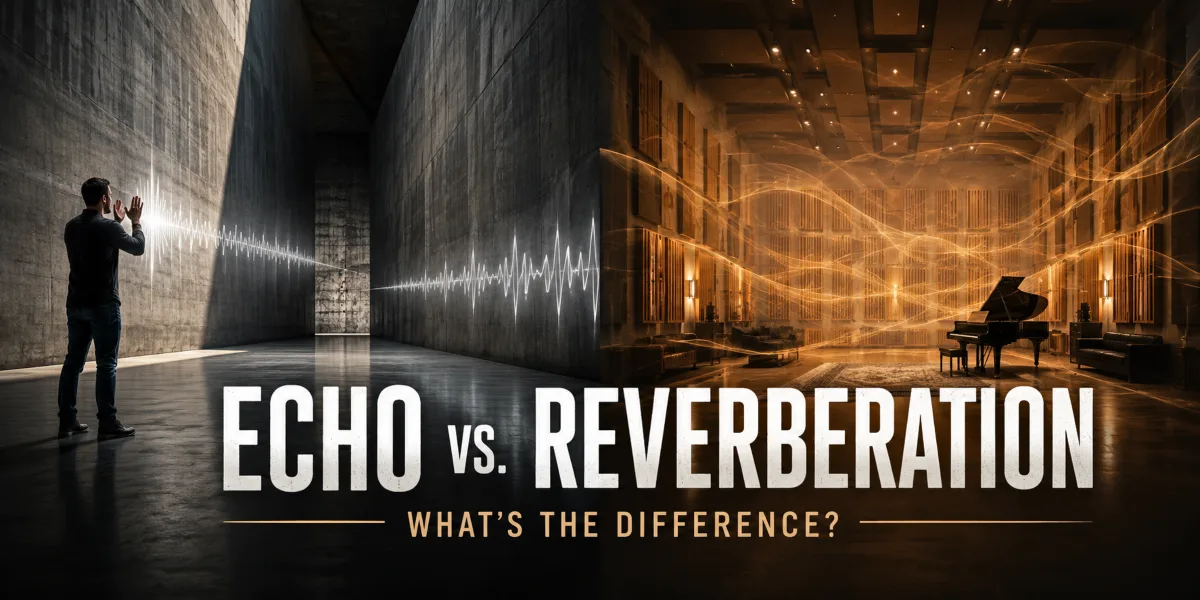
Echo and reverberation are often confused, but they’re different acoustic problems with different fixes. An echo is a distinct repeat delayed 50 ms or more; reverberation is overlapping reflections decaying over time, measured in RT60. Here’s how to tell them apart and treat each one.
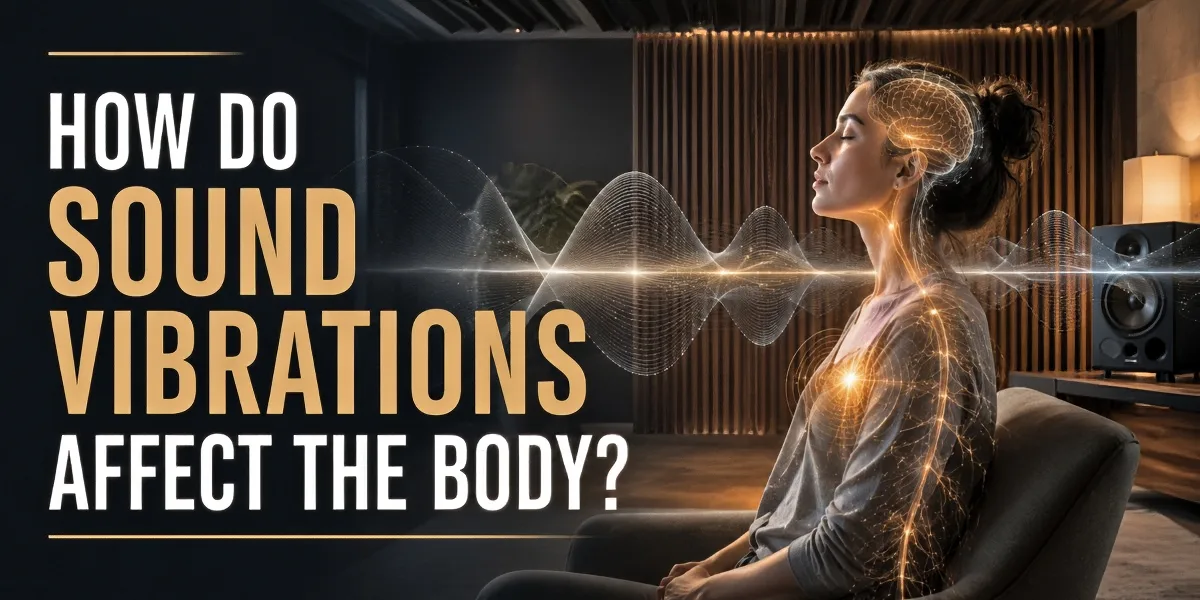
How sound waves move through tissue and bone, not just the ear – what low frequencies do to circulation, the nervous system, and cortisol, and why dose, duration, and vibration exposure matter more than volume alone.
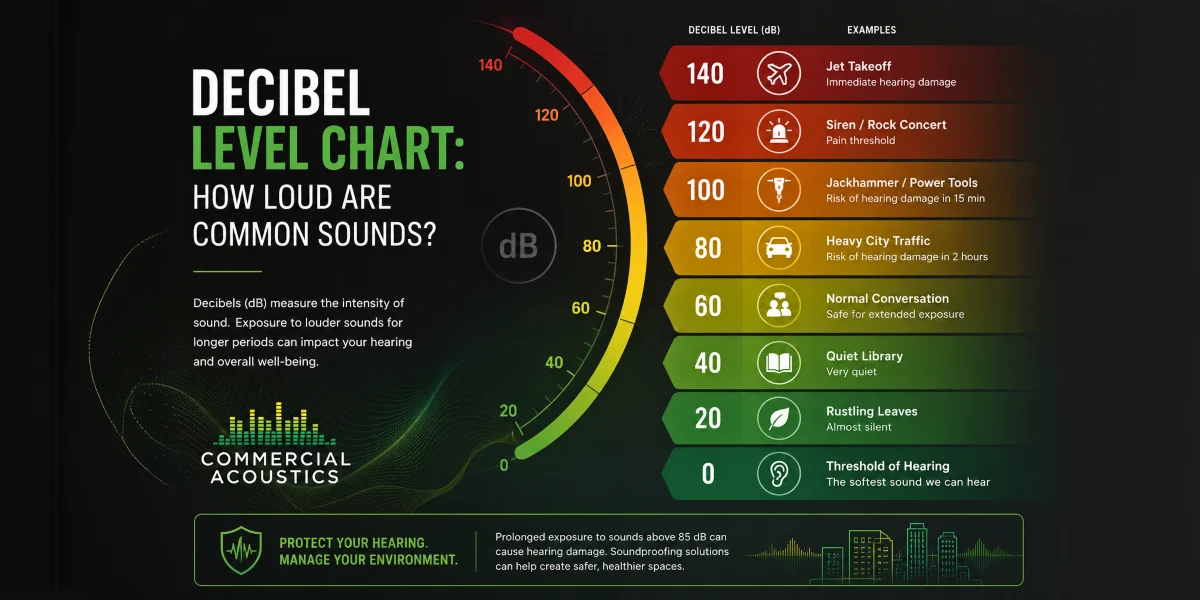
Decibel levels for everyday sounds – from a whisper (30 dB) to a jet engine (140 dB) – plus OSHA safe exposure limits, hearing damage thresholds, and acoustic design context.
Sound travels four times faster through concrete than air — why stiffness beats density, what that means for structure-borne noise paths, and how to turn one of the worst transmission materials into a quiet building.
From the loudest sound ever recorded to why a 1% gap leaks 50% of sound energy — twenty surprising facts about how sound behaves, why egg cartons don’t absorb it, and what humans actually hear.
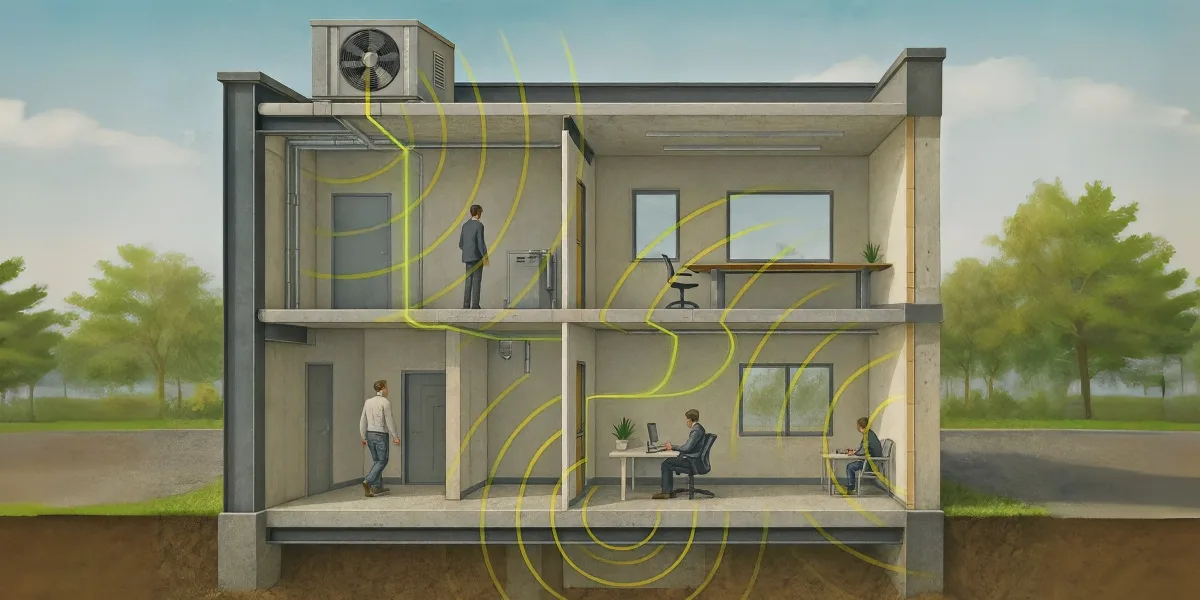
Every noise complaint starts with one question — is the sound coming through air or through structure? How to tell which you’re fighting, and the two completely different strategies for solving each.
Vibration doesn’t fade like airborne sound — how it propagates through structure, why steel and concrete carry it so far, and the design moves that stop equipment and footfall noise before they ring through a building.
Mass and decoupling do not matter if sound finds another way around – how flanking paths, penetrations, gaps, and on-site workmanship determine whether designed STC ratings hold up in the built room.
The physics behind how sound moves — airborne pressure waves, structure-borne vibration, speed through common building materials, frequency ranges, diffuse versus direct field, and how dBA falls off with distance.
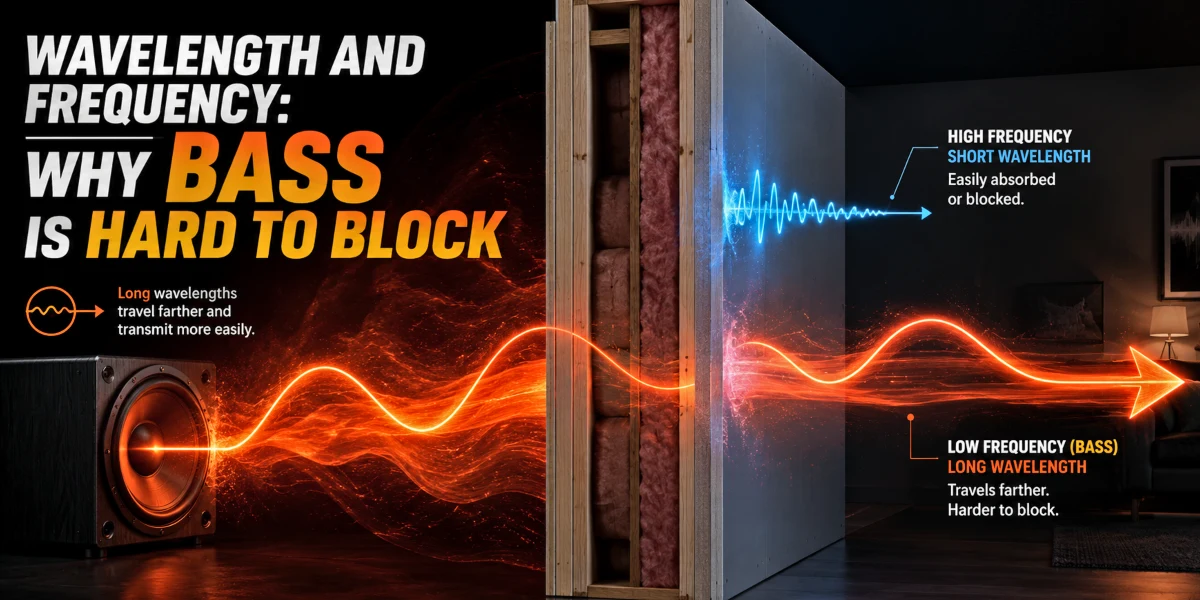
The core acoustic properties — frequency, amplitude, wavelength, propagation through materials — and how the additive and logarithmic behavior of sound shapes every decision in studio, classroom, and building design.
Why a high-STC wall can still fail — flanking paths through floors, ceilings, ducts, and framing, how they degrade designed performance, and the early-coordination moves that keep them from undoing the spec.
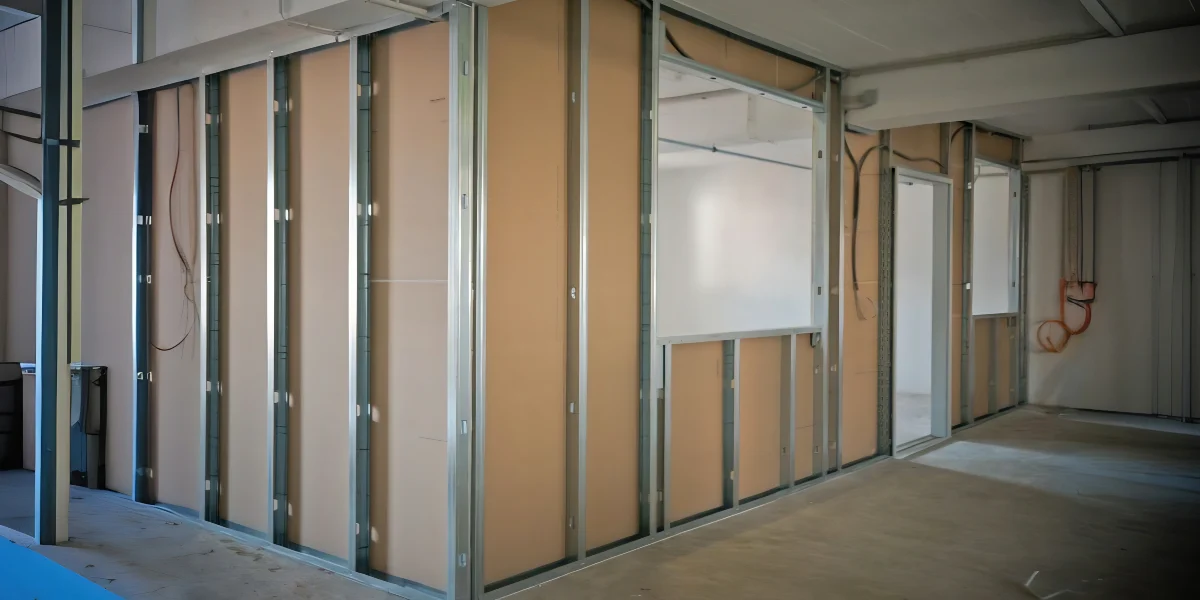
The four principles every soundproofing assembly uses (mass, decoupling, damping, absorption), how STC, IIC, and NRC measure performance, and the common myths — including soundproof paint — that quietly waste budget.
Absorption lowers dB in some situations and not in others — when it does, when blocking is the right call instead, and a real St. Pete restaurant example showing what coverage actually changes the meter.
- 1
- 2