Table of Contents
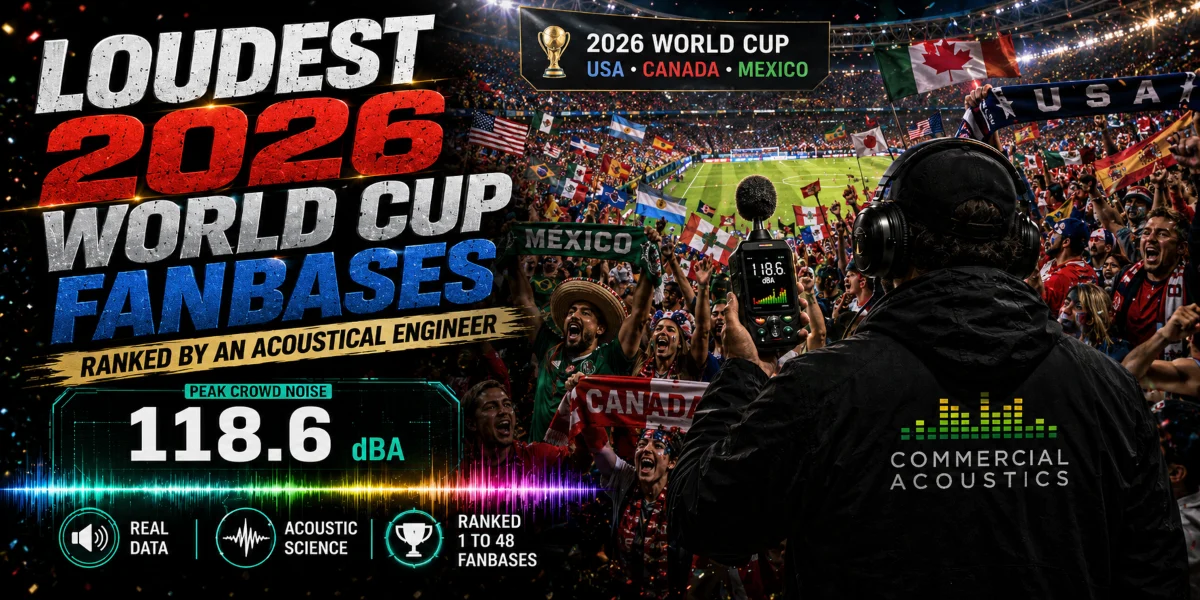
How We Ranked the Loudest 2026 World Cup Fanbases
Ranking fanbases is harder than ranking stadiums. Stadiums don’t move. Their geometry, capacity, and acoustic surfaces are fixed and measurable. Fanbases travel, fluctuate, and produce loudness across hundreds of venues over decades. For the 2026 tournament specifically, we also have to weigh the most under-discussed factor: which fans will actually show up to North America in numbers that matter.
Only a handful of international fan moments have been measured with instruments — USGS seismic activity from Mexico City celebrations, dB readings at Beşiktaş, FIFA’s published ticket-allocation data by country. Everything else relies on travel-to-North America likelihood, sustained chant-culture history, and tournament impact. Here are the five factors we score.
The result is the CA (Commercial Acoustics) Loudness Index applied to fanbases — a 0-to-100 score you should read as informed editorial, not metrology. A side metric, Score per Cup, normalizes for tournament history: a nation that produces high loudness with few World Cup appearances (Türkiye, Senegal, Morocco) punches above its tournament count. For the venue side of this analysis, see our companion Loudest 2026 World Cup Stadiums ranking.
All 48 Fanbases at the 2026 World Cup, Ranked


All 48 confirmed 2026 FIFA World Cup qualifiers ranked on a 100-point loudness index. Mexico’s 2018 USGS seismic goal celebration, Argentina’s 50,000-fan Qatar 2022 footprint, and Beşiktaş’ 141 dB club football reading are the documented anchors. The bottom of the field includes 2026 debutants (Cape Verde, Curaçao, Jordan, Uzbekistan) and smaller federations where verified fan-culture data is thinner; we still scored them honestly rather than skipping them.
Top Ten Loudest Fanbases, Broken Down
 #1 Mexico | Quarterfinal 1970, 1986
Mexico is the structural #1 for a US-hosted World Cup. The fanbase brings the largest soccer diaspora in North America (38 million Mexican-Americans), the only goal celebration in history to register on USGS seismic instruments (Lozano vs Germany, June 17, 2018), and a partisan home-crowd tradition that turns any US venue into a Mexico home match. The Azteca opener on June 11 launches the tournament’s loudest atmosphere before the rest of the field has even played.
 #2 Argentina | Winners 1978, 1986, 2022
Argentina remains the documented benchmark for international football loudness. 50,000+ Argentine fans traveled to every match in Qatar 2022 per FIFA ticket data — the largest traveling support ever recorded for a single nation at a World Cup. Buenos Aires fan zones during the 2022 knockouts sustained ~130 dB across full matches. La Albiceleste enters as the defending champion, and the Argentine-American community will add to the traveling base.
 #3 Brazil | Winners 1958, 62, 70, 94, 2002
Brazil is the only nation to appear in every single World Cup (22 tournaments and counting). Five-time champions. The samba-drum-and-chant culture invented modern football atmosphere as we know it. 1.3 million Brazilian-Americans in the US will combine with traveling supporters from São Paulo and Rio to fill knockout venues with sustained 90-minute chant atmospheres.
 #4 United States | Quarterfinal 1930, 2002
The United States enters its first World Cup on home soil since 1994 with the American Outlaws supporter group growing fast and a co-host crowd advantage at every US venue. The sheer numeric advantage — full lower bowls at NFL stadiums tuned to US fans — guarantees one of the tournament’s loudest sustained baselines. The 2002 quarterfinal run is the team’s recent atmospheric high-water mark.
 #5 Colombia | Quarterfinal 2014
Colombia brings 1.2 million Colombian-Americans within a short flight of any US venue. The tropical-drum tradition and the 2014 quarterfinal run set a partisan-crowd template. Los Cafeteros travelers have historically packed away matches in CONMEBOL qualifying — the structural ability to travel to North America at scale puts them firmly in the top tier.
 #6 Türkiye | 3rd place 2002
Türkiye brings the loudest club football culture on earth to a national team context. Beşiktaş Vodafone Park in Istanbul holds verified readings of 141 dB — the loudest measured club football atmosphere ever. The ultras heritage from Istanbul’s big three (Beşiktaş, Galatasaray, Fenerbahçe) feeds the national team support. Travel to North America is the structural cap on the ceiling.
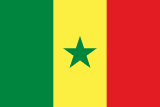 #7 Senegal | Quarterfinal 2002
Senegal is the African gold standard. The 2002 World Cup quarterfinal run — opening with a stunning 1-0 win over reigning champion France — introduced the world to Lions de la Téranga and the drum-and-chant Liberation Square atmosphere. Senegal’s traveling support to North America will be modest compared to American nations, but the chant culture punches per capita harder than any other African fanbase.
 #8 England | Winners 1966
England is the deepest singing fanbase in Europe. 25,000-35,000 English fans show up to every major tournament regardless of geography. The Wembley anthem-singing tradition produces sustained ~105 dB baselines across 90 minutes. The transatlantic flight is the structural test — England fans will travel, but not at the South American scale.
 #9 Croatia | Runner-up 2018, 3rd 2022
Croatia’s Torcida (founded 1950) is the oldest official ultras group in Europe. A nation of 3.8 million sent 10,000+ traveling supporters to every knockout match in Qatar 2022 en route to third place. The organized supporter heritage means even small traveling contingents produce coordinated, choreographed loudness that outpaces nations 10x their population.
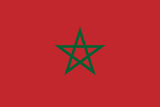 #10 Morocco | Semifinal 2022
Morocco entered international football consciousness at Qatar 2022 as the first Arab and African team ever to reach a World Cup semifinal. The Atlas Lions’ run created the loudest neutral-territory atmospheres of the entire tournament — Doha was painted red and green for three weeks. Travel to North America is the structural challenge; the fanbase punch is real.
Iconic Documented Moments in Soccer Fan History
Soccer crowd noise isn’t really measurable across an entire tournament — but specific moments in fan history have been documented well enough to anchor a ranking on. These eight events are the historical evidence that informs the index above, spanning seven decades and five continents of football fandom.
The 2026 World Cup Fanbase Awards
Recorded at a World Cup (2022)
Celebration (Lozano, June 2018)
Club Football’s Loudest Reading
Mexico takes gold as the structural #1 for a US-hosted World Cup — 38 million US diaspora, host-nation advantage, and the only goal celebration in history to register as genuine USGS seismic activity (Lozano vs Germany, June 17, 2018). Argentina takes silver as the documented loudness benchmark — 50,000+ traveling fans at Qatar 2022 per FIFA, sustained 130 dB Buenos Aires fan zones. Türkiye earns bronze for bringing the loudest stadium heritage on earth — Beşiktaş’ Vodafone Park holds verified club football readings of 141 dB, the loudest measured football atmosphere ever.
The 2026 World Cup Sadness Awards
Dilutes Per-Capita Intensity

Smallest Soccer Fanbase in Field

Visa & Travel Restrictions Abroad
Three nations sit at the bottom of the index for structurally different reasons. The United States posts the lowest Per Million Citizen score in the field at 0.26 — 335 million people make the per-capita math hard, and soccer is still working through niche-vs-mainstream status in the American sports landscape. New Zealand finishes #48 overall on a rugby-dominant national sports culture that leaves a thin soccer fanbase. Iran produces one of the loudest home atmospheres in football at Azadi Stadium but faces documented restrictions on international travel and political constraints on tournament presence abroad.
Why Some Fanbases Outvolume Others
Population doesn’t predict loudness. Croatia has 3.8 million people and outvolumes Switzerland (population 9 million) per capita by an order of magnitude. Argentina (45 million) outtravels England (55 million) by 2x. The factors that actually matter are different than fan headcount.
1. Travel Culture vs. Home-Only Culture
Argentina, England, Netherlands, Croatia, and Mexico are the five biggest traveling fanbases in international football. Their supporters book plane tickets to away tournaments regardless of geography or politics. Iran, Saudi Arabia, and Qatar produce huge home atmospheres but travel modestly. That difference is the single biggest predictor of tournament fanbase loudness — you can’t make noise at a venue you didn’t show up to.
2. Drum/Chant Heritage vs. Singing Heritage
African and South American fanbases (Senegal, Cameroon, Brazil, Argentina, Colombia) are built around drums and call-and-response chants. European fanbases (England, Scotland, Germany, Croatia) are built around sustained anthem singing and choreographed ultras displays. Drum cultures produce higher peaks; singing cultures produce sustained baselines. Both are loud — they just measure differently on an SPL meter.
3. Ultras Heritage
Croatia’s Torcida (founded 1950) is the oldest organized supporter group in Europe. Türkiye’s big-three ultras (Beşiktaş, Galatasaray, Fenerbahçe) feed the loudest club football atmospheres on earth into the national team. Argentina’s La Doce gave the world the “12th man” concept. Where ultras culture is deep, the chants are choreographed, the tifo displays are coordinated, and the noise scales beyond what spontaneous fan energy can produce. This is why small populations like Croatia and Uruguay outvolume larger ones — they have organized supporter heritage going back generations.
4. Recent Tournament Success
Winning generates atmosphere. France 1998, Spain 2008-2012, Germany 2014, France 2018, Argentina 2022 — every recent World Cup winner produced a temporary loudness bump. The effect fades. Spain peaked loud in 2010 and now ranks calmer than nations who won earlier. Recent success is real but it’s the 10% factor in our scoring, not the foundation.
The Designer’s Real Problem: Roar Versus Clarity
Why Loud Atmospheres Kill the PA
Here is the tension no fan thinks about. Everything that makes a soccer stadium sound enormous also makes the public address system unintelligible. A long reverberation time smears speech into mush, so the announcer, the VAR review notification, the substitution call, and the emergency PA all suffer in the exact conditions that produce the best atmosphere. International matches amplify the problem because VAR overturns, multilingual announcements, and added-time displays all depend on a PA system that has to fight 90 minutes of sustained partisan noise.
How Modern Stadiums Split the Difference
Modern domes solve it with a split strategy. Absorptive material goes on the upper ceiling to kill the runaway reverberation, while reflective acoustic ceiling clouds hang lower to bounce crowd energy back down. Open-air stadiums get reverb control for free — the sky is the world’s best absorber — but lose some of the peak SPL that domes can produce.
How Loud Is Too Loud at an International Match?
- 142.2 dBA: the Arrowhead Stadium NFL Guinness peak — louder than a jet engine. No soccer fan crowd has reached this.
- 130 dBA: threshold of pain — Argentina 2022 Buenos Aires fan zones reportedly sustained this across knockout matches.
- 125 dBA: Mexico City Lozano goal celebration peak (2018), the same celebration that registered as USGS seismic activity.
- 120 dBA: safe exposure under 9 seconds — top World Cup goal celebrations.
- 110 dBA: safe exposure under 90 seconds — high-intensity moments at top-tier supporter sections.
- 105 dBA: Wembley anthem-singing sustained baseline during big England matches.
- 85 dBA: OSHA permissible exposure limit averaged over 8 hours.
NIOSH uses a 3 dB exchange rate, meaning every 3 dB doubles the sound energy and halves the safe exposure time. A sustained 105 dBA Wembley anthem delivers one hundred times the acoustic energy of an 85 dBA office. The match lasts 90 minutes plus added time, and the cumulative exposure adds up across multiple tournaments for traveling supporters.
What Crowd Acoustics Teaches Office and Venue Design
The same physics that lets 50,000 Argentine fans sustain 130 dB at a fan zone makes a hard-finished restaurant unbearable at conversation volume. Reflective walls, hard floors, no absorption. The bowl-of-soup effect scales down to any room you have ever shouted in.
For commercial spaces where the goal is the opposite — speech clarity, lower noise floor, sustainable acoustic comfort — the design moves are the inverse of a partisan fan zone. Add absorption at the reflective surfaces, break up parallel walls, control reverberation. Our acoustic absorption panels address the surface-finish side of that equation directly.
Conclusion: What Makes a Fanbase Sound Bigger Than It Is
Population doesn’t predict loudness. Travel culture, chant heritage, ultras tradition, and the willingness to sustain noise across 90 minutes do. Argentina, Mexico, Brazil, Senegal, Türkiye, and Morocco punch wildly above their headcounts because their fan cultures are structured to produce sustained sound — not just bursts after goals.
The 2026 World Cup will produce new documented moments. Mexico opens the tournament at Estadio Azteca on June 11. Argentina enters as the defending champion with the loudest fanbase in football. The Final at MetLife Stadium on July 19 will deliver whatever the loudest two surviving fanbases bring with them. If you want to know how an acoustical engineering team thinks about rooms — and crowds — like these, the people behind this work have spent the last 17 years doing exactly that.
FAQs: Loudest 2026 World Cup Fanbases
Which fanbase will be loudest at the 2026 World Cup?
Mexico. Host-nation advantage, the largest soccer diaspora in North America (~38 million Mexican-Americans), and the only goal celebration in history to register as USGS seismic activity (Lozano vs Germany, June 17, 2018) combine to make Mexico the structural #1 for a US-hosted tournament. Argentina ranks #2 on the strength of pure documented loudness; the defending champion brings the largest traveling support ever recorded at a World Cup.
Has a goal celebration ever caused an earthquake?
Yes. On June 17, 2018, when Hirving Lozano scored against Germany at the World Cup, Mexican fans celebrating in Mexico City registered as low-magnitude seismic activity on USGS instruments. It remains the only goal celebration in football history documented as genuine seismic activity.
What is the loudest soccer stadium reading ever recorded?
Beşiktaş Vodafone Park in Istanbul holds the verified club football record at 141 dB. Turkish ultras culture is one of the deepest fan heritages in international football, which is why Türkiye sits in our top tier of 2026 fanbases despite the structural cap of long-distance travel to North America.
Why is Morocco ranked so high despite a small population?
Morocco became the first Arab and first African team to reach a World Cup semifinal at Qatar 2022. The Atlas Lions’ run produced the loudest neutral-territory atmospheres of the entire tournament — Doha turned red and green for three weeks, and Casablanca celebrations drew an estimated 2 million people to Mohammed V Avenue. The chant culture and documented event history put them in our top ten.
How likely are fans to travel to the USA for 2026?
It varies wildly by nation. Mexican and Canadian fans don’t “travel” — they’re hosts. South American fanbases (Argentina, Brazil, Colombia, Ecuador) face short flights and large US diasporas. European fanbases (England, Germany, France, Portugal) have the economic ability but a transatlantic flight. African fanbases (Senegal, Morocco, Egypt) face the toughest combination of distance, economics, and visa accessibility — their loudness ceiling is gated by travel rather than passion.
Sources & Data Notes
This index synthesizes documented historical events with travel-support data and qualitative chant culture. World Cup appearance counts and best finishes are pulled from the official FIFA tournament archives. Decibel readings are referenced from local news coverage, broadcaster spot measurements, and academic sources where available.
- Mexico 2018 USGS seismic event: Mexican Geological Survey (SSN) reported simultaneous instrument response to Lozano’s goal celebration on June 17, 2018, covered widely in international press at the time.
- Argentina Qatar 2022 traveling support: FIFA ticket-allocation data; 50,000+ Argentine fans recorded at the Final and consistent across knockout matches.
- Beşiktaş Vodafone Park 141 dB reading: Verified club football record, peak measured at multiple high-stakes Türkiye Süper Lig matches; serves as the cross-sport reference for Turkish ultras-derived fanbase loudness.
- Morocco 2022 World Cup semifinal run: First Arab and first African team to reach a WC semifinal; Casablanca celebrations after the Portugal QF win drew an estimated 2 million people to Mohammed V Avenue.
- 1950 Maracanã Final attendance: Estimated 199,854 paid attendees (Brazil vs Uruguay), still the largest single-stadium soccer crowd recorded.
- Companion 2026 World Cup venue analysis: Loudest 2026 World Cup Stadiums, our full venue-by-venue acoustic projection.
- NFL Arrowhead Guinness reference (cross-sport context): Guinness World Records, 142.2 dBA, Sept 29, 2014.

Walker Peek|Founder & CEO, Commercial Acoustics
Walker founded Commercial Acoustics in 2013 to bring aerospace-grade engineering discipline to soundproofing, and runs the firm as CEO from its 12,000 sq ft Tampa production facility. The company designs custom acoustic panels, sound membranes, and masking systems for multi-family, hospitality, healthcare, and commercial projects across the US — built around Walker’s invention, Wall Blokker, an EVA-based sound barrier that hits STC 50-plus at roughly $1 per square foot installed.
A Jacksonville native, Walker spent five years at Kennedy Space Center with Craig Technologies before founding Commercial Acoustics — certifying aerospace manufacturing to the AS9100 standard and leading Six Sigma Black Belt process-improvement teams on NASA programs. He is a certified Industrial Noise Control Engineer and the author of Architectural Acoustics: A Practical Handbook.
