Table of Contents
Project Overview: Acoustic Panels for Three Broadcast Studios at GPB
- Project: Acoustic Panel Installation for Three New Broadcast Studios
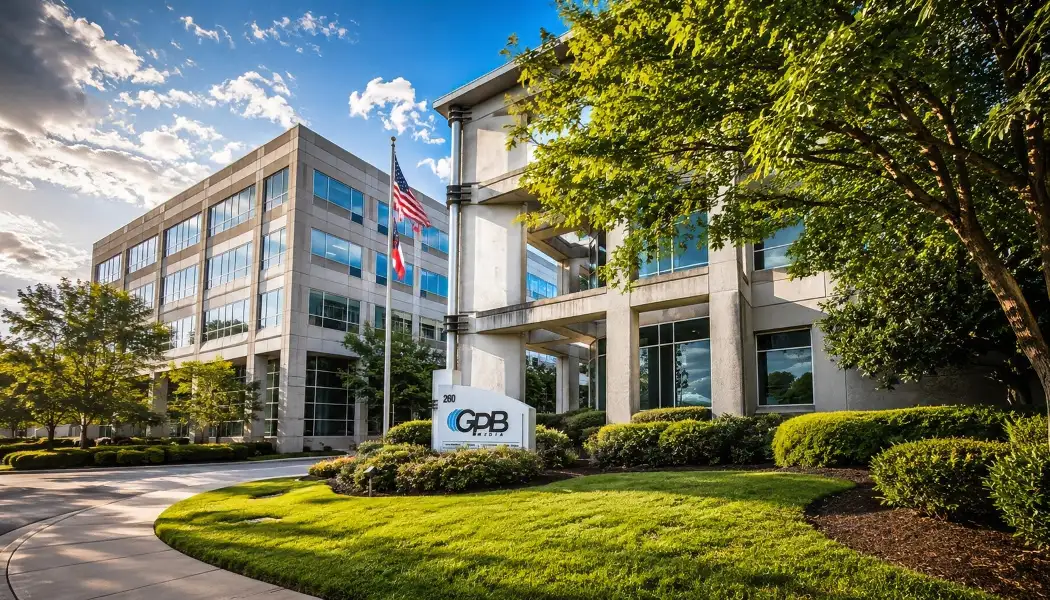
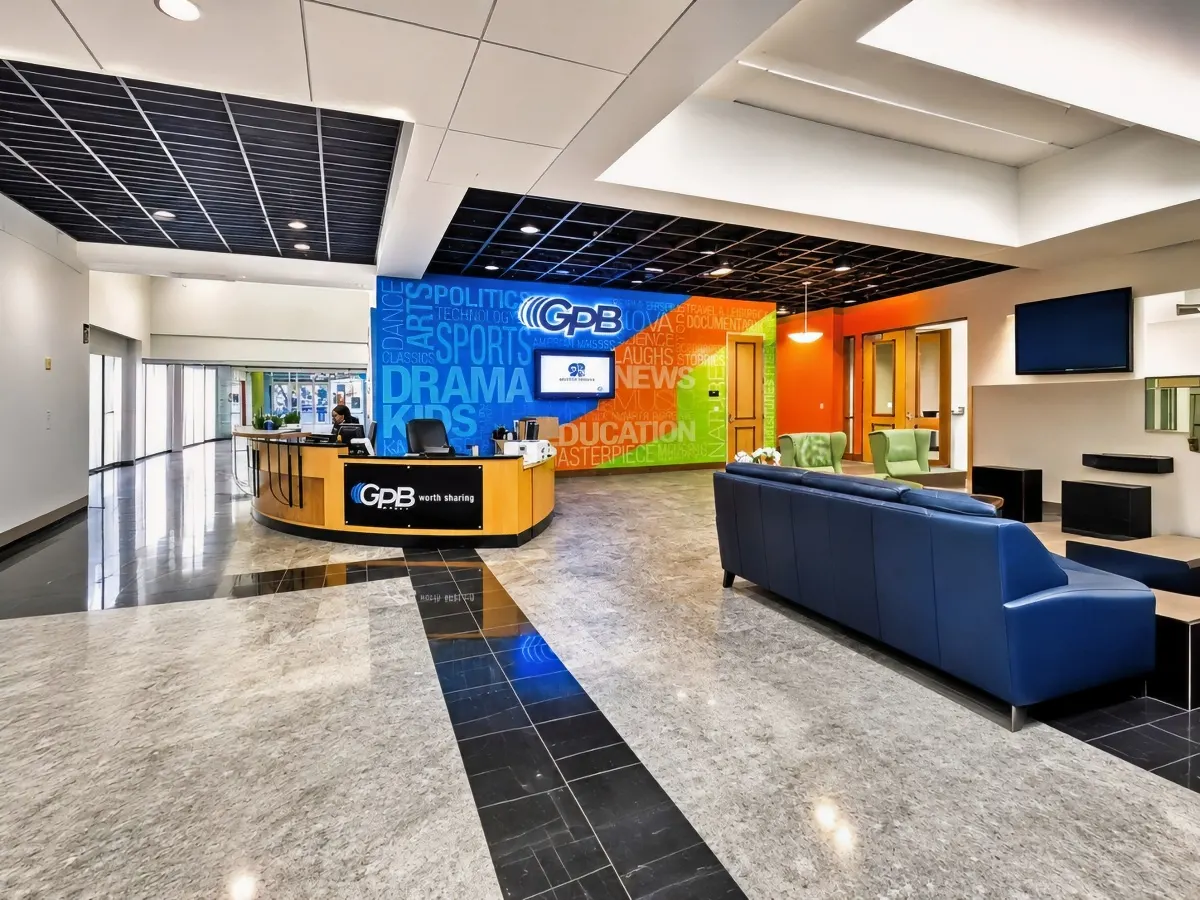
- Location: 260 14th St NW, Atlanta, GA 30318 (Georgia Public Broadcasting HQ)
- Facility Type: Public Broadcasting and Recording Studios in a Midtown Atlanta Building
- Client: Georgia Public Broadcasting (GPB)
- Objective: Reduce Flutter Echo and Hit NRC 1.0 Down to 250 Hz
- Scope: Custom 4″ Wood-Framed Acoustic Panels, Bracket and Impaling Clip Mount
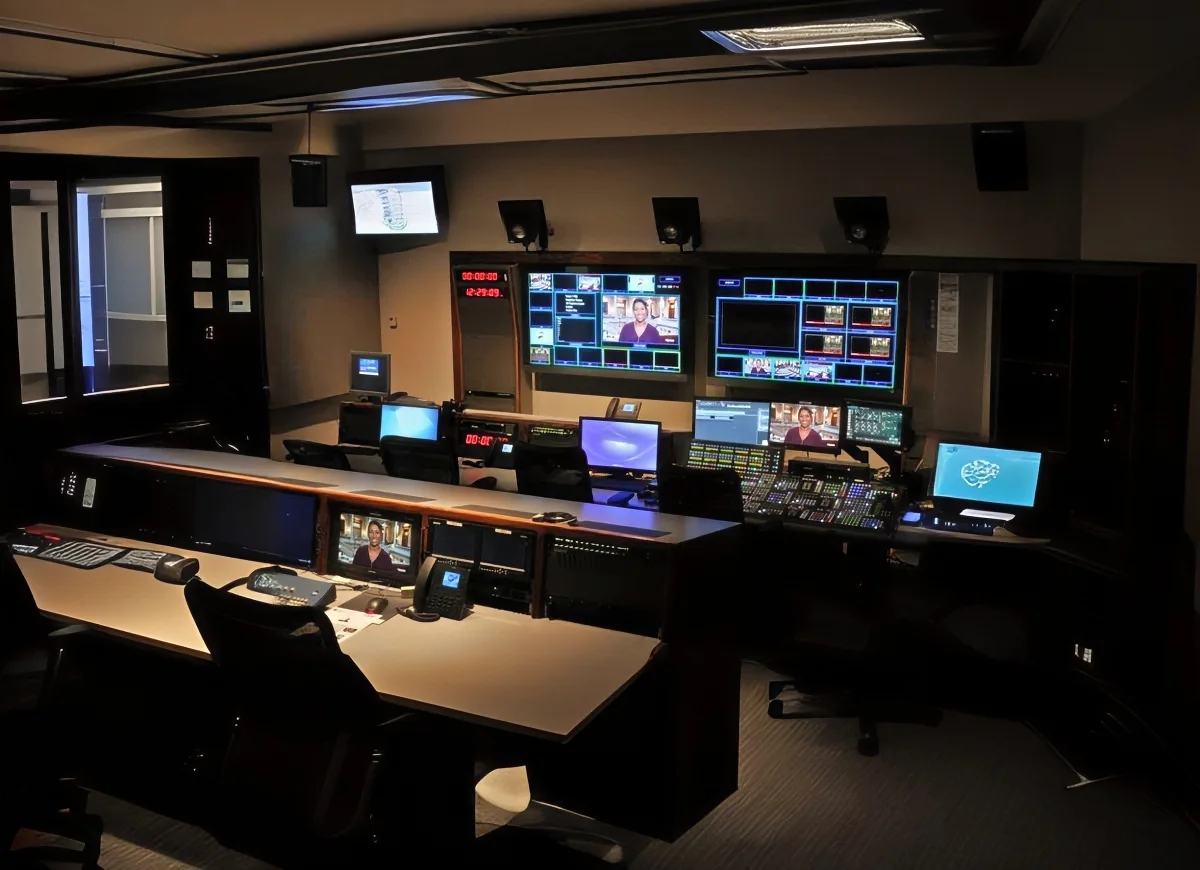
Atlanta-based Georgia Public Broadcasting expanded its broadcast capabilities at its Midtown Atlanta headquarters and built out three new recording studios to meet capacity. Commercial Acoustics was contracted to fabricate and install the acoustic treatment package across all three rooms.
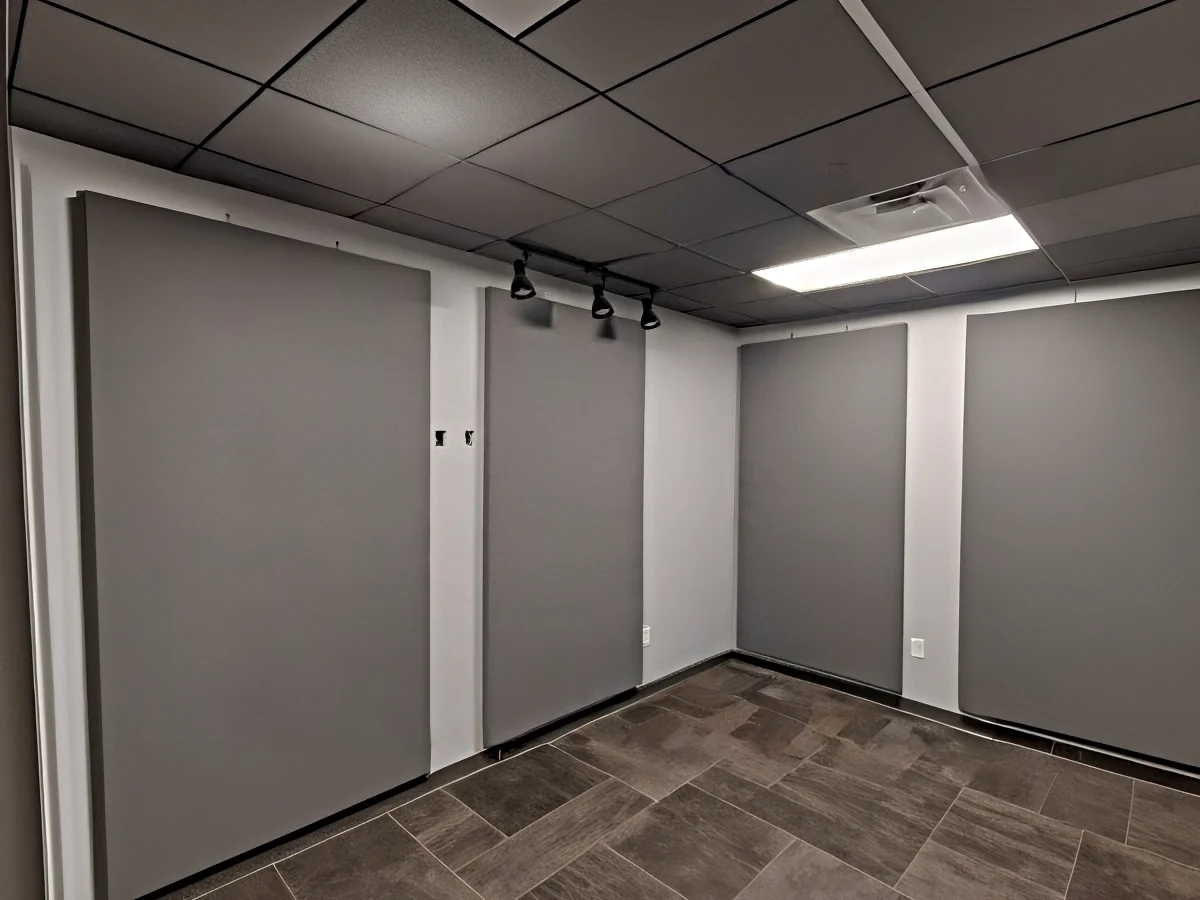
An independent acoustic consultant set the panel thickness and coverage area before we got involved. Our scope was build and install: large-format custom panels framed in wood, wrapped in acoustically transparent fabric, and mounted with a bracket-and-clip system robust enough to handle 4-inch panel weight on a drywall substrate.
Acoustic Challenges in Broadcast and Recording Studios
- Flutter Echo: Parallel drywall walls cause repeating reflections that smear vocal recordings
- Low-Frequency Buildup: Bass energy from male voices and music ducks below the absorption range of thin panels
- Drop-Ceiling Constraint: Plenum depth limits how much absorption the ceiling can hold
- Background Noise Budget: NC 25 or lower is the design target for clean tracks
Broadcast and recording studios are some of the least forgiving rooms in any commercial acoustic project. The microphone is much closer to the sound source than the human ear ever sits in normal conversation, so reflections that you would barely notice in an office show up as audible smear on a final track. Atlanta-area broadcast facilities almost always need targeted treatment to clean this up.
The bigger issue is bass control. A male voiceover or a baritone instrument concentrates energy below 250 Hz, which is where 1-inch and 2-inch absorption panels start to lose effectiveness. Without low-frequency absorption, the room develops standing waves that color every recording. Our sound absorption coefficient guide breaks down where common panel thicknesses fall off the curve.
Solution: Custom 4-Inch Wood-Framed Acoustic Panels
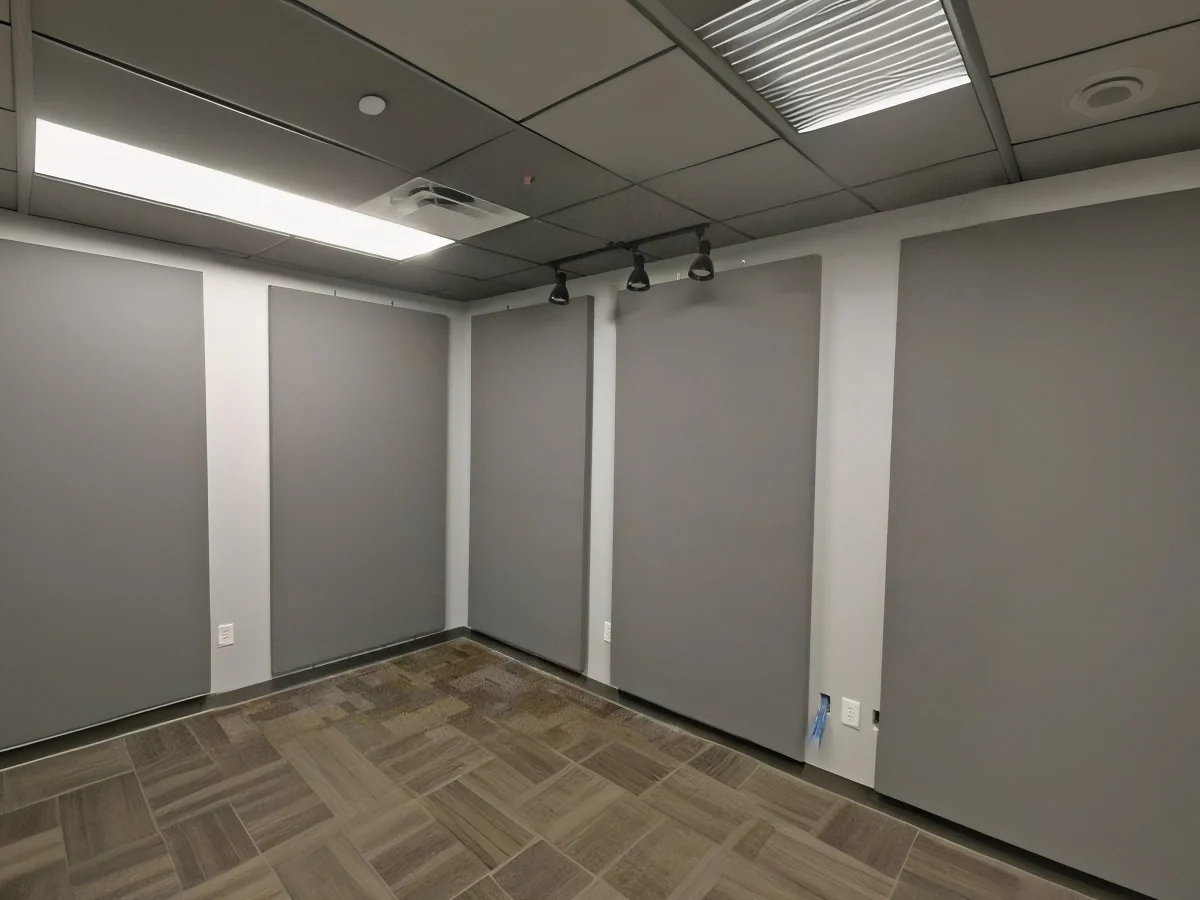
- Material: Custom acoustic panels, 4″ thick mineral wool core, wood-framed
- Fabric: Guilford of Maine acoustically transparent face material
- Performance: Absorption coefficient 1.0 down to 250 Hz
- Mount: Bracket system underneath, impaling clips and adhesive into the wall face
The panel build was custom from the frame up. Wood framing gave the panels enough structural rigidity to survive shipping and on-site handling without crushing the absorption core, which is a real risk on 4-inch panels. The wood frame also gave us a clean perimeter to wrap fabric to, which matters on a face that ends up under camera lighting and on broadcast for years.
Acoustically transparent acoustically transparent fabric wraps the panel face. Standard fabric reflects high frequencies before they reach the absorption core, which kills NRC. Acoustically transparent material lets the full audible spectrum into the panel, where it gets converted to heat instead of bouncing back into the room.
Thickness is what unlocks low-frequency control. Our 4″ panels deliver an absorption coefficient of 1.0 down to 250 Hz, which is well below where most off-the-shelf studio treatment falls off. That extended bottom-end performance is the difference between a room that records cleanly and a room that needs constant EQ correction in post.
Broadcast Studio RT60 Targets and Why Thickness Matters
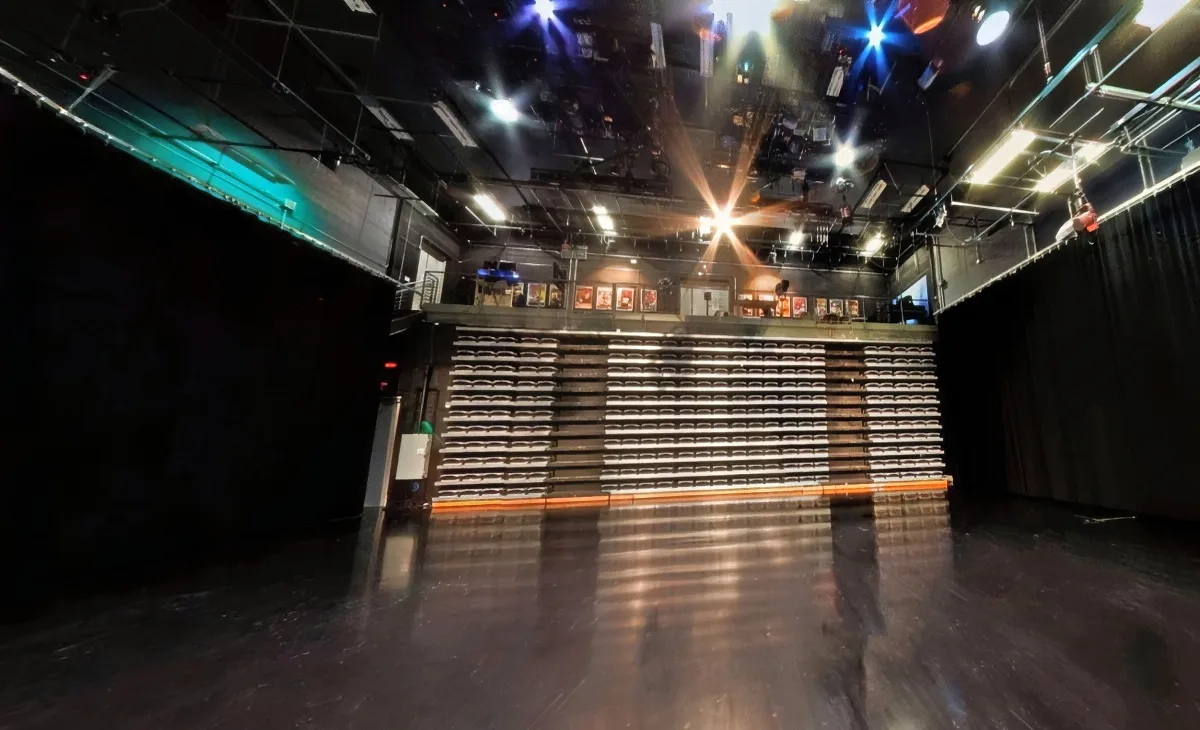
RT60 targets for studios are tighter than almost any other commercial space. Full music recording rooms aim for 0.3 to 0.5 seconds. Voice and broadcast booths run shorter, around 0.25 to 0.35 seconds, because intelligibility matters more than ambience. Anything above about 0.6 seconds and the room starts coloring every recording.
Hitting those numbers requires high broadband NRC plus extended low-frequency reach. A 1″ panel typically holds NRC 0.85+ above 500 Hz but drops below 0.50 by 125 Hz. A 2″ panel pushes the dropoff down toward 250 Hz. A 4″ panel like the GPB build holds full absorption down through 250 Hz and still contributes meaningfully into the 125 Hz band. That last octave is where male voiceovers and instrumental low end live.
The percentage of wall coverage matters too. Broadcast and podcast rooms typically target 40 to 50 percent of wall surface area in absorption to balance reverberation control against complete deadness. A fully dead room sounds unnatural for voice work and fatigues talent quickly.
White-Glove Installation: Field Modifications and Low-Poly Wrap
Acoustic panel installation is half acoustics, half white-glove finish work. Once the fabric face is exposed in a job-site environment, every drilling pilot hole or contractor moving a ladder past creates dust that permanently dirties the panel. We keep the panels in low-poly wrap until the moment they go on the wall and change gloves whenever a different product or tool gets handled.
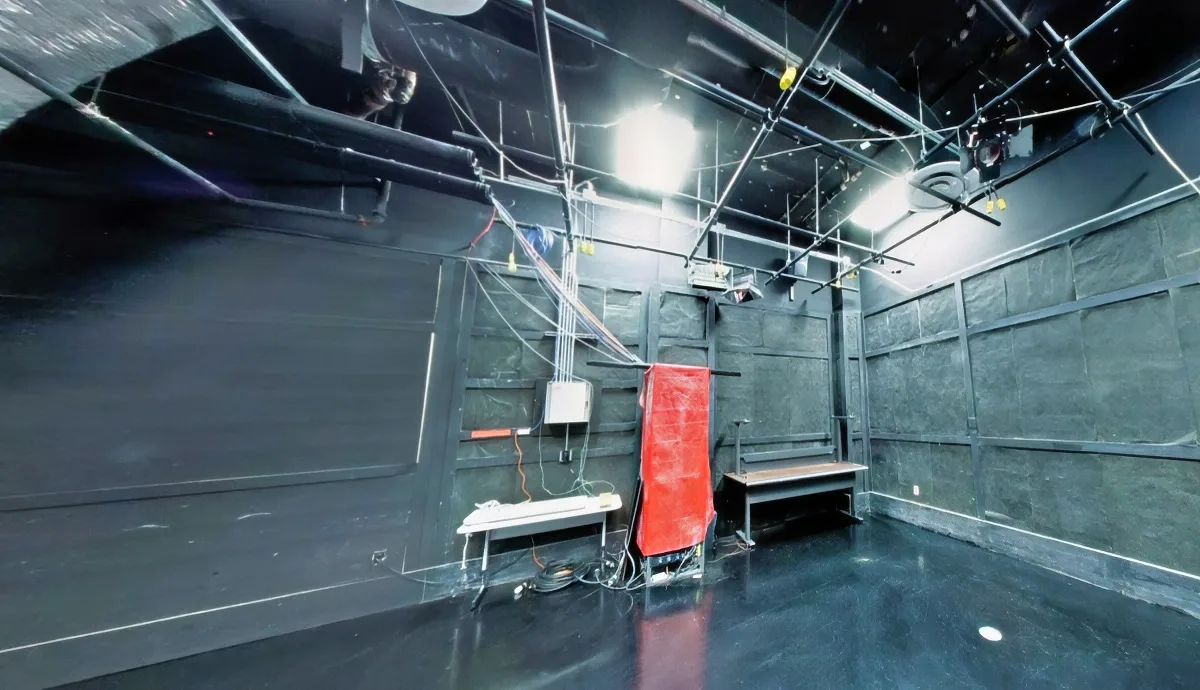
Field modifications are the other reality of any custom panel build. Architectural details on the GPB project shifted between drawing set and final field conditions, which meant several panels had to be trimmed or recut on site to fit the actual room geometry. Maintaining a clean fabric edge through that process is what separates a good install from a bad one.
The panels themselves were heavy enough that face-only fastening through impaling clips would have eventually pulled out under their own weight. We added a continuous bracket system underneath each panel that takes the dead load, with impaling clips and structural adhesive on the back face holding the panel flush against the wall. The bracket disappears once the panel is set.
Results: Pre and Post RT60 Verification with Calibrated Microphone
- Pre-Install Test: Calibrated microphone reverberation reading in each empty studio
- Modeling Tool: Sabines calculation for predicted RT60 baseline
- Post-Install Verification: Re-measurement with the same calibrated rig after panel install
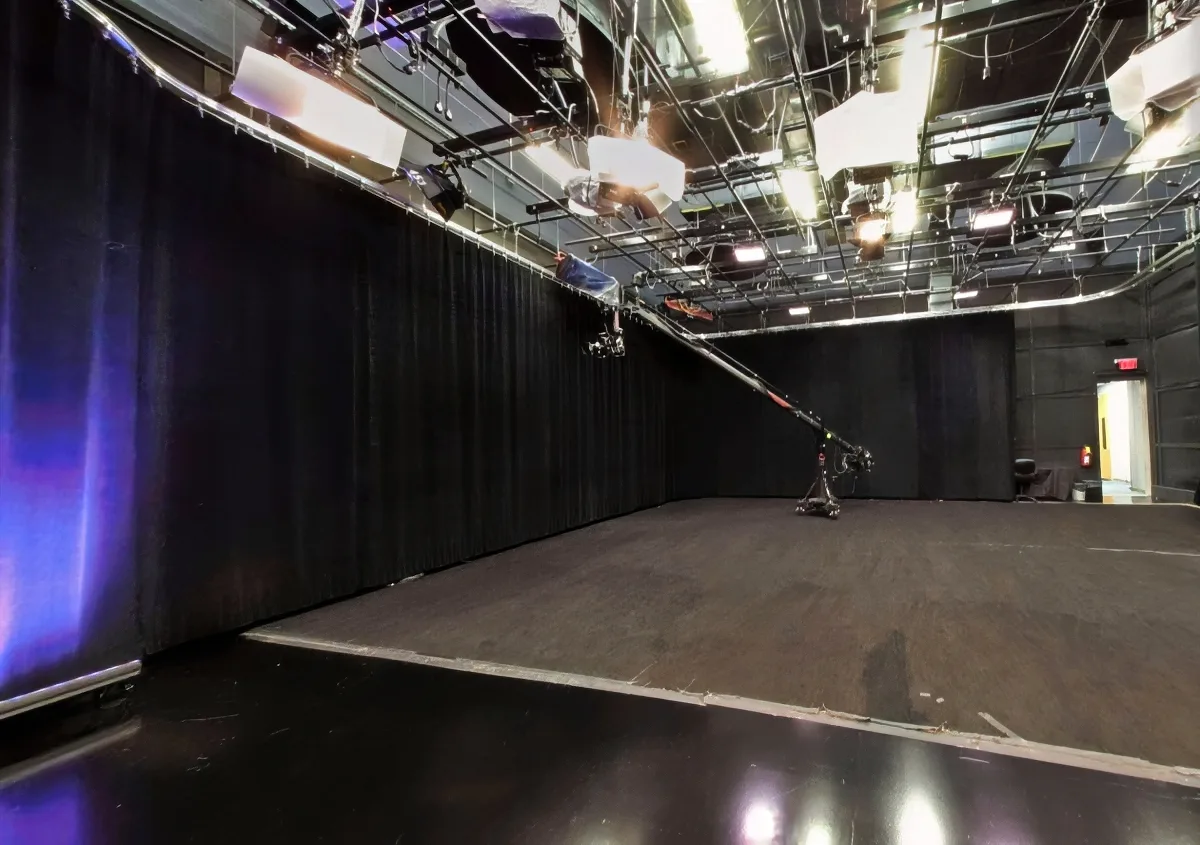
- Outcome: Three studios delivered to GPB inside the broadcast RT60 working range
Sabines calculations work well as a planning tool for rectangular rooms with conventional finishes. They struggle with non-rectangular geometry, partial absorption coverage, and the kind of mid-build architectural changes that any real studio fit-out runs into. The right move on a project like this one is to model up front and then verify on site once the panels are mounted. Our room acoustics calculator handles the prediction side of that workflow.
For another Atlanta-area education and broadcast-adjacent acoustic project, see our Georgia State lecture hall case study.
Conclusion: Acoustic Treatment for Broadcast and Recording Studios
Broadcast and recording studio acoustic treatment is mostly about getting four things right at the same time: panel thickness, coverage percentage, mount detail, and field finish. The checklist below is the short version of what we recommend for any new broadcast or recording studio build, in Atlanta or anywhere else in the Southeast.
- Specify 4″ Panels for Voice and Bass Work: 1″ and 2″ panels lose absorption below 250 Hz where male voice and instrumental low end live.
- Cover 40 to 50 Percent of Wall Area: Enough absorption to kill flutter, not so much that the room sounds dead and fatigues talent.
- Use Acoustically Transparent Fabric: Standard fabric reflects highs before they reach the absorption core. Transparent fabric preserves full broadband NRC.
- Bracket Heavy Panels at the Bottom: Face-only impaling clips eventually pull out under 4″ panel weight. Continuous bottom bracket carries the load.
- Verify with a Calibrated Microphone: Sabines modeling sets the design; on-site RT60 measurement confirms the room actually hits target.
Commercial Acoustics provides custom panel manufacturing, white-glove installation, and pre and post RT60 verification for broadcast facilities, recording studios, podcast booths, and corporate AV spaces in Georgia and across the Southeast. Reference product detail for the panel family used here lives on our acoustic absorption panel page.
FAQs: Broadcast Studio Acoustic Panels
What RT60 should a broadcast studio target?
Full music recording rooms aim for 0.3 to 0.5 seconds RT60. Voice and broadcast booths run tighter at 0.25 to 0.35 seconds. Anything above about 0.6 seconds and the room starts coloring every recording, so panel coverage and thickness need to be sized accordingly.
Why are 4-inch panels used in studios instead of 1 or 2 inch?
Panel thickness controls how low in frequency the absorption stays effective. 1-inch panels lose performance below 500 Hz. 2-inch panels hold to about 250 Hz. 4-inch panels reach absorption coefficient 1.0 at 250 Hz and still contribute meaningfully in the 125 Hz band where male voice and instrumental low end live.
What is acoustically transparent fabric and why does it matter?
Acoustically transparent fabric lets the full audible spectrum pass through to the absorption core. Standard upholstery fabric reflects high frequencies before they reach the panel, which kills NRC. For studio work, only acoustically transparent material delivers the broadband absorption the panel was designed for.
Can acoustic panels be installed after a studio is built?
Yes. Wall-mounted acoustic panels with bracket and impaling clip systems install over finished drywall without requiring demolition. Most retrofits run on an off-hours schedule. The harder constraint is keeping the fabric face clean during install, which is why we use low-poly wrap and white-glove handling on the panels.

Walker Peek|Founder & CEO, Commercial Acoustics
Walker founded Commercial Acoustics in 2013 to bring aerospace-grade engineering discipline to soundproofing, and runs the firm as CEO from its 12,000 sq ft Tampa production facility. The company designs custom acoustic panels, sound membranes, and masking systems for multi-family, hospitality, healthcare, and commercial projects across the US — built around Walker’s invention, Wall Blokker, an EVA-based sound barrier that hits STC 50-plus at roughly $1 per square foot installed.
A Jacksonville native, Walker spent five years at Kennedy Space Center with Craig Technologies before founding Commercial Acoustics — certifying aerospace manufacturing to the AS9100 standard and leading Six Sigma Black Belt process-improvement teams on NASA programs. He is a certified Industrial Noise Control Engineer and the author of Architectural Acoustics: A Practical Handbook.
