
Table of Contents
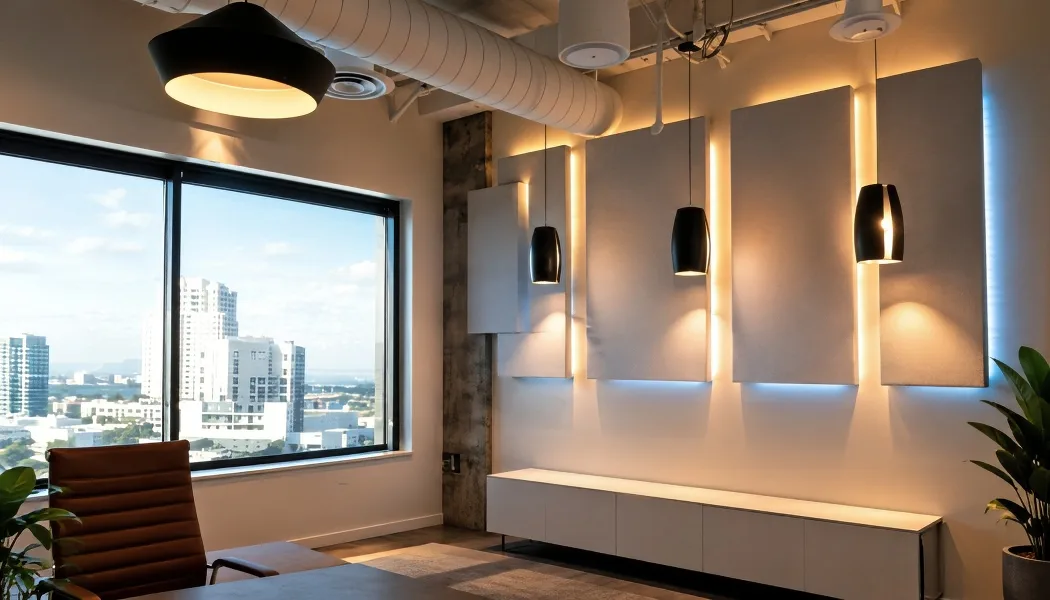
Project Overview: Conference Room Acoustics with Custom Panels
- Project: 14 Custom Fabric-Wrapped Acoustic Panels in a Corporate Conference Room
- Location: Downtown Clearwater, FL
- Facility Type: Office Conference Room with Hard Finishes and Telecom Use
- Client: Corporate Office Tenant (project anonymized)
- Pre-Treatment RT60: 1.2 seconds (well above conference range)
- Scope: Sabin Sizing, Custom Panel Fabrication, Multi-Surface Install
Why Office Conference Rooms Are the Worst Acoustic Offenders
Of every acoustic problem we get called into on a weekly basis, conference room reverberation tops the list. The reasons are structural: conference rooms are bigger than the average office, they’re built around hard reflective finishes (drywall, glass, wood floors), and they get used for the single most reverberation-sensitive activity in a modern office — telecom calls.
Telecom amplification multiplies the pain. Speaker phones, ceiling mics, and table-mounted conferencing systems all pick up the reverberant field along with the speaker’s voice. Above 0.8 seconds RT60, the remote caller starts hearing warbled speech instead of clear words. Meeting agendas deteriorate into “what?” and “can you repeat that?” — and the room gets quietly written off as unusable.
The trend toward open-plan offices and smaller huddle rooms compounds the problem, and similar sales office acoustic treatment needs show up in dealership F&I rooms and customer meeting areas. More small hard-surfaced rooms, more telecom calls per day, more rooms that need acoustic treatment to be usable.
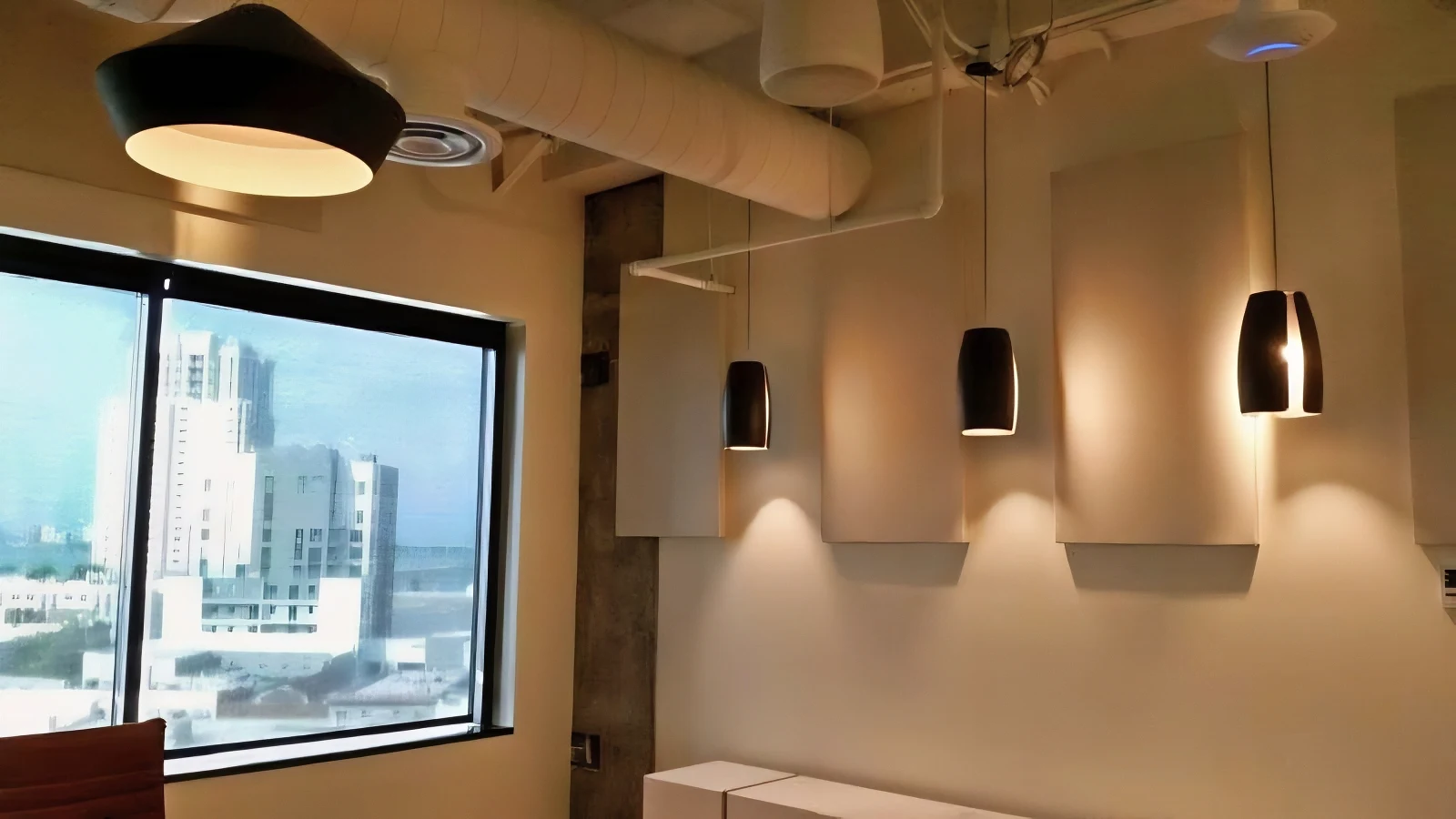
Reverberation Test: 1.2 Seconds Pre-Treatment
- Pre-Treatment RT60: 1.2 seconds, broadband
- Target Range: 0.5 to 0.8 seconds for telecom-driven conference rooms
- Hard Surfaces: Drywall, glass, wood flooring, exposed concrete deck
- Method: Sabin formula sizing from measured baseline + finish NRC values
1.2 seconds is well above the working window for any office conference room. Conversations layer on top of each other, telecom callers hear a smear of sound rather than discrete speech, and even in-person meetings start producing the cup-the-ear-and-lean-forward body language that signals an acoustic problem. The Sabin formula sized the required absorption from the measured baseline; running the math on your own room is what the how many acoustic panels do I need walkthrough covers in detail.
Custom Acoustic Panel Specification
- Quantity: 14 custom-fabricated panels
- Construction: Fabric-wrapped over high-NRC fiberglass core
- Sizes: Mixed dimensions to fit specific wall and ceiling locations
- Lead Time: 1 to 2 weeks fabrication, single-day install
Standard pre-fabricated panels would have meant compromise. Off-the-shelf 2’×4′ units do not flow around exposed concrete deck transitions, custom lighting, or design-feature walls without either visible gaps or panels jammed into spots they don’t fit. Custom fabrication solved both problems by sizing each panel to its exact location.
The fabric face was selected for healthcare-grade durability and matched to the office’s design palette. The core is the standard high-NRC fiberglass we use across most custom acoustic absorption panels — the depth and density that delivers absorption across the speech band without overshooting into low-frequency territory the room does not need.
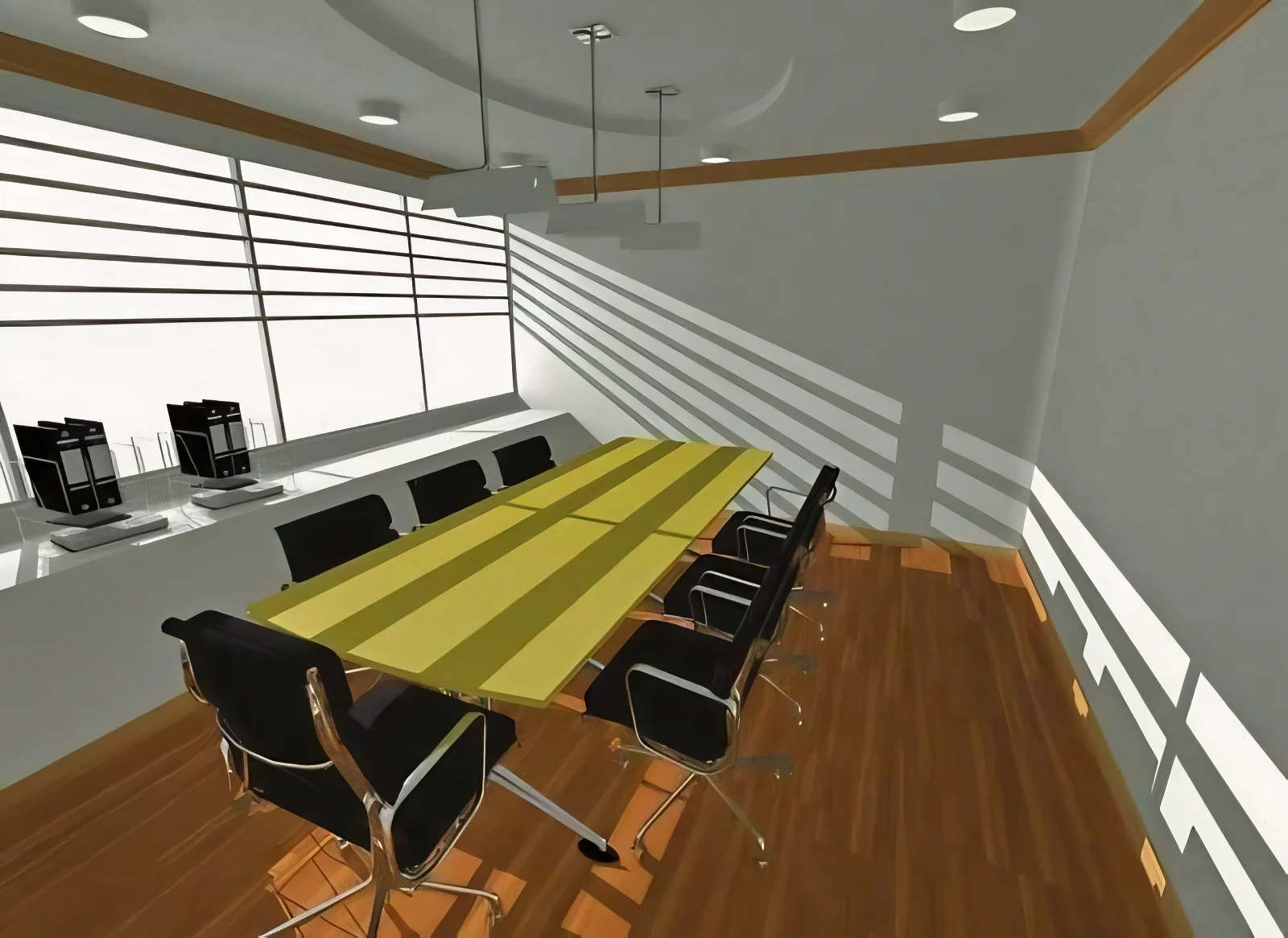
Multi-Surface Panel Layout: Walls, Ceiling, and Accent Under Lighting
- Wall Panels: Distributed across primary reflection surfaces
- Ceiling Panels: Blended into the exposed concrete deck
- Accent Panels: Back wall under existing lighting, design-integrated
- Coverage: Multi-surface distribution beats single-zone clumping
The multi-surface layout is what separates a working conference room install from a partial one. Putting all 14 panels on a single wall would have absorbed the same total energy on paper but left the opposite walls and the ceiling reflecting freely — which is exactly the wrong outcome for telecom rooms where reflections from any surface end up in the mic.
Distribution across walls, ceiling, and accent zones intercepts first reflections from every dominant path. The accent panels under the back wall lighting did double duty: acoustic absorption plus visible architectural detail that reads as design rather than acoustic gear bolted to drywall.
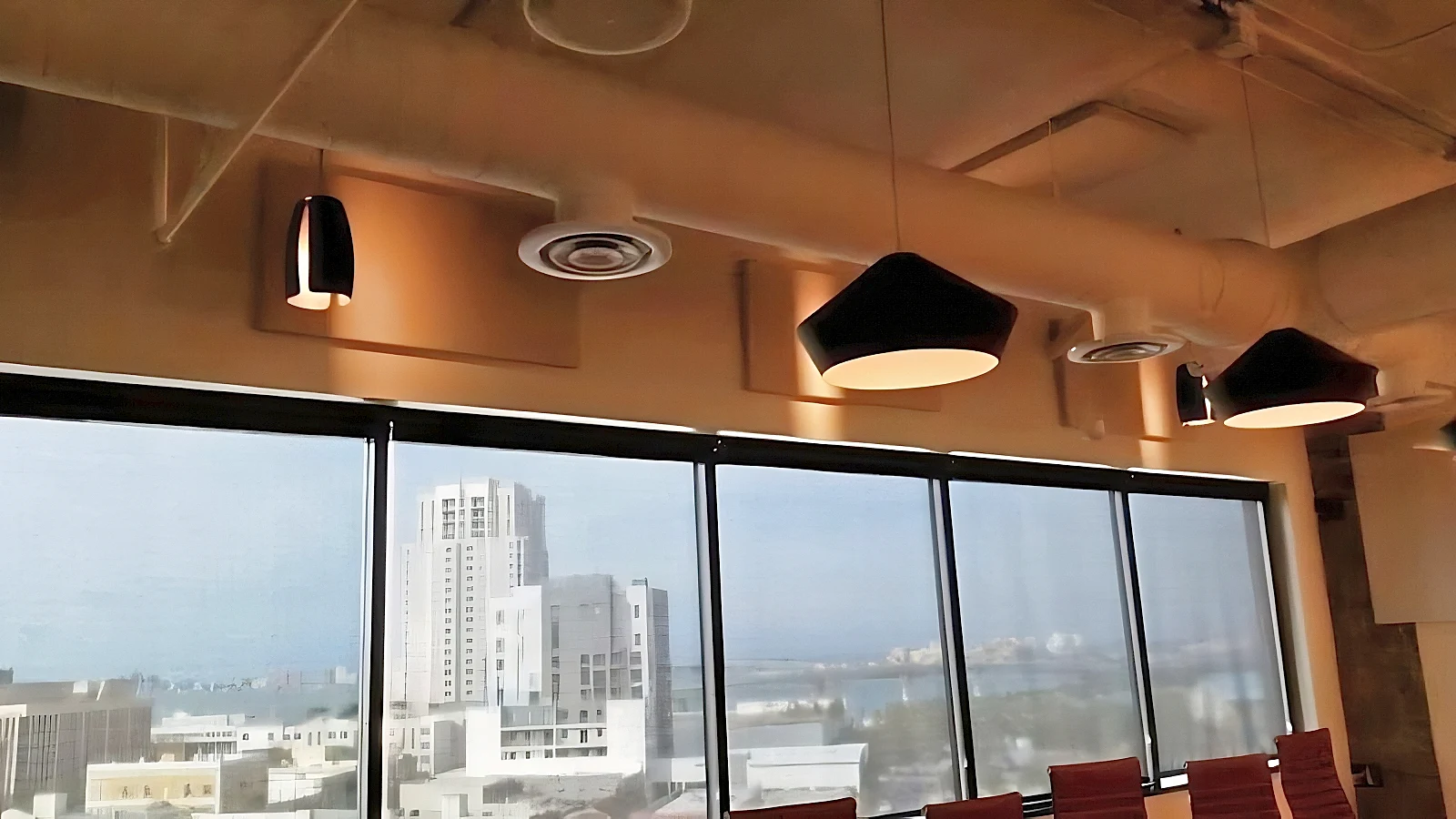
Results: RT60 from 1.2 to 0.7 Seconds
- Pre-Install RT60: 1.2 seconds
- Post-Install RT60: 0.7 seconds
- Reduction: 42% drop, comfortably inside the conference window
- Outcome: Telecom intelligibility restored, room back in standard rotation
Post-install testing returned 0.7 seconds — squarely in the conference room working window where telecom mics deliver clean signal to the remote end. The 42% reduction is the kind of step-change that staff perceive immediately. The “what did you say?” pattern stops within the first call after install.
Conference Room Acoustic Targets by Use
Different conference room programs call for different RT60 targets. Telecom-heavy rooms run tighter than in-person boardrooms; small huddle rooms run tighter still because the speaker and mic are close together. The table below maps the working trade-offs across the four most common use cases.
| Conference Room Use | Target RT60 | Why It Matters | Recommended Treatment |
|---|---|---|---|
| Telecom-Heavy Office Conference | 0.5 – 0.7 sec | Mics smear above 0.8 sec | Multi-surface custom panels or fabric wall |
| In-Person Boardroom | 0.6 – 0.9 sec | Group conversation comfort | Wall panels + ceiling treatment |
| Huddle / Call Room (2 to 6) | 0.4 – 0.6 sec | Small space + close-mic use | 2 to 4 panels or ceiling cloud |
| Multi-Purpose Training Room | 0.7 – 1.0 sec | Mixed speech and AV programs | Fabric wall + ceiling clouds |
The Clearwater install landed at 0.7 seconds — the exact upper-edge target for telecom-heavy conference. For a sister project that took the same conference-room problem in a healthcare setting (and used a different absorption tool to solve it), see the telecom conference room acoustic treatment case study at Ochsner. For the deeper office-privacy decision tree (modular vs. drywall walls), see the office sound privacy decision framework.
Conclusion: Conference Room Acoustics with Custom Panels
Fourteen custom fabric-wrapped acoustic panels distributed across walls, ceiling, and accent zones dropped the Clearwater conference room from 1.2 to 0.7 seconds RT60 — a 42 percent reduction that restored telecom intelligibility and put the room back in standard rotation. Custom fabrication beat off-the-shelf panels because the room’s exposed deck and accent lighting demanded panels sized to specific locations. See our other office acoustic projects for similar work across Florida and the Southeast.
FAQs: Conference Room Acoustics
What RT60 should a conference room target?
Telecom-heavy office conference rooms target 0.5 to 0.7 seconds RT60. In-person boardrooms can run 0.6 to 0.9 seconds. Small huddle and call rooms target tighter at 0.4 to 0.6 seconds because the speaker and mic are close together. The Clearwater room landed at 0.7 seconds, the upper edge of the telecom-conference window.
How many acoustic panels does a conference room need?
Sabin formula math sets the count. A typical office conference room runs 8 to 16 custom panels distributed across walls, ceiling, and accent zones. The Clearwater install used 14 custom fabric-wrapped panels for a single conference room sized in the standard 200 to 400 square foot range with hard finishes throughout.
When should you choose custom acoustic panels over standard pre-fab?
Custom panels win when the room has irregular surfaces (exposed deck, transitions, custom lighting) or when the design language demands specific sizes that off-the-shelf 2 by 4 panels cannot deliver. Pre-fab works fine for simple rectangular conference rooms with flat walls and standard finishes — but those rooms are getting rare in modern office design.
Why does multi-surface treatment beat single-wall panel coverage?
Multi-surface distribution intercepts first reflections from every dominant path — walls, ceiling, and floor. Concentrating all the absorption on one wall absorbs the same total energy on paper but leaves opposite walls and ceiling reflecting freely. For telecom rooms where any reflection ends up in the mic, distribution matters more than total square footage.

Walker Peek|Founder & CEO, Commercial Acoustics
Walker founded Commercial Acoustics in 2013 to bring aerospace-grade engineering discipline to soundproofing, and runs the firm as CEO from its 12,000 sq ft Tampa production facility. The company designs custom acoustic panels, sound membranes, and masking systems for multi-family, hospitality, healthcare, and commercial projects across the US — built around Walker’s invention, Wall Blokker, an EVA-based sound barrier that hits STC 50-plus at roughly $1 per square foot installed.
A Jacksonville native, Walker spent five years at Kennedy Space Center with Craig Technologies before founding Commercial Acoustics — certifying aerospace manufacturing to the AS9100 standard and leading Six Sigma Black Belt process-improvement teams on NASA programs. He is a certified Industrial Noise Control Engineer and the author of Architectural Acoustics: A Practical Handbook.
