
Table of Contents
Project Overview: NAHB Broadcast Room
- Project: Corner Office Conversion to Quiet Broadcast Room
- Location: NAHB Corporate Headquarters, Washington DC
- Facility Type: Industry-Association Office, Repurposed as Media Room
- Client: National Association of Home Builders (NAHB)
- Existing Conditions: Traffic Noise, Stairwell and Corridor Flanking, Tight Wall Footprint
- Objective: Broadcast-Ready Acoustic Environment Inside an Existing Office Shell
- Scope: Wall Blokker Pro, 5/8 inch Acoustic Gypsum, AcoustiTrac Sound-Blocking Curtains
This was a within-the-envelope acoustic retrofit, not a new build. NAHB needed a corner office converted into a quiet broadcasting space without giving up corridor square footage to thicker walls. The wall stack landed against the existing frame and the curtain layer added the final dB of attenuation needed for broadcast intelligibility.
The NAHB Headquarters and the Corner Office Problem
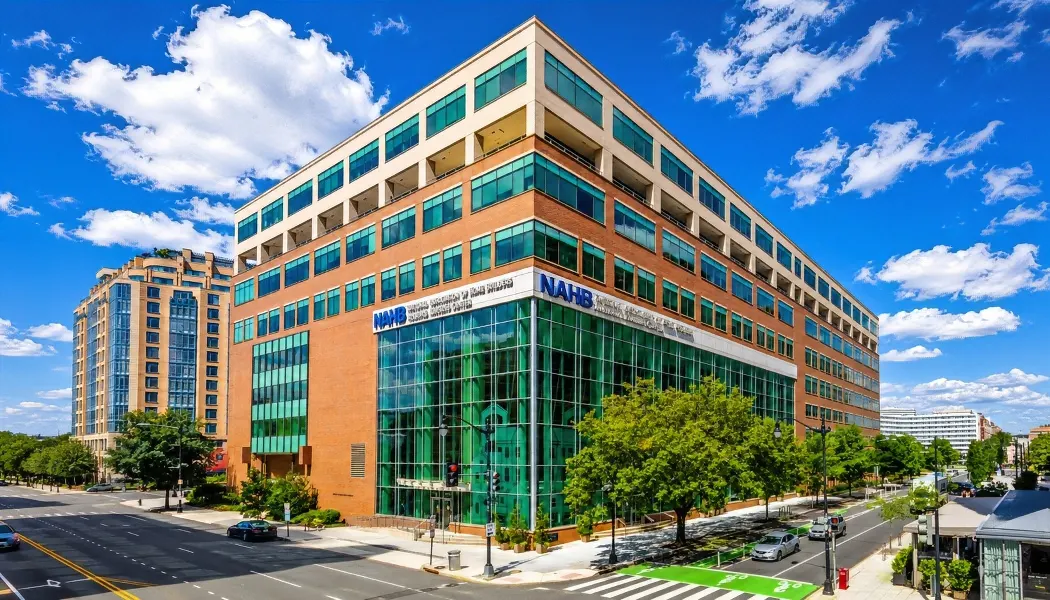
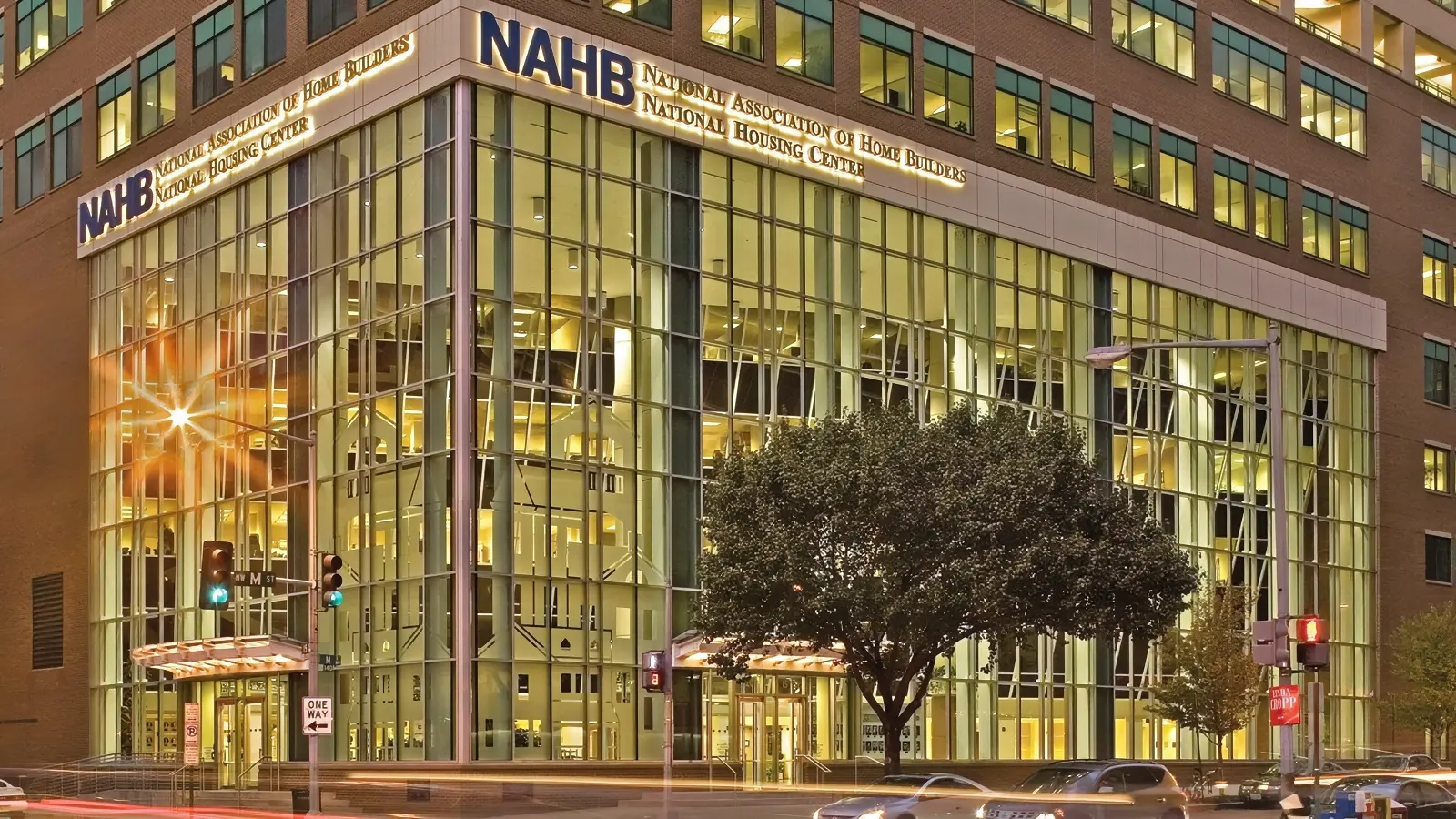
The National Association of Home Builders runs its corporate headquarters in downtown Washington DC, the industry body that represents residential builders nationally. Their communications team needed a quiet space to record broadcast content for member outreach, and the only available room was a corner office sitting against busy stairwells and a high-traffic corridor.
The constraints were typical for corporate retrofits. No structural changes allowed. No expansion into the corridor. The existing wall thickness was the budget for adding mass, and any noise still bleeding through after the wall work needed a non-permanent fix that did not require building permits or facilities sign-off.
Why Corner Offices Are Acoustic Nightmares for Broadcasting
- Two Exterior Walls: Each carries street and traffic noise from a different direction
- Stairwell Adjacency: Footfall and door slams transfer through the demising wall
- Corridor Flanking: HVAC and conversation noise enter via the ceiling plenum
- Broadcasting Threshold: Background noise floor must drop below NC 25 for clean recordings
Corner offices stack two exterior walls against a stairwell and a public corridor, which is the worst possible geometry for a broadcast space. Background noise on a mid-tier corporate microphone needs to sit below NC 25 to avoid the hum-and-shuffle bed that ruins broadcast intelligibility. Most corner offices read NC 40 or higher before any treatment. The STC calculator walks the math on the wall side.
The path from NC 40 to NC 25 is more than a single product can deliver. It takes layered intervention across walls, ceiling plenum, and the residual flanking paths that always survive a wall-only retrofit. The NAHB build used three layers to close that gap inside the existing envelope.
Wall Blokker Pro and Acoustic Gypsum: The Wall Stack
- Membrane Layer: Wall Blokker Pro bonded over existing drywall
- Finish Layer: 5/8 inch acoustic gypsum board over the membrane
- Treated Faces: Stairwell-side wall and corridor-side wall, both interior
- Wall Depth Added: Under 1 inch total, no corridor sacrifice
Wall Blokker Pro bonded directly over the existing painted drywall on the two interior demising walls. The membrane added mass to the assembly without requiring framing changes, and the 5/8 inch acoustic gypsum board went over the membrane as the finish layer. Total wall depth added came in under an inch, which the facilities team accepted without a permit conversation.
The two exterior walls did not need the membrane stack. The masonry exterior already carried enough mass to block road noise on its own, and the bottleneck was always the two interior wall paths that connected the broadcast room to the rest of the active office.
AcoustiTrac Curtains: The Final Layer for Broadcasting
- Product: AcoustiTrac sound-blocking curtain system
- Configuration: Overlapping panels, ceiling-mounted track
- Function: Final attenuation layer plus interior reverb control
- Reversibility: Removable for any future room reconversion
The AcoustiTrac curtain system handled two acoustic jobs at once. It added a final 5-to-7 dB of attenuation against the residual flanking paths that the wall stack alone could not catch, and it absorbed enough interior reflection to tighten reverb for broadcast-grade speech recording. Overlapping panels on a ceiling-mounted track meant the curtains read as decor rather than acoustic equipment when the room was hosting non-broadcast meetings.
The reversibility was the deciding factor for the facilities team. Curtains can be removed without touching the wall or the ceiling, which kept the room flexible for future use. Corporate retrofit work often dies at the permit stage, and the curtain layer kept the whole project below that threshold.
Working Inside Existing Corporate Office Geometry
- No Framing Changes: Existing 2×4 stud walls remained untouched
- No HVAC Rerouting: Original supply and return registers preserved
- No Corridor Encroachment: Wall depth stayed inside the original footprint
- Reversible Curtain Layer: Removable if the room ever reconverts back to office use
Working inside the existing office geometry was the entire project constraint. Corporate facility teams rarely sign off on framing changes or HVAC reroutes, and an industry-association headquarters carries even tighter facility-management oversight than a typical commercial office. Every layer of the build had to fit the existing envelope or it would have stalled at internal approval. Our office acoustic treatment page covers similar within-envelope retrofits.
The same approach works for any corporate broadcast room, podcast room, or recording space carved out of an existing office. Compare with the iHeart radio station project, which started from a clean slate with dedicated studio framing — the NAHB build delivered a similar acoustic outcome inside corporate constraints.
Results: Broadcast-Ready in a Corner Office
- Background Noise: Dropped below NC 25 with all three layers active
- Speech Clarity: Clean enough for direct-to-broadcast recording
- Total Project Time: Completed without disrupting active office operations
- Reusability: Room flexes between broadcast, recording, and standard meeting use
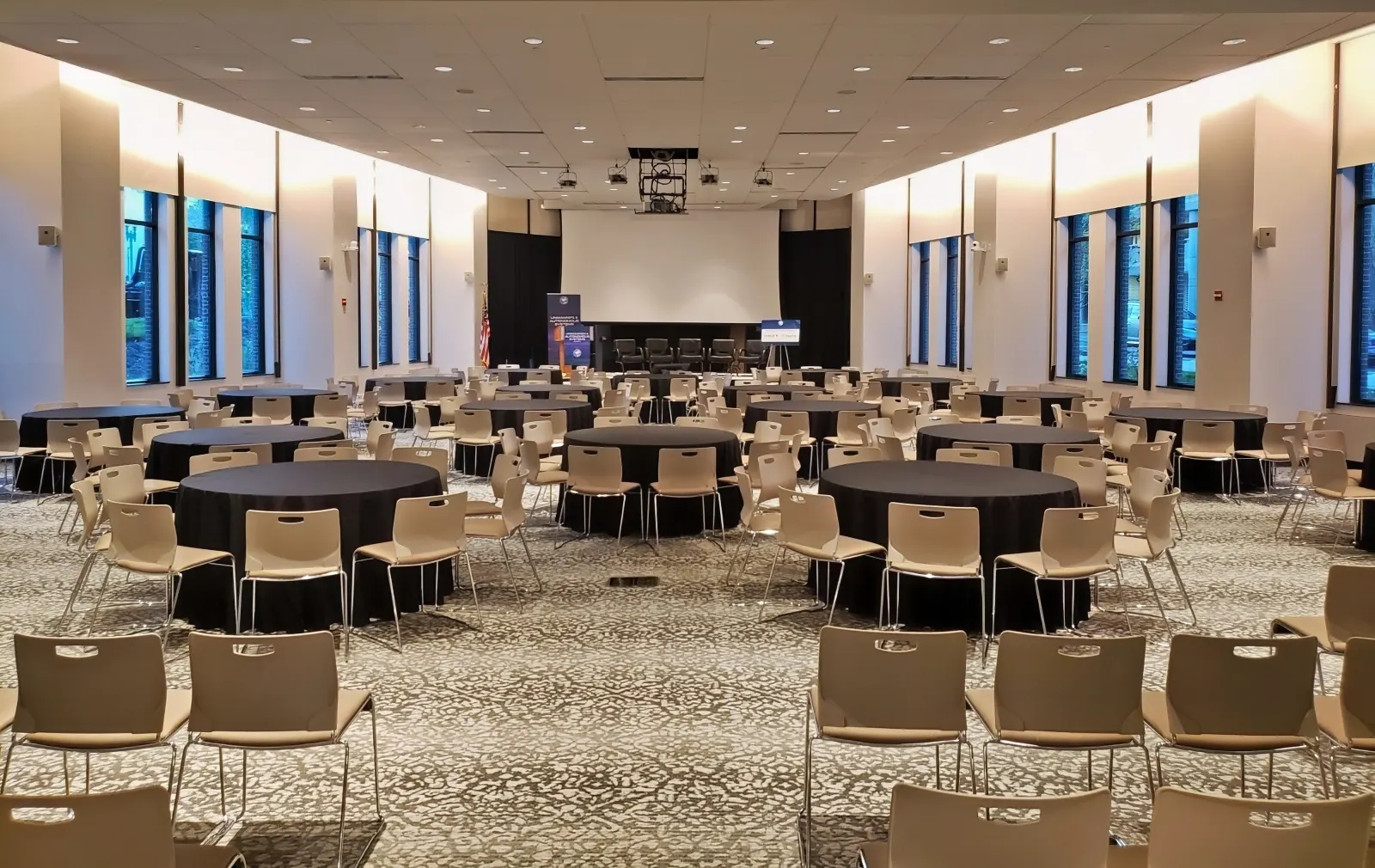
The room delivered broadcast-ready audio inside the original corner-office footprint. NC 25 was the target threshold and the layered build hit it without any structural change, no corridor encroachment, and no HVAC reroute. The communications team started recording from the new room within a week of the curtain install. A parallel example sits in the ASTC field testing study for corporate acoustic verification.
The bigger win was that the room stayed flexible. The curtain layer means future facilities staff can pull the broadcast configuration in 30 minutes if the room reverts to standard meeting use. That kind of reversibility is the part that gets corporate retrofit work approved.
Conclusion: NAHB Broadcast Room
The NAHB build is the case for layered acoustic treatment inside corporate-office constraints. Wall membrane for the structural-borne paths, acoustic gypsum for finish mass, removable curtains for the last few dB of attenuation. The result is a broadcast-grade room inside a working office, delivered without permits, framing changes, or corridor compromise. Request a project consultation on your corporate broadcast or recording build.
FAQs: Broadcast Room in an Office Space
What background noise level does a broadcast room need?
Most broadcast and recording rooms target NC 25 or lower so that HVAC and ambient noise stays below the broadcast microphone pickup threshold. Anything above NC 30 starts to introduce audible bed noise in the final recording.
Can you turn an existing corner office into a broadcast room?
Yes. The build typically requires acoustic membrane and finish board on the two interior demising walls, plus a removable curtain layer for the last several dB of attenuation. Exterior masonry walls usually carry enough mass on their own.
Do you need permits for a corporate office acoustic retrofit?
Most layered retrofit work stays below the permit threshold when the wall stack adds less than one inch of total depth and no framing or HVAC changes occur. Removable curtains never require a permit because they are reversible interior finish.
Do AcoustiTrac curtains replace wall treatment?
No. Curtains add several dB of attenuation and useful reverb control, but they are the final layer on a stack that already includes acoustic membrane and finish board. Used alone they cannot drive a room to broadcast-grade quietness.

Walker Peek|Founder & CEO, Commercial Acoustics
Walker founded Commercial Acoustics in 2013 to bring aerospace-grade engineering discipline to soundproofing, and runs the firm as CEO from its 12,000 sq ft Tampa production facility. The company designs custom acoustic panels, sound membranes, and masking systems for multi-family, hospitality, healthcare, and commercial projects across the US — built around Walker’s invention, Wall Blokker, an EVA-based sound barrier that hits STC 50-plus at roughly $1 per square foot installed.
A Jacksonville native, Walker spent five years at Kennedy Space Center with Craig Technologies before founding Commercial Acoustics — certifying aerospace manufacturing to the AS9100 standard and leading Six Sigma Black Belt process-improvement teams on NASA programs. He is a certified Industrial Noise Control Engineer and the author of Architectural Acoustics: A Practical Handbook.
