
Table of Contents
Project Overview: Warehouse Soundproofing
- Project: Warehouse Soundproofing Across Floor, Wall, and Open Volume
- Location: Urban Warehouse Conversion, Tampa Bay Area, FL
- Facility Type: 6,000 SF Warehouse Building with Mezzanine, Converted to Mixed Tenant Use
- Client: Building Owner, Multi-Tenant Lease Group
- Acoustic Problems: Footfall From Mezzanine, Echo in Open Volume, Tenant-to-Tenant Speech Transfer
- Scope: Floor Blokker on Mezzanine, Wall Blokker + QuietRock Demising Walls, Echo Eraser Panels
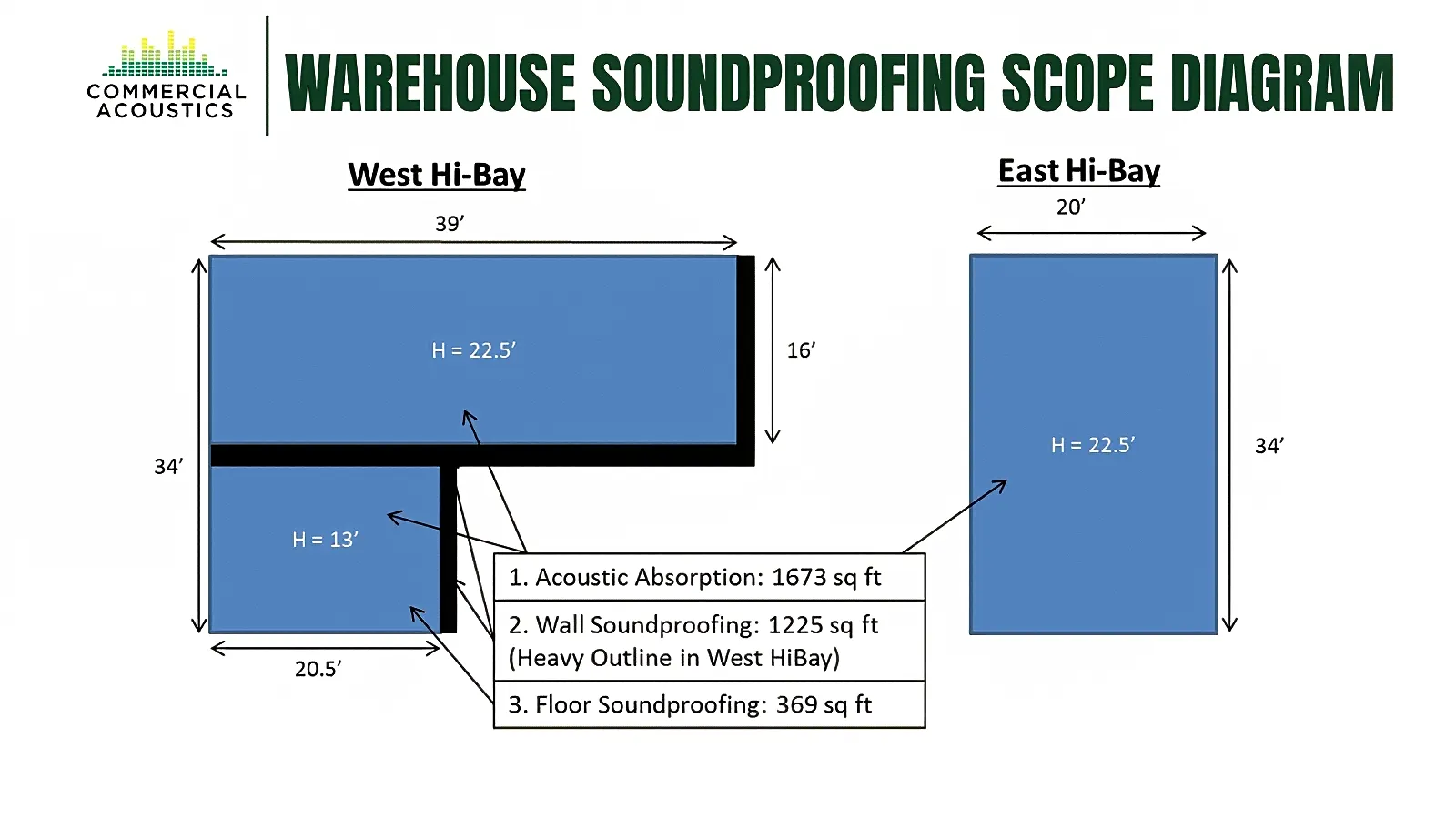
This was a full-stack warehouse soundproofing job across three different noise paths. Floor work for footfall transmission from the mezzanine, demising wall work for tenant-to-tenant speech privacy, and 1,100 Sabins of acoustic absorption to tame the open-volume echo. The same warehouse and factory noise control playbook applies whether the warehouse end use is distribution, light industrial, or office conversion.
The Urban Warehouse Conversion
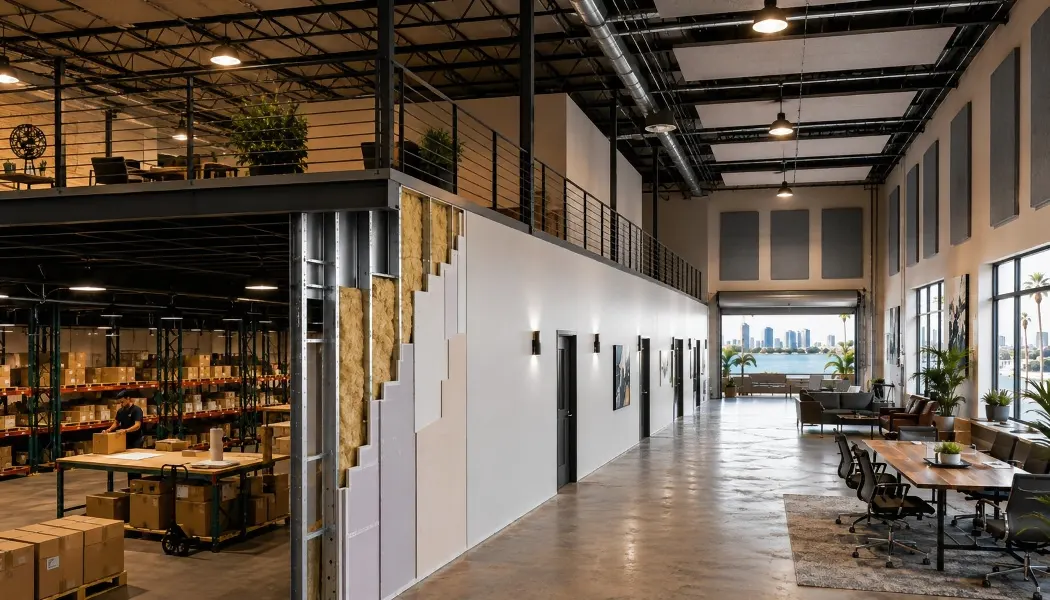
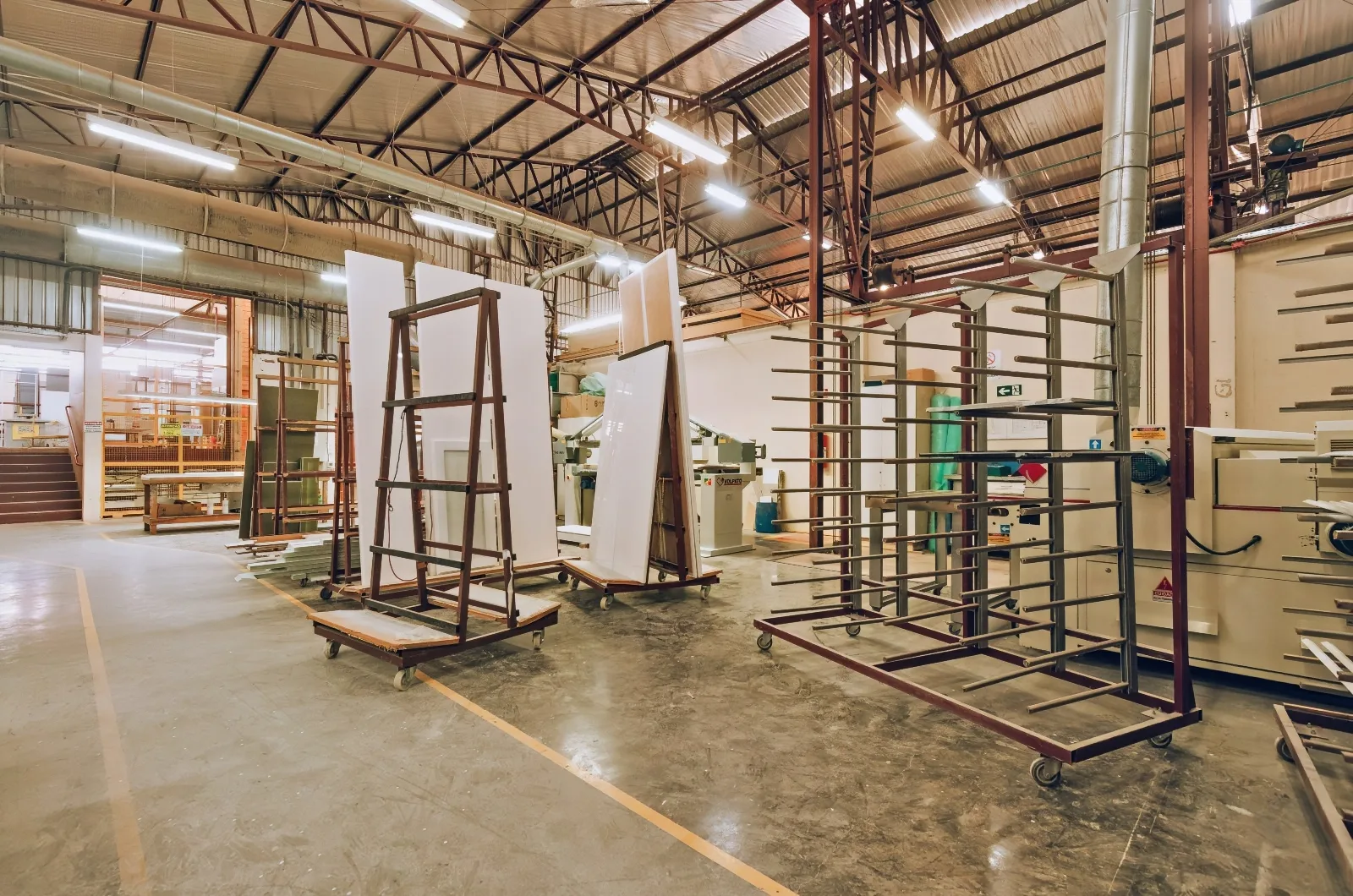
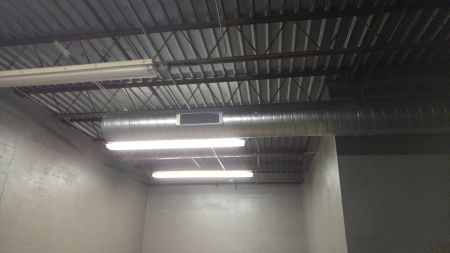
The building started as a single-tenant warehouse in an urban Tampa Bay corridor, hard concrete floor, exposed bar-joist ceilings, and the kind of open volume that turns every footstep into an echoey announcement. The owner was repositioning the space for multi-tenant lease and needed it to work acoustically for tenants who would not tolerate raw warehouse noise behavior.
Three problems came up on the walk-through. Mezzanine footfall was the loudest, because every step transmitted directly through the steel deck into the tenant space below. Echo in the main volume was the next worst — the room had 1,100-plus Sabins of absorption deficit against a working RT60 target. Demising walls between future tenant sections were code-minimum and would have read STC 40 at best.
Why Warehouses Need Sound Barrier Treatment on the Floor First
- Structural Path: Steel deck and concrete transmit impact noise directly
- Mezzanine Geometry: Footfall becomes the dominant complaint in any tenant below
- Order of Operations: Floor sound barrier first, then walls, then echo
- Why Floor Comes First: Wall STC means nothing if impact energy bypasses through the deck
Warehouse soundproofing fails when crews treat the walls before the floor. Impact energy from the mezzanine travels through the steel deck and re-radiates into the tenant space below regardless of how many decibels the dividing walls block. The sound barrier has to start at the impact source — under the floor finish — before any wall work earns its STC rating.
This is the part that contractors new to warehouse work get wrong most often. The instinct is to upgrade walls because walls feel like the obvious noise path. In a converted warehouse with mezzanines and open-deck ceilings, the dominant path is structural — and structural means floor first.
Floor Blokker: 10-Point STC Lift Under the Mezzanine
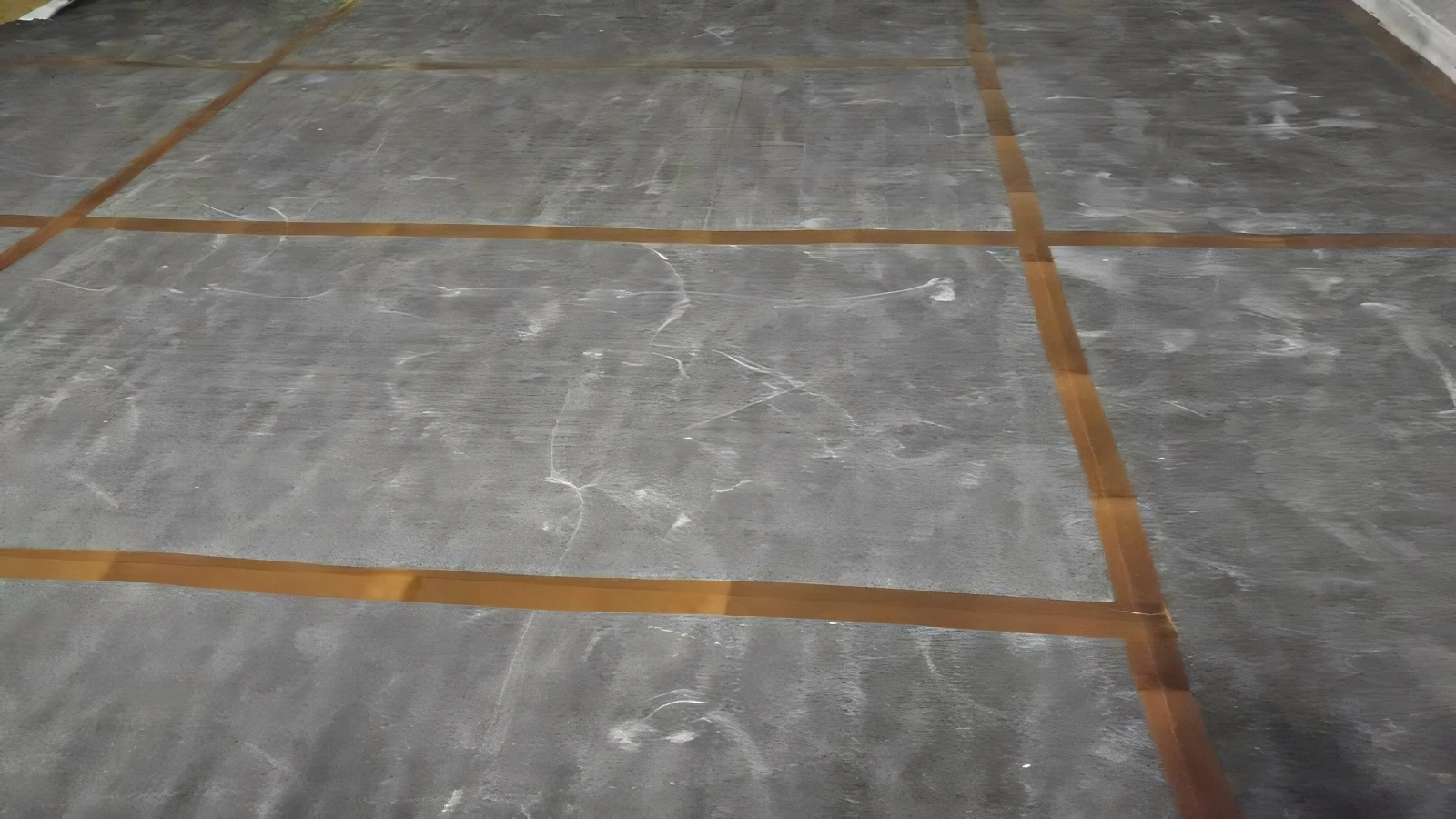
- Product: Floor Blokker mass-loaded underlayment
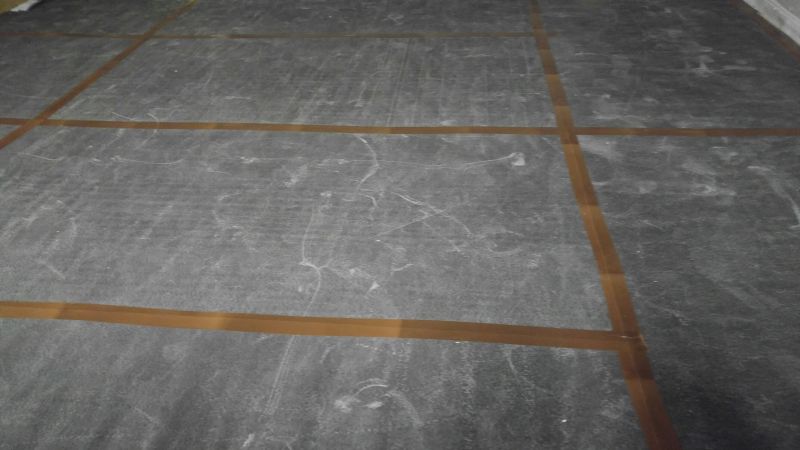
- Placement: Between mezzanine subfloor and finish flooring
- STC Lift: 10 points over bare deck assembly
- IIC Benefit: Significant impact noise reduction for footfall
Floor Blokker dropped under the mezzanine finish flooring as a continuous layer, decoupling the finish from the steel deck below. That decoupling is what kills the footfall path. The 10-point STC lift is real, and the IIC improvement on impact noise was the more important number for tenant comfort.
Mass under the finish flooring beats every other intervention point for warehouse mezzanine work. Treating the ceiling below would have required the tenant to vacate. Treating the floor only required a closure during the floor install, which was already happening for finish work.
Wall Soundproofing: STC 40 to 65 Between Sections
- Baseline Assembly: Code-minimum demising walls at STC 40
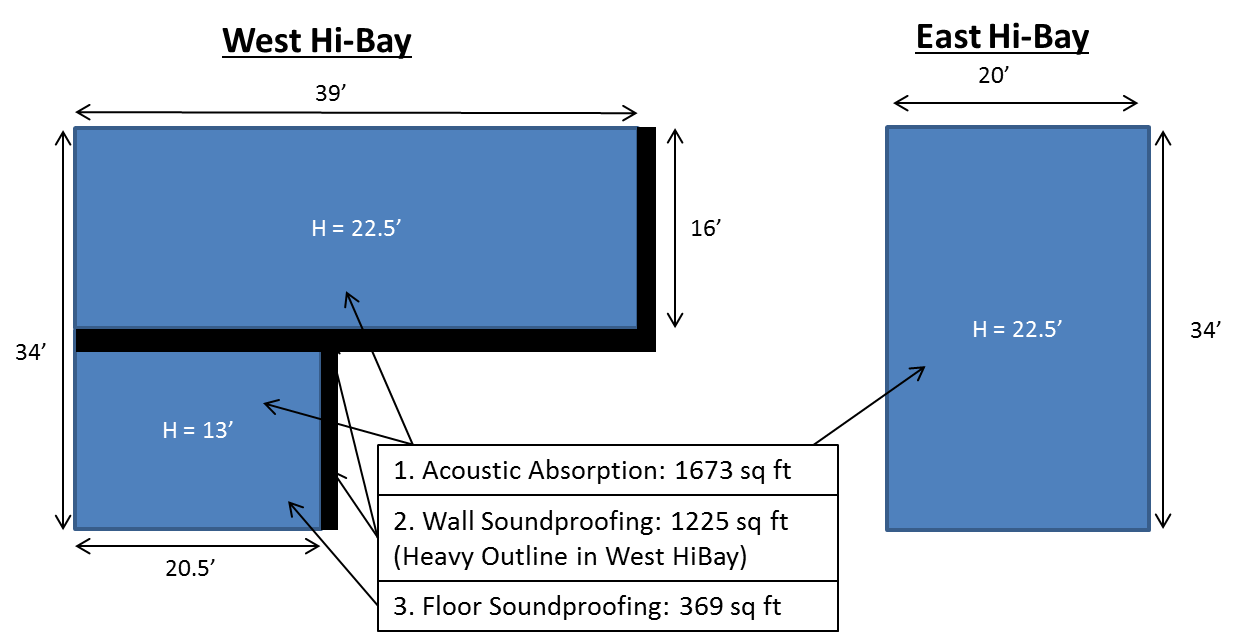
- Target Assembly: Wall Blokker membrane + QuietRock at STC 65
- Application: Both sides where tenant-to-tenant privacy was critical
- Result: Speech, music, and most impact content blocked between sections
The wall soundproofing combined Wall Blokker membrane with QuietRock high-mass drywall to take demising assemblies from code-minimum STC 40 up to STC 65. That is more than a 25-point lift, which is the difference between hearing your neighbor and forgetting they exist.
STC 65 is the upper end of practical commercial wall construction. Going higher requires structural decoupling, double-stud framing, or floating-room construction, all of which carry significantly higher cost and floor area penalties. The STC rating chart shows what each level actually blocks.
Echo Eraser: 1,100 Sabins of Absorption Across 6,000 SF
- Product: Echo Eraser acoustic felt panels
- Required Absorption: 1,100-plus Sabins to land at the working RT60 target
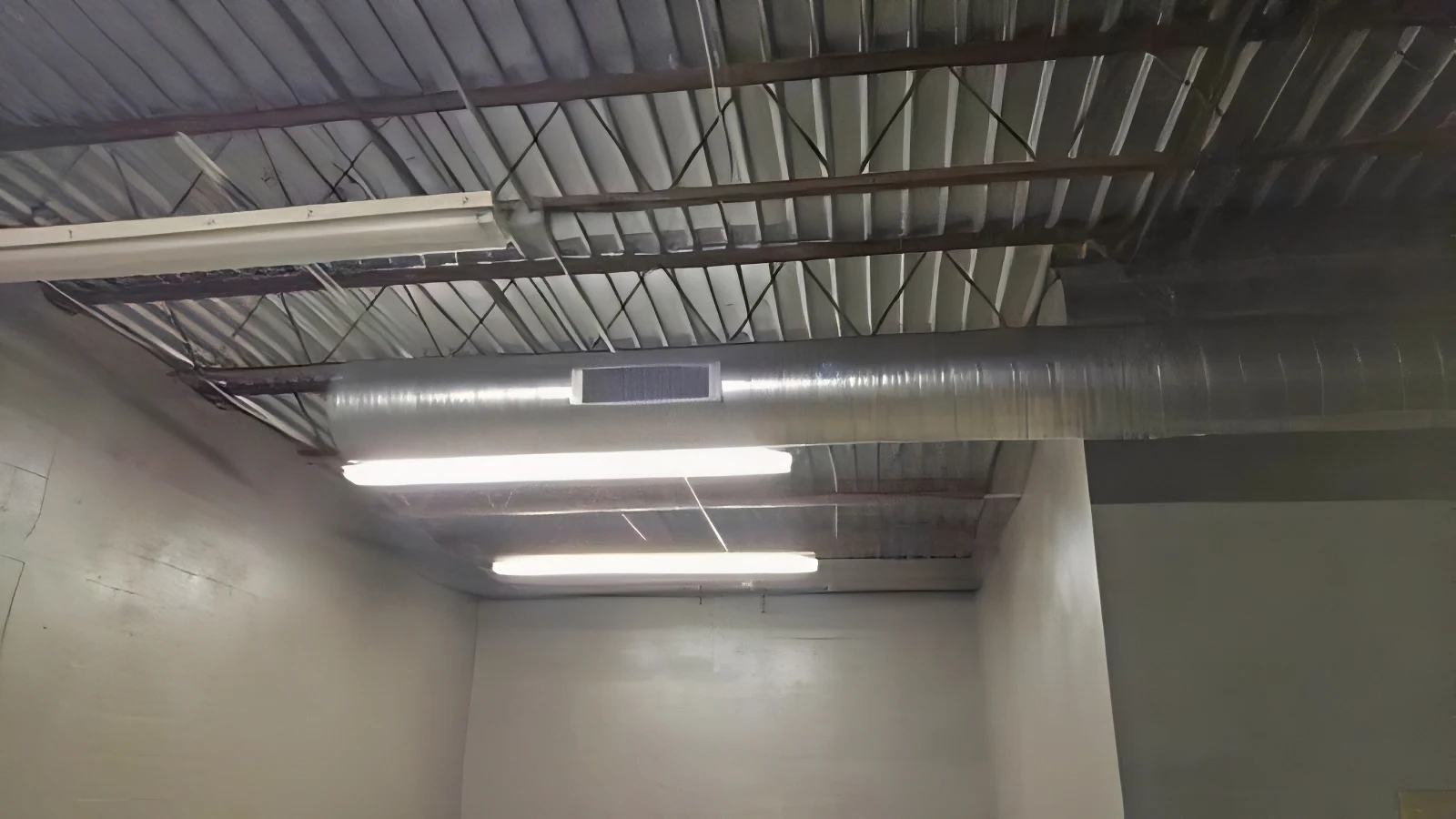
- Coverage: Distributed across walls and exposed bar-joist ceiling
- Finish Match: Felt panels chosen to read clean against industrial finish
The 1,100-Sabin number came from running the room volume against the target RT60 and the existing absorption deficit. The room acoustics calculator walks the same equation. Without the absorption pass, the soundproofed walls would have stopped neighbor-to-neighbor transfer while leaving each tenant section internally echoey.
Echo Eraser felt panels solved the visual problem alongside the acoustic one. Distributed across walls and the exposed bar-joist ceiling, the panels integrated cleanly with the converted-warehouse finish without forcing a suspended ceiling install that would have killed the design intent.
What Warehouse Soundproofing Actually Buys
- Footfall From Mezzanine: Reduced from dominant complaint to background
- Tenant Speech Privacy: STC 65 walls block conversational and loud speech
- Open-Volume Echo: RT60 brought into working range across 6,000 SF
- Tenant Retention: Building now leases at full-tenant occupancy rates
Warehouse soundproofing is rarely a single-product job. The footfall path, the speech transfer path, and the open-volume echo path each need a different intervention, and treating any one alone leaves the others as the dominant complaint. The case for the full stack is that each layer reinforces the others.
Our warehouse soundproofing solutions page maps the level of intervention against budget and use case, from distribution-only spaces to full multi-tenant conversion projects like this one.
Conclusion: Warehouse Soundproofing
The 6,000 SF conversion stands as the proof that warehouse soundproofing works as a three-path discipline. Floor first for impact, walls second for speech, absorption last for echo. Skip any layer and the project under-delivers. Run all three and the building works for any tenant a warehouse-class building owner cares to lease to.
FAQs: Warehouse Soundproofing
How do you soundproof a warehouse?
Treat the floor first, then walls, then echo. Floor mass under any mezzanine or finish flooring kills the structural impact path. Wall membrane and high-mass drywall handle tenant-to-tenant transfer. Acoustic absorption panels tame the open-volume echo last.
What is a sound barrier for a warehouse?
A sound barrier is the mass-loaded layer that blocks airborne and impact noise. In a warehouse context that usually means Floor Blokker under finish flooring or Wall Blokker behind drywall, adding decoupled mass to existing assemblies without rebuilding the structure.
What STC do warehouse demising walls need?
Most warehouse-to-tenant demising walls need STC 50 minimum, with STC 60 to 65 for tenants who require speech privacy or operate sensitive equipment. Code-minimum walls typically land at STC 40, which is not enough for multi-tenant warehouse conversion.
How many acoustic panels does a warehouse need for echo reduction?
The Sabin calculation depends on room volume and target RT60. This project used 1,100-plus Sabins across 6,000 SF distributed on walls and the exposed bar-joist ceiling. The room acoustics calculator walks the equation for any warehouse footprint.

Walker Peek|Founder & CEO, Commercial Acoustics
Walker founded Commercial Acoustics in 2013 to bring aerospace-grade engineering discipline to soundproofing, and runs the firm as CEO from its 12,000 sq ft Tampa production facility. The company designs custom acoustic panels, sound membranes, and masking systems for multi-family, hospitality, healthcare, and commercial projects across the US — built around Walker’s invention, Wall Blokker, an EVA-based sound barrier that hits STC 50-plus at roughly $1 per square foot installed.
A Jacksonville native, Walker spent five years at Kennedy Space Center with Craig Technologies before founding Commercial Acoustics — certifying aerospace manufacturing to the AS9100 standard and leading Six Sigma Black Belt process-improvement teams on NASA programs. He is a certified Industrial Noise Control Engineer and the author of Architectural Acoustics: A Practical Handbook.
