Table of Contents
Church Acoustical Design Criteria
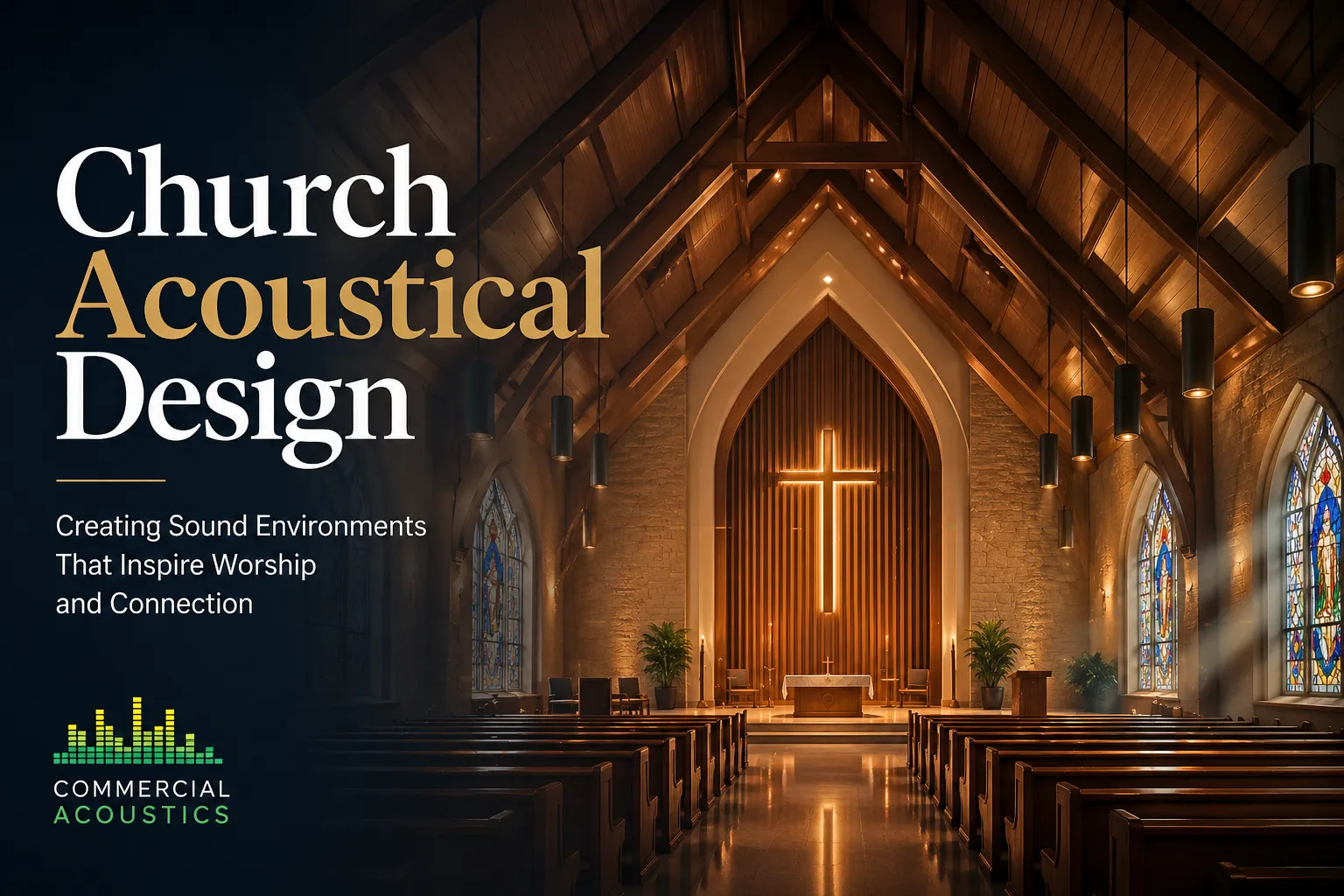
Church acoustical design balances two goals that pull in opposite directions. The first is reverberation: enough decay time for music to feel full and for the congregation to feel like they are singing together rather than singing alone. The second is speech intelligibility: a short enough decay that every word from the pulpit lands clearly in the back row.
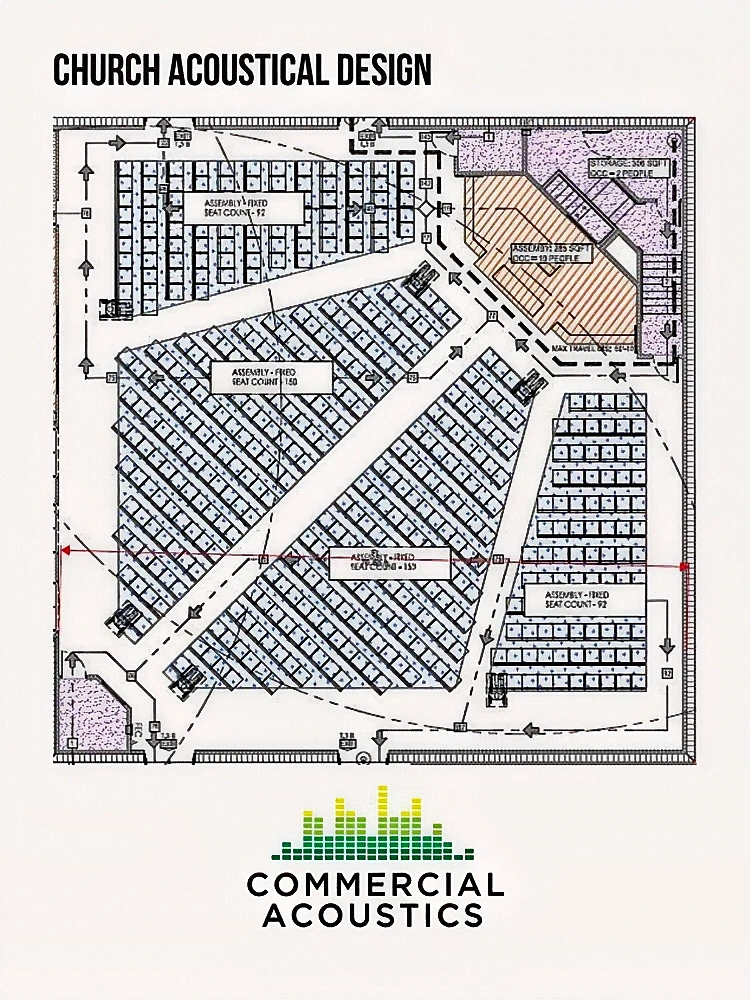
Most of the math in this guide comes out of a real consulting engagement we ran for a 484-seat sanctuary in North Florida. The numbers and rules of thumb generalize cleanly to almost any small-to-mid-size worship space.
Reverberation depends on three variables you can control: ceiling height, surface finishes, and absorbing panel coverage. Speech intelligibility depends on platform height, room geometry, and the line-of-sight relationship between the preacher and the back row. Every recommendation below comes back to one of those six levers.
Acoustic Design by Sanctuary Capacity
Sanctuary capacity drives almost every other acoustic decision. The volume target, ceiling height, RT60 window, and amount of absorbing treatment all scale with seat count. Below are the design ranges we use as starting points before site-specific adjustments.
- 150-Seat Church: 27,000–60,000 ft³ volume, 18–22 ft ceiling, RT60 1.0–1.4 s, 30–60 panels
- 200-Seat Church: 36,000–80,000 ft³, 20–24 ft ceiling, RT60 1.1–1.5 s, 40–80 panels
- 400-Seat Church: 72,000–160,000 ft³, 24–30 ft ceiling, RT60 1.2–1.6 s, 80–150 panels
- 500-Seat Church: 90,000–200,000 ft³, 26–32 ft ceiling, RT60 1.3–1.7 s, 100–180 panels
- 1,000-Seat Church: 180,000–400,000 ft³, 32–40 ft ceiling, RT60 1.5–2.0 s, 200–350 panels
The volume range reflects the 180–400 ft³ per seat rule of thumb. Speech-first sanctuaries (Catholic, traditional liturgical) sit at the lower end. Music-first sanctuaries (contemporary, gospel, a capella) sit at the higher end. RT60 ranges flex the same way: longer decay supports congregational singing, shorter decay supports preaching. For a parallel worship-space framework focused on practical fixes, see our overview on how to improve sound in worship spaces.
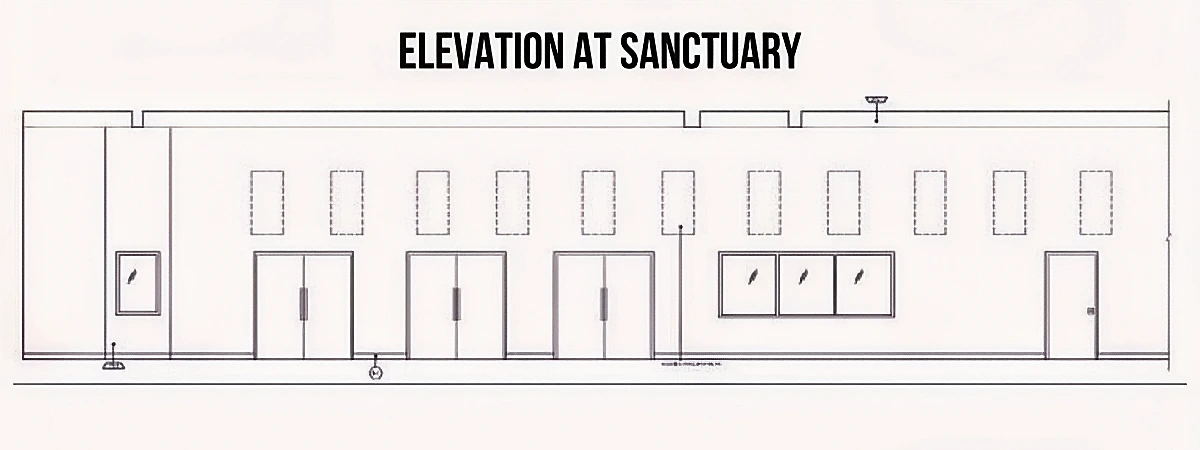
Ceiling height should never be picked for acoustics alone, but it is the single biggest driver of room volume and therefore of reverberation. A 400-seat sanctuary with a 16 ft ceiling will sound dead even with zero treatment. The same room at 28 ft ceiling will sing.
How to Improve Church Acoustics
Most church acoustic complaints fall into one of three buckets: muddy speech, weak congregational singing, or harsh PA reflections. Each has a different fix, and applying the wrong one makes things worse.
- Muddy Speech: Reverb is too long for the room volume. Add 2″ thick absorption (NRC 0.85+) on the rear wall and the upper sidewall band where speech reflections accumulate.
- Weak Congregational Singing: Reverb is too short, often after carpet was added or foam was installed across the back wall. The fix is removing some absorption rather than adding it.
- Harsh PA Reflections: The speaker stack is firing into a parallel hard surface. Angle reflective surfaces, add a pulpit reflector, or reposition the PA. More absorption rarely fixes this.
The decision tree starts with a measurement, not a guess. A reverberation reading using a calibrated impulse and a sound level meter takes 20 minutes and tells you which bucket you are in.
Our room acoustics calculator walks through the Sabine math behind the prediction side of that conversation. Plug in surface areas, finishes, and target RT60, and the tool returns a panel quantity to close the gap.
Ceiling Height and Sanctuary Volume per Seat
Volume per seat is the number to pin down before anything else. The reference range for a worship space where music carries the service is 200–400 ft³ per seat. For a speech-first or discussion-based liturgy, the target drops to 180–300 ft³ per seat.
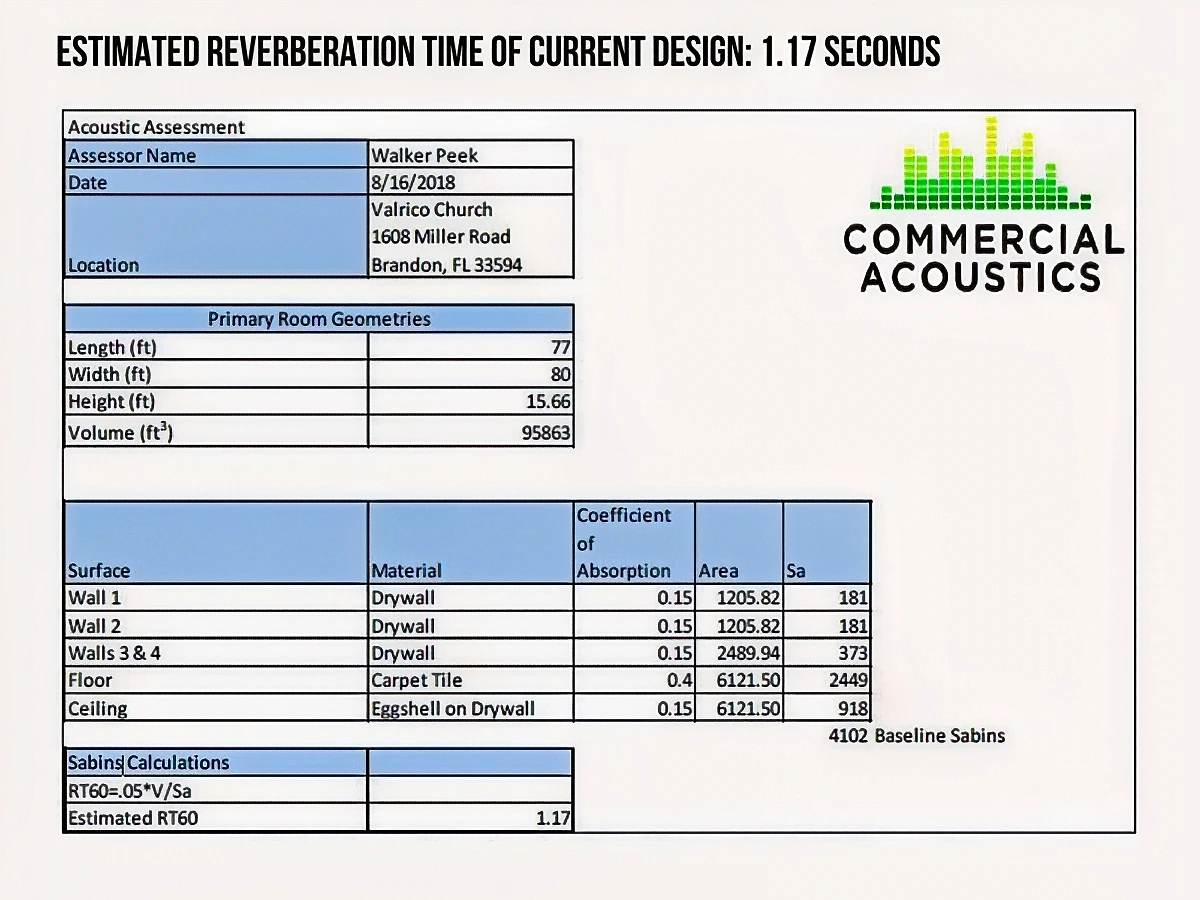
The North Florida sanctuary that this guide is partly built from holds 484 seats with 198 ft³ per seat. That is just outside the music-first range, which we then compensated for with finish choices and panel coverage. The estimated reverberation time of the new design came in at 1.17 seconds across the broadband range, slightly above the existing church’s 1.05 seconds and inside the acceptable music-first window.
Three rules of thumb anchor the calculation: a Sabine reverberation calculation using each surface area and its absorption coefficient, a target reverberation time pulled from best practices for the worship style, and a volume-per-seat check against the ranges above. Miss any one of those and the room ends up either dead or unintelligible.
Acoustic Finishes and Panel Coverage
The finish schedule for a typical sanctuary is drywall on the ceiling and walls with low-profile carpet on the floor. That mix delivers a healthy starting reverberation in the right room volume. Add a platform, padded seats, and bodies in the seats, and the live RT60 lands close to the design target.
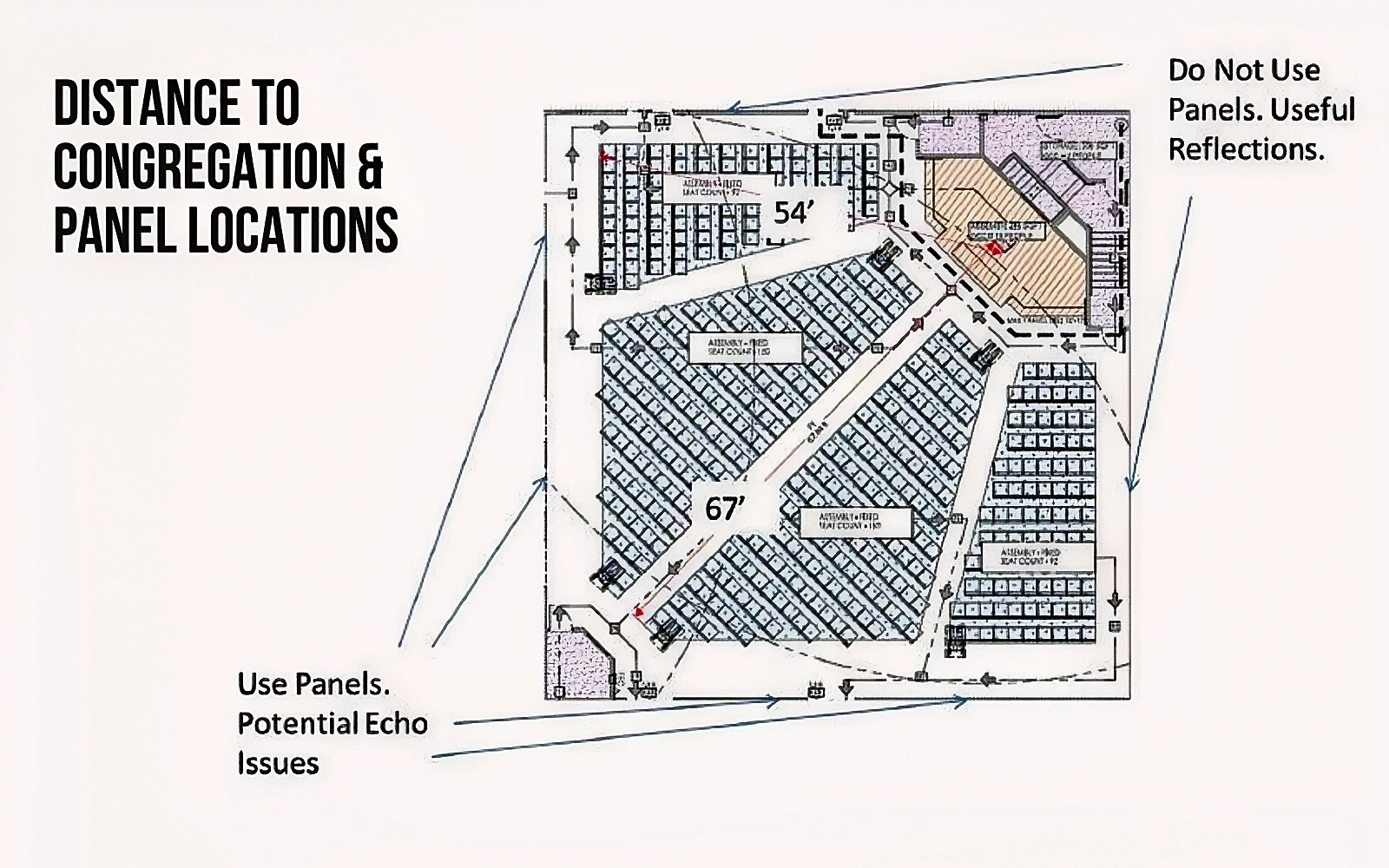
For the North Florida sanctuary the calculation called for approximately 50 panels at 2′ x 4′ x 2″ thick to bring estimated RT60 from 1.17 down to the ideal target of 1.05 seconds. Panel placement was concentrated on the rear walls and upper sidewall sections where reflections accumulate, with the side walls left untreated where reflections actively help congregational singing.
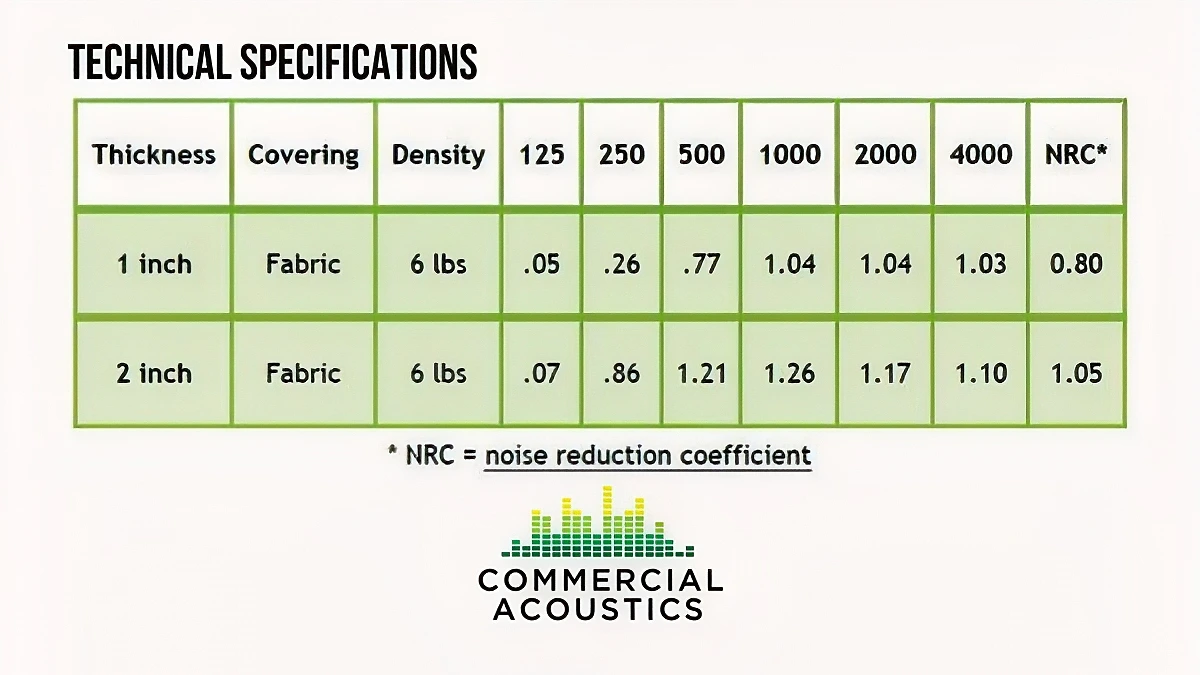
Panel thickness matters more than most operators realize. 1″ panels absorb high frequencies efficiently but lose absorption coefficient sharply below 250 Hz. That means soprano and alto voices get pulled out of the room while tenor and bass get reinforced, which produces an unbalanced choral sound. 2″ panels hold absorption down through the lower octaves and preserve the full vocal range.
Our sound absorption coefficient guide walks through how NRC values are measured and why panel thickness shifts the absorption curve.
Product reference for the panel family used in projects like this: acoustic absorption panel. For larger ceiling areas where wall coverage is restricted by stained glass or branded signage, suspended ceiling clouds handle the same band more efficiently per square foot.
Platform Height, Line of Sight, and Speech Intelligibility
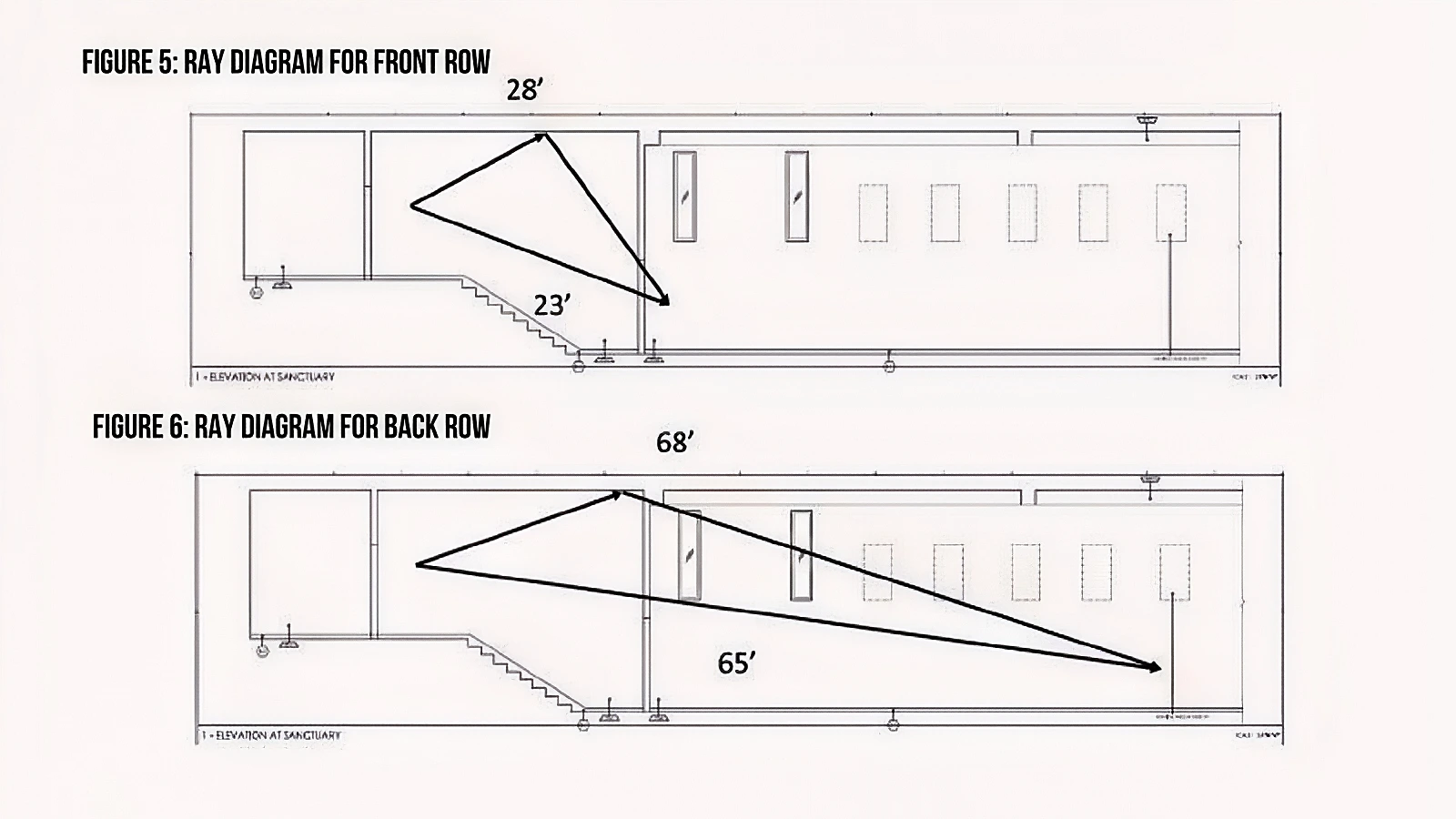
The hardest seat in any sanctuary is the back row. Direct line-of-sight sound is the strongest form of transmission, so the preacher needs to be visible to the furthest member. The benchmark distance for unamplified speech is roughly 67 feet. Beyond that, electronic reinforcement becomes a requirement rather than a convenience.
The line-of-sight math is mechanical. Each row needs about 5 inches of clearance over the row in front to see the platform. For a 67-foot back-row distance, that places the preacher’s head at roughly 11′-2″ above the floor of the back row. If the floor cannot be sloped, the platform has to make up the difference.
Staggering the seats every other row drops the per-row clearance requirement to about 2.5 inches. That is often the easier change. If the sanctuary uses pews rather than individual seats, assume worst-case non-staggered geometry and design the platform height accordingly.
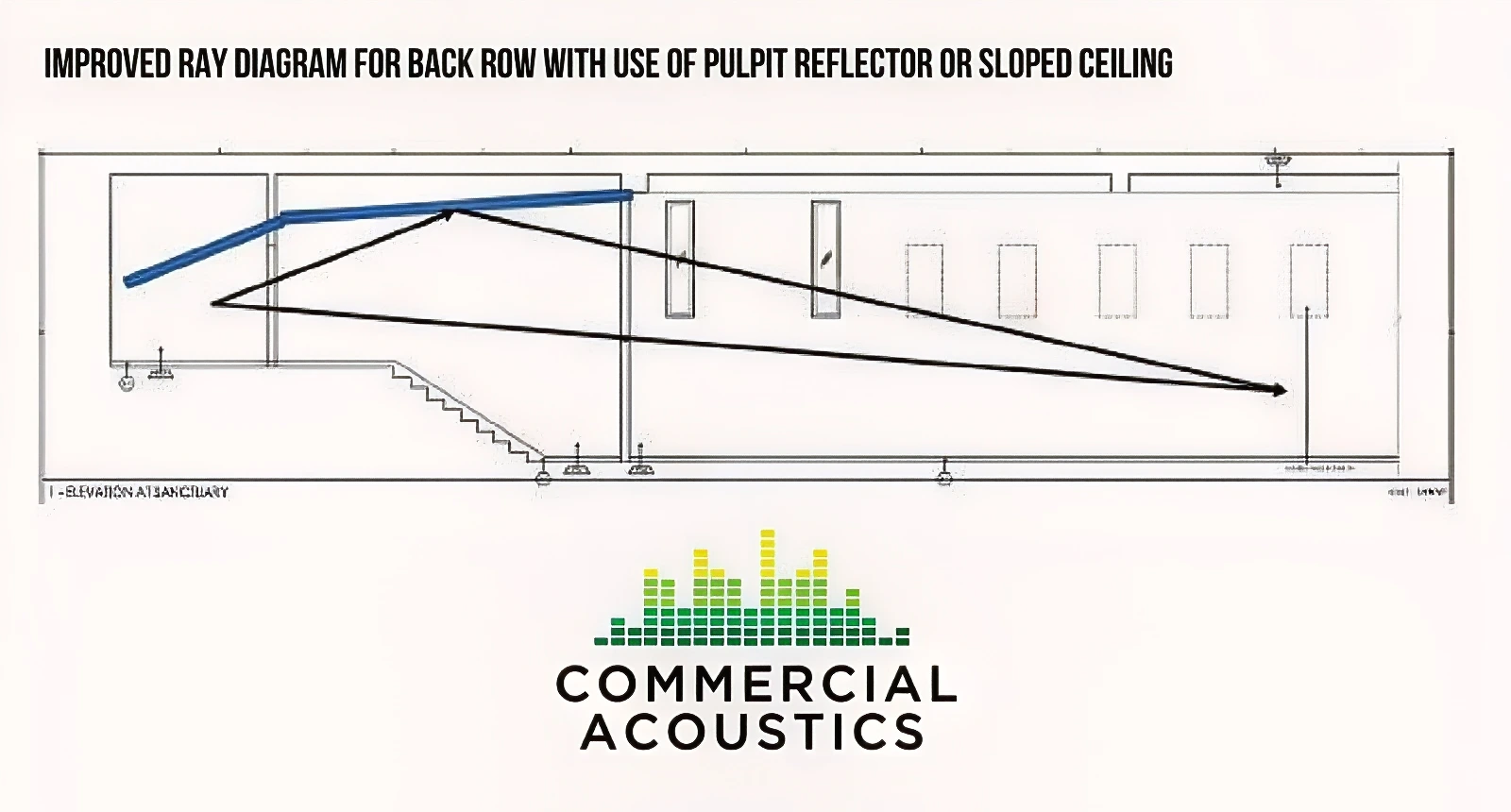
The Initial Time Delay Gap (ITDG) measures the delay between the preacher’s direct voice and the first ceiling or wall reflection at a listener’s ear. Best practices keep ITDG under 23 feet. Low ceilings naturally satisfy this; tall vaulted sanctuaries do not, and a sloped ceiling or pulpit reflector becomes the corrective tool. Our auditorium acoustics guide covers ITDG and direct-to-reverberant ratios in more detail.
Platform Orientation and the 140-Degree Rule
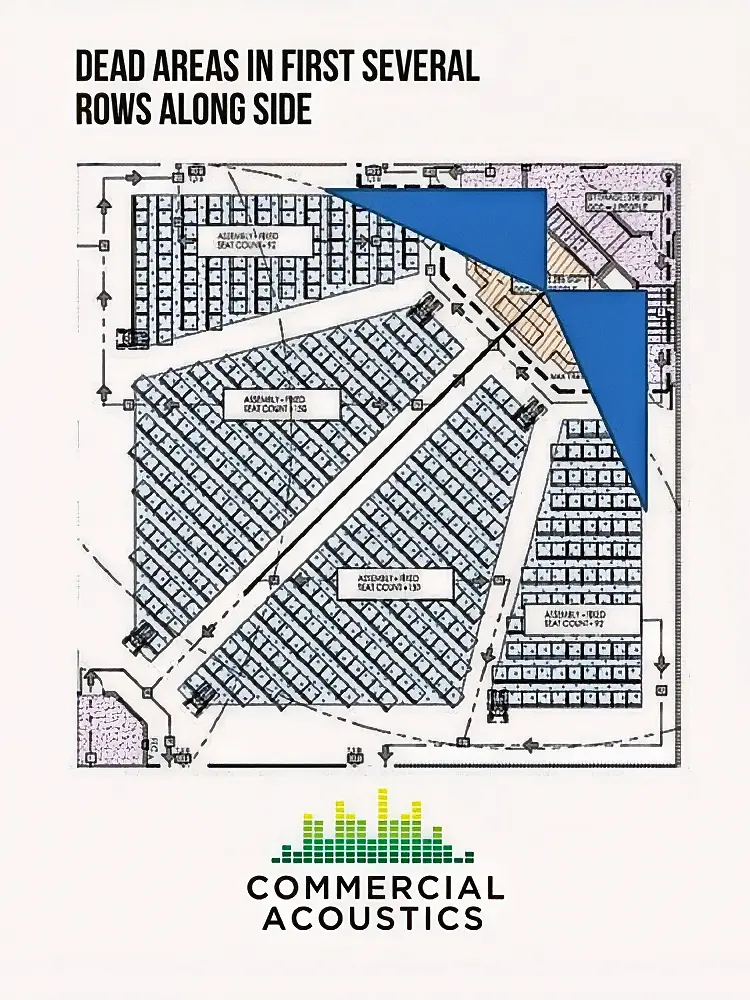
The human voice projects in a roughly 140-degree forward arc. Anything seated outside that arc relative to the preacher’s facing direction lands in a dead zone and loses speech intelligibility, even at short distances.
The dead-zone problem shows up most often in the first few rows on the far left and right of a wide sanctuary. The preacher faces forward, the side seats fall outside the 140-degree arc, and those listeners hear noticeably less direct voice than people seated in the middle three rows back. Two fixes work: pull the pulpit back roughly 10 feet so the side seats fall back inside the arc, or remove the offending corner seats and reposition them.
If a pulpit reflector is used to manage ITDG and reinforce the voice naturally, build it from double-layer gypsum and size it to at least 8 feet in diameter or length. That dimension corresponds to roughly four times the mid-frequency wavelength at 500 Hz, which is the band where speech intelligibility lives.
Church Sound Reinforcement Design
For sanctuaries beyond about 67 feet pulpit-to-back-row, electronic sound reinforcement stops being optional. The acoustic design and the PA design then need to be coordinated, because the room treatment that helps unamplified music can hurt amplified speech.
The PA itself should be a distributed line array or a steered column rather than a pair of point-source mains. Line arrays and column speakers throw a tighter vertical pattern, which means more direct energy on the listeners and less energy bouncing off the ceiling and rear wall. That delivers cleaner intelligibility in a reverberant room.
Speaker aiming usually wants the array tilted so the lowest box covers the front rows and the highest box covers the back row. A sloped ceiling above the platform helps direct the early reflections from monitors and stage wedges away from the open mics. That reduces feedback margin and lets the front-of-house operator push the gain higher before the system rings. Our lecture hall acoustics guide covers the same speaker-aiming logic for instructional spaces.
Background noise targets matter on the room side. For worship spaces, NC 25 to NC 30 is the design window. HVAC, projector fans, and exterior road noise all eat into that budget. NC 25 takes deliberate work; NC 30 is achievable with reasonable HVAC selection. Above NC 35, even a well-designed PA struggles to deliver intelligibility to the back row. Our deeper guide on designing for noise criteria walks through how to budget NC across HVAC and envelope.
Conclusion: Design Recommendations for Church Acoustics
Good church acoustics come from coordinating six levers in the right order: room volume, ceiling shape, finishes and panel coverage, platform height, platform orientation, and PA design. Get the first three right and the speech side becomes much easier. The checklist below is the field-ready short version of everything covered above.
- Slope the Ceiling: Pitch the ceiling behind and above the pulpit toward the congregation. If a slope is not feasible, install a pulpit reflector at 45 degrees and at least 8 feet across, built from double-layer gypsum.
- Concentrate Treatment: Put acoustic panels on the rear wall and upper sidewalls only. Leave the lower sidewalls untreated so reflections support congregational singing.
- Use 2″ Panels: 1″ panels distort the choral balance by absorbing only the upper voices. Specify 2″ thick everywhere absorption is used.
- Raise the Platform: The preacher’s head needs to clear 11′-2″ above the back row at a 67-foot distance. Each row needs 5″ of clearance over the row in front, or 2.5″ with staggered seating.
- Pull Back the Pulpit: Move the pulpit back about 10 feet from the front-row corners, or remove the corner seats. Anything outside the 140-degree forward arc loses intelligibility.
- Specify NC 25–30: Set HVAC and envelope design to NC 25–30. Above NC 35 cripples speech intelligibility regardless of PA quality.
Build the room first, measure RT60 after the first three or four services with people in the seats, and add the last 10–20% of treatment based on what the live measurement tells you. It is always easier to add absorption than to remove it.
FAQs: Church Acoustical Design
What is the ideal RT60 for a church sanctuary?
Music-first worship spaces target 1.5 to 2.0 seconds RT60 for full congregational singing. Speech-first sanctuaries target 1.0 to 1.5 seconds for clean intelligibility. Most multipurpose worship rooms compromise around 1.2 to 1.6 seconds depending on capacity and ceiling height.
How much volume per seat does a church need?
200 to 400 cubic feet per seat for music-first worship spaces. 180 to 300 cubic feet per seat for speech-first or discussion-based sanctuaries. Below 180 the room sounds dead; above 400 it becomes hard to control without aggressive PA work.
How tall should a church ceiling be?
Ceiling height scales with capacity. A 150-seat sanctuary works at 18-22 feet. A 500-seat sanctuary needs 26-32 feet. A 1,000-seat sanctuary lands between 32-40 feet. Ceiling height drives sanctuary volume, which drives reverberation more than any other variable.
Should I use 1-inch or 2-inch acoustic panels in my church?
Always 2 inches. 1-inch panels lose absorption coefficient sharply below 250 Hz, which removes alto and soprano energy while leaving bass and tenor untouched. The result is an unbalanced choral sound. 2-inch panels hold absorption across the full vocal range.

Walker Peek|Founder & CEO, Commercial Acoustics
Walker founded Commercial Acoustics in 2013 to bring aerospace-grade engineering discipline to soundproofing, and runs the firm as CEO from its 12,000 sq ft Tampa production facility. The company designs custom acoustic panels, sound membranes, and masking systems for multi-family, hospitality, healthcare, and commercial projects across the US — built around Walker’s invention, Wall Blokker, an EVA-based sound barrier that hits STC 50-plus at roughly $1 per square foot installed.
A Jacksonville native, Walker spent five years at Kennedy Space Center with Craig Technologies before founding Commercial Acoustics — certifying aerospace manufacturing to the AS9100 standard and leading Six Sigma Black Belt process-improvement teams on NASA programs. He is a certified Industrial Noise Control Engineer and the author of Architectural Acoustics: A Practical Handbook.
