Table of Contents
Project Overview: Noise Ordinance Testing for a Bywater Marigny Venue
- Project: Pre-Opening Noise Ordinance Compliance Testing for an Entertainment Venue
- Location: Bywater / Faubourg Marigny, New Orleans, LA
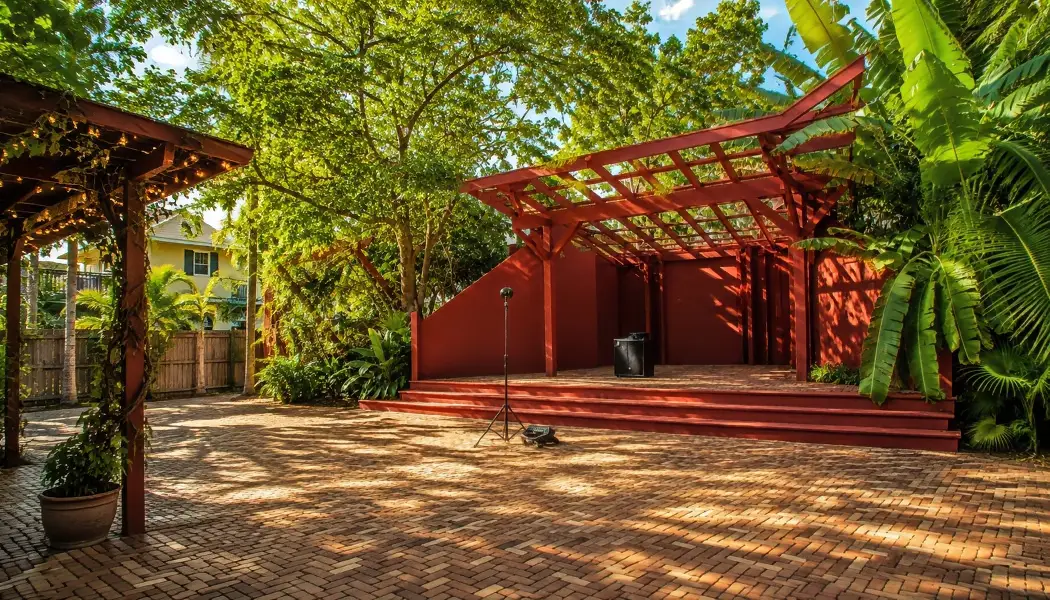
- Facility Type: Indoor-Outdoor Music Venue with Back-Patio Stage
- Governing Code: New Orleans Code of Ordinances, Chapter 66, Article IV (Noise)
- Objective: Establish baseline ambient and source sound levels prior to City Council review
- Scope: Type 2 SLM measurement, L10 and Lmax readings, 10-minute reading windows at the property line
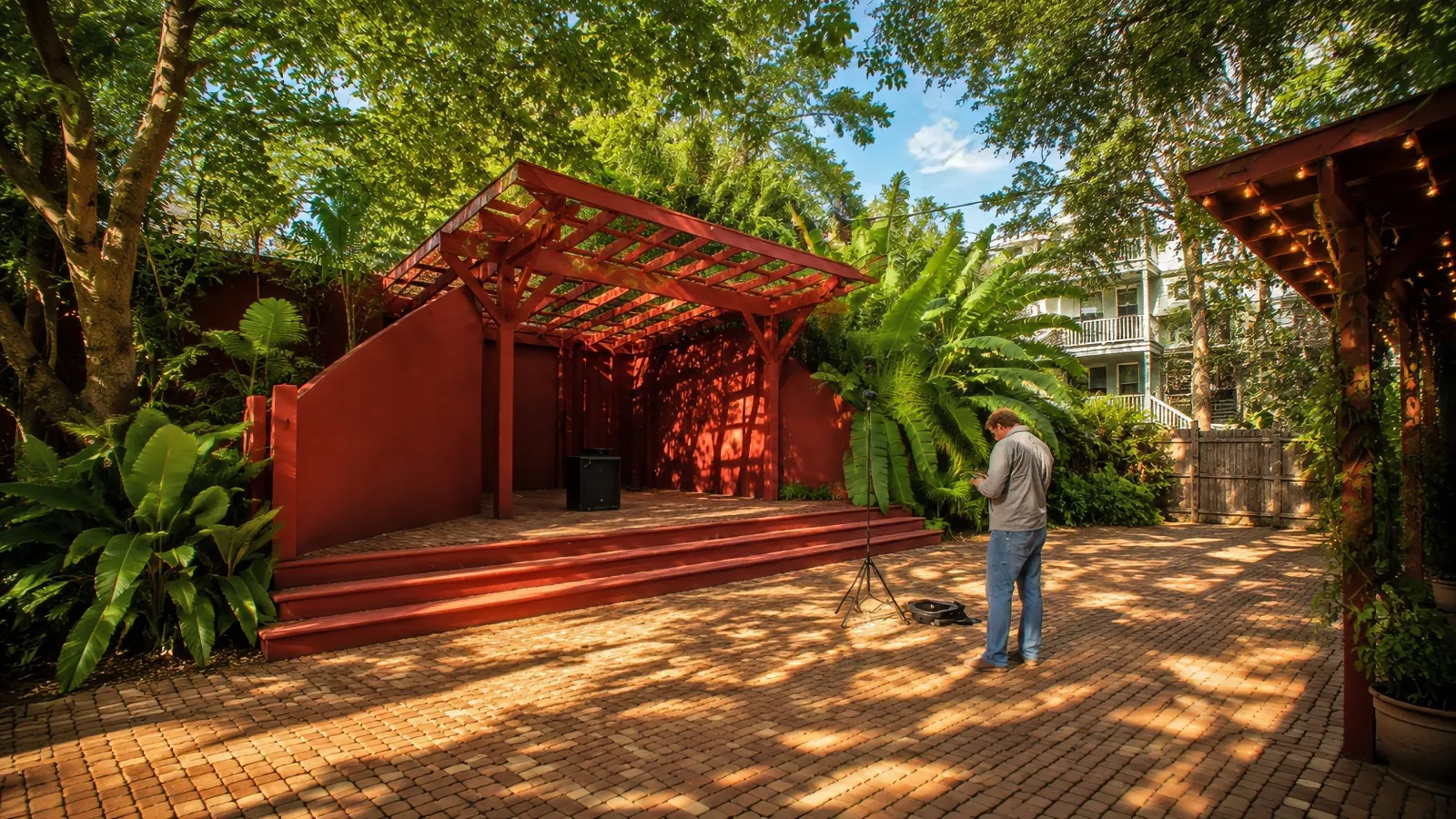
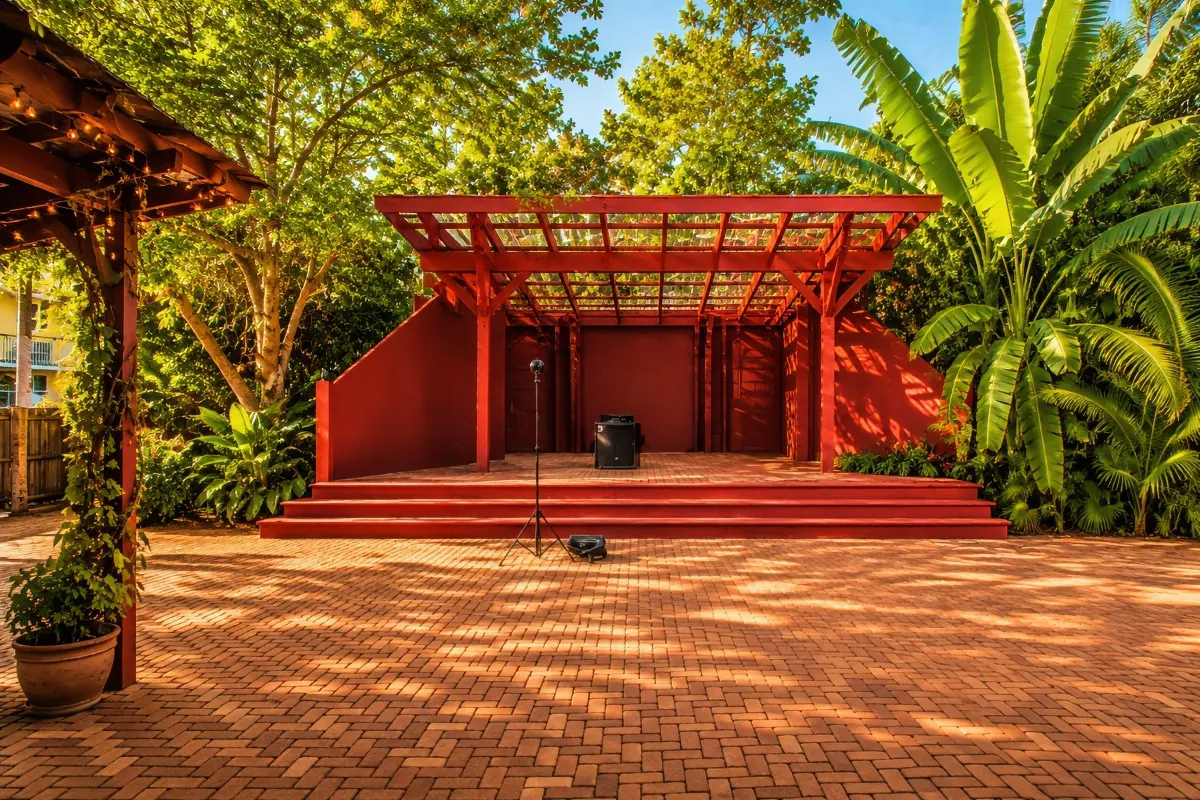
An entertainment venue preparing to open in the Bywater / Marigny district hired Commercial Acoustics to run a baseline noise ordinance assessment ahead of a meeting with New Orleans City Council members. The venue’s outdoor back-patio stage sits within feet of multiple adjacent residences, which is exactly the configuration that triggers neighbor complaints under Article IV and the same type of planning problem seen in outdoor venue noise complaints at event properties.
The work was straightforward acoustical testing, not panel install or treatment. The deliverable was a written assessment of measured sound levels against the limits set in Sec. 66-202, Table 1, with notes on the venue’s likely compliance posture under the most restrictive applicable land use category.
The New Orleans Noise Ordinance: Where It Lives in the Code
The New Orleans noise ordinance is codified in Chapter 66, Article IV of the City Code. The substantive limits are in Sec. 66-202 and Table 1, the measurement procedure in Sec. 66-201, and the specific nuisance prohibitions in Sec. 66-203. Penalties live in Sec. 66-140, with each day of continued violation counting as a separate offense.
Enforcement runs through two agencies. The New Orleans Department of Health administers the program through Sec. 66-137, and the New Orleans Police Department handles complaint response and on-site enforcement. Both have authority to perform sound level measurements and issue citations. The full ordinance text is published on the city’s Municode library.
The land use category of the receiving property, not the source property, is what controls the limit. A Marigny commercial venue producing sound that crosses into an adjacent residential lot is held to the residential limit at the property line, not the commercial limit, which is where outdoor sound barrier design becomes part of the compliance conversation.
Sound Level Limits by Zoning District
Sec. 66-202, Table 1 sets the limits in dBA. Daytime hours are 7 a.m. to 10 p.m. on weekdays and 8 a.m. to 10 p.m. on weekends. Nighttime hours are everything else.
- Resident, Public Space: day 60 / 70, night 55 / 60 (L10 / Lmax)
- Two- or Multi-Family (Intra-Building): day 50 / 60, night 45 / 55
- Business and Commercial: day 65 / 75, night 60 / 65
- Industrial: 75 / 85 at all times
- SHD/VCE (Vieux Carré Entertainment): 10 dB above ambient or 60 dB, whichever is higher, all hours
- SHD/VCR (Vieux Carré Residential): day 75 / 80, night 55 / 60
- SHD/VCC (Vieux Carré Commercial): day 75 / 80, night 60 / 65
- SHD/HMR (Historic Marigny Residential): day 60 / 70, night 55 / 60
- SHD/HMC (Historic Marigny Commercial): day 65 / 75, night 60 / 65
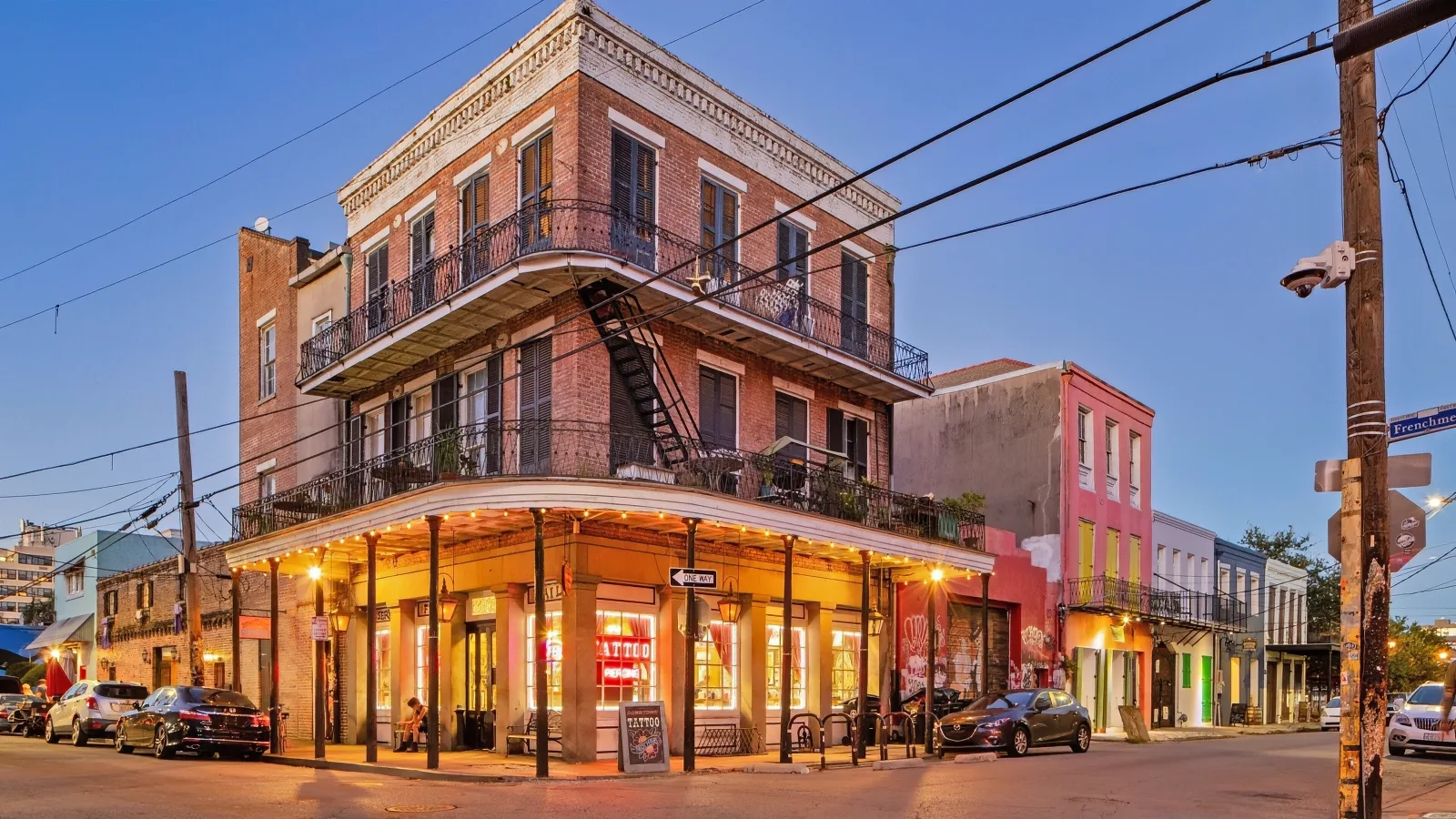
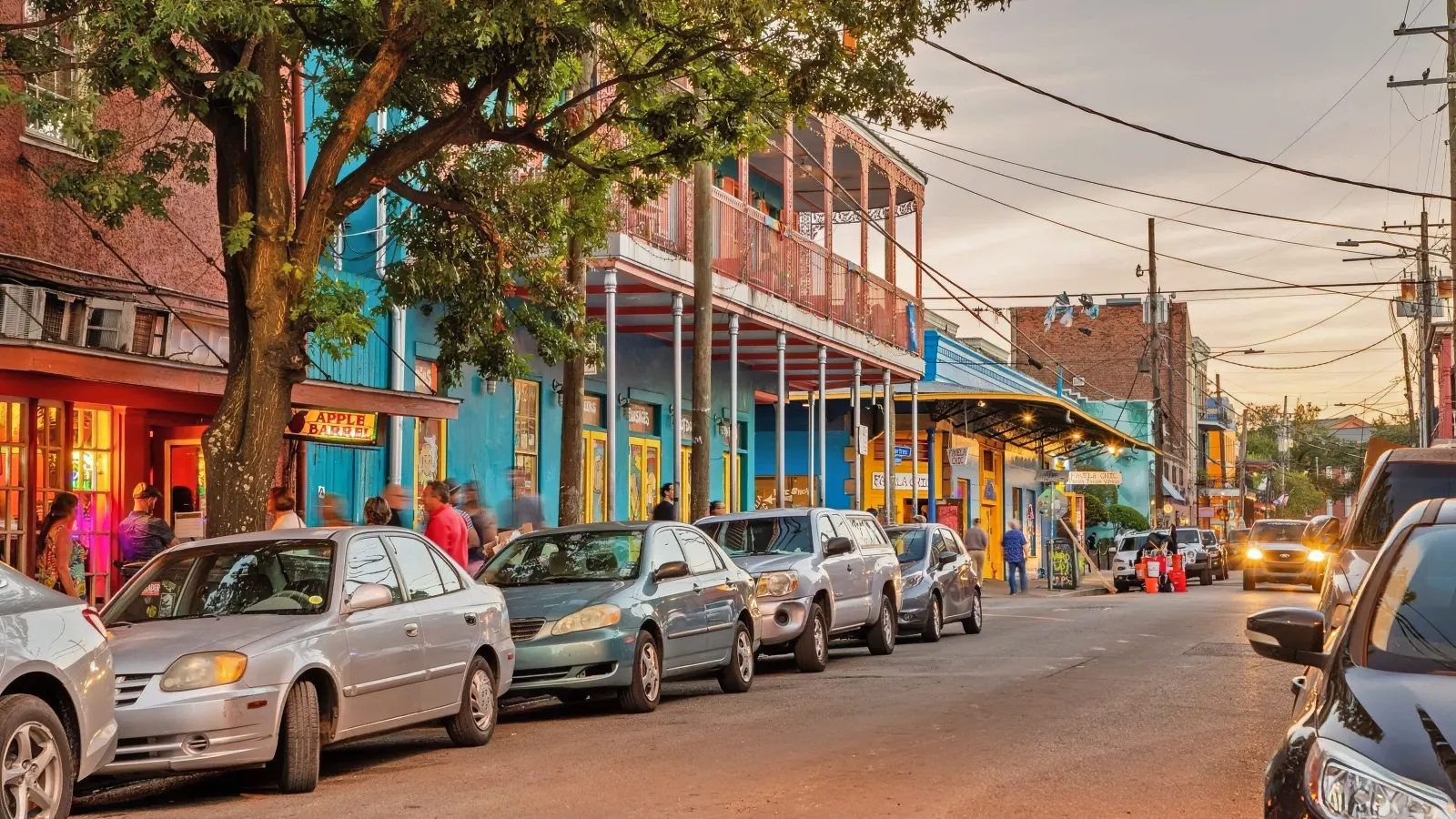
The Bywater / Marigny venue we tested falls under SHD/HMC zoning, with adjacent SHD/HMR residential parcels at the property line. The applicable nighttime limit at that property line is therefore 55 dBA L10 / 60 dBA Lmax, which is one of the more restrictive caps in the ordinance.
L10, Lmax, and the 10-Minute Measurement Rule
L10 is the A-weighted sound pressure level exceeded 10 percent of the time during the measurement window. In a 10-minute reading, L10 is the level the source exceeds for a total of one minute. It captures the louder peaks of an active music set without being thrown off by a single hand clap or car horn.
Lmax is the absolute peak A-weighted level allowed during the same window. The two metrics work together: L10 caps how loud the venue can run on average through its loudest minutes, and Lmax caps the highest single moment.
The minimum measurement period under Sec. 66-202(b) is 10 minutes. Anything shorter is not a valid reading. Measurements are taken at or beyond the property boundary of the receiving land use category, not at the source side. For multi-family dwellings, the measurement is taken inside an adjacent intra-building unit.
Equipment and Procedure: Type 2 SLM, A-Weighted, Slow Response
Sec. 66-201 is specific about equipment. Measurements have to come off a properly calibrated sound level meter rated Type 2 or better, using the A-weighted network in accordance with ANSI test procedures. Type 1 meets the bar; consumer-grade smartphone apps and untyped meters do not.
Instrument response is set to “slow” for everything except moving motor vehicles, which use “fast.” For a music venue case, that means slow response across the board. The slower time constant smooths out brief peaks the way the human ear actually perceives sustained loudness.
Calibration matters as much as the meter type itself. Pre-test and post-test calibration with a Class 1 acoustic calibrator is standard practice; without it, the readings have no defensible chain of custody if the venue ends up in a hearing. For a deeper look at the equipment side of acoustical testing, see our acoustic testing equipment guide.
Special Rules for the VCE and Historic Districts
The Vieux Carré Entertainment district (SHD/VCE), which covers the 200 to 700 blocks of Bourbon Street, has its own measurement geometry. Per Sec. 66-202(b), measurements may be taken at a minimum distance of 7.5 meters (about 25 feet) from the source, with at least 3 feet of clearance from any reflecting surface. The Bourbon Street geometry would otherwise make property-line measurement meaningless.
The VCE limit itself is set 10 dB above the ambient noise floor, or 60 dB, whichever is higher. That formula gives Bourbon Street venues real headroom on a busy night and tightens the leash when the street is genuinely quiet. The “more restrictive use” rule in Sec. 66-202(e), which usually puts the burden on the source, does not apply inside the VCE.
The Historic Marigny districts (SHD/HMR and SHD/HMC) operate under standard property-line measurement at the same residential and commercial limits as the rest of the city. Faubourg Marigny does not get the VCE’s ambient-plus-10 carve-out, which is the single biggest reason that neighborhood’s outdoor stages run into compliance issues.
Common Compliance Failures and What Triggers a Complaint
Most ordinance citations come from one of four patterns. Outdoor amplified music is the largest single category, especially at venues sitting against residential property lines after 10 p.m. when the limit drops by 5 dB.
- Outdoor Stages Past 10 p.m.: Nighttime L10 falls to 55 dBA in residential, 60 dBA in commercial. PA leakage at the property line gets caught here.
- Plainly Audible Rule: Sec. 66-203(3)(d) bans amplified sound audible at one foot from a neighbor’s exterior wall after 9 p.m. Sun-Thu or 10:30 p.m. Fri-Sat.
- Stationary HVAC and Equipment: Sec. 66-203(7). Rooftop condensers and exhaust fans get measured against Table 1 at the receiving property line and trigger violations on their own.
- Loudspeaker Advertising: Sec. 66-203(5) bans any loudspeaker plainly audible from public right-of-way for commercial advertising or attracting attention.
Penalties under Sec. 66-140 are misdemeanor-grade. Fines run up to the maximum allowed by state law, with up to 90 days imprisonment, and each day of continued violation is a separate offense. The repeat-offense framework is what turns a small noise issue into a real operational problem for a venue.
Temporary permits are available under Sec. 66-176 for short-duration activities at a $20 fee, capped at four occasions or a six-week span. Variances under Sec. 66-177 require a written petition and a director’s decision within 10 working days. For a sense of how speech privacy and ordinance compliance overlap on the commercial side, see our Fifth District Savings Bank case study.
Conclusion: Compliance Steps for New Orleans Venue Operators
Compliance with the New Orleans noise ordinance is a measurement problem first and a design problem second. Venue operators who establish a baseline before they open, and who know exactly what their property-line limits are under Table 1, almost never end up in front of City Council on a noise complaint. The checklist below is the short version of what to do before you open the doors.
- Pull Your Zoning Designation: Confirm whether the property is HMR, HMC, VCC, VCR, VCE, or general residential / commercial. The receiving land use at the property line drives every limit.
- Identify the Most Restrictive Adjacent Use: A commercial venue against a residential lot inherits the residential limit at that property line.
- Run a Baseline Measurement: Type 2 SLM, A-weighted, slow response, 10-minute window minimum, calibrated pre and post-test.
- Write Down the Numbers: Document daytime and nighttime L10 / Lmax at every shared boundary. Keep the report on file.
- Plan for the 10 p.m. Drop: Limits fall 5 dB at 10 p.m. Set sound system presets and outdoor stage cutoffs to match.
- Address HVAC and Equipment Separately: Sec. 66-203(7) treats stationary equipment as its own violation source. Don’t lump it into the music budget.
Commercial Acoustics provides noise ordinance baseline testing, City Council hearing support, and acoustical mitigation design for entertainment venues, hotels, restaurants, and commercial properties throughout New Orleans. For a hospitality-side acoustic engagement in the same city, see our Four Seasons Hotel acoustic panel case study.
FAQs: New Orleans Noise Ordinance Testing
What is the noise limit at night in New Orleans?
In residential districts the nighttime L10 limit is 55 dBA with a 60 dBA Lmax cap, measured at the receiving property line from 10 p.m. to 7 a.m. Commercial districts step up to 60 dBA L10 / 65 dBA Lmax. The Vieux Carre Entertainment district uses a different formula based on ambient noise.
What does L10 mean in the New Orleans noise ordinance?
L10 is the A-weighted sound pressure level a source exceeds 10 percent of the time during the measurement period. In a 10-minute reading, L10 is the level exceeded for a total of one minute. It captures the louder peaks of a music set without being thrown off by single transient sounds.
Do I need a permit to play outdoor amplified music in New Orleans?
For short-duration activities, a $20 temporary permit is available under Sec. 66-176, capped at four occasions or a six-week span. For ongoing operation outside Table 1 limits, a variance has to be filed with the director under Sec. 66-177 with a written petition and supporting evidence.
What kind of meter is required for ordinance testing?
Sec. 66-201 requires a Type 2 sound level meter or better, A-weighted, conforming to ANSI test procedures. Instrument response is set to slow for music venues and to fast for moving motor vehicles. Smartphone apps and uncalibrated consumer meters do not satisfy the ordinance.

Walker Peek|Founder & CEO, Commercial Acoustics
Walker founded Commercial Acoustics in 2013 to bring aerospace-grade engineering discipline to soundproofing, and runs the firm as CEO from its 12,000 sq ft Tampa production facility. The company designs custom acoustic panels, sound membranes, and masking systems for multi-family, hospitality, healthcare, and commercial projects across the US — built around Walker’s invention, Wall Blokker, an EVA-based sound barrier that hits STC 50-plus at roughly $1 per square foot installed.
A Jacksonville native, Walker spent five years at Kennedy Space Center with Craig Technologies before founding Commercial Acoustics — certifying aerospace manufacturing to the AS9100 standard and leading Six Sigma Black Belt process-improvement teams on NASA programs. He is a certified Industrial Noise Control Engineer and the author of Architectural Acoustics: A Practical Handbook.
