Table of Contents
Why Acoustic Diffusers Matter
- Scatters reflections: Breaks up specular echoes that smear clarity.
- Preserves liveliness: Maintains natural room energy vs over-absorption.
- Balances the mix: Reduces standing waves & flutter between parallels.
Acoustic diffusers redirect sound energy in many directions, smoothing reflections that otherwise cause comb filtering, flutter echo, and uneven frequency response. Used with absorption, diffusion helps you hit RT60 targets without creating a “dead” room. In music spaces especially, retaining early lateral energy improves ensemble feel, timbral blend, and audience coverage—benefits you can’t get with absorption alone.
Where Acoustic Diffusers Are Needed
- Music rooms: Band, choral & orchestral rehearsal spaces.
- Performance venues: Auditoriums, recital halls & black boxes.
- Critical listening: Studios, control rooms & mastering suites.
Diffusers shine wherever sonic detail matters and coverage must be uniform. In band rooms, they keep brass/percussion from dominating; in auditoriums, they distribute energy evenly so rear seats hear what front rows hear. In studios and control rooms, diffusion behind or above the mix position preserves spaciousness while absorption panels tame early reflections at first-order points.
Types of Acoustic Diffusers
- Barrel diffusers: Broad, curved shells that scatter lows & highs.
- Pyramidal diffusers: Multi-facet geometry for broad-band spread.
- Finish options: Textured white or fabric-wrapped to match panels.
Barrel units are popular in music rooms and stages because their curved profile throws energy laterally and vertically, complementing panels that already absorb mids. Pyramidal modules provide more isotropic scattering—useful in multipurpose rooms where source and audience locations vary. Both styles can be specified to align with visual intent (neutral white to disappear; fabric colors to accent branding).
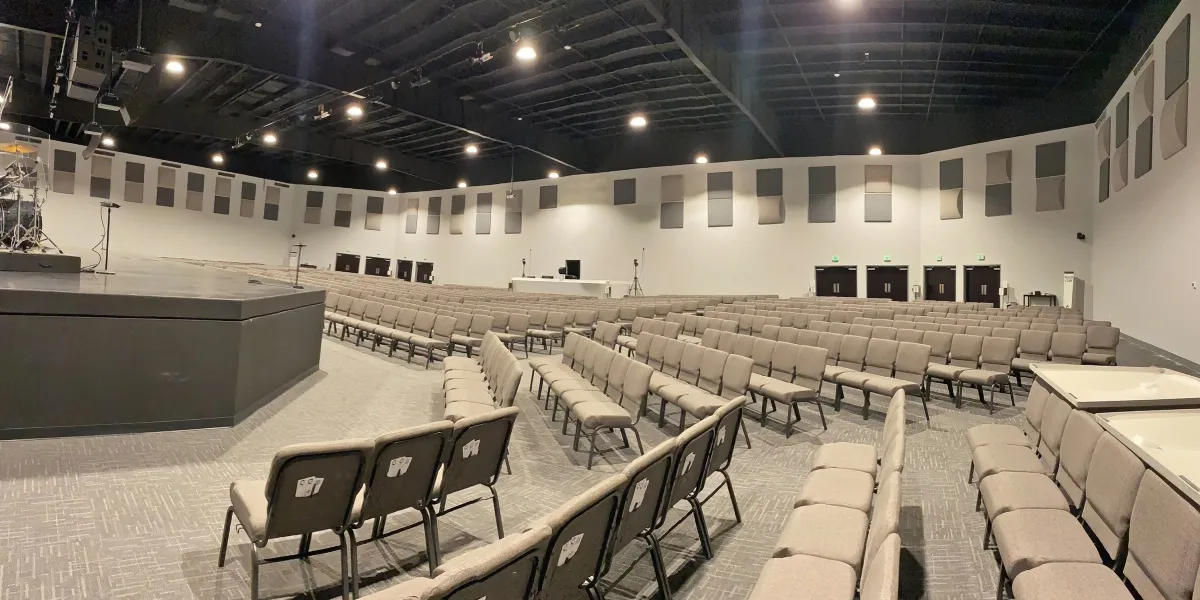
Check out our case study at Calvary Church in St. Augustine, FL to learn how to do Fabric Replacement for Acoustic Panels & Diffusers.
Acoustic Diffusers vs Acoustic Panels
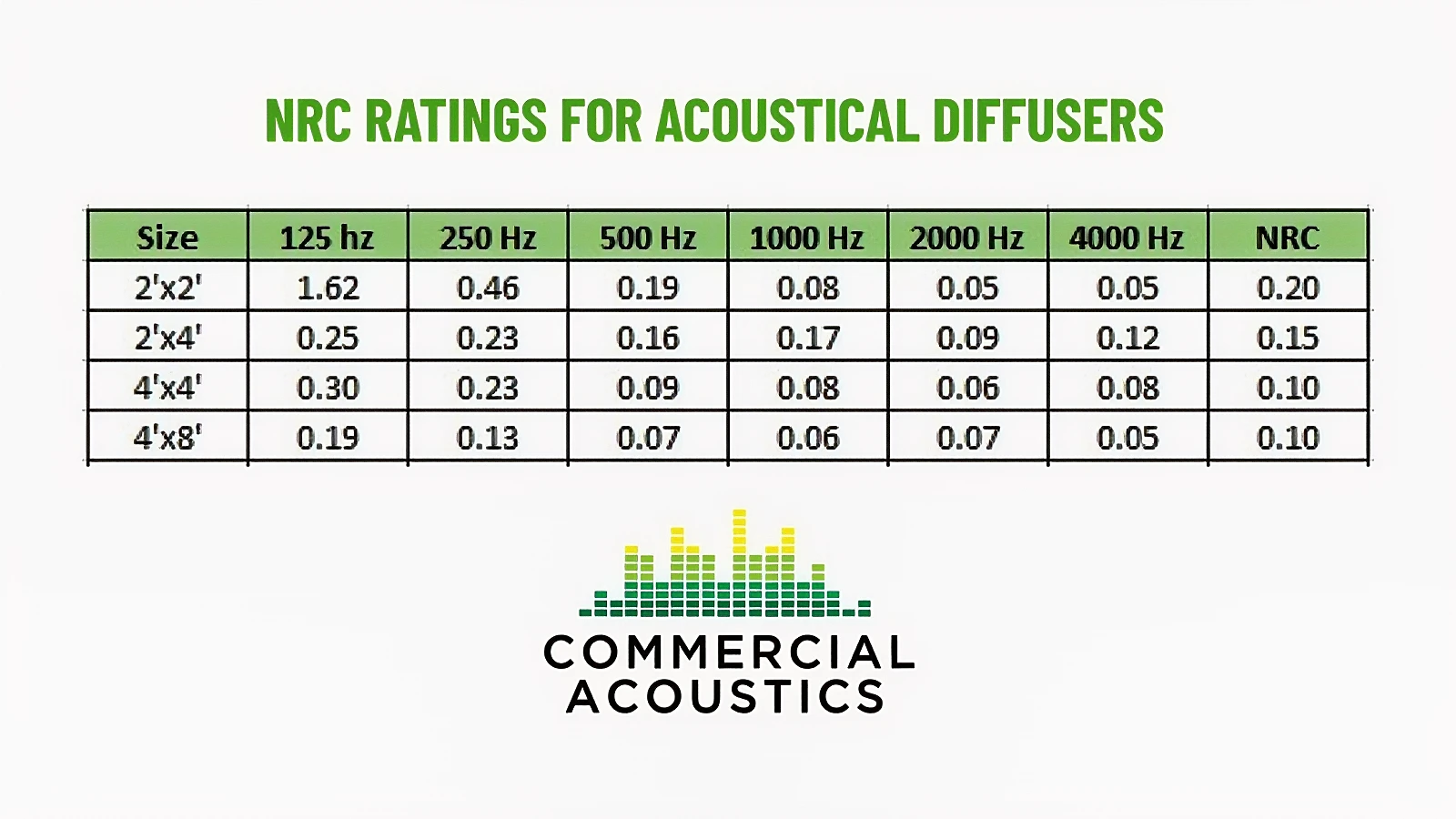
- Diffusers: Hard/reflective; scatter energy to smooth fields.
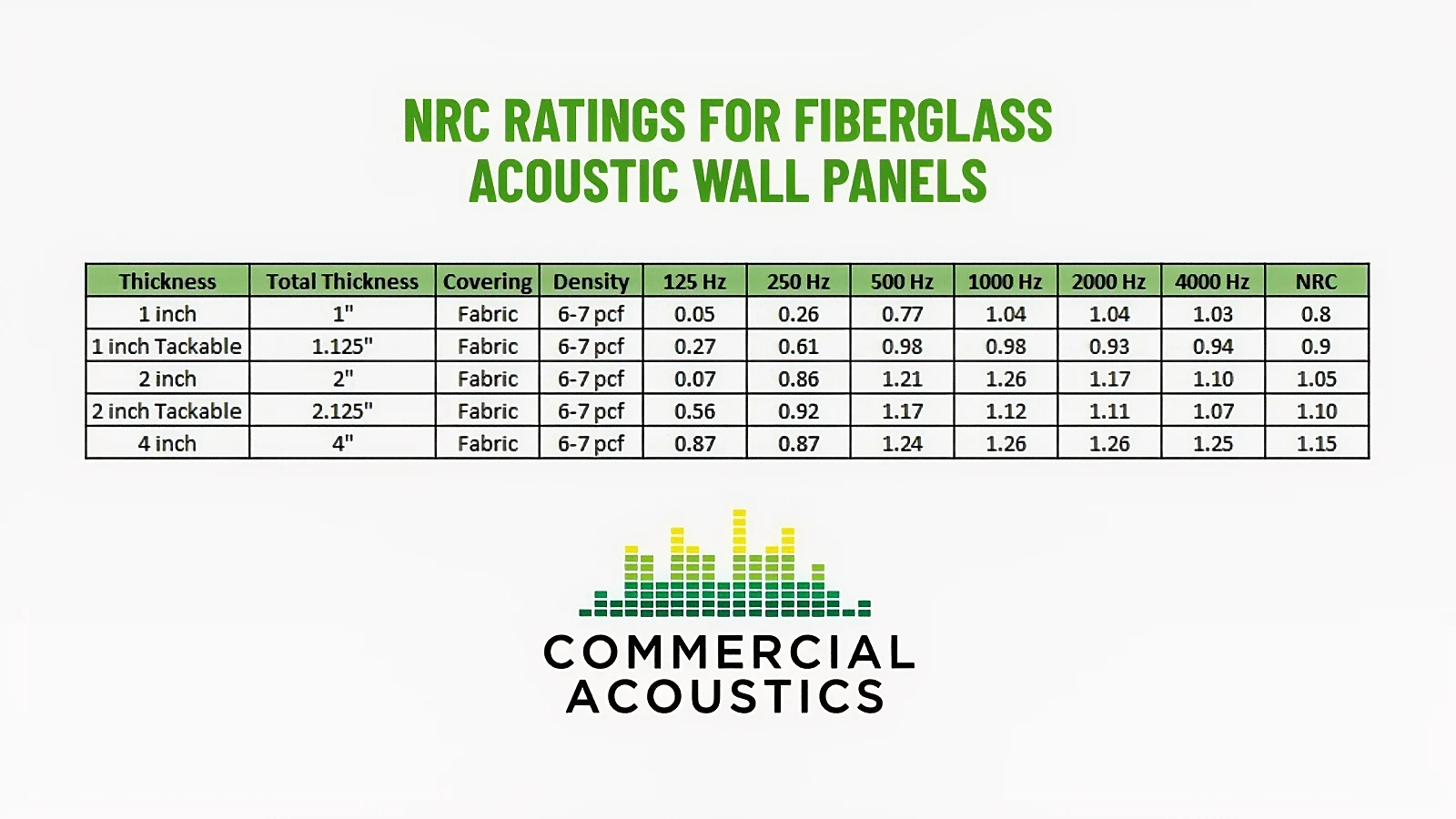
- Panels: Porous/absorptive; lower RT60 & control early hits.
- Together: Balanced clarity without killing room life.
Panels reduce overall reverberation and first reflections; diffusers shape the remaining energy so it’s evenly distributed and free of harsh artifacts. Over-reliance on absorption can dull articulation and dynamics; pairing diffusion with targeted paneling yields intelligibility for speech and realism for music.
Acoustic Diffusers vs Bass Traps
- Bass traps: Corner/soffit absorbers targeting LF buildup.
- Diffusers: Wall/ceiling units that scatter mid-to-HF (and some LF).
- Use both: Traps clean mud; diffusers keep space alive.
Low frequencies accumulate in corners and along boundaries; broadband or membrane traps tame that excess so mixes don’t sound boomy from one seat and thin from another. Diffusers won’t replace bass traps at the deepest octaves, but they prevent mid/high glare and spatial collapse—especially important in rooms that must sound natural, not just quiet.
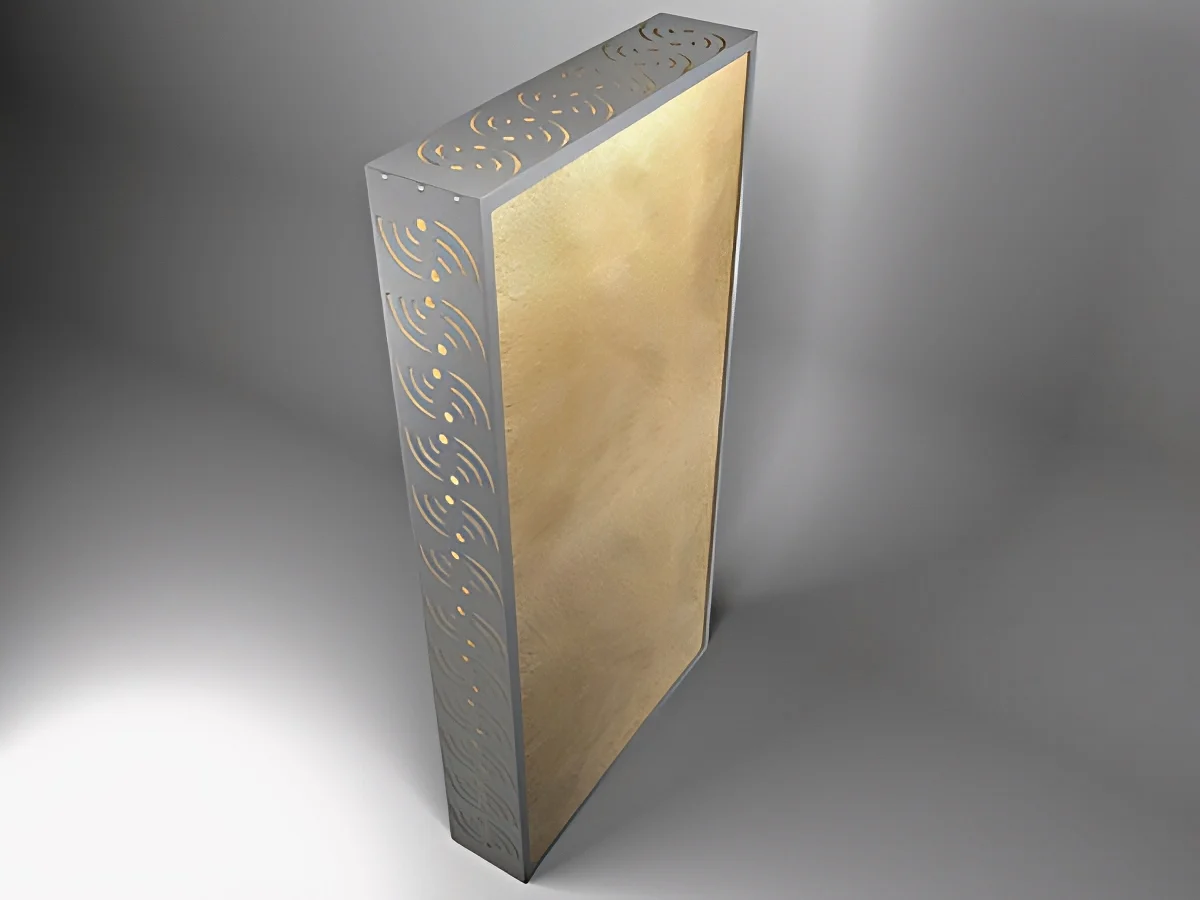
Unlike sound diffusers, bass traps are located in the corners of rooms and are made or fiberglass or foam cores. They work to absorb any low-frequency bass that may gather in the corners of rooms, as bass tends to do.
Best Practices for Installing Acoustic Diffusers
- Distribute coverage: Don’t cluster on one wall; alternate with panels.
- Treat parallels: Address opposing surfaces to avoid flutter.
- Mind height & traffic: Mount above touch zones; protect edges.
Lay out diffusion where reflections are strongest (rear/upper side walls, rear wall in control rooms, overhead canopies on stage). Alternating diffusers with ACT in ceiling grids is an efficient way to blend control with coverage in multipurpose rooms. Coordinate locations with first-reflection paneling and stage shell geometry so diffusion supports, not fights, the overall acoustic plan.
When Acoustic Diffusers Are Needed Most
- Instrument-heavy spaces: Brass, percussion & amplified sources.
- Variable seating: Rooms needing consistent audience coverage.
- Hybrid programs: Speech by day, music by night.
Use diffusion when low-end sources and strong early reflections risk dominating the room. In a band room or auditorium, pairing diffusers with panels controls reverberation, preserves presence, and prevents “one-note” dominance. In hybrid venues, diffusion lets you keep speech clear without stripping musical warmth—one layout serving many programs.
Acoustic Panels in Real-World Projects
- Arizona Restaurant Soundproofing: Panels reduce crowd noise, balance reverberation, and make dining conversations comfortable.
- Tennessee Industrial Factory: Durable wall panels and suspended baffles cut machinery echo and improve worker communication.
- North Carolina Dog Kennel: Moisture-resistant panels absorb barking noise and create calmer, cleaner environments for animals.
From restaurants to factories to kennels, acoustic panels solve very different challenges depending on the environment. In Arizona dining spaces, they limit harsh reflections and improve customer experience. Tennessee factories benefit from rugged, impact-resistant baffles that improve safety and reduce noise fatigue. In North Carolina kennels, washable acoustic panels withstand cleaning while keeping barking under control. Each project shows how targeted acoustic treatment adapts to the needs of the space while delivering comfort and clarity.
Partnering With Experts in Acoustic Diffusion
Commercial Acoustics helps architects & contractors specify the right diffusers, place them where they matter, and integrate them with absorption so you hit performance targets without compromising design. From schools to studios and auditoriums, we deliver rooms that sound as good as they look. Contact Commercial Acoustics to review drawings or discuss diffuser layouts for your next project.
FAQs: Acoustic Diffusers & Sound Treatment
What do acoustic diffusers do?
Acoustic diffusers scatter sound reflections in multiple directions, improving clarity and balance without making a room sound overly dead.
Where should acoustic diffusers be installed?
They’re best used in music rooms, studios, and auditoriums—typically on rear or side walls, or ceilings—to evenly distribute sound energy.
How are acoustic diffusers different from acoustic panels?
Diffusers scatter sound, while panels absorb it. Used together, they control reverberation and create a balanced acoustic environment.
Do acoustic diffusers help with low frequencies?
Yes, partially. Barrel diffusers can affect some low frequencies, but bass traps are still needed for deep low-end control.
Can Commercial Acoustics help design diffuser layouts?
Yes. We help architects and contractors select, place, and integrate diffusers with panels to achieve ideal sound quality and design cohesion.

Walker Peek|Founder & CEO, Commercial Acoustics
Walker founded Commercial Acoustics in 2013 to bring aerospace-grade engineering discipline to soundproofing, and runs the firm as CEO from its 12,000 sq ft Tampa production facility. The company designs custom acoustic panels, sound membranes, and masking systems for multi-family, hospitality, healthcare, and commercial projects across the US — built around Walker’s invention, Wall Blokker, an EVA-based sound barrier that hits STC 50-plus at roughly $1 per square foot installed.
A Jacksonville native, Walker spent five years at Kennedy Space Center with Craig Technologies before founding Commercial Acoustics — certifying aerospace manufacturing to the AS9100 standard and leading Six Sigma Black Belt process-improvement teams on NASA programs. He is a certified Industrial Noise Control Engineer and the author of Architectural Acoustics: A Practical Handbook.
