
Table of Contents
Project Overview: Bathroom Plumbing Soundproofing Case
- Project: Bathroom plumbing pipe lagging for toilet flush and drain noise
- Client: Residential homeowner (single-family case used as proof of concept)
- Scope: Wrap 50+ linear feet of supply and drain piping above living spaces
- Assembly: Two-part pipe lagging, mass-loaded vinyl over fiberglass batting
- Install: Approximately three hours, no demolition required where pipes were exposed
- Result: Toilet flush and kitchen drain noise dramatically reduced during dinners and gatherings
The family in this Tampa home was dealing with a noise problem most homeowners write off as unavoidable. Every toilet flush and kitchen drain cycle was audible from the dining room. During family dinners, the rush of water through the pipes overhead was loud enough to interrupt conversation. When guests were over, the sound was embarrassing. The acoustic problem was real, but the fix was simpler than the family expected.
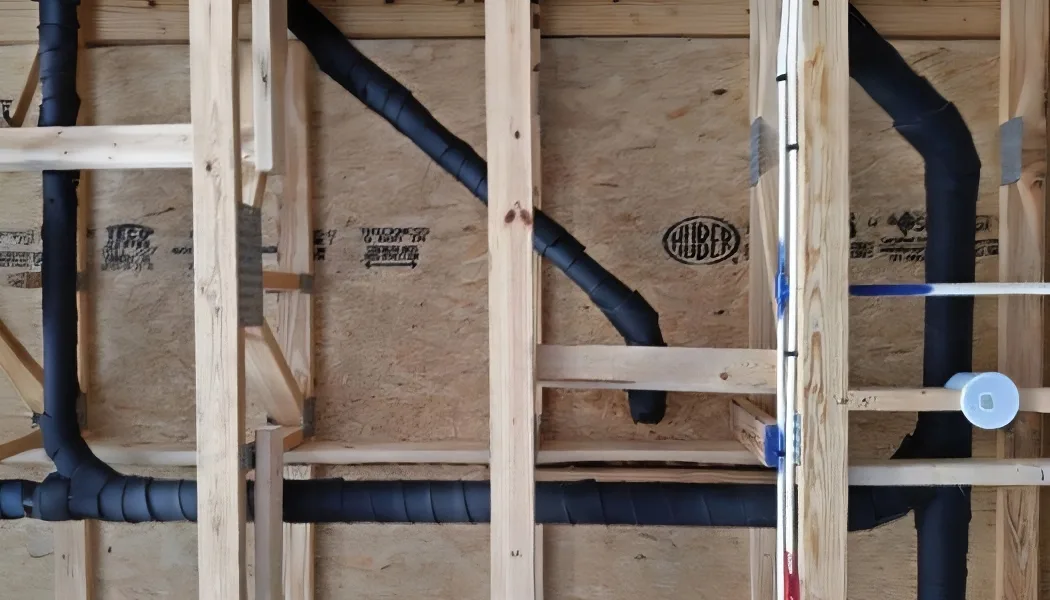
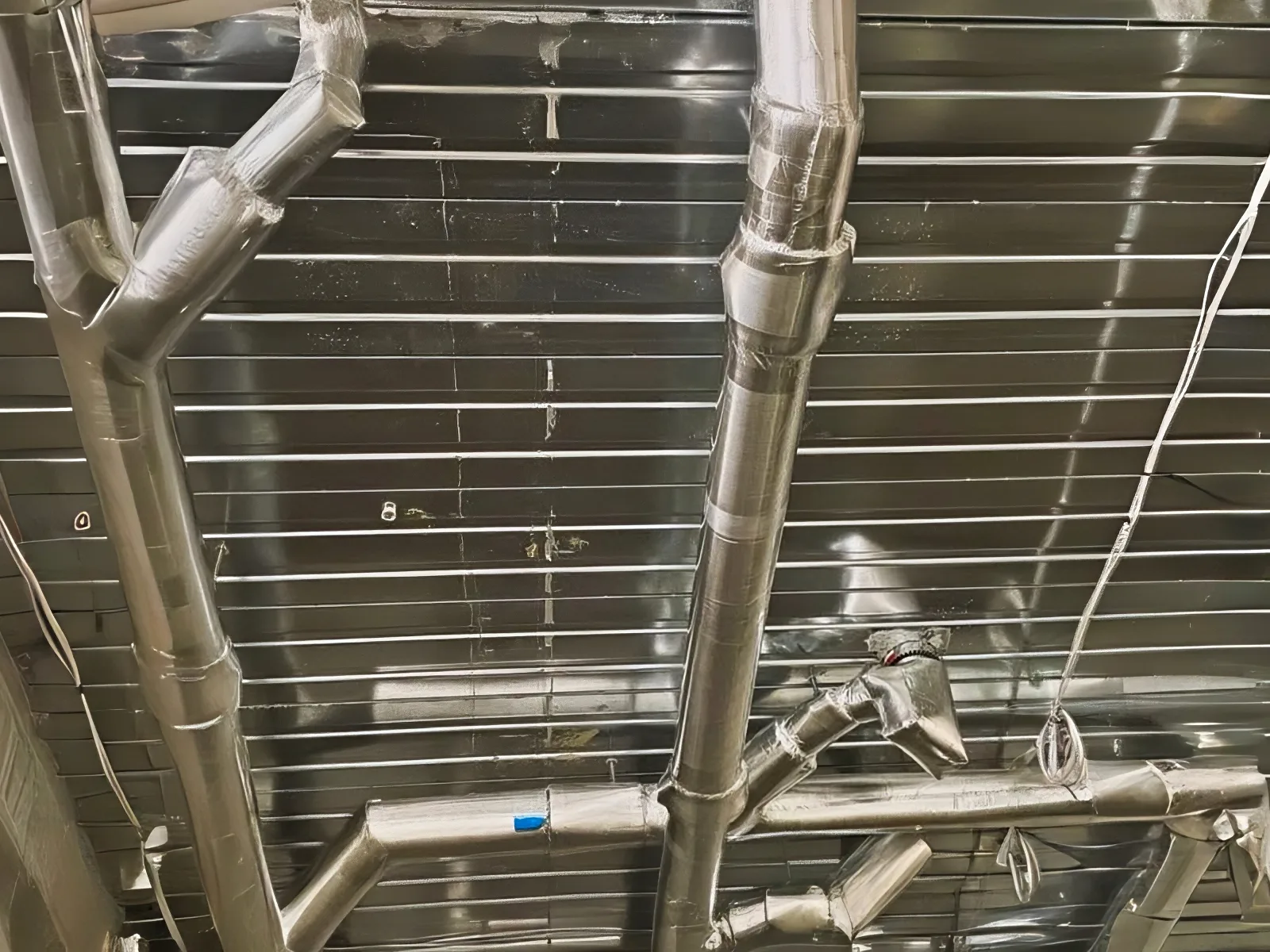
Commercial Acoustics mapped the pipe runs above the living space, identified the loudest segments, and wrapped the exposed pipe with a two-part lagging assembly. The fix took one afternoon. The result was a meaningful drop in audible plumbing noise across the entire main floor.
Even though this case was a single-family home, the same technique is the standard plumbing-noise treatment in any multi-family condo, apartment, or hotel where vertically stacked bathrooms share plumbing chases. The product, the assembly, and the install method scale.
Why Bathroom Plumbing Is the Loudest Path in a Home
Bathroom soundproofing usually starts with the wall between the bathroom and the bedroom. That is the wrong place to start. The wall is rarely the loudest path. Plumbing is.
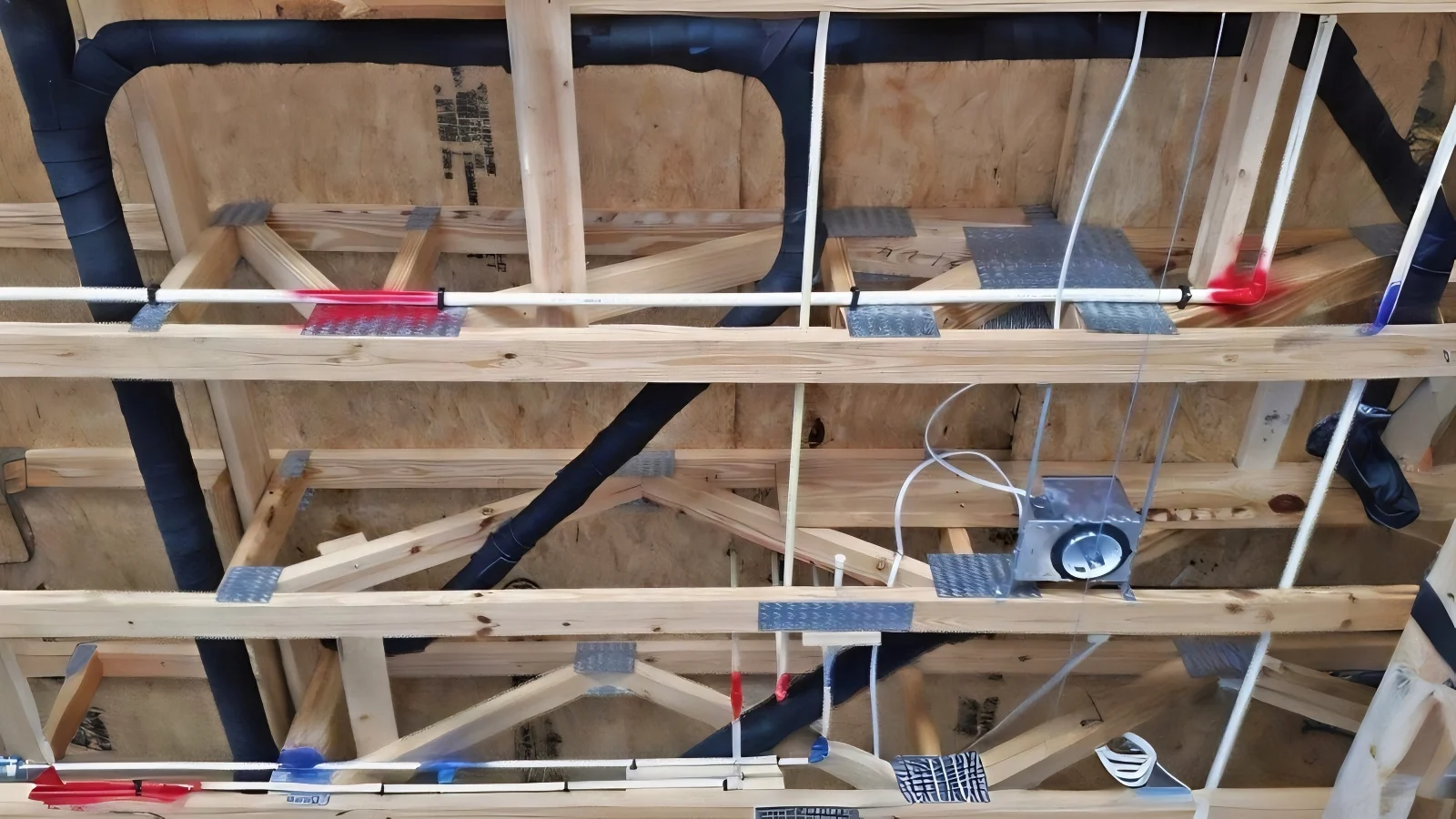
A toilet flush releases a high-velocity slug of water through a vertical drain stack at roughly 1.5 to 2 gallons per second. The water generates broad-spectrum noise from impact, turbulence, and air entrainment. That energy radiates through the pipe wall in all directions, then into the framing, then into the ceiling and wall surfaces of every room the pipe passes through. The kitchen drain does the same thing on a longer time scale. Showers add a continuous low-grade hiss for ten to twenty minutes.
Drywall walls do nothing to stop this. The noise is not coming through the wall, it is coming through the pipe inside the wall. The fix has to happen on the pipe.
The Pipe Lagging Assembly: MLV Plus Batting
- Inner Layer: Fiberglass or mineral wool batting bonded to the pipe surface, controls resonance
- Outer Layer: Mass-loaded vinyl wrapped over the batting, blocks airborne radiation
- Both Required: Batting alone leaks airborne sound, MLV alone fails to damp the pipe wall vibration
- Sealant: Aluminum tape or acoustic caulk at every seam and butt joint
The two-layer assembly is what makes pipe lagging work. The batting acts as a dampener, absorbing the high-frequency vibration in the pipe wall and converting it to low-grade heat. The MLV is the dense barrier that blocks the airborne sound that still radiates from the surface. Skipping either layer drops the effectiveness by more than half.
The product family used here is the same Commercial Acoustics Duct Blokker assembly applied to pipes instead of HVAC ducts. The lagging works on copper supply lines, PVC drain stacks, and cast iron, with the same construction in each case.
Where to Wrap: Mapping the Loudest Pipe Runs
- Vertical Drain Stacks: The loudest single source, wrap from each branch tie-in down to the stack base
- Horizontal Drain Runs: Above living-space ceilings, wrap the full span between fixtures
- Toilet Branch Lines: The first 6 to 10 feet downstream of every toilet
- Kitchen and Laundry Drains: High-flow events generate the most audible noise here
The Tampa project covered roughly 50 linear feet of pipe across the main floor. The crew walked the basement and attic before installation to map every pipe run above the dining and living areas, then prioritized the segments closest to the living space. Pipes running through closets, mechanical chases, or unfinished areas got lower priority since the sound was less audible from occupied rooms.
Bathroom Noise Sources by Housing Type
Different housing types stack bathroom noise problems differently. The table below maps the dominant noise sources and the right treatment for each.
For the office-vertical version of the same pipe-lagging technique applied to HVAC and plumbing in a commercial open office, see the office pipe lagging case study.
How This Scales to Multi-Family Condos and Apartments
Multi-family bathroom noise complaints rarely come from the demising wall. They come from the plumbing stack feeding the bathroom directly above the complaining unit. The flush above sends water down a vertical pipe inside the wall or ceiling of the unit below, and the resident hears it as if the pipe were in their own room.
Pipe lagging on that stack is the cheapest path to a satisfied resident. The work happens during a unit turnover, before the new occupant moves in, when the wall or ceiling is open for other trades. A condo association can run the lagging scope across an entire vertical stack of units during a tower-wide renovation cycle for a fraction of the cost of full wall rebuilds.
For the broader condo soundproofing playbook including demising walls and floor underlayment, see the condo soundproofing retrofit STC 58 case.
What Homeowners and Developers Should Spec
- Assembly: Two-layer lagging, fiberglass batting plus mass-loaded vinyl, both required
- Coverage: Wrap every pipe run above or adjacent to living and sleeping spaces
- Sealing: Aluminum tape or acoustic caulk at every seam, butt joint, and tee fitting
- Access: Schedule the work during open framing or ceiling renovation, not after finish
- Multi-Family: Apply lagging during unit turnovers in a tower-wide phased scope, not unit by unit
Conclusion: Bathroom Soundproofing Done Right
Bathroom soundproofing rarely starts at the wall. It starts at the pipe. Wrapping the supply and drain runs above living spaces with a two-part MLV plus batting lagging assembly removes the dominant noise path before any wall treatment matters. The Tampa project closed 50 linear feet of audible plumbing in one afternoon. The same scope applied to a vertical condo stack closes the noise for every unit on that stack.
Whether the project is a single bathroom retrofit or a multi-family tower-wide rollout, talk to an acoustic consultant about the lagging scope before the next bathroom remodel.
FAQs: Bathroom Soundproofing and Pipe Lagging
What is the loudest source of bathroom noise in a typical home?
Plumbing, not the wall. Toilet flushes and drain stack water are the dominant audible sources, transmitted through the pipe wall and then radiated through framing and finished surfaces into adjacent rooms. The fix has to happen on the pipe, not on the wall.
Can pipe lagging really cut toilet flush noise?
Yes. A two-layer assembly of mass-loaded vinyl over fiberglass batting drops the audible water noise meaningfully on every flush. The Tampa case in this study reported a dramatic reduction across the entire main floor after wrapping 50 linear feet of pipe in one afternoon.
Does pipe lagging work the same in condos and apartments?
Yes. The same MLV plus batting assembly is the standard plumbing-noise treatment in multi-family buildings. Lagging the vertical drain stack above the complaining unit is usually faster and cheaper than rebuilding walls or ceilings. The work fits well into a unit turnover schedule.
Can I install pipe lagging myself or do I need a contractor?
The product wraps and tapes with hand tools. Homeowners with exposed pipe access in a basement or attic can do it themselves over an afternoon. In finished spaces or multi-family buildings, schedule the work during a renovation cycle when the wall or ceiling is already open.

Walker Peek|Founder & CEO, Commercial Acoustics
Walker founded Commercial Acoustics in 2013 to bring aerospace-grade engineering discipline to soundproofing, and runs the firm as CEO from its 12,000 sq ft Tampa production facility. The company designs custom acoustic panels, sound membranes, and masking systems for multi-family, hospitality, healthcare, and commercial projects across the US — built around Walker’s invention, Wall Blokker, an EVA-based sound barrier that hits STC 50-plus at roughly $1 per square foot installed.
A Jacksonville native, Walker spent five years at Kennedy Space Center with Craig Technologies before founding Commercial Acoustics — certifying aerospace manufacturing to the AS9100 standard and leading Six Sigma Black Belt process-improvement teams on NASA programs. He is a certified Industrial Noise Control Engineer and the author of Architectural Acoustics: A Practical Handbook.
