
Table of Contents
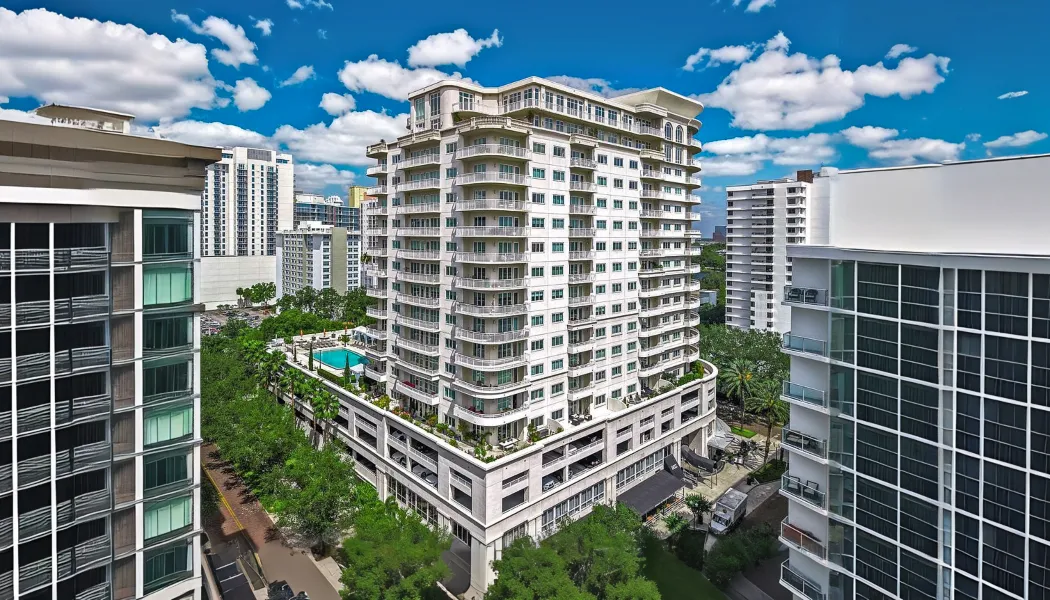
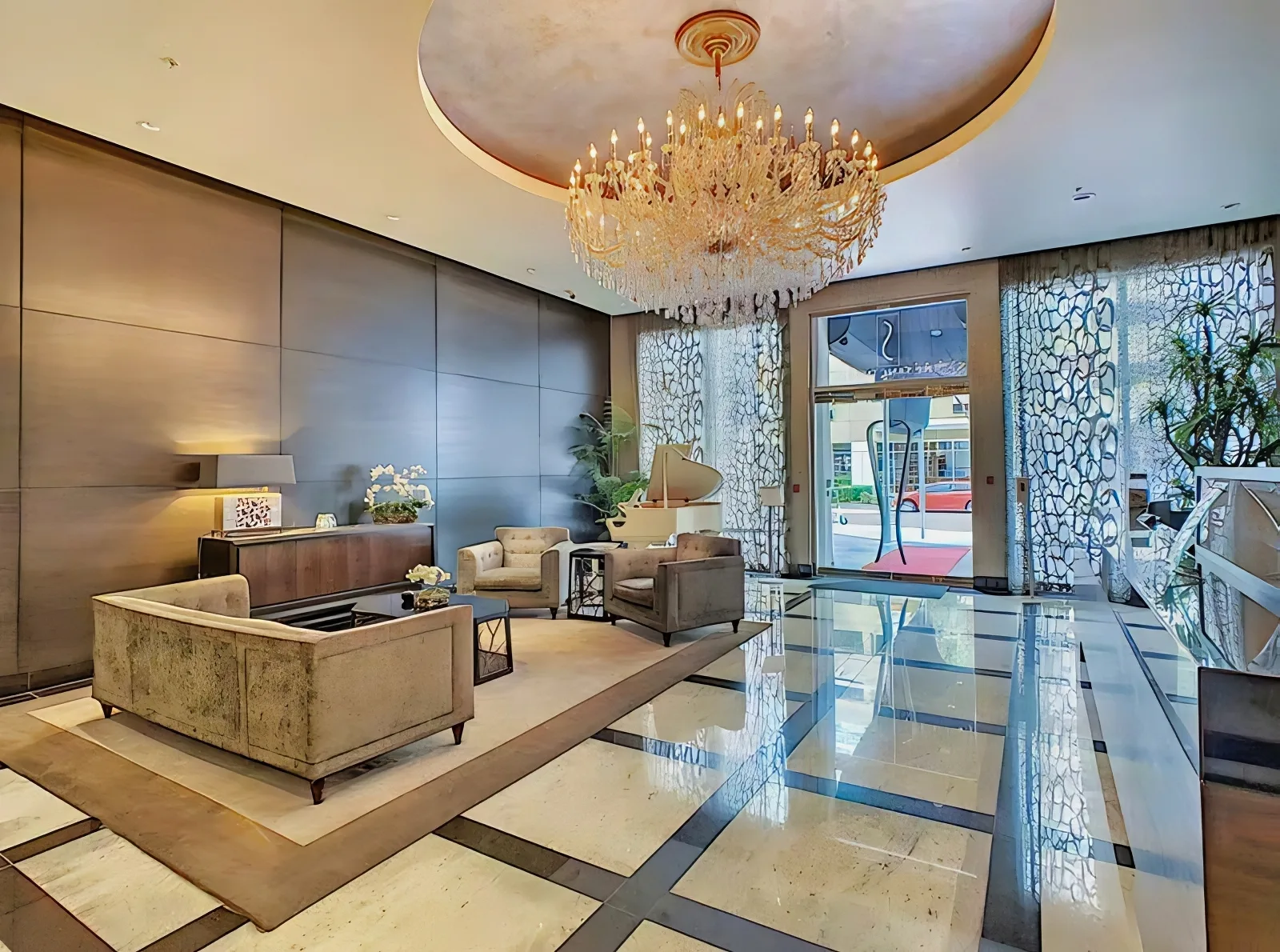
Project Overview: The Sanctuary Downtown Orlando Retrofit
- Project: Post-Construction Condo Soundproofing Retrofit
- Client: The Sanctuary Downtown HOA (formerly The Cayman, HOA-driven scope)
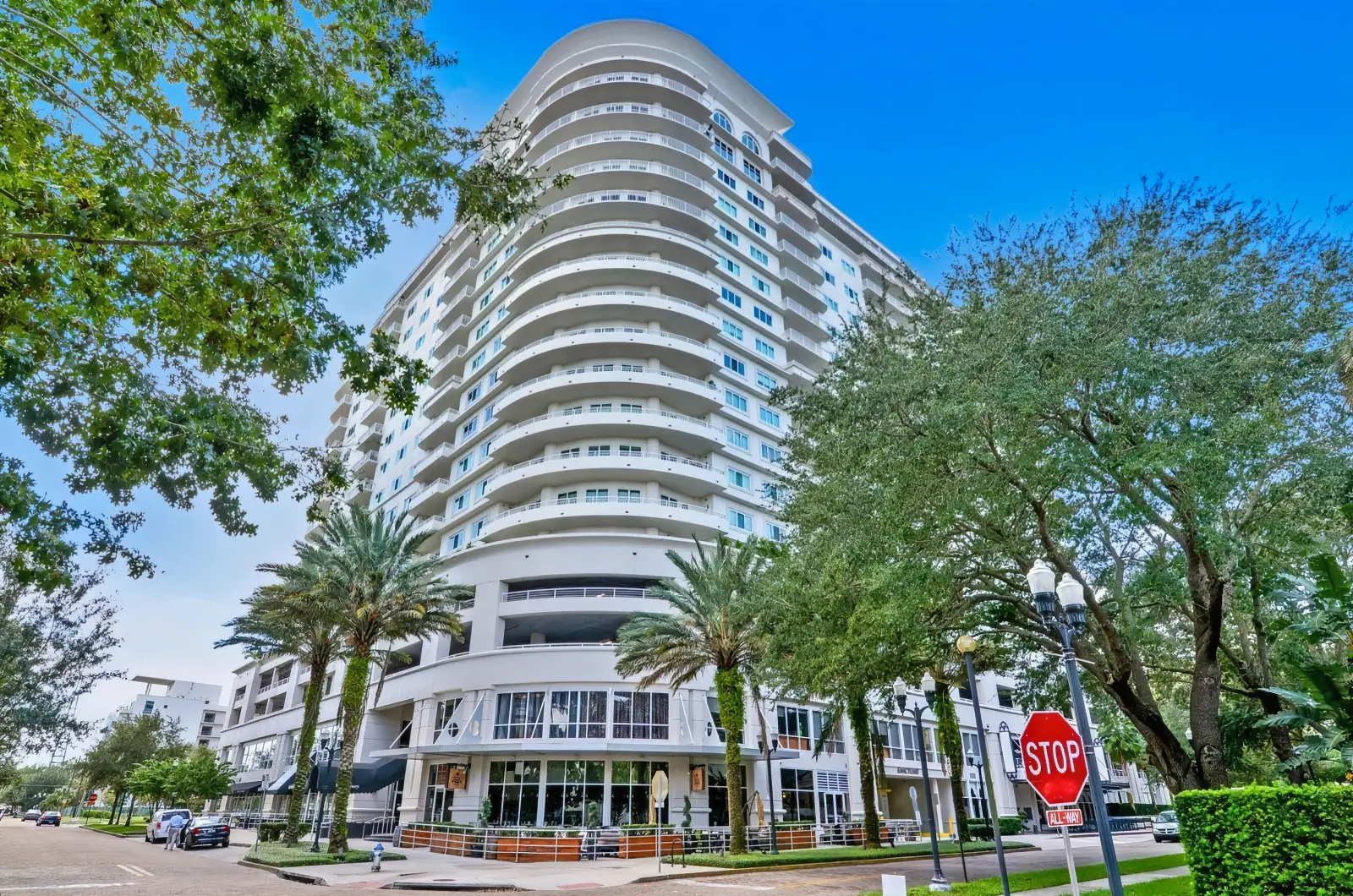
- Location: 100 S. Eola Drive, Downtown Orlando, FL 32801
- Building: 18-floor, 173-unit luxury tower, completed 2006
- Existing Wall: 20-gauge metal studs, gypsum each side, R-13 batt
- Florida Code Target: STC 50 minimum per FBC Section 1207.2
- Achieved: Field STC 58 walls, IIC 60 floors after treatment
Why 20-Year-Old Condo Buildings Suddenly Get Noise Complaints
Condo buildings rarely fail acoustically the day they open. The complaints start years later, after unit turnover changes the resident mix and lifestyle patterns shift. A retiree moves out, a remote-work couple moves in, hardwood replaces carpet, and the neighbor below now hears every footstep. The walls and floors did not change. The use case did.
The Sanctuary at 100 S. Eola Drive (originally branded The Cayman) hit that wall about two decades into service. Residents reported music, voices, and impact noise from adjacent units. Commercial Acoustics was retained to assess what an existing occupied building could realistically hit, and to do it without gutting individual suites.
Florida code only requires STC 50 between dwelling units. That number is a floor for code compliance, not a target for resident comfort. At STC 50, normal speech is muffled but raised voices and music still come through. Modern luxury buyers expect more than that.
Field Measurements: STC 58 and IIC 60 After Treatment
Most condo soundproofing case studies stop at design recommendations. This one was field-measured per ASTM E336 for airborne and ASTM E1007 for impact, both before and after the retrofit. The numbers ran the project, not the spec sheet.
Each component cleared the Florida code floor by 8 to 10 points. The combined effect is what residents actually feel: speech privacy, no music transfer, and a noticeable drop in impact noise from above.
The Three-Front Fix: Walls, Floors, and Doors
- Walls: Wall Blokker Pro membrane over existing gypsum, source side
- Floors: Acoustic underlayment under refinished hard-surface flooring
- Doors: Solid-core with perimeter gaskets and automatic door bottoms
- Penetrations: Outlets, switches, baseboards sealed with acoustical caulk
The temptation in a retrofit is to fix only the loudest complaint. That rarely works. If the wall is treated but the door is hollow-core, sound finds the door. If the wall is treated but the floor underlayment is bare slab to LVT, footfall finds the gap. The three fronts have to move together, or the weakest path defines the result.
For a deeper read on why the entry door so often becomes the limiting factor, see the door flanking field test.
Wall Blokker Pro on 20-Gauge Studs: Where the +8 Came From
The existing demising walls used 20-gauge metal studs with single-layer gypsum each side and R-13 batt insulation. That assembly hit a measured STC 50 in the field, exactly the Florida code minimum. The wall passed code on day one and started failing residents around year fifteen.
The retrofit added one layer of Wall Blokker Pro mass-loaded vinyl membrane over the existing gypsum on one side of each wall. No demolition. No exposed studs. The membrane installs over the finished surface and gets buried under a new gypsum layer with skim coat finish.
Result: an 8-point STC gain (50 to 58) on a wall that already existed. The decoupling effect of mass-loaded vinyl over a heavy-gauge stud assembly is what made the math work. Lighter 25-gauge studs would have delivered less because the studs themselves carry vibration more efficiently.
To model how membrane substitution shifts the STC math on different stud assemblies, run the STC calculator.
Florida Code STC 50: Why It Is the Floor, Not the Goal
Florida Building Code Section 1207.2 sets STC 50 between dwelling units and IIC 50 between floors. Those numbers were written in the 1970s based on what construction could economically deliver, not on what residents actually need. Luxury condo buyers in 2026 expect a meaningfully higher standard.
For more on how each STC number translates into the lived experience of speech privacy, see the STC rating chart.
Retrofit vs. New Construction: Cost and Disruption
An HOA cannot tear out and rebuild every demising wall in a 20-year-old occupied building. The retrofit playbook accepts that constraint and works inside it.
- New Construction: Double-stud or staggered with MLV, built right from day one
- Retrofit (Sanctuary approach): Add mass to existing gypsum, treat doors and floors together
- Cost Delta: Retrofit runs 30 to 50 percent of new-construction cost per linear foot
- Disruption: Three to five days per unit, no relocation required, paint and finish included
For a comparison case where the work happened during initial construction instead of after, see the luxury condo demising wall design project. Different starting point, same end goal.
What HOAs Should Ask Before a Soundproofing Project
- Field Test First: ASTM E336 on the demising wall before any scope is set
- Impact Test: ASTM E1007 on the floor above before underlayment work
- Doors: Confirm solid-core vs hollow-core, inspect perimeter seals
- Penetrations: Map outlets, recessed lights, plumbing and HVAC chases
- Validation: Treatment validated against field STC, not lab STC
Most condo associations approach soundproofing the wrong way. They get a contractor quote on a wall fix, then wonder why the complaints continue six months later. The right scope starts with a measurement, not a product spec.
The five line items above keep the scope honest. Skip any one of them and the post-treatment numbers usually land below the resident expectation that triggered the project.
Conclusion: Soundproofing an Existing Condo the Right Way
Existing condo buildings can hit luxury-tier STC and IIC numbers without a gut renovation. The Sanctuary project moved from Florida code minimum to STC 58 and IIC 60 by treating walls, floors, and doors as a single coordinated scope, with field measurements driving the design instead of paper specs. The result is a building that meets resident expectations for the next twenty years, not just the code book of the last twenty.
If your condo association is fielding noise complaints and the building is past warranty, the team behind this work can run the field test and scope the retrofit. Learn more about Commercial Acoustics and how we approach existing-building projects.
FAQs: Condo Soundproofing Retrofit
What STC rating does a luxury condo actually need?
Florida code requires STC 50 between units, but that floor only blocks normal speech. Luxury buyers expect STC 55 to 58, where music and TV become inaudible at normal levels. Ultra-luxury and hotel-branded condos target STC 62 or higher.
Can you soundproof a condo without gutting the suite?
Yes. A retrofit adds mass-loaded membrane over existing gypsum, an underlayment under refinished flooring, and upgraded doors with seals. Work runs three to five days per unit at 30 to 50 percent of new-construction cost. No exposed studs, no resident relocation.
Why do older condos start getting noise complaints after years of quiet?
Resident turnover changes lifestyle patterns. Hardwood replaces carpet, remote workers replace retirees, and noise tolerance shifts. The walls and floors did not change, but the use case did. Older buildings built to code minimum show the gap once expectations rise.
Should an HOA pay for a field acoustic test before contracting work?
Yes. An ASTM E336 field test typically runs one to three thousand dollars and tells you exactly what the existing wall delivers. Without it, an HOA risks paying for a fix that targets the wrong path. The test is the cheapest line item on the project.

Walker Peek|Founder & CEO, Commercial Acoustics
Walker founded Commercial Acoustics in 2013 to bring aerospace-grade engineering discipline to soundproofing, and runs the firm as CEO from its 12,000 sq ft Tampa production facility. The company designs custom acoustic panels, sound membranes, and masking systems for multi-family, hospitality, healthcare, and commercial projects across the US — built around Walker’s invention, Wall Blokker, an EVA-based sound barrier that hits STC 50-plus at roughly $1 per square foot installed.
A Jacksonville native, Walker spent five years at Kennedy Space Center with Craig Technologies before founding Commercial Acoustics — certifying aerospace manufacturing to the AS9100 standard and leading Six Sigma Black Belt process-improvement teams on NASA programs. He is a certified Industrial Noise Control Engineer and the author of Architectural Acoustics: A Practical Handbook.
