
Table of Contents
Project Overview: Cena Italian Restaurant, Tampa
- Project: Fine dining acoustic treatment for an upscale Italian dining room
- Client: Cena (Italian and Mediterranean restaurant)
- Location: Channelside district, Tampa, FL
- Architecture: Tall ceilings, full-height windows, painted gypsum walls
- Treatment: 2″ fiberglass ceiling clouds and acoustic panels, custom fabric matched to decor
- RT60 Result: 1.1 seconds — 0.7 seconds (fine dining target met)
- Cost / Timeline: Under $6,000 turn-key, three weeks fabrication, single-afternoon install
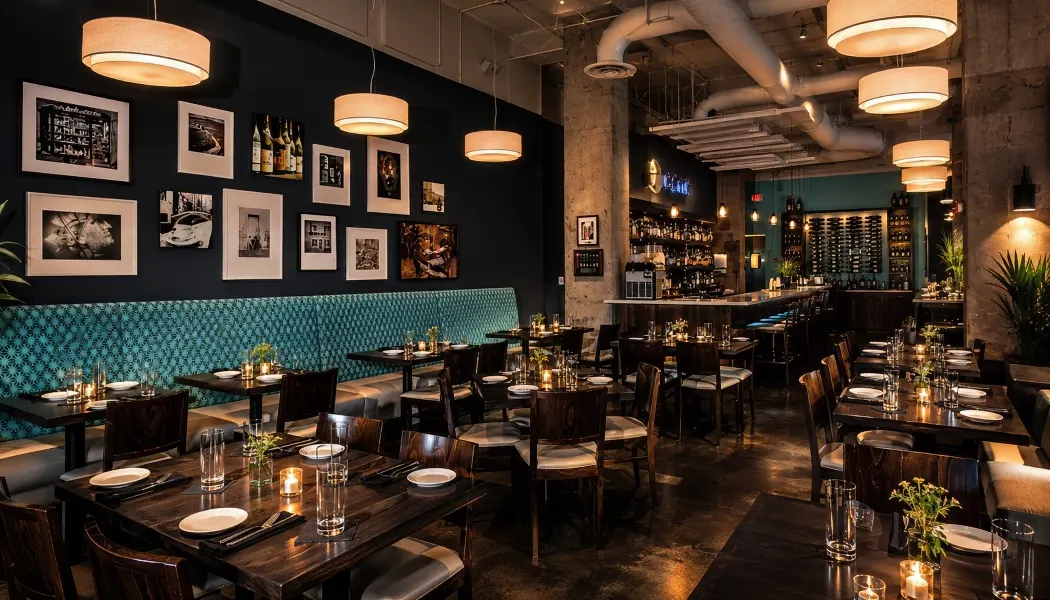
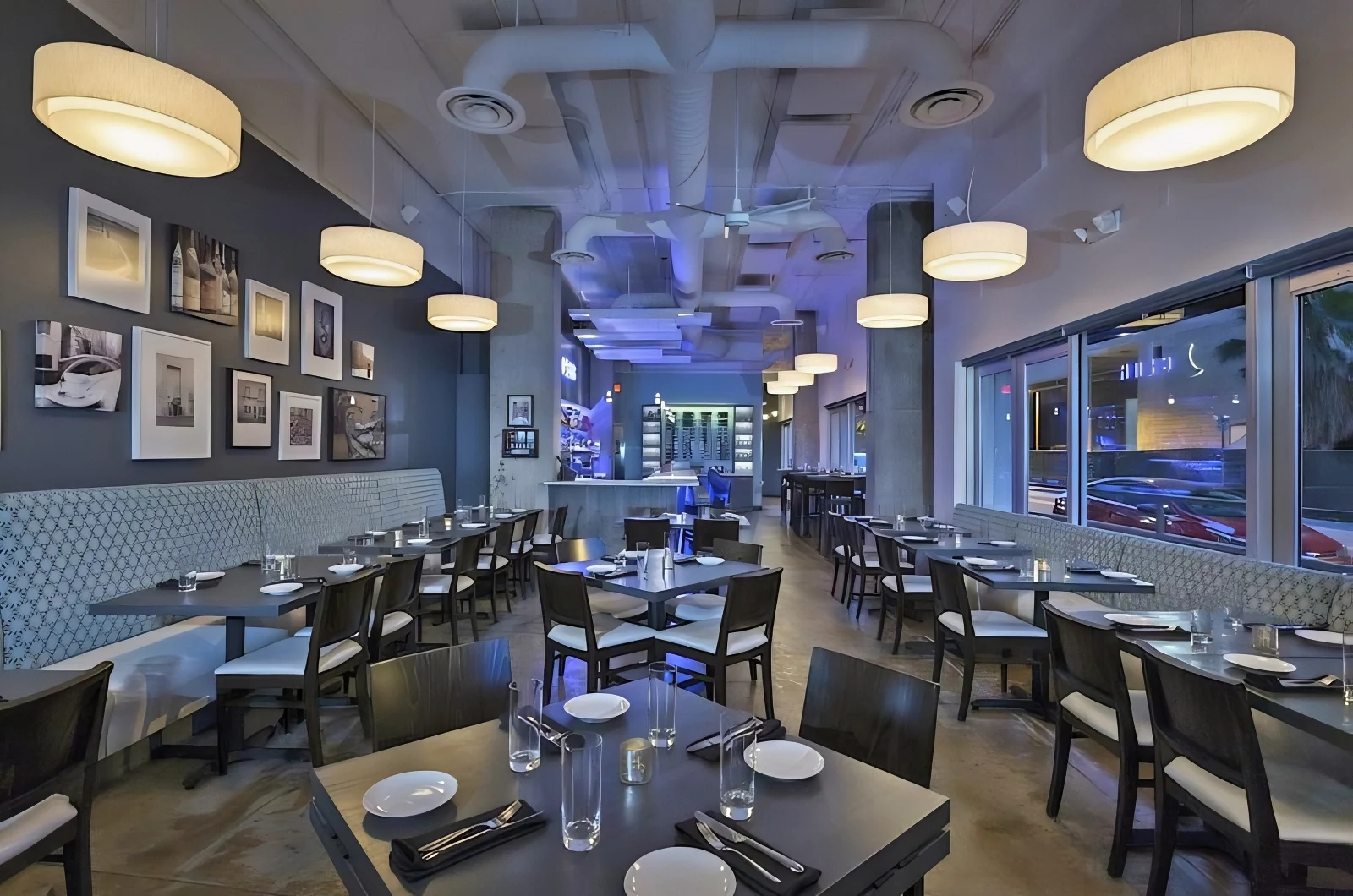
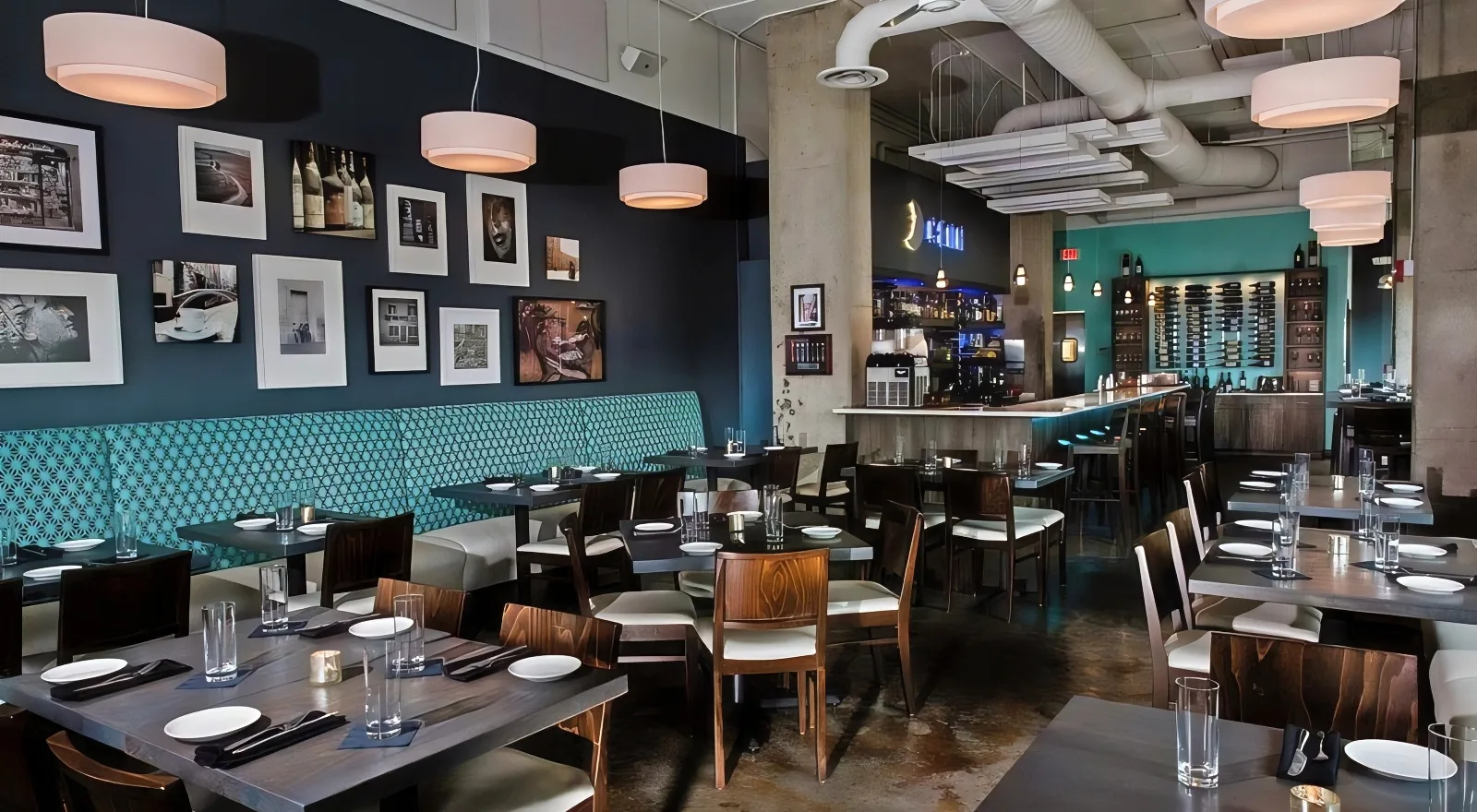
Cena’s dining room had the design wrong for the experience it was selling. The look was right for an upscale Italian restaurant. The acoustics were wrong. Tall ceilings, full-height glass to the Channelside street, painted gypsum walls, and almost no porous absorption anywhere in the room. The result was a measured RT60 of 1.1 seconds, which is fine for a busy bar and unworkable for a restaurant where guests are paying to talk to each other across the table.
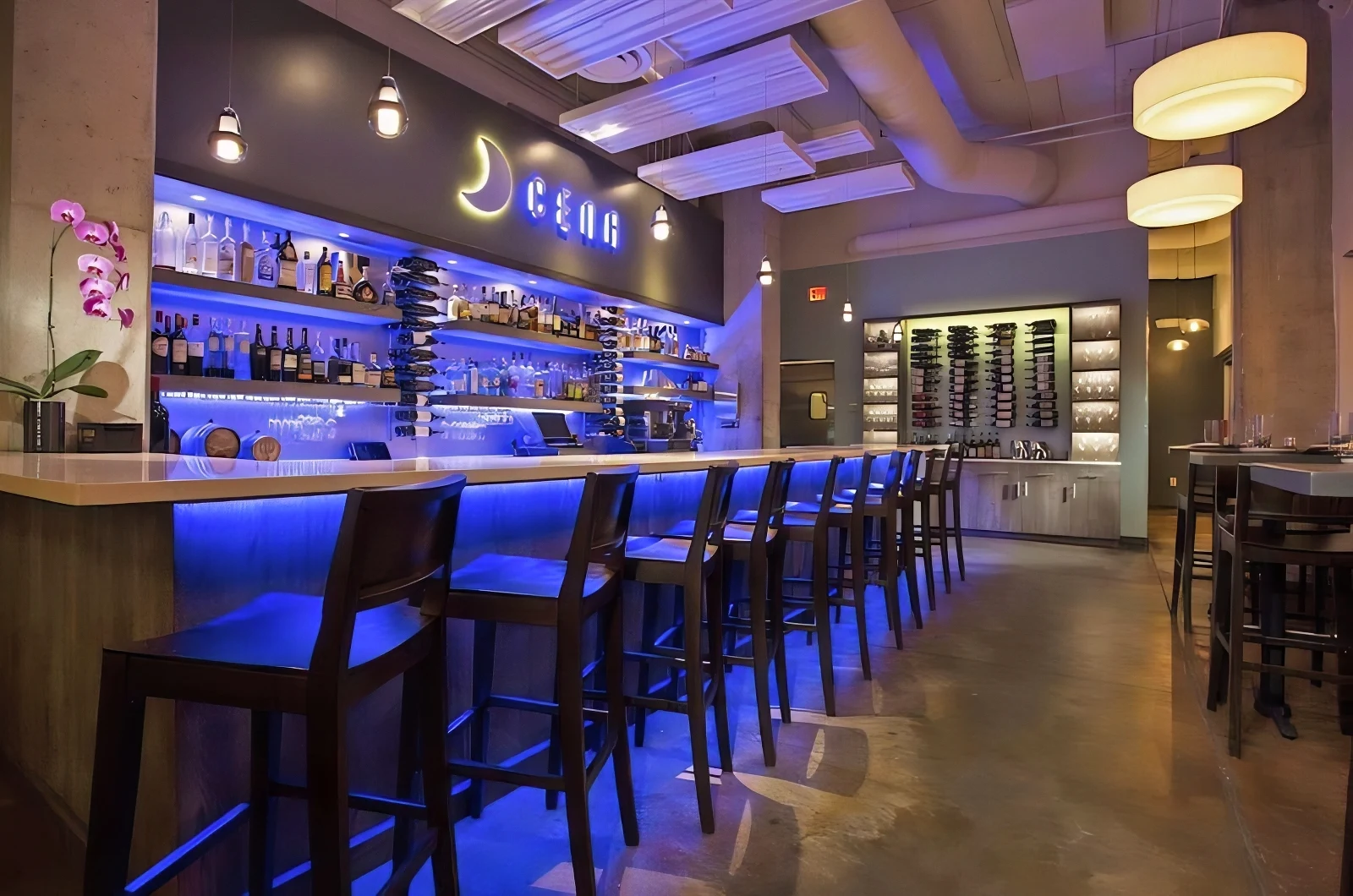
Commercial Acoustics specified ceiling clouds and wall panels in a fabric that coordinated with the existing Mediterranean color palette, fabricated everything in-house, and installed it on a single closed afternoon before the holiday rush. The post-install RT60 measured 0.7 seconds, which is the working target for fine dining. The owner described the change after the first full night of service: “the place was packed and we had great ability to converse.”
Why Fine Dining Has Stricter Acoustics Than Casual
A casual restaurant can run RT60 between 0.8 and 1.0 seconds and feel right. The energy is part of the experience, the music is part of the brand, and guests are not paying for a quiet conversation. Fine dining flips that math. Guests at a high-end Italian or steakhouse are paying for the food and for the table conversation that surrounds it. Above RT60 0.8 seconds the conversation starts to strain. Above 1.0 seconds the table becomes work.
The fine dining target is 0.5 to 0.8 seconds. Below that range the room sounds dead and intimate, which fits very quiet tasting menus. Inside that range the conversation reads as effortless. Above it the review on Yelp says the food was great but you could not hear yourselves think.
For comparison cases at the casual end of the dining spectrum, see the British pub restaurant ceiling panels case and the Naples Flatbread live music case. Same product family, different RT60 targets, different guest expectations.
The Modern Upscale Architecture Problem
The acoustic problem at Cena is the same problem at almost every modern upscale restaurant opening in 2026. The aesthetic favors hard finishes that catch light. Polished concrete or stone floors. Full-height glass to the street for visibility. Painted gypsum walls instead of upholstered booths. Ceilings opened to 14 or 16 feet for visual drama.
Each of those design choices reads as premium on Instagram and acoustically reads as a mirror. The energy from every conversation, every kitchen door, every wine glass clink bounces between the surfaces until the room hits a steady-state level that overwhelms speech intelligibility.
The fix has to live where the design will tolerate it. Wall space is often committed to art and to the open-glass view. The floor cannot be carpeted in a high-end dining room. That leaves the ceiling.
Ceiling Clouds for Tall Dining Rooms
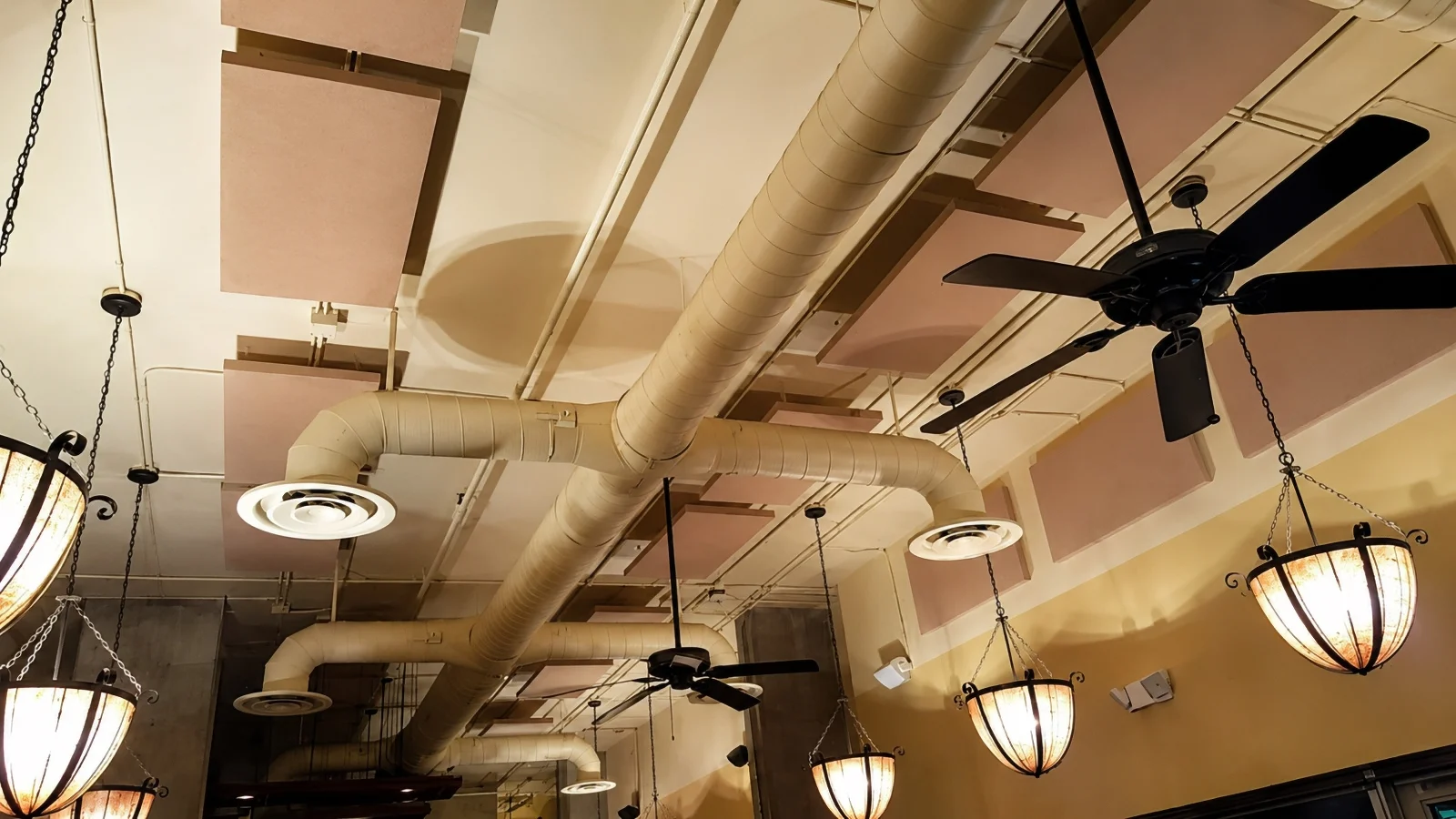
- Product: 2″ fiberglass ceiling clouds, both faces absorbing
- Position: Suspended a few feet below the high ceiling, directly above the seating zones
- Wall Layer: Coordinating acoustic panels on the largest available wall surfaces
- Fabric: Custom-wrapped to match the Mediterranean decor palette
- NRC: 0.95+ per panel, top-tier absorption for fine dining
Tall ceilings favor ceiling clouds because both faces of the cloud absorb. A wall panel only absorbs the energy that hits one face. A suspended cloud catches sound coming up from the dining room and sound that has already bounced down from the high ceiling. In a 14-foot or taller dining room the cloud math beats wall-mount math by a meaningful margin per square foot of treatment.
The custom fabric step is what kept the install invisible to guests. Standard gray office-grade fabric reads as workplace surplus in an upscale restaurant. Color-matched fabric reads as decor.
RT60 1.1s to 0.7s at Cena
Cena’s pre-install RT60 measured 1.1 seconds across the speech band. The post-install measurement on the same room landed at 0.7 seconds, hitting the fine dining target with margin.
The 0.4-second delta sounds modest as a number and reads as a different room in practice. At 1.1 seconds two diners across a four-top had to lean in to follow each other through the entrees. At 0.7 seconds the same table holds a normal conversation with the room full. The food did not change. The decor did not change. The acoustic load on the room changed and the experience followed.
Two years after the original install, Commercial Acoustics returned during an interior remodel to re-wrap the ceiling clouds with a new fabric that matched the refreshed decor. The acoustic core stayed in place. The face material changed with the room.
RT60 Targets by Dining Style
Not every restaurant should target the same reverberation time. The table below maps the working RT60 windows that match guest expectation by dining style.
What Fine Dining Operators Should Spec
- Baseline RT60: Measure before specifying anything, the room’s actual number drives the panel count
- Ceiling First: Tall dining rooms get more absorption per square foot from ceiling clouds than wall panels
- NRC 0.95+: Top-tier absorption per panel keeps the panel count low and the design clean
- Custom Fabric: Match the decor palette, not stock office gray
- Re-Wrap Path: Confirm the panels can be re-wrapped during future remodels without replacing the acoustic core
Doing it this way runs $5 to $10 per square foot of treated room for a turn-key install on a typical fine dining footprint. That cost lands inside an operating budget rather than a capital project.
Conclusion: Fine Dining Restaurant Acoustics Done Right
Fine dining lives or dies on the conversation at the table. Modern upscale architecture favors hard finishes that look premium and acoustically push RT60 past the point where guests can comfortably talk. Ceiling clouds in custom fabric, sized to the room and placed above the seating, drop RT60 into the 0.5 to 0.8 second window where the conversation reads as effortless. Cena moved from 1.1 to 0.7 seconds in a single closed afternoon for under $6,000.
If your restaurant is opening or remodeling and the dining room is going to land in modern hard-finish territory, talk to an acoustic consultant about a ceiling cloud scope before the soft opening reviews start coming in.
FAQs: Fine Dining Restaurant Acoustics
What RT60 should a fine dining restaurant target?
Between 0.5 and 0.8 seconds across the speech band. Above 0.8 seconds the table conversation starts to strain, above 1.0 seconds it becomes work. Tasting menus and sushi counters target the lower end at 0.4 to 0.6 seconds. Casual dining sits at 0.7 to 1.0 seconds where the lively atmosphere is part of the brand.
Why do ceiling clouds work better than wall panels in tall restaurants?
Ceiling clouds absorb on both faces, capturing sound rising from the dining room and sound that has already bounced down from the high ceiling. Wall panels only absorb the energy hitting one face. In dining rooms above 14 feet, the cloud math delivers meaningfully more absorption per square foot of treatment.
How much does fine dining acoustic treatment cost?
Approximately $5 to $10 per square foot of treated dining room for a turn-key install with custom fabric. The Cena project hit RT60 0.7 seconds with under $6,000 of ceiling clouds and wall panels, sized to the room. The cost lands inside an operating budget rather than a capital project for most fine dining operators.
Can acoustic panels match the decor of an upscale restaurant?
Yes, custom fabric wrapping handles this. The Cena clouds were finished in a Mediterranean color palette that coordinated with the existing decor. Guests do not see acoustic gear, they see ceiling panels that read as design intent. Panels can also be re-wrapped during future remodels without replacing the acoustic core.

Walker Peek|Founder & CEO, Commercial Acoustics
Walker founded Commercial Acoustics in 2013 to bring aerospace-grade engineering discipline to soundproofing, and runs the firm as CEO from its 12,000 sq ft Tampa production facility. The company designs custom acoustic panels, sound membranes, and masking systems for multi-family, hospitality, healthcare, and commercial projects across the US — built around Walker’s invention, Wall Blokker, an EVA-based sound barrier that hits STC 50-plus at roughly $1 per square foot installed.
A Jacksonville native, Walker spent five years at Kennedy Space Center with Craig Technologies before founding Commercial Acoustics — certifying aerospace manufacturing to the AS9100 standard and leading Six Sigma Black Belt process-improvement teams on NASA programs. He is a certified Industrial Noise Control Engineer and the author of Architectural Acoustics: A Practical Handbook.
