
Table of Contents
Project Overview: Central Florida Hospital Sound Study
- Project: Hospital-wide sound study and noise reduction recommendations
- Client: Hospital management team (facility name anonymized)
- Location: Central Florida, multi-floor acute care facility
- Driver: HCAHPS patient satisfaction scores, specifically the Quiet at Night question
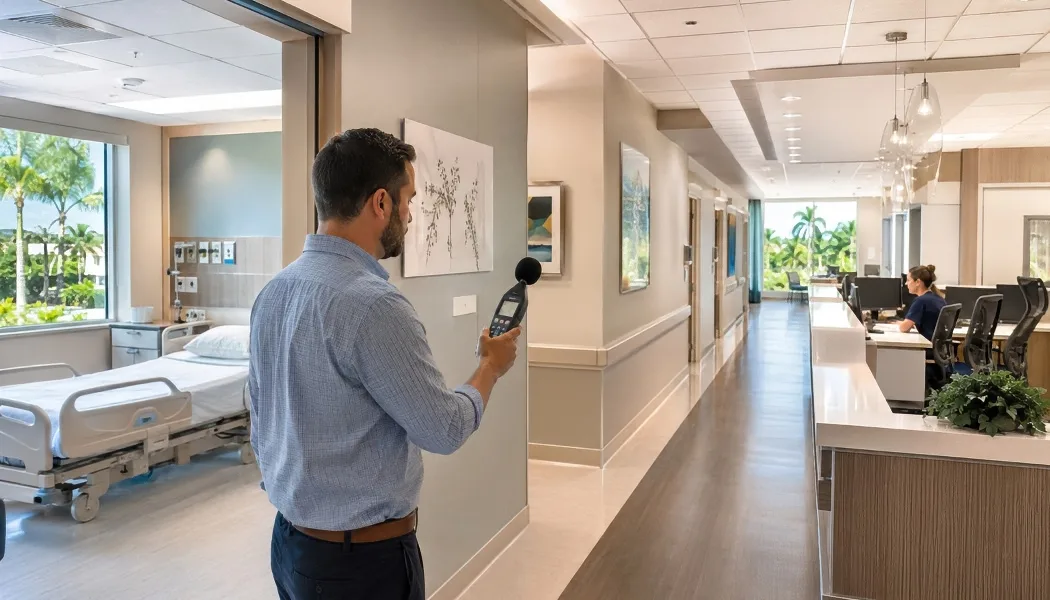
- Instrumentation: Class 1 SPL meter, time- and spatial-logged noise event capture
- Output: Multimodal noise reduction program, behavioral plus architectural interventions
- Expected Timeline: Measurable HCAHPS improvement within three to six months
The hospital management team was watching the same metric every acute care administrator watches: HCAHPS scores, and specifically the Quiet at Night question. Patient satisfaction was lagging, complaints about overnight noise were showing up consistently in the survey free-text fields, and CMS reimbursement was on the line. The administration knew they had a noise problem. What they did not have was an objective measurement of where the noise was coming from, when it was peaking, and which interventions would actually move the score.
Commercial Acoustics was retained to run a Class 1 SPL audit across the facility, classify the noise events by source and time, and recommend a phased noise reduction program. The work was diagnostic and advisory. The output was a report the hospital could take to nursing leadership, facilities, and the executive team to drive the changes that would actually show up on the next HCAHPS survey.
Why Hospital Noise Reduction Starts with an SPL Audit
Most hospitals already know they have noise complaints. The HCAHPS score told them. The problem is that nobody knows the answer to the next two questions: where is the noise coming from, and when is it loudest. Without that data, the noise reduction program is guessing. Buying acoustic ceiling tile and a few sound masking systems without a baseline measurement is how hospitals spend capital and watch the next HCAHPS round look the same as the last one.
A field SPL audit gives the hospital a baseline. The audit captures the actual sound pressure level across the day-night cycle, classifies the noise events by source, and identifies which areas and time windows produce the most complaints. Once that picture exists, the noise reduction program becomes targeted instead of speculative.
For a parallel hospital case where the field test methodology was applied to a different acoustic problem (atrium reverberation), see the pre-renovation hospital atrium reverberation study.
Field Methodology: Class 1 SPL Meter and Logged Noise Events
- SPL Meter: Class 1 instrument, calibrated within 90 days of deployment
- Capture: Time- and spatial-logged continuous recording across day, evening, and overnight windows
- Event Classification: Each peak tagged by source (equipment alarm, staff conversation, cart, door, paging system)
- Locations: Patient room samples on multiple floors, plus corridor and nurses station reference points
The Class 1 spec matters. Hospital noise audits feed into HCAHPS conversations and capital allocation decisions, so the data has to hold up under scrutiny. A Class 1 SPL meter is the highest accuracy tier defined by IEC 61672 and is the only instrument class that survives peer review for hospital acoustic studies.
The time- and spatial-logging step is what separates a useful study from a single-number report. A measurement that says the average dBA at 2 AM is 52 tells the hospital nothing actionable. A log that shows the dBA hit 65 every time a particular cart rolled past room 412 tells them exactly which cart to put rubber wheels on.
HCAHPS Quiet at Night: The Metric That Drives Reimbursement
The HCAHPS survey asks patients a specific question about overnight noise: how often was the area around your room quiet at night. The answer feeds into the publicly reported hospital quality score and ties directly to CMS Value-Based Purchasing reimbursement. A persistent low score on this question costs the hospital revenue every quarter.
Industry research backs the leverage. Northwell Health published a multi-year study showing a 30 percentile rank point improvement on the Quiet at Night top-box metric after deploying a structured noise reduction program. That is not a marginal gain. It moved Northwell from middle-of-the-pack to top-tier on the national Press Ganey database in three years.
The Central Florida hospital was watching the same metric for the same reason. The audit-driven program is how they planned to move it.
The Multimodal Framework: Behavioral & Architectural
- Quiet Hours: Designated overnight quiet window, typically 11 PM to 5 AM, with peer-accountability framework
- Staff Scripting: Lowered voices, scripted rounding, dimmed corridor lighting during quiet hours
- Equipment Quieting: Rubber-wheeled carts, softer alarm thresholds, paging system retune to overnight levels
- Architectural: Acoustic ceiling tile in corridors, door seal upgrades, sound absorption at nurses stations
- Patient Tools: White noise machines, earplugs, sleep menu in admissions packet
Behavioral interventions move the score faster. Architectural interventions hold the gain longer. Hospitals that pick one or the other typically see a partial improvement followed by regression. Hospitals that pair both inside a structured program see sustained HCAHPS gains in the three to six month window.
Hospital Noise Event Categories
The SPL audit classified every noise peak by source. The table below shows the categories that typically dominate overnight patient room noise in an acute care setting.
Sound Masking as One Tool in the Toolkit
Sound masking comes up often in the HCAHPS conversation because hospitals see it pitched as a quick fix. It can help. It is not the whole answer. Masking raises the ambient noise floor in patient rooms or corridors so that discrete noise events blend into a continuous background instead of standing out as audible spikes. That moves the perception of the Quiet at Night metric even when the underlying source events have not changed.
Masking only works when paired with the behavioral and architectural interventions in the rest of the program. A hospital that drops masking into a building with 80 dBA equipment alarms will still get complaints. For a sibling case on the masking install side specifically, with HCAHPS data from an ICU implementation, see the hospital sound masking HCAHPS ICU study.
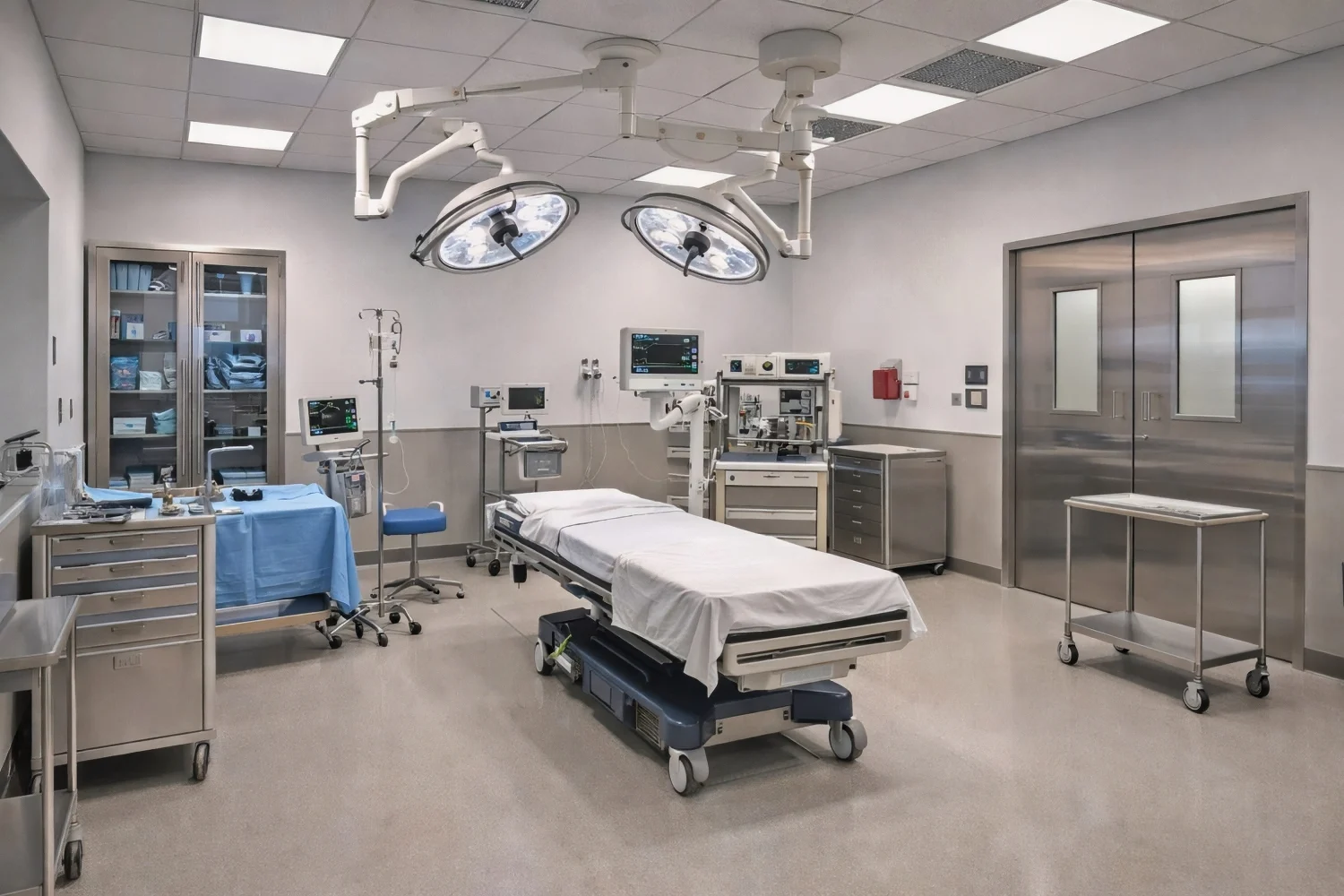
What Hospital Administrators Should Spec
- Baseline Audit: Class 1 SPL meter, multi-floor sampling, day-night cycle coverage
- Event Classification: Tag every noise peak by source and time of day, not just averages
- Multimodal Plan: Behavioral and architectural interventions paired, not picked independently
- Quiet Hours Charter: 11 PM to 5 AM with nursing leadership accountability framework
- Follow-Up Audit: Re-measure at 90 days to verify the program is moving the right peaks
Conclusion: Hospital Noise Reduction Done Right
Hospital HCAHPS noise complaints will not get better by accident. A Class 1 SPL audit, an honest classification of where the peaks are coming from, and a multimodal program that pairs behavioral and architectural interventions is the only path that moves the Quiet at Night score consistently inside a three to six month window. Hospitals that skip the audit and start buying ceiling tile usually end up running the same survey a year later with the same complaints.
If your hospital is fielding patient noise complaints and the HCAHPS scores are not moving, talk to a healthcare acoustic consultant about the audit scope before the next capital cycle.
FAQs: Hospital Noise Reduction and HCAHPS
What HCAHPS metric does hospital noise affect most?
The Quiet at Night question. HCAHPS asks patients how often the area around their room was quiet at night, and the answer feeds into the publicly reported hospital quality score and CMS Value-Based Purchasing reimbursement. A persistent low score costs the hospital revenue every quarter.
How long does a hospital noise reduction program take to show results?
Three to six months is the typical window for measurable HCAHPS improvement when the program pairs behavioral and architectural interventions. Northwell Health published a 30 percentile rank point improvement over a multi-year program, but the first detectable lift usually shows on the next quarterly survey cycle.
Is sound masking enough to raise HCAHPS scores on its own?
It helps but is not the whole answer. Masking raises the ambient noise floor so discrete peaks blend into a continuous background, which shifts the perception of quiet. Without paired behavioral and architectural changes, masking by itself rarely moves the score beyond a small initial bump.
Why use a Class 1 SPL meter for a hospital sound study?
Class 1 is the highest accuracy tier per IEC 61672 and is the only meter class that survives peer review for hospital noise studies. Capital allocation decisions and HCAHPS-driven conversations rely on the audit data, so the instrument has to hold up under scrutiny.

Walker Peek|Founder & CEO, Commercial Acoustics
Walker founded Commercial Acoustics in 2013 to bring aerospace-grade engineering discipline to soundproofing, and runs the firm as CEO from its 12,000 sq ft Tampa production facility. The company designs custom acoustic panels, sound membranes, and masking systems for multi-family, hospitality, healthcare, and commercial projects across the US — built around Walker’s invention, Wall Blokker, an EVA-based sound barrier that hits STC 50-plus at roughly $1 per square foot installed.
A Jacksonville native, Walker spent five years at Kennedy Space Center with Craig Technologies before founding Commercial Acoustics — certifying aerospace manufacturing to the AS9100 standard and leading Six Sigma Black Belt process-improvement teams on NASA programs. He is a certified Industrial Noise Control Engineer and the author of Architectural Acoustics: A Practical Handbook.
