
Table of Contents
Project Overview: Office Pipe Lagging
- Project: Pipe Lagging and Mechanical Noise Control for a 250-Person Trucking-Company Headquarters
- Client: Quality Distribution Inc. (QDI)
- Facility: 45,000 sq ft Renovated Office with 25′ Exposed Concrete Deck and Visible Mechanicals
- Issue: Rushing-Water and HVAC Rattle Bleeding Down From Exposed Ceiling Pipes
- Solution: Mass-Loaded Vinyl Plus Acoustic Batting Pipe Lagging on All Exposed Mechanical Runs
- Complementary System: Centrally-Tuned Sound Masking in Open Bullpen Sales Floor
Why Industrial-Aesthetic Offices Have a Mechanical Noise Problem
Industrial-aesthetic offices are designed to expose what most office buildouts hide. Drop ceilings come down. Concrete deck stays raw. Pipes, ductwork, conduit, and structural beams sit naked above the workstations. The look is intentional and reads as modern, but the acoustic consequence is unintentional and reads as fatiguing.
A drop ceiling does two acoustic jobs at once. It absorbs reverberation in the room and it physically blocks the noise generated by the mechanical systems running in the plenum above. Removing the ceiling eliminates both jobs simultaneously. Reverberation goes up and mechanical noise that used to be hidden becomes audible at the workstation.
The most common offenders in an exposed-ceiling office are supply water lines (rushing water during peak fixture use), HVAC supply ducts (low-frequency rumble and air rush), HVAC return ducts (the same plus return-air whistle), and refrigerant lines on the rooftop unit feeds, all examples of mechanical vibration noise that can radiate into occupied space. Each one carries a distinct sound profile and each one needs its own treatment approach.
What Pipe Lagging Actually Does
- Outer Layer: Mass-Loaded Vinyl (MLV) Sound Barrier Wrapped Around the Pipe
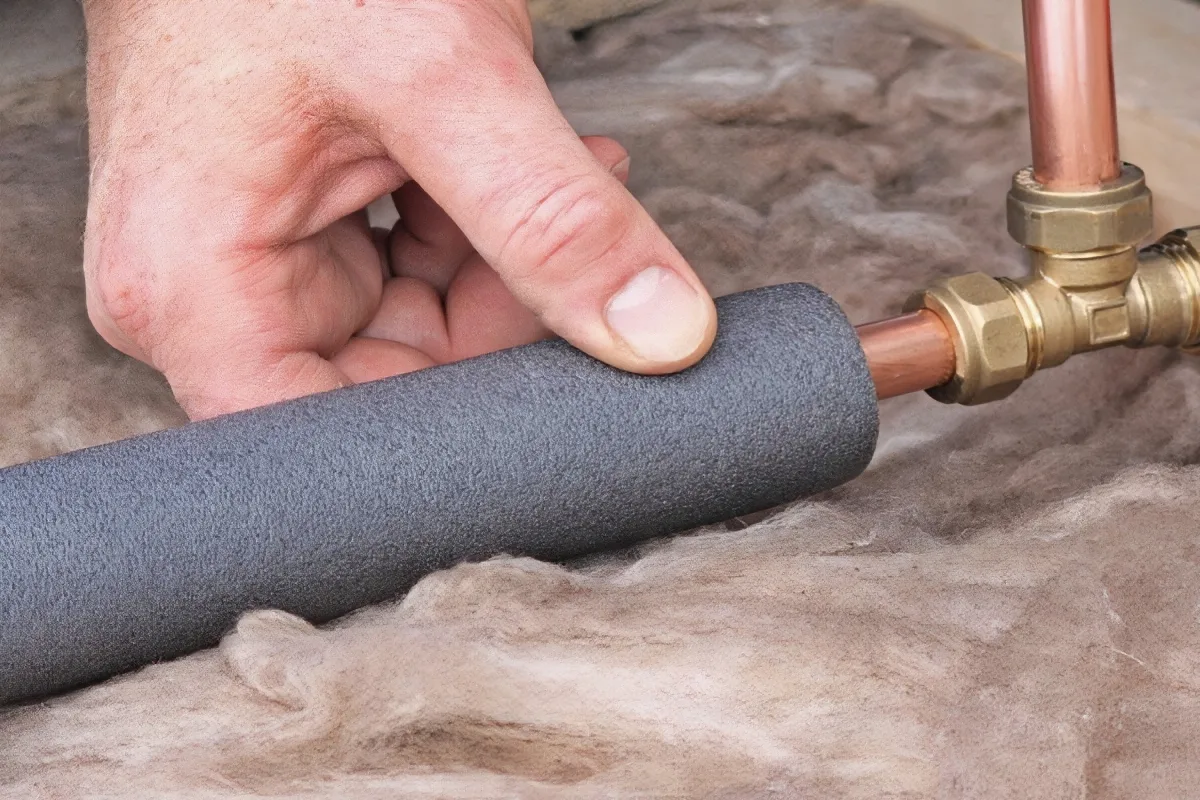
- Inner Layer: Acoustic Batting Bonded to the Inside Face of the MLV
- Function of Mass: Blocks Airborne Transmission From the Pipe Outward
- Function of Batting: Decouples the MLV From the Pipe So Vibration Doesn’t Transmit Through
Pipe lagging is a two-layer system, and both layers have to be present for the assembly to work. The mass-loaded vinyl on the outside blocks the airborne sound radiating off the pipe surface. The acoustic batting on the inside keeps the MLV from coupling directly to the vibrating pipe wall.
Skipping the batting is the most common pipe-lagging mistake. Wrapping bare MLV directly to a vibrating pipe turns the MLV into a tuned secondary radiator instead of a barrier. The result sounds about the same as no treatment, but the building owner now thinks the pipe is treated and stops looking for the source of the complaint.
The product line built specifically for this use case lives at the Pipe Blokker pipe lagging page, including spec sheets for the two-layer MLV-plus-batting assembly.

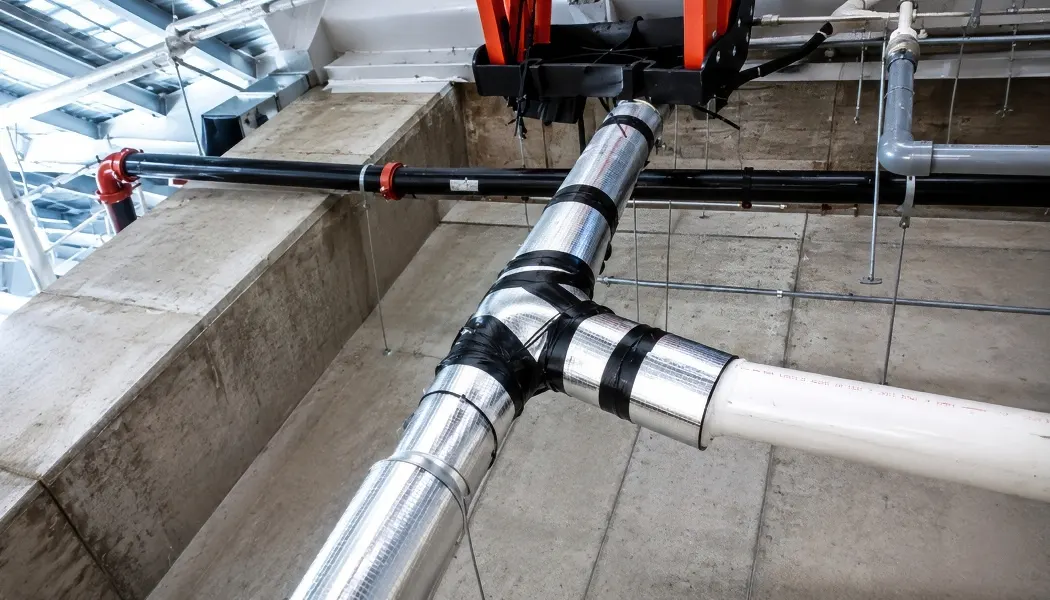
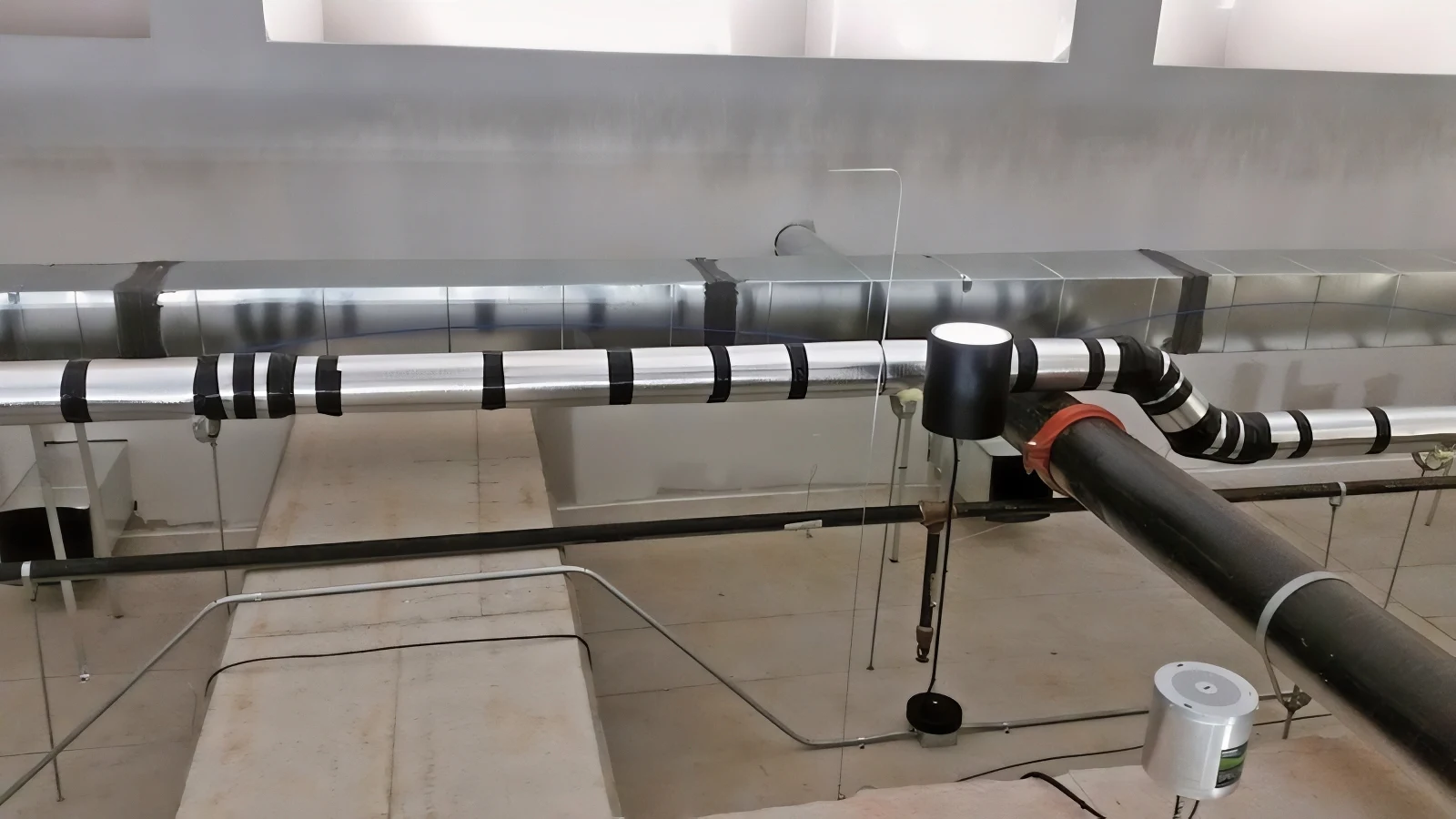
The Install: Where Lagging Was Applied
- Supply Water Lines: Wrapped Above Restroom Cores and Break-Room Plumbing
- HVAC Supply Ducts: Wrapped Along the Main Trunk Lines Above Open Workstations
- HVAC Return Ducts: Wrapped Around High-Velocity Return Sections
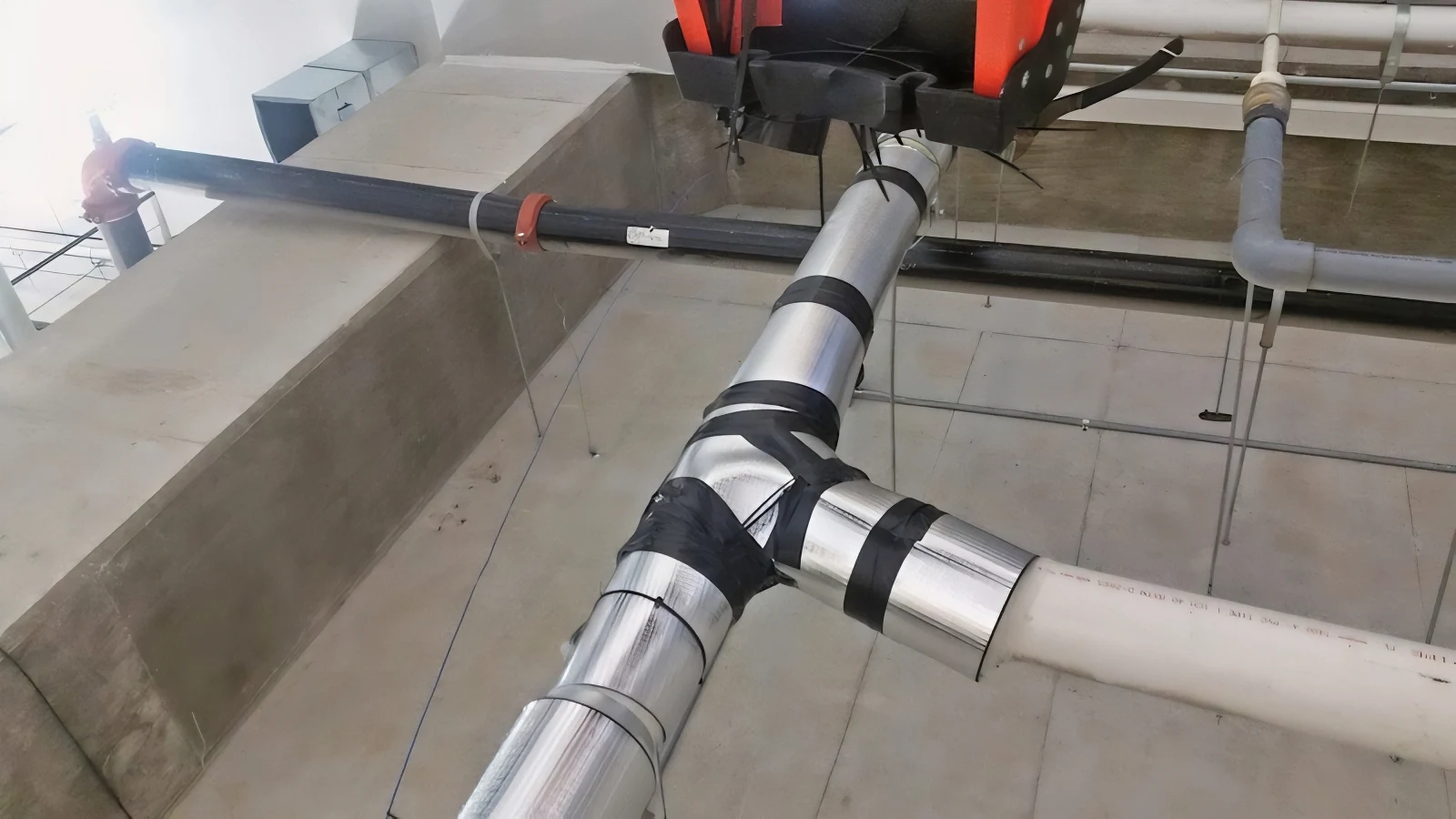
- Termination: Lagging Wraps Continued Through Junctions to Avoid Acoustic Leak Points
Coverage is the variable that drives field performance. A pipe that is lagged for 90 percent of its run still radiates noise from the 10 percent that was skipped. Junctions, elbows, and fittings are the most commonly skipped sections because they are awkward to wrap, but they are also the loudest sections because flow turbulence concentrates there.
The QDI install kept lagging continuous through every junction in the trunk runs above the open bullpen and above the restroom cores. That coverage discipline is what turned the rated transmission loss of the assembly into a real perceived improvement at the workstation level.
Sound Masking as the Complementary Move
Pipe lagging handles the mechanical-noise side. It does nothing for the speech-privacy side. The QDI bullpen runs sales and dispatch calls on a continuous basis, which is the textbook use case for sound masking. Both systems were specified for the headquarters together because each addresses a problem the other cannot.
The sound masking layer raises the ambient noise floor in the bullpen to a tuned spectrum that obscures speech intelligibility at distance without raising perceived loudness. The full background on how sound masking works in open offices lives in our sound masking for open offices guide.
Pipe Lagging Targets by Pipe Type
Different pipe types carry different noise profiles, which means each one has its own lagging priority and treatment depth. The table below maps the noise source, the typical bother level, and the recommended lagging approach across four common exposed mechanical types.
| Pipe Type | Noise Source | Bother Level | Recommended Lagging |
|---|---|---|---|
| HVAC Supply Trunk Above Workstations | Low-frequency rumble, air rush | High | MLV plus thick batting, full coverage |
| Supply Water Lines (Restroom and Kitchen Cores) | Rushing water, intermittent peaks | High | MLV plus standard batting, junction-continuous |
| HVAC Return Ducts | Return-air whistle and rumble | Medium | MLV plus standard batting on high-velocity sections |
| Refrigerant and Hydronic Lines | Compressor cycling, low-grade hum | Low to medium | Standard batting alone often sufficient |
The QDI install prioritized the top two rows. HVAC supply trunks above the open workstations and supply water lines above the restroom cores got the heaviest lagging coverage because those were the two sources generating the most field complaints during the first occupancy walk-through.
Conclusion: Office Pipe Lagging
Industrial-aesthetic offices trade away the acoustic protection of a drop ceiling for a design language. The trade only stays positive if the exposed mechanical systems are lagged at the source. Mass-loaded vinyl plus acoustic batting wrapped continuously through every junction is the working assembly for that fix. Commercial Acoustics can scope a pipe-by-pipe lagging plan against any exposed-ceiling office footprint.
FAQs: Office Pipe Lagging
What is pipe lagging in an office context?
Pipe lagging wraps exposed pipes and ducts in a two-layer assembly: mass-loaded vinyl on the outside to block airborne sound, and acoustic batting on the inside to decouple the MLV from the vibrating pipe. Both layers are required for the assembly to work.
Which pipes need lagging in an exposed-ceiling office?
Top priorities are HVAC supply trunks above workstations and supply water lines above restroom and kitchen cores. HVAC return ducts on high-velocity sections come next. Refrigerant and hydronic lines often only need standard batting without MLV.
Can you skip the batting and just wrap MLV around the pipe?
No. Wrapping bare MLV directly to a vibrating pipe turns the MLV into a secondary radiator and the assembly performs about the same as no treatment. The acoustic batting decouples the MLV from the pipe wall, which is what lets the mass actually block the airborne sound.
Does pipe lagging replace the need for sound masking?
No. Pipe lagging cuts mechanical noise. Sound masking handles speech privacy. They address different problems and are usually specified together in open-plan offices with exposed mechanicals and bullpen workstations.

Walker Peek|Founder & CEO, Commercial Acoustics
Walker founded Commercial Acoustics in 2013 to bring aerospace-grade engineering discipline to soundproofing, and runs the firm as CEO from its 12,000 sq ft Tampa production facility. The company designs custom acoustic panels, sound membranes, and masking systems for multi-family, hospitality, healthcare, and commercial projects across the US — built around Walker’s invention, Wall Blokker, an EVA-based sound barrier that hits STC 50-plus at roughly $1 per square foot installed.
A Jacksonville native, Walker spent five years at Kennedy Space Center with Craig Technologies before founding Commercial Acoustics — certifying aerospace manufacturing to the AS9100 standard and leading Six Sigma Black Belt process-improvement teams on NASA programs. He is a certified Industrial Noise Control Engineer and the author of Architectural Acoustics: A Practical Handbook.
