Table of Contents
Project Overview: Hospital Acoustic Consultant at Moffitt Cancer Center
- Project: Acoustic Fabric Wall Install in Multipurpose Conference Rooms
- Location: 12902 USF Magnolia Dr, Tampa, FL 33612
- Facility Type: Cancer Center Conference and Education Spaces
- Client: Moffitt Cancer Center
- Issue: Excessive Reverberation in Large Multipurpose Meeting Rooms
- Scope: Acoustic Assessment, Fabric Wall Spec, 2-Day Installation
Why Hospitals Need an Acoustic Consultant Beyond Walls
Hospital acoustics carry a wider problem set than most commercial buildings. Patient rooms need privacy and sleep quality, waiting rooms need HIPAA-aligned conversation control, conference and education rooms need reverberation management for speech intelligibility, all concerns that also shape healthcare acoustic treatment in senior living communities. No single product solves all three.
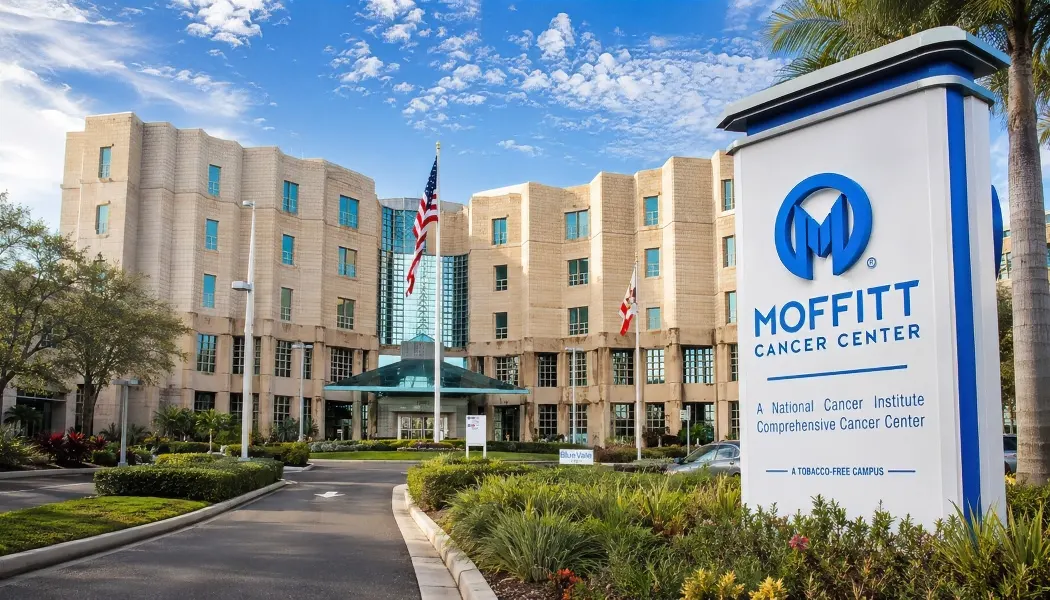
That is why hospital projects benefit from acoustic consulting before any wall, panel, or masking system gets specified. Florida hospitals in particular run a wide mix of room programs — patient towers, research labs, conference spaces, lecture halls — and the right treatment for each program varies. Moffitt Cancer Center Tampa brought us in to size the conference-room piece of that puzzle.
Hospital Acoustic Standards: STC, Masking, and Fabric Wall
- Sound Masking: Use to cover speech where walls cannot run to deck
- Wall STC 40+: Required around waiting rooms per ANSI S12
- Wall STC 50+: Required around patient rooms (privacy + sleep)
- Fabric Wall System: Right tool for large rooms with reverberation issues
Three rules of thumb cover most hospital acoustic decisions. Sound masking handles speech privacy in adjacent offices and waiting rooms — especially when walls stop at the ceiling instead of running to deck. Wall STC ratings escalate from 40 around waiting rooms to 50+ around patient rooms, where confidentiality and sleep quality both depend on the partition.
Fabric wall systems take over once the room gets big enough that distributed panel coverage stops working. Conference rooms, lecture halls, multipurpose education spaces — anywhere speech-band reverberation runs above 1.0 second and the wall surface area is large — fabric wall delivers continuous absorption across the entire wall plane rather than panel-by-panel coverage.
Moffitt Cancer Center Conference Room Project
- Spaces Treated: Multipurpose conference rooms hosting talks and meetings
- Original Issue: Speech smear at the back of the room, hard to hear presentations
- Treatment: Wall-to-ceiling fabric wall, custom-cut track frames around obstructions
- Install Window: 2 days — conference rooms back in service immediately after
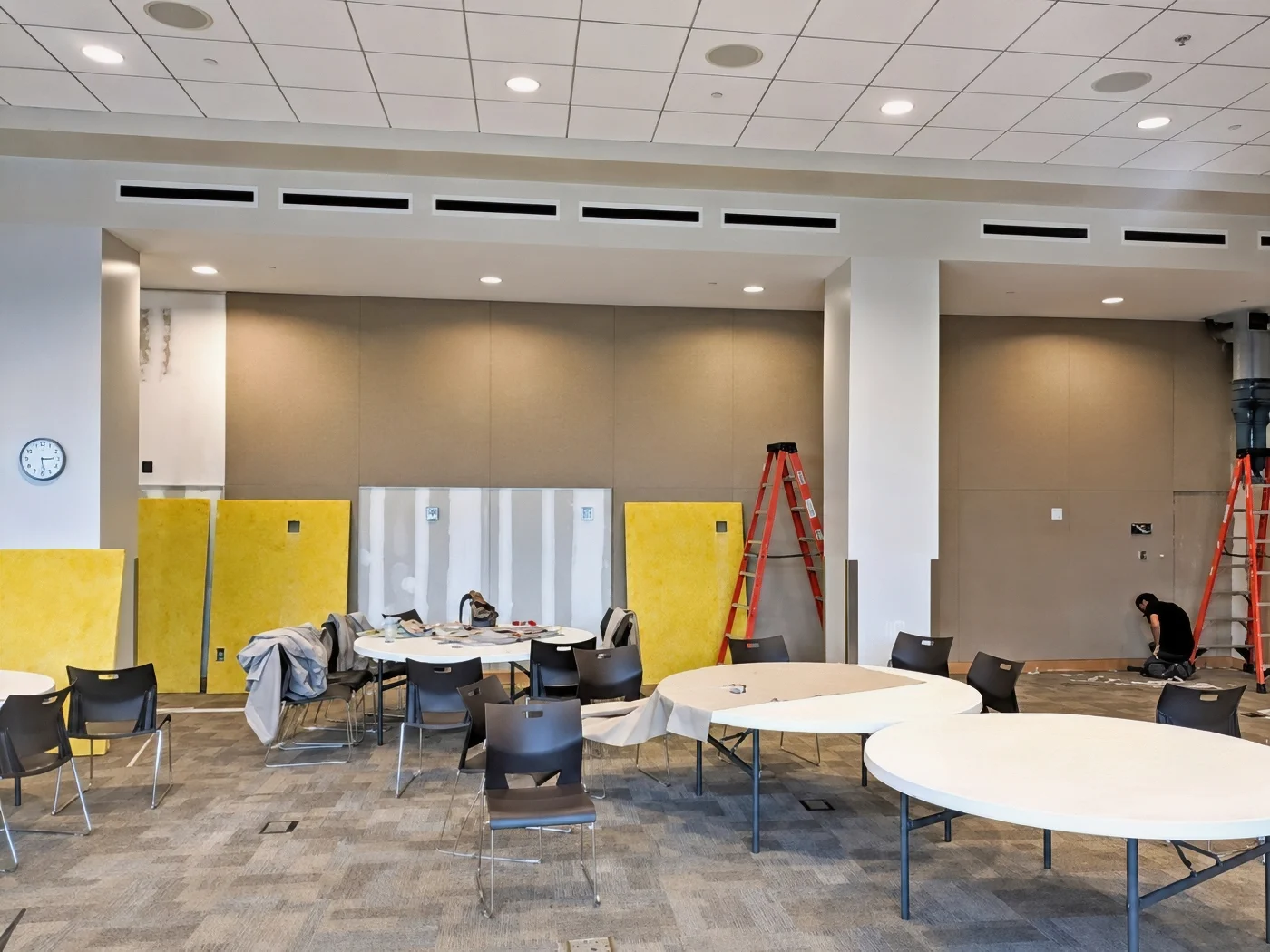
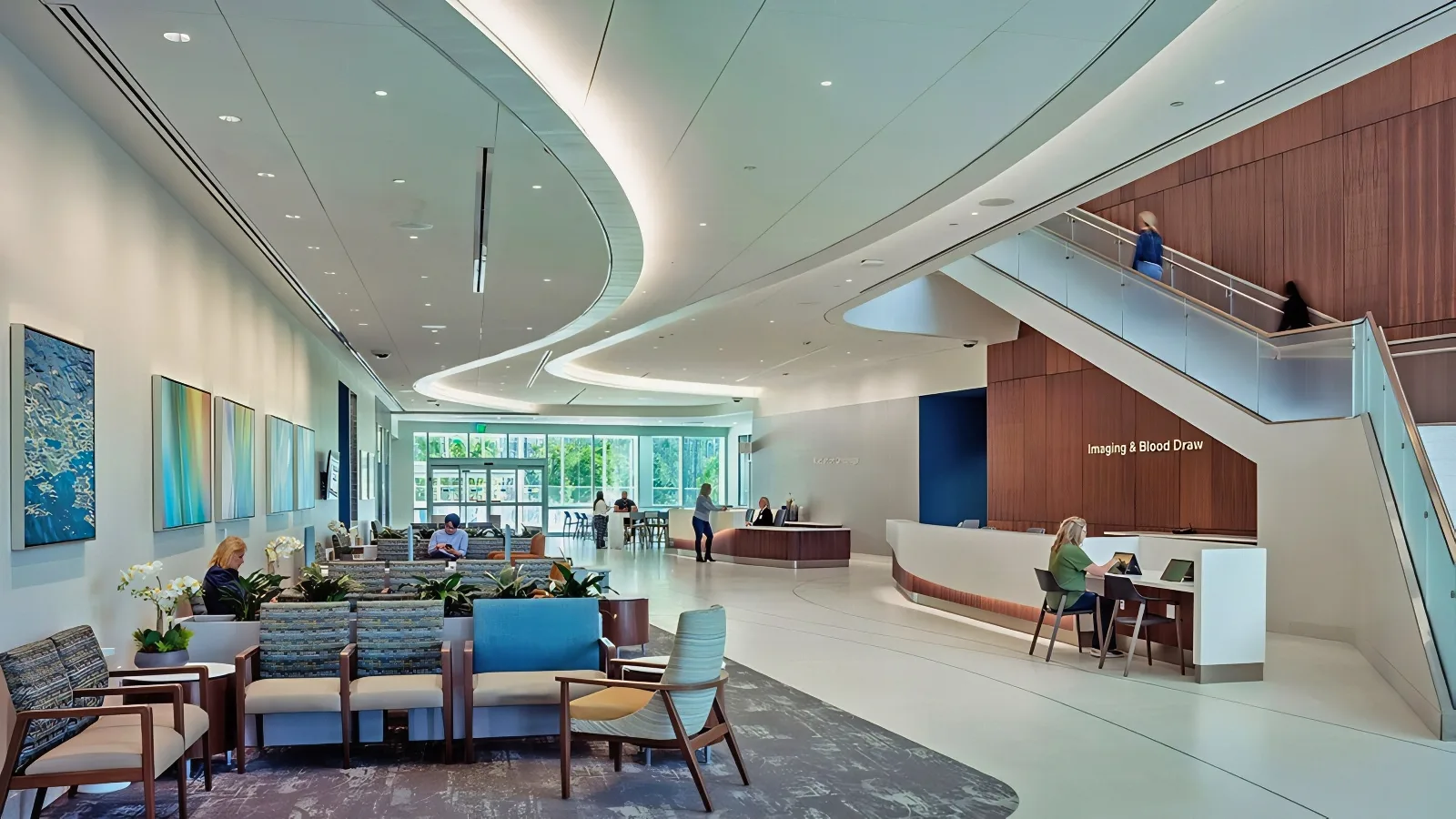
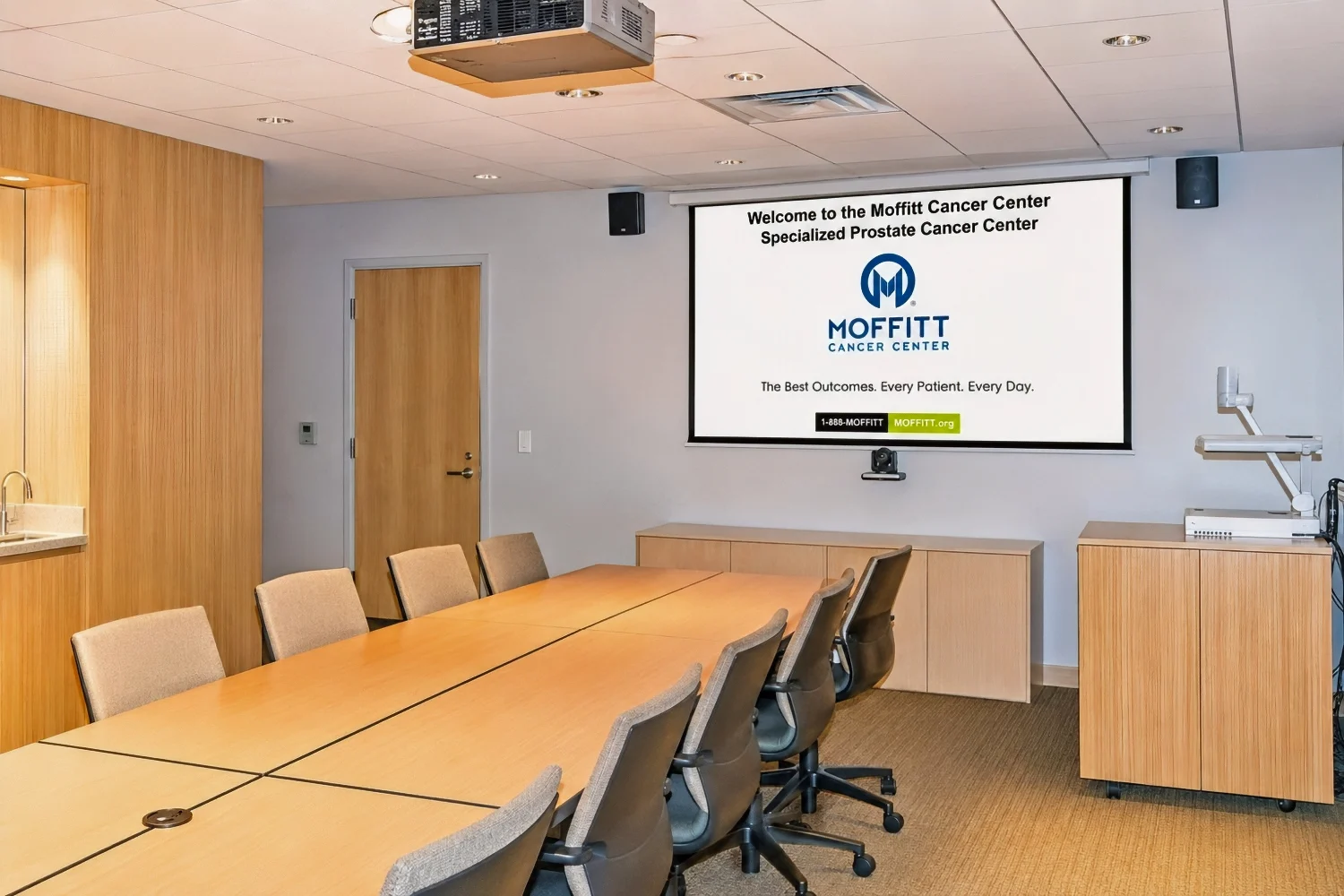
The Moffitt rooms had the standard hospital-conference-room problem: hard finishes for cleanability, large floor plate for capacity, and a reverberation profile that made it hard for the back rows to follow a presenter at the front. Standard panels would have meant individual unit placement on multiple walls, with gaps between panels and visible breaks in the surface.
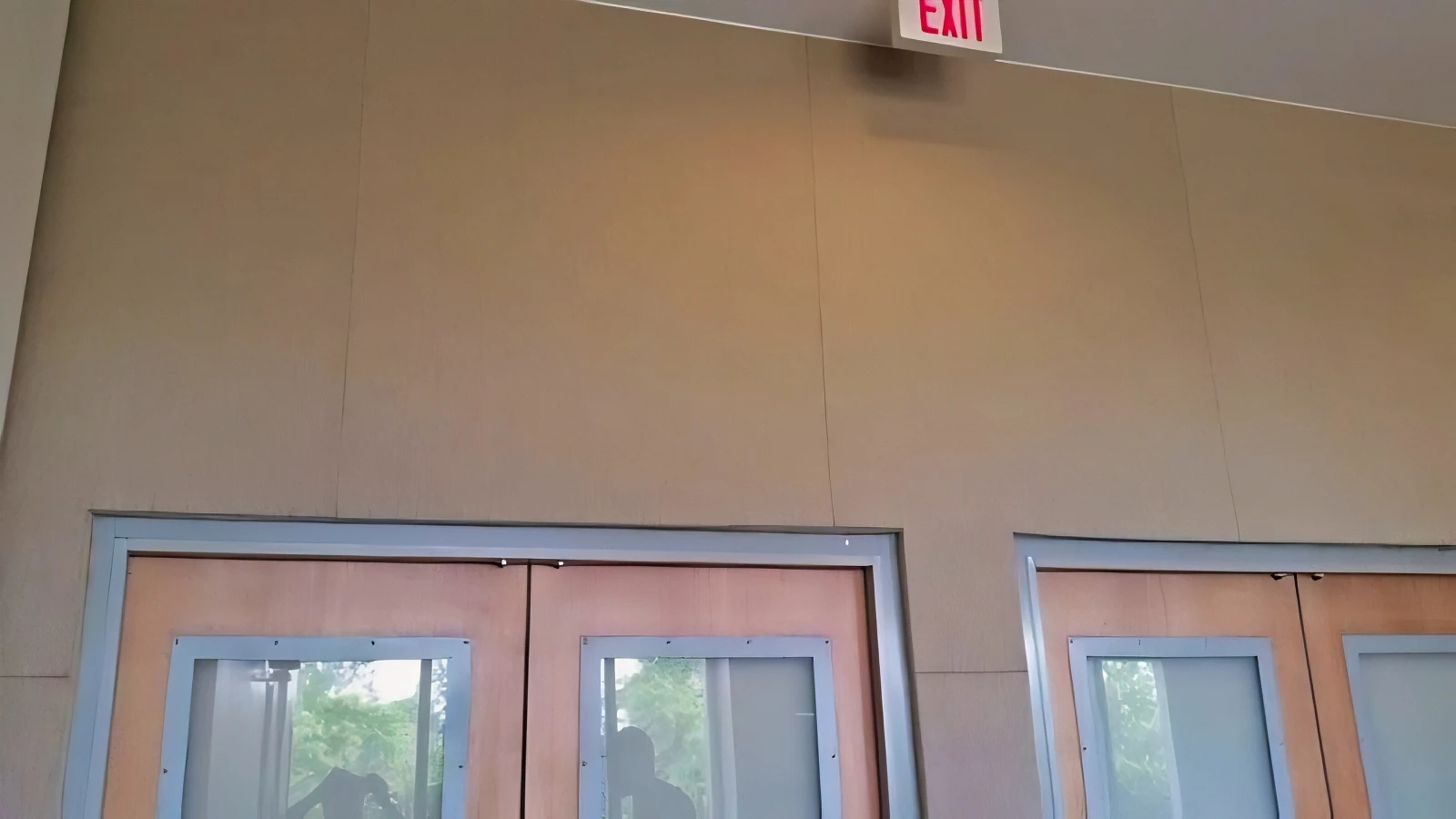
Fabric wall handles all of those constraints in one move. The track system runs the perimeter of the room, custom-cut to flow around switches, vents, and existing fixtures. The fabric face pulls flush over the fiberglass core. From the floor, the room reads as a designer wall plane rather than acoustic gear bolted to drywall.
Acoustic Fabric Wall Specification
- Core: 1″ dense fiberglass for speech-band absorption
- Track: Custom-cut track frames mounted to wall structure
- Face: Acoustically-transparent fabric, durable for high-traffic healthcare
- Durability: Healthcare-grade fabric, cleanable per facility protocols
The 1″ fiberglass core does the acoustic work. Dense fiberglass at this depth absorbs effectively across the speech band — exactly the frequencies that smear in a conference room when reverberation runs long. Thicker cores buy low-frequency absorption that conference rooms rarely need; thinner cores save cost but underperform on speech.
The custom-cut track frames are what let fabric wall flow around healthcare-environment obstructions. Outlet boxes, low-voltage data ports, light switches, vents, fire-alarm pull stations — every one of those interrupts a panel grid. Fabric wall absorbs them into the wall plane via field-cut tracks. The full product line is the acoustic fabric wall system we deploy across most healthcare and education projects.
Healthcare Acoustic Treatment Decision Matrix
Healthcare facilities run a wider acoustic range than most building types. The right treatment depends on the program, the privacy bar, and the room geometry. The table below maps the working trade-offs across five common hospital settings.
| Hospital Setting | Recommended Treatment | Why | Standard |
|---|---|---|---|
| Patient Room (Sleep + Privacy) | STC 50+ wall, optional masking | HIPAA confidentiality plus HCAHPS quietness | ANSI S12, LEED v4 |
| Waiting Room (Privacy) | STC 40+ wall + sound masking | Conversation otherwise overheard | HIPAA baseline |
| Conference / Multipurpose Room | Fabric Wall System (1″ fiberglass) | Reverberation control across large wall area | Moffitt-style approach |
| Doctor’s Consultation Room | STC 45 wall + sound masking | Active speech privacy | LEED v4 office |
| Lecture / Education Hall | Fabric wall + ceiling panels | Speech intelligibility for large audiences | AIA acoustic guidelines |
Conference and multipurpose rooms sit in their own row because the right tool there (fabric wall) is different from what works for patient rooms (STC walls + optional masking) or waiting rooms (STC + masking pairing). Sister healthcare projects across the catalog illustrate each row: see the hospital sound masking and HCAHPS case study for the patient-room angle, the counseling center sound masking case study for the privacy-driven masking angle, and the telecom conference room acoustic treatment case study for the smaller-conference-room mic-driven angle.
Conclusion: Hospital Acoustic Consultant Fabric Wall Project
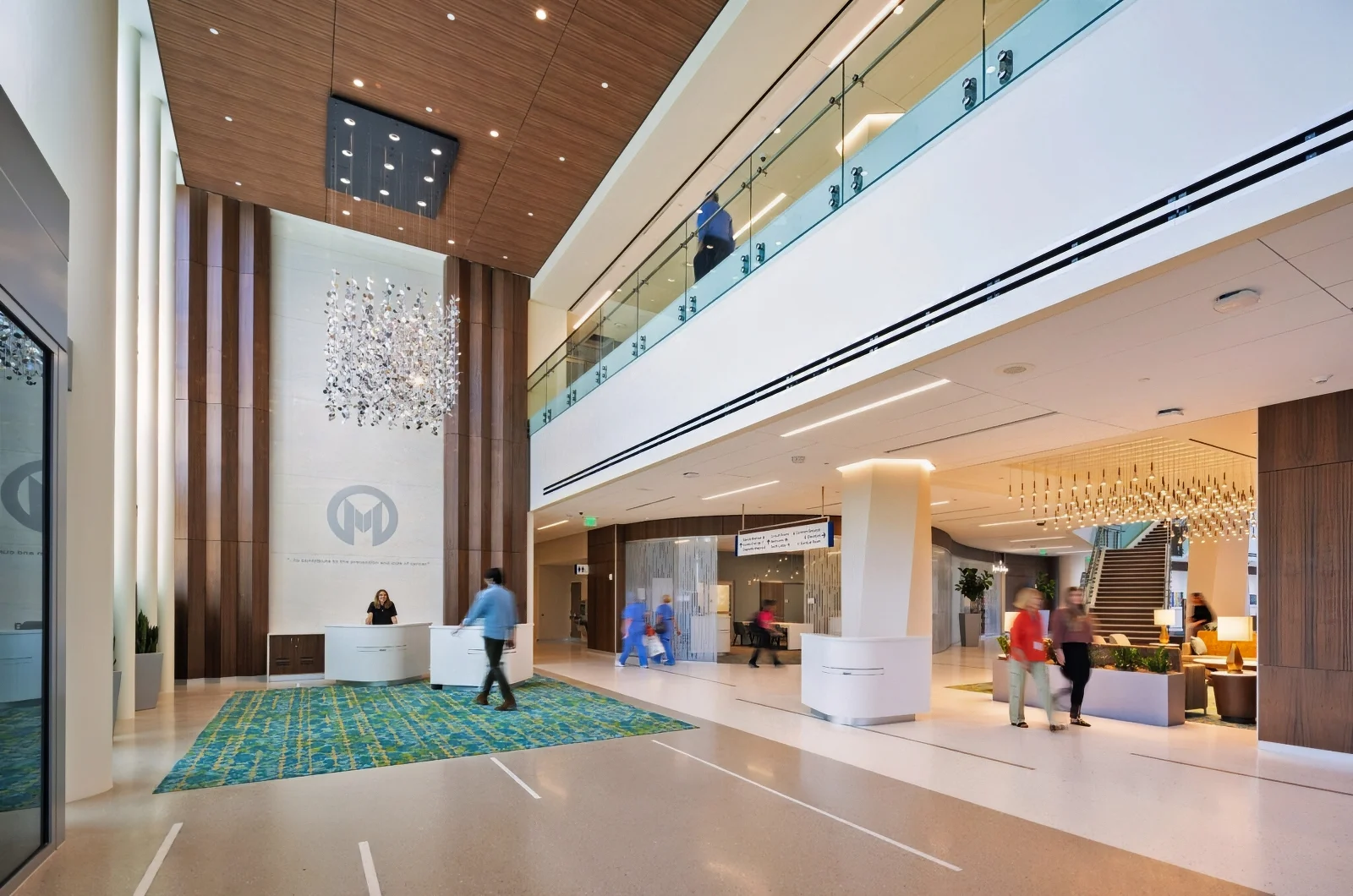
The Moffitt Cancer Center conference rooms got wall-to-ceiling fabric wall at 1″ fiberglass core, custom-cut around the existing fixtures, installed in a 2-day window so the rooms stayed in service. Florida hospitals scoping similar reverberation problems in conference, lecture, or multipurpose rooms can request a hospital acoustic consultation for measured pre/post outcomes on their own spaces.
FAQs: Hospital Acoustic Consultant
What does a hospital acoustic consultant do?
A hospital acoustic consultant sizes the right treatment for each room program — patient rooms, waiting rooms, conference rooms, lecture halls, doctor consultation offices. The work covers STC wall targets, sound masking specs, fabric wall and panel layouts, and the design coordination so the chosen treatments actually deliver in the field.
What STC ratings should hospital walls hit?
Per ANSI S12, waiting room walls should hit STC 40 or higher, while patient room walls should hit STC 50 or higher to meet HIPAA confidentiality and HCAHPS sleep-quality standards. Doctor consultation rooms typically target STC 45. Field ASTC numbers run 5 to 10 points below the lab STC for the same wall.
When does a hospital need a fabric wall instead of acoustic panels?
Fabric wall wins when a room is large, has many wall obstructions (vents, switches, data ports), or needs continuous coverage rather than panel-by-panel placement. Conference rooms, lecture halls, and multipurpose meeting spaces are the typical use case. Smaller rooms with simple wall layouts work fine with standard panels.
What does the Moffitt Cancer Center fabric wall install look like?
Wall-to-ceiling fabric wall with a 1″ dense fiberglass core, custom-cut track frames around obstructions, acoustically-transparent fabric face. Two-day installation across the multipurpose conference rooms, with the rooms back in service immediately after. The fabric face is healthcare-grade and cleanable per facility protocols.

Walker Peek|Founder & CEO, Commercial Acoustics
Walker founded Commercial Acoustics in 2013 to bring aerospace-grade engineering discipline to soundproofing, and runs the firm as CEO from its 12,000 sq ft Tampa production facility. The company designs custom acoustic panels, sound membranes, and masking systems for multi-family, hospitality, healthcare, and commercial projects across the US — built around Walker’s invention, Wall Blokker, an EVA-based sound barrier that hits STC 50-plus at roughly $1 per square foot installed.
A Jacksonville native, Walker spent five years at Kennedy Space Center with Craig Technologies before founding Commercial Acoustics — certifying aerospace manufacturing to the AS9100 standard and leading Six Sigma Black Belt process-improvement teams on NASA programs. He is a certified Industrial Noise Control Engineer and the author of Architectural Acoustics: A Practical Handbook.
