Table of Contents
Project Overview: Counseling Center Sound Masking
- Project: Above-Ceiling Sound Masking Install for Therapy Session Privacy
- Location: 1730 East Lake Rd, Suite 4, Tarpon Springs, FL 34688
- Facility Type: Counseling Center, Open Waiting Room and Multiple Therapy Rooms
- Client: Collaborative Counseling Center of Tarpon Springs
- Issue: Speech Carrying Through a Pitched Plenum Between Adjacent Rooms
- Scope: Sound Masking Install Above ACT, Pink-Noise Tuning, Hidden Volume Control
Why Therapy Sessions Need More Than Wall Soundproofing
Counseling and therapy practices live under a stricter speech-privacy bar than most healthcare settings. Therapy notes are protected under HIPAA’s psychotherapy notes provision (45 CFR 164.501) with safeguards above the standard PHI baseline — and the spoken sessions that produce those notes deserve the same protection in the room itself.
Wall soundproofing alone usually does not get a counseling center across the privacy line. Doors, ceiling tiles, plenums, and HVAC returns leak speech around even well-built walls. Sound masking attacks the problem from the receiver side: raise the noise floor enough that the leaked speech becomes unintelligible at the next room over. The Tarpon Springs project is a textbook example.
The Architectural Challenge: Pitched Plenum from 3 to 12 Feet
- Plenum Geometry: 3 feet at the side walls, rising to 12 feet at the peak
- Direct Flanking Path: Sound traveled across the plenum between adjacent rooms
- Indirect Reverberation: Volume above the ceiling tiles smeared sound further
- Walls Alone: Could not solve the problem — flanking path was overhead
The plenum geometry was the project’s defining acoustic problem. Most counseling centers have flat plenums above their drop ceilings — bad enough on their own, since walls that stop at the tile grid let sound flank over the top. This building had a pitched roof, with the plenum running 3 feet at the side walls and ballooning to 12 feet at the peak.
That extra volume above the ceiling did two things at once. It opened a direct line-of-sight flanking path between every therapy room and its neighbors. And it added enough reverberant volume above the ceiling that any speech entering the plenum smeared out and re-radiated everywhere. Sealing every wall to deck would have meant rebuilding the entire ceiling system — an option the operator did not have.
Sound Masking System Specification
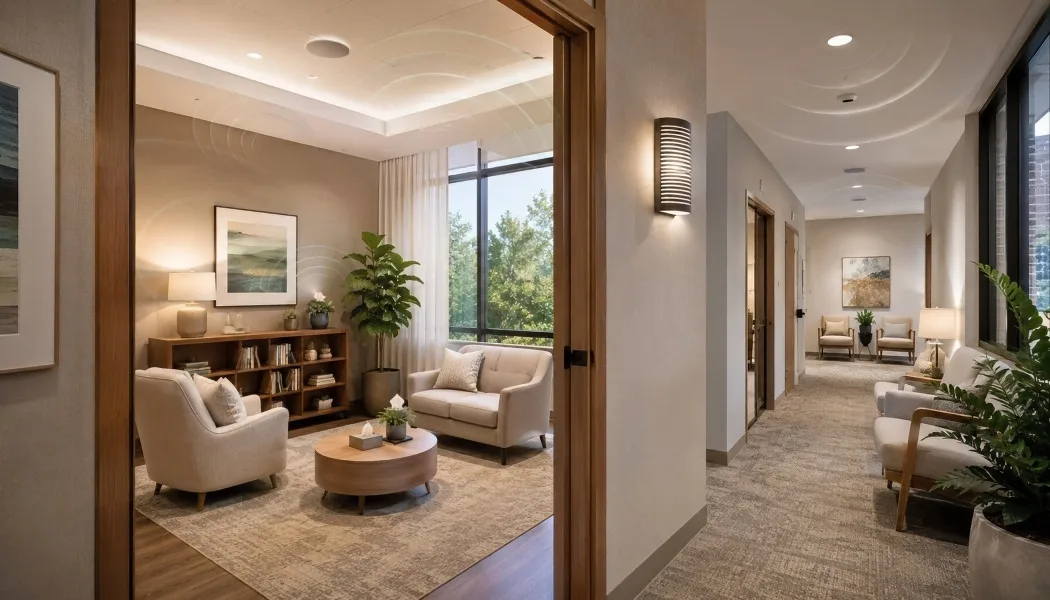
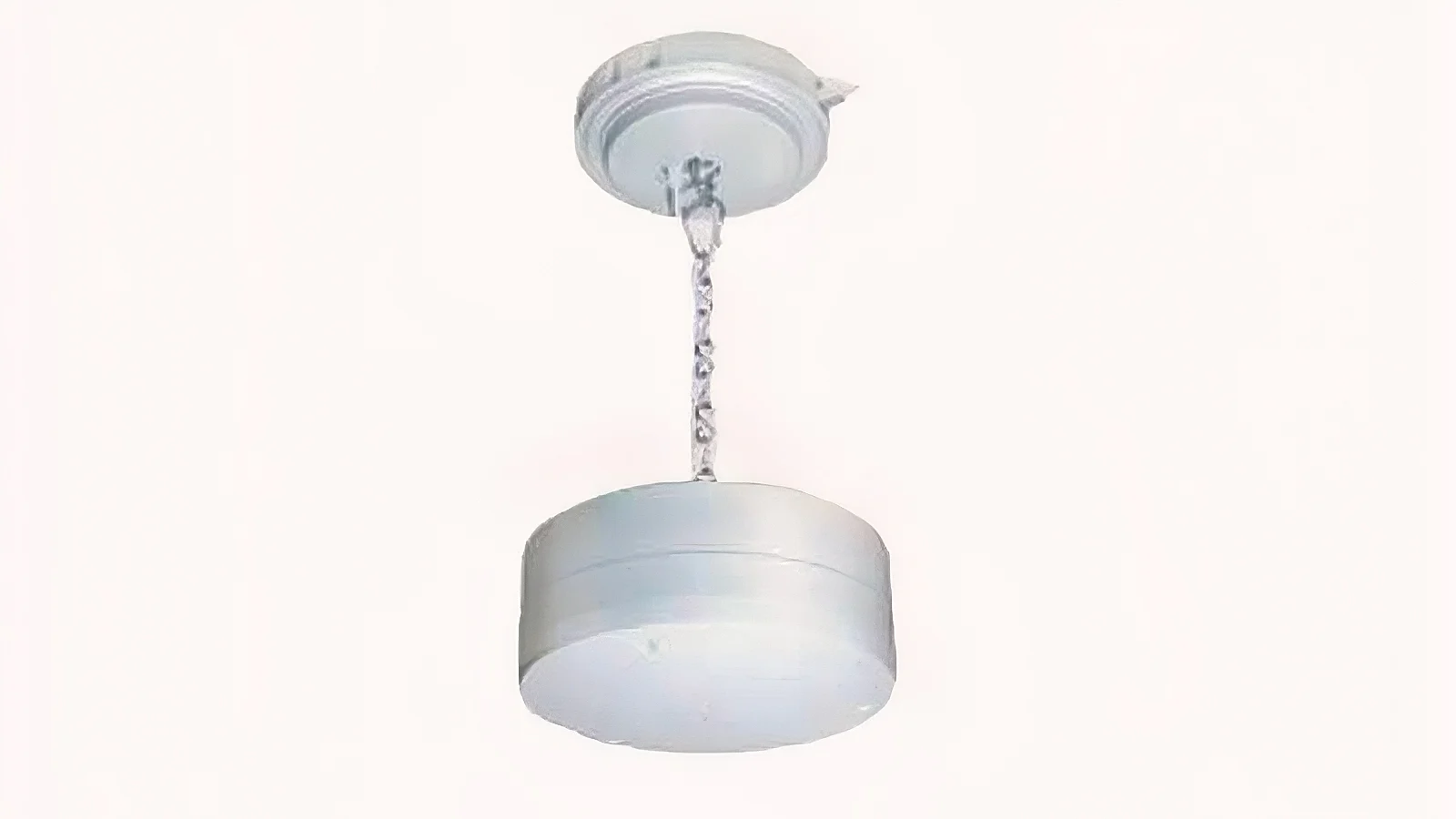
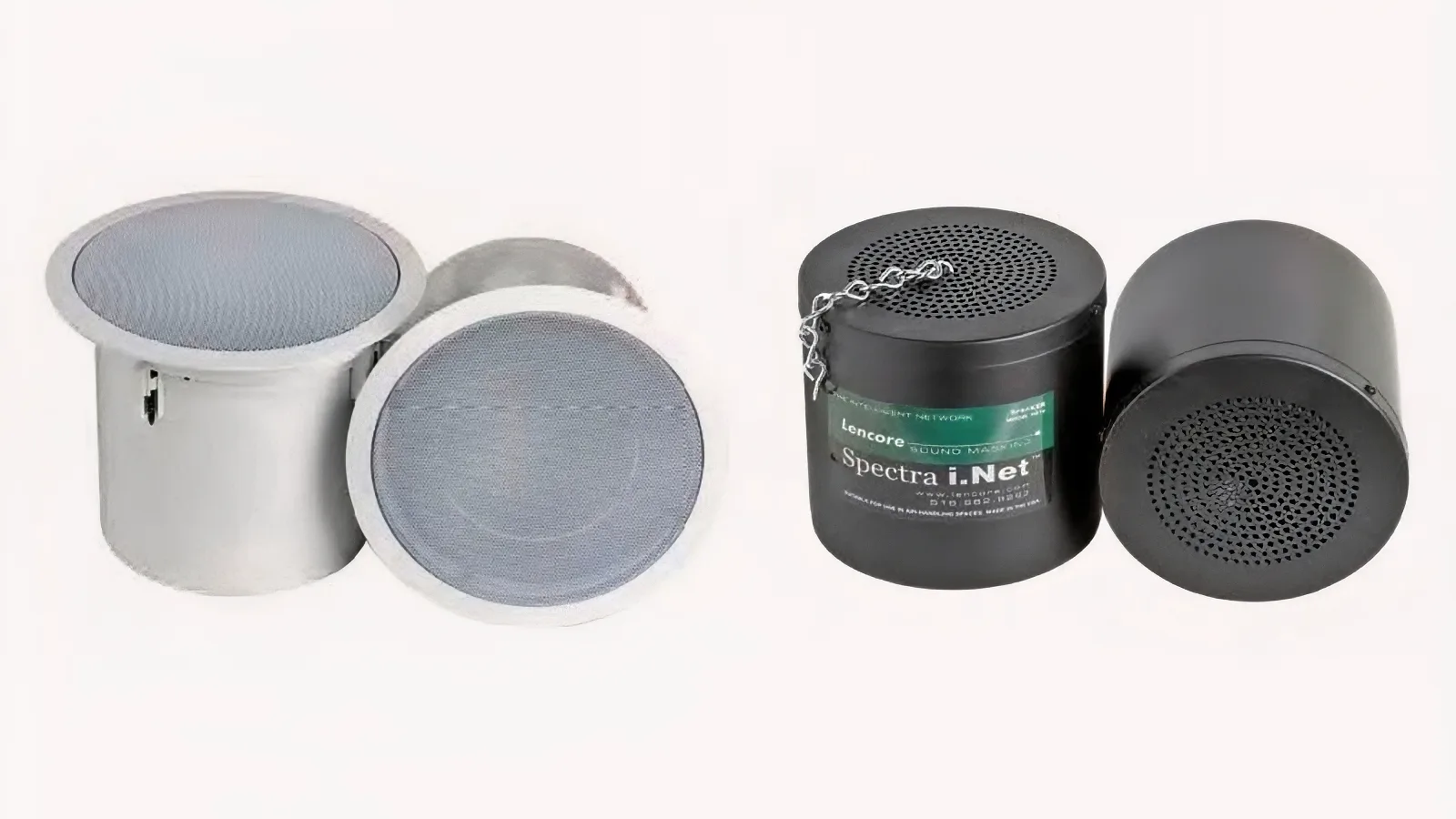
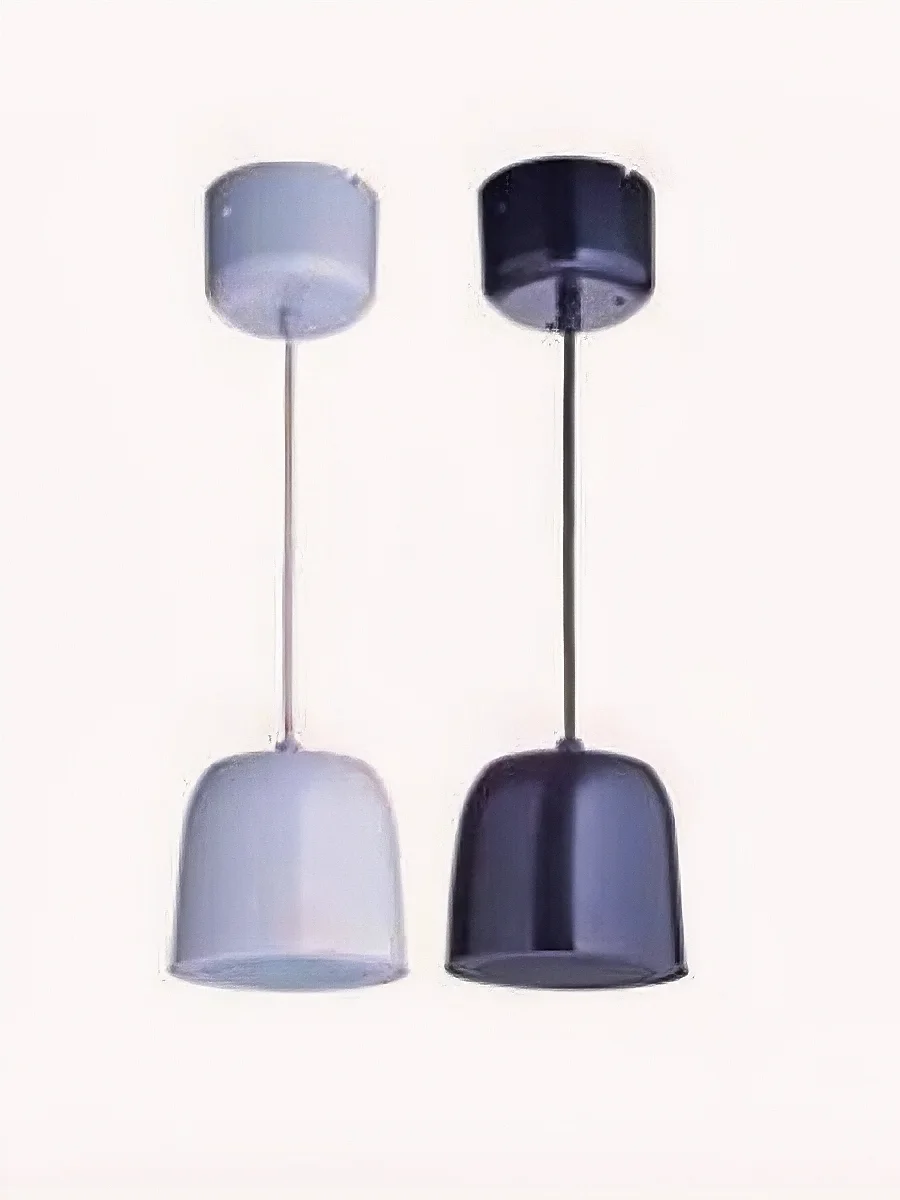
- Speaker Placement: Above the acoustic ceiling tiles, hidden from view
- Spectrum: Pink noise, tuned for natural background ambience
- Target Level: 47.5 to 48 dBA, uniform across waiting room and therapy rooms
- Volume Control: Remote panel hidden in the maintenance room
The install ran a single afternoon. Above-tile speaker placement kept the system invisible from the rooms below — no client sitting in a therapy session sees any sign that masking is running. Pink noise was the right spectrum for a counseling environment because it reads as natural background ambience rather than the obvious HVAC-style hiss of broader-band masking.
Tuning landed at 47.5 to 48 dBA across the entire suite, measured uniformly. That is the working window for healthcare and counseling masking — high enough to mask normal speech at a few feet of separation, low enough that staff and clients do not perceive the masking as noise. The hidden remote volume control in the maintenance room lets the practice manager nudge the level up or down for unusually quiet or busy days. The product line itself is the Lencore-based sound masking system we deploy across most healthcare installs.
Privacy Standards by Healthcare Setting
Counseling and therapy carry the strictest privacy bar in healthcare because of how psychotherapy notes are protected under HIPAA. The table below maps the privacy standards across the most common healthcare settings, with the recommended treatment combo for each.
| Healthcare Setting | Privacy Standard | Treatment Combo | Why It’s Different |
|---|---|---|---|
| Counseling / Therapy Office | HIPAA + 45 CFR 164.501 (psychotherapy notes) | STC 45+ wall + sound masking | Therapy notes carry stricter protection than standard PHI |
| Hospital Patient Room | HIPAA + HCAHPS | STC 50+ wall, masking optional | Patient satisfaction scores tied to privacy |
| General Medical Office | HIPAA | STC 40+ wall + masking pairing | Standard PHI baseline |
| Doctor Consultation Room | HIPAA + verbal exchange | STC 45+ wall | Active speech privacy, not records storage |
Counseling sits at the top of the privacy table because psychotherapy notes are explicitly carved out under the HIPAA Privacy Rule with safeguards beyond standard PHI. The treatment math follows: walls plus masking, not walls alone. For sister healthcare projects that took the same masking-plus-walls approach in adjacent verticals, see the Nova Medical sound masking project and the hospital sound masking and HCAHPS case study.
When Counseling Centers Need Sound Masking
- Trigger: Therapist or client reports overhearing the next session
- Diagnostic: Walls stop at the ceiling, plenum is shared, doors are hollow-core
- Common Settings: Group counseling, private practice suites, intake-and-assessment
- Pairs With: Door upgrades, weatherstripping, and any wall remediation already planned
The signal a counseling center needs sound masking is rarely subtle. A therapist mentions hearing the session next door; a client comments on it in feedback; the practice manager stops scheduling certain rooms simultaneously. Once any of those signals appears, the privacy gap is real and so is the HIPAA exposure.
Masking pairs with whatever wall or door upgrades the practice has already planned. It is not a substitute for a wall that is genuinely failing, and it is not the right tool when only one room has a leak that could be sealed cheaply. But for the standard counseling-center pattern — multiple therapy rooms, shared plenum, modest budget — masking is the cleanest path to compliant privacy.
Conclusion: Counseling Center Sound Masking
An above-ceiling Lencore install at the Collaborative Counseling Center of Tarpon Springs tuned to 47.5 to 48 dBA pink noise solved the pitched-plenum flanking path that walls alone could not — restoring HIPAA-aligned therapy session privacy across the waiting room and adjacent therapy rooms in a single afternoon. Counseling centers running into the same architecture should measure first, plan walls plus masking together, and tune the masking with staff and clients in the rooms.
FAQs: Counseling Center Sound Masking
What privacy standard applies to therapy session notes?
Therapy notes are protected under HIPAA’s psychotherapy notes provision (45 CFR 164.501), which sets a stricter safeguard standard than general PHI. The spoken sessions that produce those notes deserve the same protection in the room itself, which is why counseling centers typically pair STC 45+ walls with sound masking.
Does sound masking meet HIPAA privacy requirements?
Sound masking helps satisfy HIPAA’s reasonable safeguards requirement when paired with a properly built wall. It is not a substitute for a wall that is genuinely failing. The Tarpon Springs install used masking specifically because the pitched plenum created a flanking path walls alone could not seal cost-effectively.
What dBA tuning works for counseling and therapy rooms?
47.5 to 48 dBA is the working window for healthcare and counseling masking. Above 48 dBA the masking starts reading as deliberate noise to staff and clients; below 45 dBA it does not reliably mask normal therapy-session speech. The Tarpon Springs install hit the 47.5 to 48 dBA range uniformly.
Can sound masking work over a pitched plenum?
Yes — speakers placed above the acoustic ceiling tiles distribute the masking spectrum evenly through the tile grid into each room, regardless of plenum height variation. The pitched 3-to-12 foot plenum at Tarpon Springs was actually the reason masking was the right tool: walls could not be sealed to a peaked deck affordably.

Walker Peek|Founder & CEO, Commercial Acoustics
Walker founded Commercial Acoustics in 2013 to bring aerospace-grade engineering discipline to soundproofing, and runs the firm as CEO from its 12,000 sq ft Tampa production facility. The company designs custom acoustic panels, sound membranes, and masking systems for multi-family, hospitality, healthcare, and commercial projects across the US — built around Walker’s invention, Wall Blokker, an EVA-based sound barrier that hits STC 50-plus at roughly $1 per square foot installed.
A Jacksonville native, Walker spent five years at Kennedy Space Center with Craig Technologies before founding Commercial Acoustics — certifying aerospace manufacturing to the AS9100 standard and leading Six Sigma Black Belt process-improvement teams on NASA programs. He is a certified Industrial Noise Control Engineer and the author of Architectural Acoustics: A Practical Handbook.
