
Table of Contents
Why the Difference Matters
Every noise problem in a building starts with one question: is it airborne or structure-borne? Knowing which type you’re dealing with determines how to solve it.
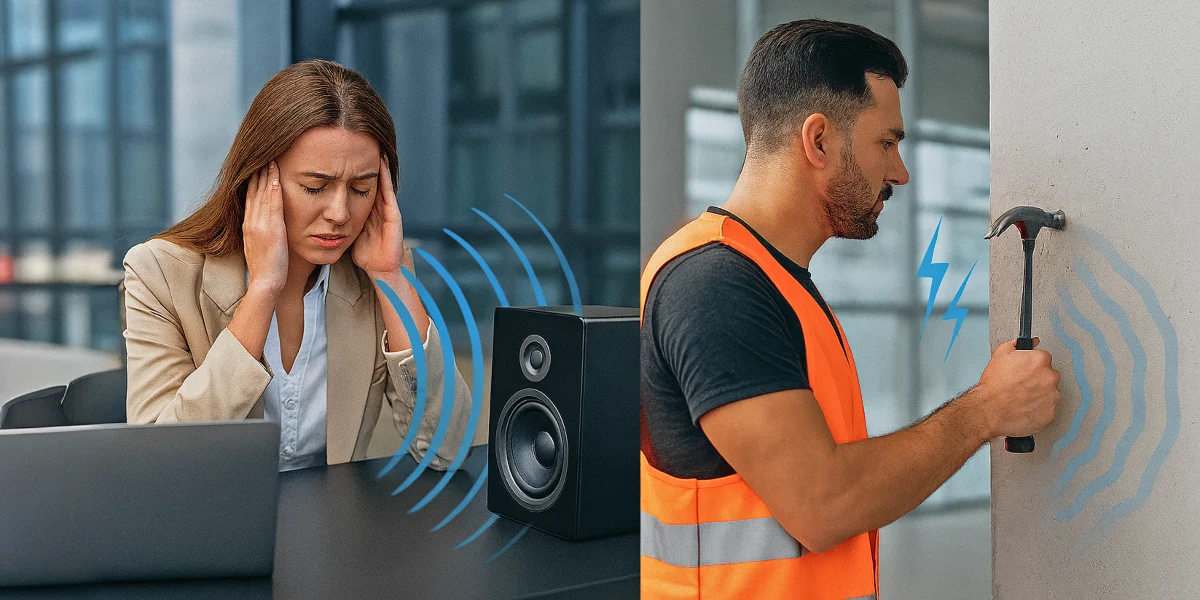
Airborne noise moves through open air — voices, televisions, barking dogs, or passing traffic — while structure-borne noise travels through solid materials such as floors, beams, or walls. Think of footsteps echoing through a slab, a washing machine vibrating against framing, or rooftop equipment humming through the structure.
Both forms of transmission can exist in the same space, and both behave differently. Understanding those paths is the foundation of effective acoustic design.
What Is Airborne Noise?
Airborne noise begins as sound waves moving through the air. When those waves hit a solid surface — like drywall or glass — they make it vibrate, which then radiates new sound into the next room. That’s why you can hear your neighbor’s TV or a nearby conversation through a wall: the sound starts in the air, strikes the surface, and re-enters the air on the other side.
Common airborne sources include:
- Speech, televisions, and music
- Barking dogs or loud appliances
- Outdoor traffic, sirens, and construction noise
Lightweight walls, hollow doors, and unsealed joints make airborne noise worse. Even tiny gaps under a door or around a vent let sound slip through.
What Is Structure-Borne Noise?
Structure-borne noise starts with direct vibration or impact against the building. Instead of moving through the air, the energy travels through solid materials like concrete, steel, or wood.
When a treadmill, elevator motor, or dropped object hits the structure, that energy spreads through the frame and re-emerges elsewhere as audible sound.
Typical structure-borne sources include:
- Footsteps, running, or moving furniture
- Washing machines, HVAC units, and pumps
- Ground vibration from trains or heavy trucks
Once vibration enters the structure, it can travel surprisingly far — sometimes several rooms away — which makes it much harder to isolate than airborne noise.
Airborne vs Structure-Borne Noise: Key Differences
| Feature | Airborne Noise | Structure-Borne Noise |
|---|---|---|
| Source | Sound waves moving through air | Vibrations traveling through solids |
| Examples | Speech, music, traffic | Footsteps, machinery, impacts |
| Pathway | Through air gaps, walls, or windows | Through floors, framing, or ductwork |
| Frequency Range | Mid to high | Low to mid (impact and vibration) |
| Best Control | Add mass and seal gaps | Isolate vibration and decouple assemblies |
For a clear breakdown of airborne versus structure-borne sound transmission mechanisms, see the “Airborne and Structure-Borne Noise Transmission” study guide from Fiveable.
Controlling Airborne Noise
Airborne noise control is all about blocking, sealing, and absorbing. The goal is to stop air — and the sound waves within it — from passing between spaces.
Adding mass to partitions helps reduce sound transmission. Heavy materials like multiple layers of drywall, laminated glass, or solid-core doors resist the pressure changes that carry noise. However, mass alone doesn’t fix leaks. That’s where airtight sealing comes in: acoustical caulk, weatherstripping, and properly detailed wall joints close off the gaps that let sound escape.
Inside the space, absorptive finishes like acoustic panels, ceiling clouds, and carpet help control reflections and reduce the buildup of reverberant noise, improving clarity and comfort.
Controlling Structure-Borne Noise
Structure-borne sound needs a completely different approach. The key is to stop vibration at the source before it spreads through rigid materials.
Start by introducing resilient connections. Wall clips, resilient channels, and isolation hangers create a flexible break in the assembly, limiting how much vibration passes through. In flooring, floating systems and acoustic underlayments absorb impact noise from foot traffic, fitness activity, or dropped objects.
Mechanical systems should always be mounted on spring or neoprene isolators to absorb movement from fans, pumps, or compressors. Adding damping layers like MLV membranes or viscoelastic compounds helps dissipate energy, converting vibration into harmless heat before it resonates through the structure.
Together, these methods create flexible breaks in the sound path — slowing vibration and preventing it from re-radiating into occupied spaces.
Real-World Applications
Apartment Footfall Complaints
In a mid-rise apartment building, residents on lower levels reported heavy footstep noise. Engineers identified structure-borne vibration through the concrete slab. Installing a resilient underlayment and floating floor system absorbed the impact energy and dramatically reduced transmission.
Office Near Mechanical Equipment
A law office shared a wall with a mechanical room housing air-handling units. The persistent low-frequency hum was traced to structure-borne vibration through the framing. Installing spring isolators beneath the HVAC units and damping sheets on the shared wall resolved the issue.
Urban High-Rise Near Traffic
In a downtown high-rise, constant street noise and low rumbles from passing trucks caused both airborne and structure-borne sound problems. Laminated glazing reduced the airborne component, while vibration-isolating pads in the foundation helped block ground-borne energy from entering the structure.
Conclusion: Two Paths, One Strategy
All unwanted noise takes one of two paths — through air or through structure. The most effective soundproofing designs block both.
By combining airtight construction for airborne control with resilient, decoupled systems for structure-borne control, architects and builders can create buildings that stay quiet even in demanding environments. Early planning prevents costly retrofits and ensures occupant comfort for decades to come.
For expert consulting, field testing, or acoustic materials, contact Commercial Acoustics to connect with our engineering team.
FAQs: Airborne vs Structure-Borne Noise
What is an example of a structure-borne sound?
Structure-borne sound comes from physical impacts or vibration within a building — like footsteps on a floor, an elevator motor running, or a washing machine shaking the walls.
What does airborne noise mean?
Airborne noise refers to sound that travels through the air, such as voices, music, or traffic. These pressure waves hit walls or windows, causing them to vibrate and pass noise into the next space.
What is structure-borne impact sound?
Impact sound is a type of structure-borne noise caused by objects striking a surface — footsteps, dropped weights, or furniture movement. The impact sends vibration through the structure, which can reappear as audible noise in other areas.
What is an example of an airborne sound?
Common airborne sounds include speech, televisions, music, barking dogs, and street traffic. These noises move through open air and easily leak through windows, vents, or lightweight walls.
What are the four types of noise?
The main categories are airborne noise, structure-borne noise, impact noise, and flanking noise — each traveling along different paths that require unique control methods in building design.
