
Dog Kennel Soundproofing: Materials, Methods, & Noise Control

Table of Contents
Why Soundproofing Matters in Dog Kennels & Daycares
- Excessive Barking: Creates stress for animals, staff & nearby tenants
- Echo & Reverberation: Hard surfaces amplify noise across large rooms
- Zoning & Code Compliance: Noise ordinances may limit operations
Dog daycares and boarding facilities are uniquely challenging when it comes to sound. Concrete floors, block walls, and open layouts create a perfect storm of echo, amplification, and constant barking. Without proper soundproofing, these spaces become stressful—not only for animals but also for staff, customers, and neighbors. This guide outlines key strategies and materials to reduce noise levels, improve animal well-being, and meet local noise codes.
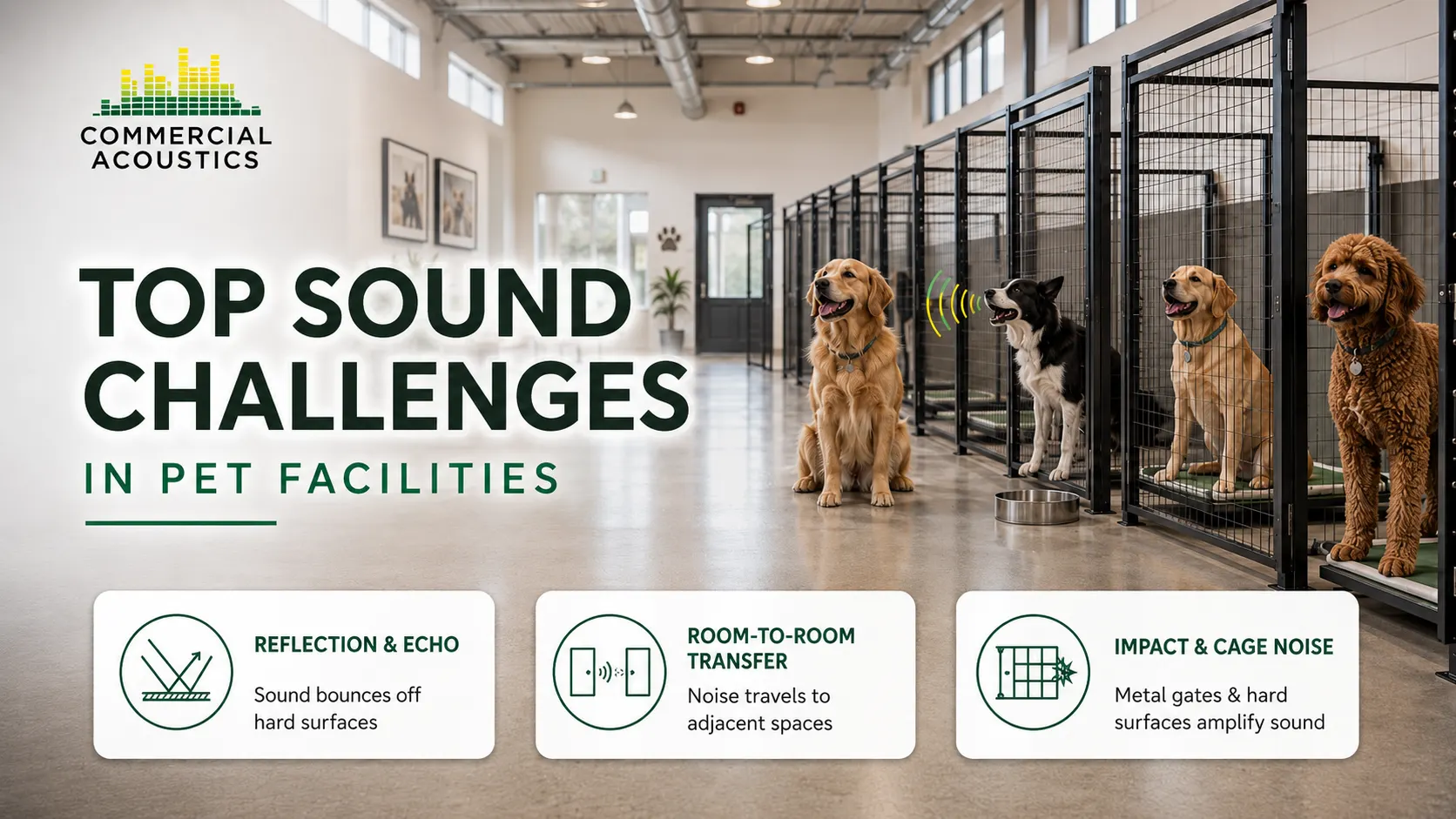
Top Sound Challenges in Pet Facilities
- Reflection & Echo: Sound bounces off concrete, tile & glass
- Room-to-Room Transfer: Barking penetrates adjacent areas & tenant walls
- Impact & Cage Noise: Metal gates & hard surfaces amplify disruption
In multi-room kennels or shared commercial buildings, controlling sound transmission is critical. Echo buildup can make barking sound louder than it actually is. If multiple dogs begin barking at once, the space can become chaotic. Acoustic treatment reduces the intensity, duration, and spread of sound across the facility.
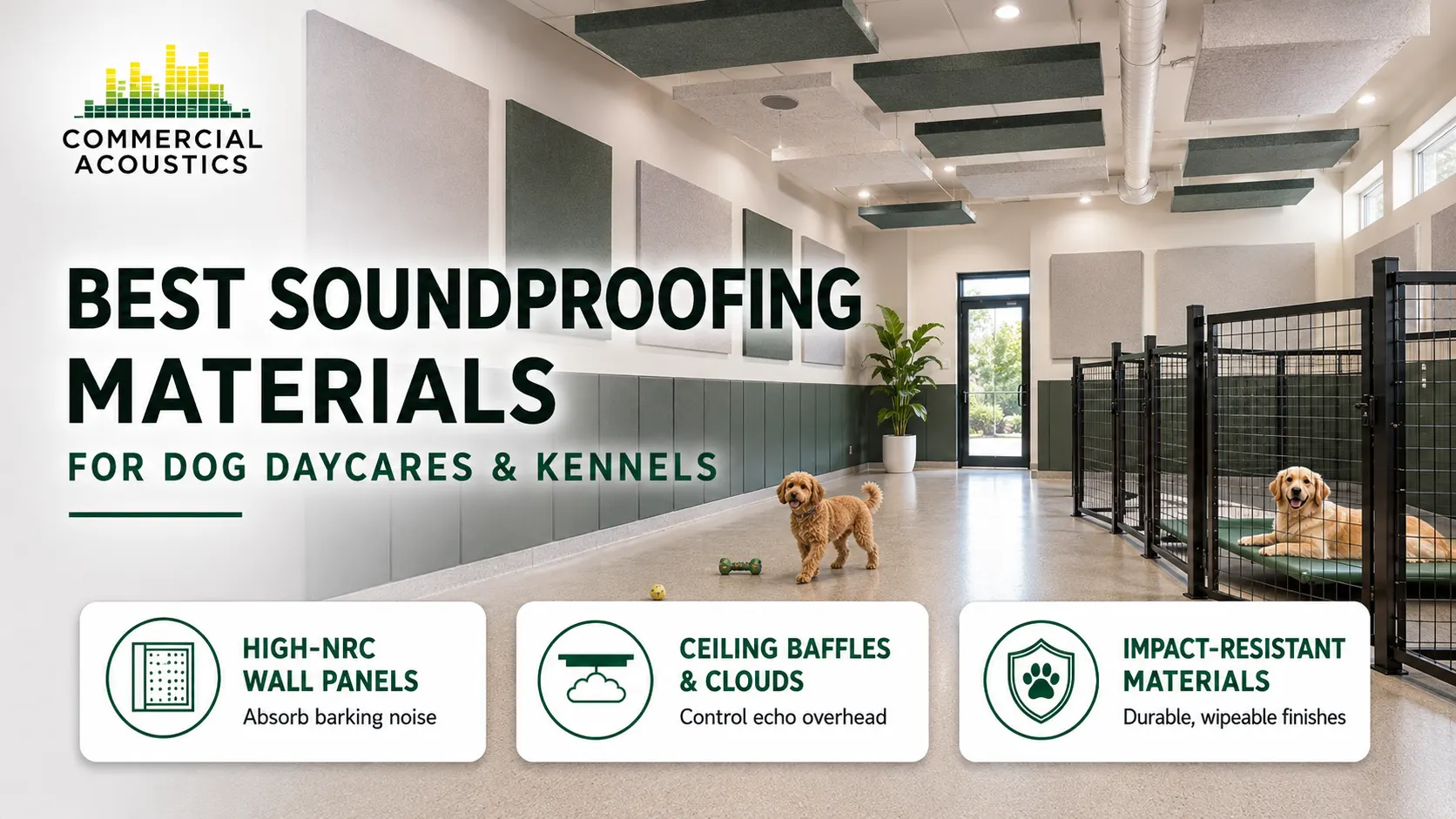
Best Soundproofing Materials for Dog Daycares & Kennels
- High-NRC Wall Panels: Absorb mid to high-frequency barking noise
- Ceiling Baffles & Clouds: Control echo in tall or open ceiling areas
- Impact-Resistant Materials: Durable, wipeable finishes suited for pet use
Dog facilities need more than soft materials—they need durable, hygienic, moisture-resistant panels that also perform acoustically. Fabric-wrapped panels are ideal for lobbies and offices, while PVC-coated or perforated rigid panels work well in kennel runs. Ceiling baffles are particularly effective in large-volume rooms where barking bounces off hard surfaces repeatedly.
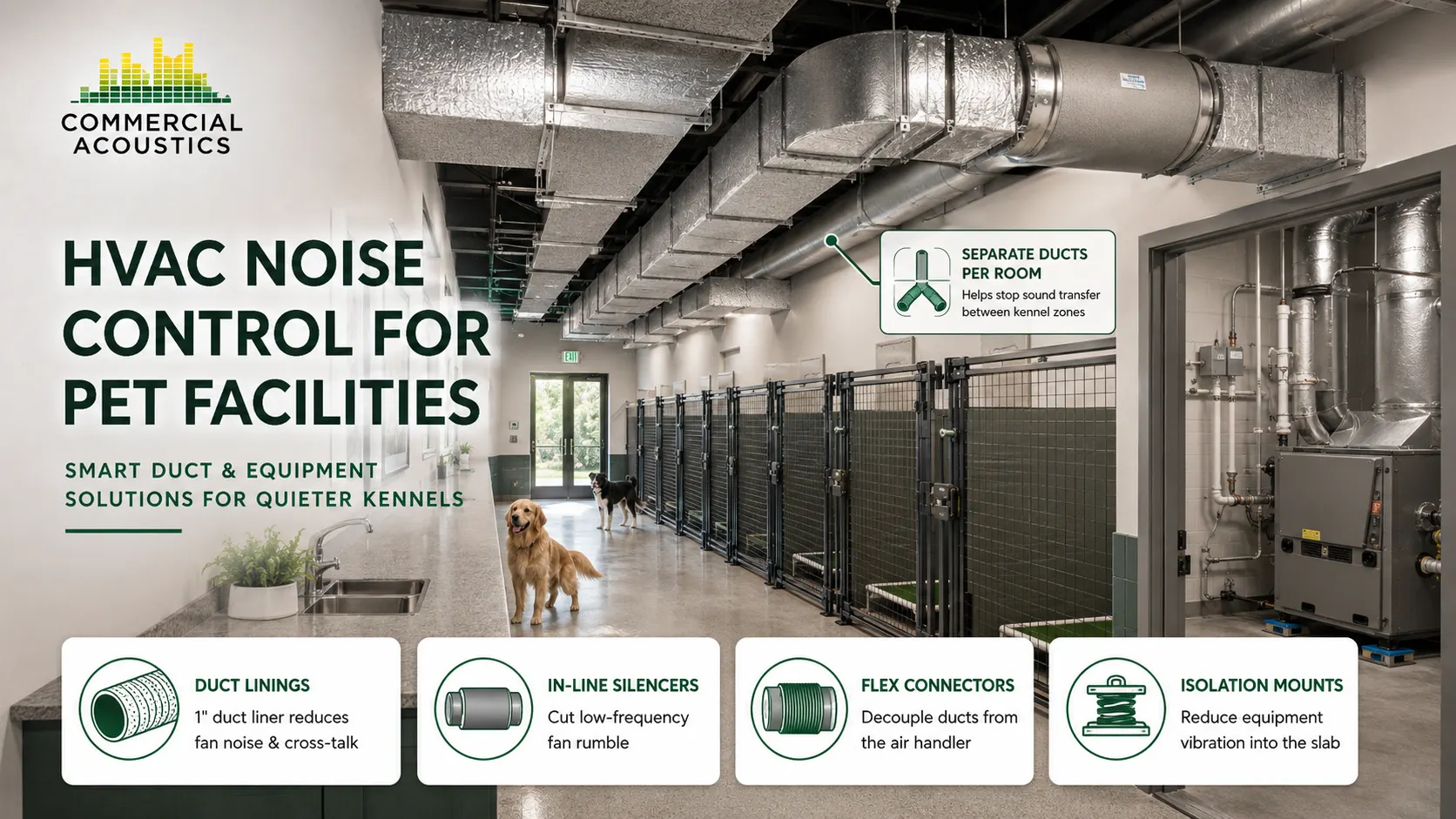
HVAC Noise Control for Pet Facilities
- Duct liners: 1″ fiberglass lining absorbs fan noise and room-to-room cross-talk.
- In-line silencers: Cut 10–25 dB of low-frequency fan rumble at the duct trunk.
- Flexible connectors: Short flex sections at the air handler kill structure-borne vibration.
- Separate ducts per room: Dedicated supply and return per zone stop shared-trunk sound transfer.
HVAC is the single most-overlooked noise path in pet facilities. Kennels require high air-change rates (typically 10–15 ACH) to manage odor and disease control, which means oversized ducts and powerful fans. Without acoustic treatment in the ductwork, those same ducts carry barking from kennel bay to exam room to lobby. For the broader principles, see our Soundproofing 101 guide.
The cheapest HVAC fix on a new build is dedicated zoned ducting with 1″ duct liner. The cheapest retrofit is adding in-line silencers at the air handler outlet. Both deliver real, measurable dB reductions at the listener position.
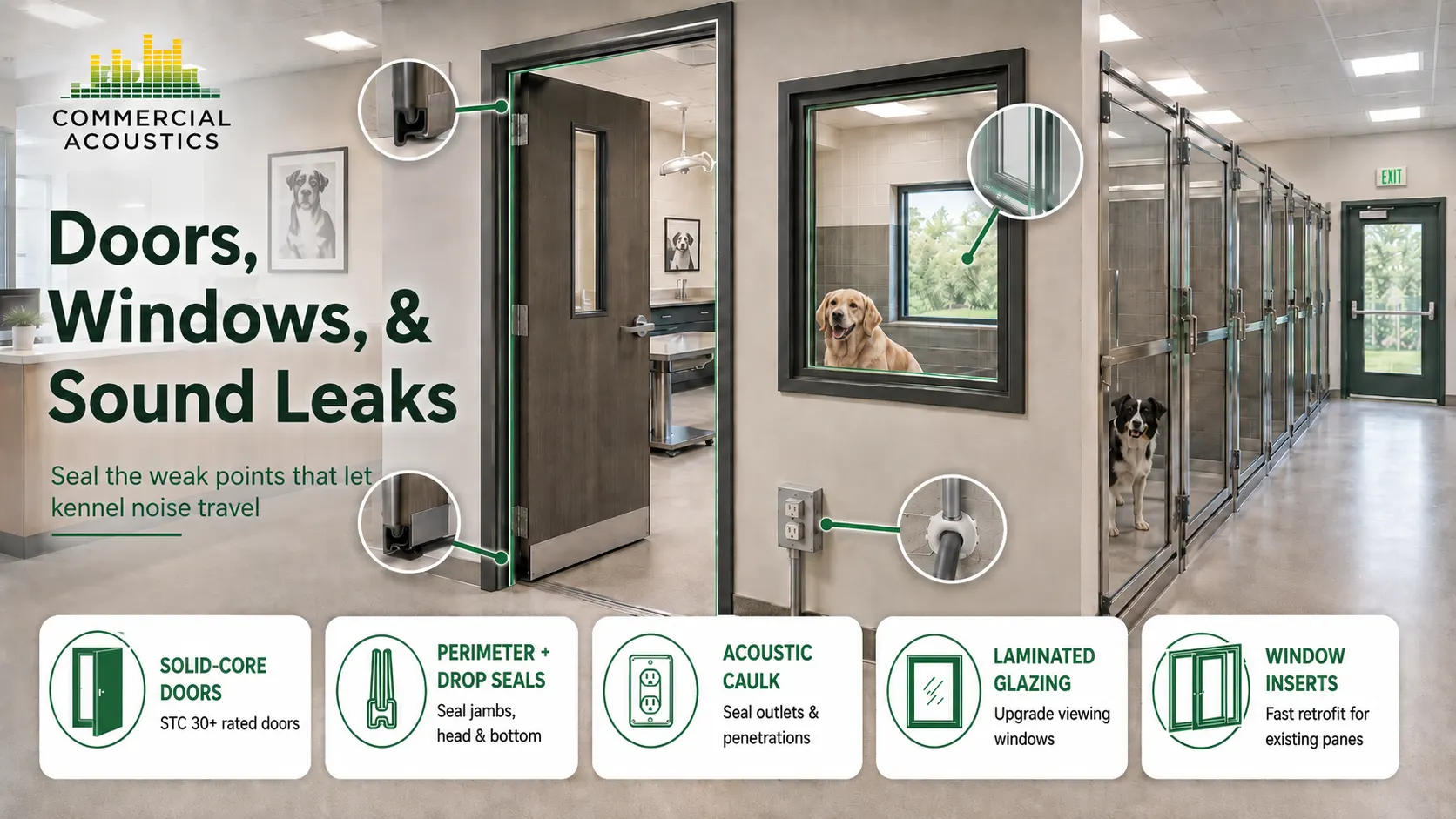
Doors, Windows, and Sound Leaks
- Solid-core doors: Replace hollow-core doors at every kennel transition. Target STC 30+.
- Perimeter + drop seals: Adjustable jamb seals plus an auto drop seal. Without them, a solid-core door behaves like hollow-core.
- Acoustic caulk at penetrations: Outlets, conduit, plumbing. Each open penetration costs 5–10 STC.
- Laminated viewing windows: Upgrades double-pane glass from STC 28–32 to STC 34–38.
Sound behaves like water. A wall built to STC 55 with one unsealed door undercut performs like a wall in the low STC 30s. The audit list above is what acoustic consultants run on every kennel project before specifying wall upgrades. For demising walls between tenants, adding mass with our Wall Blokker MLV membrane recovers what the door leaks back, and our acoustic absorption panels handle echo on the room-facing side.
NRC 1.05 lobby wall panels, Armstrong Optima NRC 0.90 ceiling tiles in the kennel, and CMU wall panels along the perimeter — delivering clearer reception speech and a noticeably quieter boarding environment.
Read Our Veterinary Hospital Case Study →Room-by-Room Soundproofing Strategy
Kennel Bays & Runs
- Ceilings: Install suspended acoustic baffles or clouds
- Walls: Add washable acoustic panels (PVC or fiberglass)
- Gates: Use rubber buffers to reduce metal-on-metal impact
Noise in kennel bays often reaches the highest decibel levels. Treating the ceiling and walls with absorptive panels significantly reduces reverberation and stress-inducing sound levels. Materials must be easy to clean and resistant to claws, moisture, and disinfectants.
Daycare Playrooms
- Wall Panels: Absorb group barking & reduce echo during activity
- Flooring: Use rubber mats or acoustic underlayments where possible
- Room Dividers: Choose acoustic partitions to separate groups
Open playrooms can turn into echo chambers without proper sound control. Panels placed on the upper walls help absorb high-frequency barking, while sound-absorbing room dividers minimize distraction between groups. Acoustic treatment improves the environment for both animals and caretakers.
Lobbies, Offices & Retail Areas
- Acoustic Panels: Improve speech clarity & customer comfort
- Door Seals: Block barking noise from reaching the front desk
- Ceiling Tiles: Use CAC-rated tiles to stop sound from bleeding above
First impressions matter. Reduce the presence of barking at the front desk by sealing doors and using acoustical ceilings. Panels in retail or office areas help with customer experience and staff productivity while maintaining a professional atmosphere.
Design Tips for Pet Environments
- Moisture Resistance: Choose non-porous or washable panel finishes
- Durability: Materials should resist scratching, chewing & cleaning agents
- Aesthetic Options: Use printed or fabric panels in public-facing areas
Pet environments demand a higher durability standard. Acoustic treatments can still look attractive—especially in customer-facing areas—but must also perform under daily exposure to dirt, claws, and frequent cleaning. Using impact-rated and antimicrobial surfaces is key.

Conclusion: Creating Calm, Code-Compliant Kennel Environments
Whether you’re operating a small boutique dog daycare or a large-scale boarding facility, noise control plays a major role in comfort, safety, and compliance. Proper acoustic treatment creates calmer conditions for pets, improves working environments for staff, and helps maintain strong relationships with neighbors and property managers.
At Commercial Acoustics, we design soundproofing solutions tailored to high-impact environments like kennels, vet clinics, and pet hotels. Our materials are tested, durable, and easy to maintain—perfect for modern pet care operations.
Looking for help specifying acoustic treatments for your facility? Contact our team for a customized solution.
FAQs: Dog Daycare & Dog Kennel Soundproofing
How loud is barking in a dog kennel?
Barking can exceed 100 dB—louder than a lawnmower or motorcycle.
Do acoustic panels help with barking?
Yes—panels absorb harsh frequencies and reduce echo intensity.
Can I clean acoustic panels in a dog kennel?
Yes—choose PVC-coated, fiberglass, or washable rigid panels for pet areas.
Will soundproofing stop neighbor complaints?
It helps significantly. Blocking and absorbing noise reduces external sound transfer.
Do dog facilities need sound masking?
Usually not—masking is more common in offices. Absorption is the key strategy here.