

Table of Contents
Project Overview: Nova’s Medical Complex Acoustic Upgrade
- Project: Nova Southeastern University Medical Education Complex
- Address: 3200 S University Dr, Davie, FL 33328
- Facility Type: Medical Education & Research University
- Client: Moss Construction
- Objective: Ensure speech privacy & meet HIPAA-aligned acoustic standards
- Scope: Design & install sound masking system to improve privacy, reduce noise intrusion, and support LEED Silver certification
Nova Southeastern University’s 380,000-square-foot medical education complex houses advanced training facilities for osteopathic medicine alongside research and administrative spaces. With a mix of lecture halls, simulation rooms, physician offices, and collaborative work areas, the project’s acoustic goals aligned closely with those of modern healthcare facilities.
Architects from Baker Barrios recognized that HIPAA-compliant speech privacy was critical—not only for any live patient interactions but also for sensitive faculty, staff, and research discussions. Moss Construction brought in Commercial Acoustics to provide design-assist services, ensuring that every space met stringent acoustic requirements under ANSI S12, DoDEA, and LEED v4 guidelines.
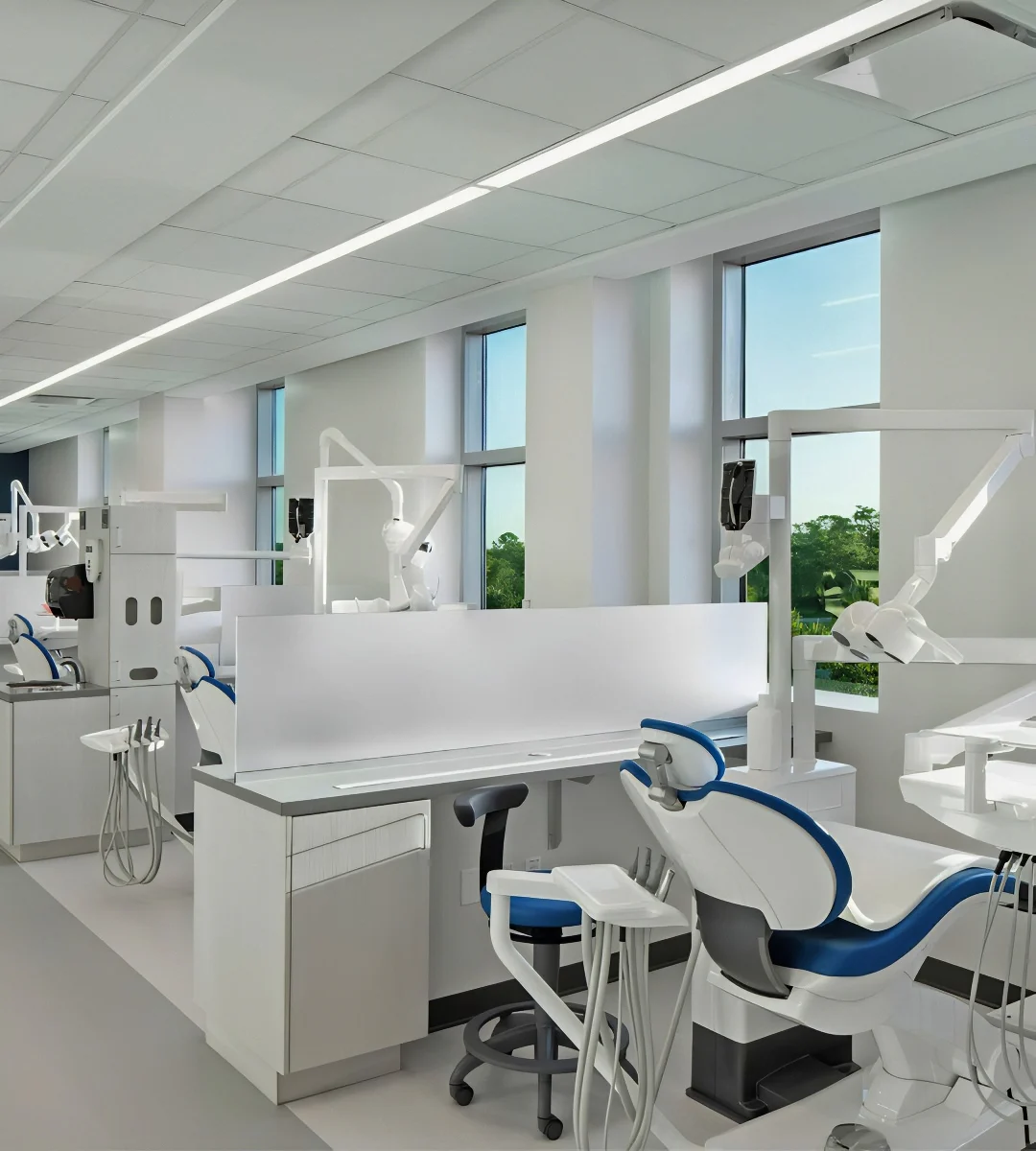
Why HIPAA Compliance Drives Sound Masking in Medical Facilities
- Speech Privacy: Prevent overhearing of confidential conversations
- Regulatory Alignment: Support HIPAA & healthcare privacy requirements
- Acoustic Comfort: Reduce distractions in large, reverberant spaces
In healthcare settings, HIPAA requires that patient health information remain private—whether in physical records, digital communications, or spoken word. While HIPAA does not mandate a specific acoustic method, sound masking is a recognized best practice for preventing incidental overhearing in compliance with the Privacy Rule.
The Nova Southeastern project posed a unique challenge: combining the needs of a healthcare-compliant facility with the operational realities of a university. Spaces like physician offices, meeting rooms, and simulation labs demanded strict speech privacy, while lecture halls and open study areas needed reverberation control for speech intelligibility.
By integrating sound masking into the plenum above, the design team ensured consistent privacy coverage without intrusive construction changes, supporting both HIPAA objectives and LEED energy efficiency goals.
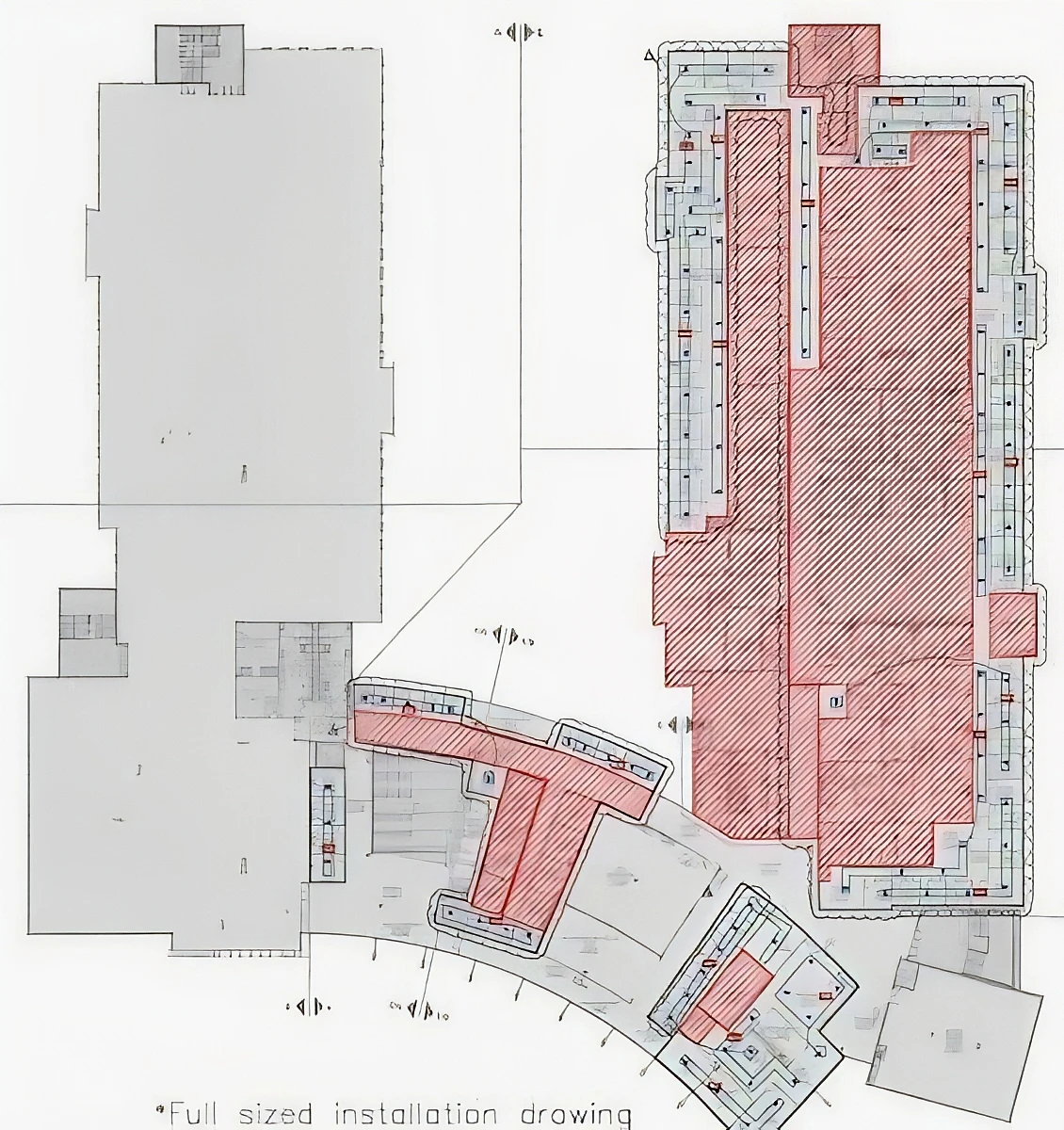
Acoustic Design Challenges in a Medical Education Complex
- Non-Continuous Partitions: Walls ending at the ceiling grid reduce STC
- Large Open Rooms: Lecture halls with 8,000+ square feet of parallel walls
- Multi-Purpose Use: Balancing privacy with intelligibility across varied spaces
One of the biggest challenges was the wall construction between adjacent physician offices and staff rooms. Many partitions ended at the ACT (acoustic ceiling tile) level rather than extending to the structural deck. In some cases, only one side of the partition extended fully to deck. This asymmetrical design significantly reduced the composite STC rating, increasing the risk of speech privacy breaches.
In lecture halls and cafeterias, reverberation time (RT60) measurements at 250 Hz and 500 Hz exceeded ideal ranges. These spaces required both fabric wall systems for absorption and carefully tuned sound masking to maintain clarity during amplified speech.
Simulation labs added another layer of complexity. These environments simulate real patient interactions, making confidentiality training part of the curriculum. Sound masking was necessary to prevent conversations from carrying into adjacent corridors or observation rooms.

Why Sound Masking Was the Preferred Solution
- Privacy Improvement: Equivalent to 5–10 STC points when properly tuned
- Construction Savings: Avoided extending all partitions to deck
- Zoning Flexibility: Different volume levels for offices, classrooms, & labs
When evaluating options for improving speech privacy, the team considered traditional wall extensions, additional drywall layers, and door upgrades. While effective, these methods carried significant cost and schedule impacts, particularly in an active construction environment.
Sound masking offered a non-disruptive alternative—particularly in plenum-mounted form. By emitting a calibrated background noise through speakers above the ceiling tiles, the system reduced the intelligibility of speech without altering the architecture.
For Nova Southeastern, this approach preserved the open plenum for mechanical, electrical, and plumbing routing and avoided dozens of penetrations that would have been needed if walls extended to deck. The result was a faster build-out, reduced costs, and a system that met the privacy goals set by HIPAA-aligned standards.
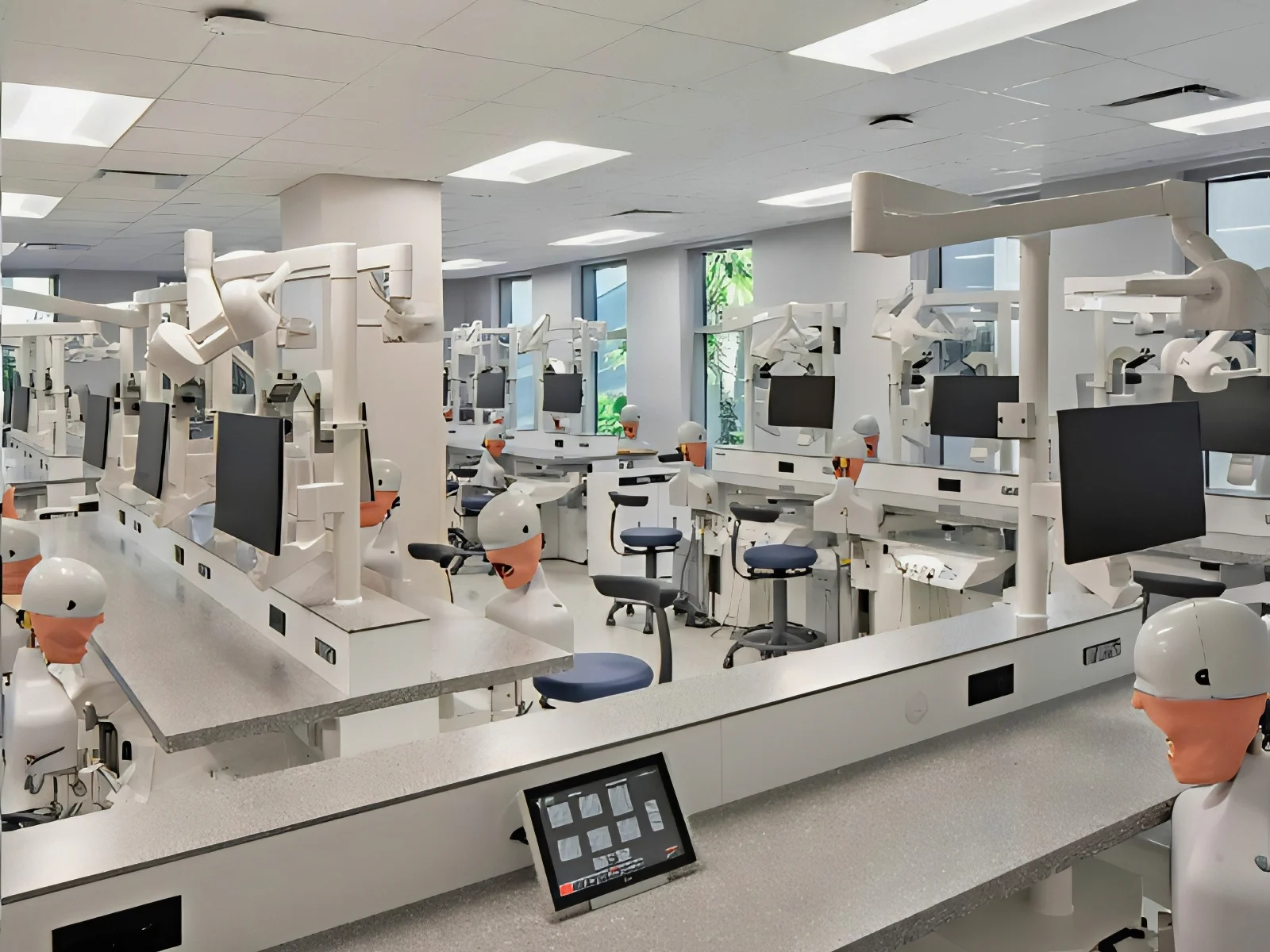
System Design & Installation Process
- System Type: Lencore Spectra i.Net sound masking
- Total Speakers: 292 installed across 3 floors
- Zoning Design: Independent tuning for open, semi-closed, & closed spaces
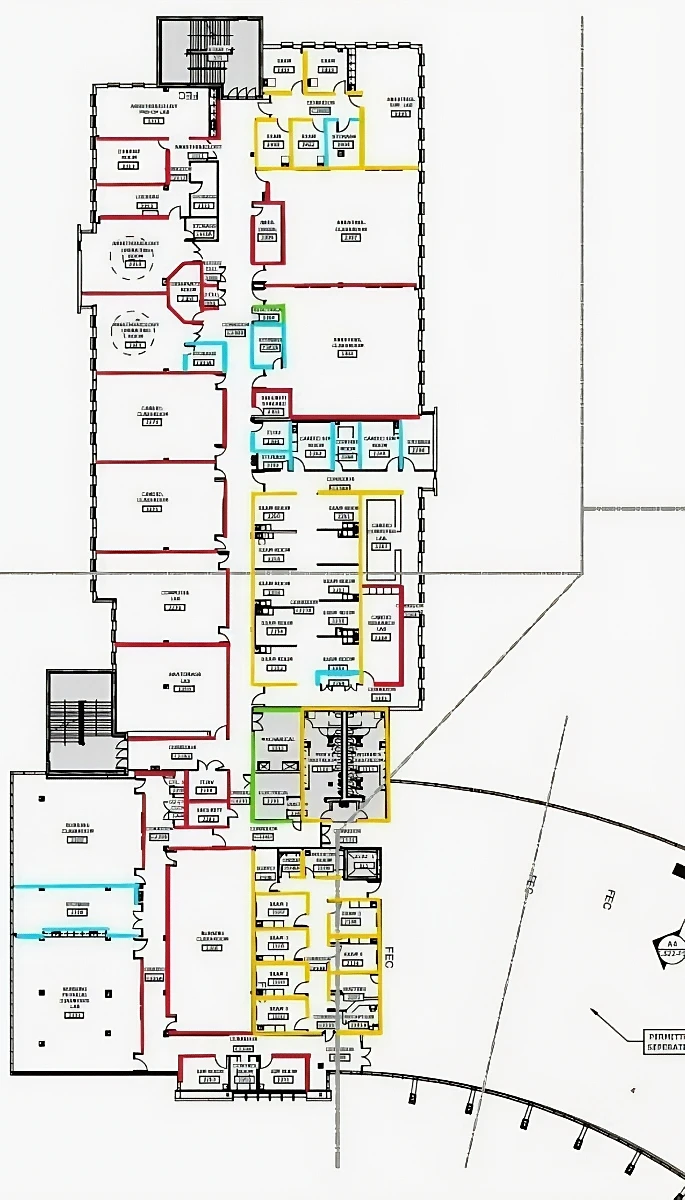
The installation was carefully coordinated to align with construction milestones. Our team began work after the ceiling grid was in place but before ACT panels were installed—mounting J-hooks to the structural deck and running plenum-rated CAT5E cabling to each speaker location. Using our Sound Masking Calculator during the design phase, we mapped out the speaker layout and quantity needed for consistent coverage across all floorplans.
The system’s control panel spanned all three floors, with vertical pass-throughs routed through the Intermediate Distribution Frame to simplify cable management and future access.

HIPAA Compliance & Acoustic Privacy
- Offices & Exam Rooms: lower volume for comfort while maintaining privacy
- Lecture Halls: slightly higher levels to mask reverberation and crowd noise
- Simulation Labs: tuned for maximum privacy during training exercises
Each zone was tuned based on its intended use, maintaining the 1–2 dB tolerance range specified in Section 275119. This allowed the system to adapt to the acoustic needs of each area—whether controlling echoes in large spaces or preserving speech privacy in high-sensitivity rooms. Together, these zones created a consistent, low-distraction environment across the entire facility.
Technical Performance by Zone
- Prevents Overhearing: Masks speech in adjacent rooms and corridors
- Supports Privacy Rule: Aligns with HIPAA requirements for oral communications
- Enhances Trust: Maintains confidentiality in training and clinical spaces
While HIPAA’s Privacy Rule does not dictate specific noise control measures, it requires covered entities to take reasonable safeguards to protect verbal communications containing protected health information. Sound masking is one of the most widely recognized tools for meeting this safeguard in healthcare environments.
At Nova Southeastern, this meant that even in educational spaces, conversations involving simulated patient cases or real research data would remain private. The system’s ability to add 5–10 STC-equivalent points to the acoustic separation of rooms made it a valuable component of the facility’s overall privacy strategy.

Results & Measured Benefits
- Speech Privacy: Achieved across all physician offices and labs
- Cost Savings: Avoided extensive wall modifications and penetrations
- Acoustic Comfort: Reduced distractions in lecture halls and open areas
The integration of sound masking with targeted fabric wall treatments allowed the facility to meet its LEED Silver acoustic targets while also aligning with HIPAA privacy principles. Classrooms and offices experienced measurable reductions in speech intelligibility from adjacent spaces, and lecture halls showed improved clarity during amplified presentations.
Beyond the technical benefits, the system delivered a future-proof privacy solution that can adapt to changes in room usage or occupancy without disruptive construction work.
Conclusion: Delivering Privacy & Performance in Medical Education
This project demonstrates that sound masking for HIPAA compliance is not limited to hospitals and clinics. It has equal value in hybrid facilities that combine medical education, research, and clinical functions. By integrating sound masking early in the design phase, Nova Southeastern University achieved a balance of speech privacy, cost efficiency, and acoustic comfort without sacrificing architectural intent.
For architects and general contractors, this case reinforces that privacy standards in healthcare-aligned facilities are best met with a combination of architectural design, material selection, and tuned acoustic systems. Whether the goal is regulatory compliance, patient comfort, or operational efficiency, sound masking remains one of the most versatile tools available.
Contact our team to discuss HIPAA-compliant sound masking solutions for your next healthcare or medical education project.
FAQs: Sound Masking for HIPAA Compliance
How does sound masking support HIPAA compliance?
Sound masking adds a controlled background sound to reduce the intelligibility of speech. In HIPAA-covered spaces, it helps meet the reasonable safeguard requirement by preventing unauthorized overhearing of protected health information.
Where is sound masking used in healthcare environments?
It is common in physician offices, nurses’ stations, pharmacies, counseling rooms, simulation labs, and any area where private medical information is discussed.
Can sound masking replace physical construction upgrades?
While it cannot fix every acoustic flaw, sound masking can provide the equivalent of 5–10 STC points in speech privacy, which often eliminates the need for costly wall extensions or additional drywall layers.
Is sound masking safe for patients and staff?
Yes. Modern systems operate at safe, comfortable sound levels, typically 45–48 dBA, which is well below OSHA limits.
