
Table of Contents
Project Overview: Acoustic Upgrades in a Courthouse Renovation
- Project: Osceola County Courthouse
- Address: 2 Courthouse Square Kissimmee, FL 34741
- Client: Johnson-Laux Construction
- Facility Type: County Courthouse
- Objective: Upgrade courtroom acoustics without altering historic features
- Scope: Acoustic ceiling tile & wall panel installation
As part of a comprehensive third-floor renovation, the Osceola County Courthouse—originally built in 1889—needed more than just cosmetic updates. With daily legal proceedings requiring focus, clarity, and discretion, courtroom acoustics had become a growing concern. The existing space suffered from excessive reverberation, poor speech intelligibility, and disruptive echo that impacted both courtroom operations and adjacent administrative areas.
Commercial Acoustics was brought in to provide a turnkey acoustic solution that would meet modern performance standards without compromising the historic architecture of the building. Working closely with Johnson-Laux Construction, our team designed and installed a system of ceiling clouds and stretched fabric panels that enhanced sound quality, reduced noise transfer, and supported the day-to-day functionality of this high-use public facility.
This case study highlights how thoughtful acoustic design—executed in the right sequence—can transform not just the sound of a space, but how it works for everyone inside.
Historic Background: Florida’s Oldest Operating County Courthouse
- Built: 1889–90 in Romanesque Revival style
- Status: Florida’s oldest operating county courthouse
- Use Today: Active third-floor courtroom & civic landmark
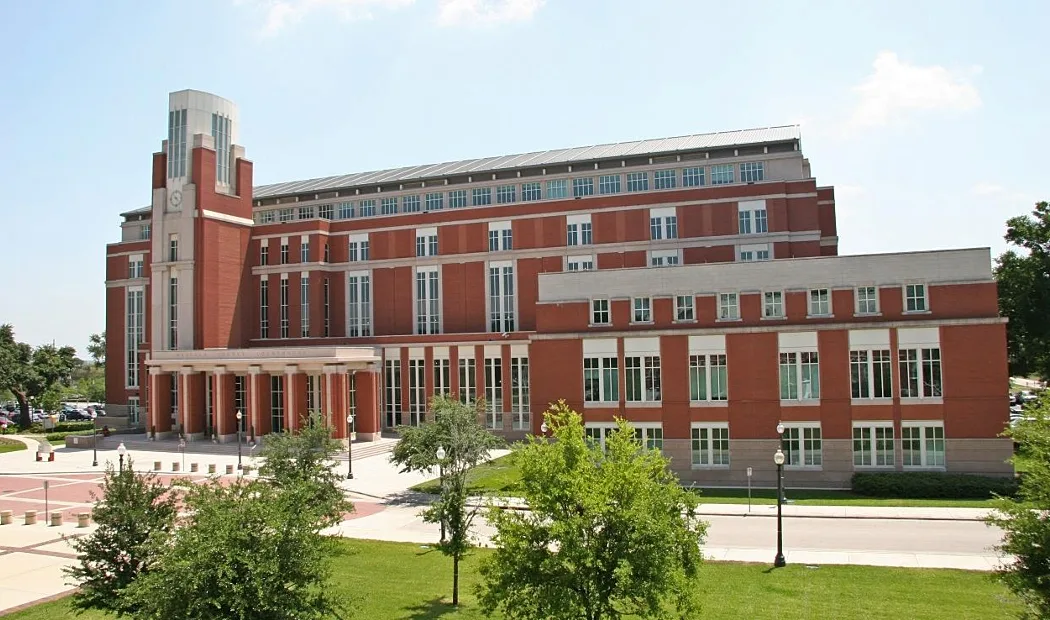
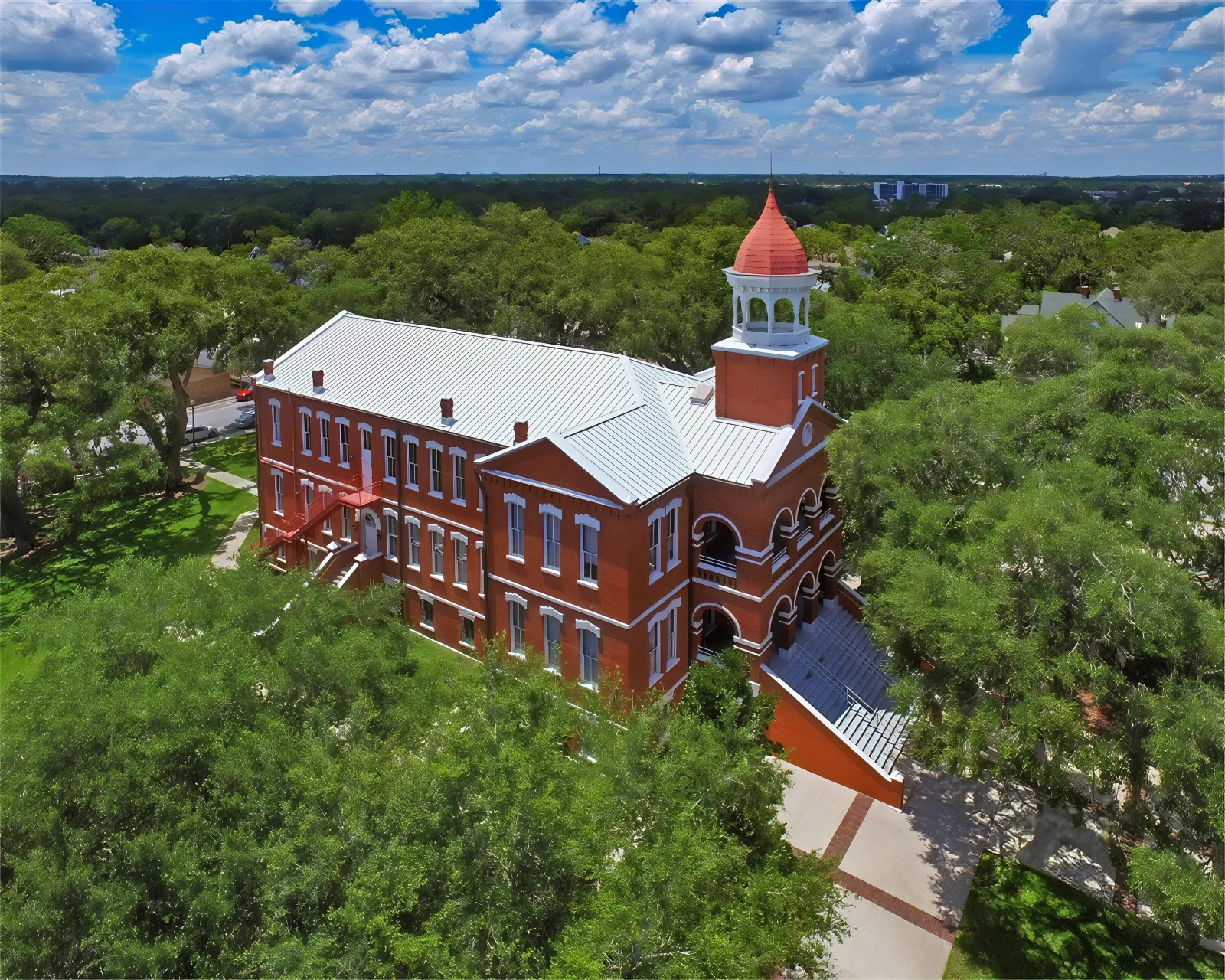
Originally built in 1889–90, the Osceola County Courthouse in Kissimmee, FL holds the title of Florida’s oldest operating county courthouse. Designed in the Romanesque Revival style by F.C. Johnson, the building features arched porticos, a central clock tower, and intricate masonry still visible today. It was added to the U.S. National Register of Historic Places in 1977.
Osceola County itself was newly formed in 1887—and let’s just say acoustics weren’t top of mind back then. Early debates focused more on naming the county (Kissimmee narrowly beat out “Hell or Hades”) than on reverberation times in courtrooms.
Still, the structure has stood the test of time. From its original electric bill of $1.64 to housing typewriters, moonshine cases, and high-profile trials, the courthouse has seen it all. While most judicial activity now happens in a newer complex, the third-floor courtroom in the original building remains active—and now upgraded for modern courtroom acoustics thanks to this renovation.
Existing Conditions: Acoustic Challenges in a Historic Courthouse
- Ceilings: High volume created long reverberation times
- Surfaces: Reflective finishes amplified noise & echo
- Sound Transfer: Poor separation between courtrooms & offices
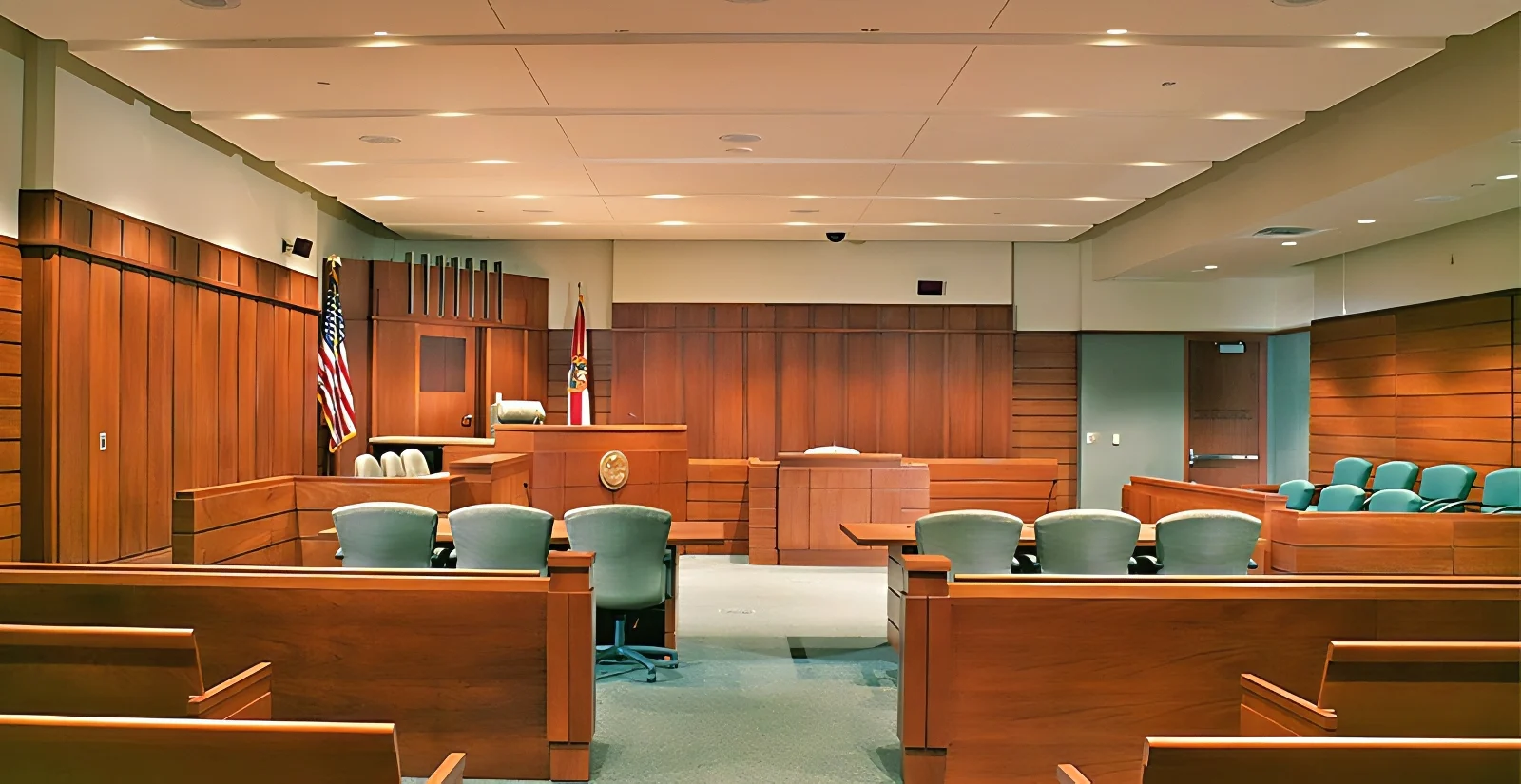
Prior to the renovation, the third floor suffered from typical courtroom acoustic issues. The high ceilings and hard wall finishes created an environment where voices overlapped and intelligibility suffered. Staff working in administrative areas struggled with noise bleed from adjacent rooms, while courtroom dialogue was frequently muddled by reflections and echo.
These challenges aren’t uncommon in older civic buildings, where acoustic performance wasn’t part of the original design criteria. Renovating the space to modern standards required a carefully planned acoustic strategy.
Acoustic Ceiling Tile Installation for Improved Sound Absorption
- Coverage: 1,400 SF of acoustic ceiling tile
- Product: USG Eclipse & Optima PB in various sizes
- Design Feature: Axiom trim used to create ceiling cloud layout
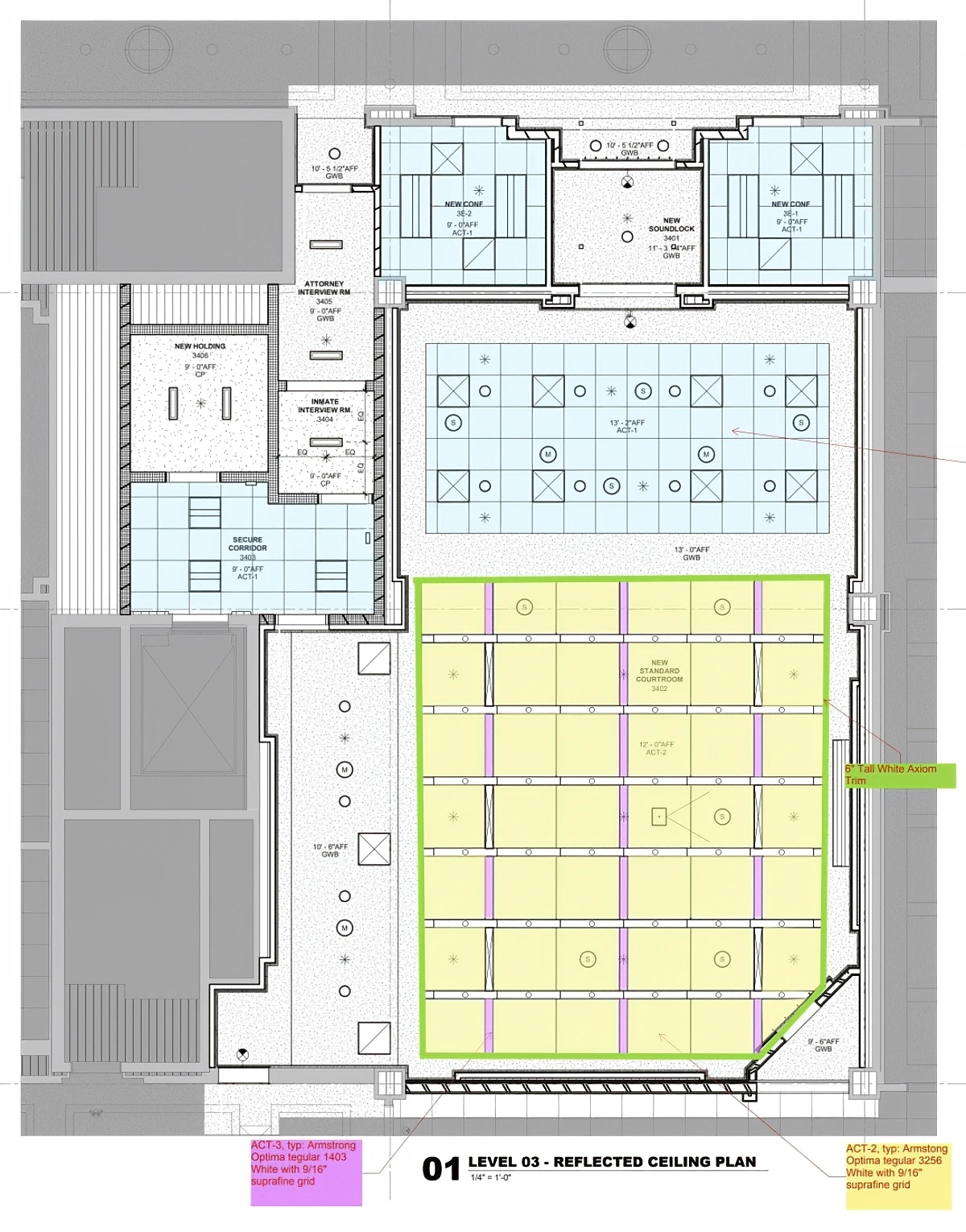
Ceiling systems were the foundation of the acoustic improvements. USG Eclipse tiles were installed throughout corridors and office areas, while high-performance Optima PB panels were used in the courtroom to absorb sound more effectively in large-volume spaces.
The team used Axiom trim to define floating ceiling “clouds” that not only contributed to sound control but also enhanced the visual presence of the courtroom. These ceiling elements helped control reverberation from above, making it easier to follow courtroom proceedings and reducing distractions throughout the floor.
Stretched Fabric Wall Panels for Balanced Room Acoustics
- Coverage: 400 SF of floor-to-ceiling wall panels
- Core: Fiberglass for full-frequency sound absorption
- Finish: Maharam fabric for durability & clean aesthetics
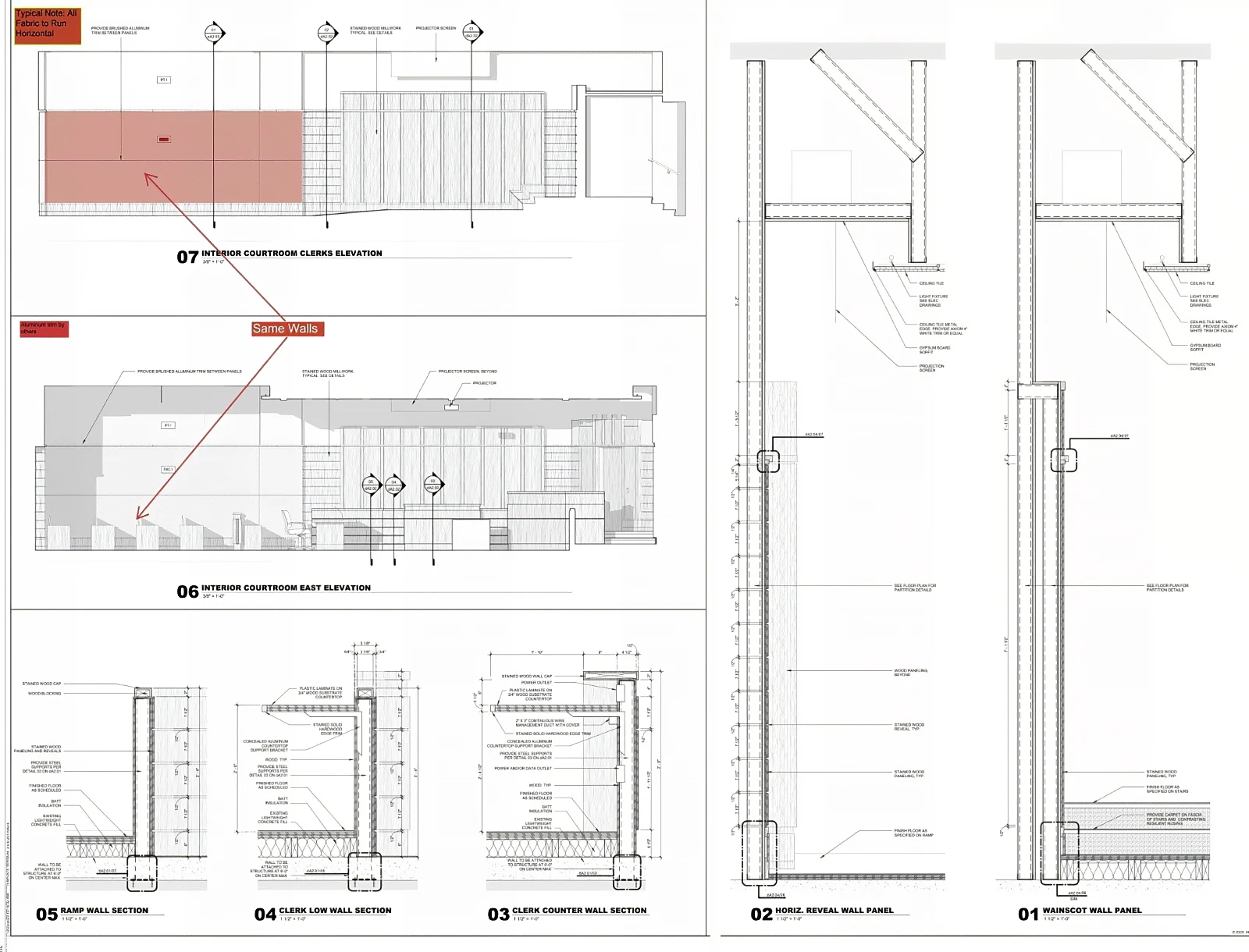
To further control sound reflections, particularly those traveling horizontally, a stretched fabric wall system was installed in the main courtroom. These panels helped absorb mid- and high-frequency sounds, reducing flutter echo and contributing to overall clarity during testimony and argument.
The panels were installed floor-to-ceiling, ensuring complete coverage of the most acoustically reflective surfaces. Maharam fabric was selected for its clean, professional appearance and durability in high-traffic environments like a county courthouse.
Coordinating Construction in an Active Courthouse
- Phasing: Installations sequenced around MEP, lighting & fire protection
- Access: Work coordinated with courthouse security & daily operations
- Outcome: No trade conflicts, rework, or construction delays
Installing acoustic treatments in a functioning public building required detailed planning. Our team coordinated directly with Johnson-Laux Construction to phase ceiling and wall panel installation between MEP, lighting, and fire protection scopes. Access and security were also carefully managed due to the courthouse’s operational status during the renovation.
Because of this early coordination and phased delivery, the installation was completed without trade conflicts, rework, or delays. Acoustic materials integrated cleanly with the architectural finishes and other building systems.
Project Results: Upgraded Courtroom Acoustics & User Satisfaction
After completion, courtroom acoustics were dramatically improved. Echo and reverb were reduced to acceptable levels, making speech clearer and more intelligible for judges, attorneys, and jurors. Office staff noted better focus and fewer distractions, and legal professionals were able to communicate effectively without overcompensating for poor acoustics.
Importantly, these acoustic upgrades were executed without disrupting the courthouse’s architectural character or operational schedule. Every component—from ceiling tile layout to fabric wall integration—was installed in coordination with other trades, preserving both finish quality and project timelines.
If you’re an architect, general contractor, or facilities planner working on a courthouse renovation, we can help you design and install the right acoustic system for the job. From courtroom acoustics to public spaces, our team delivers sound control solutions that meet spec, look clean, and install smoothly—especially in occupied or historically sensitive environments.
Contact Commercial Acoustics to discuss how we can support your next civic project with proven, high-performance acoustic systems. We’ll help you deliver on clarity, durability, and design.
FAQs: Courtroom Acoustics in Renovation Projects
Why are courtroom acoustics so important?
Clear sound is essential to ensure accurate testimony, legal understanding, and official records. Poor acoustics lead to miscommunication and frustration in court settings.
What materials work best to improve courtroom acoustics?
A combination of acoustic ceiling tiles and wall panels usually works best. Ceiling tiles absorb overhead reflections, while wall panels control side-to-side echoes and flutter.
Can acoustic treatments work in historic courthouse renovations?
Yes. Modern acoustic products like stretched fabric systems can be integrated with minimal visual impact and can even enhance architectural aesthetics when designed properly.
When should acoustics be planned during a renovation?
Ideally during the design development phase—before finish schedules are finalized. Early coordination allows the acoustic strategy to align with HVAC, lighting, and ceiling layouts.
Are there performance guidelines for courtroom acoustics?
While not always codified, ANSI S12.60 and other best practice standards offer clear benchmarks for reverberation and intelligibility in courtrooms and other public spaces.
