Table of Contents
Project Overview: Miami Acoustic Consultant for a Hotel Amenity Lounge
- Project: Pre-Construction Acoustic Analysis & Reverberation Modeling
- Location: Miami, FL
- Facility Type: 4-Star Hotel Amenity Lounge, Mixed Speech and Music Use
- Client: Hotel Architect and Developer Team (project under NDA)
- Baseline RT60: 1.8 seconds A-weighted, 6.3 seconds at 1 kHz
- Scope: Sabin-Formula Modeling, LEED v4 Targeting, Treatment Recommendations
Acoustic Consulting Brief, Miami Hotel Amenity Lounge
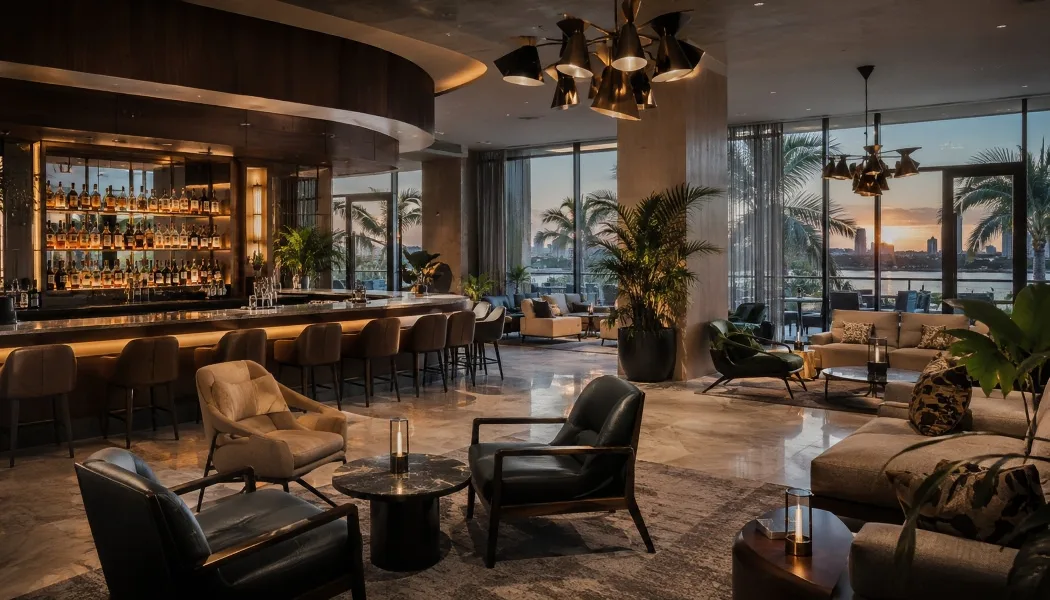
The Miami hotel project came to us in the progress drawing phase. The architect and developer wanted an acoustic consultant to size the reverberation problem in the amenity lounge before the finishes were locked, while changes were still cheap. The lounge had to host both casual conversation and amplified music programming, which is the worst possible combination for an untreated room with hard finishes.
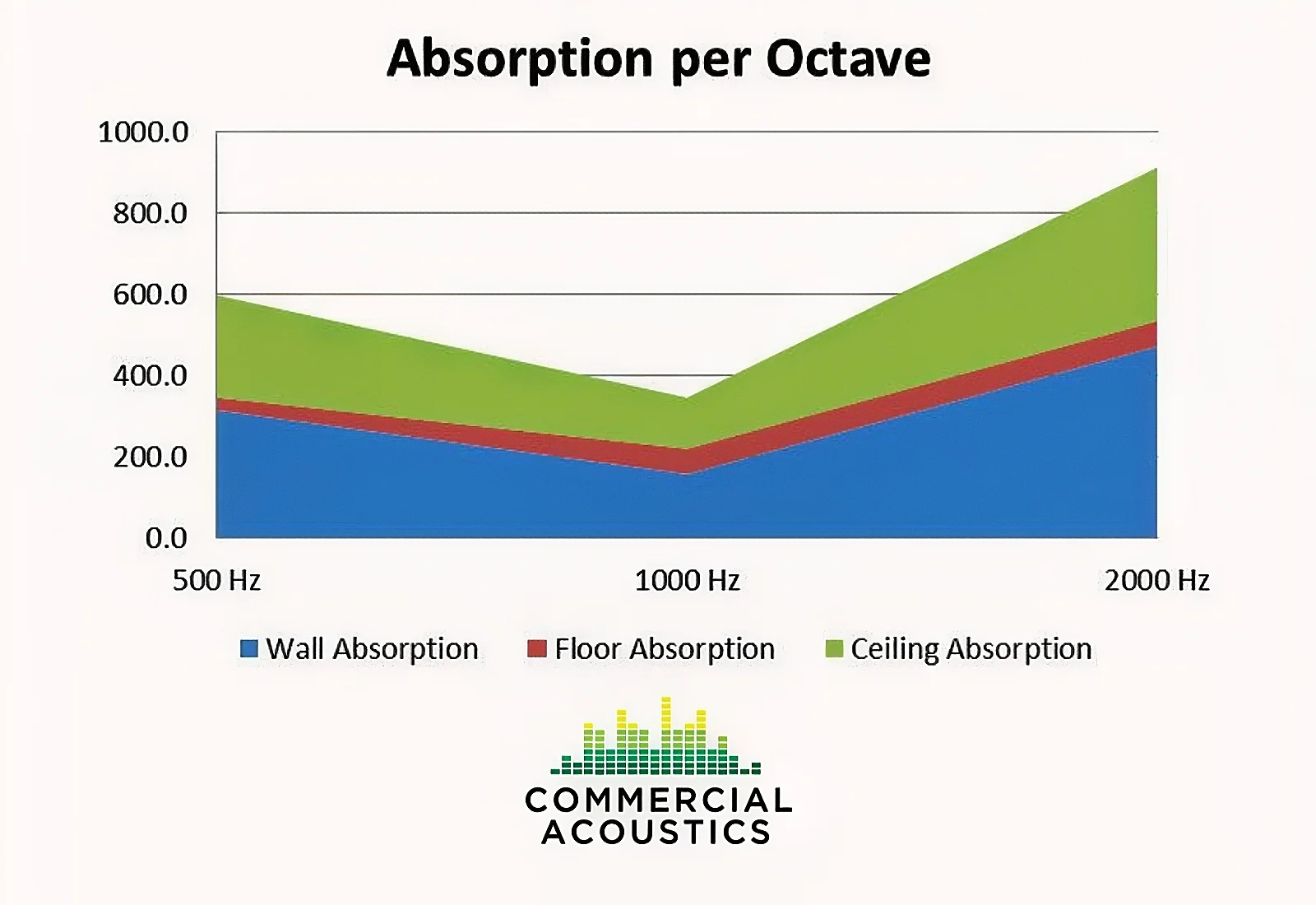
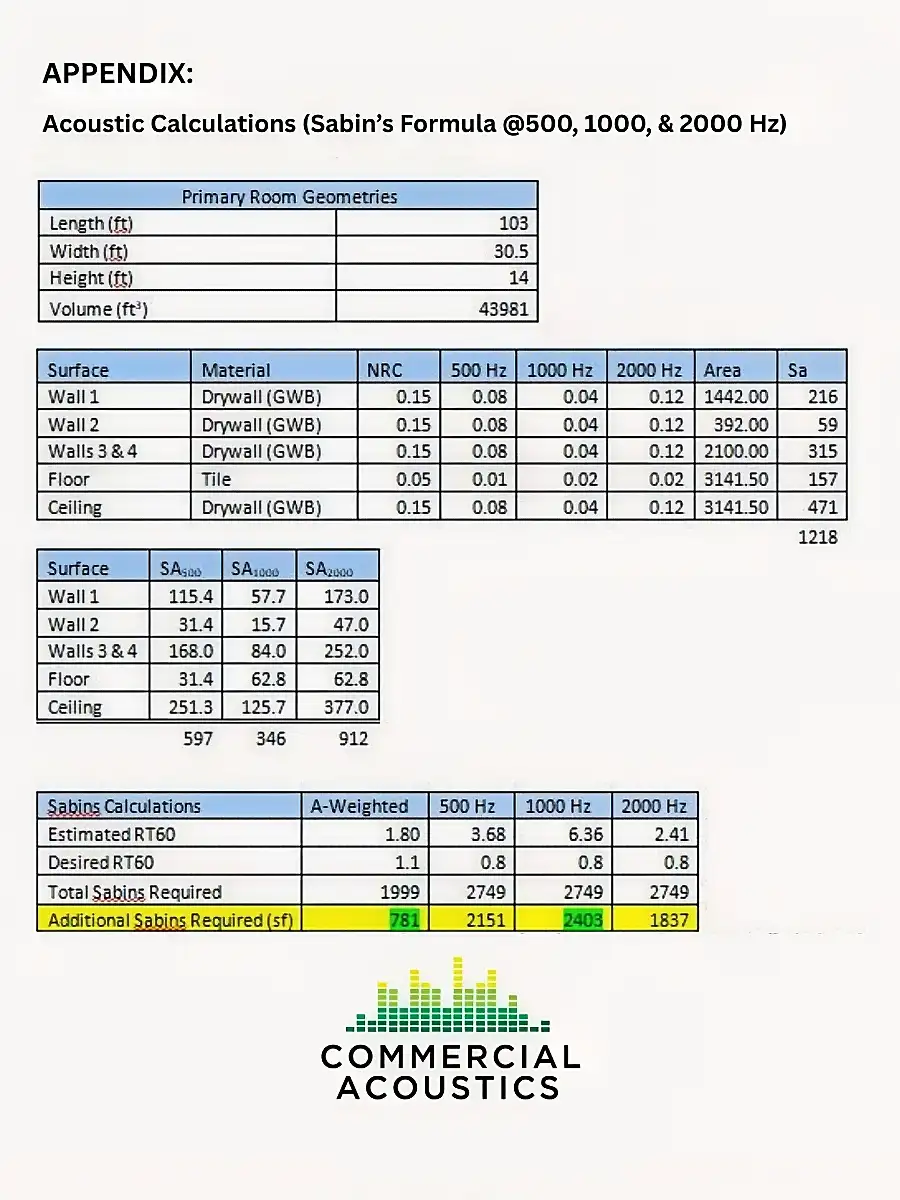
Modeling the room straight off the drawing set put RT60 at roughly 1.8 seconds A-weighted, with octave-band peaks of 3.6 seconds at 500 Hz, 6.3 seconds at 1 kHz, and 2.4 seconds at 2 kHz. Speech intelligibility breaks down above 1.5 seconds in any space; at 6.3 seconds at 1 kHz, the room would have been functionally unusable for speaking engagements.
Reverberation Modeling with the Sabin Formula
- Modeled RT60 (A-weighted): 1.8 seconds, untreated
- 500 Hz / 1 kHz / 2 kHz: 3.6 / 6.3 / 2.4 seconds
- Inputs: Room geometry and finish schedule from the progress drawing set
- Method: Sabin’s Formula with manufacturer NRC and absorption coefficients
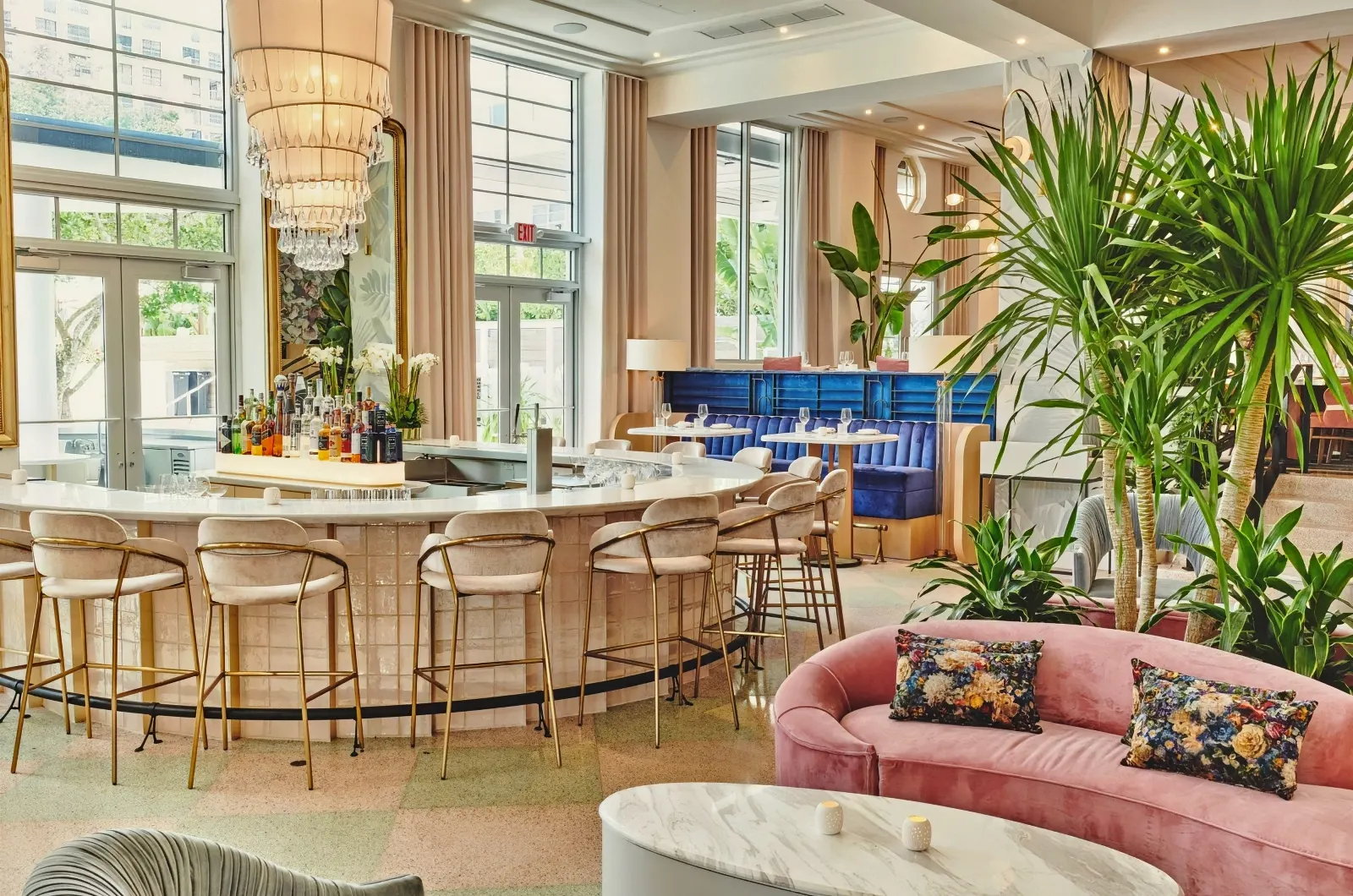
Pre-construction modeling lets the consulting work happen before any finishes are bought. The drawing set had hard floors, gypsum walls, and an exposed ceiling — exactly what you would expect from a contemporary hotel amenity space and exactly what produces a 1.8-second room. Validating the model against the sound absorption coefficient chart for each proposed finish is a fast way to keep the math honest.
Anyone running this calculation on their own room can plug values into the room acoustics calculator. Same Sabin math, scoped to a single space.
LEED v4 Reverberation Targets and Practical Alternates
- LEED v4 Target: 0.8 seconds RT60, octave-band
- Practical Alternate: 1.0 seconds RT60, A-weighted
- Restaurant Comparators: 0.7 seconds (intimate) to 1.1 seconds (lively)
- Speech-Failure Threshold: ~1.5 seconds RT60 (intelligibility breaks)
The LEED v4 acoustic performance credit sets reverberation targets at 0.8 seconds octave-band — strict, measurable, and useful when chasing certification points. For an amenity lounge that does not need to chase the credit, an A-weighted 1.0-second target hits the same usability bar at meaningfully lower treatment cost.
The intended use of the room sets the right number. Restaurants alone span 0.7 to 1.1 seconds depending on whether the operator wants intimate or lively. Above 1.5 seconds, speech intelligibility falls apart in any program type, and the room becomes a louder room rather than a more interesting one.
Recommended Acoustic Treatment Options
- Ideal (LEED-Aligned): 2,400 SF of NRC 1.00 treatment, full ceiling and floor coverage
- Adequate (Cost-Effective): 800 SF of NRC 1.00 panel and fabric wall mix
- Panel Mix: Wall-mounted absorbers plus a single fabric wall system run
- Outcome: Speech intelligibility restored, programming flexibility preserved
The two treatment paths trade square footage against finish budget. The 2,400 SF path leans on full-coverage acoustic ceiling tile plus carpeted floors, lands at the LEED 0.8-second target, and is the move when the project is chasing the credit. The 800 SF path uses a focused mix of acoustic absorption panel coverage plus a single-wall fabric system, lands at a 1.0-second A-weighted target, and is the move when the budget is tight.
Either path solves the speech-intelligibility problem in the amenity lounge. The choice between them is a finish-spec and budget decision, not an acoustic one. For a comparable hotel amenity treatment that came in on the focused-mix side of that decision, see the Luminary Hotel echo reduction case study.
Why Hire a Miami Acoustic Consultant
- Pre-Construction: Catch reverberation problems before finishes are bought
- LEED Support: Octave-band targets and credit documentation
- Sectors Served: Hotel, hospital, industrial, office, civic, restaurant
- Coverage: Miami, South Florida, and projects across the United States
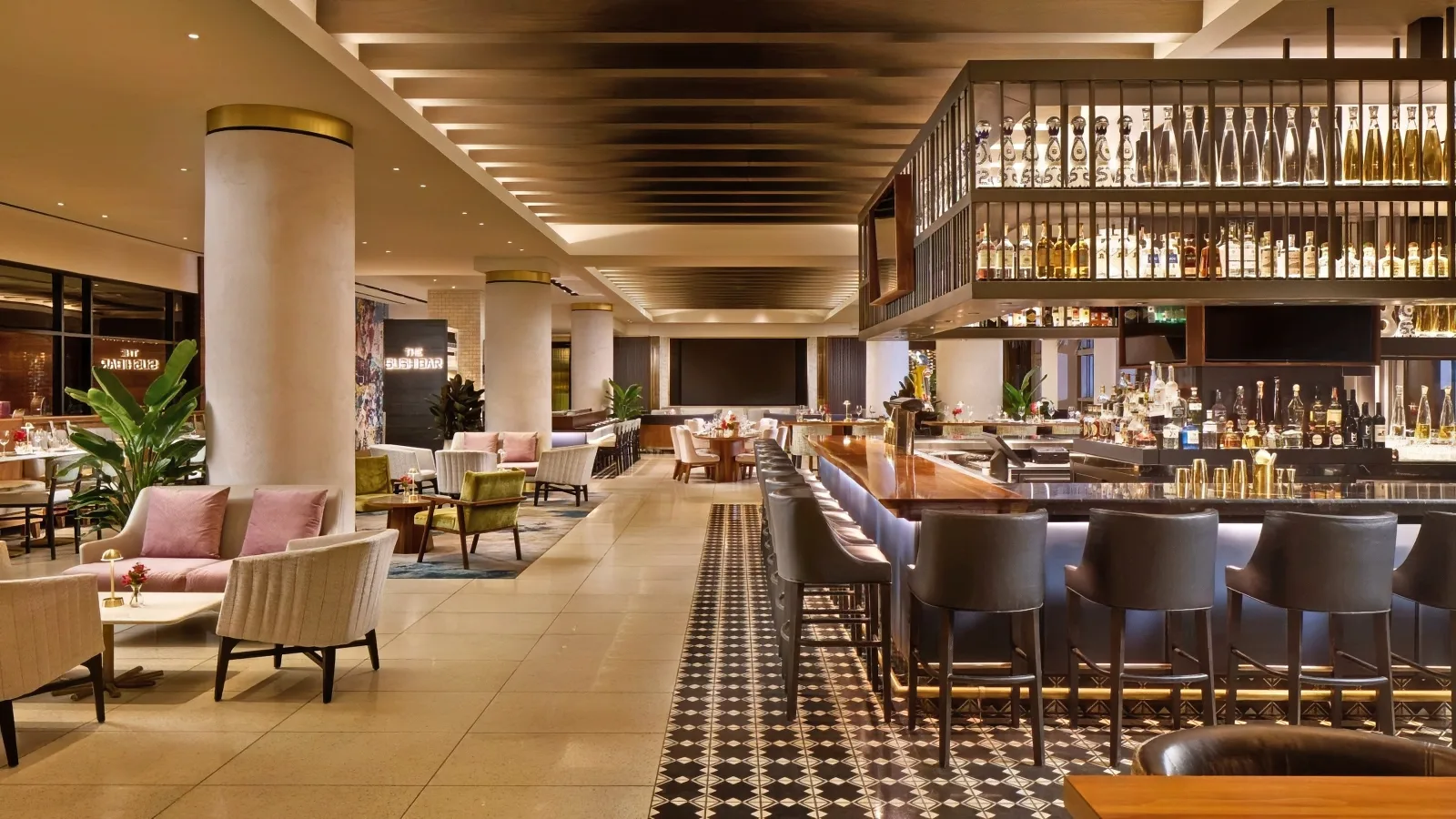
Miami brings a specific acoustic profile to the table — coastal humidity, high ceiling volumes in lobby and amenity spaces, hard tile and stone finishes that read clean on a render and live too long once the room is built. An acoustic consultant working in the city should know the local material library, the LEED targets that local developers actually chase, and the practical alternates that work when the certification path is not on the table.
Commercial Acoustics works with architects, contractors, and developers across hotel, hospital, industrial, and office projects, in Miami and across the country. The work product is the same in every case: a measured or modeled baseline, a target window with reasoning, a treatment recommendation in square feet of NRC, and a finish-spec path the design team can build against.
Conclusion: Miami Acoustic Consulting
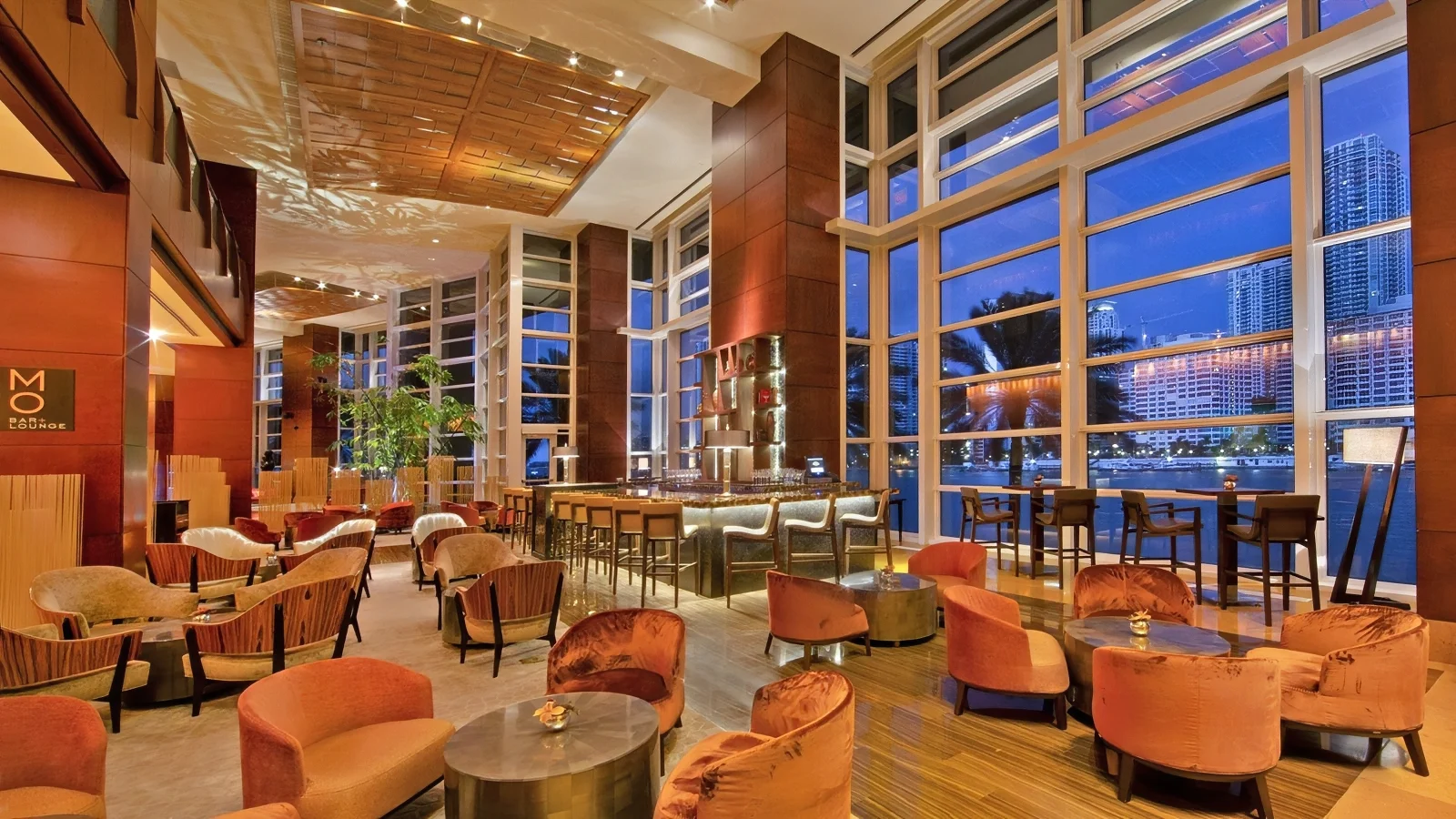
An untreated 4-star hotel amenity lounge in Miami modeled out to 1.8 seconds A-weighted and 6.3 seconds at 1 kHz — unusable for both speech and music programming. Sabin-formula modeling identified two viable treatment paths (2,400 SF for the LEED 0.8-second target, 800 SF for a 1.0-second A-weighted alternate), letting the architect pick the right one before any finish was specified. If you are sizing acoustic risk on a Miami project of your own, send us the drawing set and we will run the numbers.
FAQs: Miami Acoustic Consultant
What does a Miami acoustic consultant actually do?
A Miami acoustic consultant models reverberation, sound transmission, and speech privacy on a project before construction locks in the finishes. The work covers measured baselines or drawing-based models, target RT60 windows for the program, treatment recommendations in square feet of NRC, and finish-spec paths the design team can build against without surprises.
What RT60 should a hotel amenity lounge target?
For a mixed speech and music space, 0.8 to 1.0 seconds RT60 is the working window. LEED v4 sets the strict end at 0.8 seconds octave-band; an A-weighted 1.0-second alternate hits the same usability bar at lower cost. Above 1.5 seconds RT60, speech intelligibility breaks down regardless of program.
How much acoustic treatment does a 4-star hotel lounge need?
Treatment depends on room volume, baseline RT60, and target window. The Miami amenity lounge here came in at 800 square feet of NRC 1.00 panel and fabric wall mix for the cost-effective path, or 2,400 square feet of full-coverage treatment for the LEED-aligned path. Both solve the speech-intelligibility problem.
Can acoustic analysis happen from drawings only, before construction?
Yes. Sabin-formula modeling uses room geometry plus the manufacturer NRC and absorption coefficients of every proposed finish. Catching the problem at the drawing stage is the cheapest moment to fix it — finish swaps cost nothing on paper and a fortune after install. That is the entire point of pre-construction acoustic consulting.

Walker Peek|Founder & CEO, Commercial Acoustics
Walker founded Commercial Acoustics in 2013 to bring aerospace-grade engineering discipline to soundproofing, and runs the firm as CEO from its 12,000 sq ft Tampa production facility. The company designs custom acoustic panels, sound membranes, and masking systems for multi-family, hospitality, healthcare, and commercial projects across the US — built around Walker’s invention, Wall Blokker, an EVA-based sound barrier that hits STC 50-plus at roughly $1 per square foot installed.
A Jacksonville native, Walker spent five years at Kennedy Space Center with Craig Technologies before founding Commercial Acoustics — certifying aerospace manufacturing to the AS9100 standard and leading Six Sigma Black Belt process-improvement teams on NASA programs. He is a certified Industrial Noise Control Engineer and the author of Architectural Acoustics: A Practical Handbook.
