
Table of Contents
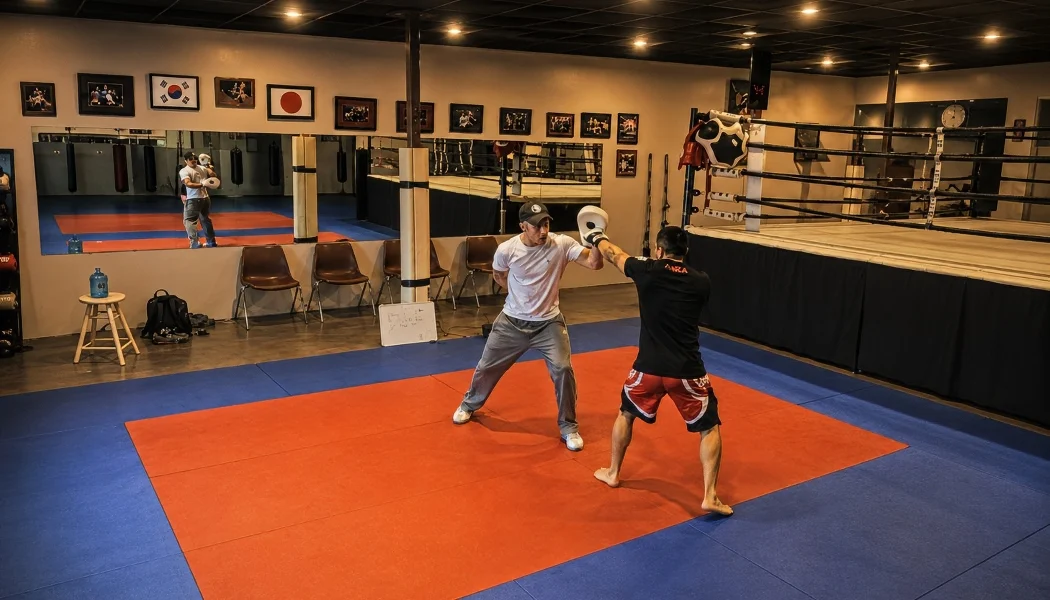
Project Overview: Fitness Studio Soundproofing
- Project: Franchise Kickboxing Studio Build-Out in a Retail Strip
- Location: Alpharetta, Georgia (I Love Kickboxing franchise)
- Facility Type: Group Fitness Studio Inside a Multi-Tenant Retail Building
- Issue: Loud Class Music and Bag Impact Bleeding Into Neighboring Tenants
- Architectural Solution: Wall Blokker Pro Overlay Plus 5/8″ Drywall — STC 55 Demising Walls
- Operational Solution: Centrally-Controlled Audio System with Capped dBA Limits
Why Retail Strip Tenants Don’t Tolerate Gym Noise
Retail strip buildings are designed for low-decibel uses. Day spas, salons, dental offices, accountant suites, and retail boutiques expect a quiet ambient floor and rarely have any acoustic treatment in the demising walls beyond a single layer of drywall on each side of a stud cavity. That assembly is fine when both tenants are quiet.
A franchise fitness studio breaks that assumption hard, which is why fitness studio soundproofing has to account for music, wall transmission, and impact together. Class music runs above 85 dBA. Bag impact, footwork, and instructor cues add airborne and structure-borne noise on top. The neighboring tenant on the other side of the wall hears all of it through an assembly that was never rated for that source level.
Tenant complaints escalate quickly when one operator’s revenue depends on a quiet environment. Landlords write lease cure clauses that put the noise problem on the gym operator. The fix has to land before the lease violations stack. The general framing of how speech, music, and impact noise travel through walls lives in our airborne vs structure-borne noise guide.
The OSHA Class-Volume Problem
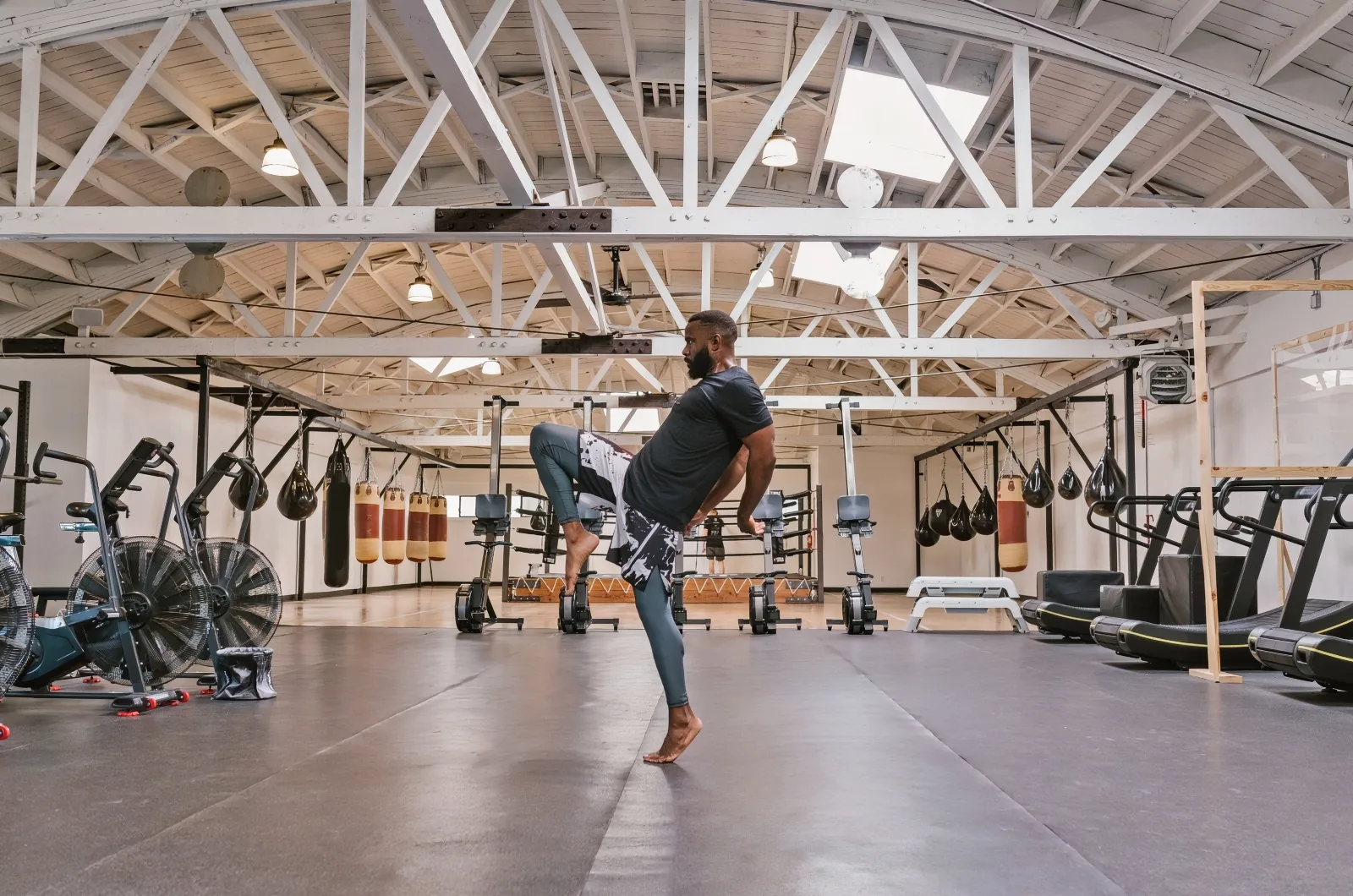
- OSHA Permissible Exposure: 90 dBA averaged over an 8-hour shift
- Action Level: 85 dBA averaged over 8 hours triggers a hearing-conservation program
- Typical Class Music: 90 to 100 dBA at the speaker stack, often higher near the front row
- Trainer Exposure: Multiple back-to-back classes can stack into the OSHA action range
OSHA permissible exposure limits are written for industrial workplaces, but the math applies to fitness studios with full-day class schedules. A trainer running five back-to-back classes at 90 dBA for an hour each is sitting at the OSHA permissible exposure ceiling before any quiet time is factored in. Members in the front row absorb similar exposure during their session.
The trainer-by-trainer audio preference problem makes it worse. One instructor likes 90 dBA, the next pushes 98 dBA, the third runs 95 dBA but routes more bass through the subwoofer. Without a central cap, the loudest setting becomes the de facto venue volume. The deeper background on how dBA changes are perceived as the source ramps up lives in our how sound travels guide.
Architectural Side: STC 55 Demising Wall Overlay
- Membrane: Wall Blokker Pro Mass-Loaded Sound Barrier
- Mounting: Adhered Directly Over the Existing Drywall on the Demising Walls
- Finish Layer: 5/8″ Drywall Over the Membrane
- STC Target: 55 (above retail-tenant tolerance threshold)
- Trade-Off Avoided: Demolition, Second Stud Wall, Loss of Workout Floor
STC 55 is well above any building code minimum. The reason a fitness operator needs to push that high is the source-side noise level. Class music at 95 dBA on one side of an STC 50 wall lands at roughly 45 dBA on the receiving side, which is enough to disrupt a quiet office, dental practice, or spa next door. STC 55 cuts that bleed-through to a level most retail neighbors will tolerate.
The membrane overlay plus added drywall hits STC 55 without demolishing the existing demising wall, building a second stud wall, or eating workout floor. The product page with full spec data lives at Wall Blokker Pro mass-loaded membrane.
This is the same overlay technique used on residential adaptive reuse projects, but pushed to a higher target STC because retail tenants do not tolerate as much bleed-through as residents do. For a sister case study that ran the same Wall Blokker Pro overlay logic on residential demising walls instead of a retail tenant assembly, see the adaptive reuse apartment soundproofing case study.
Operational Side: Capped Class Audio dBA
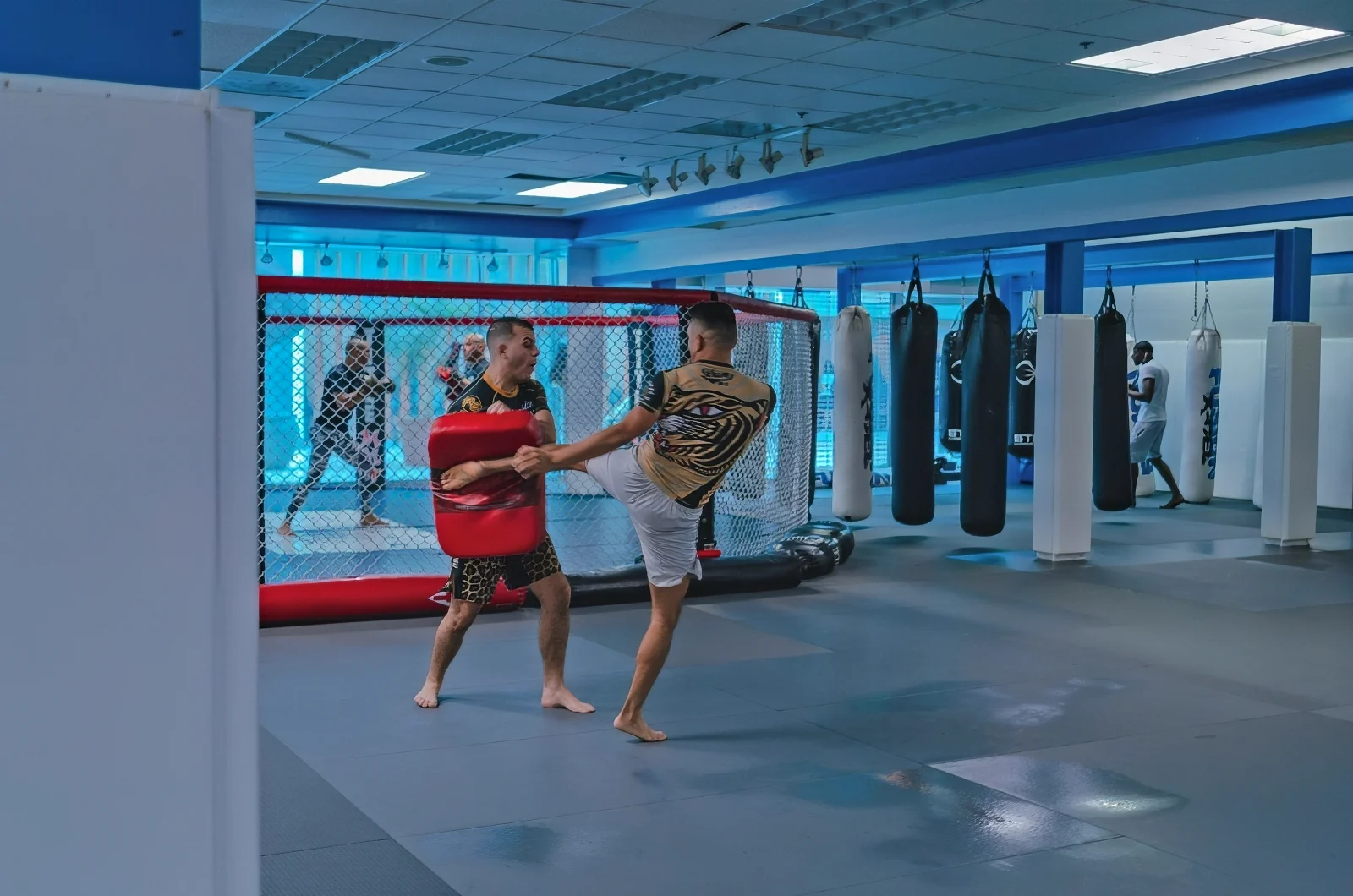
- System: Centrally-Controlled Audio with Manager-Level Volume Limit
- Cap: 90 dBA Average at the Class Floor
- Lockout: Trainers Cannot Override the Cap From the Class Floor
- Outcome: Predictable Source Level Independent of Trainer Preference
The architectural overlay is the floor. The operational cap is the ceiling. Both are needed because the demising wall only knows what the source side delivers. Push the source above the design assumption and the assembly underperforms its rated transmission loss.
A centrally-controlled audio system fixes the trainer-preference creep. The volume cap is set in software and locked at the manager level. Trainers run their classes at whatever level they prefer up to the cap, but cannot push the system past it. That keeps the source level predictable for the demising wall design and for OSHA exposure tracking on staff.
Fitness Studio Acoustic Targets by Format
Fitness studio acoustic targets shift with the format. Kickboxing and HIIT studios run the loudest source levels. Yoga and Pilates run quietest. The table below maps demising wall STC and class dBA caps across four common formats.
| Studio Format | Demising Wall STC | Class Audio Cap | Notes |
|---|---|---|---|
| Kickboxing / HIIT (Retail Tenant) | STC 55+ | 90 dBA | Bag impact adds structure-borne noise |
| Indoor Cycling | STC 55+ | 90 to 92 dBA | Heavy subwoofer use, low-frequency leak risk |
| Yoga / Pilates / Barre | STC 50 | 75 to 80 dBA | Source-side already low |
| CrossFit / Free Weight | STC 55+ | 88 to 92 dBA | Weight drops dominate, floor impact treatment also needed |
The kickboxing studio landed in the top row at STC 55 demising walls and a 90 dBA class audio cap. That gave the franchise a defensible noise profile to share with the landlord and the neighboring tenants during lease conversations.
Conclusion: Fitness Studio Soundproofing
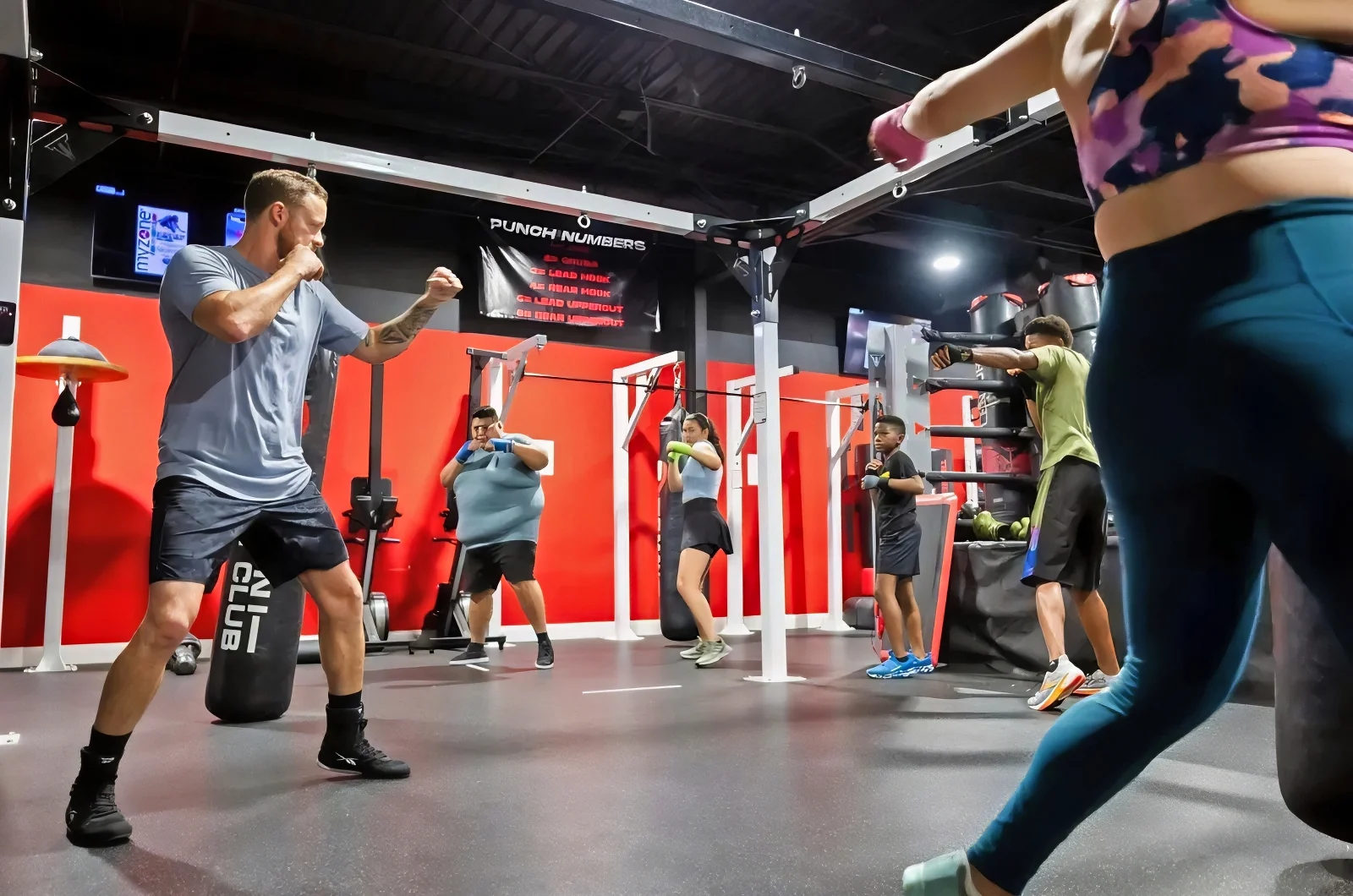
Fitness studio noise is a two-axis problem. The demising wall has to be rated for the source level the studio will actually generate. The class audio system has to be capped so the source level cannot drift past the design assumption. Architectural and operational moves work together. Either one alone leaves the franchise exposed to lease violations and OSHA hearing-exposure issues. More on the team behind fitness studio soundproofing for franchise operators scoping similar build-outs.
FAQs: Fitness Studio Soundproofing
What STC do gym demising walls need in a retail tenant context?
STC 55 or higher. Retail neighbors run quiet ambient noise floors and do not tolerate as much bleed-through as residential tenants. STC 50 (residential code) leaves about 45 dBA of class music audible next door, which is enough to disrupt a quiet office, spa, or boutique.
How loud is a typical fitness class?
Class music typically runs 90 to 100 dBA at the speaker stack, often higher in the front row. OSHA permissible exposure is 90 dBA averaged over an 8-hour shift. Trainers running multiple back-to-back classes can hit the OSHA action level without volume management.
Why use a centrally-controlled audio system in a fitness studio?
Trainer audio preferences vary widely, and the loudest setting becomes the de facto venue volume without a cap. A central system locks the maximum dBA at the manager level so individual trainers run their classes up to the cap but cannot push past it.
Does a Wall Blokker Pro overlay add a lot of wall depth?
No. The membrane plus a single 5/8″ drywall finish layer adds substantially less depth than building a second stud wall or installing resilient channels. That preserves workout floor area, which matters for franchise unit economics measured in revenue per square foot.

Walker Peek|Founder & CEO, Commercial Acoustics
Walker founded Commercial Acoustics in 2013 to bring aerospace-grade engineering discipline to soundproofing, and runs the firm as CEO from its 12,000 sq ft Tampa production facility. The company designs custom acoustic panels, sound membranes, and masking systems for multi-family, hospitality, healthcare, and commercial projects across the US — built around Walker’s invention, Wall Blokker, an EVA-based sound barrier that hits STC 50-plus at roughly $1 per square foot installed.
A Jacksonville native, Walker spent five years at Kennedy Space Center with Craig Technologies before founding Commercial Acoustics — certifying aerospace manufacturing to the AS9100 standard and leading Six Sigma Black Belt process-improvement teams on NASA programs. He is a certified Industrial Noise Control Engineer and the author of Architectural Acoustics: A Practical Handbook.
