
Table of Contents
Project Overview: Hotel Penthouse Ceiling Soundproofing
- Project: Penthouse Ceiling Soundproofing for a Condo-Hotel Below a Rooftop Bar
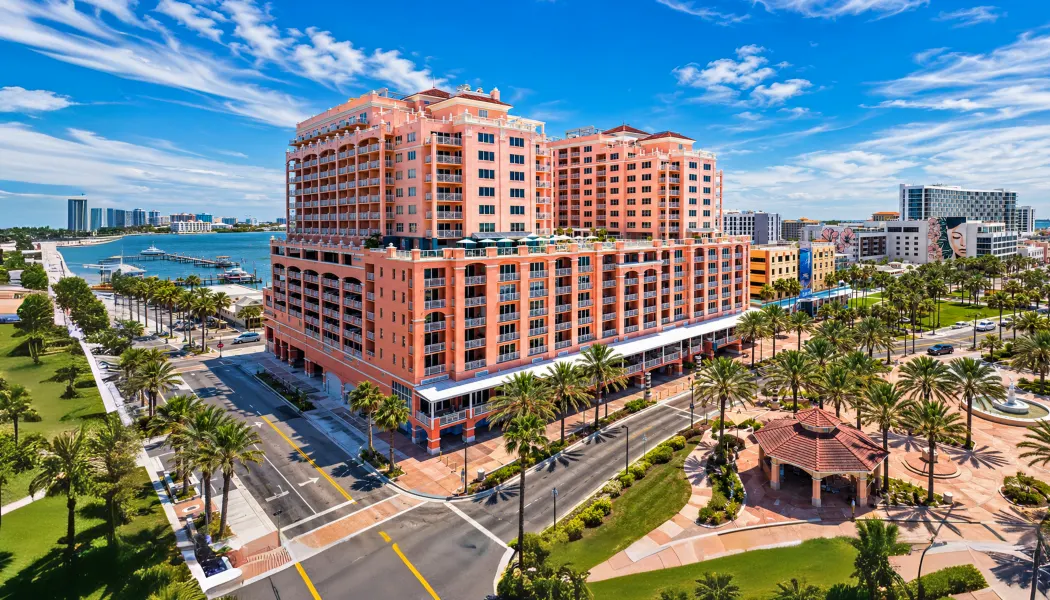
- Client: Hyatt Condo, Clearwater, Florida
- Facility Type: Hotel-Condo Hybrid With Rooftop Bar Programming Above the Penthouse
- Issue: Bar Patron Noise From Above Bleeding Into the Penthouse Suite at Nights and Weekends
- Constraint: Rooftop Deck Already Finished Beyond the Waterproof Limit — No Source-Side Treatment Possible
- Solution: Wall Blokker Pro Membrane Installed on the Penthouse Ceiling From Below
Why Penthouse Suites Sit in the Worst Acoustic Position
Penthouses sell on the view. The unit at the top of a tower has the best sightlines, the most natural light, and the highest revenue per night or per square foot. The trade-off most operators undersell is the acoustic position. The penthouse sits directly under whatever the property does on the roof.
Modern hotel-condo properties almost always activate the roof. A rooftop bar, a pool deck, an event lawn, or a mechanical equipment array — all of those generate noise that travels straight down through the floor-ceiling assembly into the penthouse below. The same view that drives the rate also creates the noise problem.
Hotel acoustic codes do not regulate this directly. Brand standards do. Most major hotel brands hold demising and floor-ceiling assemblies to STC 55 to 60 in standard rooms and above 60 in luxury suites. The deeper read on hotel STC standards lives in our soundproofing a hotel guide.
When the Source Is Inaccessible: The Rooftop Deck Constraint
- Textbook Approach: Treat the Source-Side Floor Above the Receiving Space
- Problem at Hyatt Clearwater: Rooftop Deck Already Built and Sealed
- Why That Matters: Tearing Up the Deck Breaks the Building Waterproof Envelope
- Forced Path: Treat the Receiving-Side Ceiling From Below Instead
The textbook acoustic move for a noise-from-above problem is to treat the floor of the source space. Add an underlayment, a floating floor, or a decoupled assembly between the noise generator and the structure. That is what works on between-floor multi-family stacks and event-venue-above-kitchen scenarios.
Rooftop bars and pool decks change the math. Once the rooftop deck is finished and the building waterproofing layer is in place, opening that surface to add acoustic treatment risks the entire weatherproof envelope. The cost and risk of compromising the roof waterproofing is almost always greater than the acoustic benefit, so source-side treatment is off the table.
That forces the fix to the receiving side. The penthouse ceiling becomes the only surface available, which means the noise control has to be installed from below into the existing ceiling assembly. For the floor-side counterpart of this same vertical noise problem (where source access WAS available), see the retrofit soundproofing between floors case study.
The Wall Blokker Pro Ceiling Retrofit
- Membrane: Wall Blokker Pro Mass-Loaded Sound Barrier
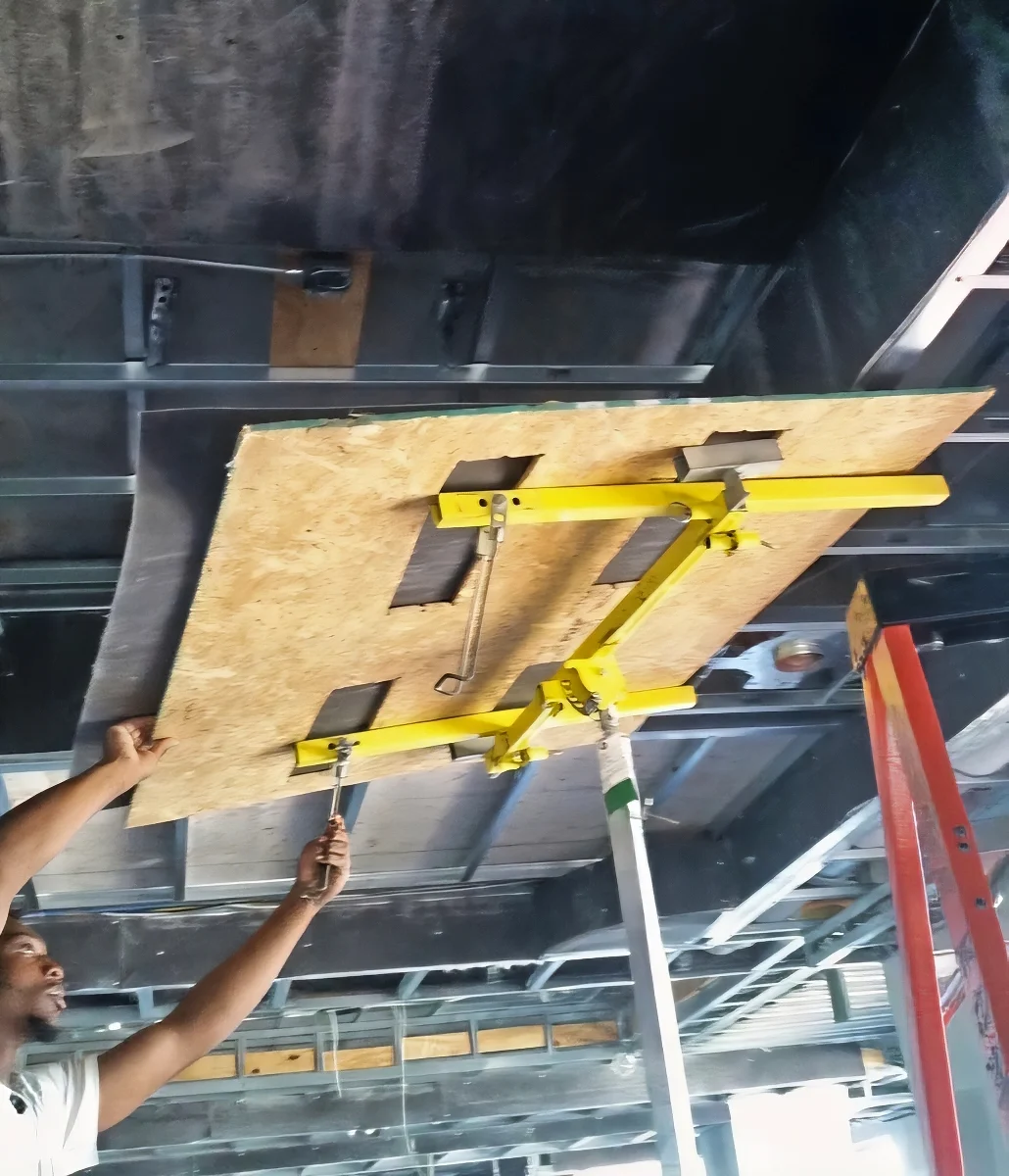
- Application: Installed Across the Penthouse Ceiling From Below
- Function: Adds Mass and Decouples the Existing Ceiling Drywall From the Structure Above
- Result: Significant Cut to Airborne Transmission From the Rooftop Bar
Wall Blokker Pro is named for wall use but the membrane works on any drywall plane. Installed on a ceiling from below, it adds the same mass and decoupling benefit it delivers in a wall assembly. The mass blocks airborne sound. The decoupled mounting prevents the membrane from coupling rigidly to the structure above.
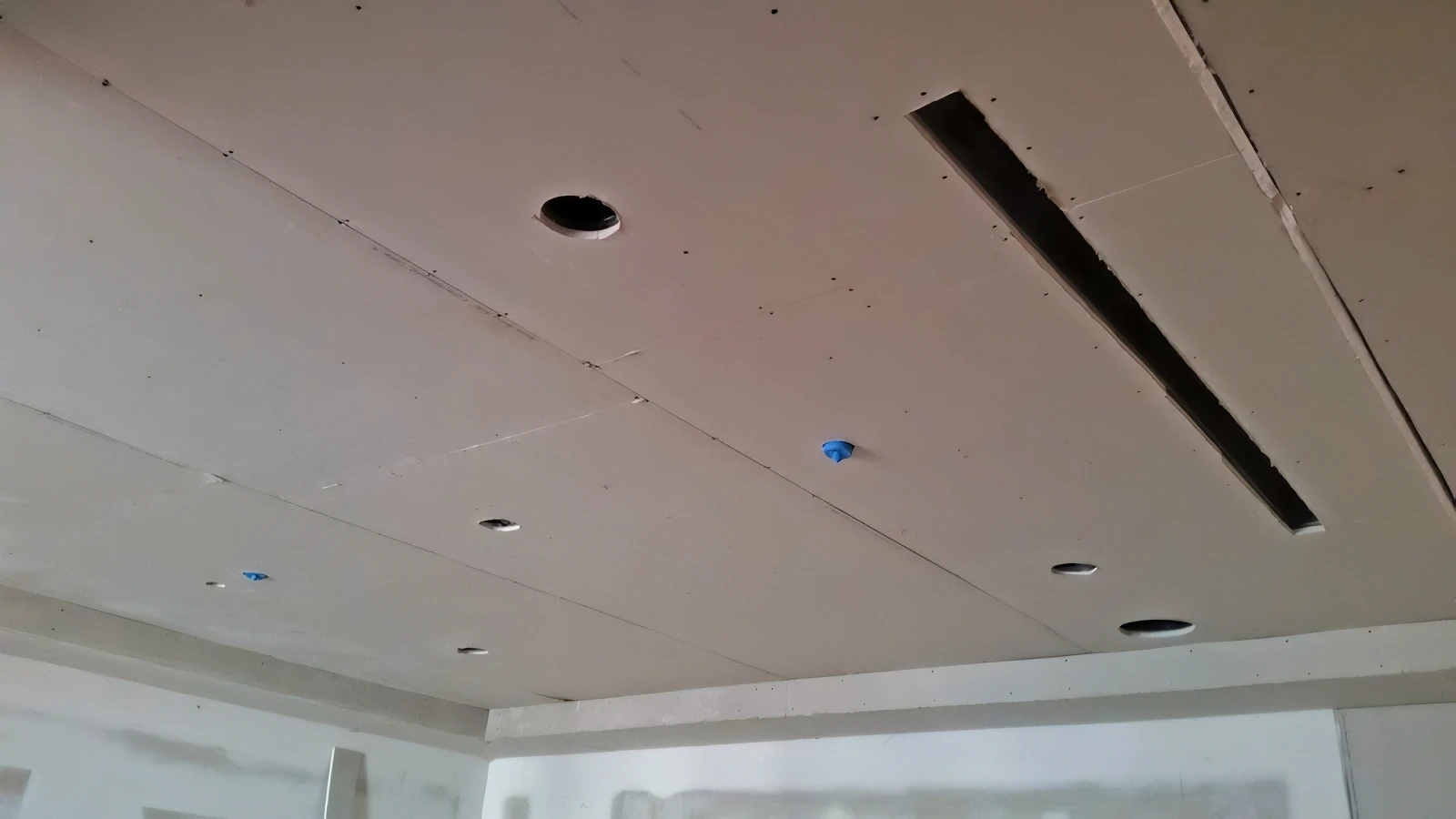
The Hyatt Clearwater penthouse install put the membrane against the existing ceiling, then re-finished with a new drywall layer below. The completed assembly looks identical to the original ceiling from inside the unit, but performs significantly better against airborne transmission from the bar above.
The product page with full spec data and STC contribution figures lives at the Wall Blokker Pro mass-loaded membrane page.
Working Around Existing Soffits and Double-Rack Ceilings
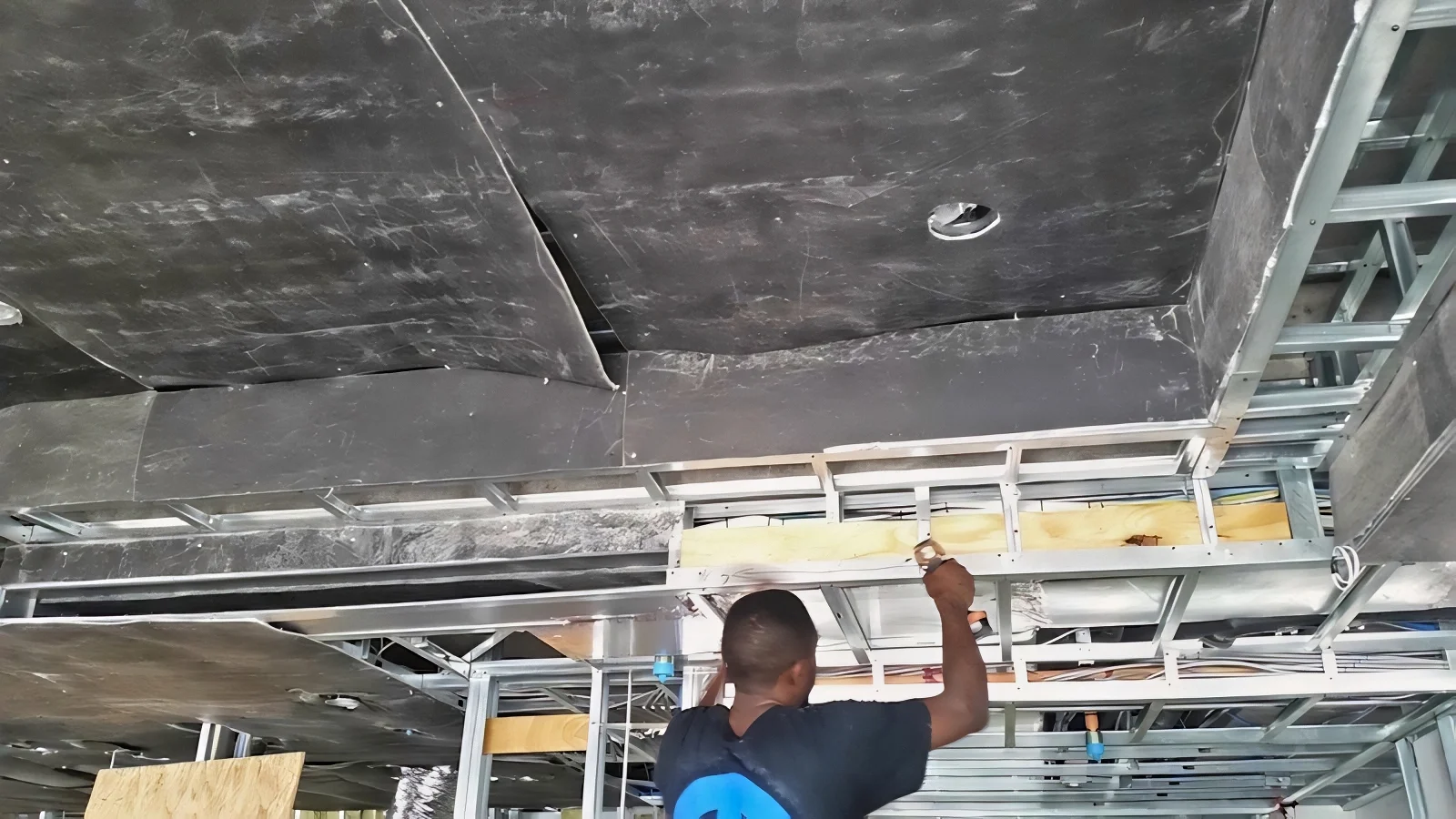
The Hyatt Clearwater penthouse ceiling was not flat. The build-out had a double-rack design with soffits running along several walls to hide pipes and electrical. Those soffits looked good and solved a routing problem, but they did not contribute meaningfully to the acoustic performance of the assembly.
The membrane retrofit had to follow the existing geometry. That meant cutting and fitting the Wall Blokker Pro across the flat field of the ceiling, then continuing the membrane up and around the soffit faces so airborne sound did not bypass the treatment through the unfinished soffit interior. Skipping the soffit faces would have left a continuous flanking path around the rest of the membrane.
Soffit-continuous coverage is one of the underrated decisions on a ceiling soundproofing retrofit. The flat field tends to get treated correctly because it is the easy part. The bumps, drops, and changes in plane are where the field-tested transmission loss often falls below the rated lab value.
Hotel Ceiling Soundproofing Targets by Noise Source
Hotel ceiling soundproofing targets shift with what is happening directly above the receiving space. A rooftop bar generates the loudest sustained noise, a mechanical room generates the loudest low-frequency rumble, and a regular guest room above generates intermittent normal-occupancy noise. The table below maps the working windows.
| Source Above | Floor-Ceiling STC Target | IIC Target | Treatment Approach |
|---|---|---|---|
| Rooftop Bar / Active Programming | STC 60+ | IIC 60+ | Membrane plus added drywall on penthouse ceiling |
| Rooftop Mechanical Equipment | STC 55+ | IIC 65+ | Membrane plus isolation pads on equipment |
| Regular Guest Room Above | STC 55 (brand standard) | IIC 50 to 55 | Standard floor-ceiling assembly, no retrofit |
| Corridor or Service Traffic | STC 50 | IIC 50+ | Underlayment on corridor floor, perimeter seal |
The Hyatt Clearwater penthouse landed in the top row at the rooftop-bar target. The Wall Blokker Pro ceiling retrofit raised the floor-ceiling STC into the brand-standard band for luxury suites, which is what the property needed to hold the penthouse rate without taking a complaint hit on weekend nights.
Conclusion: Hotel Penthouse Ceiling Soundproofing
Penthouse acoustic problems are usually source-from-above problems with no source-side access. The rooftop deck waterproofing locks the floor above. That forces the fix to the receiving-side ceiling and requires a membrane retrofit installed from below. Wall Blokker Pro on the existing ceiling, run continuous through soffits, hits the brand-standard luxury-suite STC band without compromising the building envelope. More on the team behind hotel ceiling soundproofing for ownership groups scoping similar penthouse retrofits.
FAQs: Hotel Penthouse Ceiling Soundproofing
How do you soundproof a hotel ceiling when you can’t access the floor above?
Treat the receiving-side ceiling from below. A mass-loaded membrane like Wall Blokker Pro installed against the existing ceiling adds airborne transmission loss without touching the source-side floor or breaking the building waterproofing envelope above.
What STC do penthouse hotel ceilings need below a rooftop bar?
STC 60 or higher. Standard hotel brand standards target STC 55 for guest rooms, but a penthouse below an active rooftop bar needs more headroom because the source-side noise floor runs higher than a normal occupancy unit above.
Why can’t you just treat the rooftop deck floor instead?
Once the rooftop waterproofing membrane is installed and the deck is finished, opening the floor to add acoustic treatment risks the building’s weatherproof envelope. The cost and risk of compromising waterproofing usually exceeds the acoustic benefit, so receiving-side ceiling retrofit is the path.
Does Wall Blokker Pro work on a ceiling the same as a wall?
Yes. The membrane delivers the same mass and decoupling benefit on a ceiling plane as on a wall. The product was named for the wall use case but performs identically on any drywall plane when installed with the same mounting approach.

Walker Peek|Founder & CEO, Commercial Acoustics
Walker founded Commercial Acoustics in 2013 to bring aerospace-grade engineering discipline to soundproofing, and runs the firm as CEO from its 12,000 sq ft Tampa production facility. The company designs custom acoustic panels, sound membranes, and masking systems for multi-family, hospitality, healthcare, and commercial projects across the US — built around Walker’s invention, Wall Blokker, an EVA-based sound barrier that hits STC 50-plus at roughly $1 per square foot installed.
A Jacksonville native, Walker spent five years at Kennedy Space Center with Craig Technologies before founding Commercial Acoustics — certifying aerospace manufacturing to the AS9100 standard and leading Six Sigma Black Belt process-improvement teams on NASA programs. He is a certified Industrial Noise Control Engineer and the author of Architectural Acoustics: A Practical Handbook.
