

Table of Contents
Project Overview: Live Music Restaurant Acoustic Treatment
- Project: Restaurant Acoustic Treatment for a Live Music Dining Room
- Client: Naples Flatbread, Naples, Florida
- Facility Type: Modern Restaurant with Stage and Live Music Programming
- Issue: 30-Foot Clear Height Plus Sealed Surfaces Plus Live Music Equals Acoustic Chaos
- Solution: 75 NRC 1.0 Acoustic Panels — 50 Wall-Mounted, 25 Ceiling-Mounted
- Outcome: Reverberation Cut to a Window That Holds Both Conversation and Live Music Cleanly
Why Restaurants With Live Music Have a Double Acoustic Problem
A standard restaurant has one acoustic problem to solve. Diner-generated noise (conversation, glassware, kitchen sounds) needs to be controlled enough that guests can hold a table conversation without raising voices. That single problem is hard but well understood.
A restaurant with a live music stage has two problems running at once. The dining-room conversation problem still applies. On top of that, the live performance has to remain intelligible to the audience near the stage and tolerable to the diners further away. Both targets pull the room toward different reverberation profiles.
The general framing on how reverberation interacts with speech and music intelligibility lives in our restaurant acoustics design guide. The key insight is that the same room cannot be both a quiet dining room and a hot music venue. The acoustic target for a live-music restaurant sits in a middle band that compromises both.
Why Tall Ceilings Make the Problem Worse
- Naples Flatbread Clear Height: Approximately 30 Feet
- Standard Restaurant Clear Height: 9 to 12 Feet
- Effect on Reverb: Volume Triples or Quadruples for the Same Floor Area
- Acoustic Implication: Sound Energy Has More Cubic Volume to Bounce Through
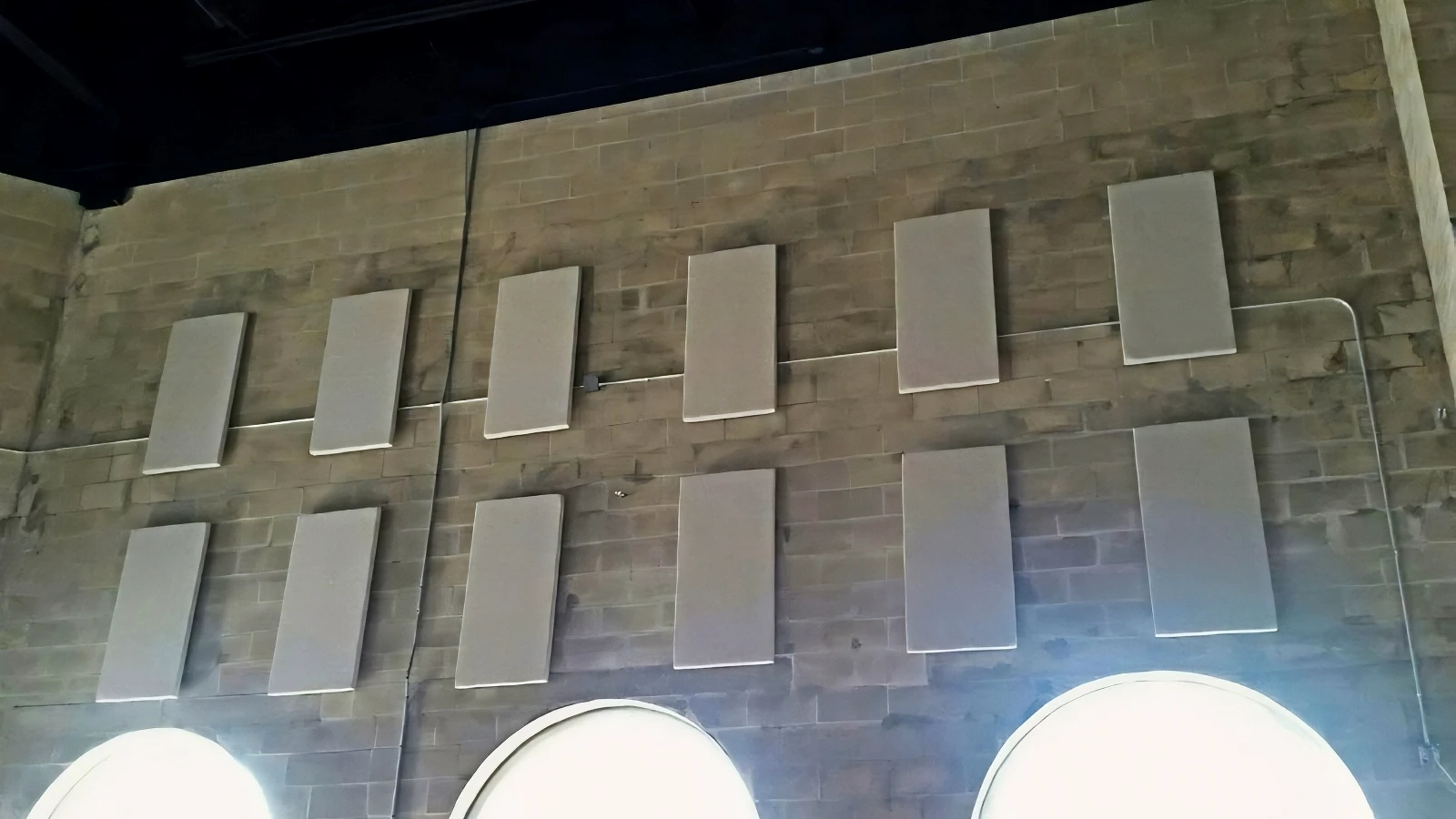
Reverberation time scales with the cubic volume of a space, not the floor area. A 30-foot clear height triples the air volume relative to a standard 10-foot ceiling for the same restaurant footprint. That means three times the sound energy can persist in the room before the room finally absorbs it.
Modern restaurants love tall ceilings for the visual feel. Exposed structure, suspended fixtures, and an open feeling all make a space read as upscale. The acoustic price for that look is that the room needs more absorption — not just per square foot of floor, but additional treatment in the upper third of the volume that a normal ceiling install does not reach.
The Wall and Ceiling Panel Split Strategy
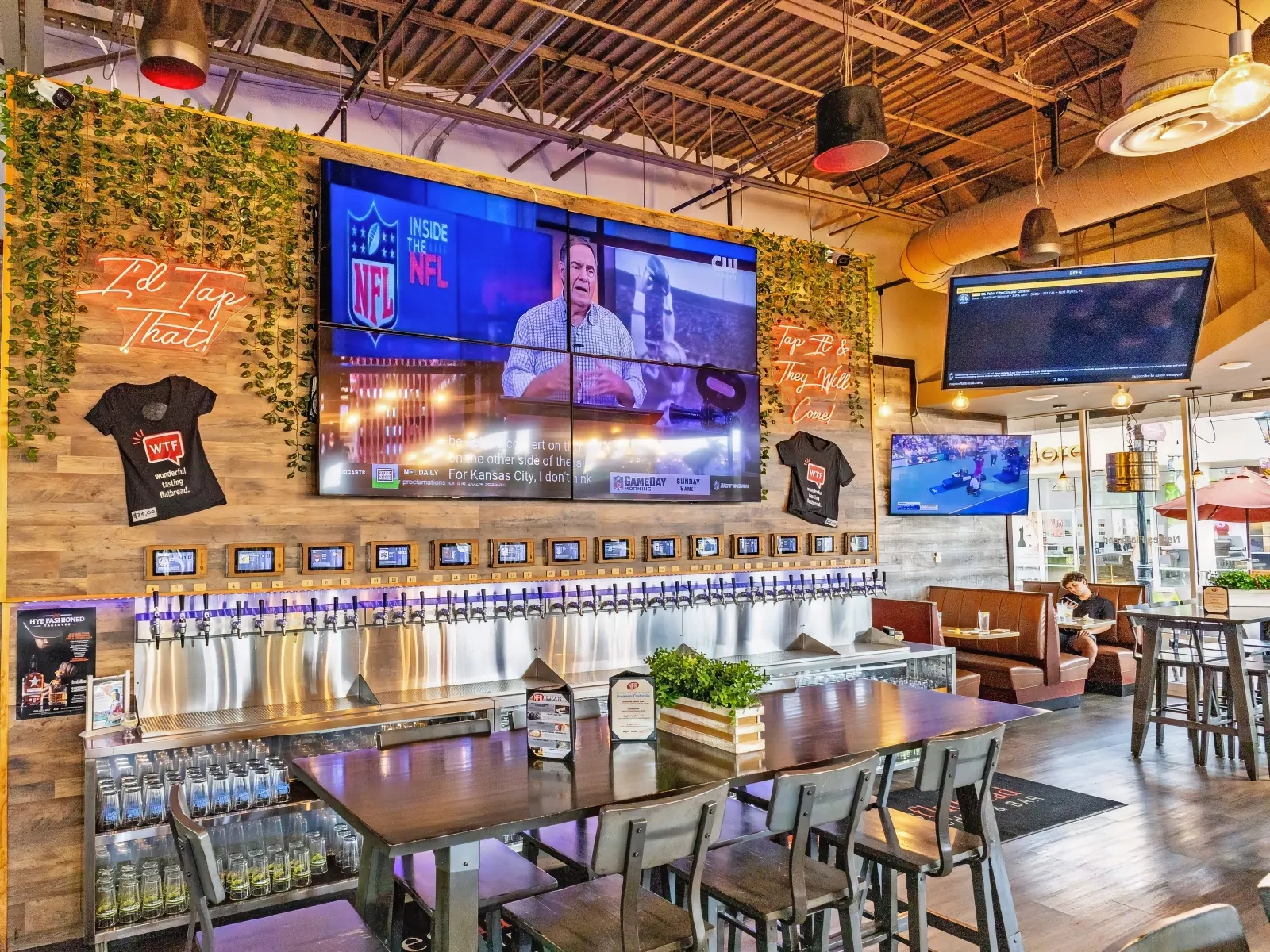
- Total Panels: 75 Acoustic Sound Panels, 2-Foot by 4-Foot, 2-Inch Depth
- Wall Coverage: 50 Panels Mounted on Restaurant Walls
- Ceiling Coverage: 25 Panels Mounted on the Restaurant Ceiling
- Hardware: Drywall Anchors and Rotofast Anchors for Snug Long-Term Attachment
Most restaurant installs go either wall-only or ceiling-only. The Naples Flatbread project ran both because the room demanded it. The 50/25 wall-to-ceiling ratio puts roughly two-thirds of the absorption at the elevation where most diner-generated noise originates and one-third up high to handle the live-music spread and the upper-volume reverberation.
The wall placement also handles flutter echo between parallel surfaces. Two facing walls without absorption produce a slap echo that becomes audible the moment the room volume drops. Distributing 50 panels across the wall planes breaks up that flutter without committing the entire treatment budget to one elevation.
For a sister project that ran a ceiling-only acoustic panel install in a high-volume gastropub instead of a live-music restaurant, see the restaurant acoustic ceiling panels case study.
NRC 1.0 Panels at 2-Inch Depth
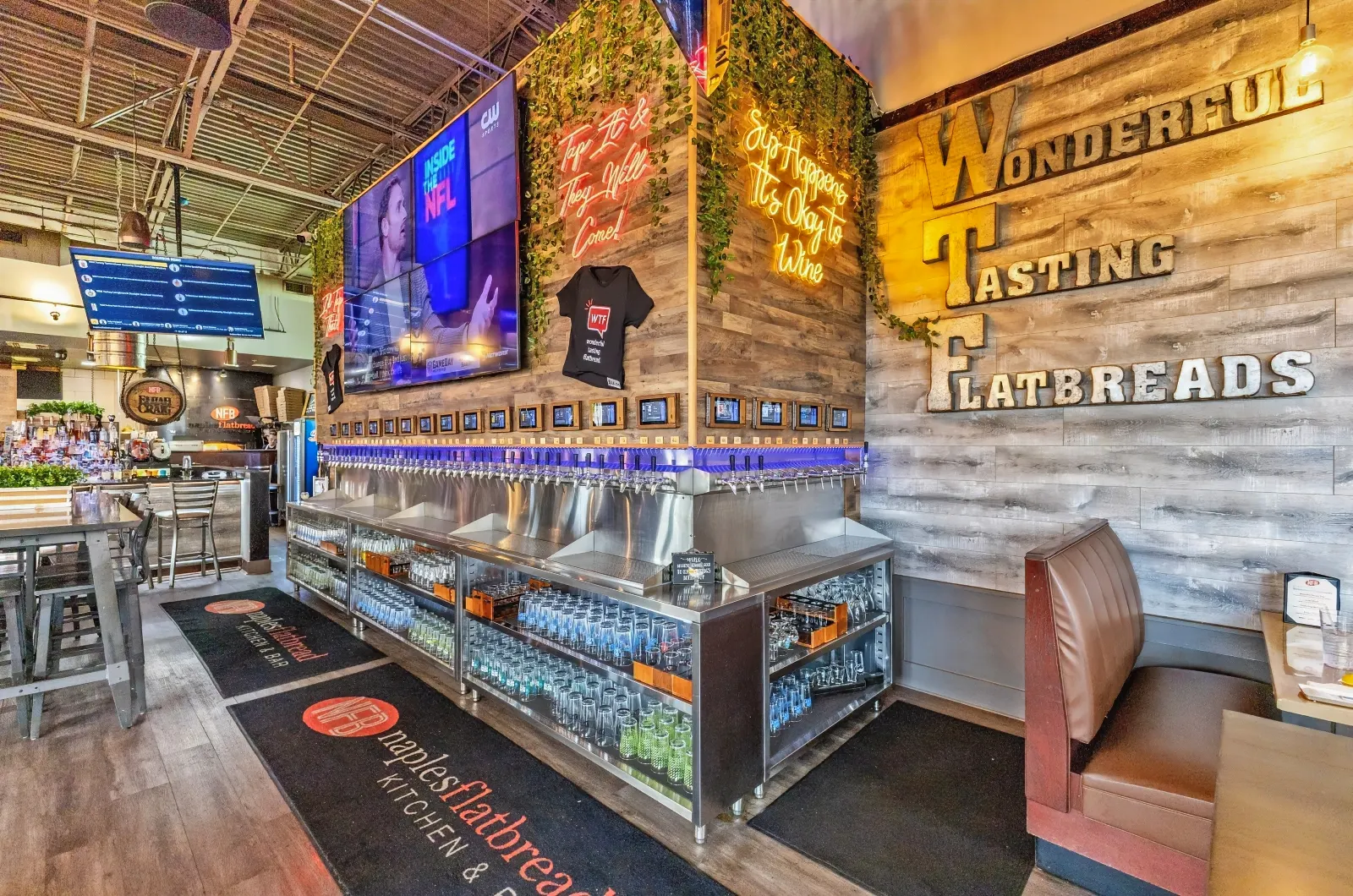
Standard 1-inch acoustic panels run NRC 0.85 to 0.95. The Naples Flatbread project specified 2-inch panels rated at NRC 1.0. The deeper panel reaches further into the lower frequencies that drive both speech and live music intelligibility, which is the right call for a room that has to handle both at once.
NRC 1.0 means functionally complete absorption at the rated frequency band. Sound energy that reaches the panel surface does not bounce back into the room. That is the maximum absorption a single-layer treatment can deliver, and it is what allows the 75-panel total count to work in a 30-foot clear-height room. Lower-NRC panels would have required a higher panel count to hit the same reverberation target.
The product page with the full panel spec lives at the acoustic absorption panel page, with NRC ratings, sizes, depth options, and finish choices.
Live Music Restaurant Acoustic Targets by Format
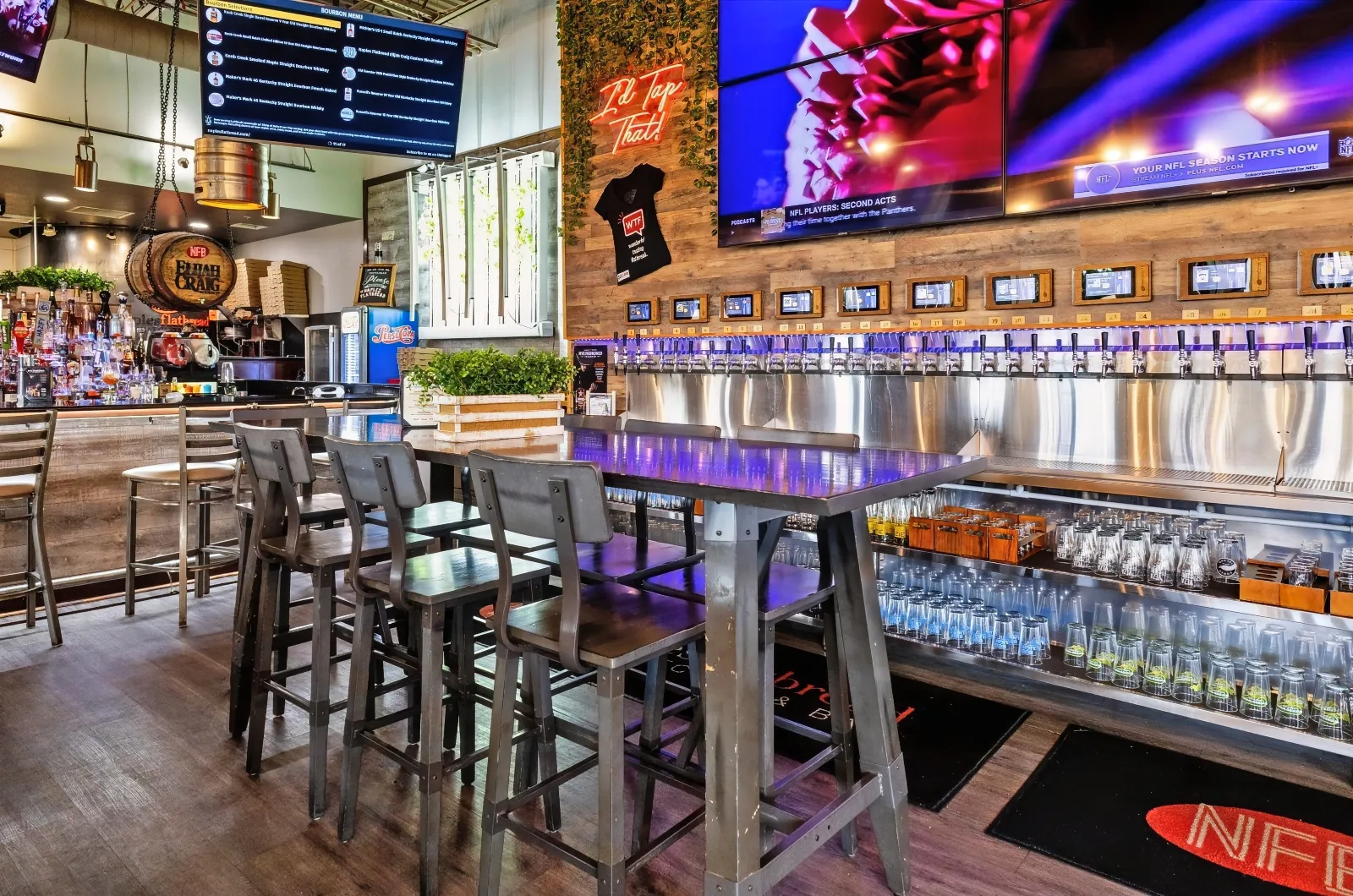
Restaurants that host live music sit in a middle band between quiet dining rooms and dedicated music venues. The reverberation target depends on the format and how often the music plays. The table below maps the working windows across four common configurations.
| Format | Target RT60 | Target NRC | Treatment Approach |
|---|---|---|---|
| Restaurant With Live Music Stage | 0.7 to 0.9 sec | 0.95 to 1.00 | Wall plus ceiling panels, deeper than standard |
| Dedicated Live Music Venue | 0.9 to 1.2 sec | 0.85 to 0.95 | Tuned absorption plus diffusion |
| Standard High-Volume Restaurant | 0.6 to 0.8 sec | 0.85 to 1.00 | Ceiling panels, wall optional |
| Fine Dining | 0.8 to 1.0 sec | 0.70 to 0.85 | Light ceiling absorption only |
Naples Flatbread landed in the top row at the live-music restaurant target window. The 75-panel install split between wall and ceiling delivered the absorption budget needed to land RT60 inside the 0.7 to 0.9 second band that holds both conversation and live music cleanly.
Conclusion: Live Music Restaurant Acoustic Treatment
A restaurant with a live music stage cannot be tuned like a quiet dining room and cannot be tuned like a music venue. The middle band between those two targets is reachable with deeper NRC 1.0 panels distributed across both walls and ceiling at a roughly two-to-one wall-to-ceiling ratio. Naples Flatbread used 75 panels split that way to land the room in the working window. Contact Us for an absorption plan scoped to a specific live-music restaurant footprint.
FAQs: Live Music Restaurant Acoustic Treatment
How is a live music restaurant different from a regular restaurant acoustically?
A regular restaurant only controls diner noise. A live music restaurant has to handle diner noise plus deliver intelligible performance plus stay tolerable for distant tables. The reverberation target sits in a middle band between quiet dining and music venues.
Why do tall ceilings make restaurant acoustics harder?
Reverberation scales with cubic volume, not floor area. A 30-foot clear height triples the air volume of a 10-foot ceiling for the same footprint, which means three times the sound energy persists before the room absorbs it.
Should acoustic panels go on walls, ceilings, or both in a live music restaurant?
Both. The wall-plus-ceiling split handles two problems at once: ceiling panels reduce overall reverberation, and wall panels break up flutter echo between parallel surfaces while absorbing diner noise at the elevation where it originates.
What NRC do live music restaurant acoustic panels need?
NRC 0.95 to 1.00 at 2-inch panel depth. Lower NRC and thinner panels require a higher panel count to hit the same target. Deeper panels reach further into the lower frequencies that drive speech and live music intelligibility.

Walker Peek|Founder & CEO, Commercial Acoustics
Walker founded Commercial Acoustics in 2013 to bring aerospace-grade engineering discipline to soundproofing, and runs the firm as CEO from its 12,000 sq ft Tampa production facility. The company designs custom acoustic panels, sound membranes, and masking systems for multi-family, hospitality, healthcare, and commercial projects across the US — built around Walker’s invention, Wall Blokker, an EVA-based sound barrier that hits STC 50-plus at roughly $1 per square foot installed.
A Jacksonville native, Walker spent five years at Kennedy Space Center with Craig Technologies before founding Commercial Acoustics — certifying aerospace manufacturing to the AS9100 standard and leading Six Sigma Black Belt process-improvement teams on NASA programs. He is a certified Industrial Noise Control Engineer and the author of Architectural Acoustics: A Practical Handbook.
