Table of Contents
Project Overview: Pre-Renovation Acoustic Testing
- Project: Pre-Renovation Reverberation Assessment for a Hospital Atrium
- Client: Moffitt Cancer Center
- Renovation Trigger: Replacement of Existing Wood Flooring With Terrazzo
- Concern: Existing Reverberation Already Generating Complaints During Loudspeaker Events
- Test Method: Type 1 SPL Meter Plus Three Impulse Noise Sources, Multiple Atrium Test Points
- Outcome: Frequency-by-Frequency RT60 Baseline to Quantify Pre-Renovation State and Predict Post-Renovation Impact
Why Hospital Atriums Have Acoustic Challenges
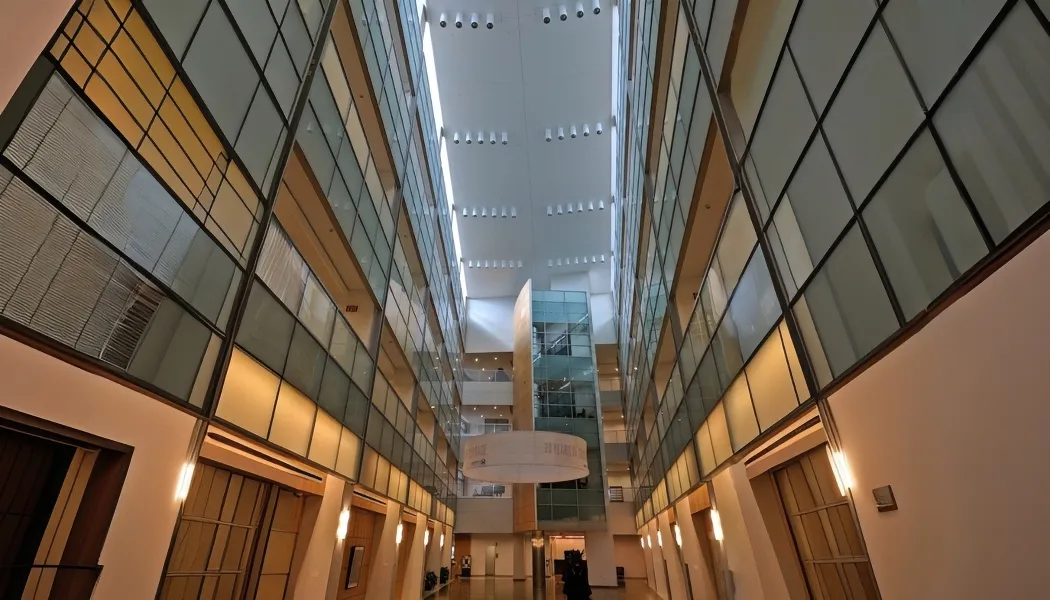
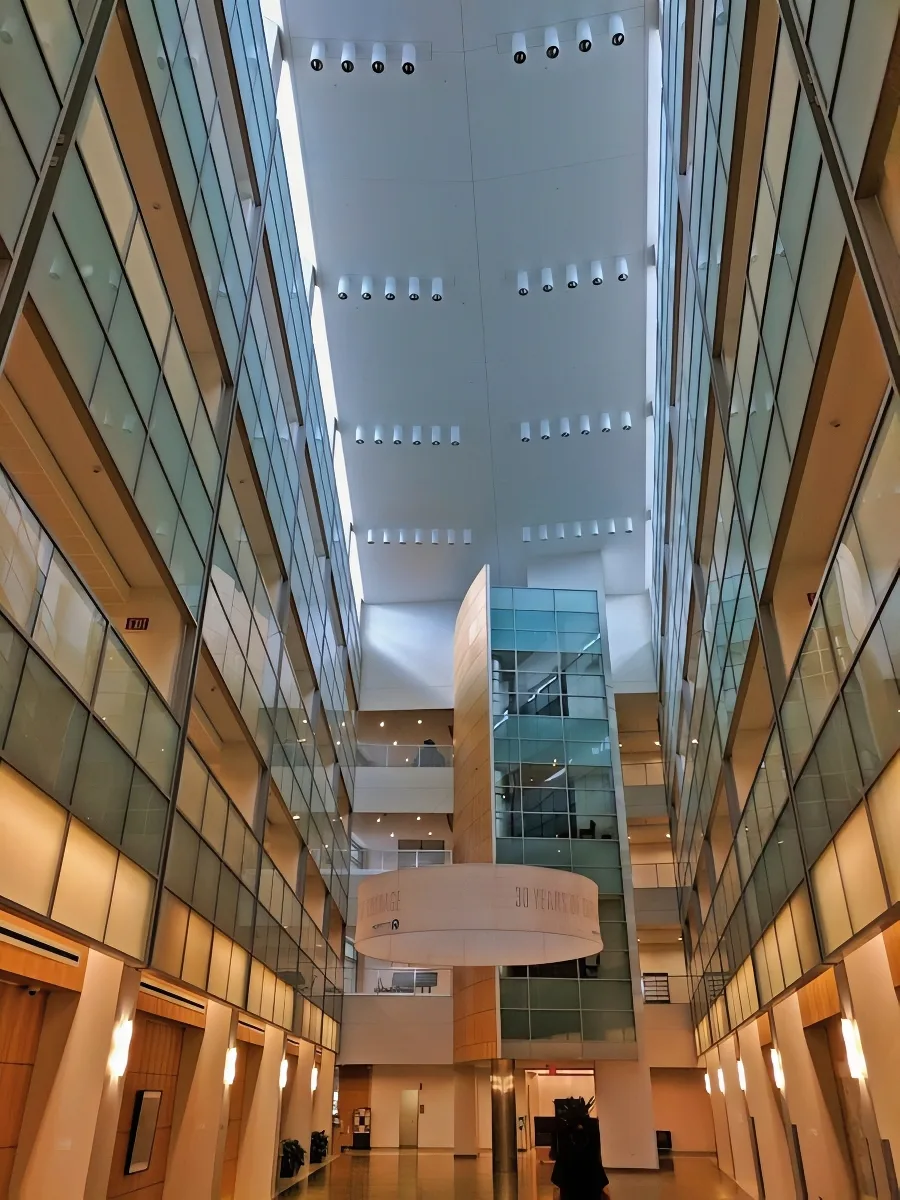
Hospital atriums are designed to do two things at once. Architecturally they signal openness, daylight, and welcome to patients and visitors arriving for treatment. Acoustically they are the worst possible room shape for controlled sound. Tall ceilings, glass curtain walls, polished stone floors, and minimal soft furnishings combine to deliver reverberation times in the 2 to 4 second range — concert hall territory, not hospital territory.
The same atrium often hosts amplified events: speeches at fundraising drives, patient celebrations, holiday programs, donor recognition. Loudspeakers in a 3-second reverberant room produce a wash of unintelligible sound. Words from one sentence overlap with the tail of the previous sentence, the audience strains to follow, and complaints land at facilities or events the next day.
The general framing of how reverberation kills speech intelligibility lives in our airborne vs structure-borne noise guide.
The Wood-to-Terrazzo Decision: Why It Matters Acoustically
- Existing Floor: Wood (Some Acoustic Absorption at the Surface)
- Proposed Floor: Terrazzo (Hard, Polished, Highly Reflective)
- Driver: Durability, Cleanability, Long-Term Maintenance Cost
- Acoustic Cost: Loss of the Modest Absorption the Wood Was Providing
- Predicted Impact: Existing 2.6 to 2.8 Second RT60 Pushed Higher After Renovation
Hospital facilities teams choose terrazzo for cleanability and lifecycle cost, not aesthetics or acoustics. The decision is correct on those axes. The acoustic side gets factored in only when an outside consultant raises the issue, which is exactly what the pre-renovation testing was scoped to do for Moffitt.
Wood flooring contributes a small but real amount of acoustic absorption at speech and high frequencies. Terrazzo contributes essentially none. The renovation as designed would push reverberation in an atrium that was already reverberant into a state that would make amplified events functionally unusable. Catching that before the floor was installed gave the project team room to budget for compensating absorption (acoustic ceiling clouds, wall panels, or absorptive baffles) in the same renovation cycle.
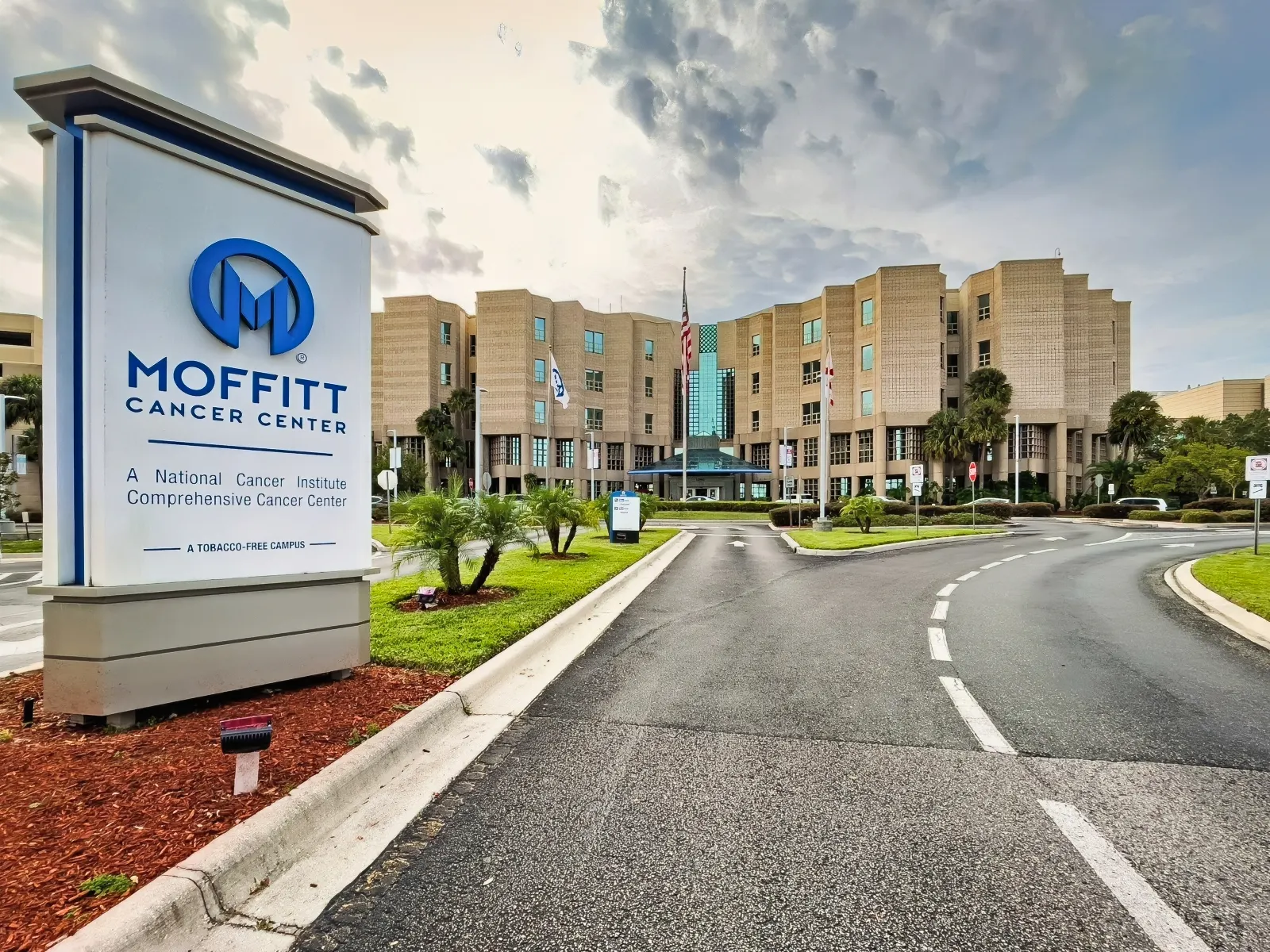
Test Methodology: Three Impulse Noise Sources Compared
- Source 1: Loudspeaker Playing White Noise, Cut Off Abruptly
- Source 2: Hand Claps as Impulse Noise
- Source 3: Two 2×4 Wood Studs Clapped Together
- Receiver: Type 1 SPL Meter Capturing 60 dB Decay at Each Frequency Band
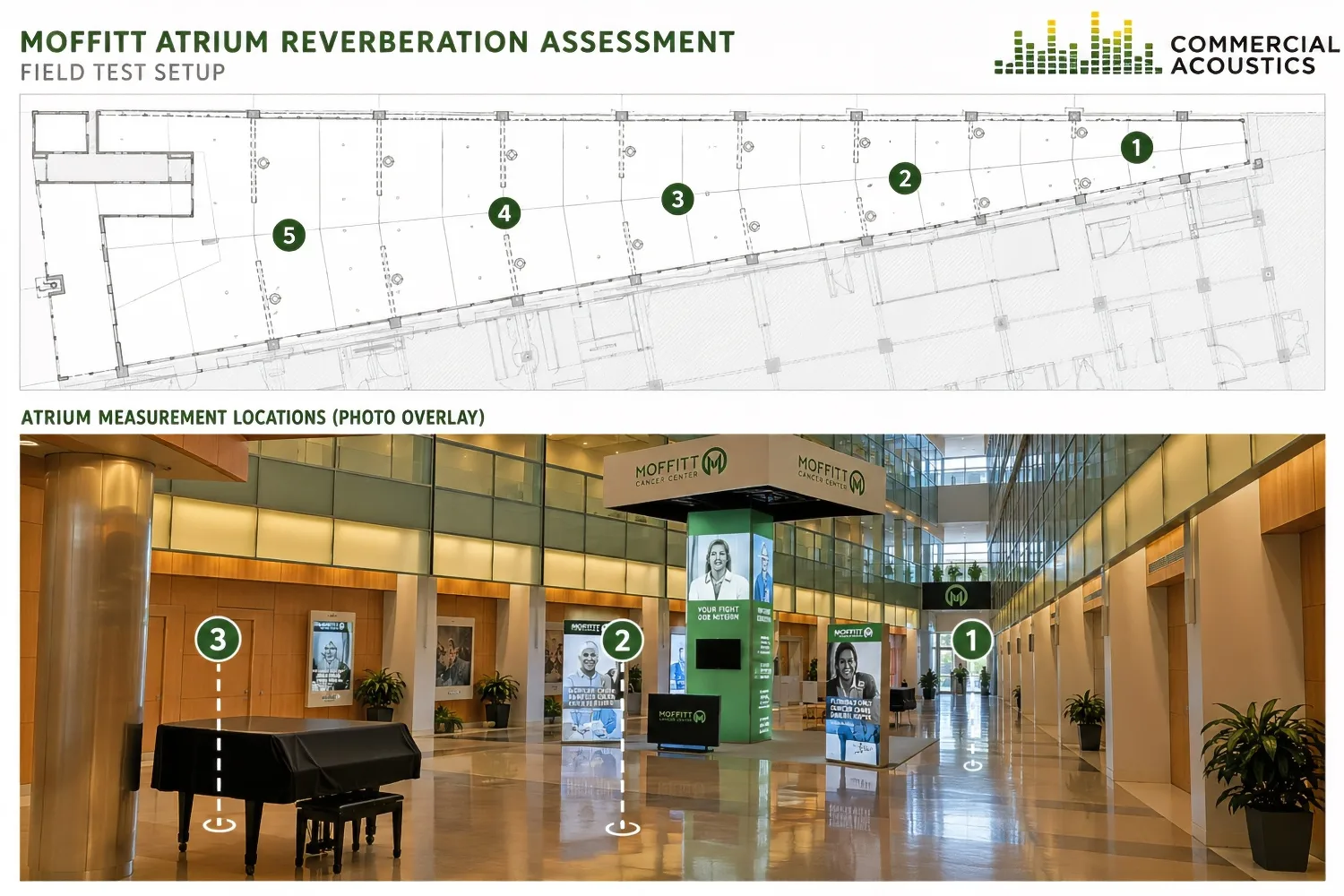
- Test Points: Multiple Locations Across the Atrium Floor for Spatial Averaging
The three impulse sources produced different results at different frequency bands. The white noise cutoff and hand claps both failed to produce conclusive readings below 1000 Hz because neither source delivered enough low-frequency energy to measure decay reliably. Clapping two 2×4 wood studs together generated the broad-spectrum impulse needed to capture the lower bands.
Spatial averaging across multiple atrium test points matters because reverberation is not uniform inside a large open space. Standing waves, hard wall reflections, and seating clusters all create local variations. Averaging across points yields a representative RT60 instead of a snapshot from one corner that may not generalize.
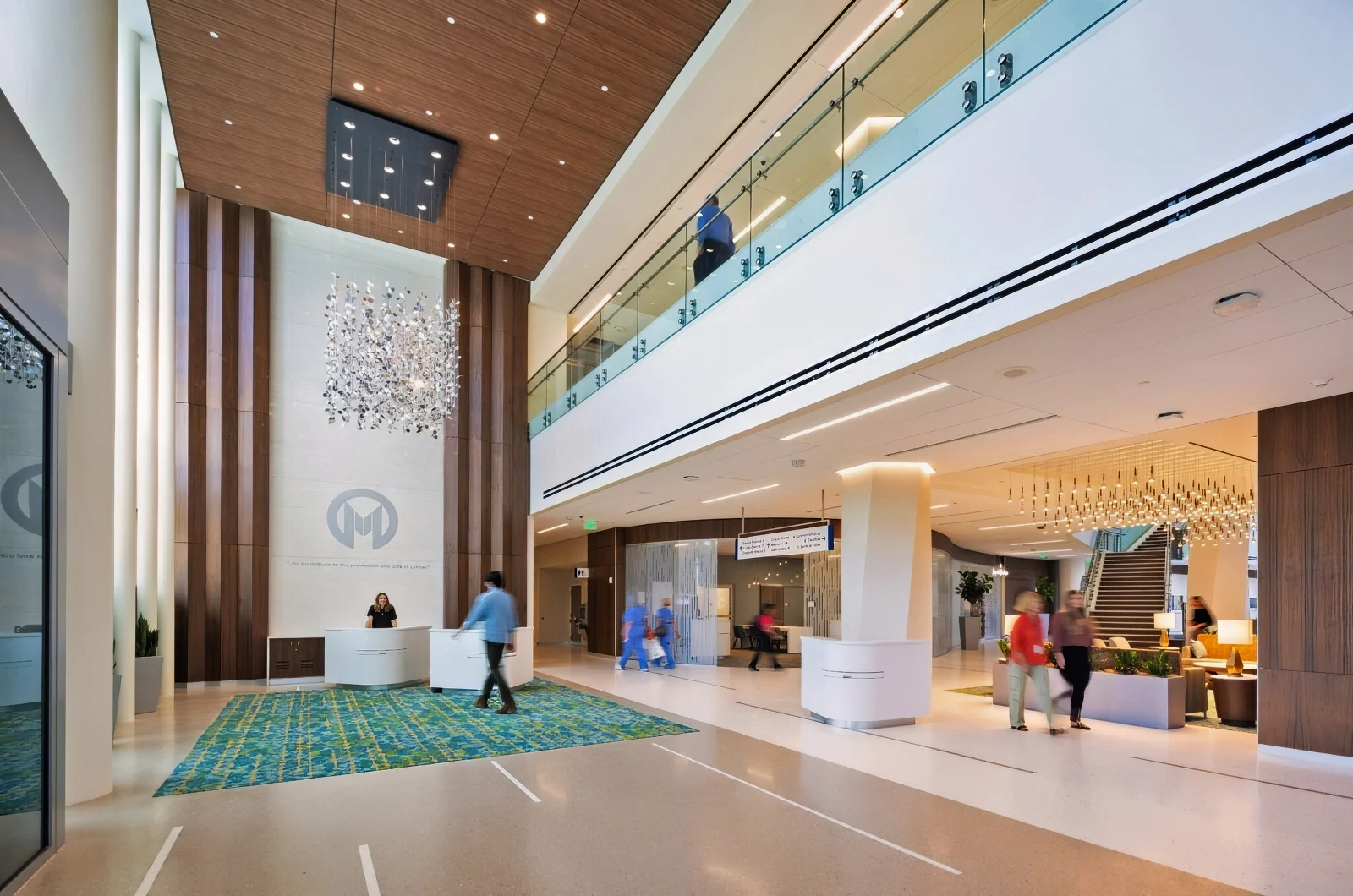
RT60 Measurements at 10 Frequencies
Frequency-by-frequency RT60 measurements give a far richer diagnostic than a single average. The table below shows the field readings across three test points at 10 frequency bands from 800 Hz through 6.3 kHz. Speech intelligibility primarily lives in the 1-4 kHz range, so the high reverberation at those frequencies maps directly to the audience experience during loudspeaker events.
| Frequency | Point 1 | Point 2 | Point 3 |
|---|---|---|---|
| 800 Hz | 3.41 sec | 3.51 sec | 2.71 sec |
| 1 kHz | 3.16 sec | 3.13 sec | 2.62 sec |
| 1.25 kHz | 3.21 sec | 2.67 sec | 2.48 sec |
| 1.6 kHz | 2.97 sec | 2.58 sec | 2.53 sec |
| 2 kHz | 2.78 sec | 3.14 sec | 2.25 sec |
| 2.5 kHz | 2.42 sec | 2.33 sec | 2.04 sec |
| 3.15 kHz | 2.27 sec | 2.04 sec | 2.11 sec |
| 4 kHz | 2.30 sec | 1.88 sec | 2.01 sec |
| 5 kHz | 1.89 sec | 1.73 sec | 1.60 sec |
| 6.3 kHz | 1.44 sec | 1.26 sec | 1.39 sec |
| Average RT60 | 2.80 sec | 2.67 sec | 2.18 sec |
The pattern is consistent across all three points. RT60 sits well above 2 seconds across the speech range and only drops into the 1.4 to 1.9 second range at the highest measured frequencies. For an atrium that hosts amplified speech events, this is unworkable before the renovation even starts.
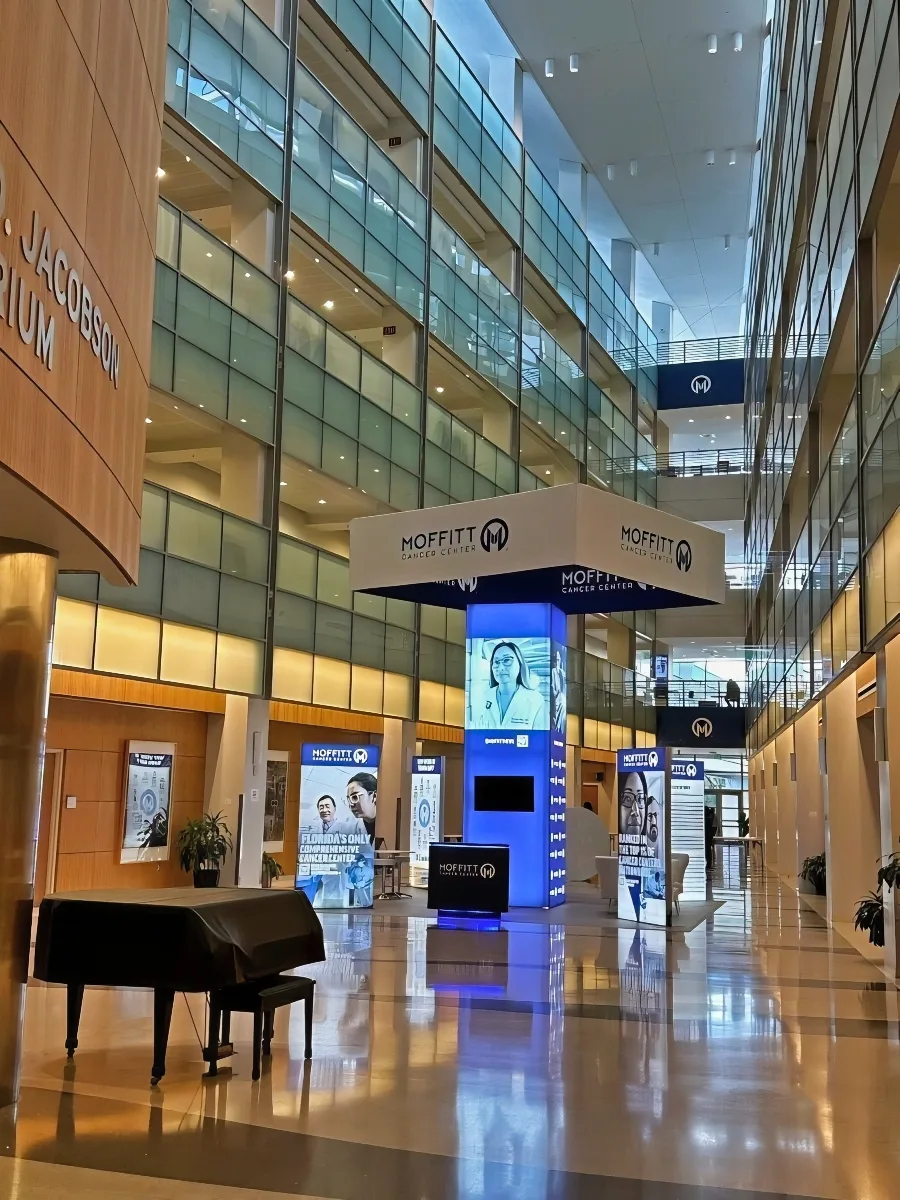
Hospital Atrium Reverberation Targets by Use Case
RT60 targets for hospital atriums shift with the primary use case. A quiet circulation atrium tolerates more reverberation than an atrium that hosts amplified loudspeaker events. The table below maps the working windows.
| Atrium Use | Target RT60 | Speech Intelligibility | Treatment Approach |
|---|---|---|---|
| Atrium With Amplified Loudspeaker Events (Moffitt Case) | 1.2 to 1.6 sec | Required across speech range | Heavy ceiling clouds plus wall absorption panels |
| Mixed-Use Atrium (Circulation Plus Occasional Events) | 1.5 to 2.0 sec | Moderate | Ceiling clouds plus distributed wall panels |
| Quiet Circulation Atrium (No Events) | 2.0 to 2.5 sec | Not a primary concern | Light ceiling absorption only |
| Healthcare Worship or Meditation Atrium | 1.0 to 1.5 sec | Required for spoken content | Heavy distributed absorption |
The Moffitt atrium landed in the top row at the most demanding target window. The pre-renovation 2.7 second average sat roughly a full second above the working window for amplified speech. Adding terrazzo without compensating absorption would have widened that gap further.
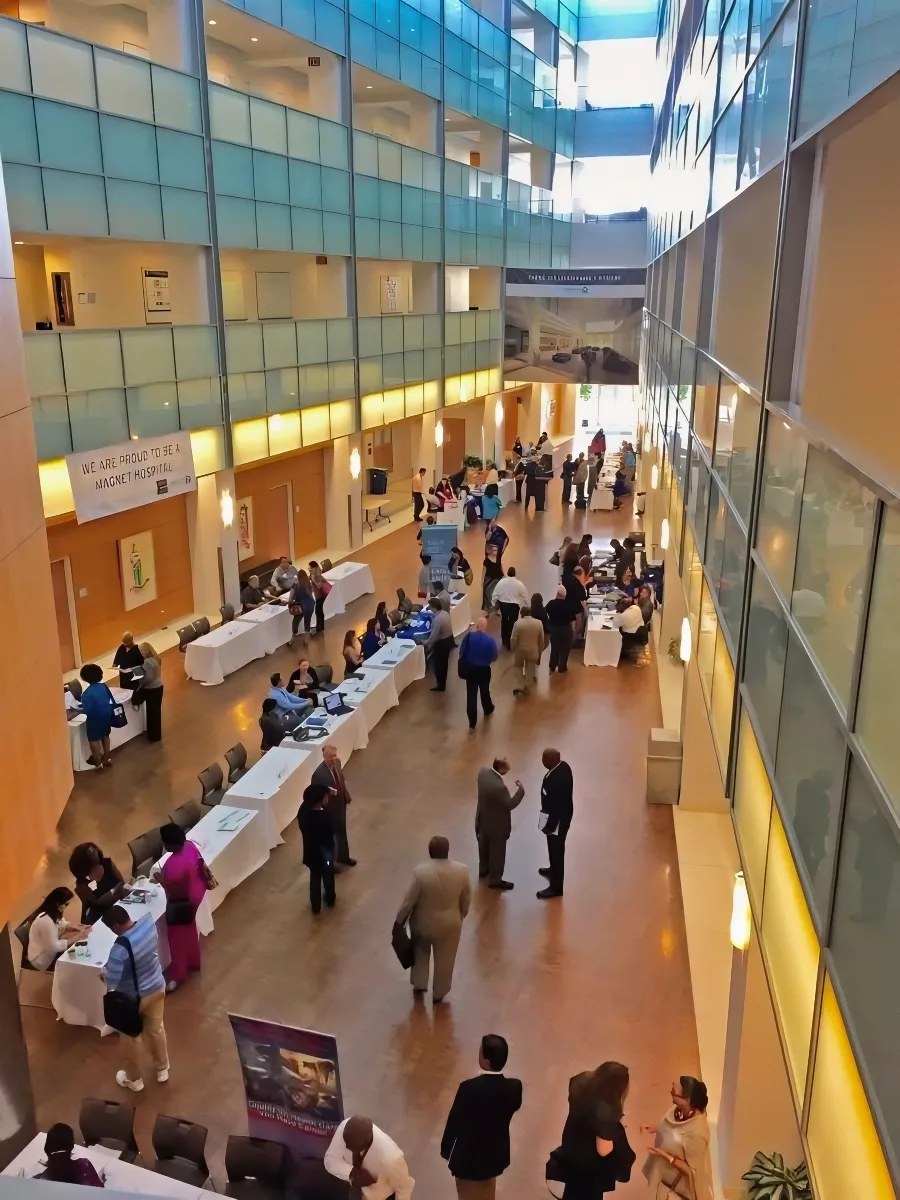
Conclusion: Pre-Renovation Acoustic Testing Value
Pre-renovation acoustic testing buys the design team room to act before the change locks in. Once the terrazzo is poured, retrofitting absorption costs more, takes longer, and runs around an installed finished floor that is now part of the brand experience. Catching the impact in advance lets compensating ceiling clouds, wall panels, or hanging baffles get budgeted into the same renovation cycle as the flooring change. More on the team behind pre-renovation acoustic testing for healthcare facilities planning hard-finish renovations.
FAQs: Pre-Renovation Acoustic Testing
What is pre-renovation acoustic testing?
Pre-renovation acoustic testing measures the existing reverberation of a space before a renovation changes the finishes. The baseline data is used to predict the post-renovation acoustic state and to budget compensating absorption into the same renovation cycle if needed.
What RT60 should a hospital atrium target?
1.2 to 1.6 seconds for atriums hosting amplified loudspeaker events. 1.5 to 2.0 seconds for mixed-use circulation plus occasional events. Quiet circulation-only atriums tolerate up to 2.5 seconds. Worship or meditation atriums target the lowest at 1.0 to 1.5 seconds.
How does replacing wood flooring with terrazzo affect reverberation?
Terrazzo is essentially non-absorptive, while wood provides a small but real amount of absorption at speech and high frequencies. Switching from wood to terrazzo in a large atrium typically pushes RT60 up by 0.2 to 0.5 seconds depending on the floor area and ceiling height.
Why use multiple impulse noise sources in a reverberation test?
Different impulse sources deliver different frequency content. White noise cutoffs and hand claps often fail below 1000 Hz because they lack low-frequency energy. Clapping two 2×4 wood studs together generates the broad-spectrum impulse needed to capture the lower bands reliably.

Walker Peek|Founder & CEO, Commercial Acoustics
Walker founded Commercial Acoustics in 2013 to bring aerospace-grade engineering discipline to soundproofing, and runs the firm as CEO from its 12,000 sq ft Tampa production facility. The company designs custom acoustic panels, sound membranes, and masking systems for multi-family, hospitality, healthcare, and commercial projects across the US — built around Walker’s invention, Wall Blokker, an EVA-based sound barrier that hits STC 50-plus at roughly $1 per square foot installed.
A Jacksonville native, Walker spent five years at Kennedy Space Center with Craig Technologies before founding Commercial Acoustics — certifying aerospace manufacturing to the AS9100 standard and leading Six Sigma Black Belt process-improvement teams on NASA programs. He is a certified Industrial Noise Control Engineer and the author of Architectural Acoustics: A Practical Handbook.
