Table of Contents
Project Overview: Door Flanking ASTC Test
- Project: Field STC Test of Two Demising Wall Assemblies at a Luxury Timeshare
- Location: Luxury Timeshare, Orlando, Florida
- Walls Tested: Unit 209A↔210A and Unit 211A↔212A (ASTM E336 ASTC Test)
- Wall A (With Wall Blokker Membrane): ASTC 46
- Wall B (Gypsum Only): ASTC 44
- Florida Building Code Minimum: ASTC 45 (FBC Section 1207.2)
- Door-Base Sound Level: 69.8 dBA — 9 dB Higher Than the 60.8 dBA Measured at the Wall
Why Doors Are the Hidden Acoustic Weakness
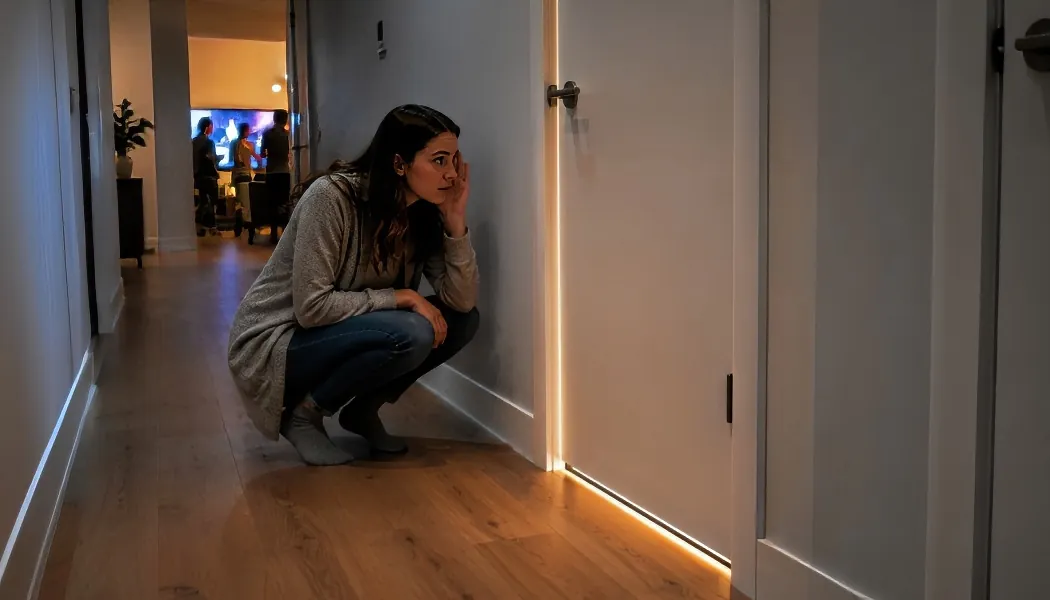
Most demising wall acoustic specs focus on the wall assembly itself. Stud type, drywall layer count, insulation, decoupling, membranes — all of it gets engineered to hit a target STC rating. The door in the same partition rarely gets the same scrutiny. That is the gap where soundproofing fails in the field.
A standard hollow-core interior door tests at STC 24 to 32. A standard solid-core door tests at STC 32 to 36. An acoustic-rated door with seals reaches STC 40 plus. Drop any of those into an STC 50 wall and the door becomes the dominant transmission path. The wall might block 50 dB of sound. The door blocks 25 to 35.
The composite STC of a wall plus door assembly is closer to the door’s rating than to the wall’s. A 25-square-foot door inside a 100-square-foot wall pulls the effective STC of the entire partition down to roughly the door’s rating plus a few points of contribution from the wall. Engineering the wall up to STC 60 while leaving a hollow-core door in the middle is wasted spec.
The Two-Wall Field Test Setup (ASTM E336)
- Test Standard: ASTM E336 (Standard Test Method for Measurement of Airborne Sound Attenuation Between Rooms in Buildings)
- Test Time: Late Afternoon, Adjacent Construction Site Noise Minimized
- Wall A Assembly: 1 Layer 5/8″ Type X Drywall Each Side + 1 Layer 1/8″ Wall Blokker Membrane One Side + 25-Gauge Steel Studs 16″ o.c. + R-13 Fiberglass Batt
- Wall B Assembly: 1 Layer 5/8″ Type X Drywall One Side + 2 Layers 5/8″ Type X Drywall Other Side + 25-Gauge Steel Studs 16″ o.c. + R-13 Fiberglass Batt
- Both Walls Included: A Hollow-Core Door at the Center, 4-Inch Air Gap, and a Second Hollow-Core Door — With Automatic Door Sweeps Engaged
The two-wall comparison was set up to isolate the contribution of the Wall Blokker membrane. Both partitions used the same studs, same insulation, same door configuration, and same testing conditions. The only meaningful difference between Wall A and Wall B was the membrane on one side of Wall A versus the second drywall layer on Wall B. ASTM E336 governs how the field-measured ASTC value is captured and calculated.
Test Results: 9 dB Louder at the Door Base Than at the Wall
Both walls tested within 2 STC points of each other. The Wall Blokker membrane lifted Wall A to ASTC 46. The gypsum-only Wall B came in at ASTC 44. The Florida Building Code minimum for walls between adjacent dwelling units is ASTC 45, which means Wall A passed and Wall B failed by one point. The membrane delivered a measurable but modest 2-point lift.
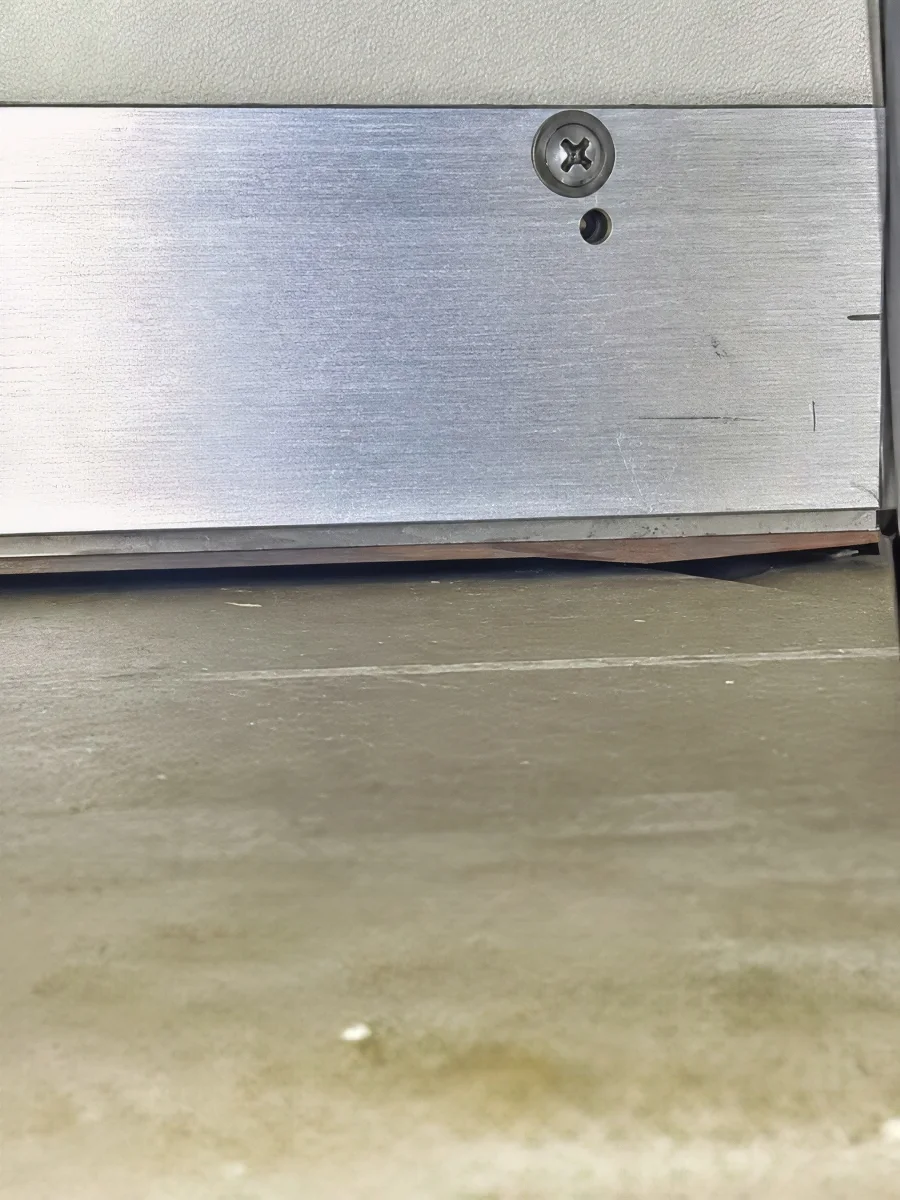
The headline finding came from the post-test leak check. The receive-side SPL meter was walked across the partition while the source noise played. The reading at the wall surface measured 60.8 dBA. The reading at the base of the door measured 69.8 dBA. The door was 9 decibels louder than the wall it sat in.
9 dB at the door base means the partition would have measured significantly higher if the door were not the dominant flanking path. Even with automatic door sweeps engaged, the door stayed the weakest acoustic element in the assembly. The wall blocked sound to its rated capacity. The door undid most of that work.
Hollow-Core vs Solid-Core Door STC Performance
- Hollow-Core Door (Standard Interior): STC 24 to 32
- Solid-Core Door (Heavier Construction): STC 32 to 36
- Acoustic-Rated Door (With Seals and Sweep): STC 40 to 45
- Studio-Grade Acoustic Door: STC 50+ (Used in Recording and Broadcast Spaces)
The door upgrade path is steep. Going from a hollow-core to a solid-core door adds 5 to 10 STC points. Going from a solid-core to an acoustic-rated door with seals and sweep adds another 5 to 10. Each step matters because the door’s STC is what caps the composite STC of the partition it sits in.
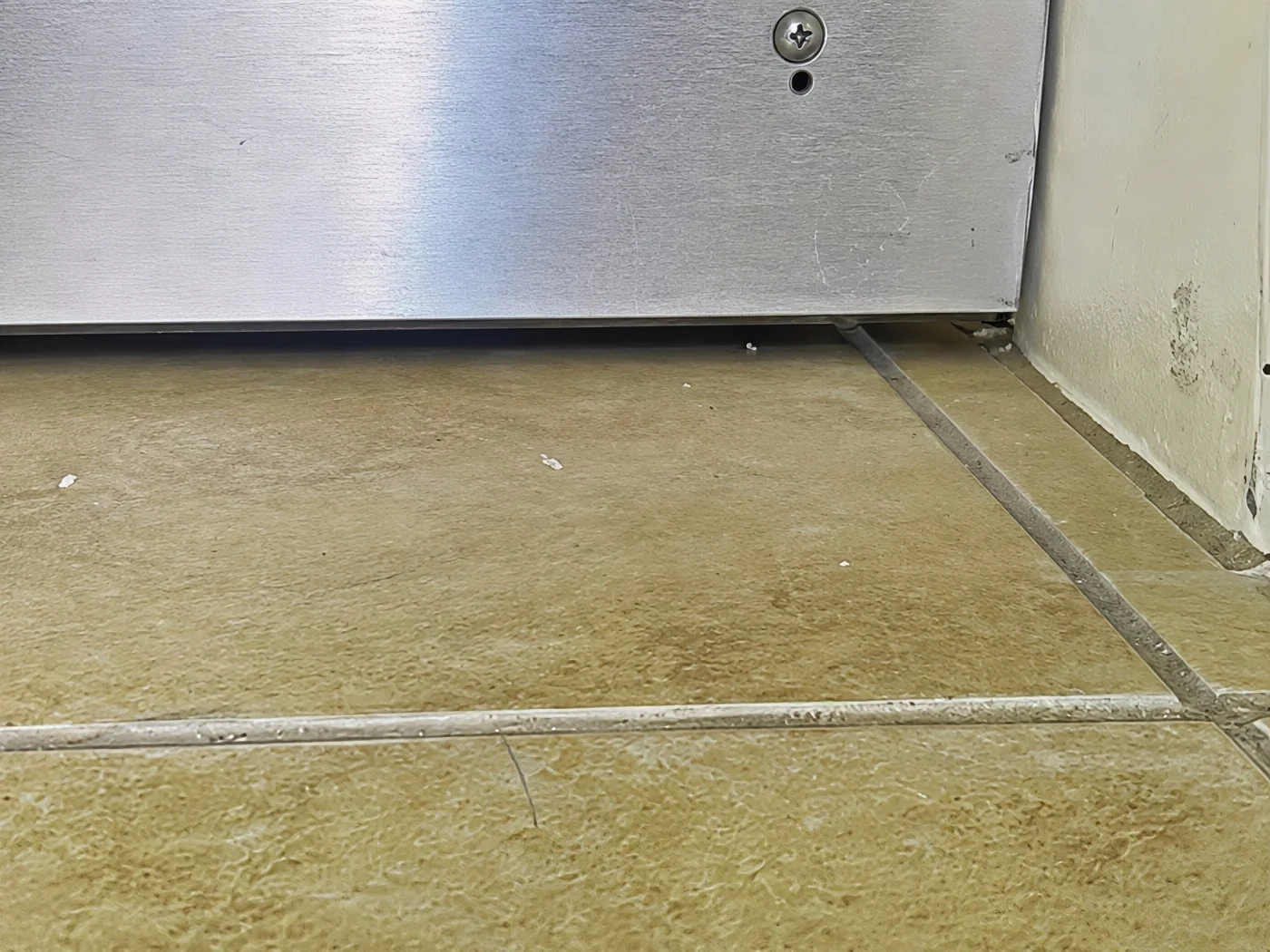
The door sweep is not optional. Even an acoustic-rated door with no sweep leaks airborne sound through the gap at the floor. The Orlando timeshare test confirmed this: door sweeps were engaged and the door base still read 9 dB above the wall. The sweep helps but cannot fully compensate for a hollow-core door body. The product side of acoustic membrane that made the wall difference lives at the Wall Blokker mass-loaded membrane page.
Door and Wall Combinations: STC Outcomes
The composite STC of a wall plus door assembly depends on both elements together, not on the wall in isolation. The table below maps the typical composite STC outcomes for common wall and door combinations in multi-family and hospitality construction.
| Wall STC | Door Type | Door STC | Composite STC (Approximate) |
|---|---|---|---|
| STC 50 | Hollow-Core, No Sweep | STC 26 | STC 28 to 30 |
| STC 50 (Orlando Timeshare Wall A) | Hollow-Core With Sweep | STC 28 to 30 | ASTC 44 to 46 |
| STC 50 | Solid-Core With Sweep | STC 34 | ASTC 48 to 50 |
| STC 50 | Acoustic-Rated With Seals | STC 42 | ASTC 50+ |
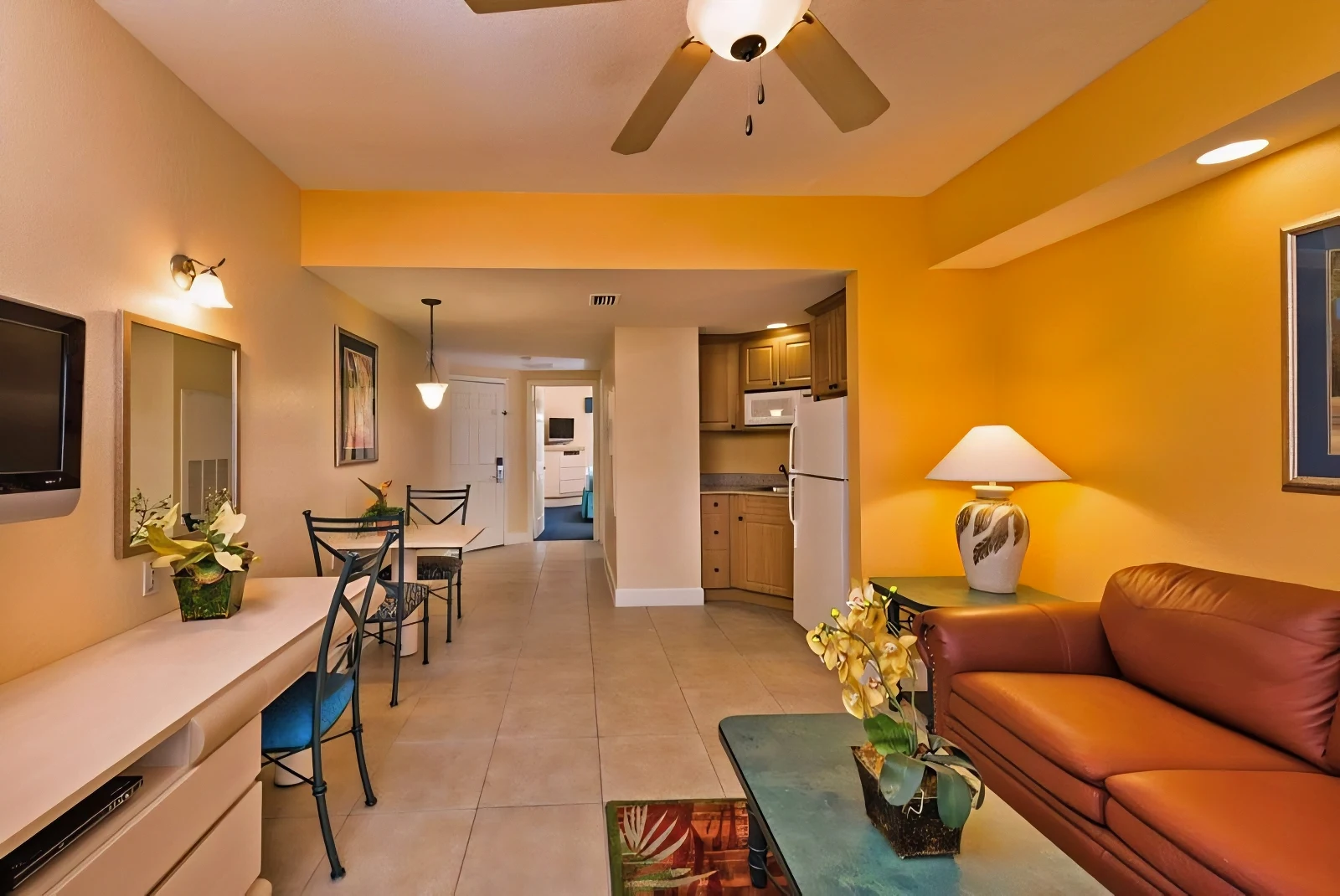
The Orlando timeshare landed in the highlighted second row at ASTC 44 to 46. The wall itself was capable of STC 50, but the hollow-core door with sweep limited the composite to roughly the door’s rating plus a few points. Swapping the door to solid-core with the same wall would push the composite to ASTC 48 to 50. Going to an acoustic-rated door would clear ASTC 50.
Conclusion: Fixing Door Flanking in Demising Walls
Door flanking is the most common reason a code-compliant demising wall fails its field STC test. The Orlando timeshare data is not anomalous. The 9 dB door-base reading shows up on almost every multi-family or hospitality field test where hollow-core doors sit inside otherwise-competent demising walls. The fix is the door, not more drywall layers on the wall. Solid-core door plus acoustic seals plus engaged sweep gets a partition from ASTC 44 to ASTC 50 with no change to the wall assembly. Contact Us for a field STC test or door-flanking diagnostic on a specific multi-family or timeshare project.
FAQs: Door Flanking and Demising Wall STC
Why does my soundproof wall not work in the field?
Almost always the door. A standard hollow-core door tests at STC 24 to 32. Drop that into an STC 50 wall and the door becomes the dominant flanking path. Composite STC lands closer to the door’s rating than the wall’s.
How much louder is sound at the door base than at the wall?
In the Orlando timeshare field test, the door base measured 69.8 dBA versus 60.8 dBA at the wall surface. That is a 9 dB jump from wall to door base, indicating the door dominated the transmission path even with automatic door sweeps engaged.
Should I use hollow-core or solid-core doors in a soundproof wall?
Solid-core. Hollow-core doors test at STC 24 to 32 and cap the partition’s composite STC in that range. Solid-core doors test at STC 32 to 36 and let an STC 50 wall hit ASTC 48 to 50. Acoustic-rated doors with seals reach ASTC 50+.
Do door sweeps fix door flanking?
Sweeps help but cannot compensate for a hollow-core door body. The Orlando test had sweeps engaged and still measured 9 dB higher at the door base than at the wall. The sweep closes the floor gap, but the door body itself still leaks sound.

Walker Peek|Founder & CEO, Commercial Acoustics
Walker founded Commercial Acoustics in 2013 to bring aerospace-grade engineering discipline to soundproofing, and runs the firm as CEO from its 12,000 sq ft Tampa production facility. The company designs custom acoustic panels, sound membranes, and masking systems for multi-family, hospitality, healthcare, and commercial projects across the US — built around Walker’s invention, Wall Blokker, an EVA-based sound barrier that hits STC 50-plus at roughly $1 per square foot installed.
A Jacksonville native, Walker spent five years at Kennedy Space Center with Craig Technologies before founding Commercial Acoustics — certifying aerospace manufacturing to the AS9100 standard and leading Six Sigma Black Belt process-improvement teams on NASA programs. He is a certified Industrial Noise Control Engineer and the author of Architectural Acoustics: A Practical Handbook.
