Table of Contents
Project Overview: Tampa Open Office Sound Panel Install
- Project: Sound Panels for Open Office Reverberation Reduction
- Location: Tampa, FL (open-plan commercial office)
- Existing Surfaces: Thin commercial carpet, painted drywall, exposed corrugated metal deck ceiling
- Baseline RT60: 1.2 seconds (well above the 0.6 to 0.8 target for open offices)
- Products Installed: Acoustic absorption panels, hanging baffles, ceiling clouds
- Result: Conference calls became viable, parallel conversations stopped colliding
Why Open Offices Need Sound Panels for Conference Calls
Open offices used to be measured by speech privacy and noise distraction between desks. Hybrid work changed the test. The new failure mode is the conference call. When a remote participant joins a meeting and hears every keyboard, footstep, and side conversation echoing in the background, the room is acoustically broken regardless of how it sounds in person.
This Tampa open office hit that wall after a year of hybrid use, making open office acoustic panels the right fix for call clarity. The space looked finished and felt fine to anyone in the room, but every Teams and Zoom call had remote participants asking the in-room presenter to repeat themselves. Commercial Acoustics was retained to scope a sound panel install that would land before the next quarter’s all-hands.
Sound masking is the wrong fix here. Masking helps with speech privacy between desks, but it does nothing for reverberation. The microphone on a laptop still picks up the same room echo it always did. The fix had to be absorption, not masking, which means panels.
Baseline RT60: 1.2 Seconds in a Bare Open Office
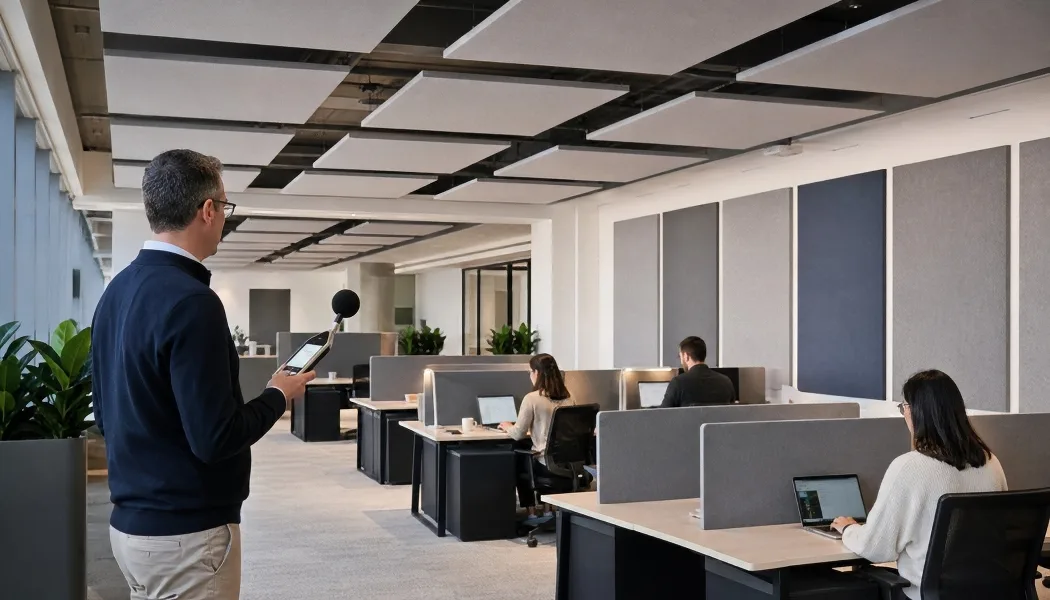
Reverberation time was measured at 1.2 seconds across the speech band. For context, a typical conversation lasts about 0.5 seconds per word. At RT60 1.2, each word was still echoing when the next two arrived. The room essentially smeared every sentence.
The baseline was easy to diagnose by walking the room. Three hard surfaces dominated: a thin commercial carpet that absorbed almost nothing in the speech band, painted drywall on every vertical face, and a corrugated metal deck ceiling that acted as a parallel reflector to the floor. Sound had nowhere to die.
To model how RT60 changes with added absorption surface area in different rooms, run the room acoustics calculator.
Sound Panels in Tampa: Why Local Fabrication Matters
Sound panels in Tampa do not have to ship from a national distributor. Commercial Acoustics fabricates absorption panels, baffles, and ceiling clouds locally in the Tampa Bay area. Lead times run two to three weeks instead of the eight to twelve weeks typical of national-brand orders, and custom sizes are quoted at the same per-square-foot rate as standard sizes.
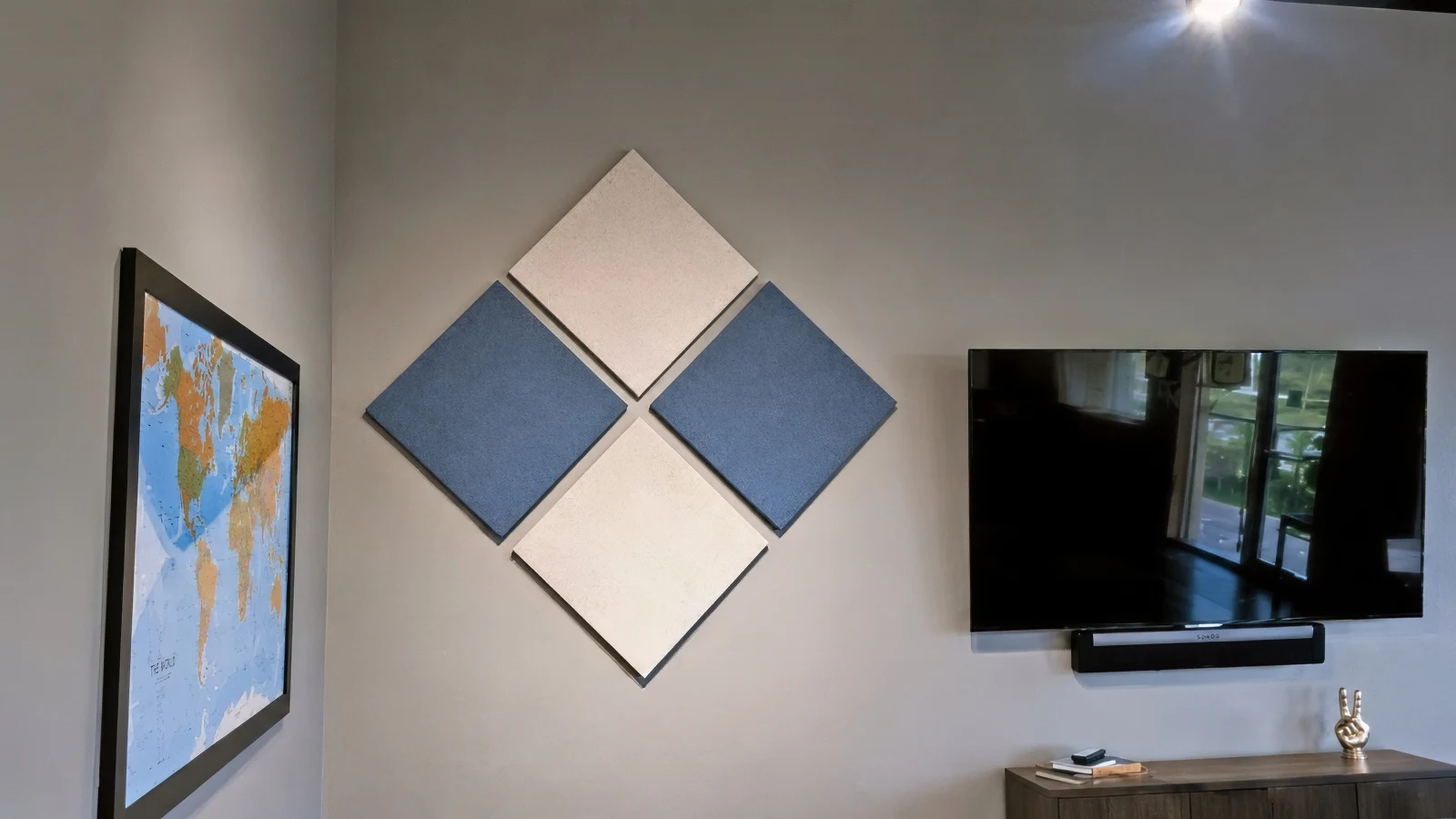
For this project the panel sizes were tuned to the available wall space between window mullions and HVAC chases. A national vendor would have forced a standard 24 by 48 layout that left dead space at every wall edge. Local fabrication let the panels carry the wall.
Acoustic and soundproof wall panels in Tampa are stocked here, fabricated here, and installed by the same team that scoped the project. No staged distribution chain, no surprise lead times after a deposit lands.
The Three-Product Mix: Wall Panels, Baffles, and Ceiling Clouds
- Wall Panels: Acoustic absorption panels on the largest available wall surfaces, NRC 0.85+
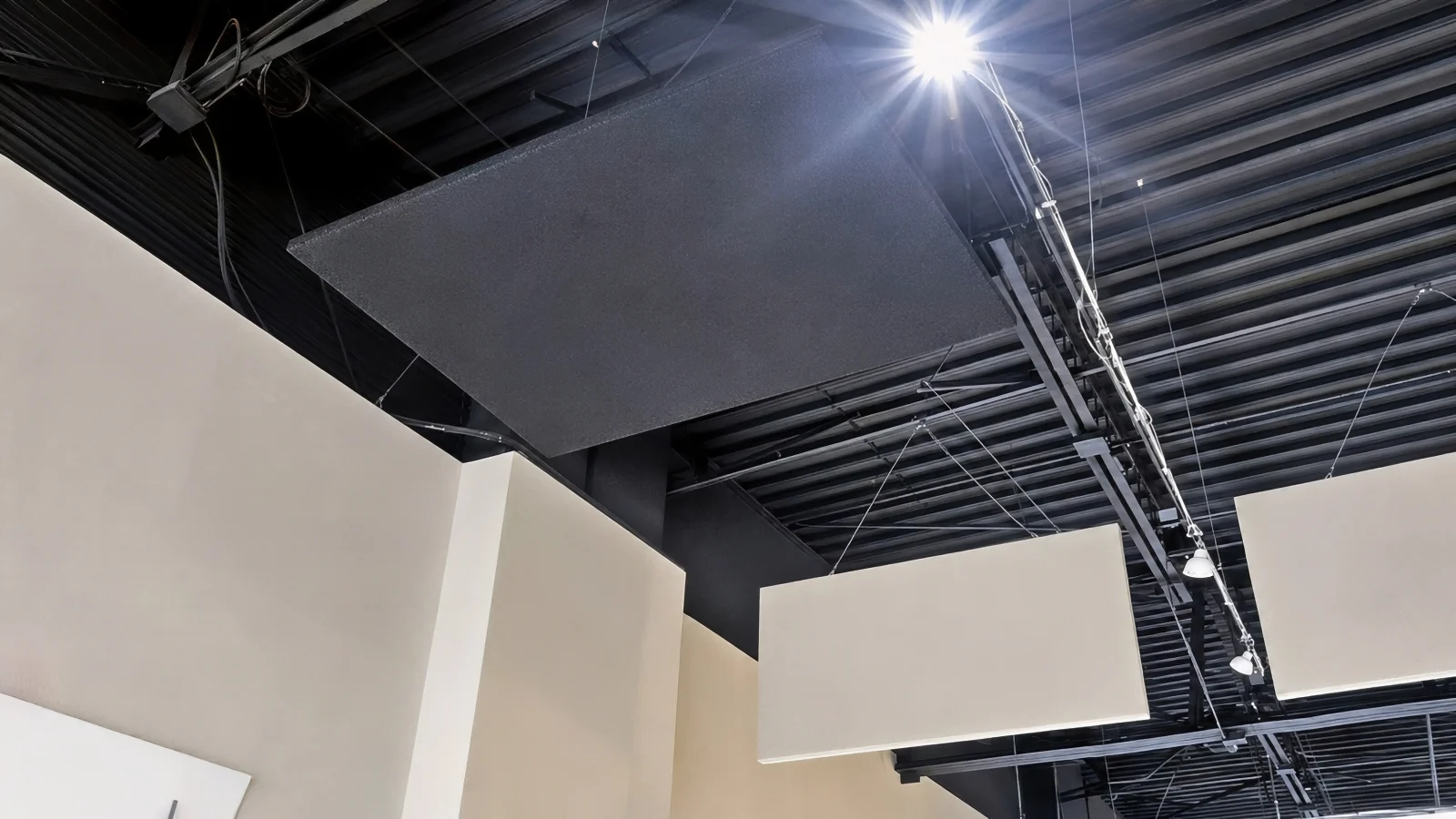
- Hanging Baffles: Vertical baffles suspended from the metal deck to add absorption surface area in the room volume
- Ceiling Clouds: Horizontal cloud panels positioned directly above seating clusters and the conference table
- Coverage: Combined absorption brought RT60 below the 0.8 second target for open offices
Wall panels alone leave the ceiling untreated, and the corrugated metal deck reflects sound straight back down to the floor. Ceiling clouds alone cover the seated zone but miss vertical reflection between drywall partitions. Baffles add volumetric absorption that catches sound traveling diagonally through the room. Three products, three reflection paths.
The product mix was specific. We used acoustic absorption panels on the walls, hanging baffles for volume, and ceiling clouds over the seating clusters.
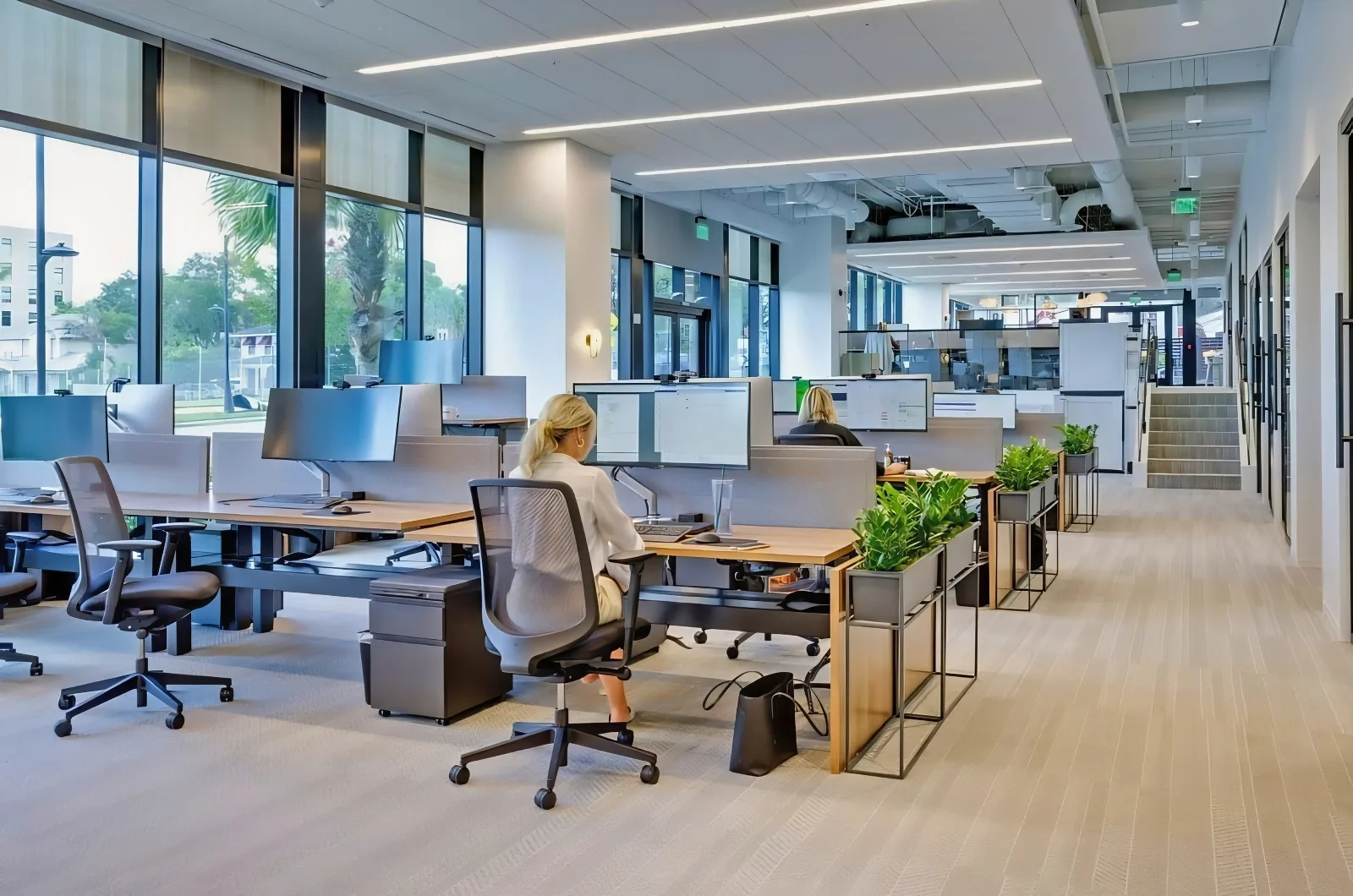
RT60 Targets by Office Use Case
Different office use cases call for different reverberation targets. The table below maps the working windows that an office sound panel scope should design to.
For a comparison conference room project that took the same RT60 reduction approach but at a smaller room scale, see the conference room custom panels case study.
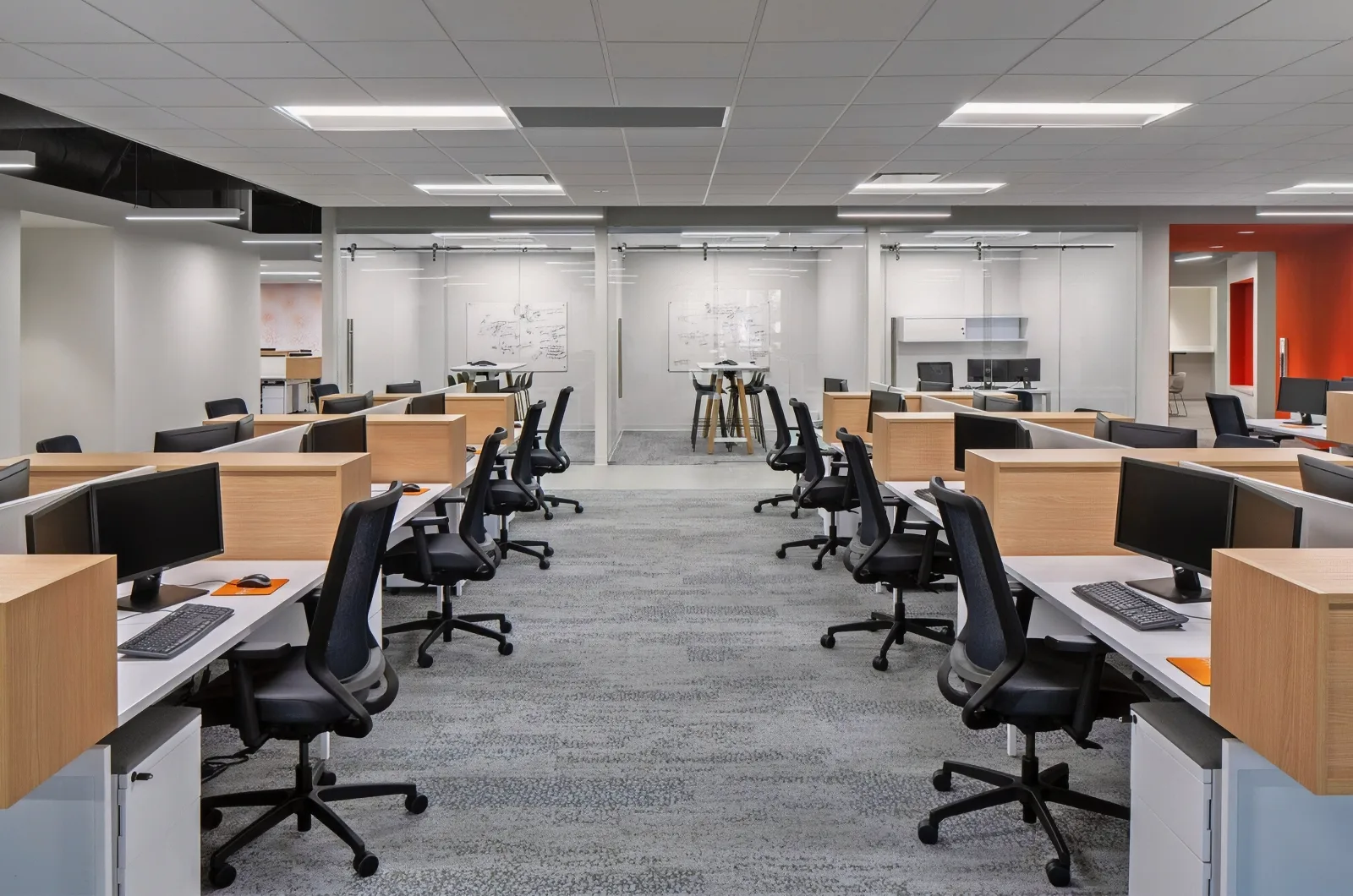
Industrial and Manufacturing Office Adjacencies
Tampa is heavy on light-industrial workspaces where the back-office sits adjacent to a shop floor or warehouse. The same sound panel mix works on the office side, but the source side typically needs separate work on barrier walls, baffles in the high-bay volume, and equipment isolation. One scope, two halves.
What to Ask Before Ordering Sound Panels in Tampa
- Request a baseline RT60 measurement before any panel quantity is specified
- Ask whether the panels are stocked and fabricated locally or shipped from a national vendor
- Confirm the modeled post-treatment RT60 number, not just a panel count
- Ask whether the scope addresses the ceiling reflection path on rooms with exposed metal deck or hard ACT
- Get NRC 0.85 or higher on every panel spec, not the cheaper NRC 0.65 alternates
Conclusion: Sound Panels in Tampa, Done Right
An open office that fails on conference calls does not need new headsets or another round of microphones. It needs sound panels, scoped to the room geometry and tuned to a measured baseline. This Tampa project moved RT60 from 1.2 seconds to under 0.8 with a coordinated mix of wall panels, hanging baffles, and ceiling clouds, all locally fabricated.
Commercial Acoustics stocks, fabricates, and installs sound panels across the Tampa Bay area, with field measurements driving every scope.
FAQs: Sound Panels in Tampa
What NRC rating should an office sound panel hit?
NRC 0.85 or higher is the working target for office reverberation work. Cheaper NRC 0.65 panels need roughly 30 percent more surface area to deliver the same RT60 drop, which usually wipes out any per-panel cost savings once the install math runs.
What RT60 should an open office target?
Most open offices should land between 0.6 and 0.8 seconds across the speech band. Above 0.8 the room starts smearing speech, and conference call audio degrades for remote participants. Above 1.0 the room becomes uncomfortable for in-person conversation as well.
Are sound panels stocked in Tampa or shipped from out of state?
Commercial Acoustics fabricates absorption panels, baffles, and ceiling clouds locally in the Tampa Bay area. Lead times run two to three weeks. Custom sizes are quoted at the same per-square-foot rate as standard sizes, which lets the design fit the actual wall geometry.
Why use panels, baffles, and ceiling clouds together?
Each product covers a different reflection path. Wall panels treat vertical reflections between drywall faces. Ceiling clouds catch sound bouncing off hard ACT or exposed metal deck. Hanging baffles add volumetric absorption that catches sound traveling diagonally through the room.

Walker Peek|Founder & CEO, Commercial Acoustics
Walker founded Commercial Acoustics in 2013 to bring aerospace-grade engineering discipline to soundproofing, and runs the firm as CEO from its 12,000 sq ft Tampa production facility. The company designs custom acoustic panels, sound membranes, and masking systems for multi-family, hospitality, healthcare, and commercial projects across the US — built around Walker’s invention, Wall Blokker, an EVA-based sound barrier that hits STC 50-plus at roughly $1 per square foot installed.
A Jacksonville native, Walker spent five years at Kennedy Space Center with Craig Technologies before founding Commercial Acoustics — certifying aerospace manufacturing to the AS9100 standard and leading Six Sigma Black Belt process-improvement teams on NASA programs. He is a certified Industrial Noise Control Engineer and the author of Architectural Acoustics: A Practical Handbook.
