
Table of Contents
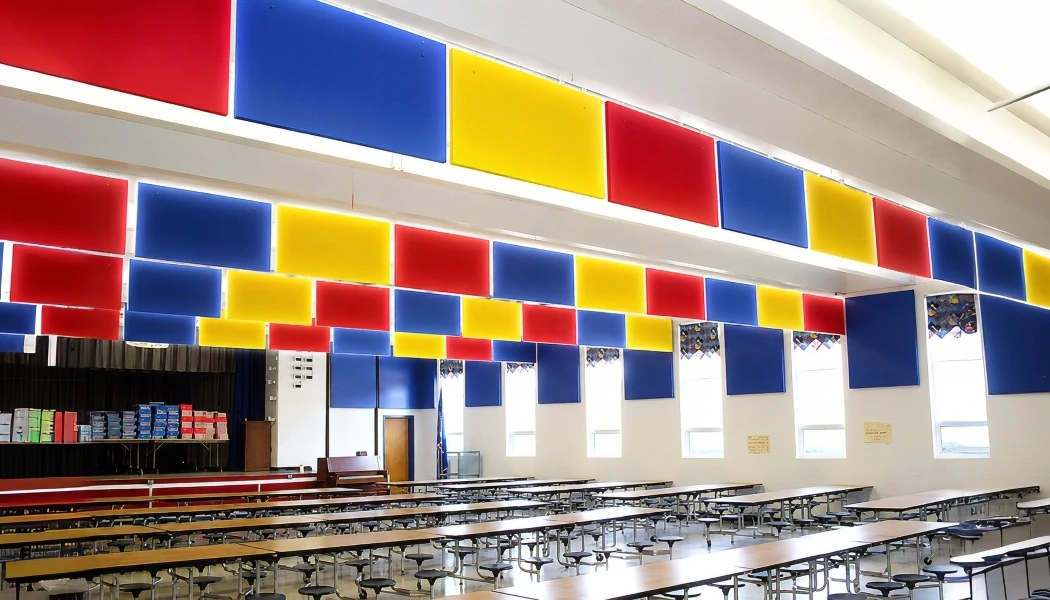
Project Overview: Cafeteria Soundproofing
- Project: Acoustic Baffle Install for a School Cafeteria
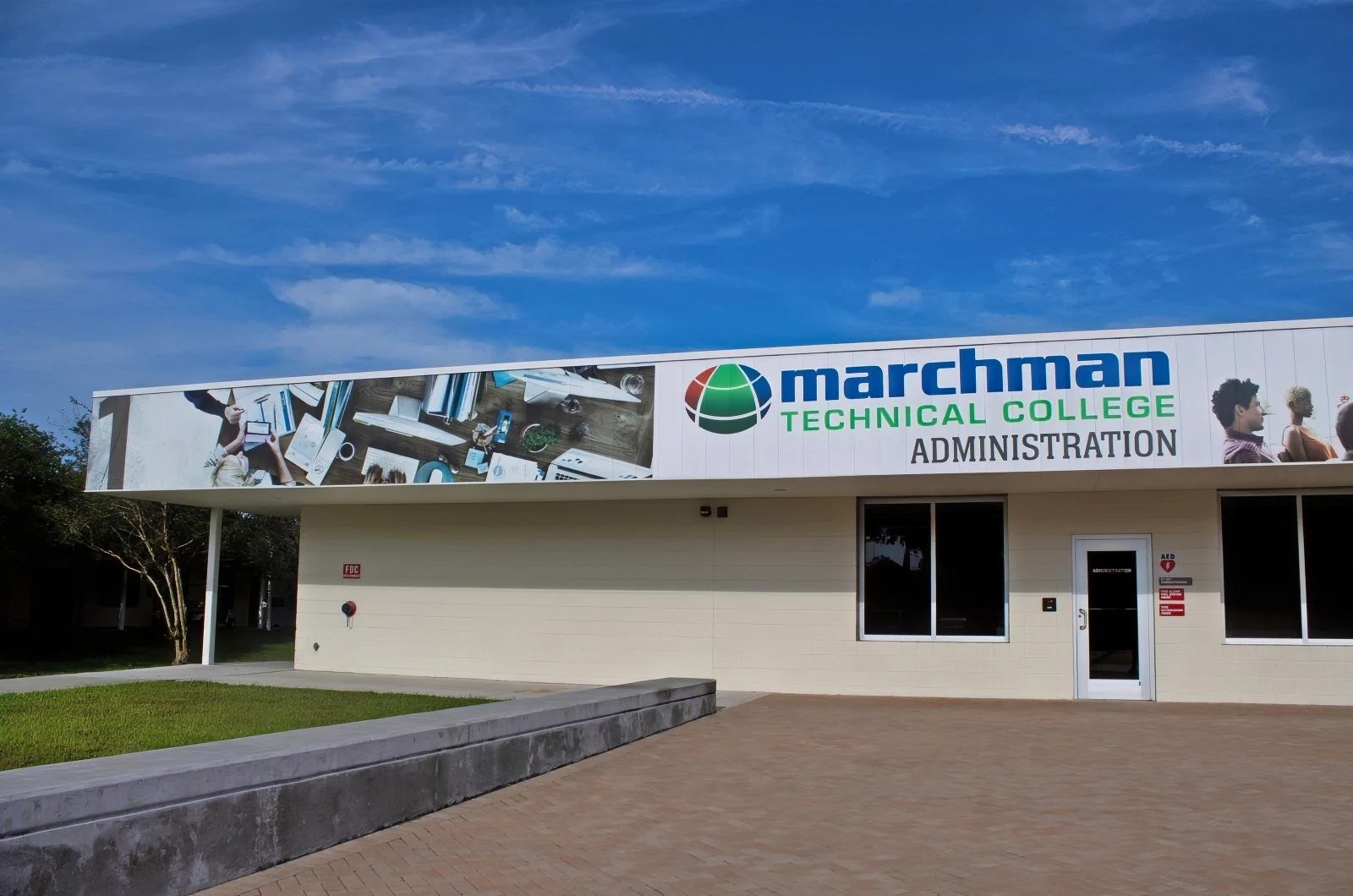
- Client: Marchman Technical College, Pasco County, Florida
- Space Treated: Main Cafeteria / Dining Hall
- Solution: 100 PVC-Wrapped Hanging Acoustic Baffles Suspended From the Ceiling
- Outcome: Reverberation Significantly Reduced, Speech Privacy and Intelligibility Restored
Why School Cafeterias Have Severe Acoustic Problems
School cafeterias are designed for cleanability first. Tile floors, sealed walls, hard ceilings, stainless serving lines, and minimal soft material on any surface make a cafeteria the easiest building type to mop and the hardest to control acoustically. Every one of those finish choices reflects sound rather than absorbing it.
Add the occupant load. Two to four hundred students at peak lunch service generate continuous talking, tray clatter, chair scrape, and kitchen noise. The room hits the Lombard effect within minutes — everyone raises their voice to be heard over their neighbors, neighbors raise theirs in response, and the room volume climbs until staff can no longer give safety instructions over the wash.
Reverberation time is the metric that quantifies the problem. Anything above 1.5 seconds RT60 in a speaking environment overlaps speech sounds and forces the cognitive load up. Cafeterias commonly test in the 2 to 3 second range before treatment. The deeper background on educational acoustics lives in our acoustics for schools guide.
The Hanging Acoustic Baffle Approach
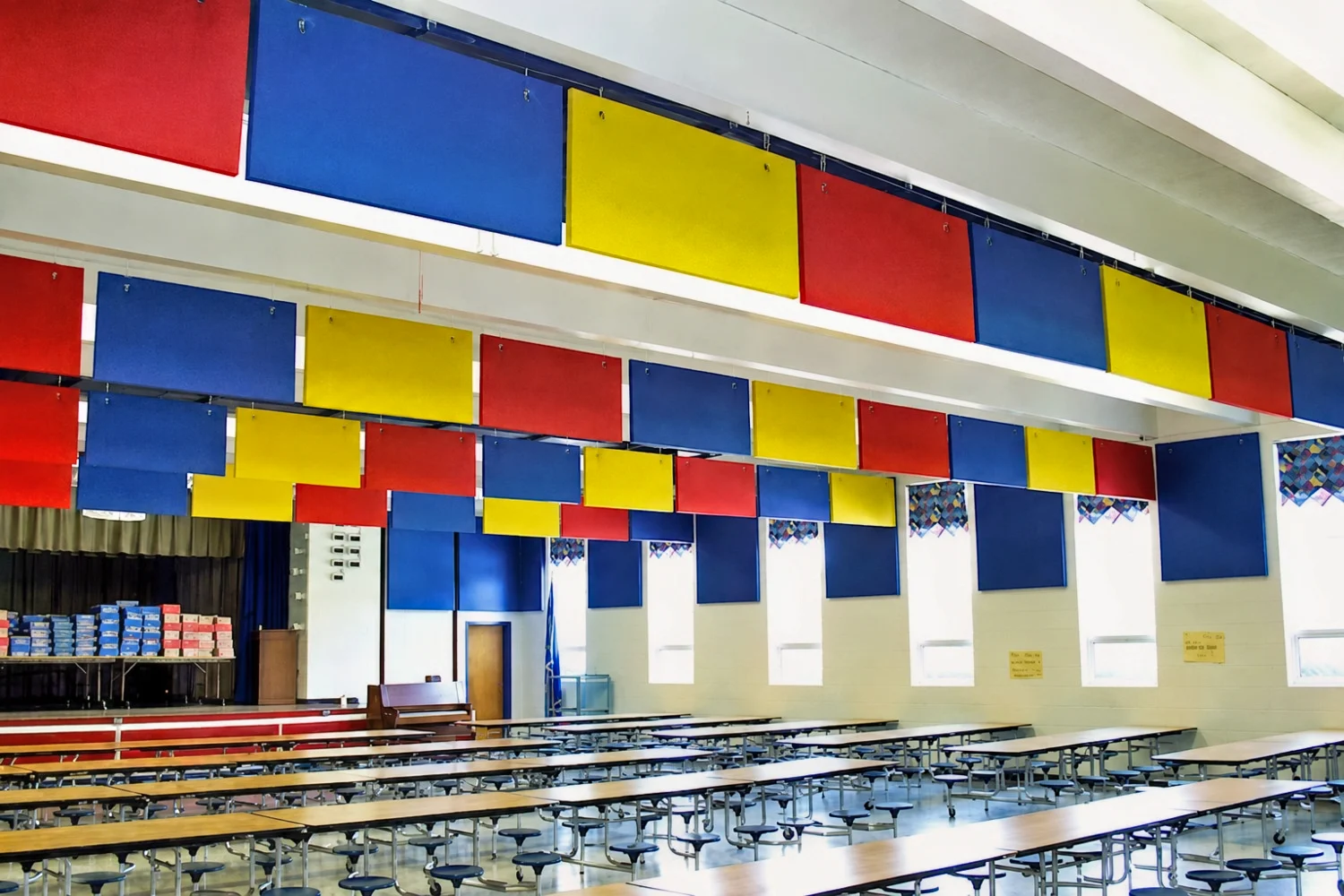
- Form Factor: Vertical Absorptive Panels Suspended From the Ceiling Structure
- Coverage Logic: Distributed Array Across the Cafeteria Footprint
- Why Hanging vs Wall-Mounted: Long Open Spaces Need Absorption Distributed Through the Air Volume, Not Concentrated on the Perimeter
- Absorption Surface Area: Both Faces of Each Baffle Contribute, Doubling Coverage Per Suspended Unit
Acoustic ceiling baffles are the right tool for long open spaces where sound travels significant distances before hitting any surface. Wall-mounted absorption panels work in smaller rooms, but in a cafeteria the perimeter walls are too far from where the sound is generated to do the work. Suspending absorption directly into the air volume above the diners places the absorber where the energy is.
Each baffle absorbs sound on both faces simultaneously. A 2-foot by 4-foot baffle suspended from the ceiling delivers roughly 16 square feet of absorptive surface area per unit (both sides). That doubled efficiency is why baffle counts in cafeterias come in lower than the wall-panel square footage that would be needed for the same RT60 reduction.
Why PVC-Wrapped Baffles for Food-Service Spaces
- Standard Baffle Wrap: Acoustic Fabric (Looks Better, Easier to Soil)
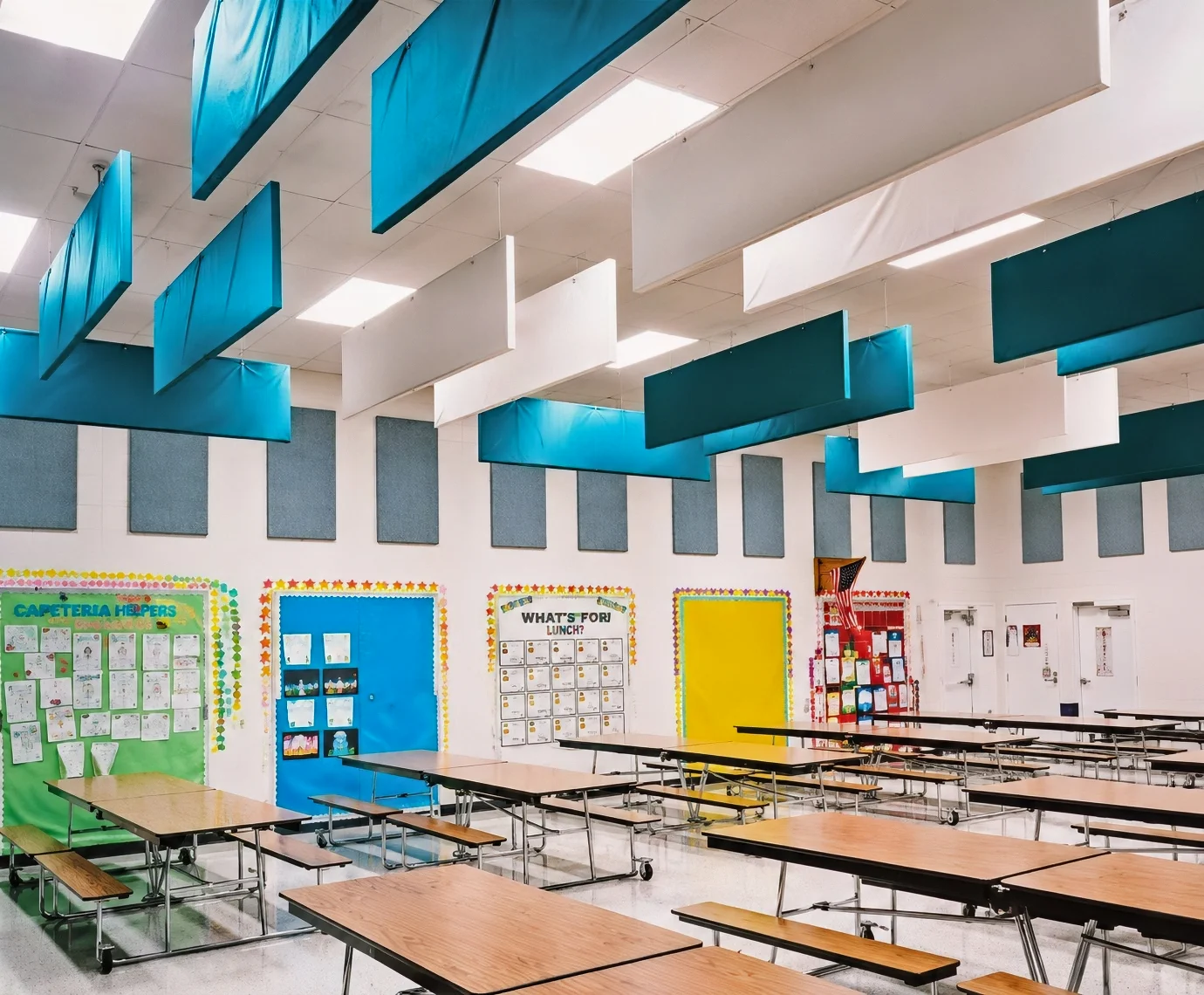
- Food-Service Baffle Wrap: PVC (Wipeable, Stain-Resistant, Hygiene-Compliant)
- Cafeteria Reality: Food, Drink, and Tray Spills That Spray Vertically Reach Suspended Baffles
- Maintenance Win: PVC Wrap Cleans With a Standard Wipe-Down, No Specialty Acoustic Fabric Care
The wrap material on a baffle determines whether it can survive a cafeteria environment. Standard fabric-wrapped baffles look great in conference rooms and offices, but in a cafeteria they collect food residue, grease aerosol, and stain marks within months. The maintenance team cannot easily clean them, and the visual quality drops fast.
PVC-wrapped baffles deliver the same acoustic absorption with a wipeable surface that handles food-service hygiene requirements. Spills, splashes, and routine surface contamination wipe off without damaging the underlying acoustic core. The Marchman install used PVC wrap for exactly this reason — the cafeteria operations team would maintain the baffles indefinitely without specialty cleaning protocols.
The 100-Baffle Install at Marchman Technical College
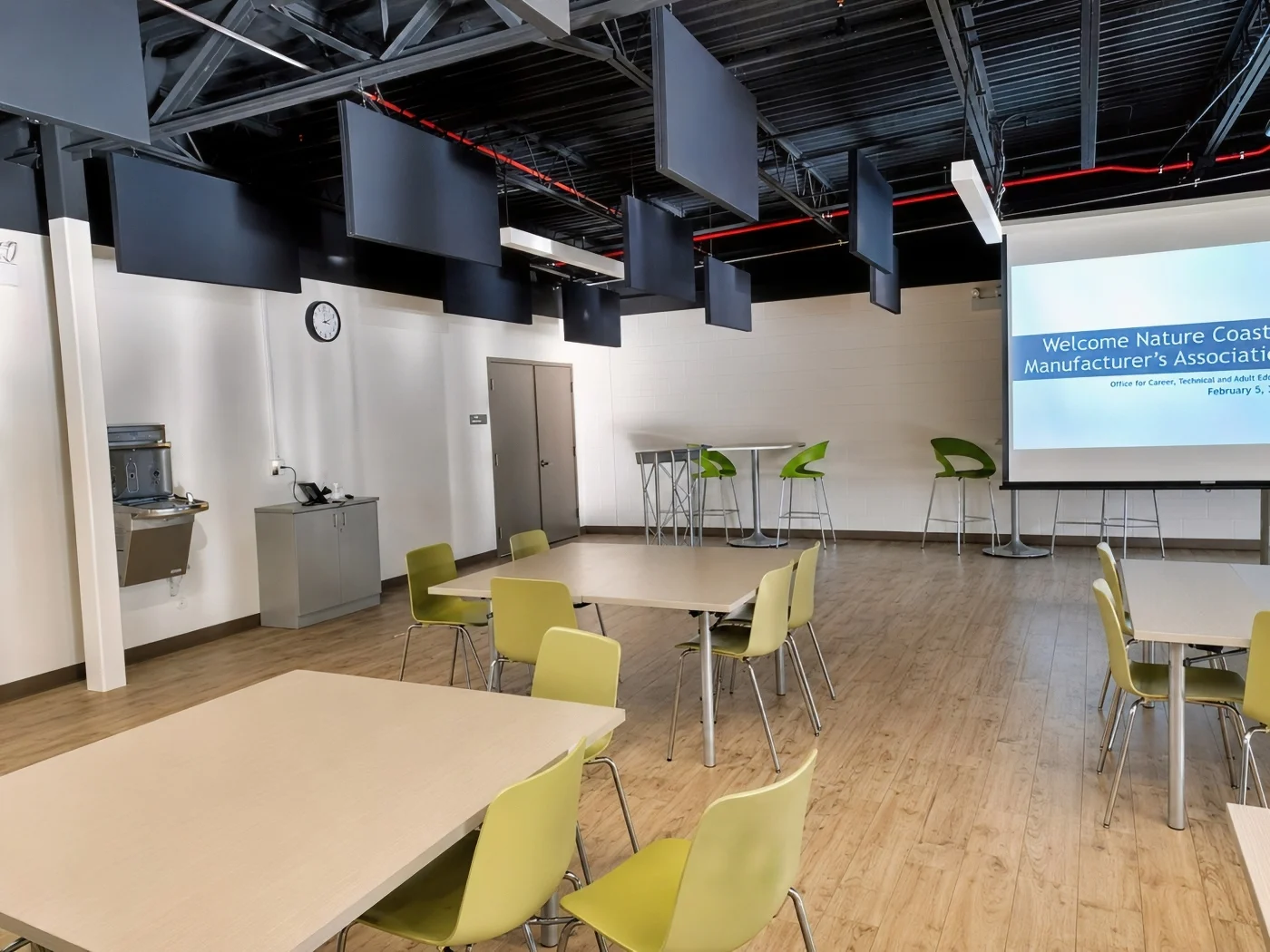
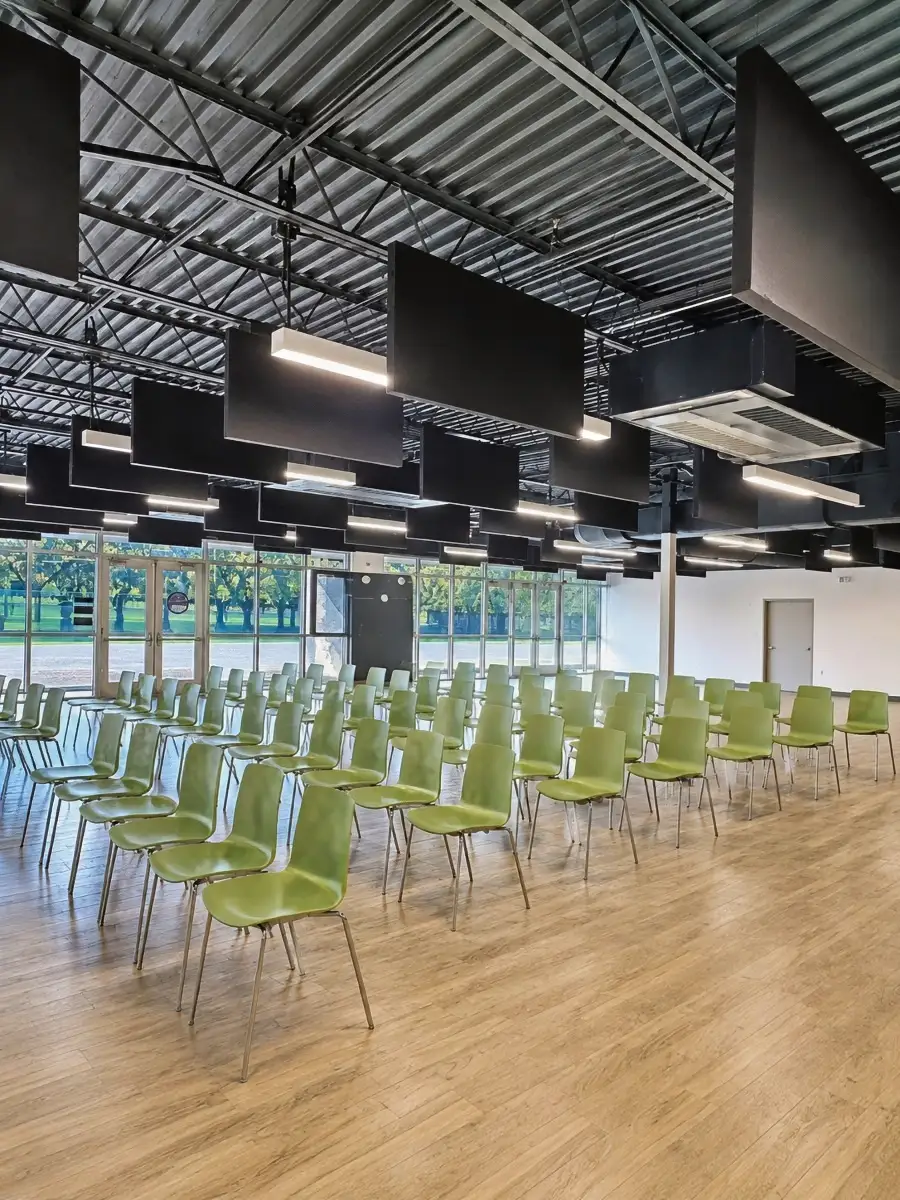
The architects on the Marchman Technical College project consulted on the cafeteria during design rather than waiting for post-occupancy complaints. The acoustic spec called for distributed baffle coverage across the dining footprint with PVC wrap for food-service durability. Final spec landed at 100 baffles suspended from the cafeteria ceiling structure.
Coverage was distributed deliberately rather than concentrated. A clump of 100 baffles in one corner would have absorbed sound in that corner and left the rest of the cafeteria reverberant. Spreading the baffle array across the full ceiling area pulls energy out of the air everywhere a student is sitting.
After install, reverberation in the cafeteria dropped significantly and speech privacy was reestablished. The baffle array put the room inside the working RT60 window for a school dining environment without rebuilding any of the existing finishes. For deeper background on how reverberation translates to room comfort, see our reverberation time graphic reference.
Cafeteria Acoustic Targets by Format
Cafeteria acoustic targets shift with the school size, the occupant load at peak service, and the volume of the room. The table below maps the working windows across four common cafeteria formats.
| Cafeteria Format | Target RT60 | Typical Baffle Count | Notes |
|---|---|---|---|
| Elementary School Lunchroom | 0.6 to 0.9 sec | 40 to 80 | Lower ceilings, smaller footprint |
| Middle / High School Cafeteria | 0.8 to 1.2 sec | 75 to 125 | Larger occupant loads, multi-period service |
| College / Technical School Dining (Marchman Range) | 0.8 to 1.2 sec | 80 to 120 | Adult conversation, longer dwell time |
| Open Food Court / Multi-Vendor | 1.0 to 1.4 sec | 100 to 200+ | Larger volume, multiple kitchen sources |
Marchman Technical College landed in the highlighted college dining row with 100 baffles. That count put the room inside the 0.8 to 1.2 second RT60 target window for adult cafeteria conversation, where students can hold a table conversation without raising voices and staff can give announcements that the room actually hears.
Conclusion: Cafeteria Soundproofing With Hanging Baffles
School cafeterias are designed for cleanability and forced into reverberation. Hanging acoustic baffles wrapped in PVC reverse the acoustic side without rebuilding the cleanable side. A distributed array of 80 to 125 baffles brings most middle-school, high-school, and college cafeterias into the working RT60 window. The Marchman Technical College install delivered that result with 100 baffles. More on the team behind cafeteria soundproofing for school operators scoping similar dining-hall acoustic work.
FAQs: Cafeteria Soundproofing
How do you soundproof a cafeteria?
Hang acoustic baffles from the ceiling structure across the dining footprint. Cafeterias use hard cleanable finishes that reflect sound. Distributed PVC-wrapped baffles introduce absorption directly into the air volume above the diners and pull RT60 into the working window for speech intelligibility.
Why use PVC-wrapped baffles in food-service spaces?
PVC wrap delivers acoustic absorption with a wipeable surface that handles food-service hygiene. Standard fabric-wrapped baffles collect spills, grease aerosol, and stain marks within months in a cafeteria. PVC wipes clean and stays presentable across normal cafeteria maintenance cycles.
How many baffles does a school cafeteria need?
Elementary lunchrooms typically need 40 to 80 baffles. Middle and high school cafeterias need 75 to 125. College dining halls need 80 to 120. Open food courts need 100 to 200 plus depending on volume. Final count comes from a reverberation calculation against the room geometry.
What RT60 should a cafeteria target?
0.8 to 1.2 seconds for middle school through college cafeterias. Elementary lunchrooms target 0.6 to 0.9 seconds. Open food courts can run up to 1.4 seconds. Anything above 1.5 seconds in a speaking environment generally tanks speech intelligibility and triggers complaints.

Walker Peek|Founder & CEO, Commercial Acoustics
Walker founded Commercial Acoustics in 2013 to bring aerospace-grade engineering discipline to soundproofing, and runs the firm as CEO from its 12,000 sq ft Tampa production facility. The company designs custom acoustic panels, sound membranes, and masking systems for multi-family, hospitality, healthcare, and commercial projects across the US — built around Walker’s invention, Wall Blokker, an EVA-based sound barrier that hits STC 50-plus at roughly $1 per square foot installed.
A Jacksonville native, Walker spent five years at Kennedy Space Center with Craig Technologies before founding Commercial Acoustics — certifying aerospace manufacturing to the AS9100 standard and leading Six Sigma Black Belt process-improvement teams on NASA programs. He is a certified Industrial Noise Control Engineer and the author of Architectural Acoustics: A Practical Handbook.
