
Table of Contents
Project Overview: Restaurant Acoustic Art Panel Install
- Project: Custom-printed acoustic art panels for restaurant echo control
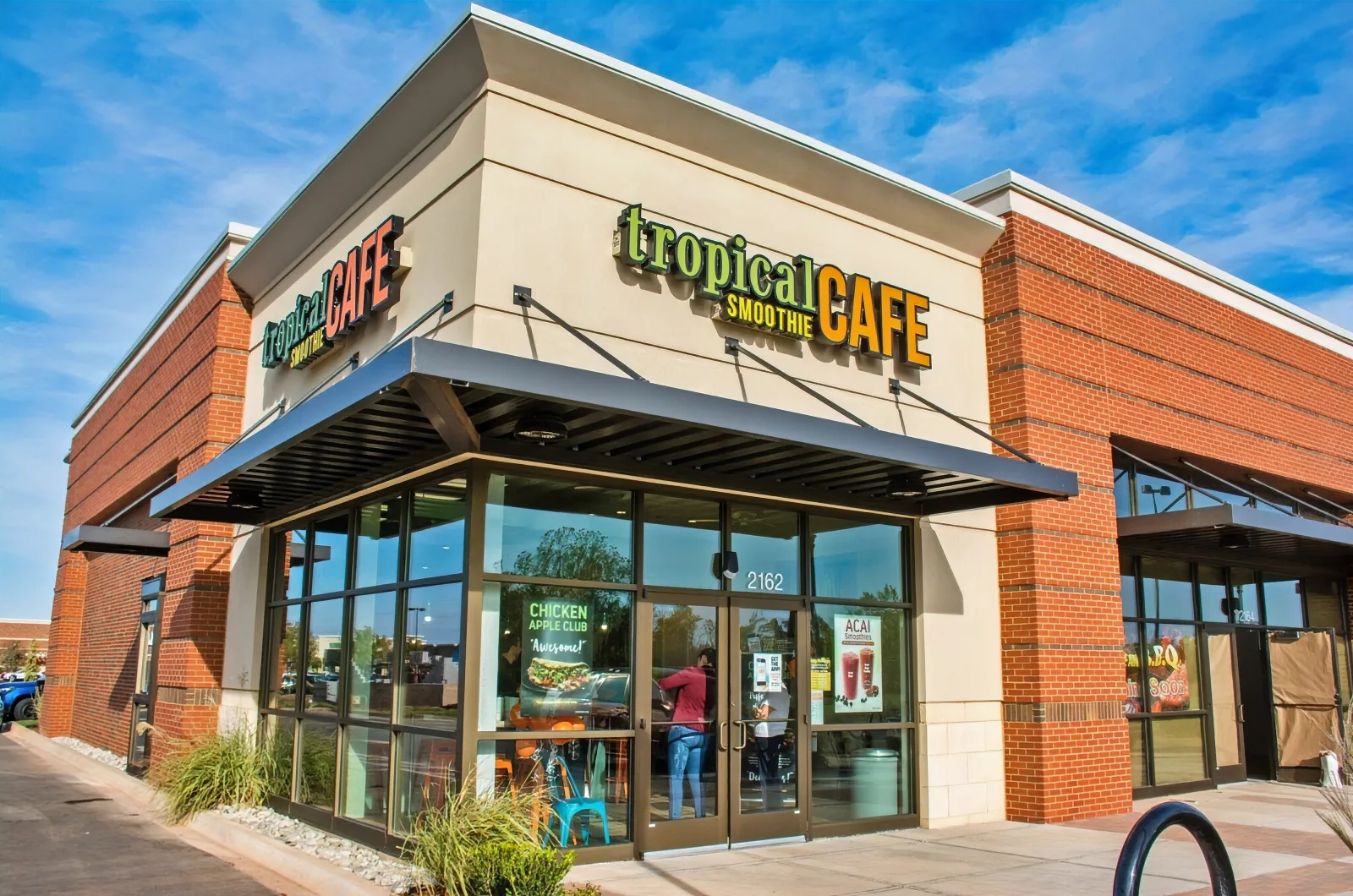
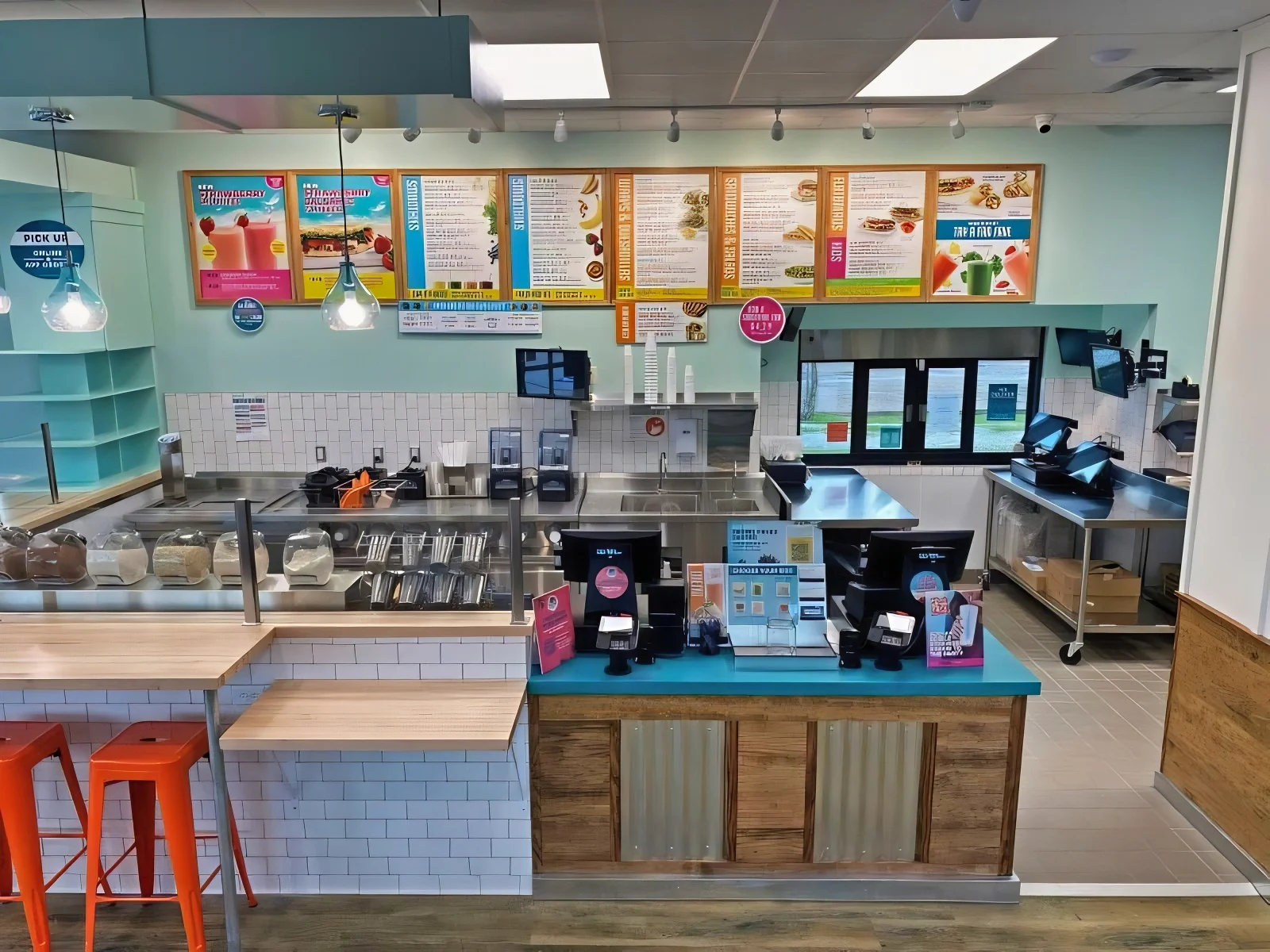
- Client: Tropical Smoothie Cafe (kitchen and dining areas)
- Building Type: Quick-service restaurant, hard-surface interior
- Panel Spec: 2″ mineral fiber core, NRC 1.05, dye-sublimated print on Guilford of Maine fabric
- Scope: Custom art panel as anchor piece plus baffles and standard panels for full coverage
- Install Window: After-hours, two-week fabrication lead time
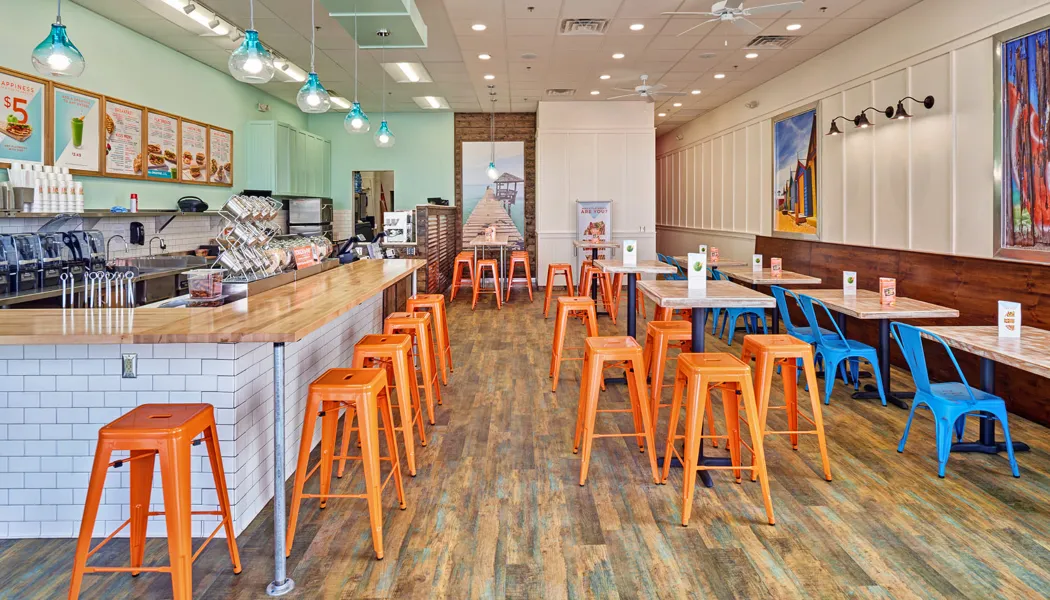
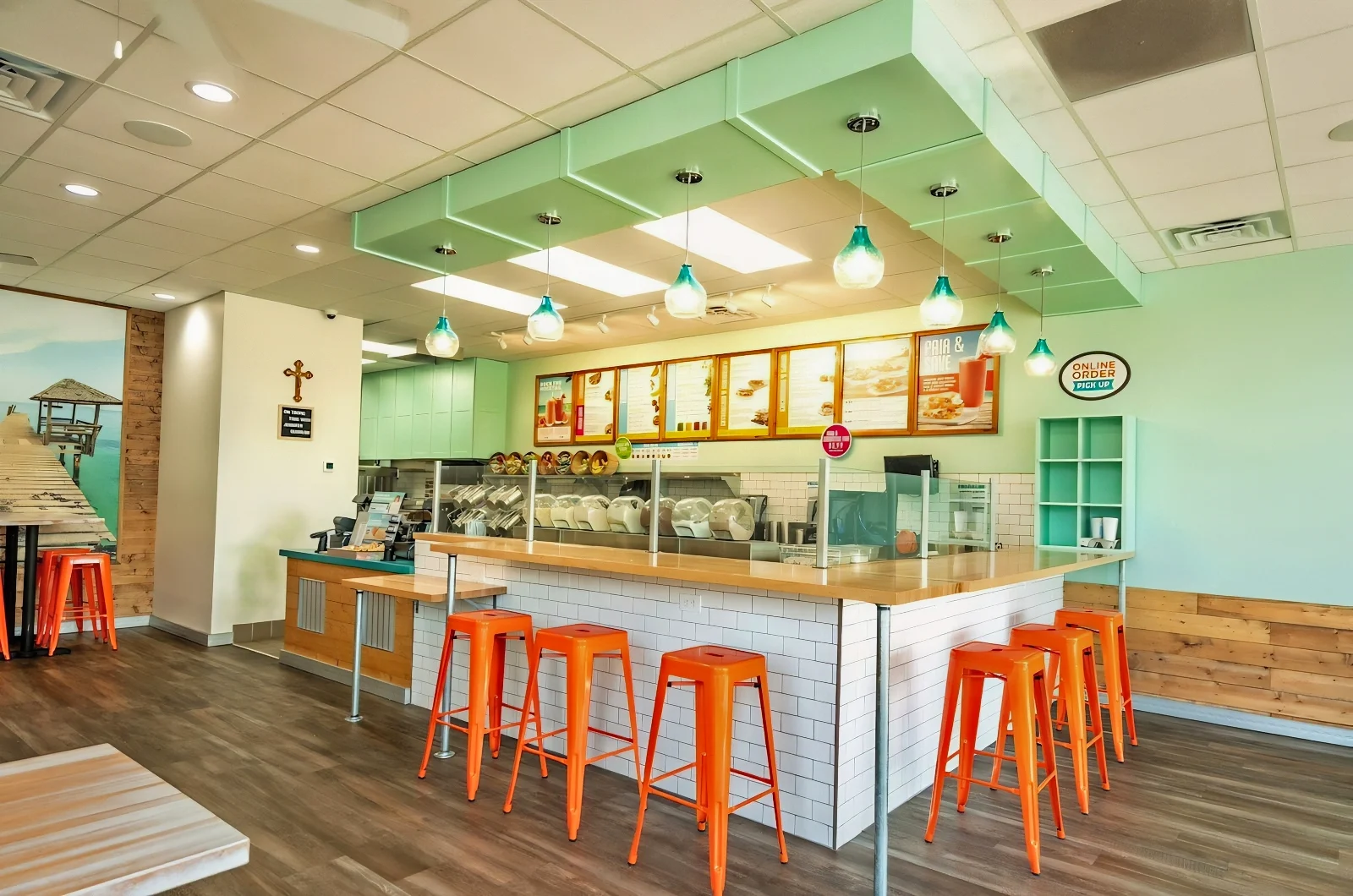
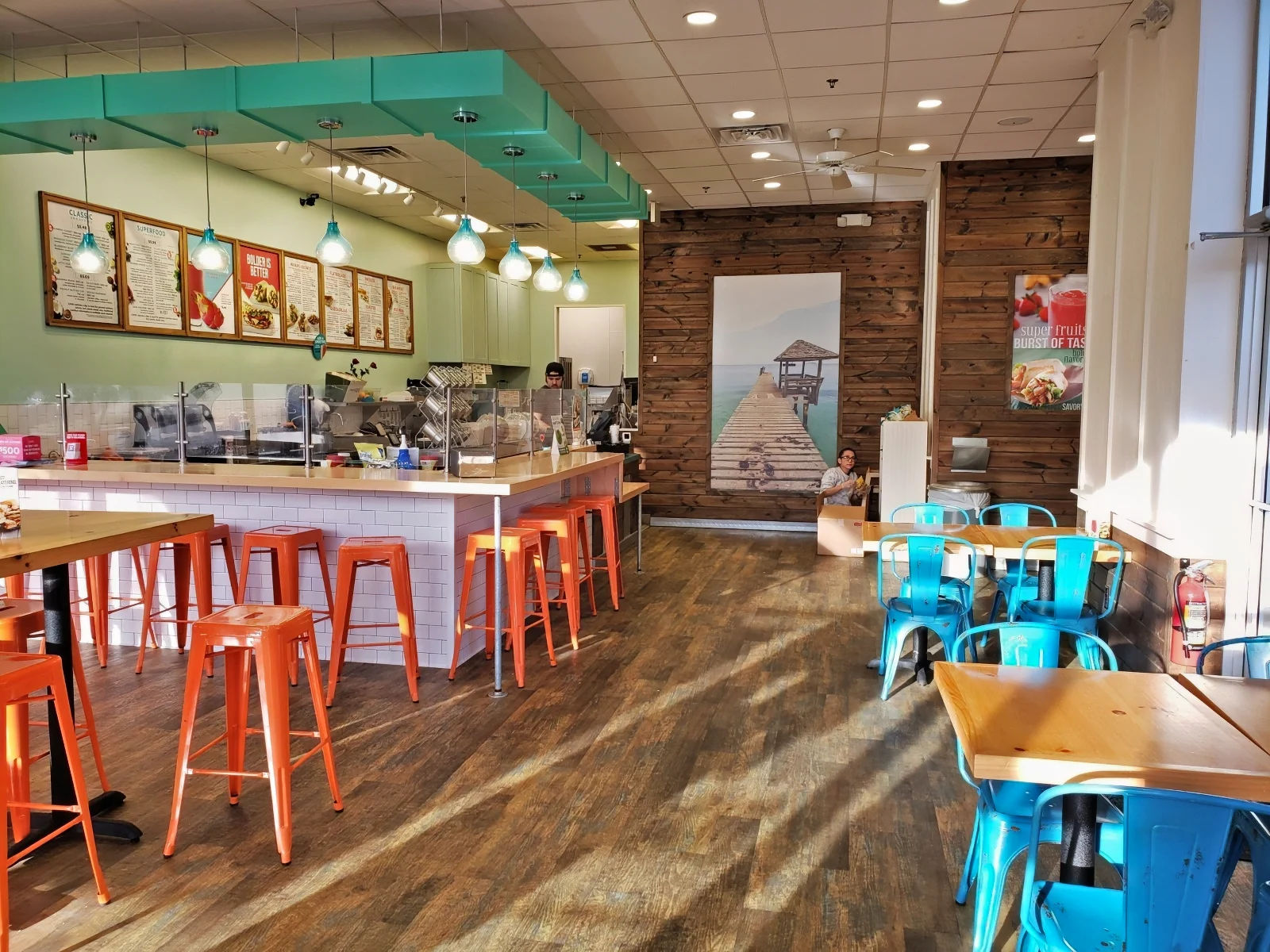
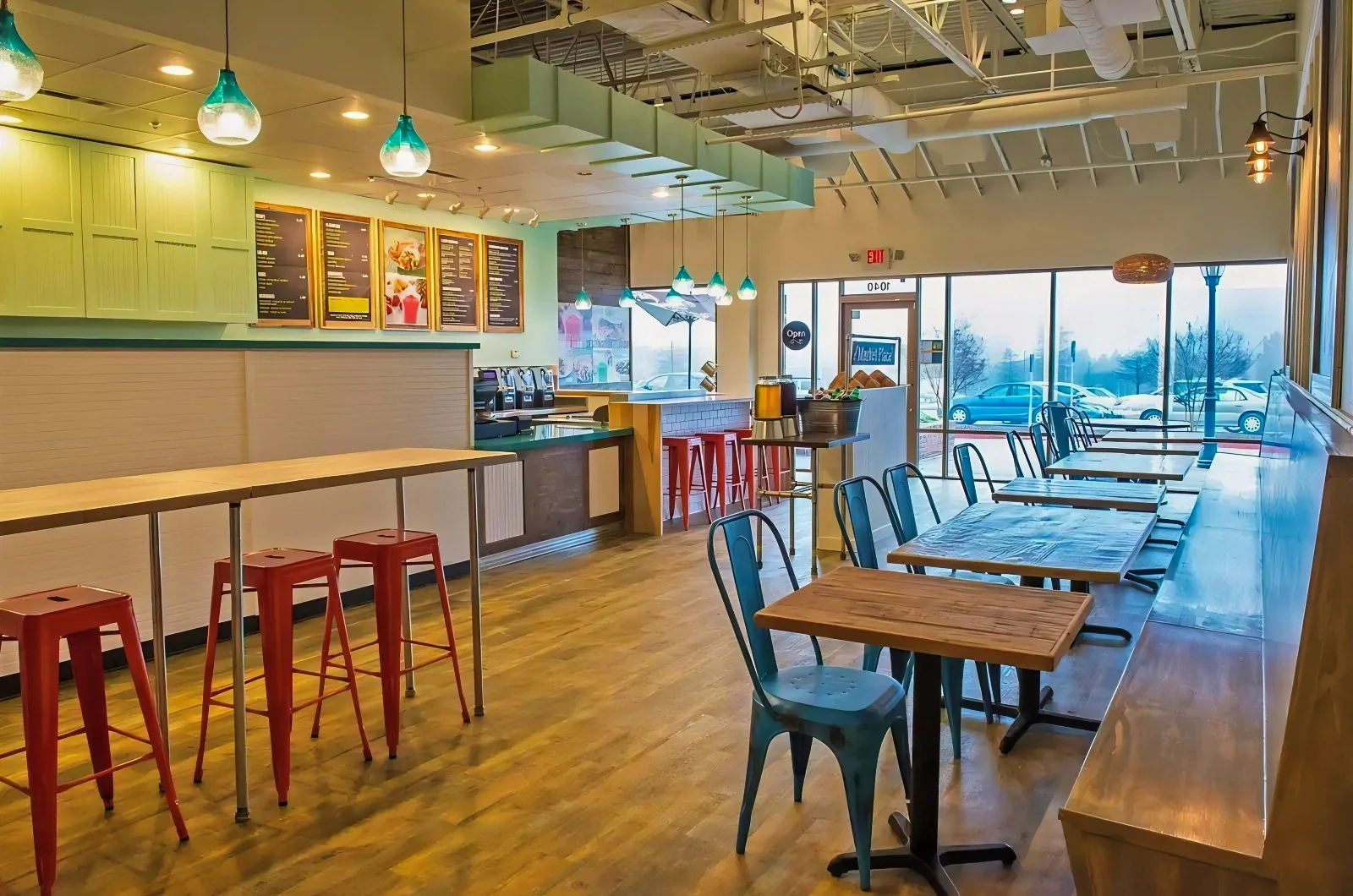
The Tropical Smoothie Cafe location had the same acoustic problem most quick-service restaurants run into within a year of opening. Hard tile floors, painted drywall, and a metal-and-glass storefront left the dining room with nowhere for sound to settle. During lunch peak, the room turned into a wash of overlapping conversations, blender noise from the kitchen, and front-counter calls. Guests stayed shorter, came back less, and the brand experience suffered.
The fix had to do two things at once. It needed to absorb enough sound to bring reverberation under control, and it had to look intentional. Generic gray fabric panels read as office surplus in a brand-driven QSR space. The answer was a custom-printed acoustic art panel that carried Tropical Smoothie’s visual identity into the dining room while delivering the acoustic numbers a restaurant needs.
Why Restaurants Need a Different Acoustic Treatment
Office acoustic treatment can hide. A restaurant cannot. Every panel sits in the customer’s line of sight from the front door to the booth, and the brand pays for any ugly cover-up the GC put up to chase a noise complaint. Commercial Acoustics built this scope around the constraint that the panels had to read as intentional decor, not patchwork.
Restaurants also stack acoustic challenges that offices do not. Kitchen noise spills into the dining room through the order window. Grease and food traffic limit which fabrics can survive year two. Open mic comes from every table at lunch peak, not just one conference room at 2 PM. The treatment plan has to account for all of it.
The single biggest mistake restaurant operators make is treating acoustics like a punch-list item. By the time the noise complaint shows up on the review site, the brand has already taken the hit. Designing acoustics into the build, or treating it within the first quarter of opening, costs a fraction of the lifetime impact of bad reviews.
The Custom Print Build: NRC 1.05 with Brand Graphics
- Core: 2-inch mineral fiber, the absorbing layer behind the print
- Fabric: Guilford of Maine acoustically transparent face, sound passes to the core
- Print: Dye-sublimated brand artwork, no surface coating that would clog pores
- Frame: Wood border for clean edges and a finished gallery look
- Performance: NRC 1.05 absorption, top tier for any panel in this thickness class
The custom panel does most of the visual lift on the main feature wall. Standard absorption panels and ceiling baffles handle the rest of the room volume out of sight, behind the bar and above the seating. The split lets the brand graphic carry the moment without needing every panel in the room to be a custom print, which keeps the budget honest.
Full product detail and configuration options live on the acoustic art panels page.
Why Dye Sublimation Matters for Restaurant Panels
Print method matters more than print quality on an acoustic panel. Surface inks, screen prints, and laminate films all sit on top of the fabric and physically block the pores that let sound pass through to the absorbing core. A panel that looks gorgeous can lose half its NRC the moment it gets coated.
Dye sublimation is the answer because the dye becomes part of the fabric fiber rather than sitting on the surface. The fabric pores stay open, the print stays sharp, and the acoustic performance does not change between the lab test and the installed panel. Guilford of Maine fabrics are the standard substrate because they are engineered for acoustic transparency at the fiber level.
The same rule applies to artwork choice. Highly saturated, large-format graphics print well at panel scale. Fine line work and small text can wash out at typical restaurant viewing distance. The art proof step before fabrication exists to catch this before the panels go to production.
Restaurant Echo Targets by Use Case
Different restaurant formats call for different reverberation targets. The table below maps the working windows that an acoustic scope should design to.
To model how RT60 changes with added absorption surface area in different room sizes, run the room acoustics calculator.
Where Standard Acoustic Panels Fall Short in Food Service
Generic gray office panels show three failure modes inside a year of restaurant service. The fabric absorbs grease and food vapor and stains in patches the cleaners cannot fix. The visual mismatch with the restaurant’s design palette gets called out in customer reviews. And the standard sizes leave dead wall space that an art panel layout would have filled.
Custom-printed art panels avoid all three. The dye sublimation print does not show grease the way solid-color fabric does, the artwork integrates with the brand language by design, and the panels can be sized to fill specific wall sections rather than forced into a 24-by-48 grid. Fewer panels, more coverage, better optics.
What Restaurant Operators Should Ask Before Specifying Art Panels
- NRC Spec: Confirm NRC 0.85 minimum, 1.0+ for high-traffic dining
- Print Method: Dye sublimation only, never surface inks or laminate films
- Fabric: Acoustically transparent face like Guilford of Maine, not decorative upholstery
- Sizing: Custom dimensions to fill the wall, not standard 24×48 forced into the layout
- Cleanability: Fabric care guide for grease and food vapor exposure
- Art Proof: Pre-print proof step to catch fine line and small text issues at panel scale
Skip any of these and the panels still look fine on day one but start failing within the first year of restaurant service. The spec sheet is short and the cost difference between doing it right and doing it cheap is small at the install level, large at the lifetime level.
Conclusion: Acoustic Art Panels Built for the Dining Room
Restaurants do not have to choose between echo control and brand-consistent design. Custom-printed acoustic art panels deliver NRC 1.05 absorption while carrying the restaurant’s visual identity onto the wall. The combination keeps reverberation in the right window for the format, holds up to grease and food traffic, and reads as intentional decor instead of an after-the-fact noise patch.
Whether the project is a single Tropical Smoothie location or a multi-unit rollout, Commercial Acoustics handles the spec, the art proof, and the after-hours install as one scope.
FAQs: Acoustic Art Panels for Restaurants
What NRC should a restaurant acoustic panel hit?
NRC 0.85 is the floor and 1.0 or higher is the working target for high-traffic dining. The 2-inch mineral fiber core panels used at this Tropical Smoothie location landed at NRC 1.05, which is top tier for any panel in this thickness class.
Will printing artwork on an acoustic panel hurt the absorption?
Only if the print method is wrong. Dye sublimation embeds the dye into the fabric fiber, so the pores stay open and acoustic performance does not change. Surface inks, laminate films, and screen prints all coat the fabric and can drop NRC by 30 to 50 percent.
Can custom acoustic art panels handle restaurant grease and food vapor?
Yes when the fabric is engineered for it. Acoustically transparent fabrics from manufacturers like Guilford of Maine include lines specified for hospitality and food service. Generic decorative upholstery is not the right substrate and will stain inside a year.
How long does fabrication and install take for custom restaurant art panels?
Two weeks fabrication is typical from approved art proof to delivery. Install runs after-hours so the restaurant does not lose service days. Single-location projects often complete in one overnight window for the wall scope plus baffles.

Walker Peek|Founder & CEO, Commercial Acoustics
Walker founded Commercial Acoustics in 2013 to bring aerospace-grade engineering discipline to soundproofing, and runs the firm as CEO from its 12,000 sq ft Tampa production facility. The company designs custom acoustic panels, sound membranes, and masking systems for multi-family, hospitality, healthcare, and commercial projects across the US — built around Walker’s invention, Wall Blokker, an EVA-based sound barrier that hits STC 50-plus at roughly $1 per square foot installed.
A Jacksonville native, Walker spent five years at Kennedy Space Center with Craig Technologies before founding Commercial Acoustics — certifying aerospace manufacturing to the AS9100 standard and leading Six Sigma Black Belt process-improvement teams on NASA programs. He is a certified Industrial Noise Control Engineer and the author of Architectural Acoustics: A Practical Handbook.
