Table of Contents
Project Overview: Upstate New York Multifamily Property
- Project: Multifamily acoustic field testing and construction defect investigation
- Client: General contractor (ongoing vacation rental and multifamily portfolio)
- Location: Upstate New York multifamily property
- Trigger: Resident complaints about adjacent stairway noise and footfall from above
- Standards: ASTM E336 ASTC airborne + ASTM E1007 AIIC impact field testing
- Frequency Range: 100 Hz to 4000 Hz across the speech and impact bands
- Turnaround: Test, diagnose, recommend within 2 weeks of contract
The general contractor managing this Upstate New York multifamily property had a problem most multifamily operators eventually face. Residents were filing noise complaints between units, the construction documents looked clean, the walls measured to spec on paper, and nobody could explain why the field experience kept diverging from the design intent. Stairway noise was traveling between units. Footfall from above was disturbing the units below. The acoustic complaint pattern was real and the cause was hidden.
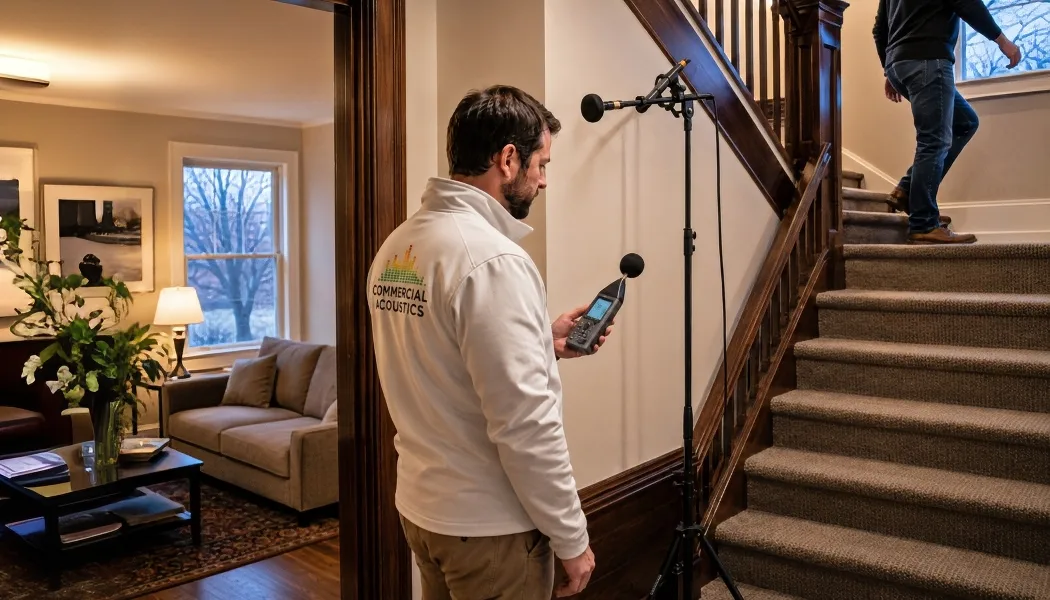
Commercial Acoustics ran ASTC airborne and AIIC impact field tests across the affected unit pairs, then opened ceilings and walls at the spots the data flagged. The investigation turned up three construction defects that the design drawings did not predict and that no single acoustic test could identify on its own. The combination of field testing plus visual inspection produced the actual diagnosis.
Why Multifamily Acoustic Testing Needs Both ASTC & AIIC
Two different physical phenomena cause two different complaint types in multifamily housing. Airborne sound (voices, music, TV) transmits through walls and ceilings as compression waves in the air. Impact sound (footfall, dropped objects, chair scrapes) travels through the structure itself as mechanical vibration. The two tests for these are distinct.
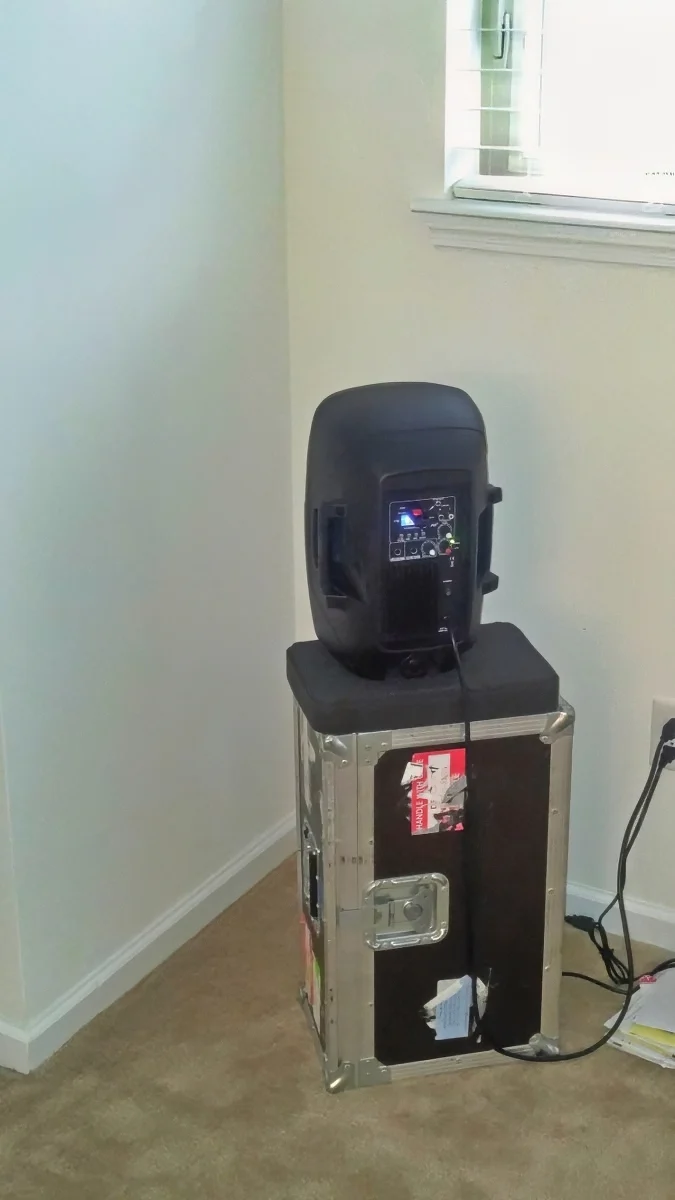
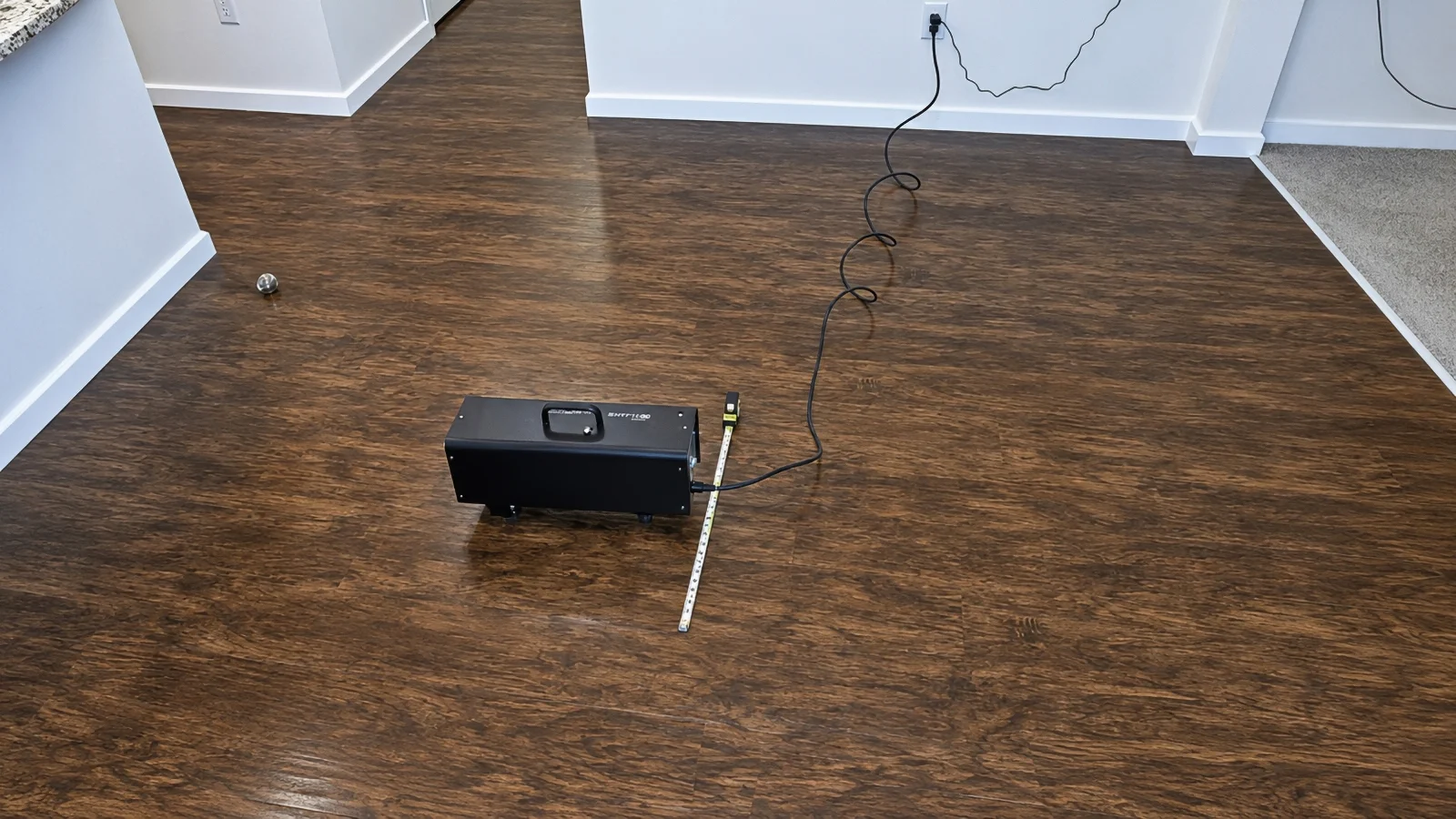
ASTM E336 ASTC tests airborne transmission with a calibrated pink noise source on one side of the wall and a meter on the other. ASTM E1007 AIIC tests impact transmission with a tapping machine dropping standard-weight steel balls onto the floor above while measuring the level in the unit below. A multifamily property with footfall complaints needs the AIIC test specifically. Running only the ASTC misses the actual problem.
For a single-family parallel that ran the same field testing methodology in a NOLA shotgun, see the New Orleans residential sound testing case. For a commercial AIIC example, see the dance studio AIIC field test.
Field Methodology: Pink Noise & Tapping Machine
- Airborne Source: Calibrated loudspeaker playing pink noise, set at least 10 dB above background in the receiving room
- Impact Source: Standard tapping machine, 500-gram stainless steel balls dropped from controlled height
- Capture: Sound level meter logging across the 100 to 4000 Hz speech and impact bands
- Remote Tapping: Tapping machine operated remotely between units for fast multi-pair coverage
- Visual Follow-Up: Inspection at flagged areas, ceiling and wall openings to confirm the source of leak
The visual follow-up step is what separates a useful acoustic field test from a number on a report. The data tells the engineer where the leak is. The wall opening tells them why. On this Upstate New York project, every defect found needed visual confirmation. The meter found the spots, the carpentry told the story.
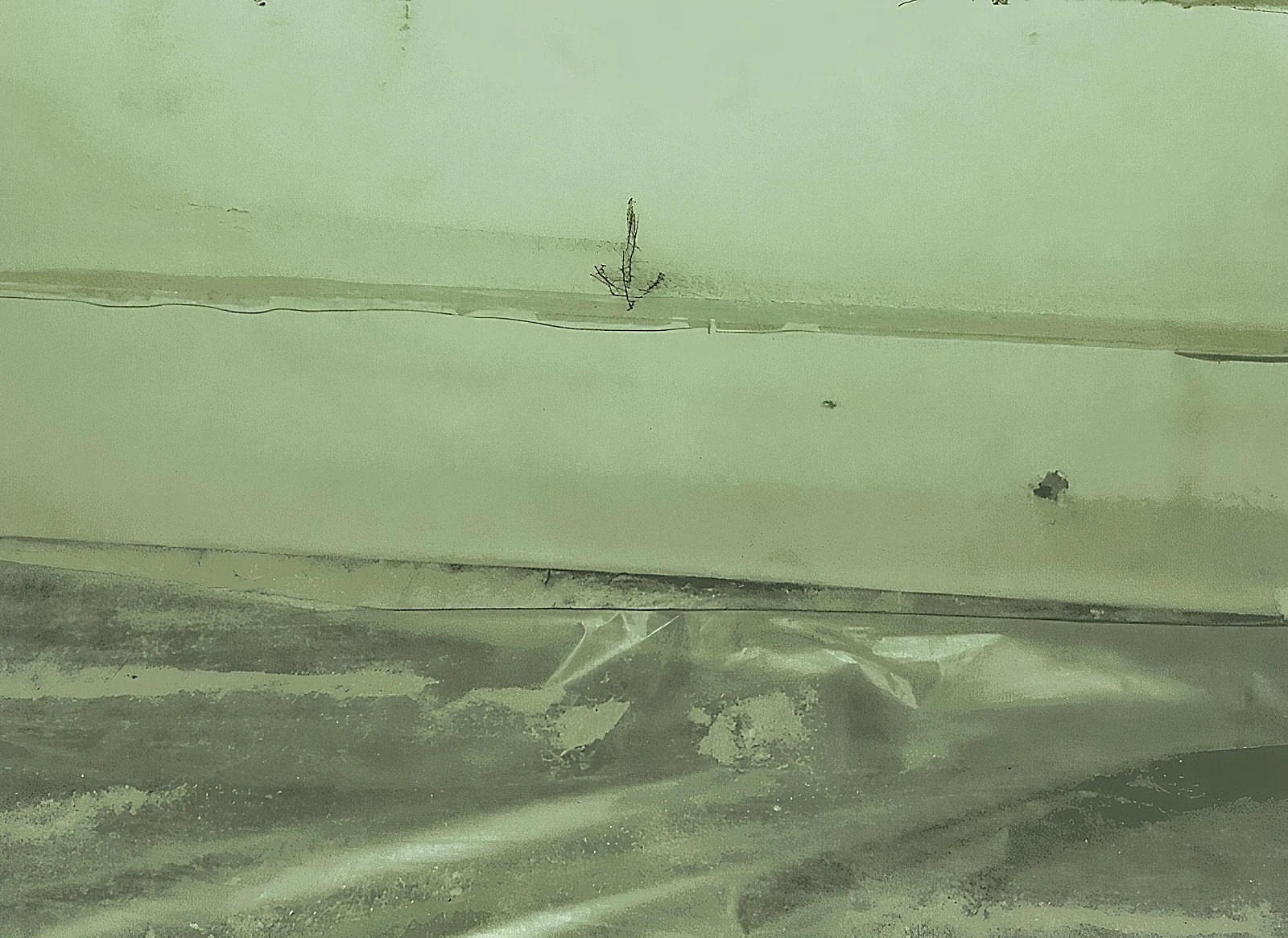
The Construction Defects Field Testing Found
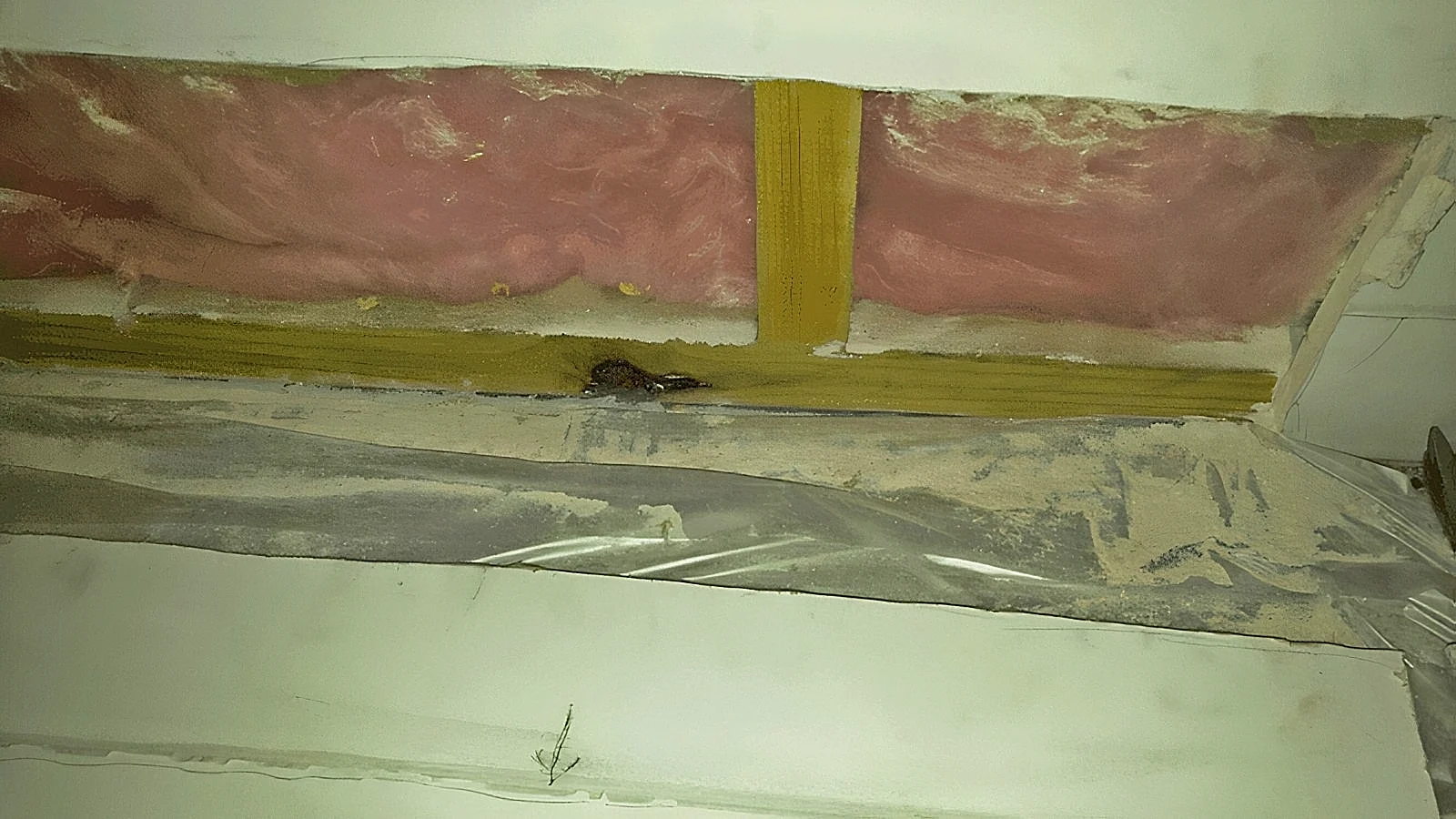
- Wood Knot in Baseplate: Continuous void along the entire baseplate creating a direct sound leak path
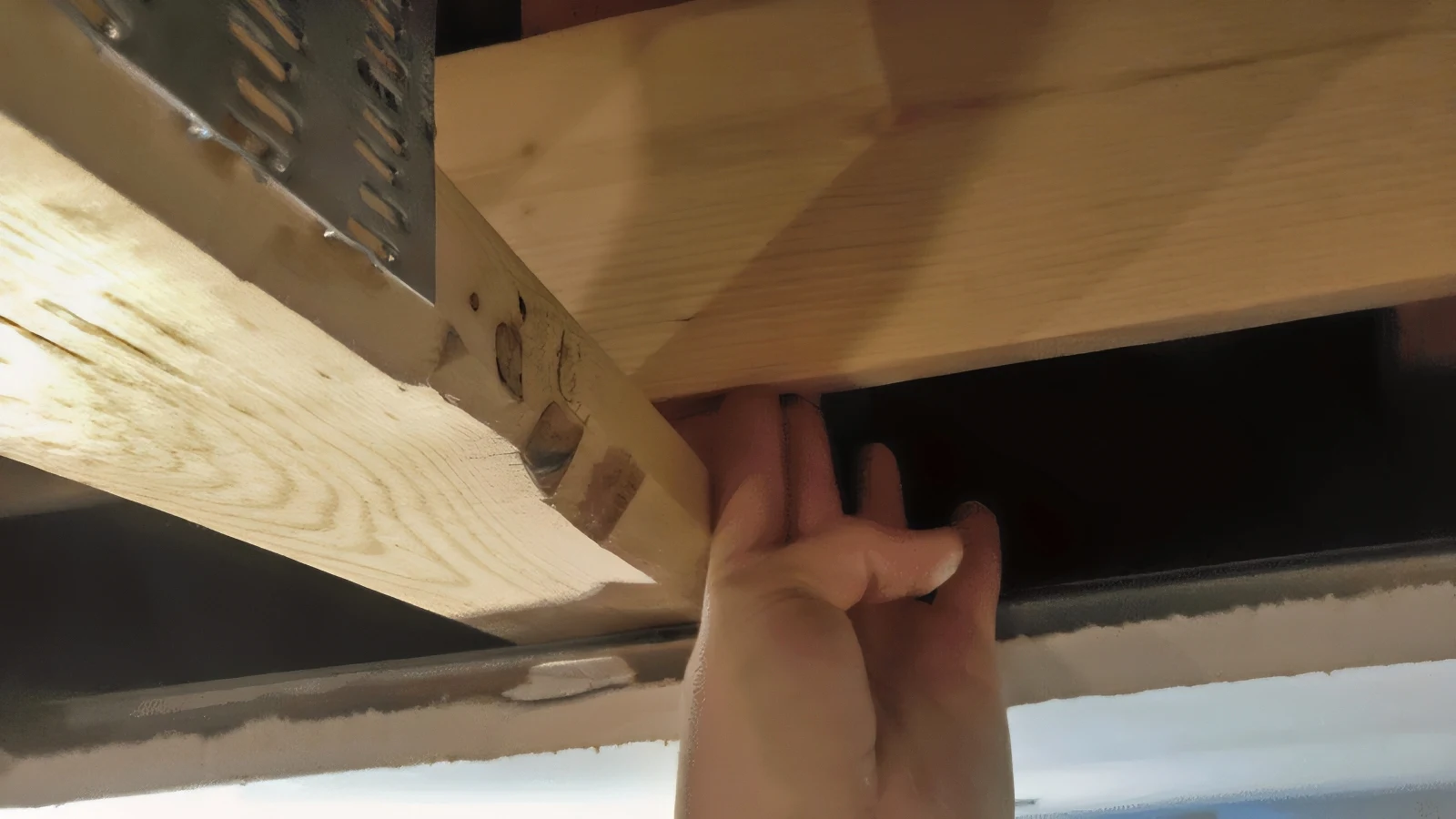
- Unfastened Strongback: Floor web trusses moving independently, eliminating low-frequency decoupling
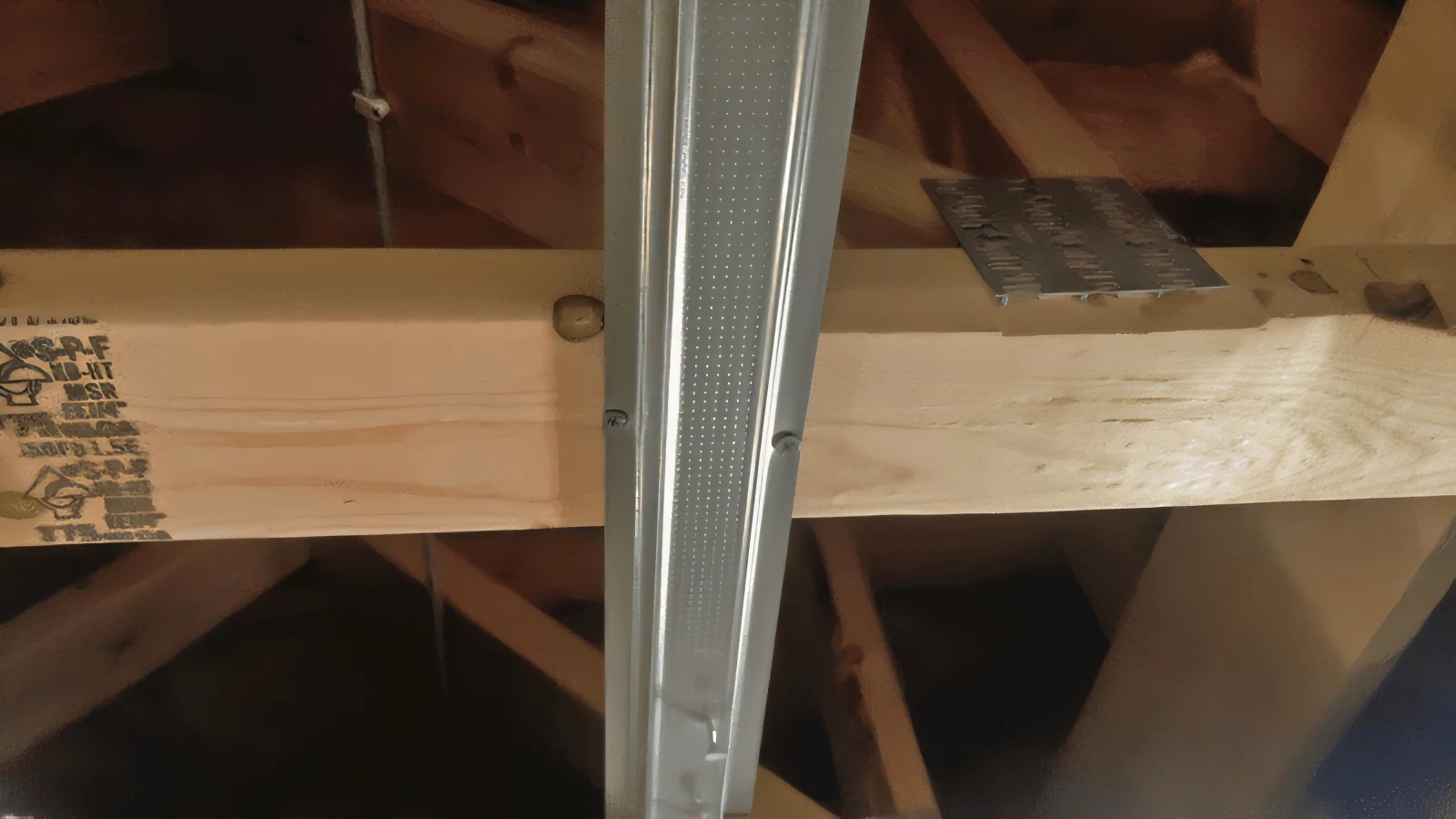
- Hat Channel Substitution: Standard hat channel installed where resilient channel was specified, killing the isolation
- Baseboard Sealant Gaps: Acoustical caulk missing along the wall-to-floor joint in multiple locations
Each of these defects compounds. The wood knot is a single point leak. The unfastened strongback is a structural decoupling failure across the entire floor assembly. The hat channel substitution makes the wall behave fundamentally differently than the spec assumed. None of them show up on a code inspection. All three were invisible until the meter pointed at them and the ceiling came down.
The hat channel finding was the most consequential. The drawings called for resilient channel, which decouples the drywall face from the framing and adds 5 to 10 STC points. Hat channel does not decouple. Installing one instead of the other looks identical at the framing stage and the difference only shows up in the field test.
Multifamily Acoustic Test Types Compared
Different multifamily complaints map to different field tests. The table below shows which test to run for which complaint pattern.
Common Multifamily Construction Defects
The Upstate New York defects are representative. Three patterns recur on almost every multifamily field test that returns numbers worse than the design predicted.
- Channel Substitution: Hat channel or standard furring installed where resilient channel was specified
- Penetration Leaks: Outlets, switches, plumbing chases left unsealed by the wall trade
- Decoupling Failures: Unfastened strongbacks, missing isolation clips, hard contact at floor-wall joints
- Material Defects: Knots, splits, or voids in framing lumber that create direct sound paths
- Sealant Skipped: Acoustical caulk specified but never applied at the wall-to-deck or wall-to-floor joints
None of these are detected by the building inspector. All five are caught reliably by ASTM E336 plus E1007 plus an honest visual inspection.
What Multifamily Developers Should Test Before Closeout
- Sample ASTC: ASTM E336 on at least one demising wall per unit type, before drywall finish
- Sample AIIC: ASTM E1007 on at least one floor-ceiling assembly per stack, before final flooring
- Visual Inspection: Open the wall at any flagged spot, verify the actual install matches the spec
- Channel Audit: Confirm resilient channel, not hat channel, on every wall the design called for
- Penetration Map: Catalogue all outlets, plumbing, HVAC penetrations and verify acoustical sealant
Catching defects before closeout costs a fraction of catching them after. After closeout means tearing out finishes, displacing residents, and explaining to the building owner why the construction documents did not deliver the acoustic spec.
Conclusion: Multifamily Acoustic Testing Done Right
Multifamily acoustic performance is a field problem, not a paper problem. The wall on the drawing rarely matches the wall in the building, and the gap between the two shows up as resident noise complaints that escalate to lease disputes and code enforcement. A combined ASTM E336 ASTC plus E1007 AIIC field test, paired with visual inspection at every flagged location, produces the diagnosis that the design documents and the building inspector both miss. This Upstate New York project caught three defects in two weeks.
If you operate a multifamily property and the resident noise complaints are outrunning what the drawings predicted, talk to an acoustic testing consultant about scoping a field audit before the next round of complaints.
FAQs: Multifamily Acoustic Testing in New York
What is the difference between ASTC and AIIC testing?
ASTC is the airborne sound transmission class measured per ASTM E336, capturing speech, music, and TV transmission through walls and ceilings. AIIC is the apparent impact insulation class measured per ASTM E1007, capturing footfall, dropped objects, and other impact noise traveling through the floor assembly. Multifamily properties with both speech and footfall complaints need both tests run.
What construction defects does multifamily acoustic testing find?
The recurring patterns are channel substitution (hat instead of resilient), unsealed penetrations at outlets and plumbing, decoupling failures like unfastened strongbacks or missing isolation clips, material defects like knots and voids in framing lumber, and acoustical sealant skipped at the wall-to-floor or wall-to-deck joints. Field testing plus visual inspection catches all five.
How long does a multifamily acoustic field test take?
Two weeks is typical from contract to delivered report for a multi-unit assessment. Field measurement runs one to two days. Visual inspection at flagged areas adds another day or two. The remaining time is data analysis, defect documentation, and the recommendation memo for the contractor or owner.
Should multifamily testing happen before or after closeout?
Before is dramatically cheaper. Open framing or pre-finish testing lets the contractor fix defects without tearing out drywall or displacing residents. Post-closeout testing still works for diagnosing complaints, but the remediation cost runs three to five times higher because finishes have to come out and go back in around the fix.

Walker Peek|Founder & CEO, Commercial Acoustics
Walker founded Commercial Acoustics in 2013 to bring aerospace-grade engineering discipline to soundproofing, and runs the firm as CEO from its 12,000 sq ft Tampa production facility. The company designs custom acoustic panels, sound membranes, and masking systems for multi-family, hospitality, healthcare, and commercial projects across the US — built around Walker’s invention, Wall Blokker, an EVA-based sound barrier that hits STC 50-plus at roughly $1 per square foot installed.
A Jacksonville native, Walker spent five years at Kennedy Space Center with Craig Technologies before founding Commercial Acoustics — certifying aerospace manufacturing to the AS9100 standard and leading Six Sigma Black Belt process-improvement teams on NASA programs. He is a certified Industrial Noise Control Engineer and the author of Architectural Acoustics: A Practical Handbook.
