
Table of Contents
Project Overview: Tampa Yacht & Country Club Outdoor Patio
- Project: Outdoor event venue property line noise control
- Client: Tampa Yacht and Country Club (TYCC)
- Location: Tampa, FL
- Driver: Tampa noise ordinance compliance, wedding events with live bands
- Baseline: 55+ dBA at property line during peak band moments
- Solution: Fence Blokker MLV panels on perimeter fence + tent overhang, decorative curtain cover
- Result: 15 dB reduction behind the venue, 12 dB reduction at the property line
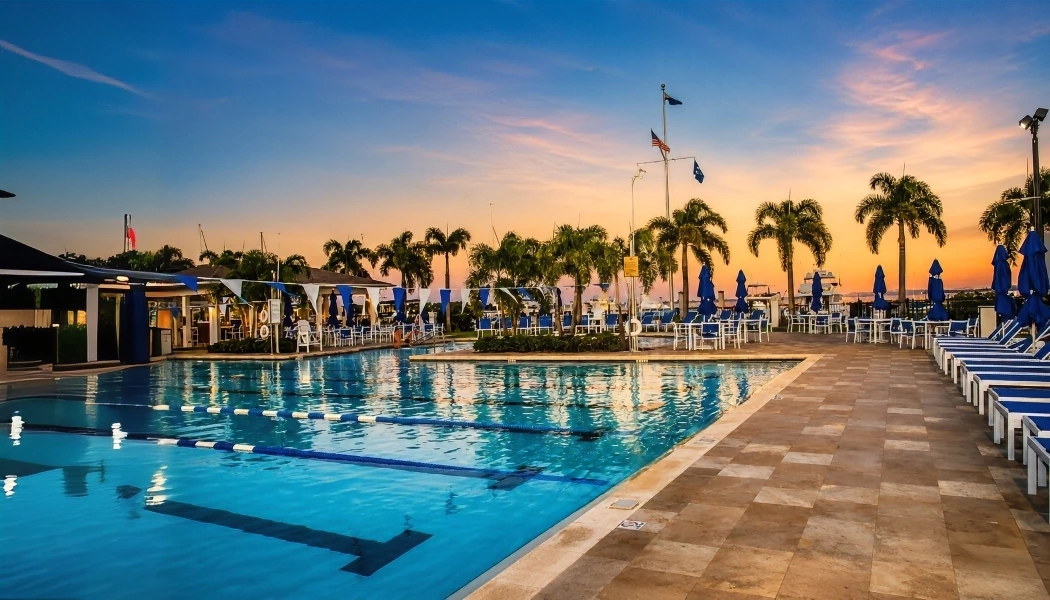
Tampa Yacht and Country Club ran a beautiful outdoor wedding venue and a real noise problem with the neighbors, the same mix of music, guest comfort, and code pressure that drives acoustic treatment for wedding venues. Live bands on the patio routinely pushed past 55 dBA at the property line, well over the threshold in Tampa’s updated noise ordinance. The club needed a fix that worked, did not change the look of the patio, and held up across a full Saturday-night wedding load.
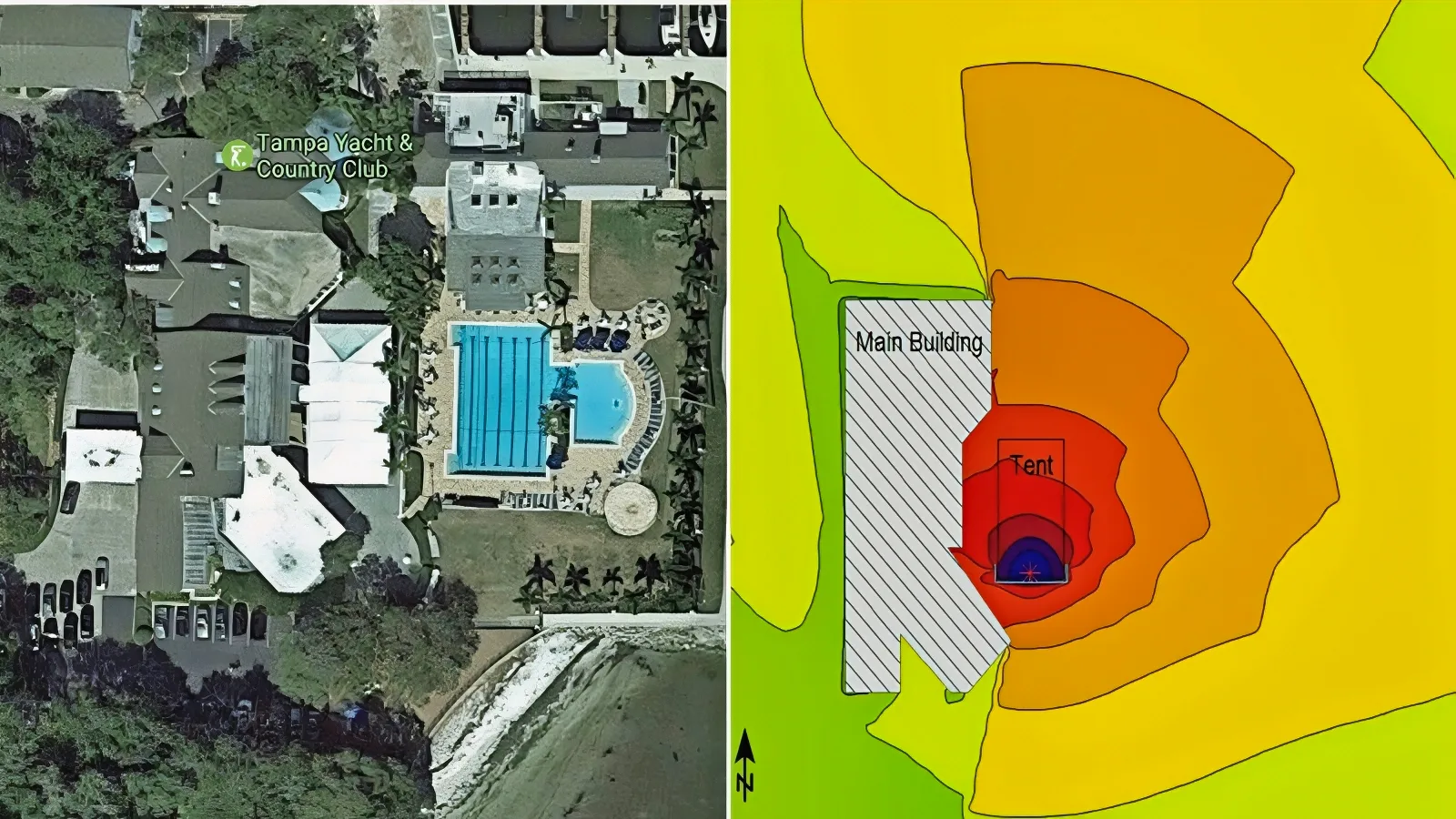
Commercial Acoustics modeled the sound propagation, installed Fence Blokker MLV panels along the patio perimeter, and hid the panels behind decorative sheer curtains so the guest experience was untouched. The install happened just before a wedding. Measurements that same evening confirmed the ordinance target was met with margin.
The Outdoor Event Venue Noise Problem
Outdoor event venues sit at the intersection of three problems. The events themselves are loud. The neighbors live within earshot. The city is paying attention, which is why outdoor noise control has to account for source level, barrier height, and property-line exposure together.
A wedding band on an outdoor patio runs 95 to 105 dBA at the stage. With no perimeter attenuation, that energy travels essentially unimpeded to the property line. Tree lines and decorative landscaping look like sound barriers but acoustically deliver almost nothing. The first complaint from a neighbor becomes the first call to code enforcement, which becomes the first warning letter, which becomes the threat of fines or a venue license review.
For a parallel case on the testing side of municipal noise compliance, see the New Orleans noise ordinance testing study.
City Noise Ordinances Are Getting Stricter
The old standard was a simple dBA limit at the property line. Tampa’s updated ordinance added a separate test: the noise cannot be plainly audible at 100 feet from the property line. That language matters because it shifts compliance from a numbers-only test to a perceived-noise test that a neighbor with a phone can document.
The trend is national. Cities across the Southeast are adopting some combination of dBA limits, dBC limits for low-frequency bass, and plainly-audible language for nighttime events. Venues that operated for years under the old rules are suddenly out of compliance under the new ones. The acoustic scope has to match the new test, not the old one.
The Fence Sound Barrier: MLV Behind Decorative Curtains
- Core Material: Reinforced mass-loaded vinyl, the dense barrier doing the actual blocking
- Mounting Surface: Perimeter fence between the patio and the property line, plus the tent overhang
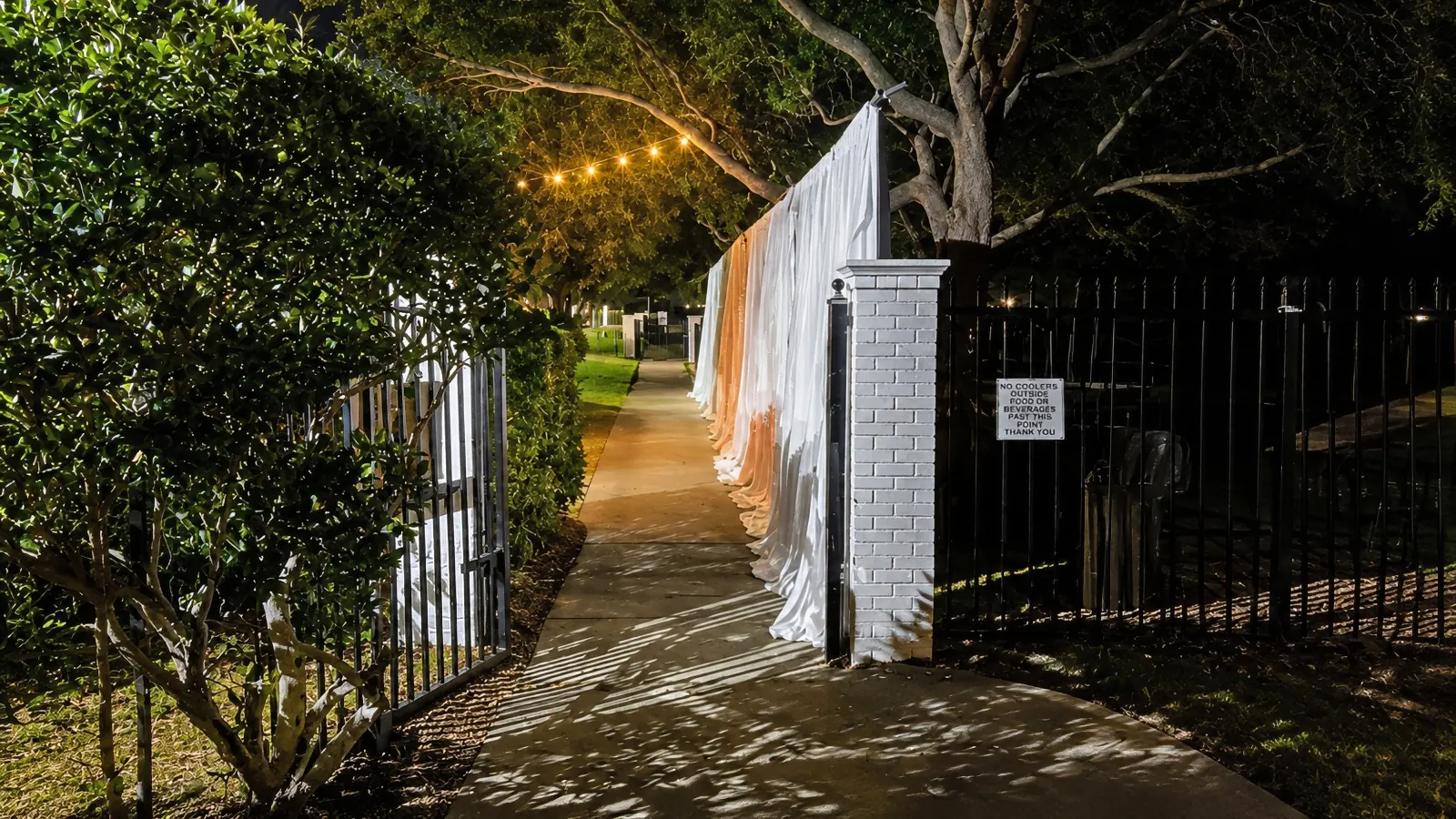
- Aesthetic Cover: Decorative sheer curtains in front of the MLV panels, guest-visible
- Modeling: Sound propagation model built before install to predict dBA drop at the property line
- Mode: Initial deployment was rented, club exercised purchase option after the first wedding cycle
The product family is the Commercial Acoustics Fence Blokker assembly, MLV-reinforced panels engineered for outdoor mount. The mass blocks airborne sound, the panels handle weather, and the decorative curtain layer means the install reads as venue dressing rather than sound treatment. Guests at the wedding never see acoustic engineering, only the patio they came for.
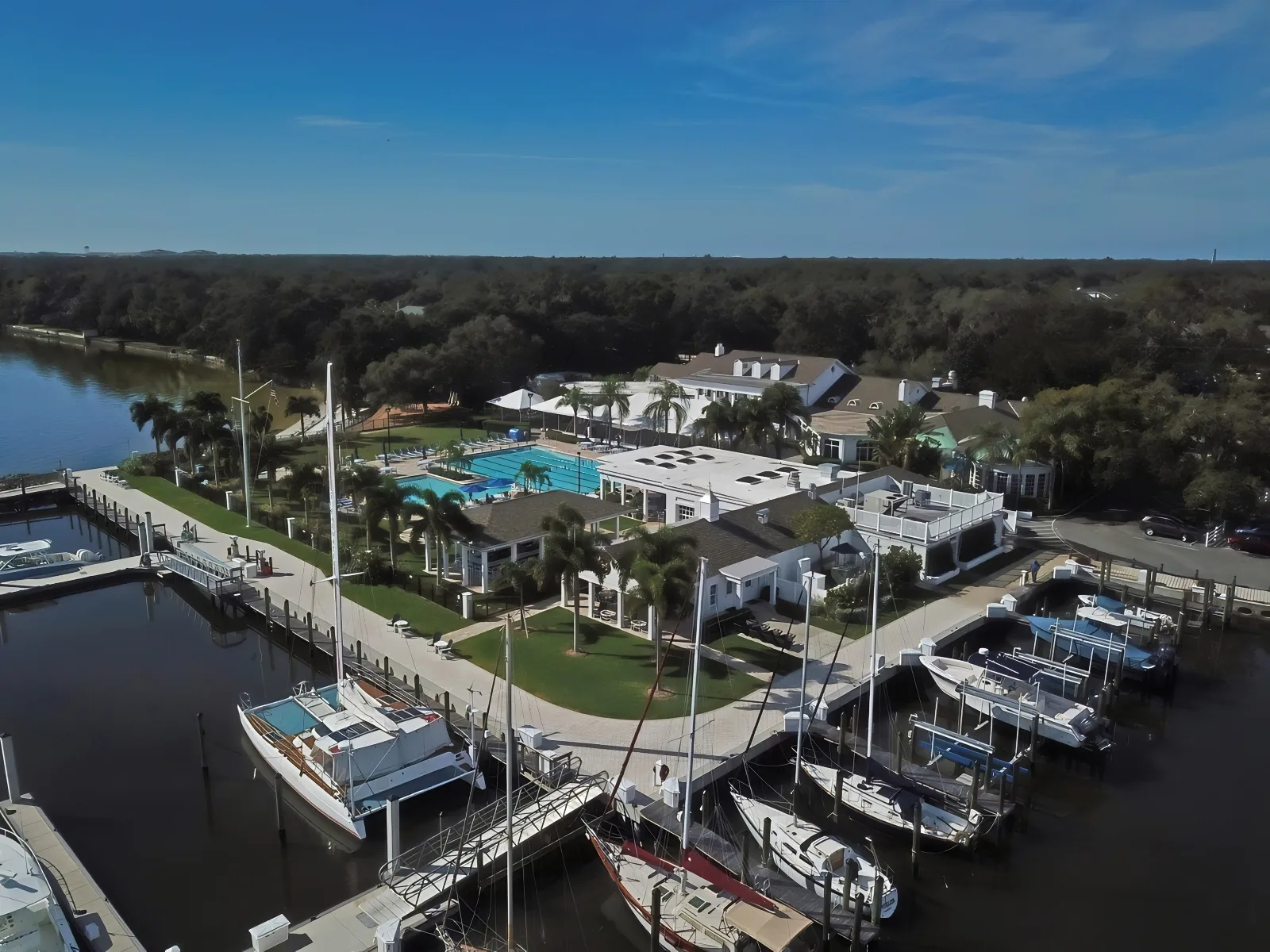
Field Result: 15 dB at Patio, 12 dB at Property Line
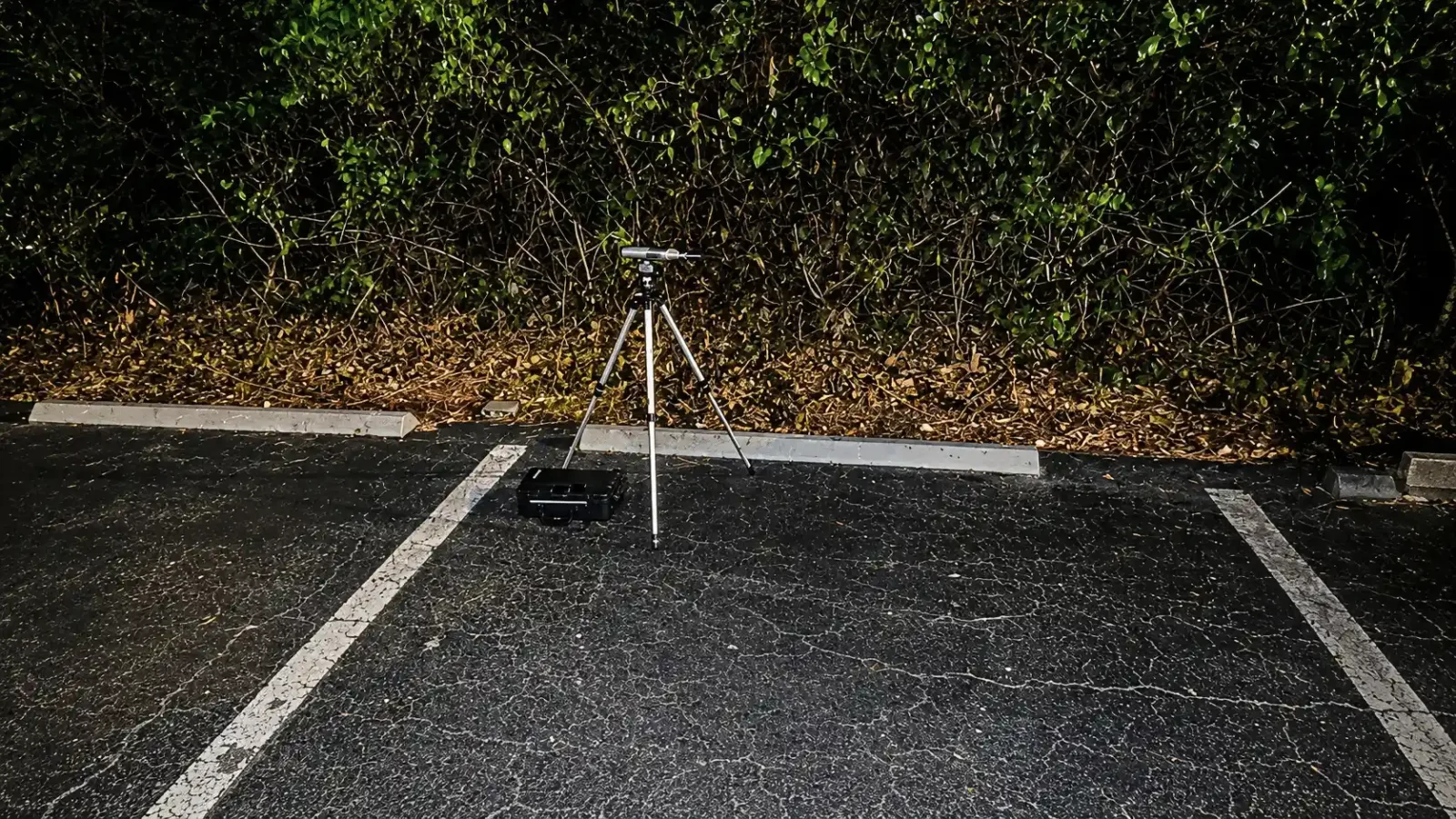
Field measurements that wedding night showed a 15 dB reduction directly behind the venue and 12 dB at the property line. The 10 dB ordinance target the club was chasing got cleared with margin.
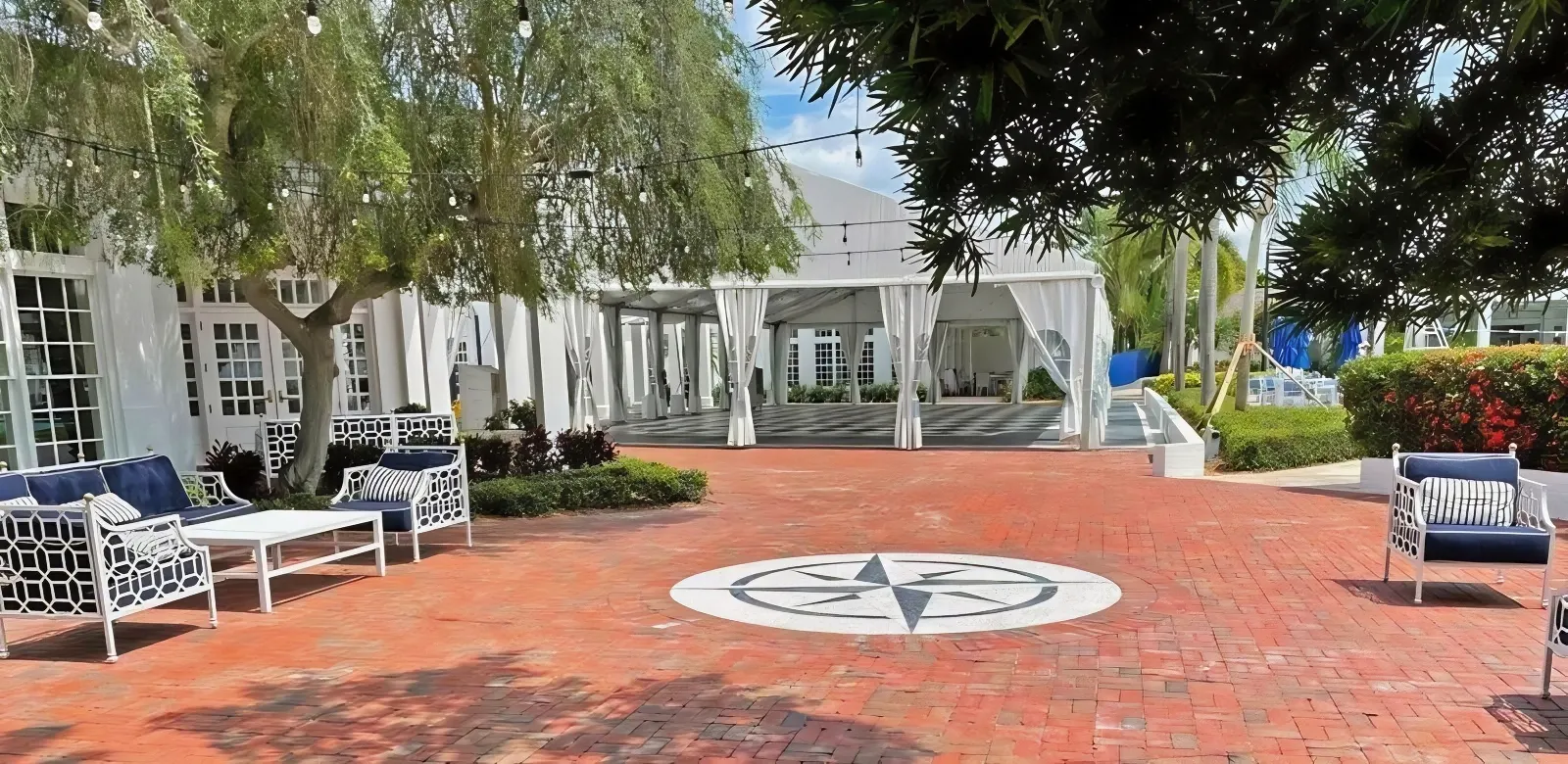
Operational Layers: Stage Orientation & Loudspeaker Control
The fence barrier did the structural work. Two operational adjustments did the rest. Re-orienting the stage so the speakers fired into the venue interior rather than out toward the property line dropped another few dB at the perimeter. Loudspeaker volume caps tied to a venue policy capped the peak band moments before they triggered a complaint.
Architectural and operational layers stack. The fence install is the durable fix. The stage and volume changes are the easy ones that hold the line on any night the band plays a few decibels louder than usual.
What Outdoor Event Venues Should Spec
- Read the Ordinance: Confirm dBA, dBC, and plainly-audible language before any spec
- Model First: Sound propagation model to predict barrier height and coverage
- Fence Path: MLV-reinforced panels along the perimeter, height matched to band amplifier line of sight
- Aesthetic Cover: Decorative curtain layer over the MLV so guests never see acoustic gear
- Operational Rules: Stage orientation, speaker volume caps, written into the wedding contract
Doing all five matters. Skip the model and the barrier height is a guess. Skip the operational rules and one loud band negates a quarter of the structural gain.
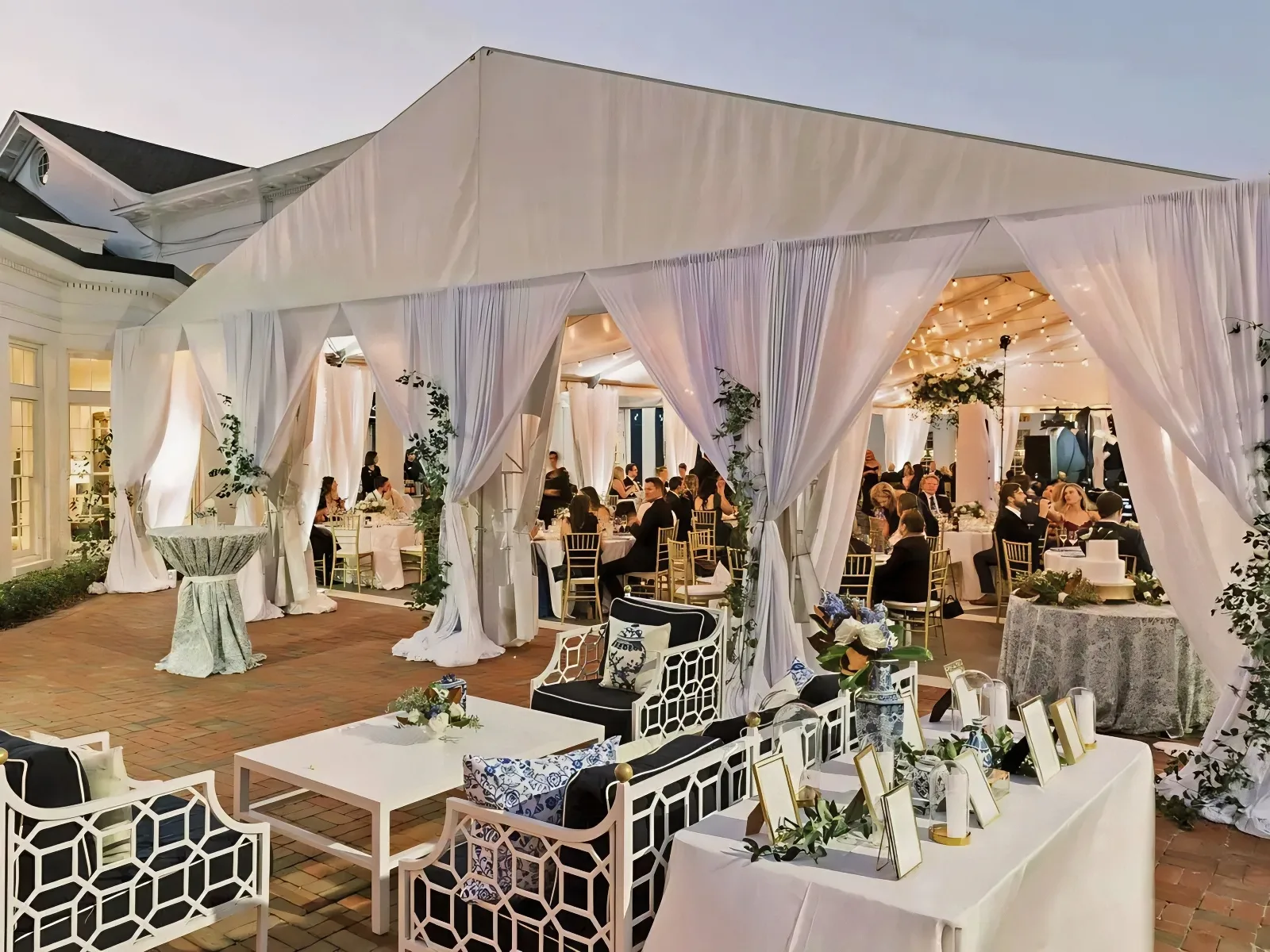
Conclusion: Outdoor Event Venue Noise Control Done Right
Outdoor event venues facing tightening municipal noise ordinances do not have to choose between hosting weddings and keeping the neighbors quiet. A Fence Blokker MLV barrier along the perimeter, hidden behind decorative curtains, drops the property-line noise by 10 to 15 dB. Pair it with stage orientation and a written speaker volume policy and the venue holds the line on every event.
If your venue is fielding neighbor complaints or facing a tightening city ordinance, talk to an acoustic consultant about a perimeter model before the next event season.
FAQs: Outdoor Event Venue Noise & Fence Sound Barriers
How much noise reduction does a fence sound barrier provide?
A properly designed MLV fence barrier delivers 10 to 15 dB of attenuation at the property line, depending on barrier height, coverage, and line-of-sight to the noise source. The Tampa Yacht Club project measured 15 dB directly behind the venue and 12 dB at the property line, clearing the 10 dB ordinance target with margin.
Will fence sound barrier panels work for any outdoor event venue?
Yes for venues with a defined perimeter fence or wall line. MLV panels mount to the existing structure, weather-rated. They work for wedding venues, breweries with patios, restaurants with outdoor seating, country clubs, and any venue where the noise source has line of sight to neighbors at the property line.
What is the plainly audible standard in city noise ordinances?
Plainly audible language says the noise cannot be clearly heard at a defined distance from the property line, typically 50 to 100 feet. This is separate from the dBA threshold and is enforced subjectively by a code officer or by neighbor complaint. Cities are adding this language because it captures bass and intermittent sound that dBA limits miss.
Can fence sound barriers be hidden so guests do not see them?
Yes. Decorative sheer curtains, lattice panels, or landscaping in front of the MLV barrier read as venue dressing. The acoustic panel does the blocking, the decorative layer covers the look. The Tampa Yacht Club install used sheer curtains so wedding guests never saw the acoustic treatment.

Walker Peek|Founder & CEO, Commercial Acoustics
Walker founded Commercial Acoustics in 2013 to bring aerospace-grade engineering discipline to soundproofing, and runs the firm as CEO from its 12,000 sq ft Tampa production facility. The company designs custom acoustic panels, sound membranes, and masking systems for multi-family, hospitality, healthcare, and commercial projects across the US — built around Walker’s invention, Wall Blokker, an EVA-based sound barrier that hits STC 50-plus at roughly $1 per square foot installed.
A Jacksonville native, Walker spent five years at Kennedy Space Center with Craig Technologies before founding Commercial Acoustics — certifying aerospace manufacturing to the AS9100 standard and leading Six Sigma Black Belt process-improvement teams on NASA programs. He is a certified Industrial Noise Control Engineer and the author of Architectural Acoustics: A Practical Handbook.
