
Table of Contents
Project Overview: Adaptive Reuse Apartment Soundproofing
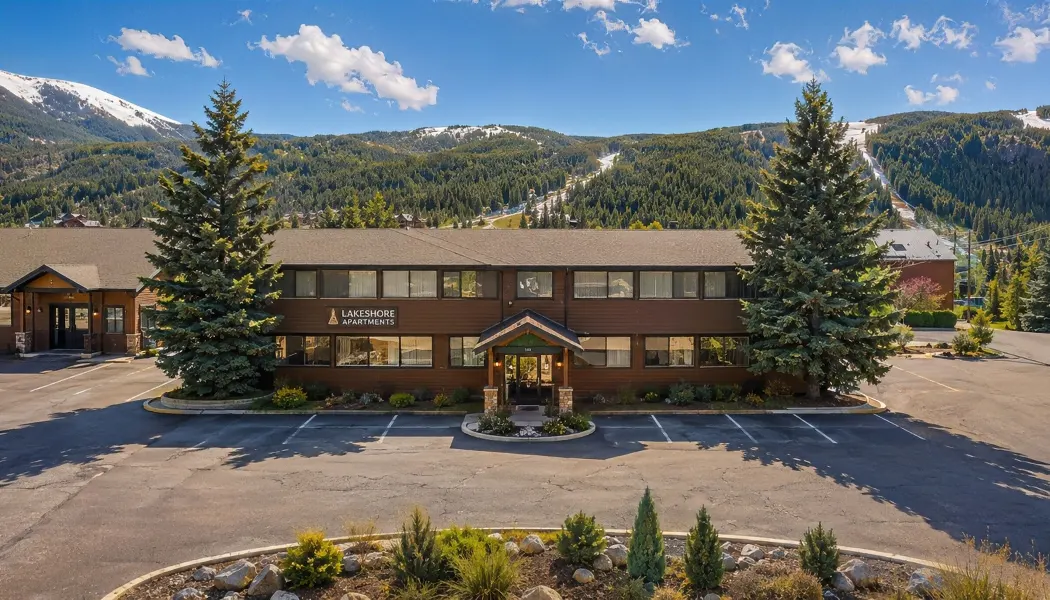
- Project: Adaptive Reuse Conversion of Commercial Building to Eight Apartment Units
- Client: Lakeshore Apartments development team
- Issue: Existing Demising Walls Hit STC 45, Code Required STC 50 for Residential
- Constraint: Resilient Channel Retrofit Would Have Eaten Too Much Livable Floor Area
- Solution: Wall Blokker Pro Membrane Overlay Plus 5/8″ Drywall on Existing Walls
- Outcome: STC 45 Lifted to STC 50, IBC 1207.1 Met, Square Footage Preserved
Why Adaptive Reuse Triggers Demising Wall Code
Adaptive reuse projects convert an existing building into a different use class. The most common version takes an old commercial or industrial structure and turns it into apartments, condos, or mixed-use residential. The conversion looks like a renovation on paper, but the building code treats the result as new residential construction.
That code shift is what catches developers. A wall assembly that was perfectly legal under commercial use can fall short of residential acoustic minimums the moment the use class changes. The original Lakeshore demising walls were rated at STC 45, which was acceptable for the building’s prior commercial tenants but well below the residential bar.
The other common adaptive reuse trap is loss of floor area. Many traditional STC retrofits add depth to a wall assembly. In tight conversion units, three quarters of an inch of added wall depth multiplied across every demising line can cost a meaningful percentage of livable square footage. The path to hitting the residential floor without overbuilding lives in our STC 50 wall construction guide, and the same space-sensitive retrofit logic shows up in our historic hotel soundproofing work.
IBC 1207.1 STC 50 Requirement
- Code: International Building Code Section 1207.1
- STC Floor: 50 (laboratory test) for demising walls between dwelling units
- Applies To: Walls separating residential units from each other and from public spaces
- Field Equivalent: Apparent STC 45 once flanking and field conditions are factored
IBC 1207.1 sets a floor for sound transmission between residential units. The code reads in laboratory STC, which is the rating from a controlled isolation chamber test. Field conditions almost always perform a few points below the lab number because of flanking through floors, ceilings, and shared mechanical penetrations.
The Lakeshore existing walls, 2×6 studs at 16 inches on center with one layer of drywall on each side, tested at STC 45 in lab models. That left the assembly five points short of the IBC residential floor. The full background on what STC actually measures and how field tests compare to lab numbers lives in our common wall STC values reference.
Why Resilient Channels Were Rejected
- Performance: Resilient Channels Reliably Add 5 to 8 STC Points
- Wall Depth Cost: Adds Roughly 1/2″ to 5/8″ Per Treated Side
- Layout Cost: Multiplied Across Six Demising Walls in Tight Units
- Trade-Off: Code Compliance Versus Saleable Square Footage
Resilient channel retrofits are the textbook answer for a STC 45 to STC 50 jump. Decoupling the drywall from the studs with a thin metal hat channel adds five to eight STC points reliably. The performance is well documented and the labor is straightforward.
The hidden cost is wall depth. A resilient channel install adds half an inch to five eighths of an inch per treated side. In a small adaptive reuse unit with six demising walls, that depth multiplied along every demising line eats meaningful livable square footage. For a developer pricing units per square foot, the math turned negative quickly.
The team modeled the trade-off in advance and decided a thin overlay solution would protect the developer’s revenue per unit better than the channel approach. For a project that ran the same general STC retrofit logic on a multi-family vertical instead of a horizontal demising line, see the multi-family soundproofing underlayment case study.
The Wall Blokker Pro Membrane Overlay
- Membrane: Wall Blokker Pro Mass-Loaded Sound Barrier
- Mounting: Adhered Directly to the Existing Drywall Surface
- Finish Layer: 5/8″ Drywall Over the Membrane
- STC Lift: Approximately 5 Points (STC 45 to STC 50)
- Added Depth: Substantially Less Than a Resilient Channel Retrofit
Wall Blokker Pro is a mass-loaded barrier engineered to add transmission loss when laminated between two layers of drywall. The mass blocks airborne sound. The two drywall layers sandwiching the membrane prevent it from coupling directly to either face, which preserves the membrane’s transmission-loss rating in field conditions.
The product page with full spec data lives at Wall Blokker Pro mass-loaded membrane, including STC test data for common wall assemblies.
The result was a wall assembly that hit IBC 1207.1 with significantly less added depth than a channel install. The developer kept livable area inside each unit, hit code on the first inspection, and shortened the construction schedule.
Demising Wall STC Targets by Building Type
Demising wall STC targets shift with building type and the standard the project is held to. Code-minimum apartments need the least. Luxury condos and hotels target the most. The table below maps the working windows across four common residential building types.
| Building Type | Lab STC Target | Field STC Target | Typical Retrofit |
|---|---|---|---|
| Adaptive Reuse Apartments (Code Minimum) | STC 50 | ASTC 45 | Membrane overlay plus added drywall |
| Standard New-Construction Apartments | STC 50 | ASTC 45 | Double-stud or staggered-stud assembly |
| Luxury Condos | STC 53 to 58 | ASTC 50 plus | Double-stud plus membrane plus mineral wool |
| Hotels (Brand Standard) | STC 55 plus | ASTC 50 plus | Membrane overlay plus resilient channel plus mineral wool |
Lakeshore landed in the adaptive reuse row at the IBC code minimum. The Wall Blokker Pro overlay plus added drywall hit the lab STC 50 target with the smallest depth penalty available, which mattered more for this project than chasing a higher number.
Conclusion: Adaptive Reuse Apartment Soundproofing
Adaptive reuse converts buildings into uses they were never originally rated for, which puts existing wall assemblies on a collision course with residential acoustic code. A mass-loaded membrane overlay plus an added drywall layer is the cheapest path from STC 45 to STC 50 when the original studs and framing have to stay and saleable floor area cannot be sacrificed. Contact Us for a wall assembly review on a specific adaptive reuse project.
FAQs: Adaptive Reuse Apartment Soundproofing
What STC is required for apartment demising walls?
International Building Code Section 1207.1 sets the floor at lab STC 50 for walls between residential units. Field-tested ASTC typically lands a few points below the lab number once flanking and penetrations are factored. Luxury condos and hotels target higher.
How do you raise an existing STC 45 wall to STC 50?
Two common paths: a resilient channel retrofit (adds 5 to 8 STC points but eats wall depth) or a mass-loaded membrane overlay plus added drywall (adds about 5 STC points with much less depth). Pick based on how much livable area the project can give up.
Why does adaptive reuse trigger acoustic code issues?
Adaptive reuse changes the building use class, usually from commercial to residential. Wall assemblies that were legal under commercial code can fall below residential STC minimums. The existing structure has to be retrofitted to the new use class even when the framing stays in place.
Does Wall Blokker Pro need to be sandwiched between drywall?
Yes. The membrane reaches its rated transmission loss when it is laminated between two drywall layers. The drywall on each side prevents the membrane from coupling directly to either face, which preserves the rated STC contribution in the field assembly.

Walker Peek|Founder & CEO, Commercial Acoustics
Walker founded Commercial Acoustics in 2013 to bring aerospace-grade engineering discipline to soundproofing, and runs the firm as CEO from its 12,000 sq ft Tampa production facility. The company designs custom acoustic panels, sound membranes, and masking systems for multi-family, hospitality, healthcare, and commercial projects across the US — built around Walker’s invention, Wall Blokker, an EVA-based sound barrier that hits STC 50-plus at roughly $1 per square foot installed.
A Jacksonville native, Walker spent five years at Kennedy Space Center with Craig Technologies before founding Commercial Acoustics — certifying aerospace manufacturing to the AS9100 standard and leading Six Sigma Black Belt process-improvement teams on NASA programs. He is a certified Industrial Noise Control Engineer and the author of Architectural Acoustics: A Practical Handbook.
