

Table of Contents
Project Overview: Acoustic Design in Education
- Project: St. Stephen’s Episcopal School STEAM Center
- Address: 315 41st Street West, Bradenton, FL 34209
- Client: Willis Smith Construction
- Facility Type: STEAM (Science, Technology, Engineering, Arts, Math) Center
- Objective: Improve speech clarity & minimize distraction in AV-rich spaces
- Scope: Complete acoustic design including ceilings & wall treatment
The St. Stephen’s STEAM Center was developed to support 21st-century learning through interactive labs, collaborative zones, and state-of-the-art AV systems. But as the design evolved, it became clear that modern technology and open layouts introduced significant acoustic risk. Our role was to implement a layered, performance-based acoustic design strategy that would complement the architecture while directly improving the learning experience.
Having completed dozens of similar K–12 and higher education projects, Commercial Acoustics was brought in as a specialized school acoustic consultant. Our experience gave the design team confidence that every solution would be both technically sound and practical to implement. By leveraging lessons learned from past classroom, lab, and STEAM center projects, we provided targeted recommendations that balanced performance with budget. For architects, this meant partnering with a consultant who not only understood the science of sound but also how to integrate it seamlessly into the architecture of modern learning environments.
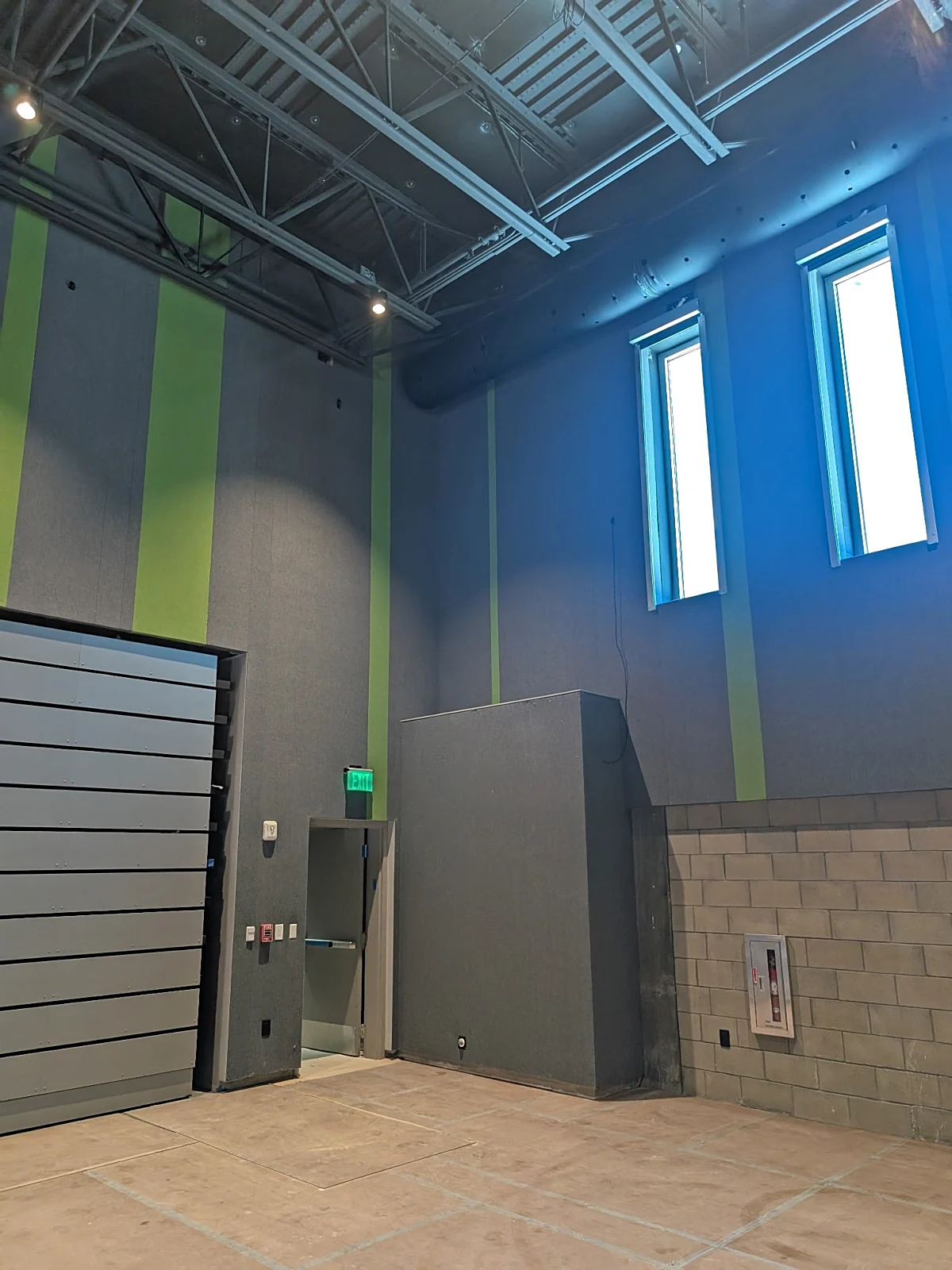
Existing Conditions: Open Layouts with High Acoustic Risk
- Ceiling Conditions: High exposed ceilings, grid tile, mixed mechanical systems
- Room Types: AV classrooms, computer labs, collaborative maker spaces
- Challenges: Echo, cross-talk, and loss of speech intelligibility in shared spaces
Prior to acoustic treatment, the STEAM Center’s design left the space vulnerable to the same issues common in modern education buildings—too much hard surface area, too little absorption, and growing demand on voice and video clarity. Large zones with minimal acoustic dampening allowed sound to bounce between students and instructors, creating confusion and distraction. Our job was to bring control to the chaos—quietly, cleanly, and in a way that respected the vision of the architects and educators behind the project.
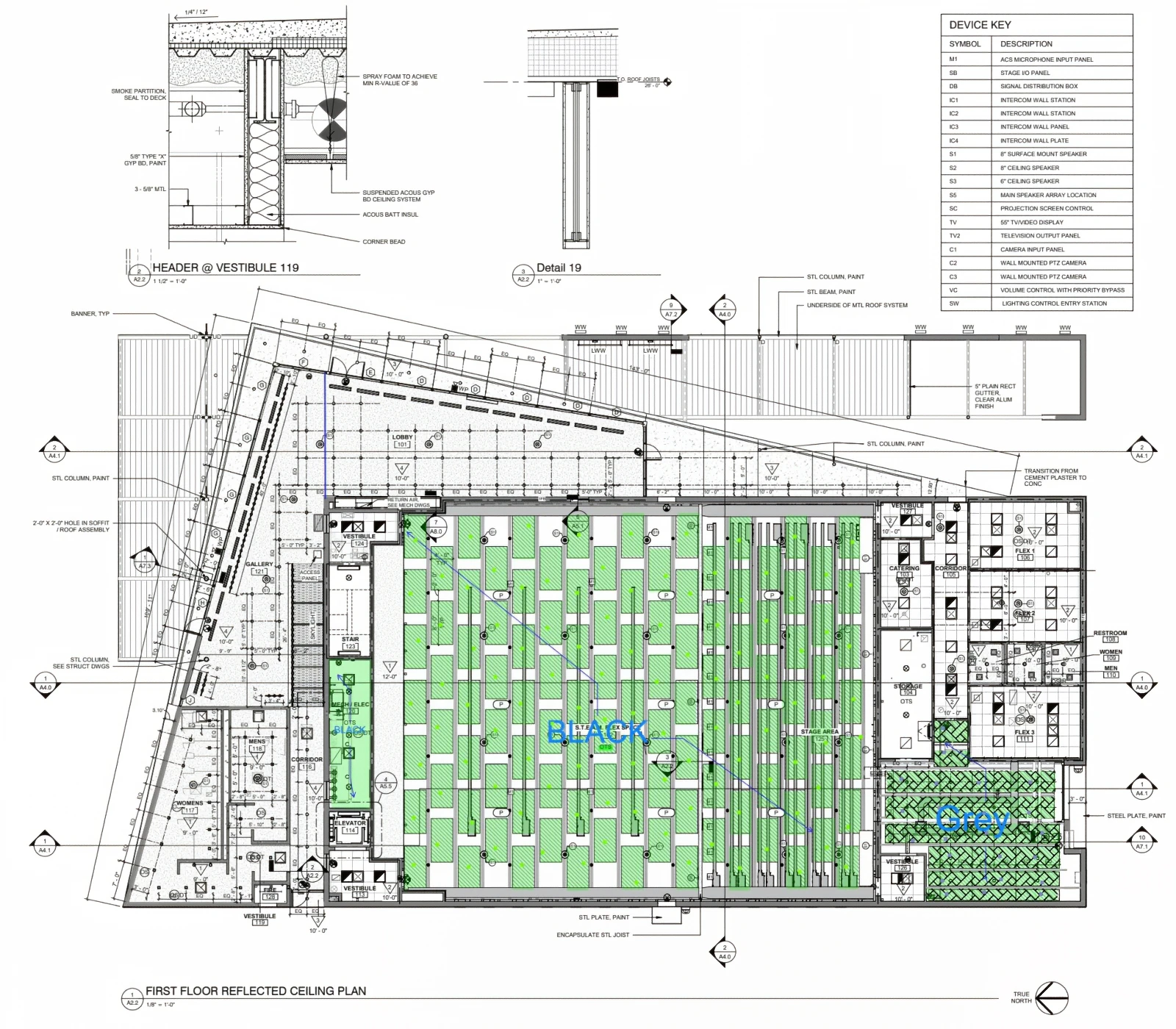
Ceiling Tile Installation: Controlling Echo Overhead
- Product Installed: Armstrong Dune 2’×2’ ceiling tile
- Square Footage: 1,556 sq ft
- Grid Type: 15/16″ Prelude standard system
We began with high-performance ceiling tiles in standard classroom zones, science labs, and faculty spaces. With their high NRC ratings and clean visual texture, Armstrong Dune tiles provided broad absorption across the entire space while blending into the design language. The system allowed access to above-ceiling utilities and aligned with mechanical and lighting systems without rework.
Ceiling tile might seem like a basic solution, but in education spaces, it plays a critical role. These tiles help trap mid- and high-frequency reflections that interfere with human speech. In rooms where learning depends on communication, ceiling-based absorption is often the first and most cost-effective acoustic measure.
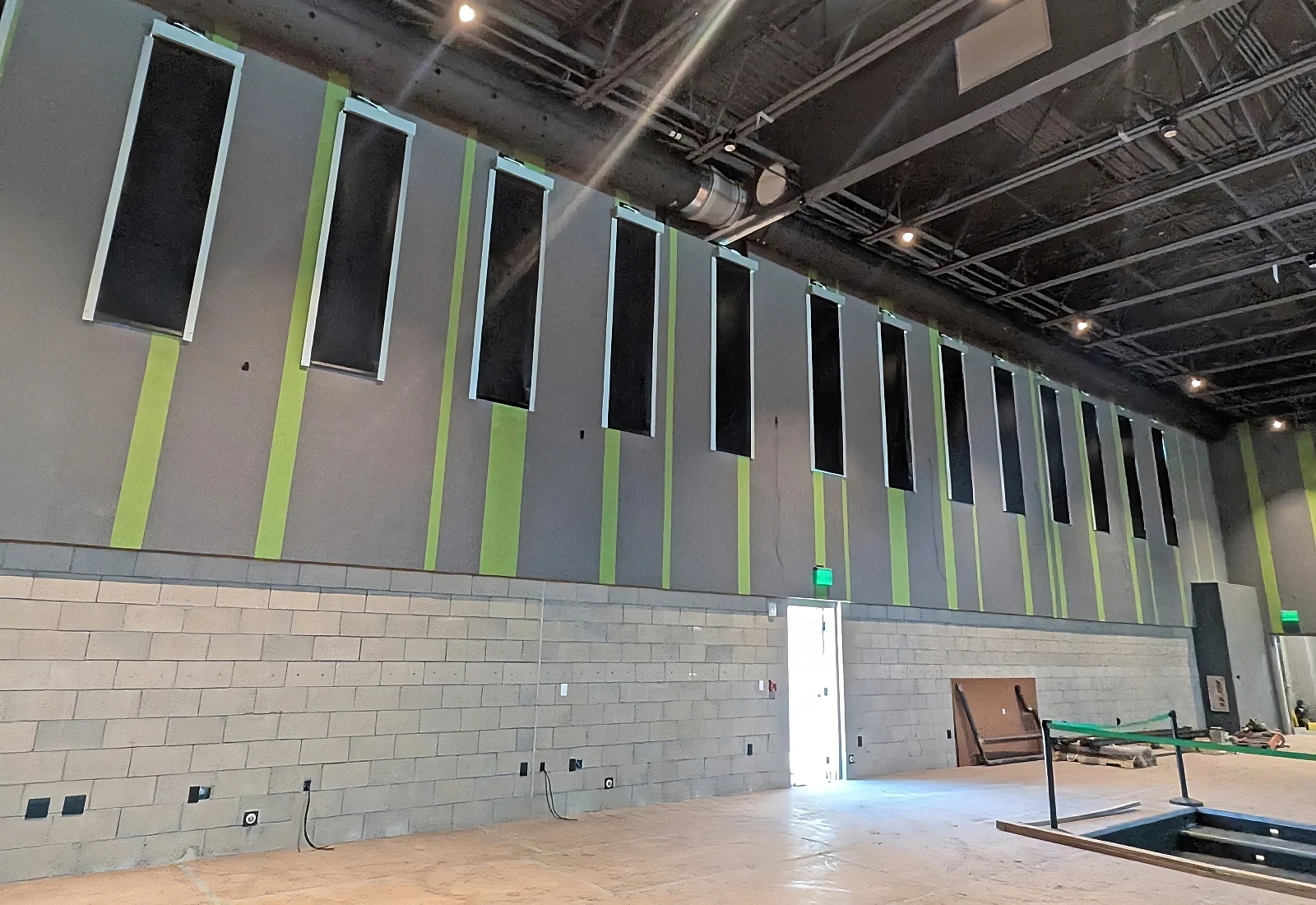
Fabric-Wrapped Ceiling Panels: Focused Absorption in High-Risk Areas
- Product: MBI Spectrum Panels
- Core Material: Fiberglass (2″–4″ thickness)
- Finish: Black perforated PVC
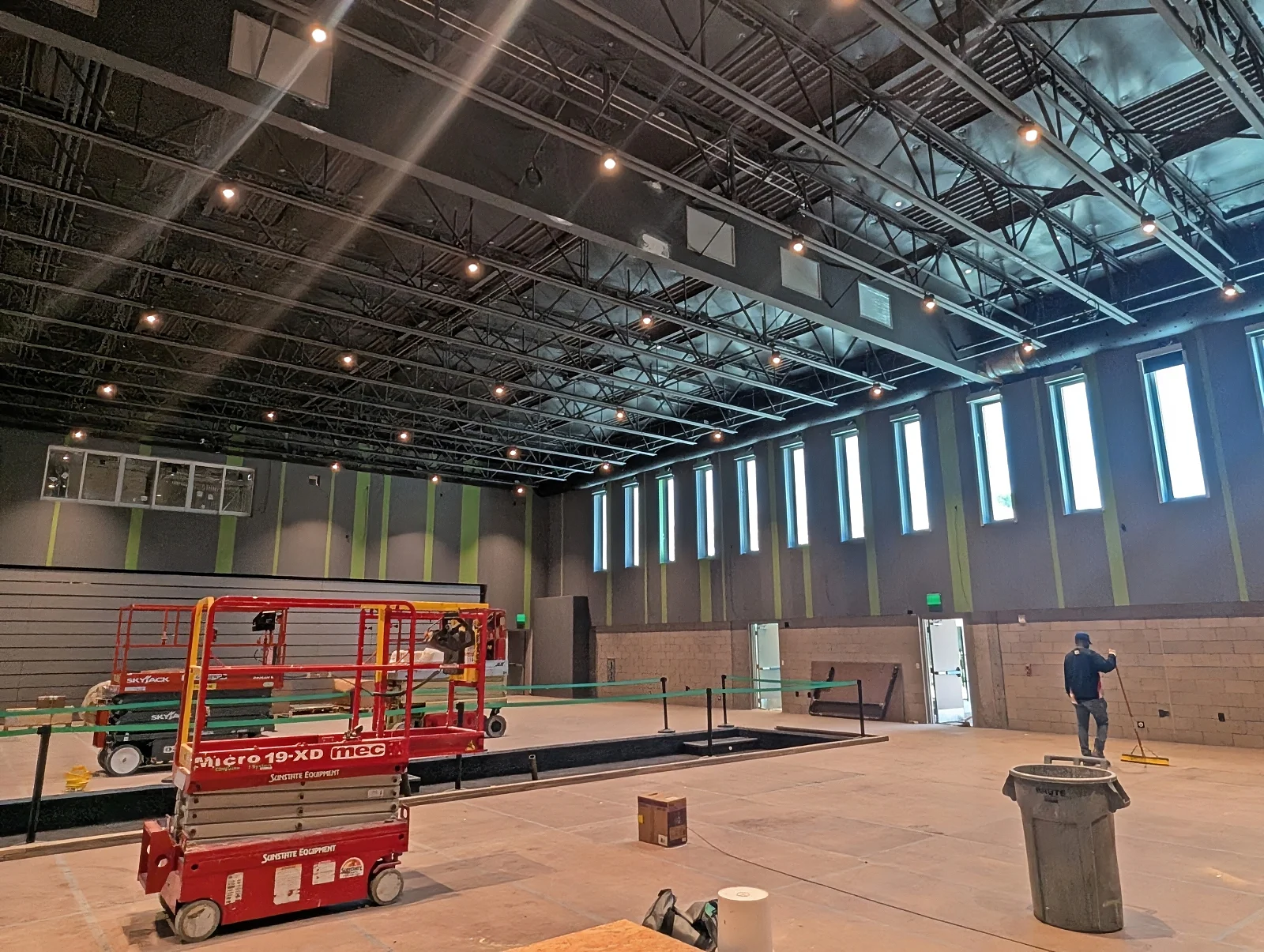
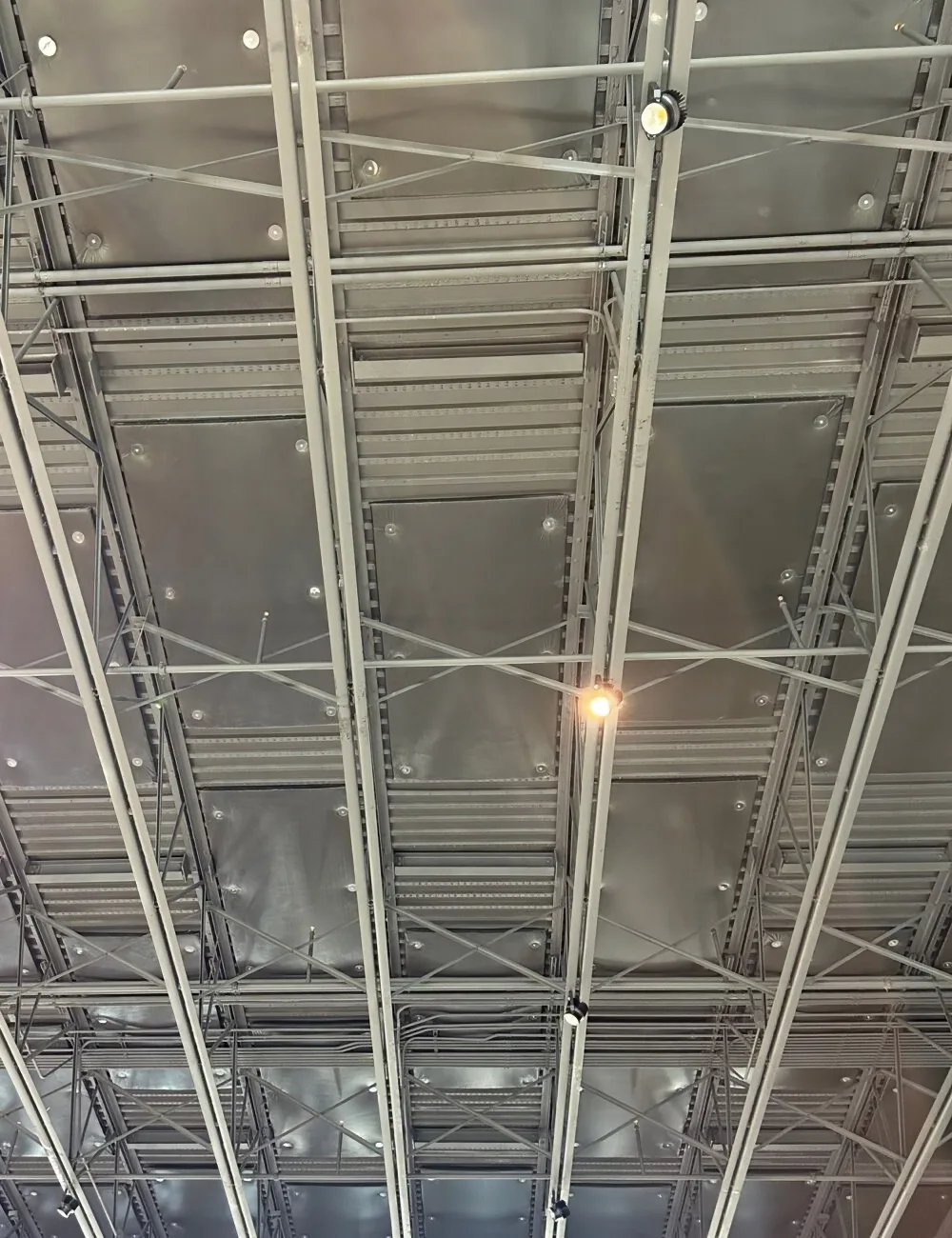
In larger, AV-intensive rooms—like media production labs and collaborative maker areas—our team installed ceiling-mounted Spectrum panels to supplement the grid system. These panels were strategically placed to catch reflections from screens, glass walls, and hard furniture, which commonly degrade clarity in active learning spaces.
The panels offered high absorption in critical speech frequencies and were robust enough to withstand daily use in active education environments. Their visual simplicity helped maintain a clean ceiling design while their placement significantly improved both spoken word clarity and background noise control.
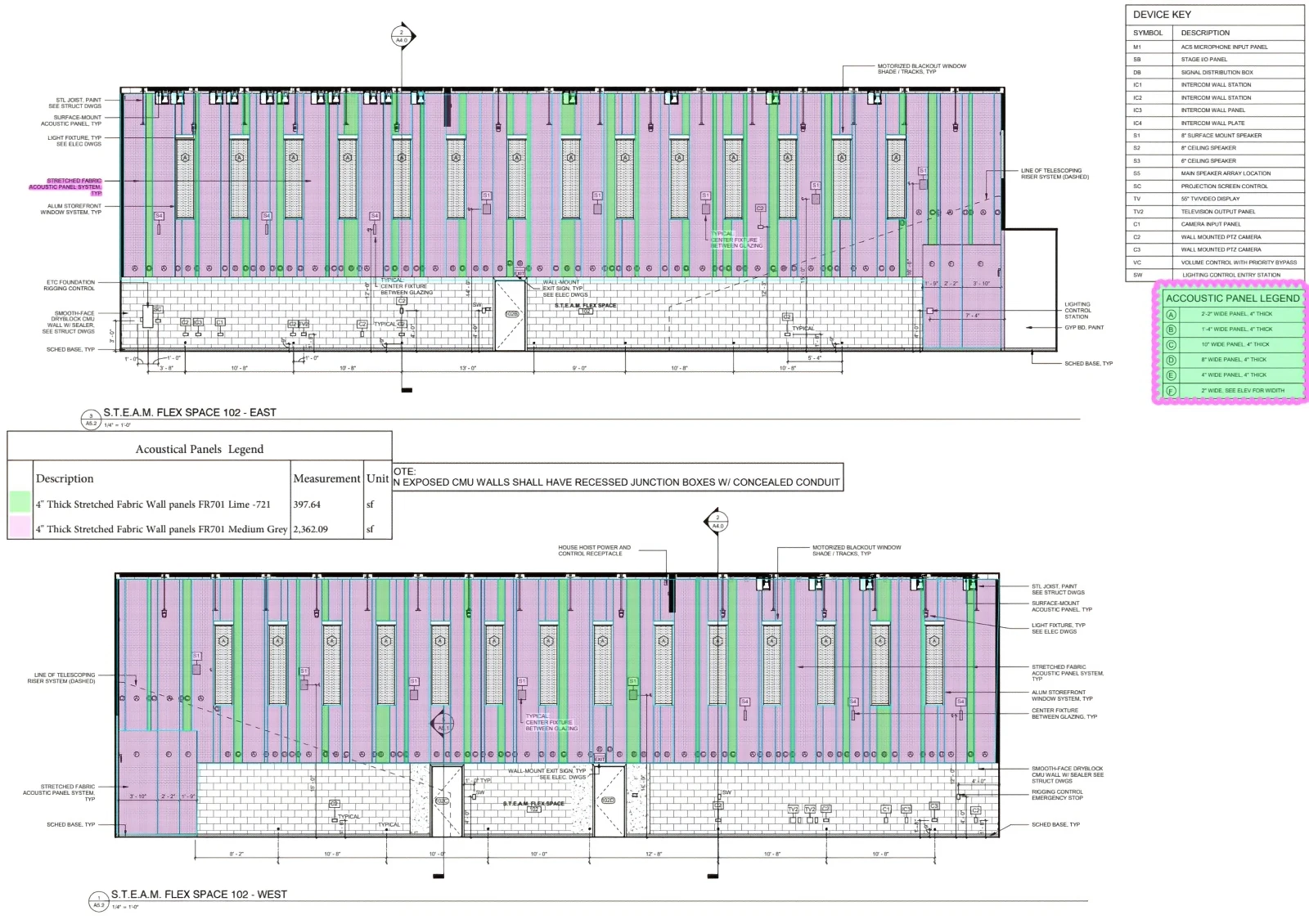
Stretched Fabric Wall System: Full-Frequency Absorption at the Source
- Type: Floor-to-ceiling stretched fabric system
- NRC Rating: 0.8 to 1.15 depending on location & configuration
- Thickness: 4″ absorptive core for full-range sound control
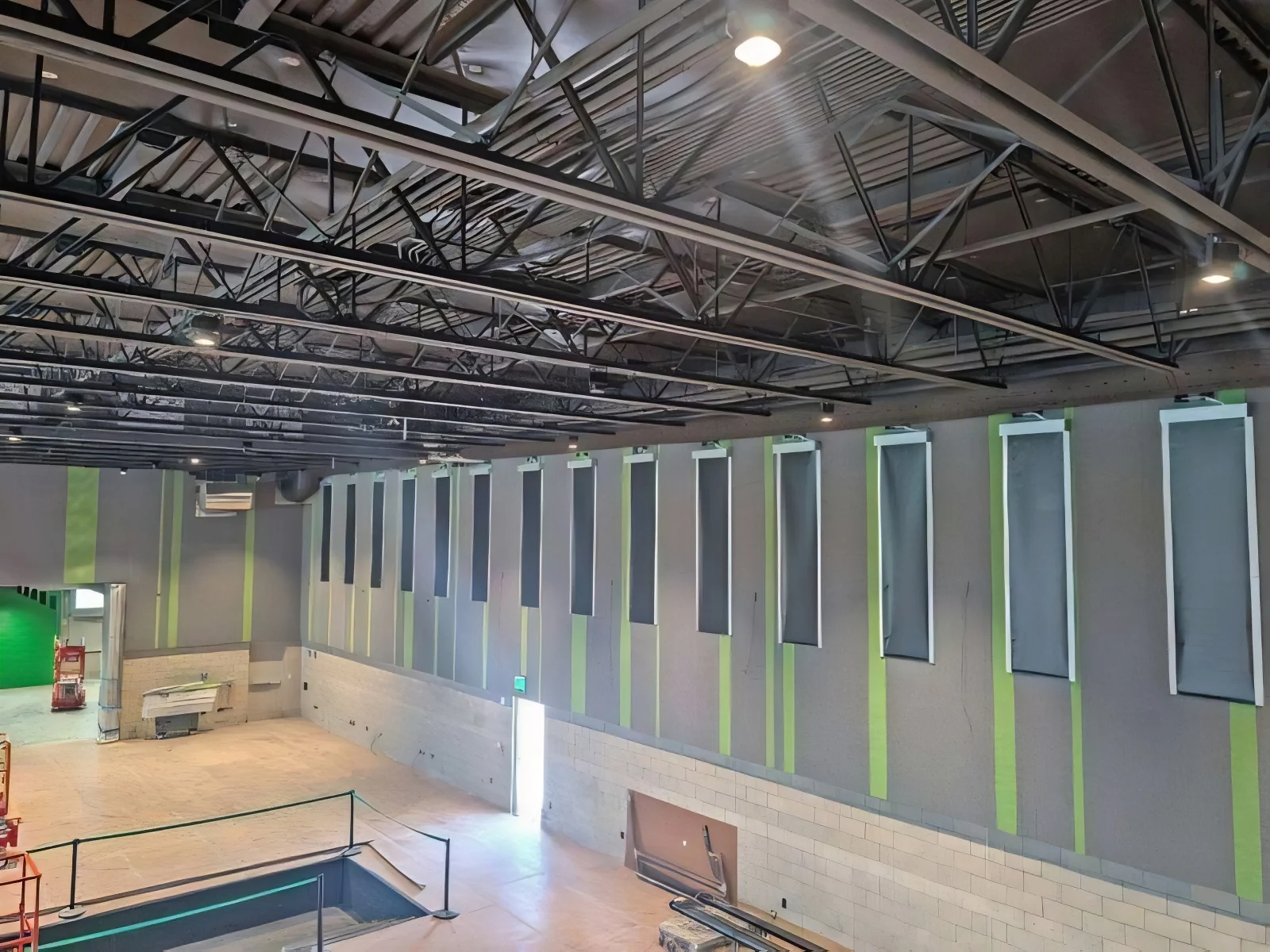
The standout performer in this install was a full-height stretched fabric wall system placed in one of the facility’s main instructional zones. Floor-to-ceiling treatment provided broad frequency absorption, particularly in the low end where ceiling systems are less effective. Because of the wall’s continuous coverage, it eliminated flutter echo and offered a clear sound path between instructor and student—without disruption or reflective interference.
We integrated the fabric system alongside millwork and AV components using a custom track layout. The result was a finished wall that performed at the highest acoustic standard but looked like part of the architecture.
Coordination and Construction Approach
- GC Partner: Aligned with Willis Smith for install & schedule
- Trade Sync: Coordinated with HVAC, fire, & lighting teams
- Timing: Installed post-ceiling, pre-AV for clean workflow
Coordination with Willis Smith Construction was critical to this project’s success. Our installation was timed to begin after ceiling framing but before audiovisual systems were mounted—allowing seamless integration with lighting, ductwork, and fire suppression systems. Every product was sequenced to avoid conflicts with other trades, while still maintaining visual consistency and acoustic performance.
We worked closely with the MEP and design consultants to confirm mounting conditions, access needs, and routing paths before any material was delivered. Ceiling tiles were installed after HVAC and lighting rough-ins were complete, and the wall system was aligned with AV junction boxes and millwork details. This upfront planning ensured a smooth install without rework or compromise.
The result? No punch-list delays, no surprises, and no friction between trades. Just a high-performance acoustic system executed cleanly and efficiently.
Result: Quiet, Clear, Collaborative Learning
- Clarity: Speech intelligibility improved in all key zones
- Echo: Noticeable reduction across large open areas
- Integration: Acoustic systems aligned with AV & lighting
The final space speaks volumes—by making speech easier to hear. After installation, speech clarity improved significantly across every major zone, especially in open classrooms and AV-rich labs. Echo was noticeably reduced, and the learning environment felt immediately more comfortable and focused.
System integration was seamless. Ceiling systems coordinated perfectly with lighting and ductwork. Wall systems worked in tandem with AV and power layouts. Most importantly, the entire system delivered performance without visual intrusion. The acoustic design enhanced the space without ever calling attention to itself.
For both architects and contractors, this project offers a clear example of how well-planned acoustic design can elevate both form and function in educational buildings.
Conclusion: Building for Clarity in Modern Education
At St. Stephen’s, we didn’t just install acoustic materials—we shaped an environment that allows students to focus, instructors to be heard, and lessons to land without interruption. Every ceiling tile, fabric wall, and fiberglass panel served a purpose, aligned with a vision of how education should sound.
Good acoustic design doesn’t demand attention. It quietly improves outcomes. And when it’s done right, like it was here, it becomes a foundation for better learning—not just a building material.
The St. Stephen’s STEAM Center now offers students a space that performs as intelligently as it looks—and that’s the true value of acoustic design in education.
For product specifications, lead time guidance, or acoustic integration support on your next K–12 or institutional project, contact the team at Commercial Acoustics.
FAQs: Acoustic Design in Educational Spaces
How does acoustic design impact education?
It improves speech clarity and reduces distractions, allowing students to focus, understand instruction, and retain information more effectively. Without proper acoustics, even the best-designed school can become a noisy, frustrating place to learn.
What’s the role of ceiling tile in school acoustics?
Ceiling tiles with high NRC ratings absorb sound rather than reflect it. This helps control echo and background noise, especially in spaces with high ceilings or multiple talking sources—common in modern classrooms and labs.
Why choose full-height fabric wall systems over typical panels?
Fabric walls offer broad frequency absorption, especially in the low-to-mid range, and provide consistent performance across large surface areas. They eliminate gaps in coverage and integrate more naturally into wall finishes and teaching zones.
When should acoustic design be addressed in a school construction project?
As early as possible—ideally during schematic design. Coordinating acoustic treatments with ceiling layout, AV infrastructure, and HVAC plans avoids costly revisions and ensures the finished space performs as intended.
What makes an educational acoustic design strategy successful?
Clarity of intent. It means selecting the right materials (ceiling tile, fabric wall systems), placing them in zones that impact performance, and working closely with contractors to execute them without delays or trade interference. The result isn’t just a quieter space—it’s a better place to learn.
