Table of Contents
Project Overview: Call Center Sound Masking
- Project: Sound Masking System Install for a High-Density Financial Call Center
- Client: MidFlorida Credit Union Headquarters Call Center
- Issue: Voice Carryover – Employees Could Not Hear Their Own Calls Over Coworkers
- Privacy Layer: Confidential Member Financial Data Bleeding Across Workstations
- Solution: Carefully Spaced Sound Masking Speakers Tuned to a White Noise Spectrum
- Outcome: Background Speech Masked, Speech Privacy Restored, Productivity Gains Across the Center
Why Call Centers Have a Unique Acoustic Problem
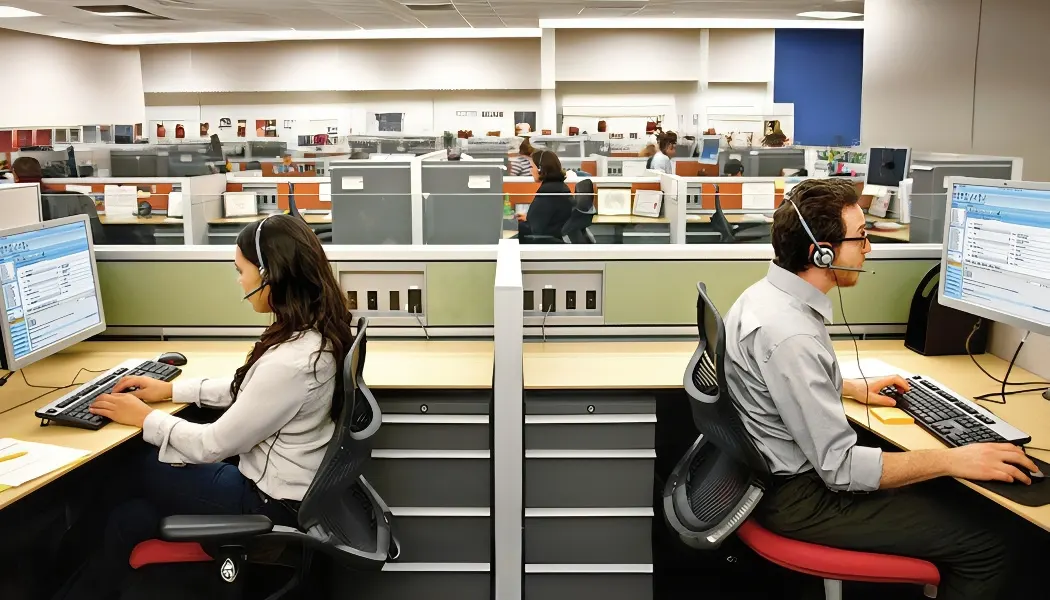
A normal open office has intermittent speech. People talk in bursts. Conversations end. The room cycles between active and quiet. A call center never cycles. Every workstation is an active speech source for the entire shift, and every adjacent workstation is another active source on top of that. Background noise stacks rather than dissipates.
The result is what call center operators call voice carryover. An agent on a customer call can hear two or three coworkers’ calls bleeding through their headset and into the room. The customer on the other end of the line hears the same wash. Both sides struggle to maintain the call, agents talk louder to compensate, and the room volume climbs further.
Call center managers also have a privacy obligation that ordinary office managers do not. The general framing of how background noise affects workplace performance lives in our negative effects of background noise in the workplace guide.
Sound Masking vs Acoustic Panels: When Each Is the Right Tool
- Acoustic Panels: Reduce Reverberation by Absorbing Reflected Sound
- Sound Masking: Adds a Tuned Background Noise Floor That Obscures Speech at Distance
- Panels Solve: Echoey Rooms, Hard Surfaces, Reverberation Times Above 1 Second
- Masking Solves: Speech Carrying Between Workstations in Open-Plan Environments
This is the most common misconception in call center acoustic specs. Acoustic panels and sound masking solve different problems. Panels reduce reverberation, which helps with the echoey quality of a hard-surfaced room but does almost nothing for speech privacy between source and receiver. A panel can absorb a reflected sound that already started its journey from a neighboring workstation, but it cannot prevent the direct path from one talker to another listener.
Sound masking inverts the approach. Instead of trying to absorb the speech, masking adds a tuned background noise floor that fills the room at a level that obscures the intelligibility of any single speech source at distance. The receiver still hears their own call clearly because they are close to their own headset, but the bleed from the workstation two desks over fades into the masking spectrum and becomes unintelligible.
The deeper background on how a tuned masking system works lives in our how sound masking works guide.
Speech Privacy Math for Financial Call Centers
- PCI DSS Implication: Cardholder Data Discussed Aloud Must Not Be Audible to Unauthorized Listeners
- Member Privacy: Account Numbers, Balances, and PII Spoken Continuously During a Shift
- Speech Privacy Index Target: 0.95 or Higher in Confidential-Discussion Spaces
- Without Masking: A High-Density Open-Plan Call Center Typically Hits 0.60 to 0.75
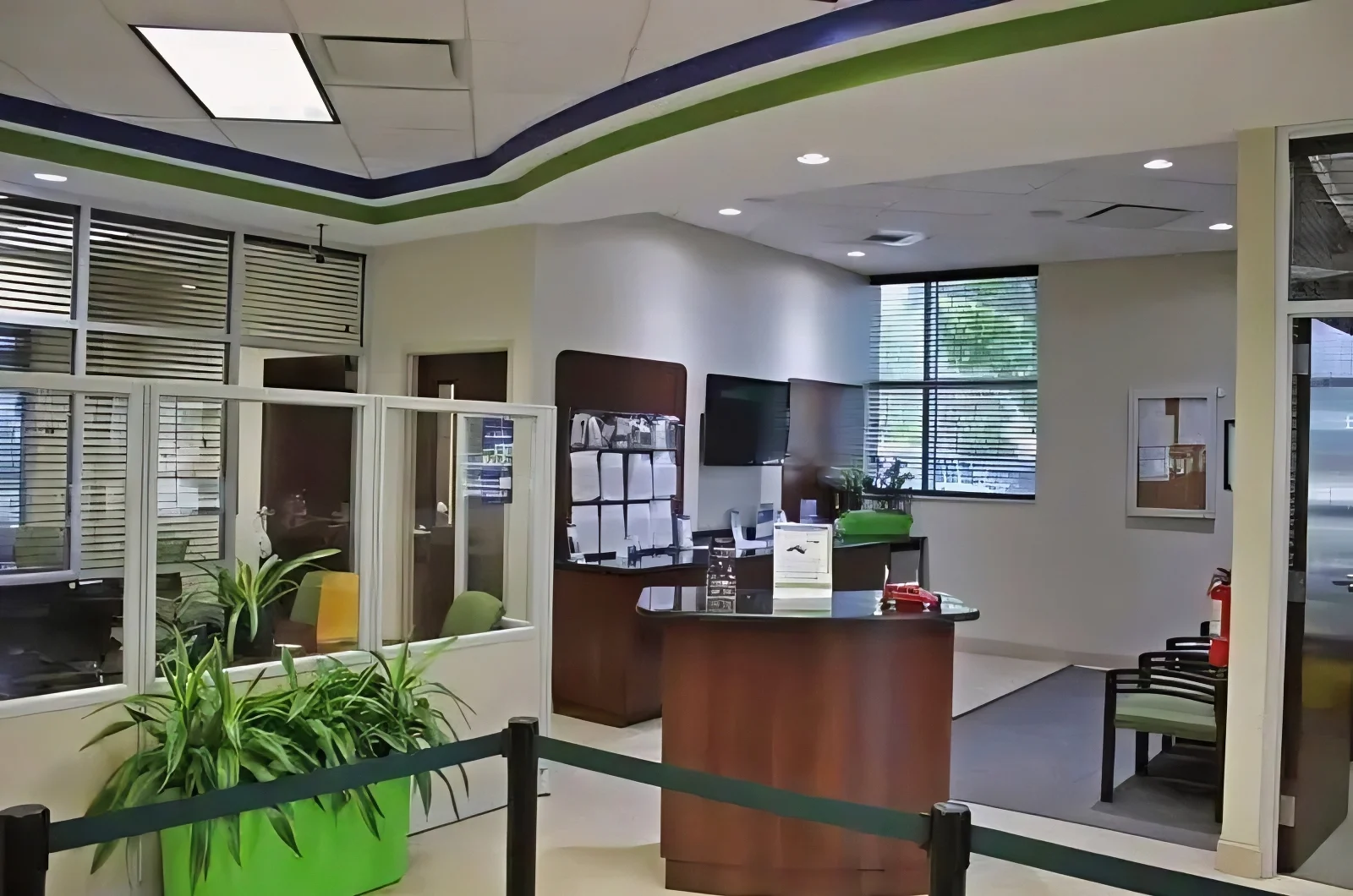
Financial call centers handle confidential member information continuously throughout the shift. Account numbers, balances, transaction history, and personally identifiable information get spoken aloud thousands of times a day. PCI DSS and similar privacy frameworks require that confidential data discussed aloud not be audible to unauthorized listeners including coworkers two or three desks away who are not directly handling that member’s account.
Speech Privacy Index is the metric that captures this. The scale runs from 0 (perfect intelligibility receiver hears every word clearly) to 1 (perfect privacy receiver cannot decode any speech content). Target above 0.95 for spaces handling confidential financial discussion. A high-density call center without sound masking typically lands at 0.60 to 0.75, which is far below the target.
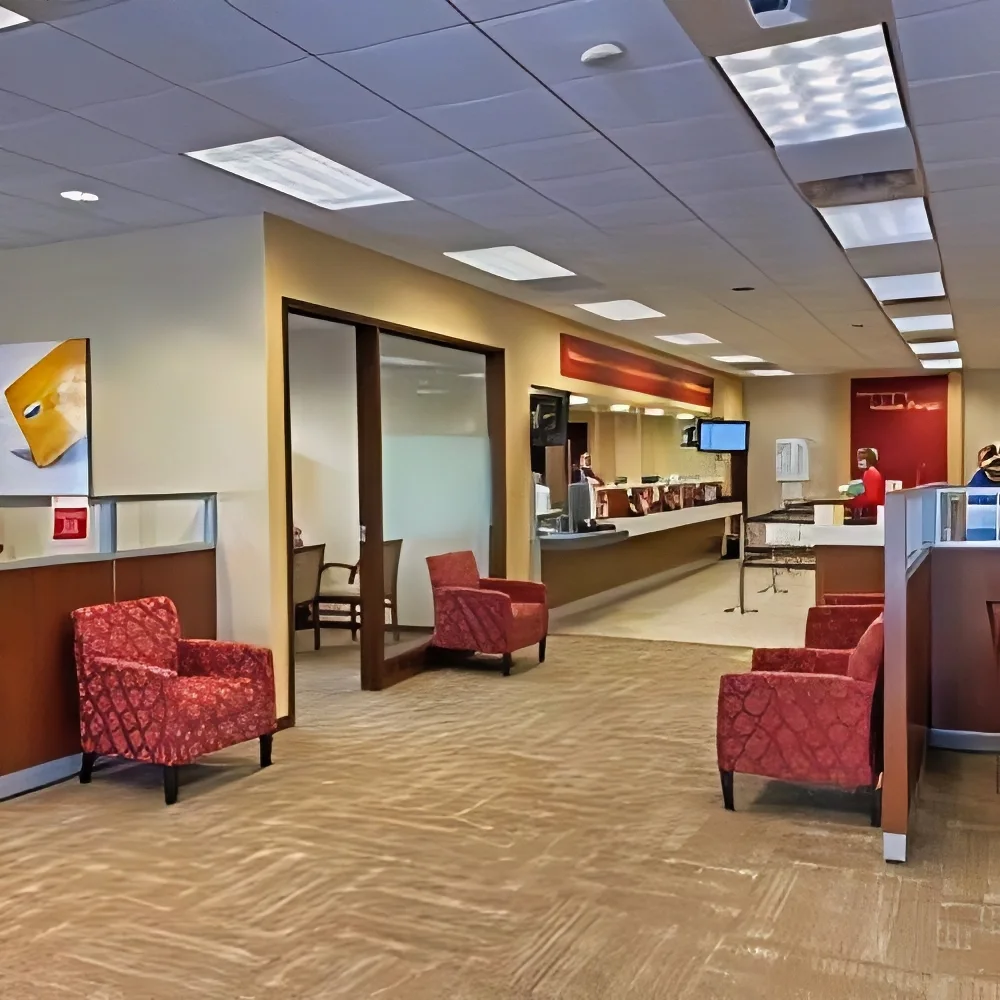
The Install: Spaced Speakers and a Tuned White Noise Spectrum
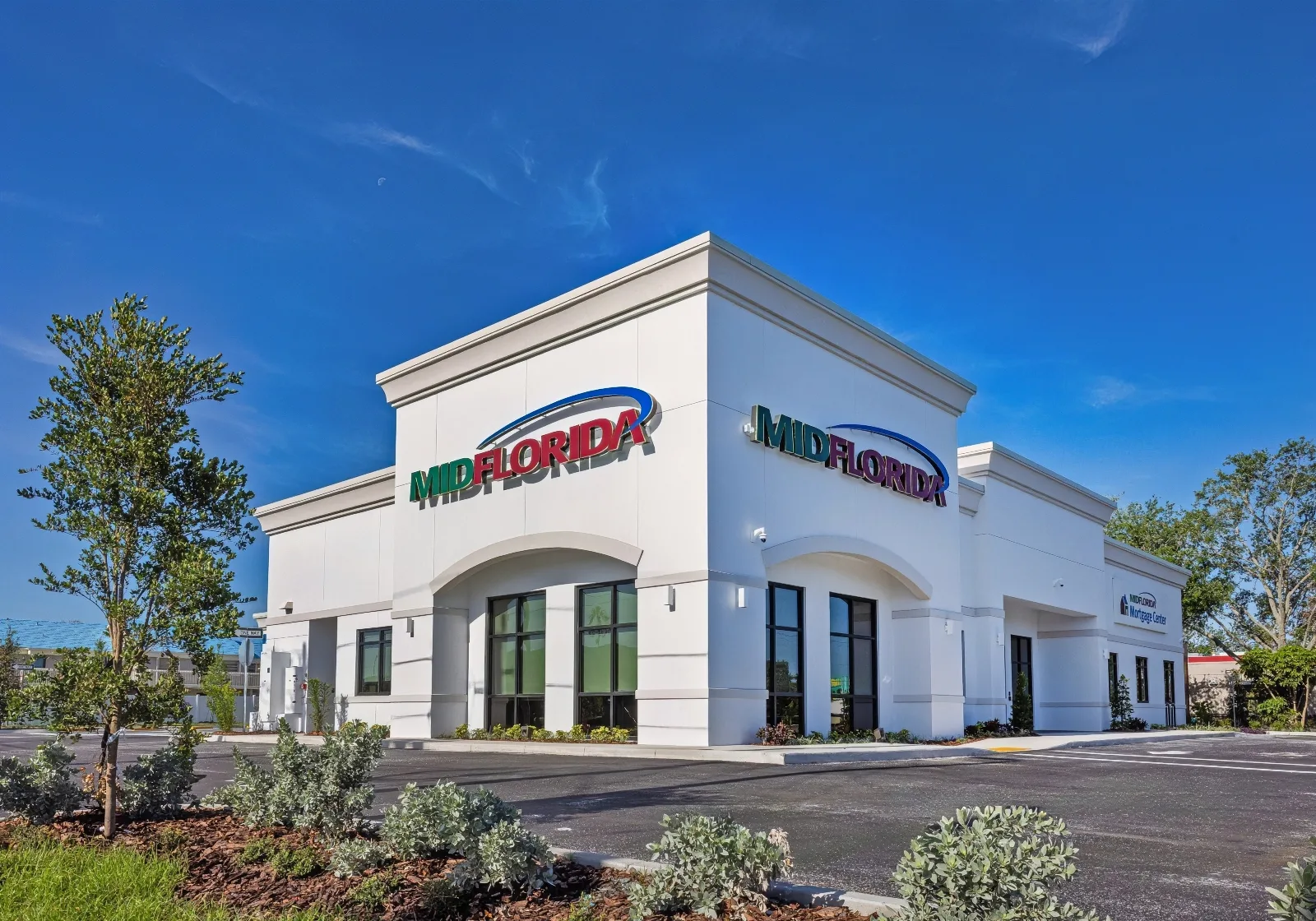
The MidFlorida install used carefully spaced ceiling-mounted masking speakers throughout the call center floor. Speaker spacing matters because the masking effectiveness depends on uniform coverage at every workstation. Gaps in the masking field create privacy holes that defeat the purpose of installing the system at all.
The white noise spectrum was tuned to the natural speech frequency range primarily 250 Hz to 5 kHz with a gentle roll-off above and below so the masking matches the energy profile of the human voice it needs to obscure. Untuned white noise sounds like a hiss and is harder to acclimate to. Tuned masking sounds like background HVAC and falls below conscious notice within a few minutes.
The product page with full system spec lives at the Commercial Acoustics sound masking system page. For a sister project that ran the same masking technology in a bank operations context instead of a call center, see the Bank of America sound masking case study.
Call Center Sound Masking Targets by Format
Call center sound masking targets shift with the seat density, the type of conversation handled, and the privacy obligation. The table below maps the working windows across four common call center formats.
| Call Center Type | Masking Level (dBA) | Speech Privacy Index Target | Speaker Spacing |
|---|---|---|---|
| Financial Call Center (PCI / Confidential Member Data) | 46 to 48 dBA | 0.95+ | 10 to 12 ft on grid |
| Healthcare Call Center (HIPAA) | 46 to 48 dBA | 0.95+ | 10 to 12 ft on grid |
| Customer Service / Support (Non-Confidential) | 44 to 46 dBA | 0.85 to 0.90 | 12 to 14 ft on grid |
| Outbound Sales / Telemarketing | 42 to 45 dBA | 0.80 to 0.85 | 12 to 15 ft on grid |
MidFlorida landed in the top row at the financial-confidential target. The 46 to 48 dBA masking level plus tight speaker spacing delivered the Speech Privacy Index above 0.95 needed for member-data discussion at every seat in the center.
Conclusion: Call Center Sound Masking
Call center acoustic problems do not get solved by acoustic panels alone. The continuous high-density speech environment requires sound masking and a tuned white noise floor that obscures voice carryover between workstations and protects confidential member or patient information. MidFlorida Credit Union deployed the system across its headquarters call center and saw both productivity gains and privacy compliance improvements simultaneously. Contact Us for a sound masking spec scoped to a specific call center floor plate.
FAQs: Call Center Sound Masking
What is sound masking and how does it work in a call center?
Sound masking adds a tuned background noise floor across the call center ceiling. The spectrum matches natural speech frequencies and obscures voice carryover from neighboring workstations without raising perceived loudness. Agents still hear their own calls clearly through their headset.
Why don’t acoustic panels solve call center noise problems?
Panels reduce reverberation but do little for speech privacy between source and receiver. A panel absorbs reflected sound, not the direct path from one talker to another listener two desks away. Call centers need sound masking. Panels are a complement, not a substitute.
What dBA level should call center sound masking run at?
Financial and healthcare call centers run 46 to 48 dBA to hit Speech Privacy Index 0.95+. Customer service and outbound sales can run 42 to 46 dBA at lower privacy targets. The level is set during commissioning to match seat density and conversation type.
Does sound masking help with call center compliance like PCI or HIPAA?
Yes. Both frameworks require that confidential information discussed aloud not be audible to unauthorized listeners. Sound masking pushes Speech Privacy Index above 0.95, which makes coworker-overhear scenarios computationally unintelligible and supports the privacy obligations these frameworks impose.

Walker Peek|Founder & CEO, Commercial Acoustics
Walker founded Commercial Acoustics in 2013 to bring aerospace-grade engineering discipline to soundproofing, and runs the firm as CEO from its 12,000 sq ft Tampa production facility. The company designs custom acoustic panels, sound membranes, and masking systems for multi-family, hospitality, healthcare, and commercial projects across the US — built around Walker’s invention, Wall Blokker, an EVA-based sound barrier that hits STC 50-plus at roughly $1 per square foot installed.
A Jacksonville native, Walker spent five years at Kennedy Space Center with Craig Technologies before founding Commercial Acoustics — certifying aerospace manufacturing to the AS9100 standard and leading Six Sigma Black Belt process-improvement teams on NASA programs. He is a certified Industrial Noise Control Engineer and the author of Architectural Acoustics: A Practical Handbook.
