Table of Contents
Introduction: Fabric Walls & Acoustic Wall Coverings
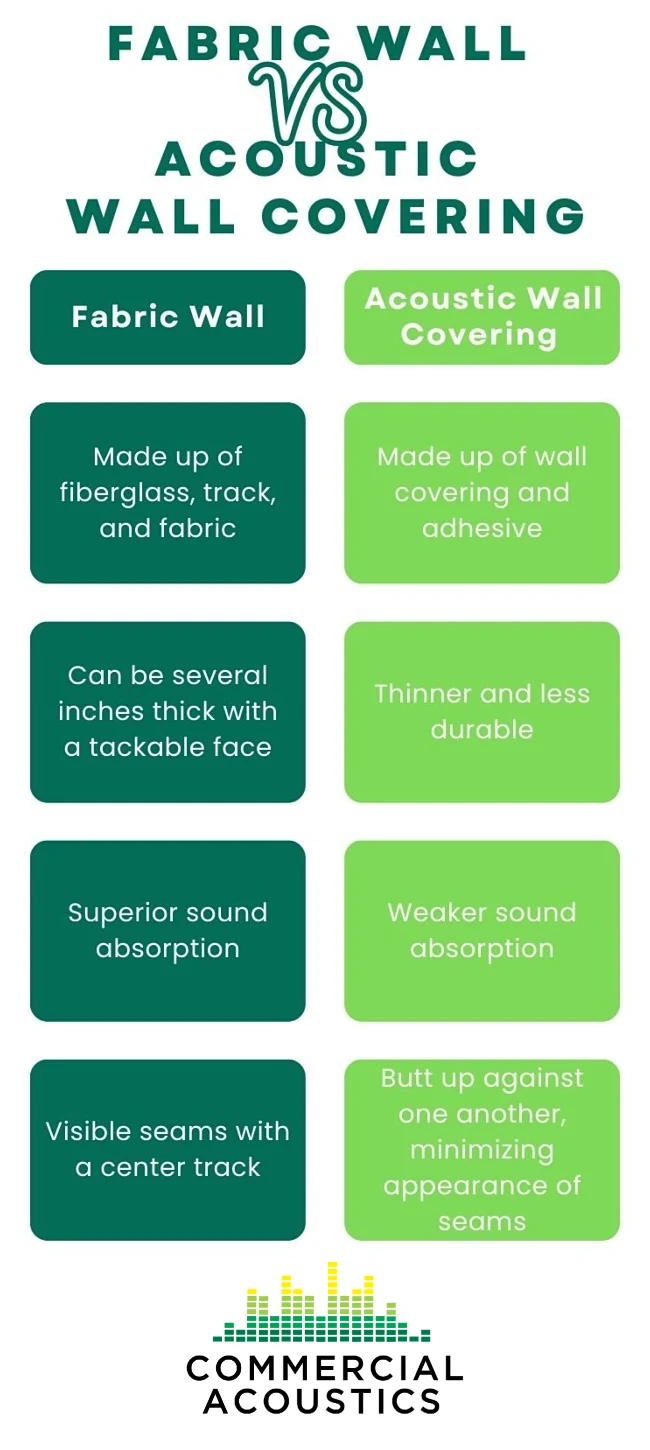
When “WC” (Wall Covering) appears on an architectural drawing set, it may refer to a standard wall finish, an acoustic wall covering, or a stretched fabric wall system. These products differ in construction, thickness, and sound absorption — making it essential to know what’s being specified.
For architects and contractors, the distinction directly impacts performance. Stretched fabric walls with fiberglass cores provide NRC ratings up to 1.05, while acoustic wall coverings max out near 0.40. Understanding these differences helps ensure the right system is used to meet both design and acoustic goals.
How a Stretched Fabric Wall is Constructed
- Three-part system: Track, fiberglass core, and fabric facing.
- Multiple thicknesses: Commonly 1″ & 2″, but also available in 4″ or custom builds.
- Core options: Standard, white-mat face, or impact-resistant fiberglass.
Stretched fabric walls are built to perform. The track is fastened directly to the wall, fiberglass is secured inside, and the fabric is stretched overtop to hold everything in place. Thicker cores deliver higher absorption, with NRC values reaching 1.05 at 2″. White-mat facings prevent yellow fiberglass from bleeding through light fabrics, while impact-resistant versions stand up in gyms and high-traffic areas.
What Thickness Fabric Wall Should You Specify?
- 1″ systems: NRC 0.80, ideal for conference rooms, offices, & corridors.
- 2″ systems: NRC 1.05, preferred for classrooms, gyms, & auditoriums.
- Impact option: Tackable surface for gyms or low wall protection.
The right thickness depends on reverberation targets and room size. Smaller rooms may only need 1″ absorption, but large spaces almost always benefit from 2″ systems. Impact-resistant fiberglass adds durability where walls are vulnerable to contact — making stretched fabric a versatile choice for both acoustic and practical reasons.
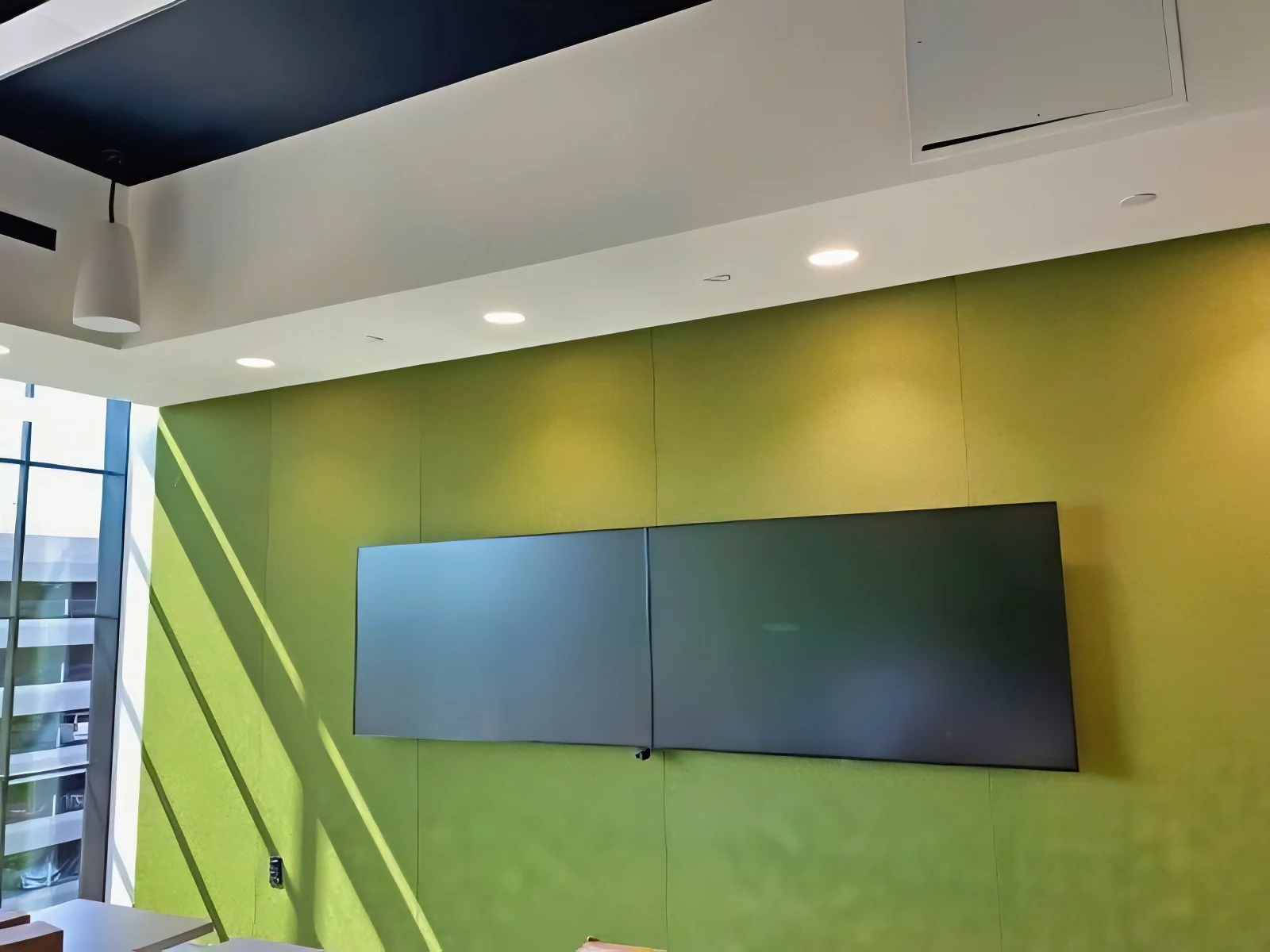
Unlike a wall covering, acoustic fabric wall will have visible seams due to the use of center track. This is required due to the width of the fabric roll, if the wall is wider than the fabric, there must be a seam.
Finished Appearance of Stretched Fabric Walls
- Visible seams: Required because fabric roll widths are limited.
- Custom profiles: Track systems available in square, beveled, or radius designs.
- Design flexibility: Fabric can match branding, palettes, or texture preferences.
Seams are part of the system, but with equal spacing they can look intentional and refined. Architects often use them as part of the design language rather than trying to hide them. Profiles and fabric options add another layer of customization, letting acoustics become a feature instead of a compromise.
Fabric wall is also acoustically superior to acoustic wall coverings. The 1″ thick fiberglass core shown above has a 0.8 NRC while acoustic wall coverings max out at around 0.4 NRC.
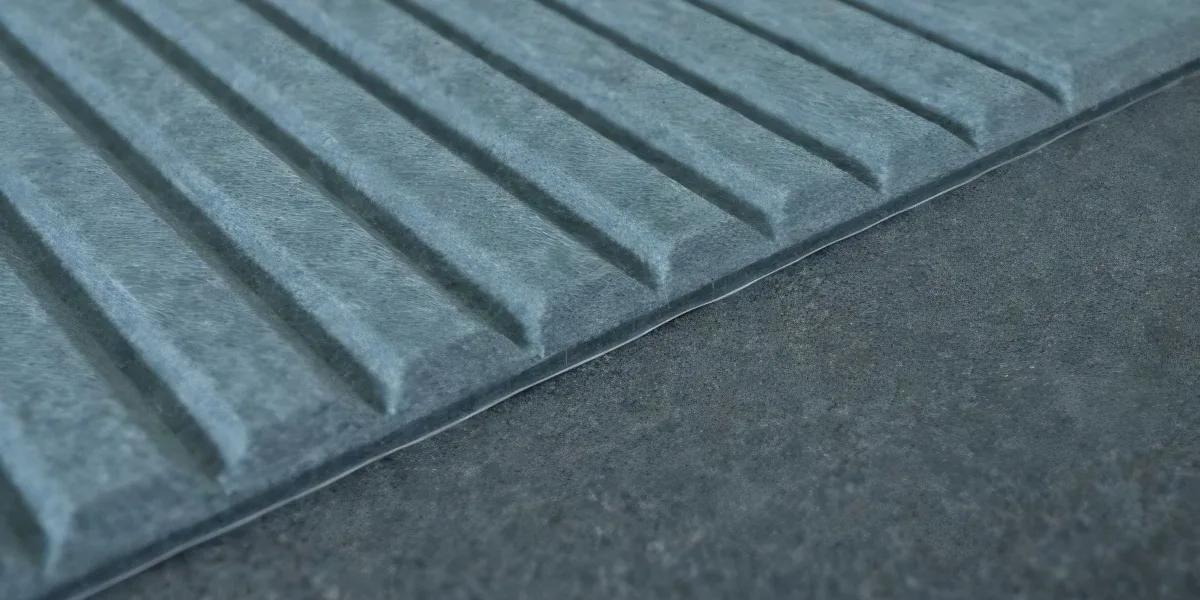
What is an Acoustic Wall Covering?
- Polyester material: Typically 3–5 mm thick (⅛″–¼″).
- Wallpaper-like install: Applied with adhesive, no track or fiberglass.
- Minimal NRC: Tops out around 0.40.
Acoustic wall coverings are essentially decorative wall finishes that happen to offer some absorption. They look and install like wallpaper, but are made from compressed polyester. They’re thin, light, and easy to apply — but their impact on reverb is limited compared to stretched fabric systems.
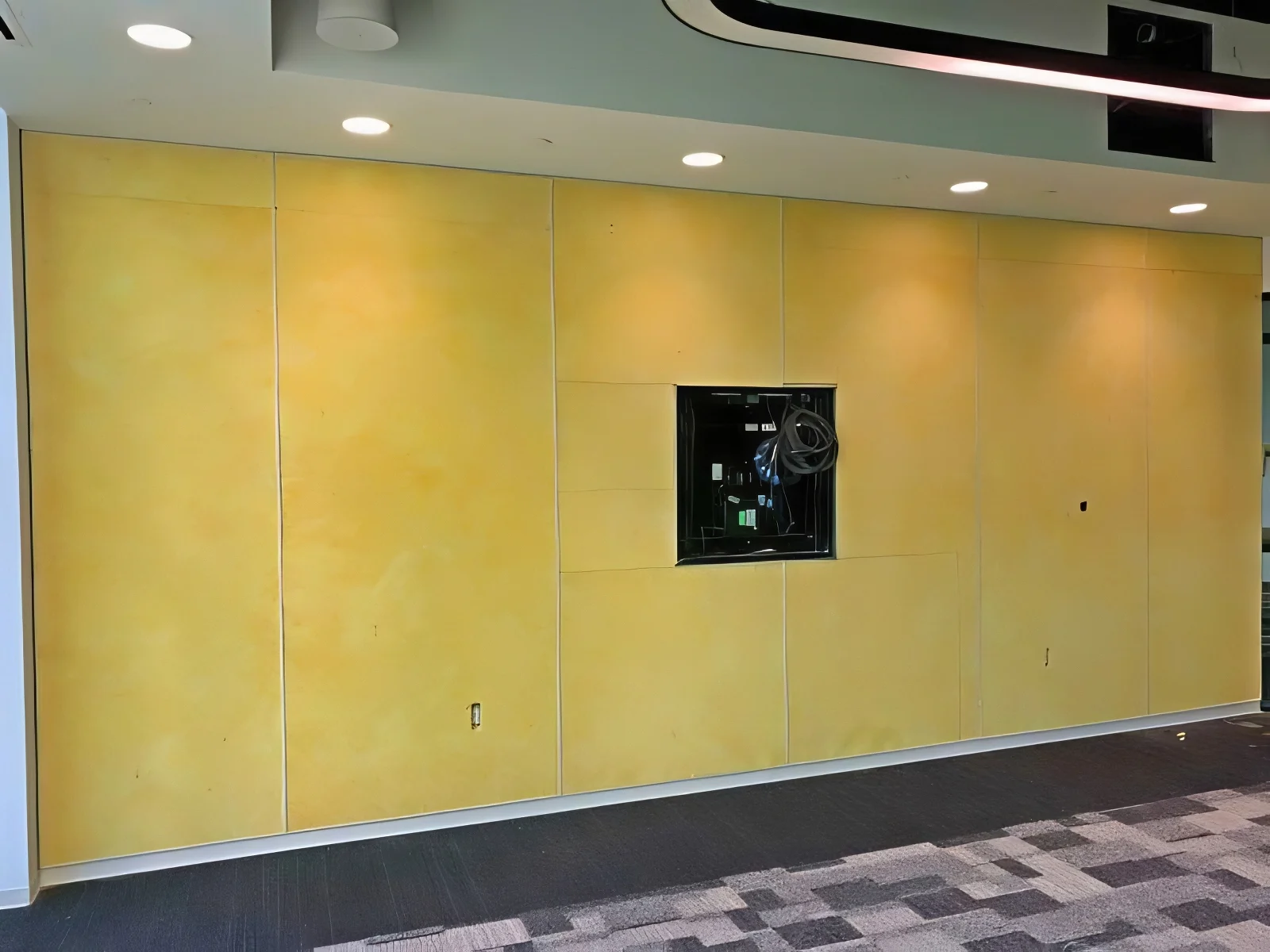
In the acoustic wall covering shown above, each sheet is butted up to one another, minimizing the appearance of seams.
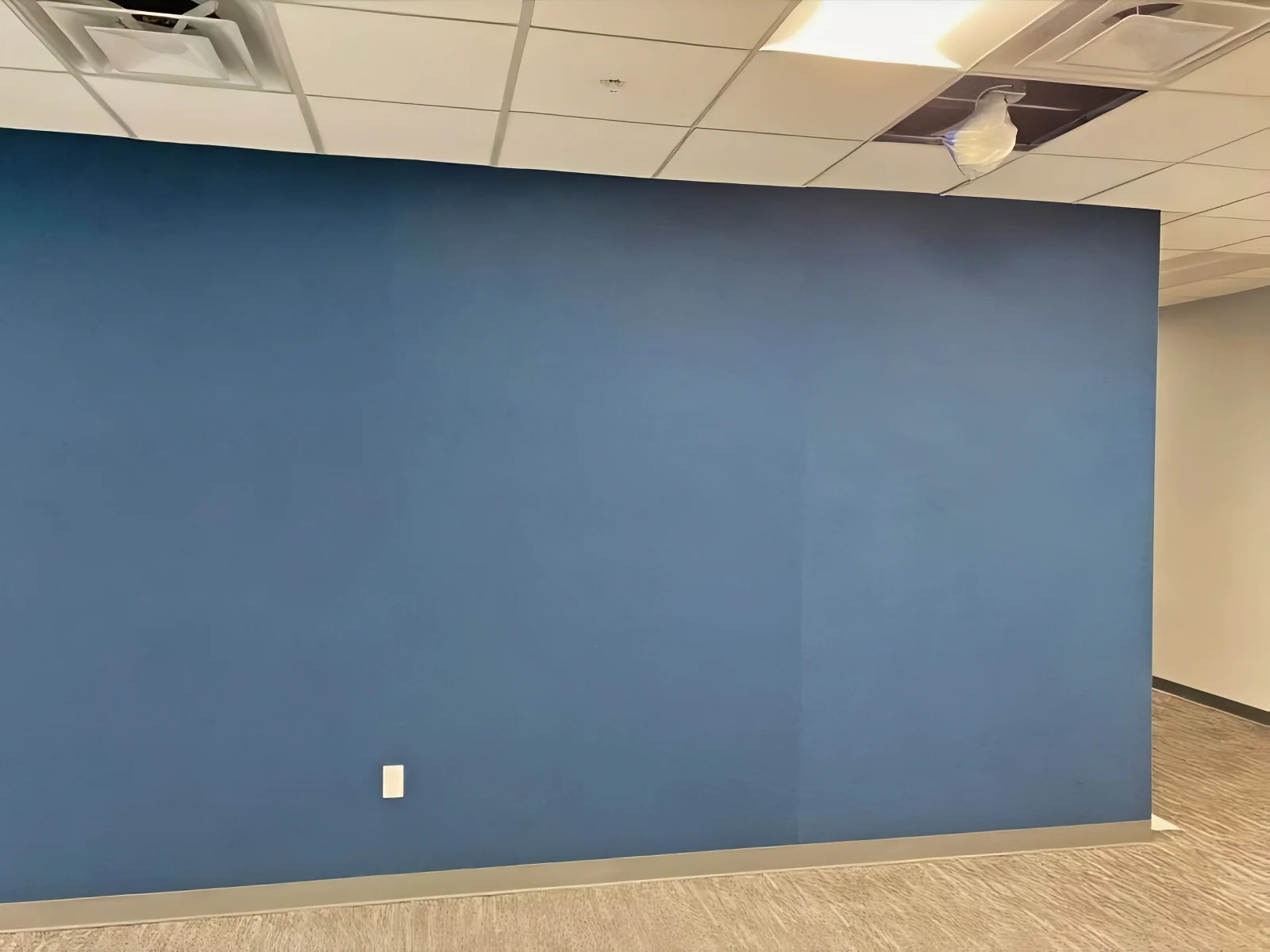
Finished Appearance of Acoustic Wall Coverings
- Seamless look: Sheets butt together for minimal visibility.
- Pattern matching: Makes joints virtually disappear.
- Aesthetic first: Chosen more for color & finish than acoustic results.
Because wall coverings are thin, their main benefit is appearance. They provide a cleaner, uninterrupted surface than fabric walls and are often used when visuals matter more than absorption. For architects, this makes them suitable for offices, lobbies, or corridors where only light acoustic control is needed. Different track profiles also allow fabric wall to have a more unique finished look. Some of these profiles include square, beveled and radius.
Key Differences: Stretched Fabric Wall vs Acoustic Wall Covering
- Components: Fabric wall = fiberglass, track, fabric. Wall covering = thin polyester + adhesive.
- Thickness: Fabric wall up to 4″ thick; wall coverings max at ¼″.
- Acoustics: Fabric wall NRC 0.80–1.05; wall coverings NRC up to 0.40.
- Appearance: Fabric walls show seams; wall coverings appear seamless.
Stretched fabric walls are the stronger option when acoustic performance and durability are top priorities. Acoustic wall coverings, on the other hand, are better suited to decorative finishes where sound absorption isn’t the primary concern. For architects and contractors, the right choice depends on balancing performance goals, aesthetics, and budget.
Acoustic Wall Projects Across Industries & States
- Mississippi Factory Soundproofing: Reducing machinery noise & echo in large production areas.
- Kentucky Multi-Family Soundproofing: Improving privacy & comfort between shared living spaces.
- Texas Clubhouse Soundproofing: Enhancing speech clarity & acoustic balance in community gathering rooms.
Acoustic wall systems bring performance and precision to a range of projects. From reducing mechanical noise in Mississippi factories to increasing comfort and privacy in Kentucky apartments, and improving clarity in Texas clubhouses—each installation shows how stretched fabric walls & acoustic wall coverings elevate both sound quality and design intent. These systems help architects & contractors achieve better control over reverberation, privacy, and aesthetic cohesion across diverse building types.
Partnering With Experts in Acoustic Wall Systems
Commercial Acoustics has the experience to help you choose and install the right wall system for your project. From conference rooms to auditoriums, we’ve delivered both stretched fabric walls and acoustic wall coverings that meet performance targets while enhancing design. Our team understands the trade-offs between aesthetics and absorption — and we’ll guide you toward the best fit for your specification.
If you’re weighing stretched fabric walls vs acoustic wall coverings, work with a partner who knows both systems inside and out. Contact Commercial Acoustics today to discuss your project.
FAQs: Stretched Fabric Walls & Acoustic Wall Coverings
What’s the difference between stretched fabric walls and acoustic wall coverings?
Fabric walls use a track, fiberglass core, and fabric facing for higher absorption. Wall coverings are thin polyester sheets that provide minor acoustic benefits but focus on aesthetics.
How much sound do fabric walls absorb compared to wall coverings?
Fabric walls achieve NRC ratings up to 1.05, while acoustic wall coverings reach about 0.40. The added fiberglass core makes fabric walls far more effective for noise control.
Where are stretched fabric walls most useful?
They’re ideal in conference rooms, classrooms, auditoriums, and gyms—anywhere clarity and noise reduction matter.
Do fabric walls have visible seams?
Yes. Center tracks create visible seams between fabric panels, but when evenly spaced, they look intentional and architectural.
Can Commercial Acoustics help specify or install these systems?
Yes. We design and install both stretched fabric and acoustic wall covering systems, ensuring the right balance of performance and appearance for each project.