

Table of Contents
Design & Performance Benefits of Specialty Ceilings
Specialty ceilings blend acoustics & aesthetics into one design feature. While traditional acoustic ceiling tiles work, many projects call for something more dynamic. Options like baffles, clouds, and stretched fabric turn ceilings into both performance systems & visual statements. These choices reduce reverberation, improve clarity, and support branding without sacrificing style — giving architects a way to solve acoustic challenges without compromising design intent.
Acoustic Ceiling Baffles
- Vertical panels: Hung from ceilings to absorb sound energy.
- Material variety: Fiberglass, PET felt, or foam construction.
- Open-space use: Ideal for gyms, cafeterias, or large lobbies.
Acoustic ceiling baffles are excellent in spaces with little wall area for absorption. They help zone areas acoustically, control reverberation, and often integrate with lighting or HVAC for added utility. Their modular design makes them flexible for both retrofit applications and new construction projects where ceiling height & openness are key considerations.
Acoustic Ceiling Clouds
- Horizontal panels: Suspended above in squares, circles, or hexagons.
- Design flexibility: Fabric-wrapped, painted, or perforated finishes.
- Focal point potential: Double as acoustic control & centerpiece.
Acoustic ceiling clouds absorb noise while bringing dimension to a space. In open offices or dining halls, they reduce harsh sound and add flair. Their ability to be arranged in clusters or patterns lets architects play with rhythm & geometry while meeting acoustic performance targets.
Metal Ceilings
- Perforated panels: Sound passes through to backing insulation.
- Installation types: Lay-in grids or linear planks.
- Durable finishes: Aluminum or steel with corrosion resistance.
Metal ceilings pair industrial strength with acoustic function. They’re common in airports, labs, and transit stations where durability matters. Advanced systems can incorporate antimicrobial coatings or moisture resistance, making them ideal in healthcare & transportation environments where hygiene and longevity are critical.

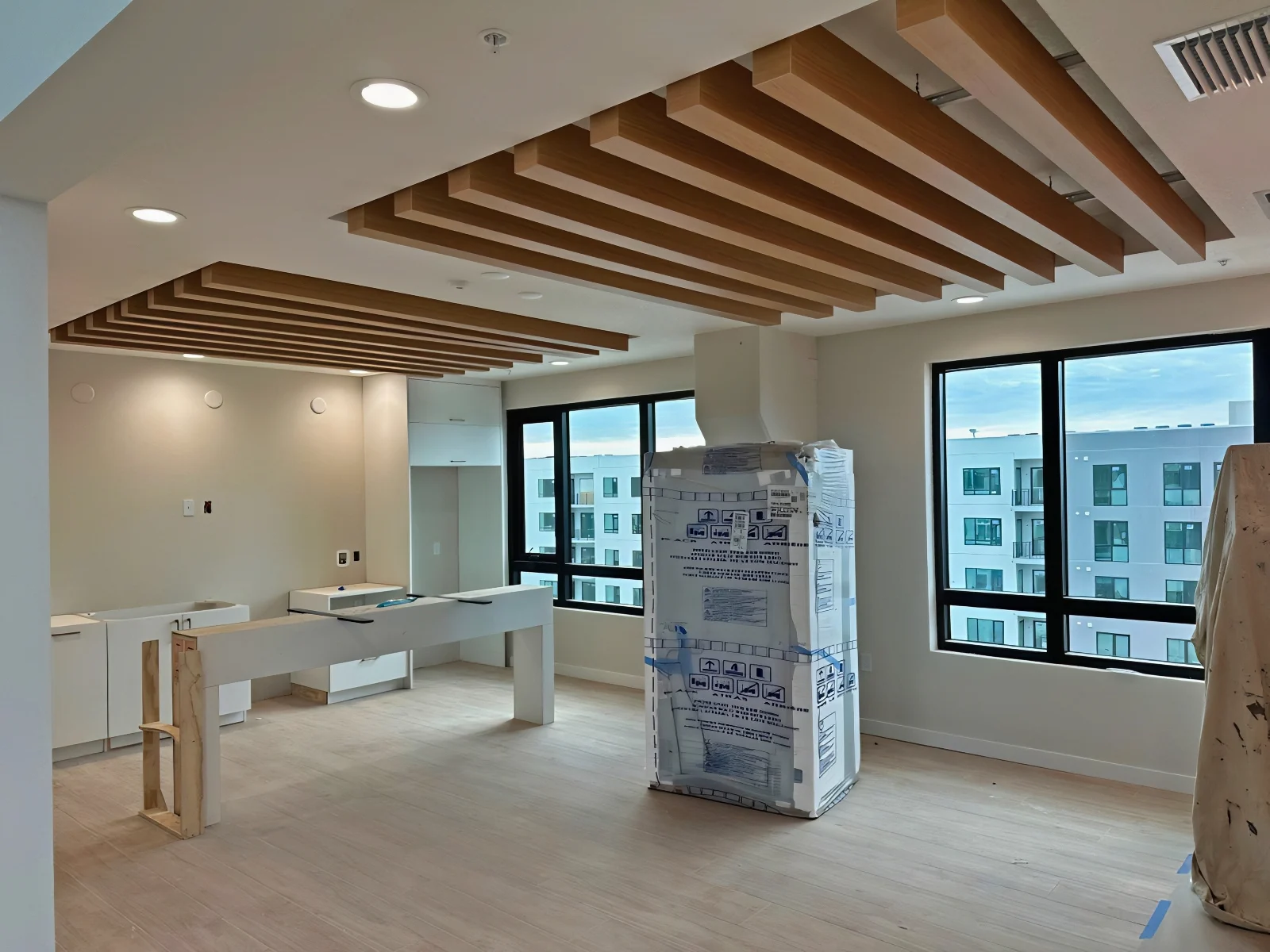
Wood Ceilings
- Natural warmth: Adds biophilic design appeal.
- Green credentials: Often FSC-certified or LEED-friendly.
- Tuned absorption: Perforations target specific sound ranges.
Wood ceilings create inviting spaces that soften modern interiors. Beyond their warmth, they can be engineered for precise acoustic performance in schools, theaters, or lecture halls. Many systems are available in veneers or solid species, giving designers freedom to balance sustainability, aesthetics, & budget.
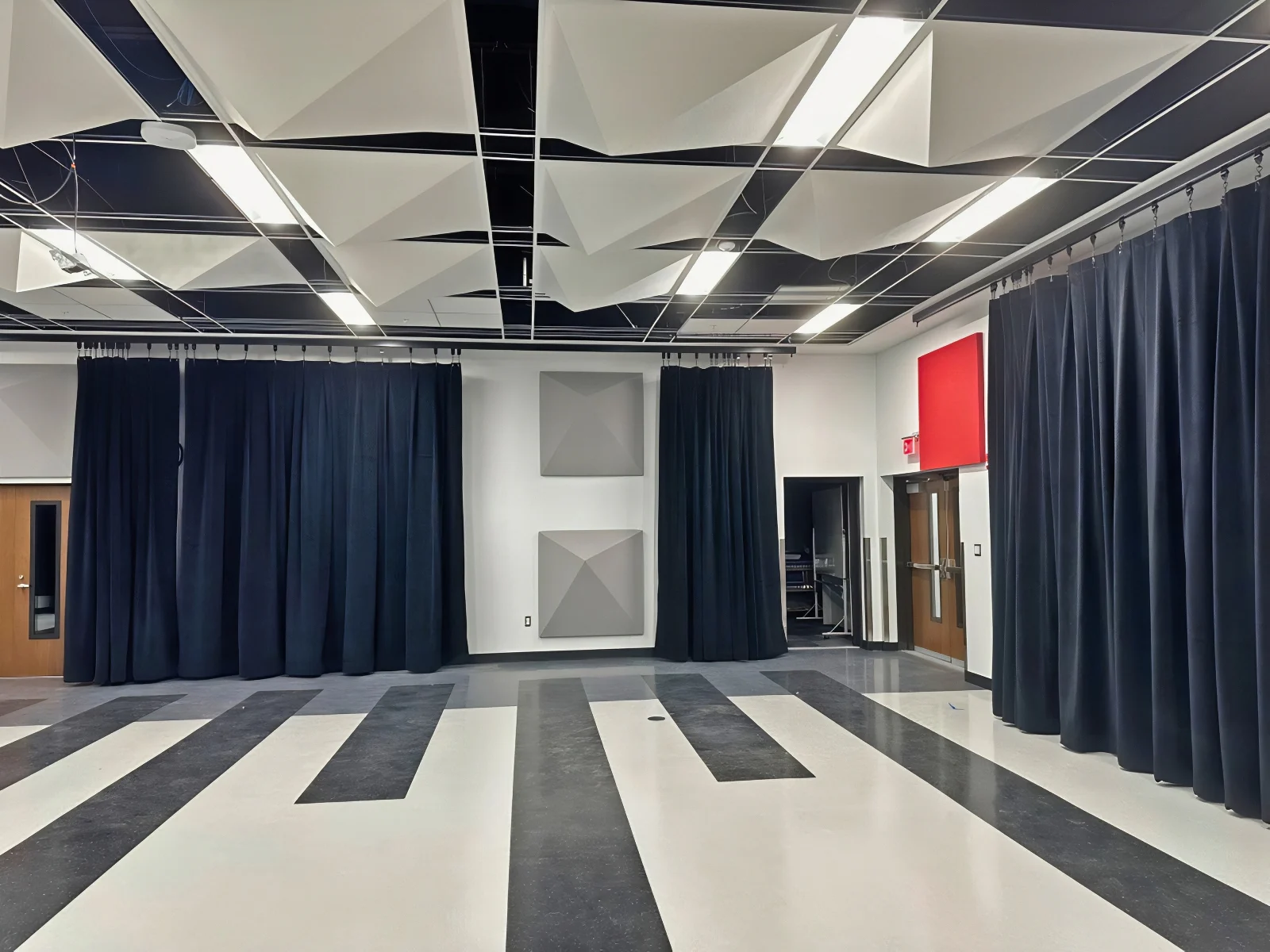
Pyramid Diffusers
- Angled geometry: Breaks up reflections & echoes.
- Balanced sound: Keeps liveliness while reducing echo buildup.
- Targeted placement: Hung in zones needing diffusion.
Pyramid diffusers scatter sound for clarity without deadening a space. In studios, concert halls, or auditoriums, they create balance by disrupting standing waves. Their non-absorptive design is often paired with absorptive panels to dial in reverberation times for music or speech.
Decorative Gypsum Ceilings
- Design variety: Coffered, tray, or curved profiles.
- Concealed systems: Hide lighting, sprinklers, or ventilation.
- Statement ceilings: Add architectural depth & drama.
Gypsum ceilings are both versatile and functional. Tray ceilings add height & light integration, while curved forms create sweeping focal points. Because of gypsum’s adaptability, architects can incorporate intricate detailing while keeping acoustical strategies aligned with mechanical & lighting systems.
Metal Baffles
- Clean lines: Evenly spaced, perforated metal slats.
- Custom options: Choose spacing, size, & finishes.
- Practicality: Easy access to utilities above ceiling.
Metal baffles blend industrial minimalism with acoustic control. Whether in rustic or modern spaces, they reinforce rhythm and reduce echo. Their durability and modular suspension systems make them a strong choice for high-traffic environments where frequent maintenance or above-ceiling access is necessary.
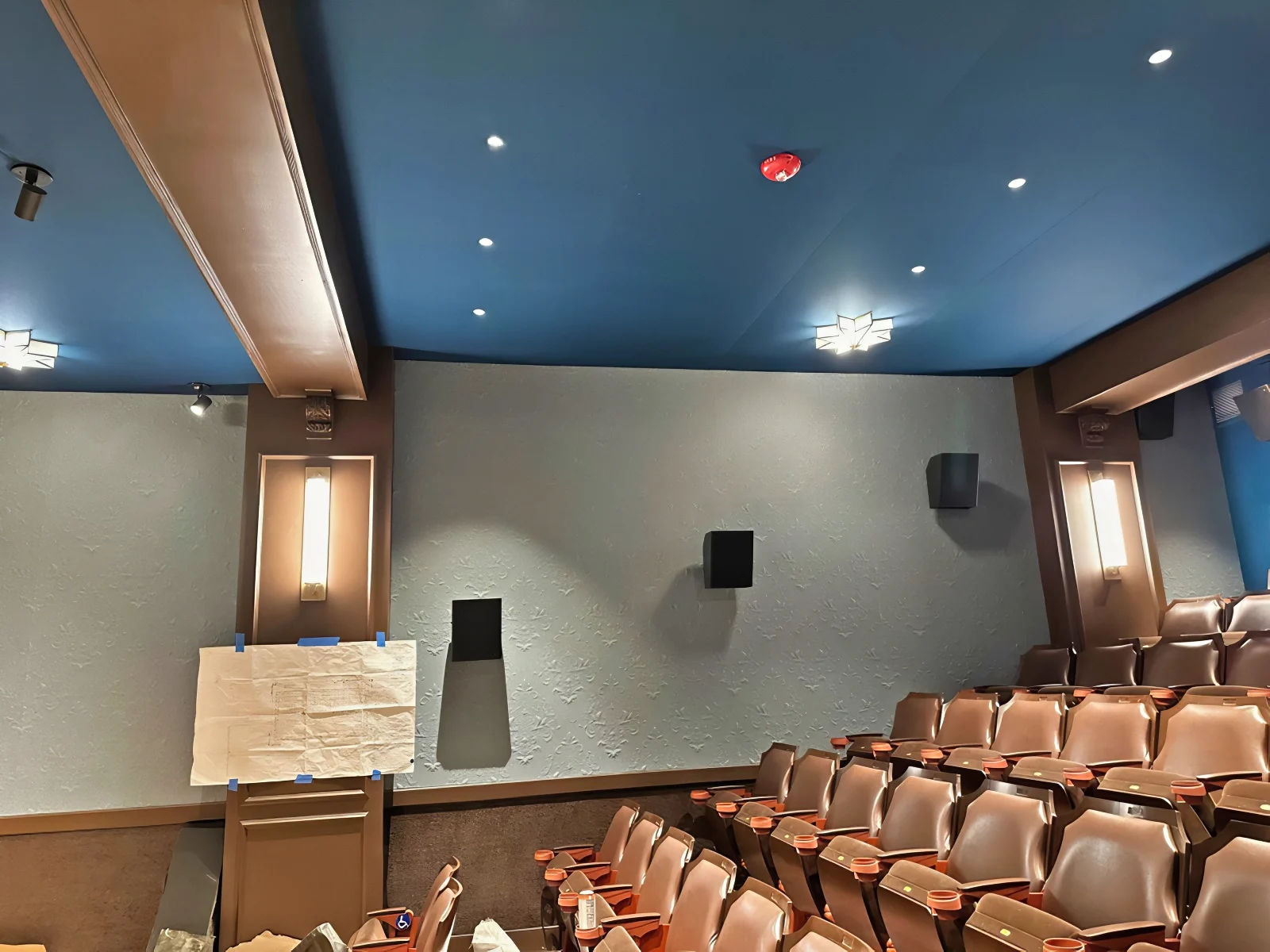
Stretched Fabric Ceilings
- Seamless look: Flat finish across large spans.
- Adaptable use: Graphics, insulation, or integrated lighting.
- Quick install: Minimal prep, no sanding or painting.
Stretched fabric ceilings offer sleek performance with design freedom. Backlit versions can glow across a lobby, while printed graphics personalize corporate or retail spaces. Architects often specify them for projects requiring rapid installation with minimal disruption — practical as well as eye-catching.
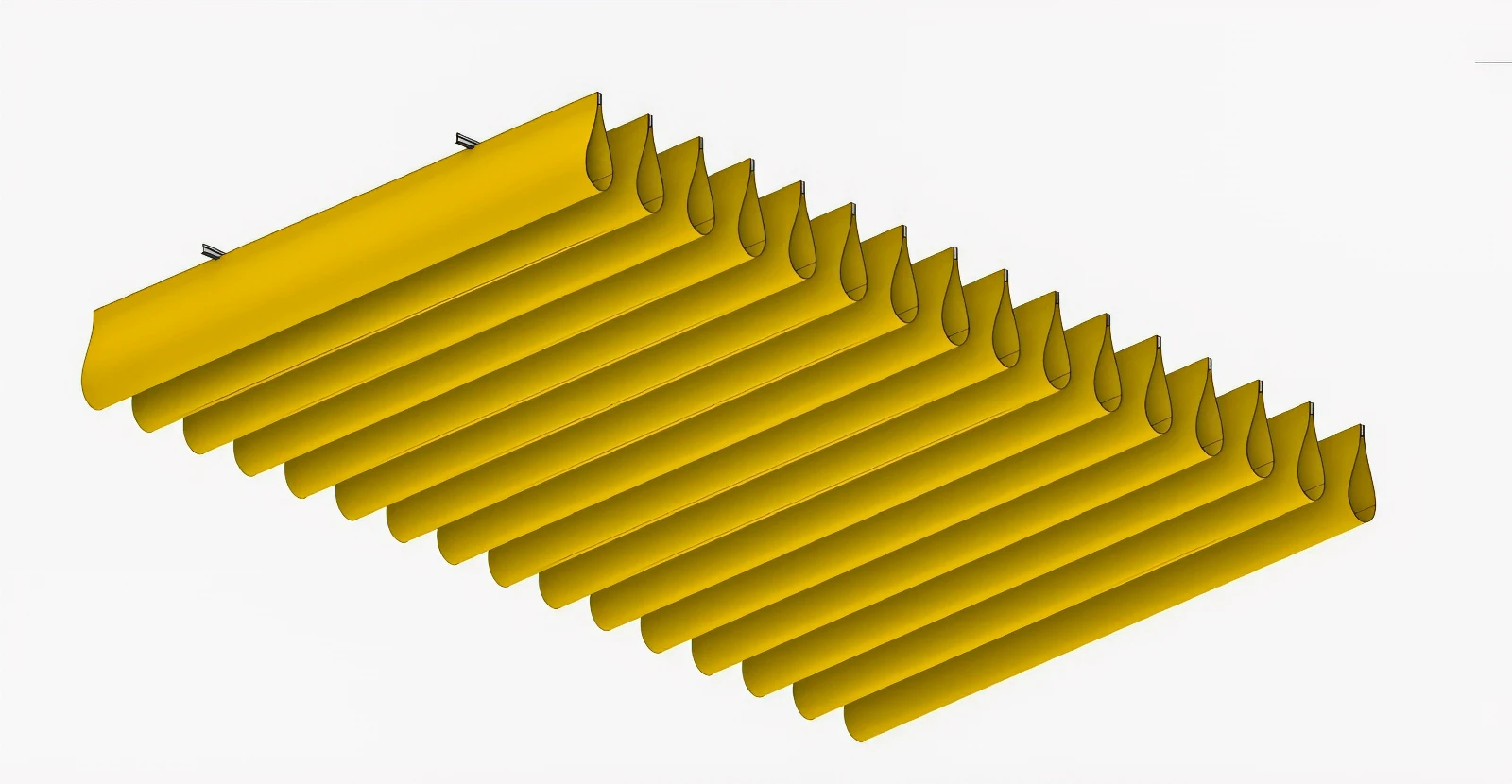
Teardrop Baffles
- Curved form: Softens sound from multiple angles.
- Lightweight build: PET felt or polyester construction.
- Sculptural design: Adds movement & organic appeal.
Teardrop baffles are as artistic as they are functional. In offices, lobbies, or atriums, they reduce reverberation while breaking away from rigid lines. Their organic shape gives designers an elegant way to introduce softer forms into spaces dominated by straight geometry.
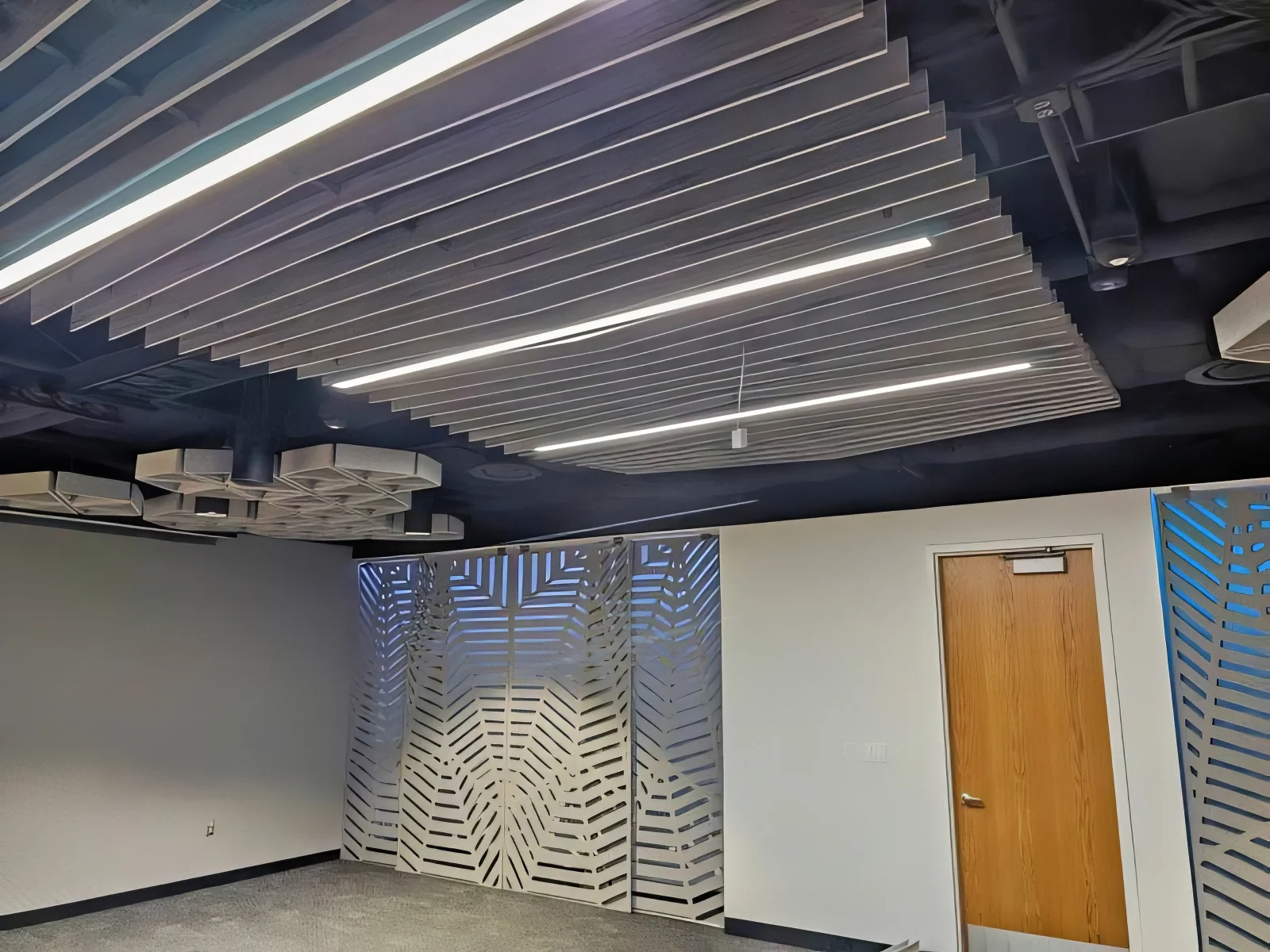
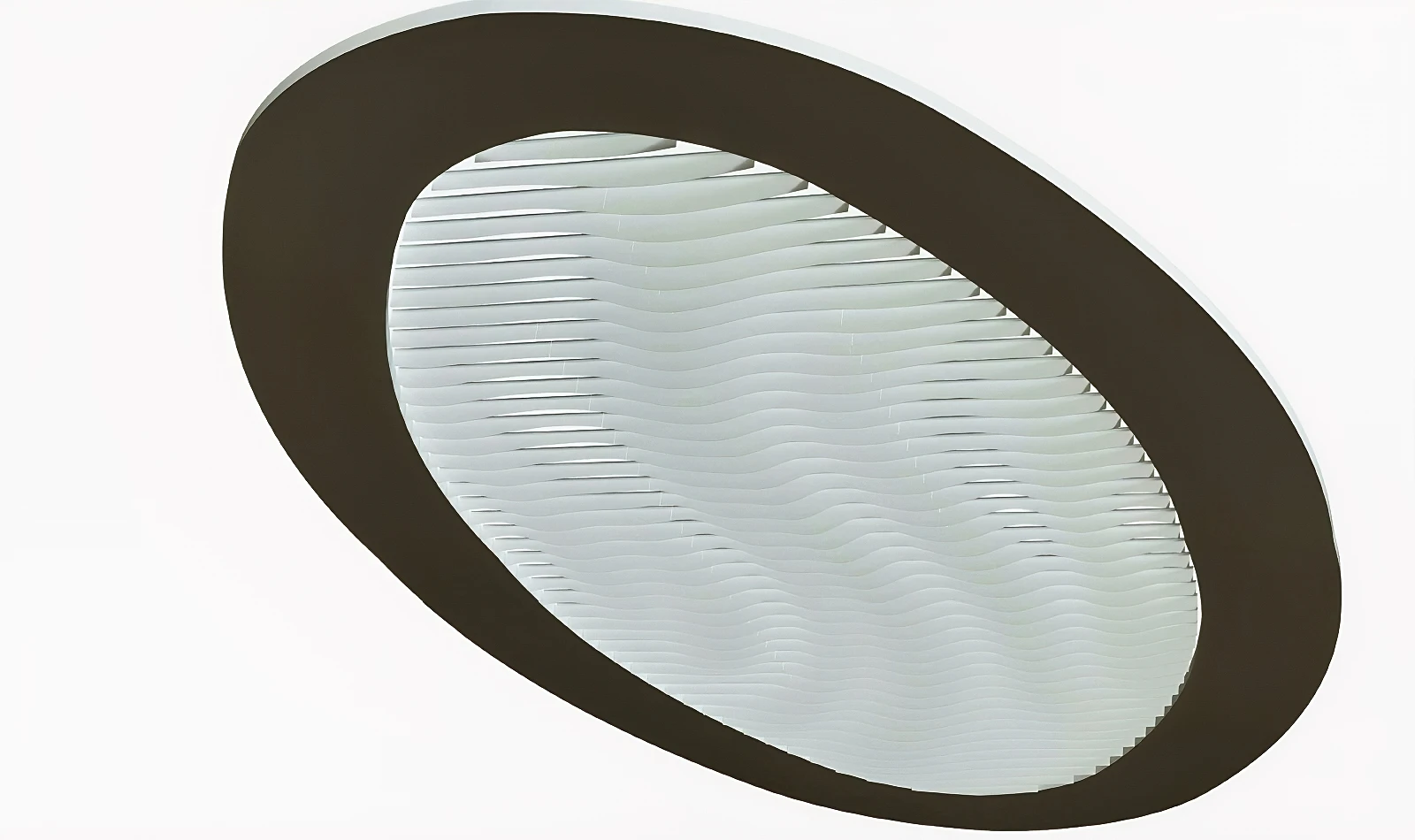
Wave Baffles
- Flowing shape: Undulating design increases absorption.
- Acoustic impact: Disrupts reflections in large open spaces.
- Eco-friendly: Often made from recycled, fire-rated materials.
Wave baffles ripple across ceilings, softening harsh acoustics and injecting visual energy. Their form adds movement, helping spaces feel more dynamic. They shine in high-volume interiors where traditional flat planes struggle to manage echo effectively.
Specialty Ceiling Projects Across Industries & States
- Texas Restaurant Soundproofing: Managing noise & echo in vibrant dining spaces.
- Louisiana Clubhouse Soundproofing: Improving speech clarity & comfort in shared gathering areas.
- South Carolina Factory Soundproofing: Controlling reverberation & equipment noise in high-volume work zones.
Specialty ceilings deliver both performance and design impact across a wide range of environments. From reducing chatter and reverberation in bustling Texas restaurants, to enhancing speech clarity and warmth in Louisiana clubhouses, and improving communication on busy South Carolina factory floors—these systems prove that ceiling design is more than aesthetics. By integrating acoustic baffles, clouds, and metal panels, architects & contractors can achieve measurable sound control while complementing each project’s visual identity and functional needs.
Partnering With Experts in Specialty Ceilings
Specialty ceilings combine performance with personality — from the absorption of baffles to the warmth of wood, the resilience of metal, and the artistry of gypsum. Architects value these systems for delivering measurable results while elevating design intent.
Commercial Acoustics is more than an installer — we’re an acoustic consultant & integration partner. We evaluate reverberation targets, code requirements, and constructability to align ceiling systems with lighting, HVAC, & access needs. With proven results across education, healthcare, office, hospitality, & performance venues, we design & deliver systems that improve clarity, comfort, and aesthetics — on schedule & within budget.
FAQs: Specialty Ceilings, Baffles, Clouds, & Acoustic Design
What’s the difference between baffles and clouds?
Baffles hang vertically to absorb sound from both sides, while clouds suspend horizontally for a sleek look. Both reduce echo in open or high-ceiling spaces.
Can specialty ceilings reduce restaurant or office noise?
Yes. They lower background noise and echo, improving comfort in busy dining or work environments without compromising design.
Which materials are best for durability?
Metal and gypsum resist impact and moisture, while fabric and wood add warmth and texture. Each suits different project goals and environments.
How are specialty ceilings installed?
They use modular track or suspension systems for fast installation and easy access to lighting, HVAC, or utilities above the ceiling.
Do specialty ceilings help with LEED or code compliance?
Yes. Many offer tested NRC ratings and sustainable options like PET felt or FSC wood, helping meet acoustic and green-building standards.
