

Table of Contents
Understanding the Basics
When people talk about sound masking, they often refer to it as “white noise.” But in practice, the balanced, comfortable sound used in most professional systems is pink noise. Pink noise distributes sound energy more naturally across frequencies, making it softer and easier on the ear. It’s the acoustic foundation behind modern office sound masking systems, helping control distractions while maintaining speech privacy.
Unlike white noise, which can sound sharp and static-like, pink noise has a deeper tone that feels natural—similar to the rhythm of rainfall or ocean waves. This sound quality makes pink noise ideal for creating peaceful and productive work environments. By tailoring pink noise sound masking systems to specific ceiling types and room acoustics, specialists can deliver comfort without compromising clarity.
What Is Pink Noise?
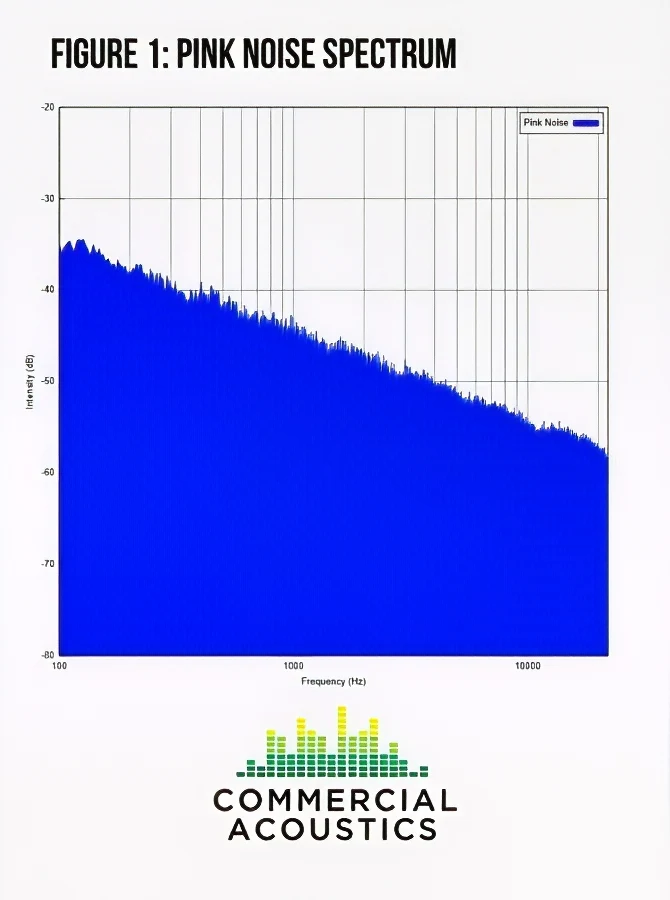
- Frequency Balance: Pink noise decreases in intensity as frequency increases, creating a smoother, warmer sound.
- Natural Perception: Because humans are more sensitive to higher frequencies, pink noise feels more pleasant over time.
- Real-World Examples: Think rainfall, a fan’s hum, or wind through trees—all examples of natural pink noise.
In acoustic terms, pink noise (aka 1/f noise: The scientific name for pink noise (pronounced “one over f noise) redistributes energy in a way that mirrors how our ears process sound. By reducing high-frequency sharpness, it minimizes listener fatigue while maintaining consistent coverage throughout a space. For architects and acoustic consultants, understanding this balance is key to designing sound environments that promote focus and comfort.
Pink Noise vs White Noise: What’s the Difference?
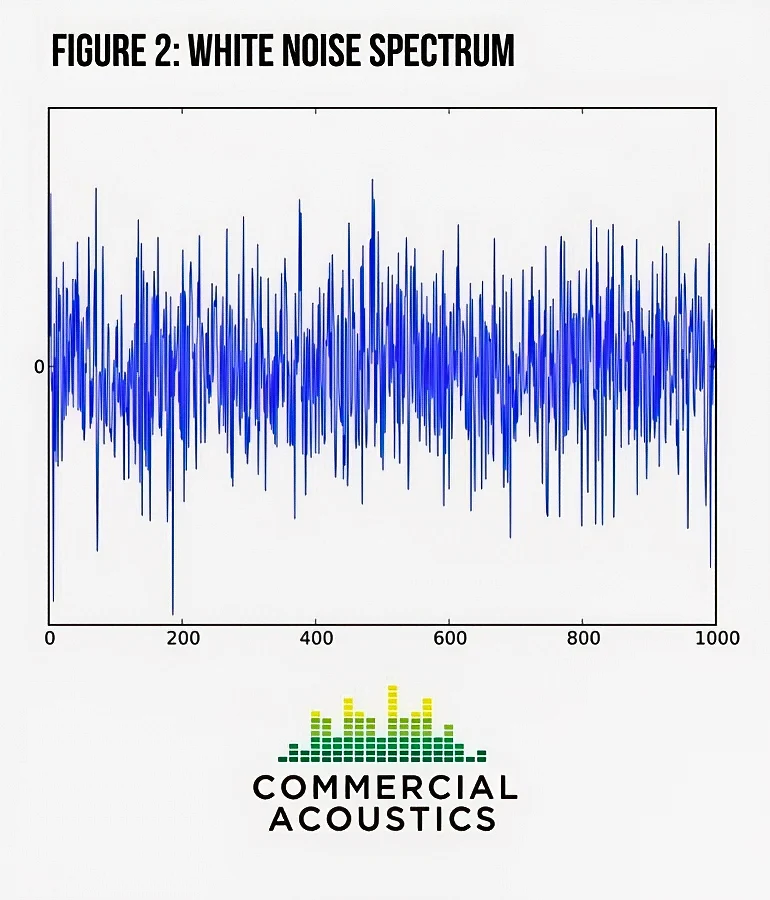
- White Noise: Equal intensity at all frequencies; sounds bright, harsh, or “hissy.”
- Pink Noise: Decreases in volume as frequency rises, producing a deeper, softer tone.
- Perception: Pink noise blends naturally into the background, while white noise stands out and can become tiring.
When you visualize the two, white noise forms a flat line across frequencies, while pink noise slopes downward. This slope explains why pink noise is preferred for sound masking—it aligns more closely with how humans perceive balanced sound. The difference between pink and white noise directly impacts how comfortable and effective a workspace feels over time.
Why Pink Noise Works Better for Sound Masking
- Improved Comfort: Pink noise feels more natural and less fatiguing to listeners.
- Better Speech Privacy: Its frequency curve more effectively masks conversations and background chatter.
- Custom Tunability: Acoustic specialists can adjust pink noise for specific ceiling tiles, room sizes, and finishes.
Modern sound masking systems rely on pink noise because it creates a calm, consistent background that improves privacy without becoming noticeable. When properly tuned, it blends into the environment seamlessly, helping employees stay focused while preventing accidental speech intelligibility. For projects that prioritize acoustic comfort in offices or healthcare spaces, pink noise systems consistently outperform pure white noise setups.
How Loud Should Pink Noise Be?
- Closed Offices: Typically tuned between 43–45 dBA.
- Open Offices: Slightly higher, around 46–48 dBA.
- Upper Limit: Avoid exceeding 50 dBA to prevent the masking system itself from becoming distracting.
The goal of pink noise sound masking isn’t volume—it’s balance. A properly calibrated pink noise system should blend so naturally that occupants don’t consciously notice it. Acoustic consultants adjust these levels using specialized meters to maintain speech privacy while enhancing comfort across open and enclosed environments.
White Noise Systems: Why They Fall Short
White noise systems deliver the same sound level across all frequencies, which makes them sound sharp and static-like. Over time, this consistency becomes uncomfortable to human ears, especially in offices where people are exposed for long periods. As a result, pure white noise systems often cause listener fatigue, complaints, and reduced productivity.
Modern sound masking design has evolved beyond white noise to focus on pink-noise-based tuning. This spectrum produces smoother coverage, minimizes high-frequency hiss, and creates a more natural acoustic environment. The shift from white to pink noise is now standard practice in professional office acoustics.
The Bottom Line: Why Pink Noise Wins
Both pink and white noise can mask sound, but pink noise offers the perfect balance of performance and comfort. It’s scientifically proven to reduce distractions, protect privacy, and enhance acoustic comfort across offices, hospitals, and government facilities.
At Commercial Acoustics, our engineers design and install pink noise sound masking systems that are precisely tuned for your ceiling type, layout, and sound environment. The result is quieter, more productive spaces that sound as good as they look. Contact us today to learn how pink noise can transform your next project.
FAQs: Pink Noise, White Noise & Sound Masking
What is pink noise?
Pink noise is a balanced sound spectrum with lower intensity at higher frequencies, making it smoother and more natural than white noise. It’s the preferred base for sound masking in modern offices.
How is pink noise different from white noise?
White noise has equal energy across all frequencies, which sounds sharp or hissy. Pink noise decreases in energy as frequency rises, creating a calmer, more pleasant sound profile.
Why is pink noise used in offices?
It provides consistent coverage and privacy without listener fatigue. This makes pink noise systems ideal for open offices, call centers, and healthcare facilities.
Can I use pink noise at home?
Yes, pink noise is often used in sleep and relaxation apps. However, commercial sound masking systems require professional tuning for accuracy and comfort.
How does Commercial Acoustics use pink noise?
Our team calibrates every sound masking system using pink noise curves optimized for the space’s materials and geometry, ensuring even sound coverage and effective privacy.
