Table of Contents
Why MLV Sound Barriers Matter
- Reliable Soundproofing: MLV blocks airborne noise more effectively than drywall or insulation alone.
- Flexible Applications: Used in walls, ceilings, and floors across residential, commercial, and industrial projects.
- Lightweight and Thin: Achieves high STC ratings without adding major wall thickness.
Mass Loaded Vinyl (MLV) is one of the most trusted materials for controlling airborne noise in construction. It provides a high level of sound isolation without heavy materials or complicated installation. Builders, architects, and acoustic consultants rely on MLV to meet strict STC requirements while saving on labor and space. As a result, MLV sound barriers have become a go-to choice for improving acoustic comfort in multi-family, hospitality, and commercial projects. For more detailed applications, see our guide on Mass Loaded Vinyl Sound Barrier Uses.
Understanding MLV Sound Barrier Uses
- Multi-Family Buildings: Reduces noise transfer between apartments and condos.
- Hospitality & Offices: Improves speech privacy in hotel walls and conference rooms.
- Industrial & Mechanical Rooms: Controls machinery and HVAC noise at the source.
MLV sound barriers are installed behind drywall, under flooring, or above ceilings to stop sound transmission through structures. In apartment walls and hotel partitions, they are a proven way to meet IBC STC 50 code requirements without extra drywall layers. Because MLV adds density and mass without taking up valuable space, it’s ideal for retrofits and new construction projects where performance and efficiency are critical.
EVA vs PVC Sound Barriers
- Material Composition: PVC requires plasticizers to stay flexible; EVA remains soft naturally.
- Durability: EVA retains elasticity over time, while PVC can harden and crack.
- Environmental Factors: EVA is non-toxic and odor-free, unlike PVC which can off-gas slightly.
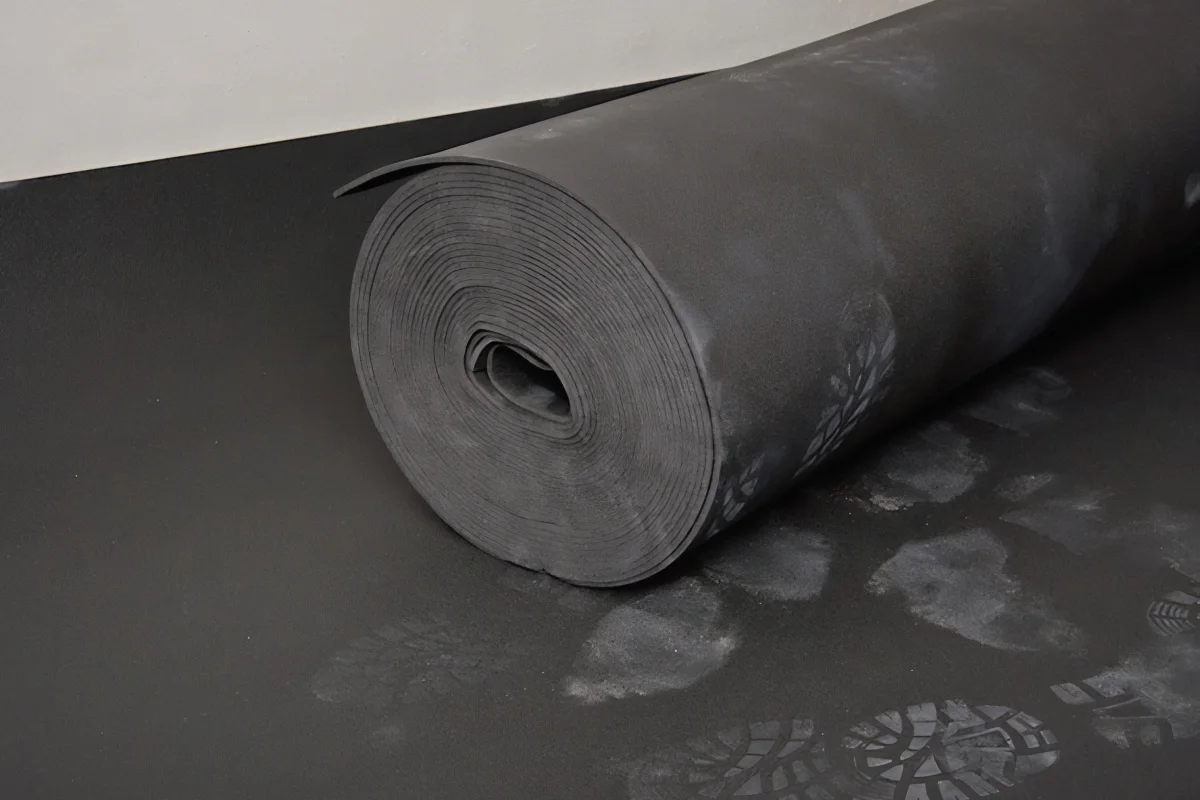
Both EVA and PVC-based MLV barriers block noise effectively, but EVA offers long-term reliability. PVC has been the industry standard for decades, but EVA-based membranes like Wall Blokker™ outperform PVC in flexibility and lifespan. EVA doesn’t rely on additives to maintain softness, meaning it won’t become brittle or lose performance with age. One reason EVA performs better is that it doesn’t rely on chemical plasticizers used in PVC (see more on plasticizers).
STC Performance and Lab Results
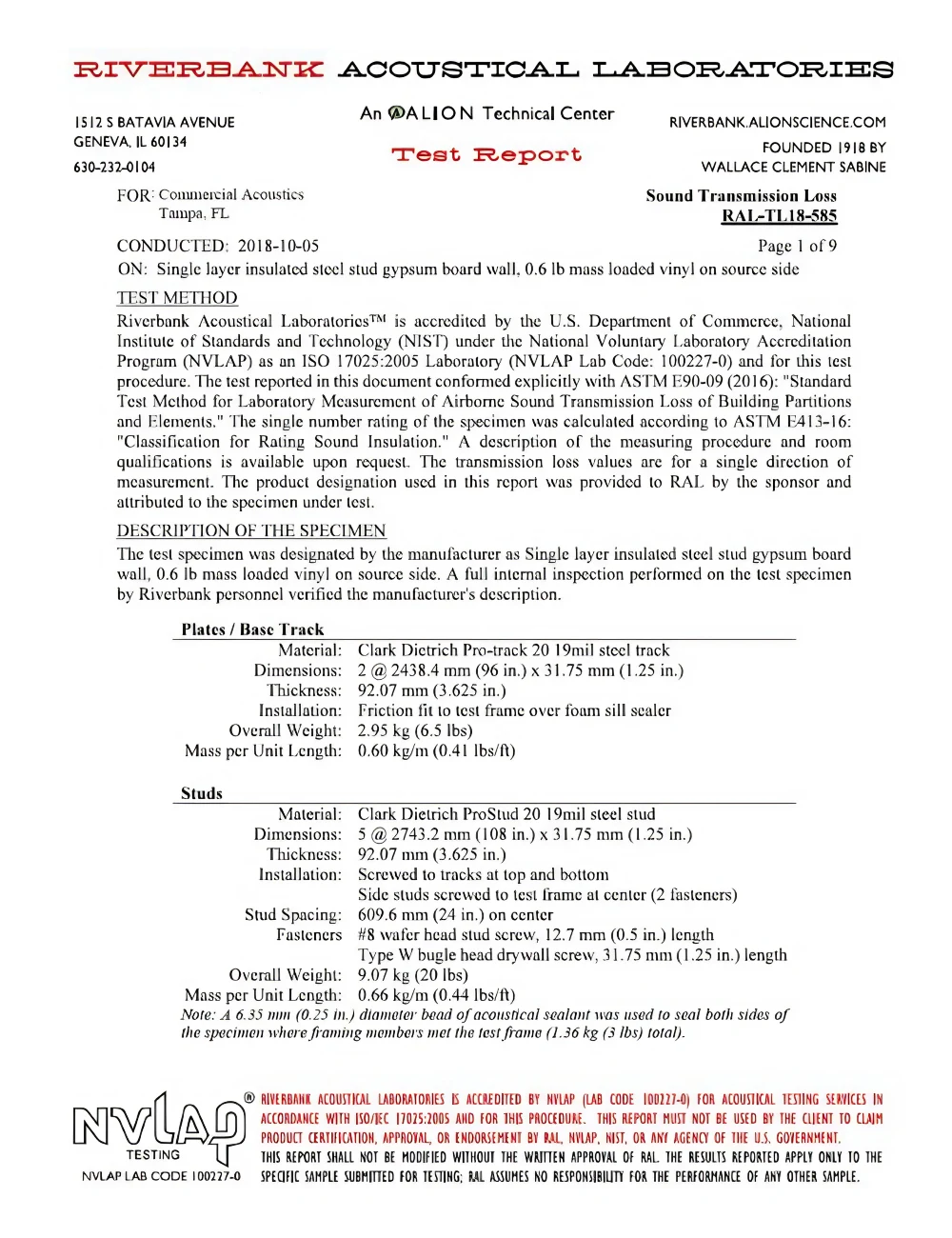
- PVC-Based MLV: Typical assemblies reach STC 54–55 on single-stud walls.
- EVA-Based MLV: Achieves STC 56–58 with improved flexibility and airtight contact.
- Tested on Metal & Wood Studs: Proven results in independent lab and field testing.
The difference between PVC and EVA may only be a few points on paper, but that margin often determines whether a wall passes or fails inspection. EVA’s ability to seal tightly against framing helps prevent flanking paths, improving real-world performance compared to brittle PVC membranes. Consistent testing and verified data make MLV a reliable acoustic material for architects seeking predictable, code-compliant results on every project.
Advantages of MLV Over Extra Drywall
- Higher Efficiency: One layer of MLV equals multiple layers of drywall in sound reduction.
- Lower Cost: Reduces material and labor expenses on large projects.
- Space Saving: Maintains thin wall assemblies while meeting acoustic code requirements.
Adding multiple drywall layers increases cost and installation time. MLV provides the same (or better) results in a fraction of the space, making it a preferred option for multifamily housing, schools, and healthcare environments where space and budget are tight. Contractors also appreciate the versatility of MLV—it can be cut, bent, and installed easily on any surface while maintaining consistent noise-blocking performance.
Installing an MLV Sound Barrier
- Walls: Staple or screw to studs before applying drywall.
- Ceilings: Attach over joists to block sound between floors.
- Floors: Lay underlayment beneath floating or finished surfaces for added mass.
For best results, seams should be overlapped or sealed with acoustic caulk to eliminate sound leaks. Using resilient channels or isolation clips alongside MLV can increase STC ratings significantly. To compare options, explore Wall Blokker Lite, Wall Blokker, and Wall Blokker Pro—each designed for different noise levels, budgets, and wall assemblies. MLV is simple to install but extremely effective when properly sealed and combined with other acoustic systems.
Why Choose EVA-Based MLV
- Improved Flexibility: Easier installation with consistent seal and no cracking over time.
- Better Longevity: Maintains mass and damping properties for decades.
- Health & Safety: No plasticizers or VOC off-gassing.
EVA-based MLV is designed for durability, flexibility, and clean performance. It’s ideal for environments that prioritize long-term reliability, such as healthcare, education, and residential developments. Commercial Acoustics’ Wall Blokker™ product line leads this new class of noise barriers—engineered for both acoustic isolation and ease of installation. The improved material consistency and sound-blocking capacity make EVA-based MLV a clear upgrade for any professional seeking better soundproofing results.
Conclusion: The Smarter Sound Barrier Choice
Mass Loaded Vinyl remains one of the best solutions for improving sound isolation in modern construction. While PVC-based products are still widely used, EVA-based MLV sound barriers deliver better flexibility, higher STC ratings, and longer lifespan—all without chemical additives or odor issues. By choosing MLV, builders can achieve strong, long-lasting noise control with predictable results and minimal wall buildup.
Commercial Acoustics manufactures and installs EVA-based MLV systems like Wall Blokker™, Wall Blokker Pro, and Wall Blokker Lite for architects, builders, and contractors nationwide. Whether you’re meeting code or upgrading acoustic performance, MLV sound barriers deliver proven, lab-tested results that stand the test of time. MLV continues to outperform other soundproofing materials due to its combination of density, flexibility, and ease of installation.
FAQs: MLV Sound Barriers
Does MLV work for soundproofing?
Yes. MLV is one of the most effective materials for blocking airborne sound through walls, floors, and ceilings. It’s used in everything from apartment walls to industrial enclosures to achieve measurable sound isolation.
Why is MLV so expensive?
Because it’s a dense, engineered barrier made with high-quality polymers designed to block sound—not just absorb it. While initial cost is higher, MLV reduces material use and labor costs by replacing multiple drywall layers.
Is MLV better than acoustic foam?
Yes. Foam absorbs echo and reverberation, but it doesn’t block noise. MLV adds mass, which prevents sound from passing between spaces, offering true soundproofing rather than just absorption.
How well does MLV work?
When properly installed, MLV can increase wall STC ratings by 7–10 points—enough to meet IBC code requirements for most multi-family and hospitality projects. It’s one of the most efficient ways to meet acoustic targets with minimal construction change.
Can Commercial Acoustics help me select MLV?
Absolutely. Commercial Acoustics provides consulting, product recommendations, and installation support to help you choose the right MLV system for your project. Our team ensures your MLV solution fits both your acoustic goals and your construction schedule.
