

Table of Contents
Why Acoustic Ceilings Matter in Modern Design
Acoustic ceilings are a critical part of modern commercial design. Whether in offices, schools, healthcare facilities, or performing arts venues, they balance performance and aesthetics. The right ceiling tile helps architects and engineers reduce noise, control reverberation, and enhance the overall experience of a space.
By considering both performance ratings (NRC, CAC) and design intent, ceiling systems become more than just finishes—they become part of the acoustic strategy of the building.
Major Brands of Acoustical Ceiling Tiles (ACT)
Armstrong Acoustic Ceiling Tiles
Armstrong is one of the most recognized names in the industry, with an extensive portfolio of mineral fiber and fiberglass tiles. Their lines range from cost-effective Fine Fissured panels to premium Optima and Ultima systems.
Armstrong is known for sustainability initiatives, offering many products within their Sustain portfolio. With Total Acoustics technology, Armstrong tiles can balance absorption and blocking, making them adaptable to multipurpose spaces.
USG Acoustic Ceiling Tiles
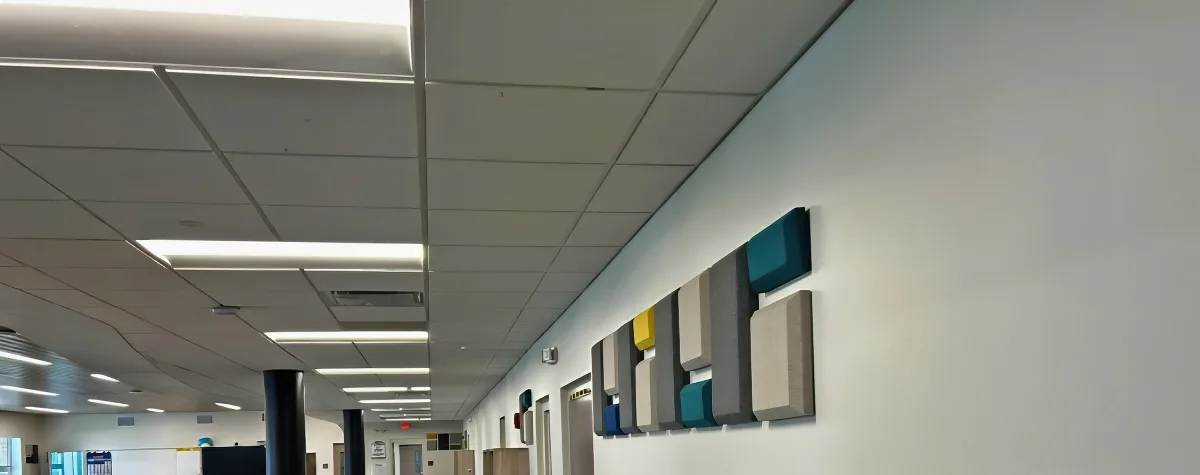
USG offers mineral fiber and fiberglass tiles that combine durability with high acoustic ratings. With NRC values up to 0.90 and ClimaPlus technology for humidity resistance, USG panels are widely used in healthcare and educational environments.
Their products are designed to integrate seamlessly with Donn® suspension systems, reducing installation complexity for contractors. Sustainability is also a core feature, with recycled content and low VOC certifications across their lines.
Rockfon Acoustic Ceiling Tiles
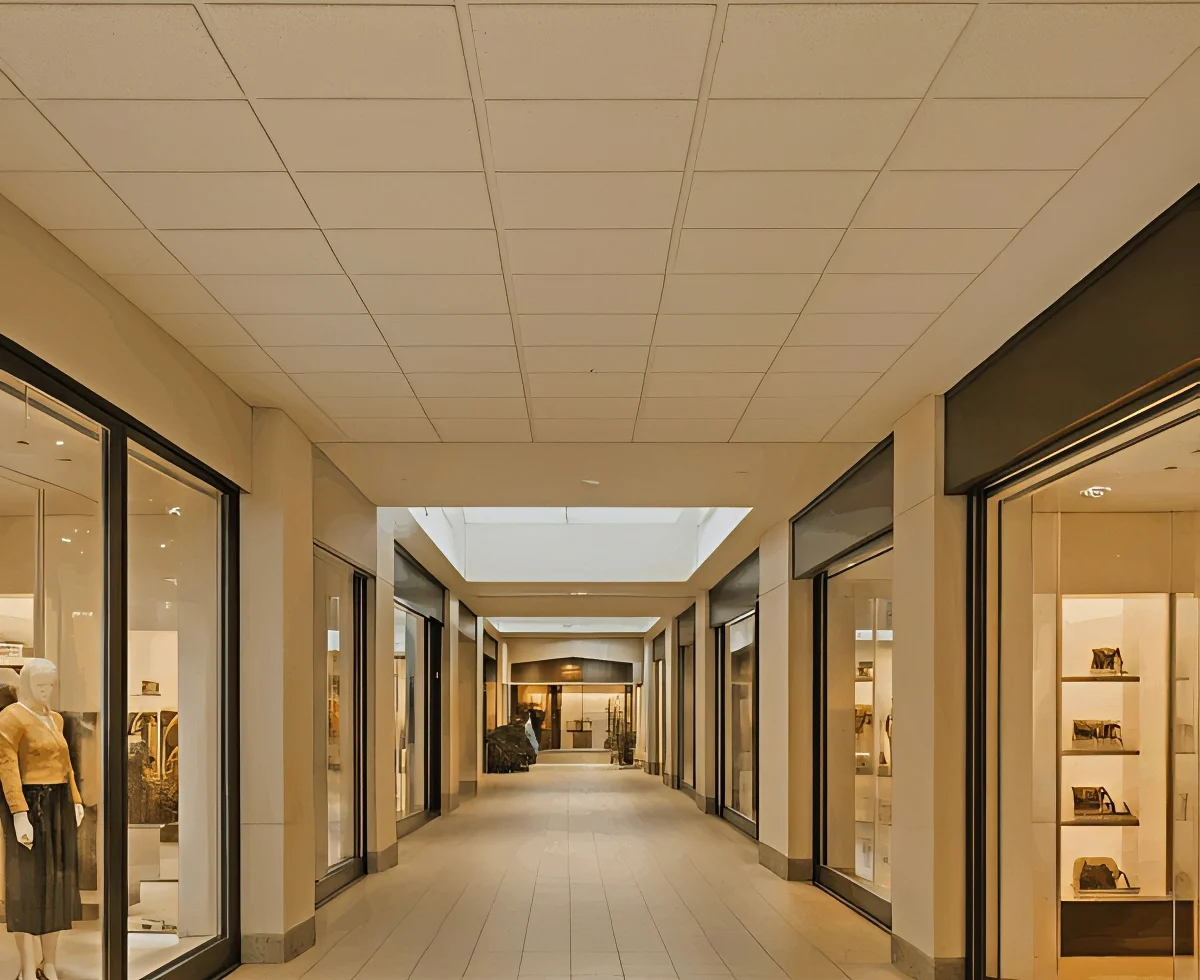
Rockfon manufactures panels from stone wool, a naturally non-combustible material. With a melting point above 1000°C, Rockfon tiles deliver unmatched fire safety and humidity stability, remaining dimensionally stable even in extreme conditions. Their NRC values reach up to 0.75, and the tiles are fully recyclable, contributing to sustainable building practices.
With smooth finishes and multiple edge options, they work well in projects that require both performance and durability. Pictured to the right is 2’x2′ Fine Fissured Square Tegular Tile on Suprafine 9/16″ Grid.

CertainTeed Acoustic Ceiling Tiles
CertainTeed offers both mineral fiber and fiberglass ACT products, with options tailored for a variety of commercial spaces. Their Symphony®, Baroque, and Theatre Black lines highlight the company’s range—from refined aesthetics to high-performance acoustics. With NRC values up to 0.85 and CAC ratings as high as 42, CertainTeed products excel in spaces requiring both absorption and blocking. Many lines feature washable finishes and sustainable certifications, making them reliable for education, healthcare, and theater environments.

Common Types of Acoustic Ceiling Tiles (ACT)
Fine Fissured ACT
Fine Fissured tiles are one of the most widely used ceiling solutions in commercial interiors. Made from mineral fiber with a subtly textured surface, they offer moderate absorption (NRC 0.55–0.70) and blocking (CAC up to 40).
They provide dependable performance at an economical price, making them common in classrooms, offices, and healthcare spaces where budgets are tight but noise control is still necessary. Their availability in standard sizes and grid compatibility makes them a versatile, go-to solution.
Cortega ACT
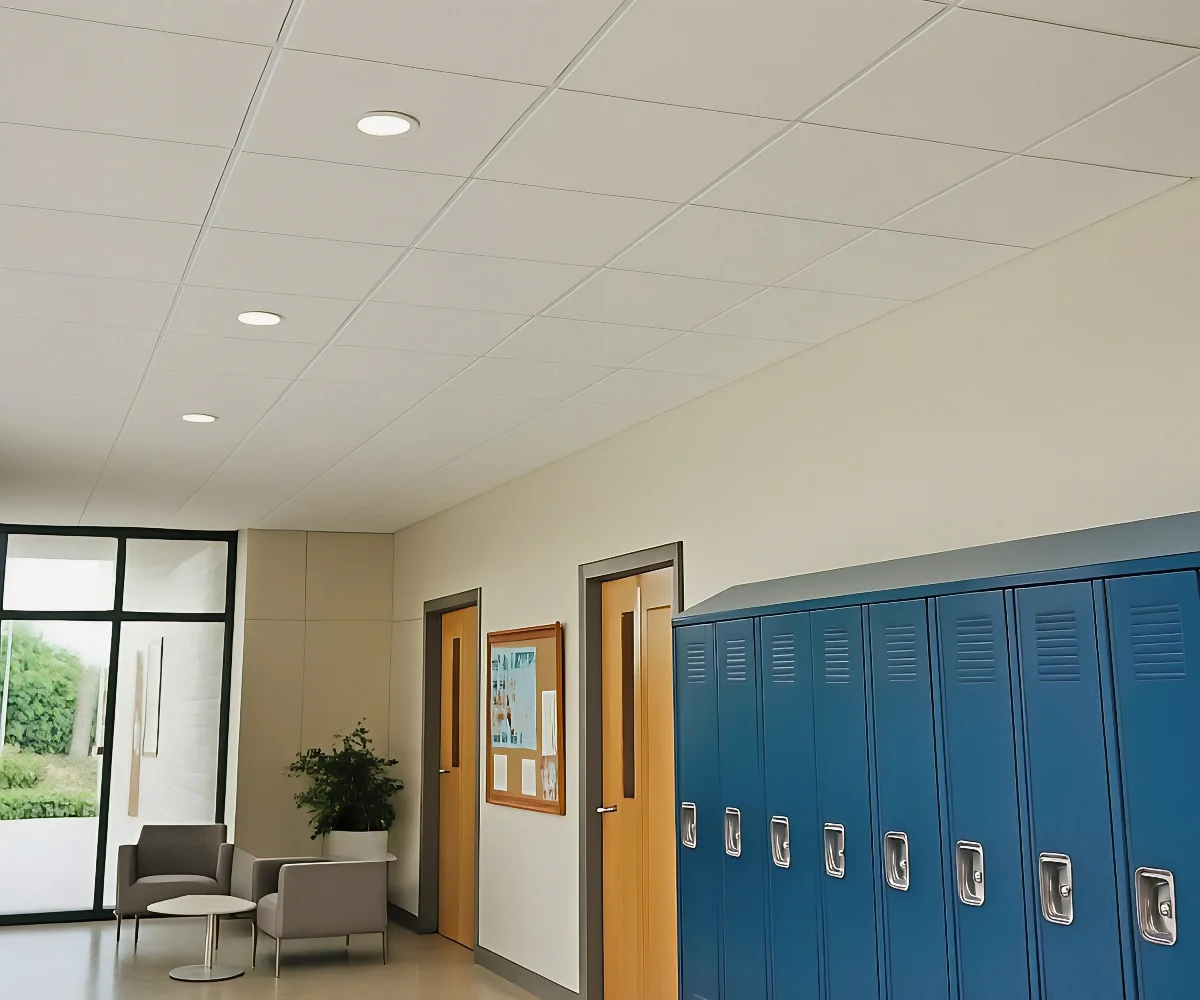
Cortega tiles by Armstrong are designed for practicality and reliability. Manufactured from mineral fiber, they provide NRC ratings around 0.55 and CAC values up to 40. Their non-directional medium texture simplifies installation and reduces waste.
These tiles are fire-rated (Class A), reflect up to 80% of light, and support sustainable construction through recycled content. Cortega is a common choice for back-of-house spaces, retail, and utility areas where durability and cost efficiency are prioritized without sacrificing acoustic performance.

Dune ACT
Dune tiles are mineral fiber panels with a fine-textured, clean surface that complements modern interiors. They combine moderate acoustic control (NRC 0.50, CAC up to 35) with added durability features like HumiGuard Plus and BioBlock technologies for mold and mildew resistance.
Dune tiles also reflect up to 81% of light, improving energy efficiency. They are a strong fit for healthcare facilities, schools, and offices where both durability and clean aesthetics are important.

Optima ACT
Optima tiles represent the high-performance end of Armstrong’s fiberglass ceiling line. With NRC ratings up to 0.95, they provide superior absorption for open-plan offices, educational facilities, and healthcare environments. Their smooth, non-directional finish offers a refined aesthetic while resisting sagging, mold, and mildew.
Optima tiles are impact- and scratch-resistant, washable, and available in multiple sizes and edge profiles. For projects where reverberation must be tightly controlled, Optima is often the preferred choice.

Ultima ACT
Ultima tiles are premium mineral fiber panels engineered with Armstrong’s Total Acoustics technology, combining NRC values up to 0.75 with CAC ratings up to 40. This dual performance makes them ideal for flexible environments like classrooms, offices, and healthcare settings where both absorption and blocking are needed.
Their smooth surface, high light reflectance (up to 88%), and mold/mildew resistance make them durable and visually refined. Ultima tiles are also part of Armstrong’s Sustain portfolio, supporting low-VOC and recycled content requirements for green building standards.
Selecting the Right Acoustic Ceiling System
- Performance goals: Match NRC & CAC to space requirements
- Aesthetic intent: Align textures, colors & finishes with design vision
- Environmental factors: Consider humidity, cleanability & sustainability
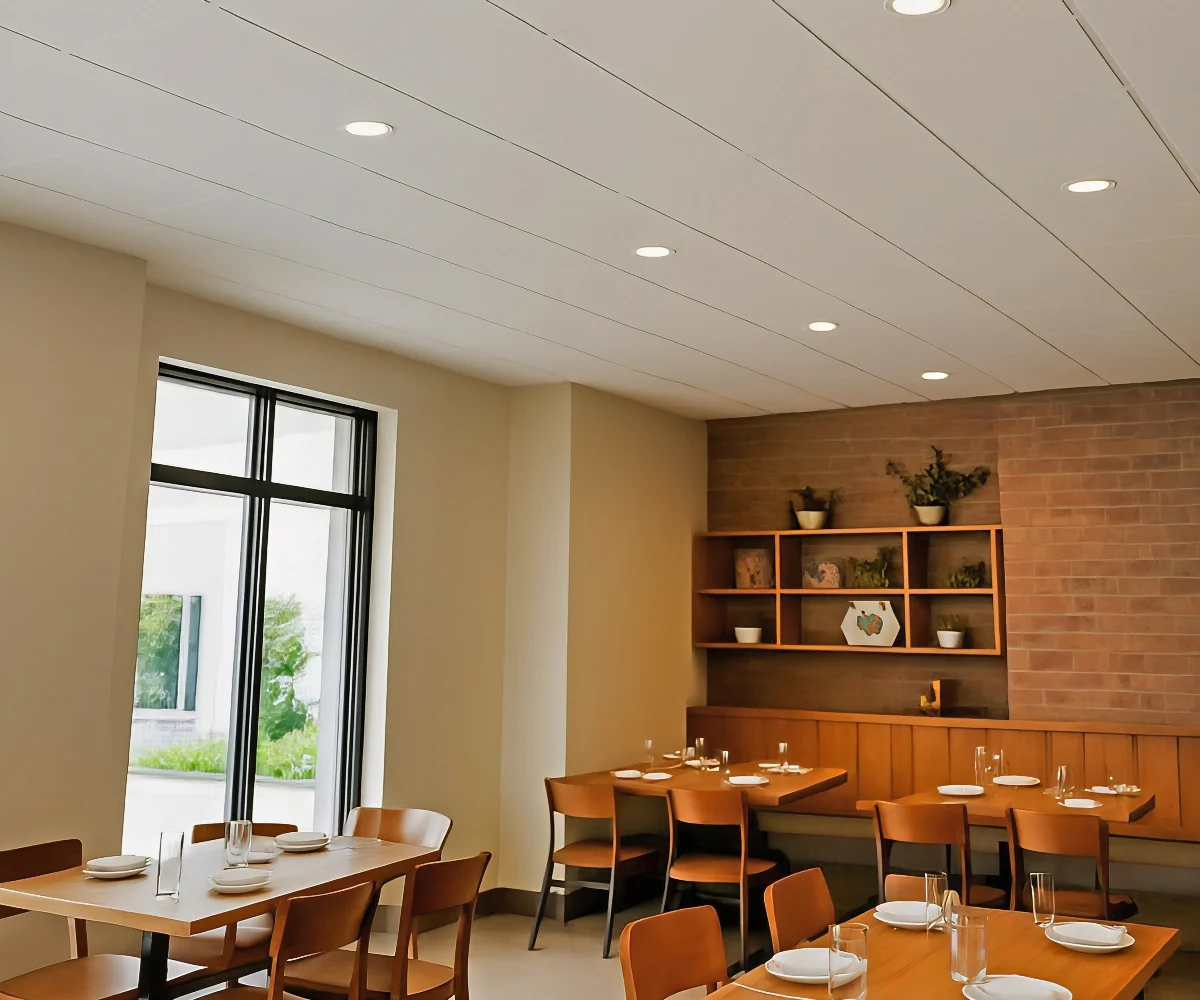
The choice of acoustic ceiling tile must balance technical performance with design intent. In classrooms, NRC may drive specifications to improve speech intelligibility. In healthcare, antimicrobial and washable finishes become essential. In multipurpose performing arts spaces, designers may combine ACT with wall treatments and diffusers to achieve a precise balance. By weighing performance ratings, durability, and aesthetics, architects and engineers can specify solutions that deliver both function and form.
Acoustic Ceiling Projects Across Industries & States
- California Restaurant: Noise control in dining environments
- North Carolina Industrial Factory: Reducing machinery & workflow noise
- Mississippi Clubhouse: Enhancing clarity in shared gathering spaces
Acoustic ceilings are not just a design choice—they’re proven solutions across real projects. From taming chatter in busy California restaurants to controlling heavy industrial noise in North Carolina factories, and creating comfortable gathering spaces in Mississippi clubhouses, these systems show how ceilings can play a central role in effective soundproofing. By linking performance ratings with practical applications, architects & contractors can see firsthand how ACT installations deliver results in demanding environments.
Conclusion: Acoustic Ceilings That Deliver Performance & Design
Acoustic ceilings are more than just overhead finishes—they are engineered systems that shape the sound quality of interior environments. From cost-effective mineral fiber tiles to premium fiberglass systems, ACT solutions allow architects and engineers to address acoustic goals while supporting aesthetic and sustainability requirements.
To explore acoustic ceilings for your next project, reach out to Commercial Acoustics for specialty installation and expert guidance.
FAQs: Acoustic Ceilings & Design Performance
What do acoustic ceilings do?
They absorb and block sound to reduce echo, improve clarity, and create comfortable environments in offices, classrooms, and healthcare spaces.
What’s the difference between NRC and CAC?
NRC measures sound absorption, while CAC measures sound blocking. High NRC improves clarity within a room; high CAC improves privacy between rooms.
Which brands make the best acoustic ceiling tiles?
Armstrong, USG, Rockfon, and CertainTeed are top choices—each offering products that balance performance, design, and sustainability.
Where are acoustic ceilings most useful?
They’re ideal in spaces like restaurants, offices, schools, and hospitals—anywhere noise control and speech clarity matter.
Can Commercial Acoustics help specify or install ACT systems?
Yes. We provide consultation, product selection, and professional installation to meet acoustic targets and design goals for any commercial project.
