

Table of Contents
Why Cleaning Acoustic Panels Matters
One of the most common questions we hear from clients is whether acoustic wall panels can be cleaned without damage. Since panels are wrapped in acoustically transparent fabrics, the wrong cleaning method can compromise performance or aesthetics. Knowing which fabrics are washable — and how to maintain them — protects your investment and keeps your panels performing for years.
Whether you’re working in a school, healthcare setting, office, or restaurant, understanding cleaning codes and fabric durability is just as important as the initial design.
Acoustic Panel Fabrics: Cleanable & Non-Cleanable Options
- Washable fabrics: Recommended for areas with food, children, or high traffic.
- Standard cleanable fabrics: FR701, Whisper, Anchorage.
- Bleach-cleanable fabrics: Studio 54, ideal for healthcare or high-wear spaces.
Most panel fabrics can be vacuumed or lightly dusted, and many can be safely cleaned using hydrogen peroxide or alcohol-based solutions. A simple trick for spot cleaning involves applying cornstarch with a soft brush, then vacuuming it out — a method we’ve used successfully on countless installations.
Some premium fabrics are even bleach-cleanable, making them a smart choice where strict hygiene standards are required. Always confirm the manufacturer’s cleaning code before applying cleaners.
The cleaning code guide from fabric manufacture, Guilford of Maine, says to clean with water based cleaning agents, foam or pure, water-free solvents. Vacuuming or light brushing is recommended to prevent dust and soil buildup. May also be disinfected with hydrogen peroxide, alcohol, and quatemary ammonium (quat) based cleaners.

Cleaning Acoustic Panels Safely
Not all cleaning agents are created equal. For example, Guilford of Maine fabrics with a W-S code can be cleaned using hydrogen peroxide, alcohol, or quat-based cleaners. If the fabric is both W-S and bleach cleanable, bleach-based cleaners are also safe.
Never soak the panel with liquid. Instead, use a spray bottle to lightly mist the cleaner onto a cloth, then gently wipe the fabric. This prevents saturation, which can damage the fiberglass or mineral wool core of the panel.
Preventing Stains on Acoustic Wall Panels
- Mounting height: Install panels at least 8–10 feet high to keep them out of reach.
- Protective finishes: Apply products like Scotchgard as a preventative layer.
- Color choices: Select darker tones in high-touch areas to reduce visible dirt.
Preventing stains is far easier than removing them. Panels hung too low often collect oils and dirt from hands, especially in schools and multipurpose spaces. Applying a light mist of fabric protectant makes future cleaning easier, but re-application may be required over time.
Color choice also plays a role. White or light-colored panels mounted at eye level highlight every mark, while darker panels installed higher up are more forgiving. To minimize damage, panels should remain wrapped until final installation and should only be unwrapped after paint has fully cured.
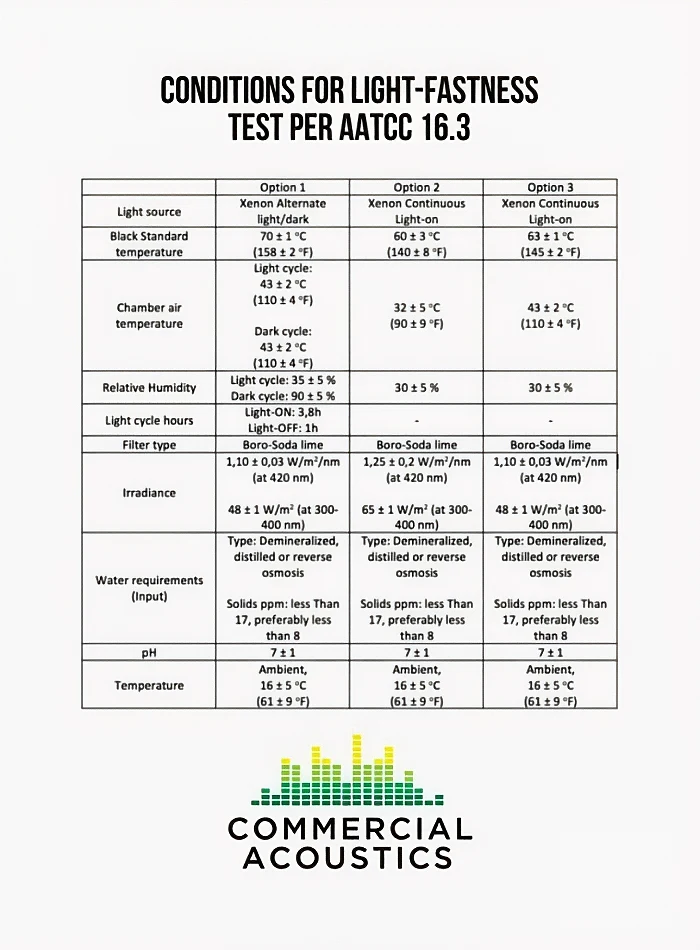
Acoustic Panel Color Fastness
Durability isn’t just about cleanliness — it’s also about color. In the acoustical panel industry, color fastness is measured by AATCC 16.3 standards. Premium fabrics typically achieve ratings of 4 or higher, meaning they can withstand exposure to ambient light without noticeable fading.
That said, direct sunlight, harsh UV exposure, and proximity to heat sources (like lamps or fixtures) can accelerate fading. Designers should consider both placement and lighting when specifying fabric finishes to maintain long-term aesthetics.
Conclusion: Long-Term Care for Acoustic Panels
Cleaning and maintaining acoustic panels doesn’t have to be complicated, but it does require the right combination of fabric selection, maintenance practices, and professional oversight. Today’s acoustical fabrics — from washable options like FR701 to bleach-cleanable selections such as Studio 54 — are designed for both performance and durability when cared for correctly.
At Commercial Acoustics, we’ve worked with thousands of panels in schools, offices, healthcare facilities, and performance spaces. Our team understands not only how to install panels for maximum acoustic performance, but also how to guide clients in long-term maintenance so they look and perform like new for years to come. With professional design, installation, and care strategies in place, acoustic panels become a lasting investment — enhancing sound quality, supporting aesthetics, and maintaining cleanliness across the life of the building.
FAQs: Cleaning & Maintaining Acoustic Panels
Can acoustic panels be cleaned without damage?
Yes. Most acoustic panels can be safely vacuumed or lightly dusted. Use only the cleaning methods approved by the fabric manufacturer to avoid compromising sound performance or appearance.
What are the best cleaning products for acoustic panel fabrics?
For most fabrics, hydrogen peroxide, alcohol-based, or quat-based cleaners work well. Always mist the cleaner onto a cloth—never spray directly onto the panel—to prevent liquid from soaking into the acoustic core.
Are any acoustic panel fabrics bleach-cleanable?
Yes. Fabrics like Studio 54 from Guilford of Maine are bleach-cleanable and ideal for healthcare or high-wear environments. Always confirm that the fabric’s cleaning code includes both W-S and bleach-safe ratings.
How can stains on acoustic panels be prevented?
Install panels above 8–10 feet, apply protective finishes such as Scotchgard, and select darker fabric tones in high-touch areas. These steps minimize visible wear and make maintenance easier over time.
Do acoustic panel fabrics fade over time?
Premium fabrics have strong color fastness ratings but may fade with direct sunlight or heat exposure. Avoid installing panels near windows or light fixtures and choose fabrics rated 4 or higher under AATCC 16.3 for long-term durability.
